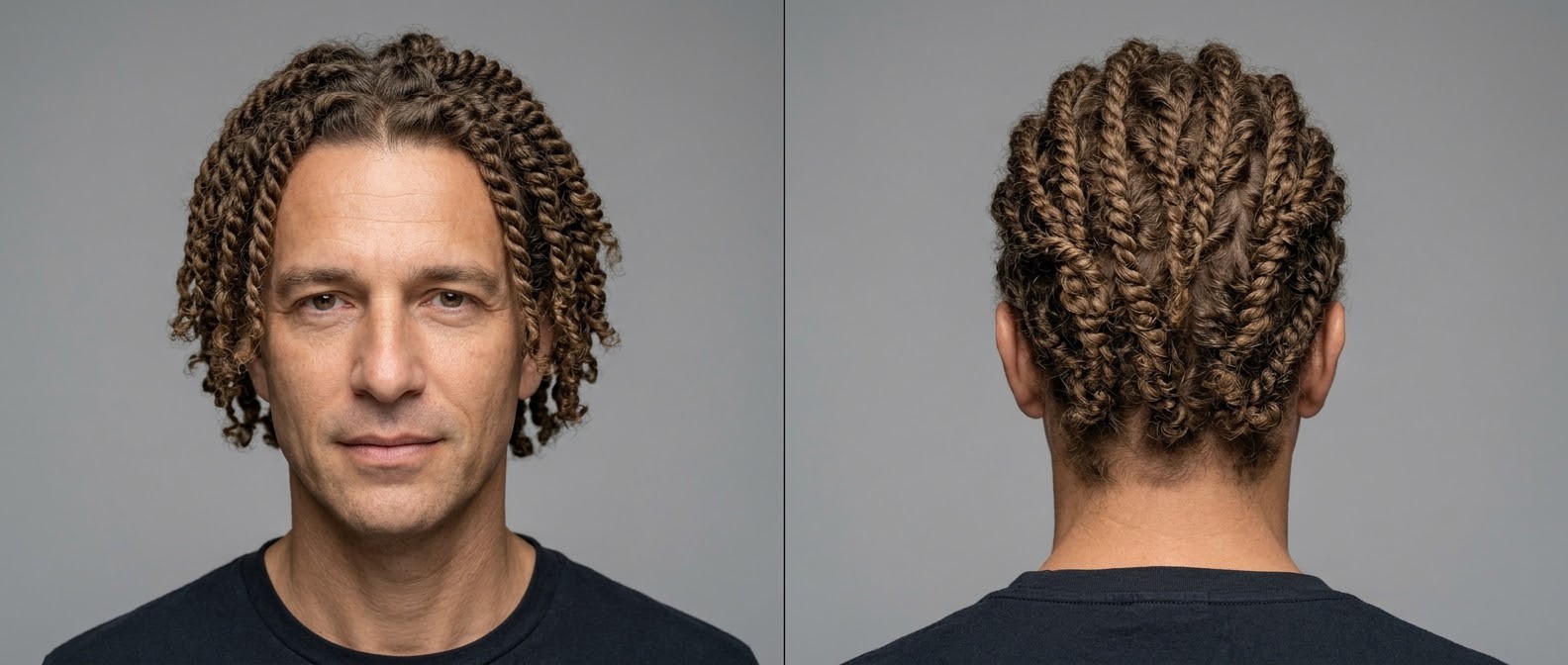
Add one front-facing photo. We send it to the AI together with this exact cut — and you get a photorealistic preview of yourself wearing it.
1
Your photo
Front view · neutral face · even light
2
This haircut
Already included
Front and back reference — taken from this page
3
Your preview
Your result appears here
![]()
![]()
Generated for you, not published anywhere
How do you rate this tool?
- Reading your photo
- Matching the cut
- Rendering your preview
How to take a photo that works
Do
- Face the camera straight on
- Even daylight, no harsh shadow
- Head and shoulders in frame
- Hair fully visible, nothing covering it
Avoid
- Hats, caps, hoods, sunglasses
- Steep angles or a tilted head
- Group photos or heavy filters
- Backlight that darkens the face
Men's Mid-Length Two-Strand Twists with Center Part
 Top
Long (10-20 cm)
 Sides
Short (6-20 mm)
 Hair Type
Curly (Type 3)
 Face Shape
Oval
 Maintenance
Medium
 Thickness
Thick / Dense
About This Style
This striking hairstyle showcases the versatility of naturally curly, thick hair through meticulously crafted two-strand twists. Featuring a distinct, clean center part, the hair is sectioned and twisted from the roots down to the jawline, creating a uniform and textured silhouette that frames the face perfectly. The light brown twists fall naturally, offering a relaxed yet highly intentional aesthetic that bridges the gap between casual everyday wear and refined personal style. Ideal for men with Type 3 curly hair who want a protective style that requires minimal daily manipulation, this look is exceptionally flattering for oval face shapes. The twists add verticality and structured volume without the bulk of loose curls, keeping the hair controlled and manageable. For the mature gentleman looking to embrace his natural texture while maintaining a polished, distinguished appearance, this twisted style offers an outstanding balance of character and low-maintenance daily wear. It completely eliminates the need for daily detangling while promoting healthy hair growth by protecting the fragile ends.
Key Features
- Uniform two-strand twists extending consistently from the root all the way down to the jawline and nape of the neck.
- Distinct, sharp center part that dictates the symmetrical flow and balanced distribution of the twists across the head.
- Retained natural thickness and density, effectively structured into individual, well-defined cylindrical sections.
- Free-falling twists on the sides and back that move naturally with the head, creating a dynamic yet tidy appearance.
- Clean, carefully sectioned scalp exposure at the roots, highlighting the meticulous parting and grid work of the stylist.
- Unraveled, slightly curly ends that provide a natural, lived-in finish to each twist rather than a blunt, stiff edge.
- Balanced overall silhouette that neatly hugs the natural head shape while providing controlled, manageable volume.
Getting the Cut
- Request a thorough clarifying wash and deep conditioning treatment to properly prepare your thick curly hair for twisting.
- Ask the stylist to create a precise, perfectly straight center part extending from the front hairline all the way to the crown.
- Request standard two-strand twists over the entire head, ensuring the sections are completely uniform in size (about half an inch square).
- Instruct them to twist the hair using a medium-hold twisting cream or natural butter to ensure longevity without excessive stiffness or flaking.
- Ask the stylist to leave the very ends slightly loose rather than rubber-banding them, allowing your natural Type 3 curl pattern to naturally seal the twist.
- Specify that you want the twists to fall naturally downward, following the natural growth pattern and gravity of your hair.
- If you prefer a cleaner perimeter, ask for a very subtle line-up at the front hairline and temples, but keep it natural to match the relaxed vibe.
- Request that the nape and sides be left at their full length and twisted, avoiding any tapers or fades to maintain the uniform mid-length silhouette.
Daily Routine
- Begin your daily morning routine by lightly misting your twists with a hydrating leave-in conditioner or a refreshing mixture of water and aloe vera.
- Gently massage a few drops of lightweight, nourishing hair oil (like argan, jojoba, or sweet almond) directly into your scalp to prevent dryness and flaking.
- Use your fingers to carefully separate any twists that may have clumped or tangled together overnight, maintaining their individual definition.
- Smooth down any surface frizz or flyaways at the roots and along the length of the twists using a dime-sized amount of light styling foam or mousse.
- Allow the twists to air dry completely if you applied moisture; strictly avoid using a blow dryer as the heat and harsh airflow can cause unwanted frizz.
- Check your center part in the mirror and gently pat down the roots to ensure the hair lays relatively flat and neat against the top of the head.
- Finish by applying a tiny amount of edge control to the front hairline if you desire a sharper, more polished look for your workday or a special event.
Products & Tools
- Lightweight twisting cream, butter, or gel for the initial styling process, providing a medium hold and a natural, non-greasy finish.
- Hydrating leave-in conditioner spray for daily moisture revitalization and keeping the hair shaft flexible and strong.
- Natural hair oils (such as argan, jojoba, or sweet almond oil) for maintaining optimal scalp health and twist lubrication.
- High-quality styling foam or light mousse for taming daily frizz and flyaways without adding heavy, suffocating product buildup.
- Fine-toothed rat-tail comb for creating the precise center part and the uniform square sections required for neat twists.
- Silk or satin durag, bonnet, or pillowcase to rigorously protect the twists from friction and moisture loss while sleeping.
- Gentle clarifying shampoo to effectively remove product buildup and environmental debris during your scheduled wash days.
Maintenance
- Schedule a dedicated visit to your loctician or stylist every 3-4 weeks to retwist the new root growth and maintain overall neatness.
- Wash your hair every 2-3 weeks while in twists, focusing the shampoo strictly on the scalp to avoid unraveling the mid-lengths and ends.
- Always sleep with a high-quality silk or satin head covering to prevent cotton pillowcase friction, which causes frizz and premature unraveling.
- Strictly avoid heavy, petroleum-based waxes or thick greases that can cause severe, hard-to-wash buildup and attract lint to your twists.
- Thoroughly dry your twists after washing (using a hooded dryer on low heat if necessary) to prevent mildew or a damp odor from forming inside the thick hair.
Best For
Face Shapes: Exceptionally flattering for Oval and Diamond face shapes due to the symmetrical framing and the balanced jaw-length fall of the twists.
Hair Types: Ideal for Type 3 (curly) and Type 4 (coily) hair that possesses enough natural texture and grip to hold a twist without easily unraveling.
Thickness: Best suited for thick, dense hair profiles to ensure the twists look full, voluminous, and substantial rather than sparse or stringy.
Lifestyles: Perfect for active professionals and athletes seeking a low-maintenance protective style that transitions effortlessly from the gym to the office.
Pro Tips
- A common mistake is twisting the hair too tightly at the root, which can cause painful tension alopecia; ensure your stylist uses comfortable, gentle tension.
- During dry, cold winter months, slightly increase your scalp oiling frequency to prevent the exposed ends of the twists from becoming brittle and snapping off.
- If your hair is on the looser, silkier end of Type 3, explicitly ask your stylist to use a slightly stronger hold twisting gel to prevent premature unraveling.
- To quickly refresh the style mid-week without causing frizz, use a handheld facial steamer to infuse lightweight moisture without fully drenching the hair.
Related Hairstyles
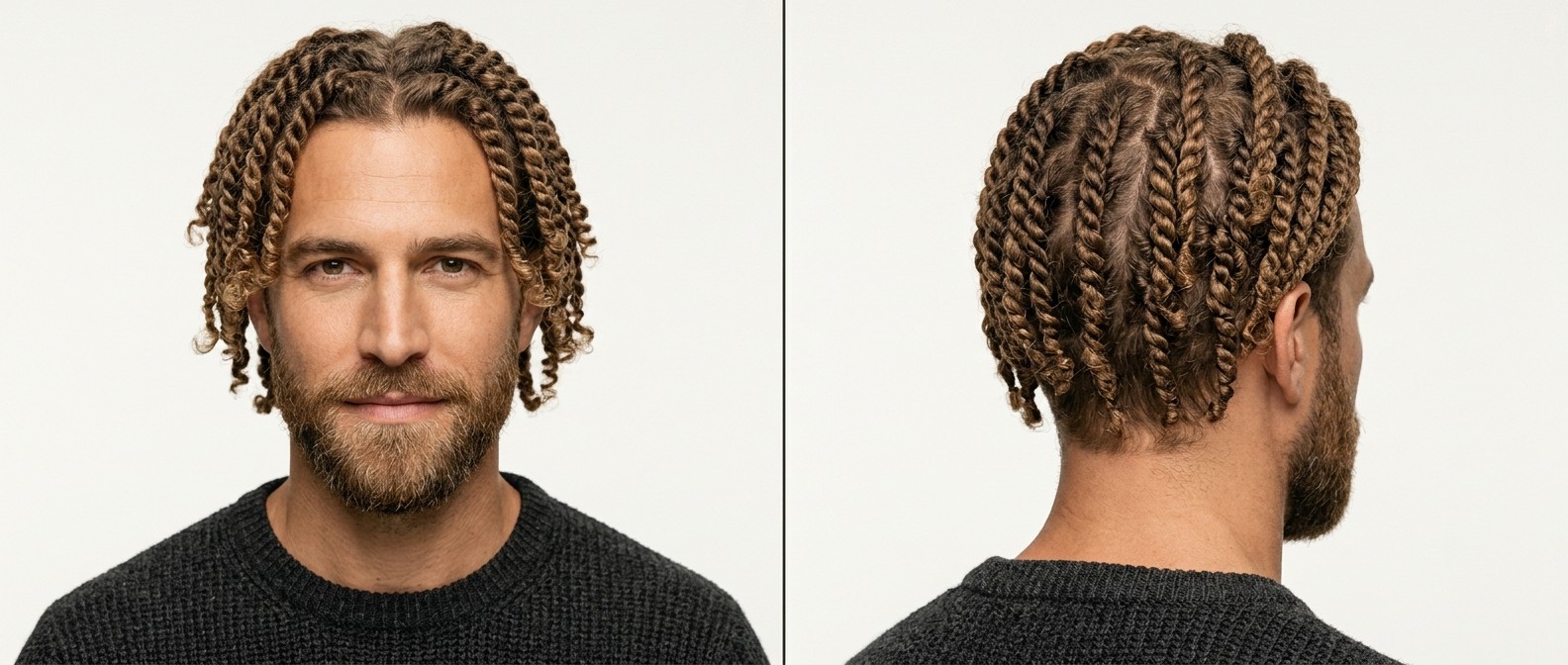
Twists
Medium Two-Strand Twists with Defined Partings and Beard

Twists
Classic Two-Strand Twists with Center Part and Tapered Nape
Twists
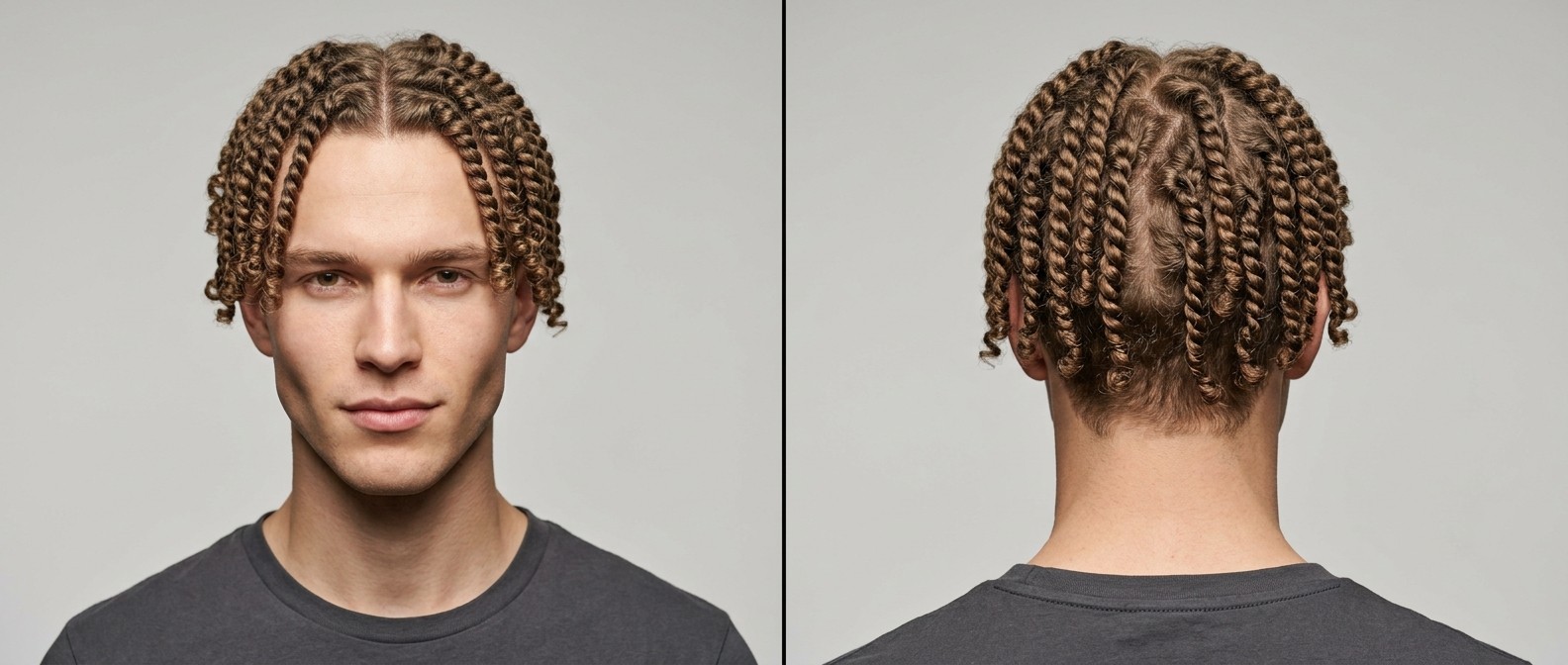
Center-Parted Two-Strand Twists for Medium Curly Hair

Twists
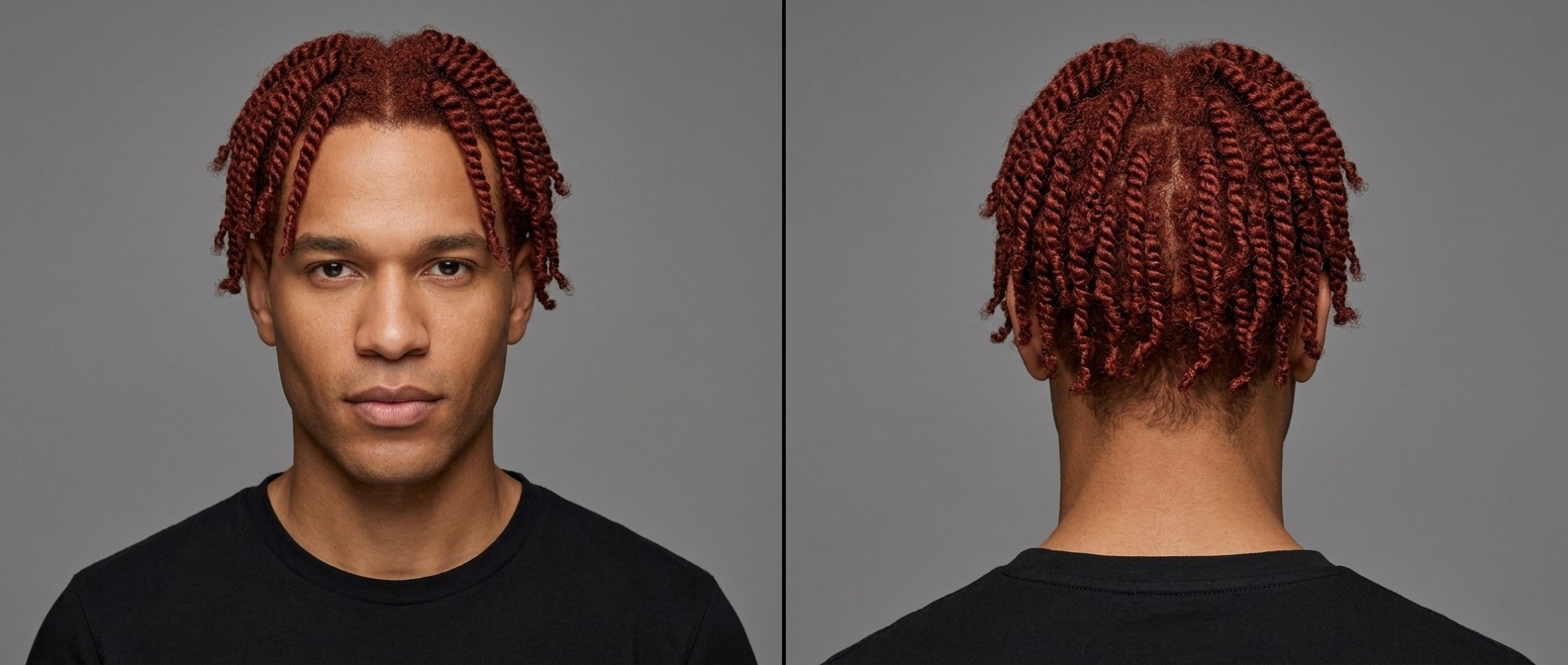
Deep Red Two-Strand Twists with Defined Middle Part
Twists
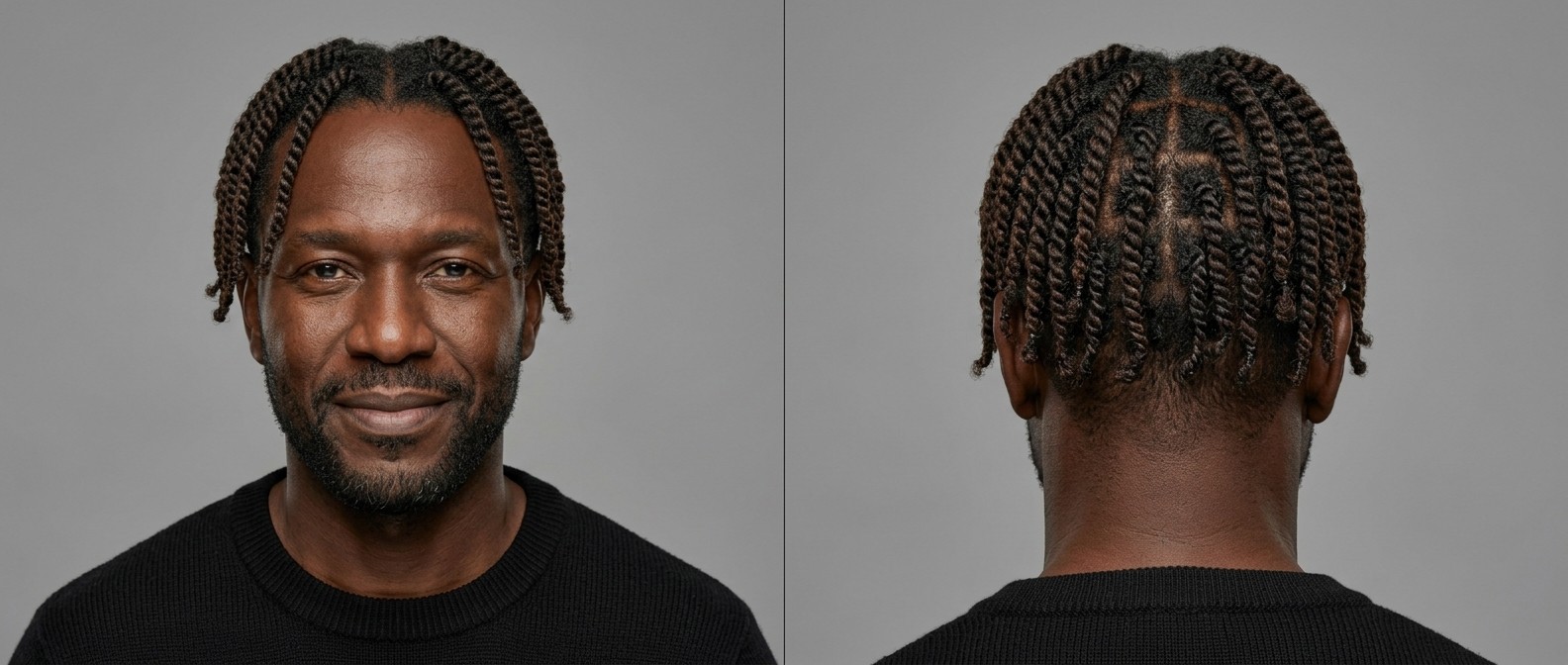
Classic Two-Strand Box Twists with Center Part for Men
Twists