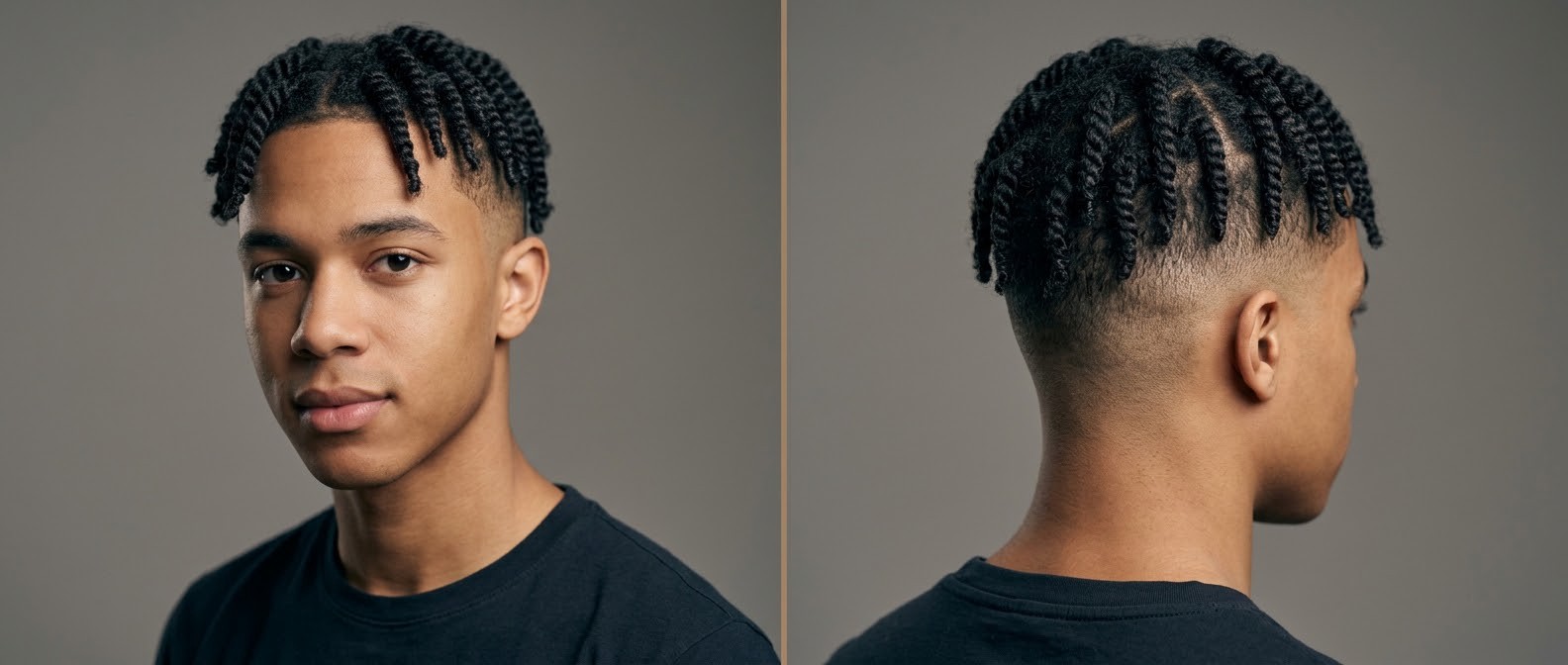
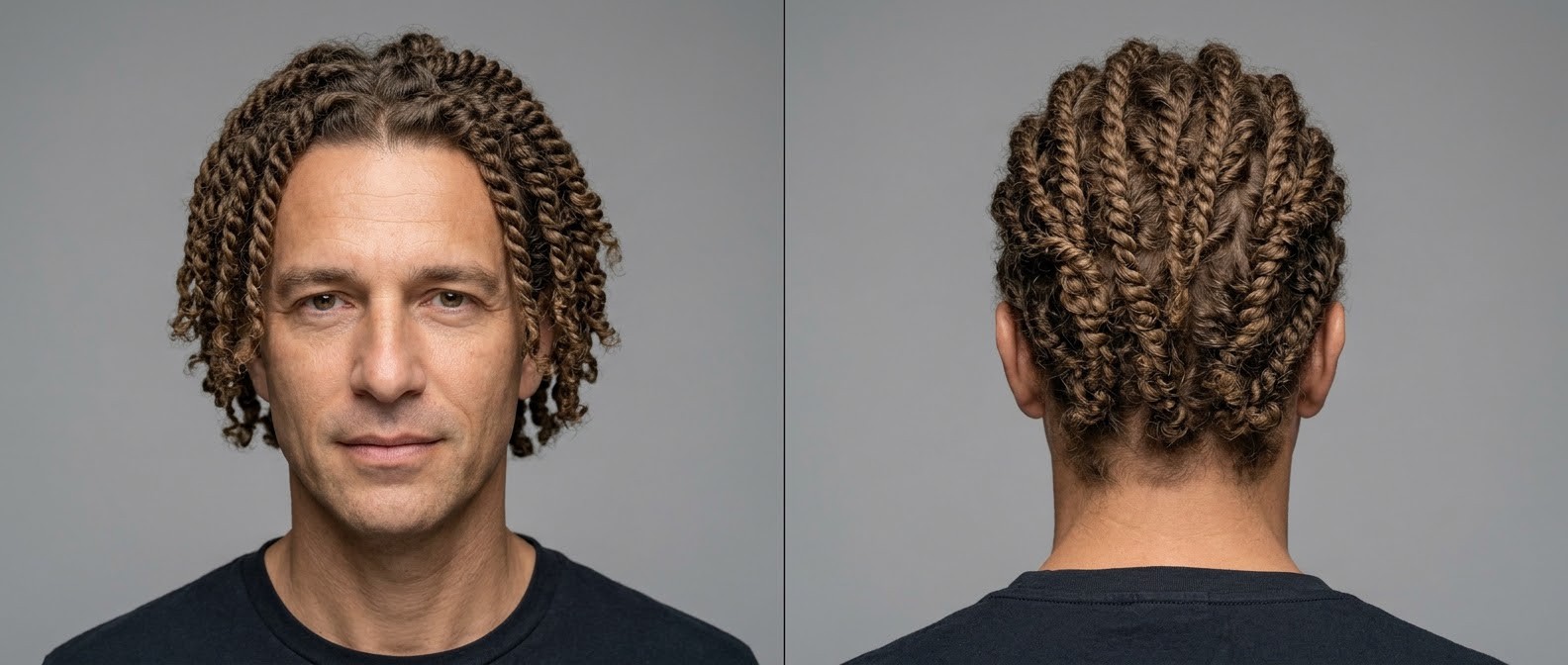
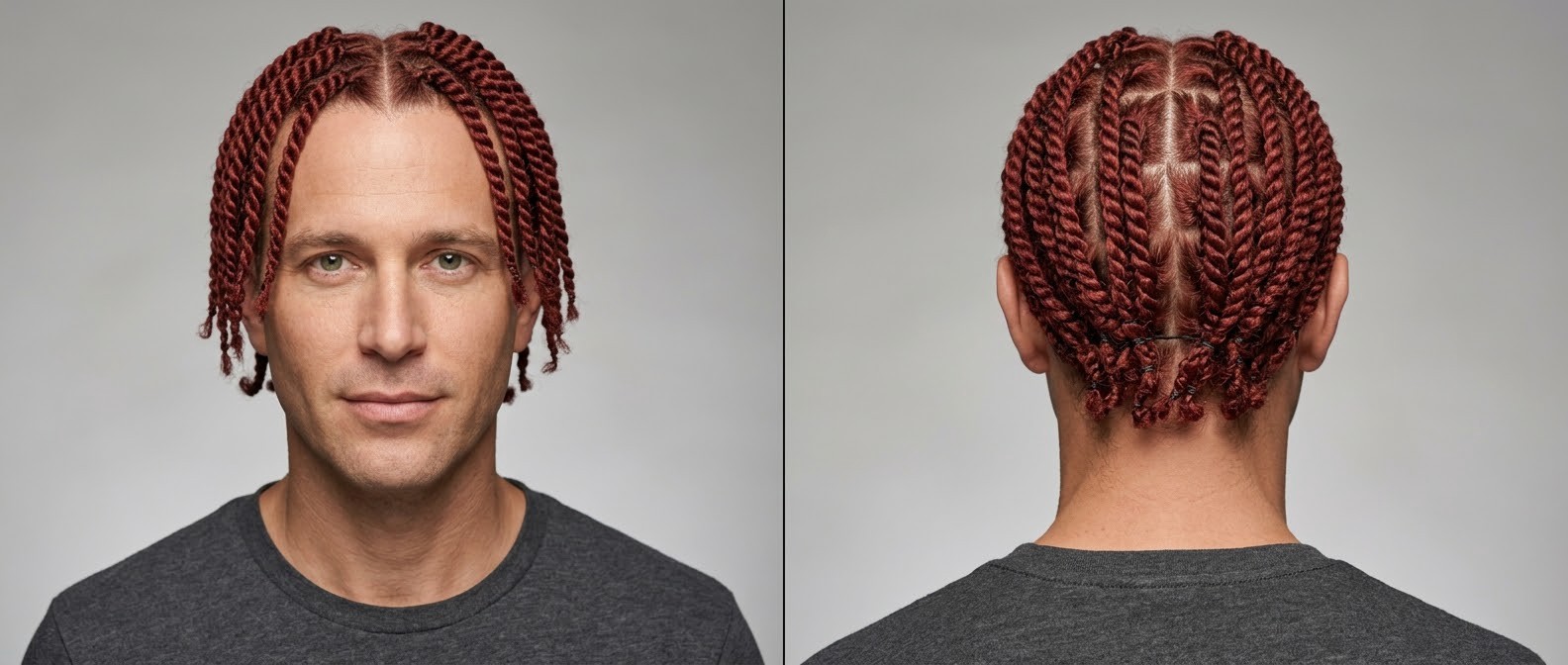
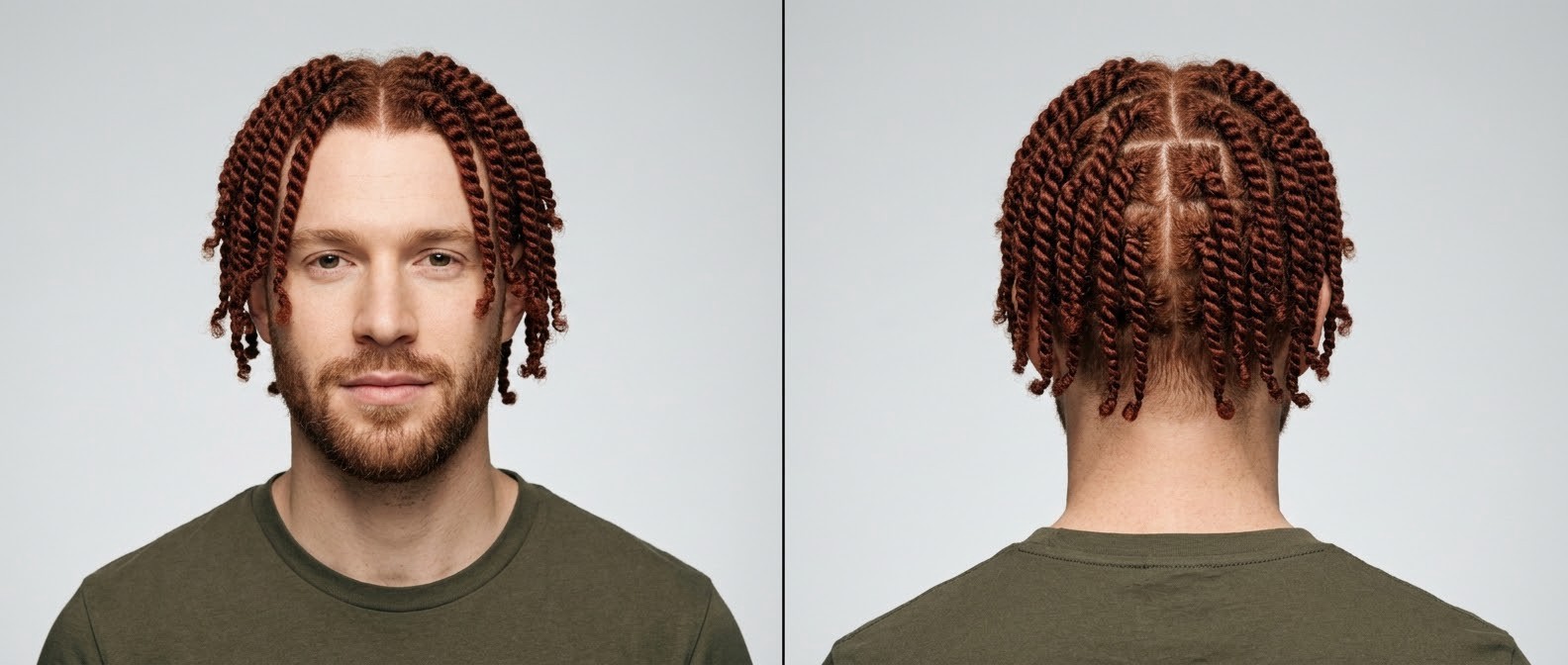


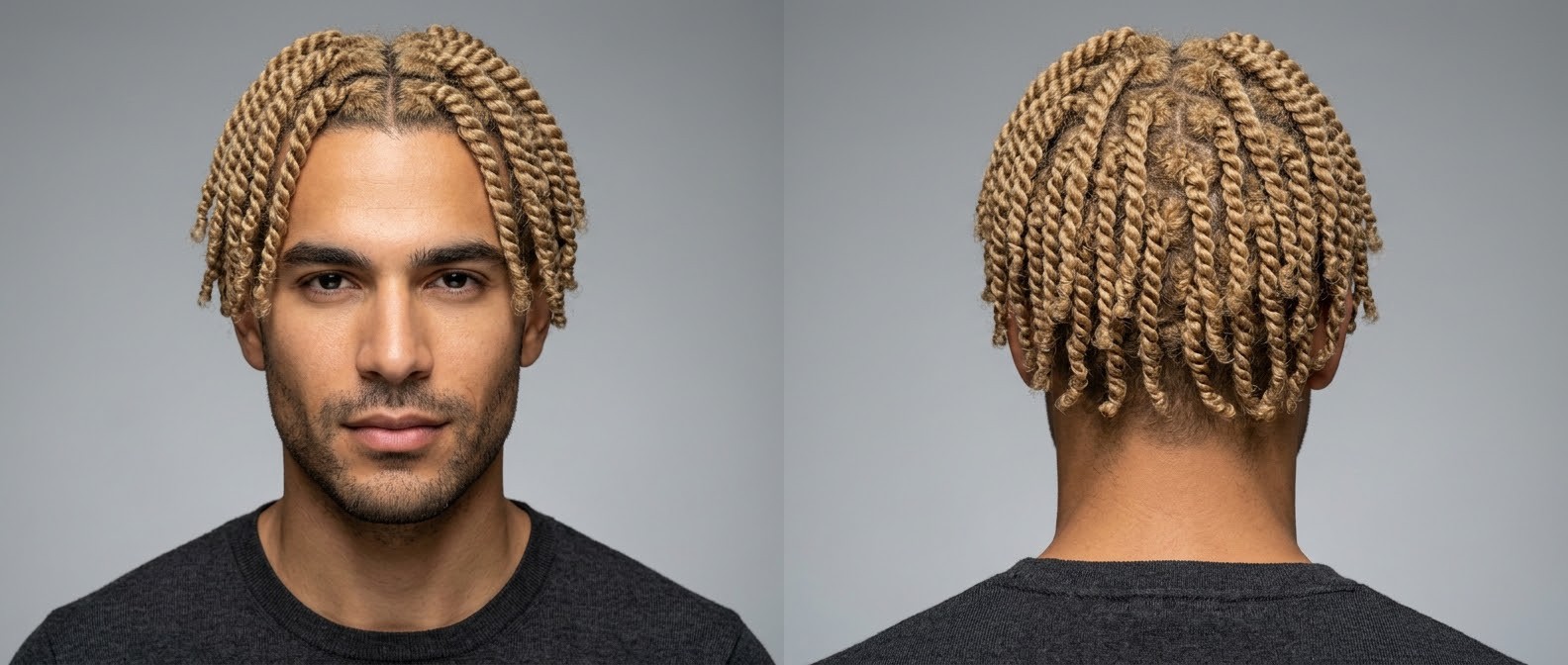
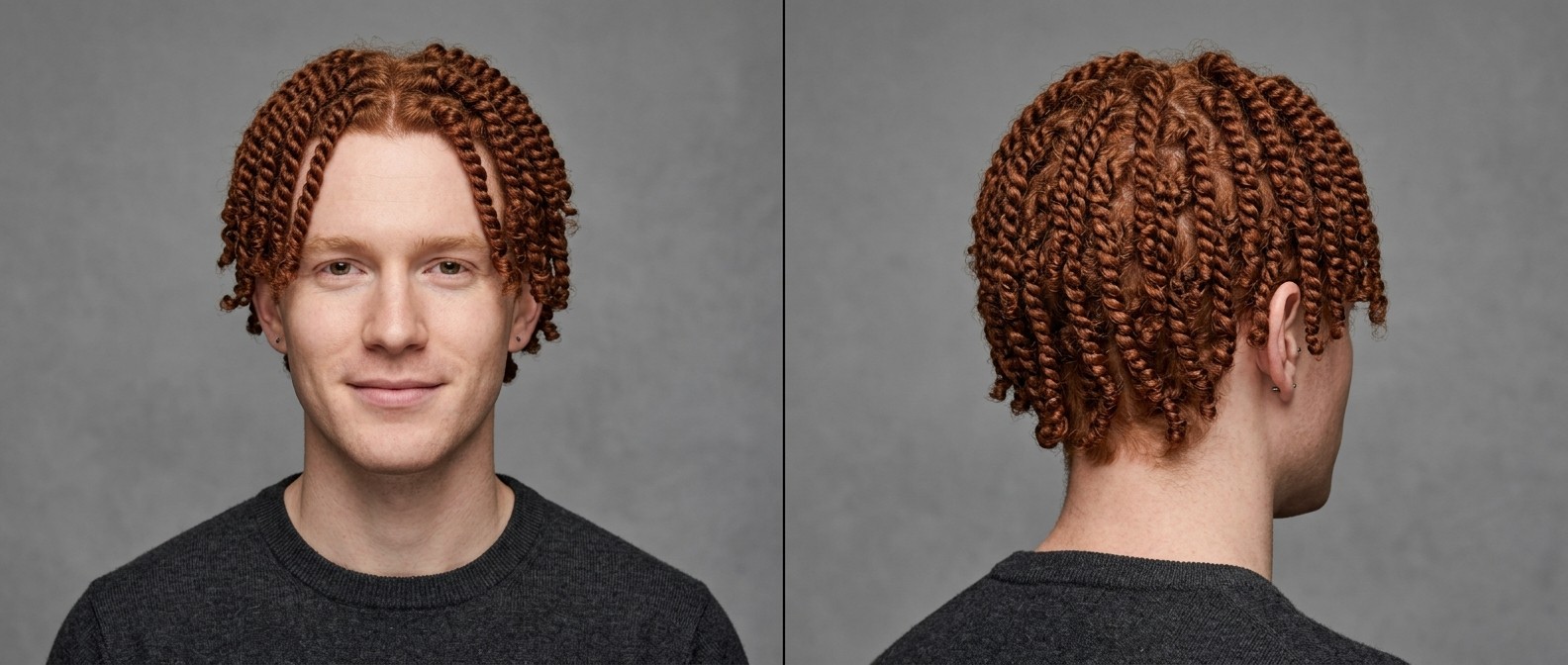
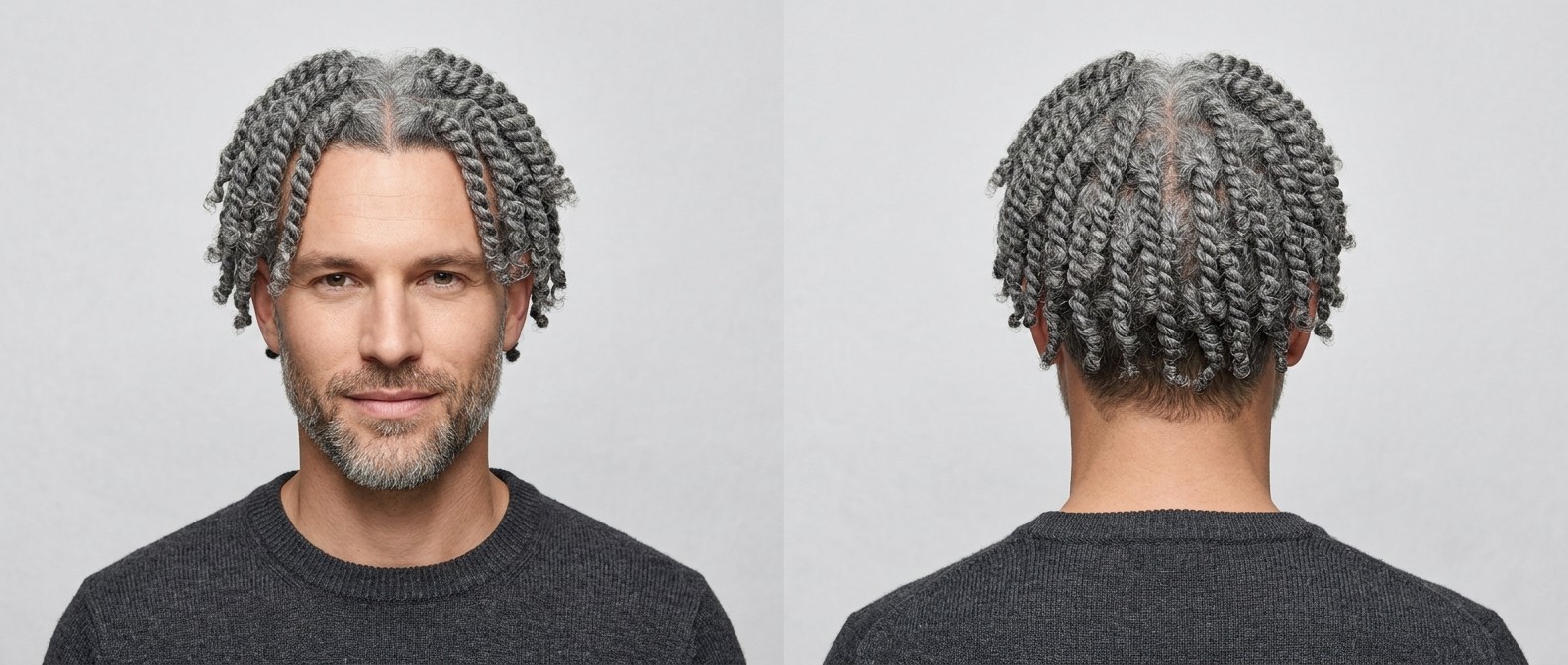
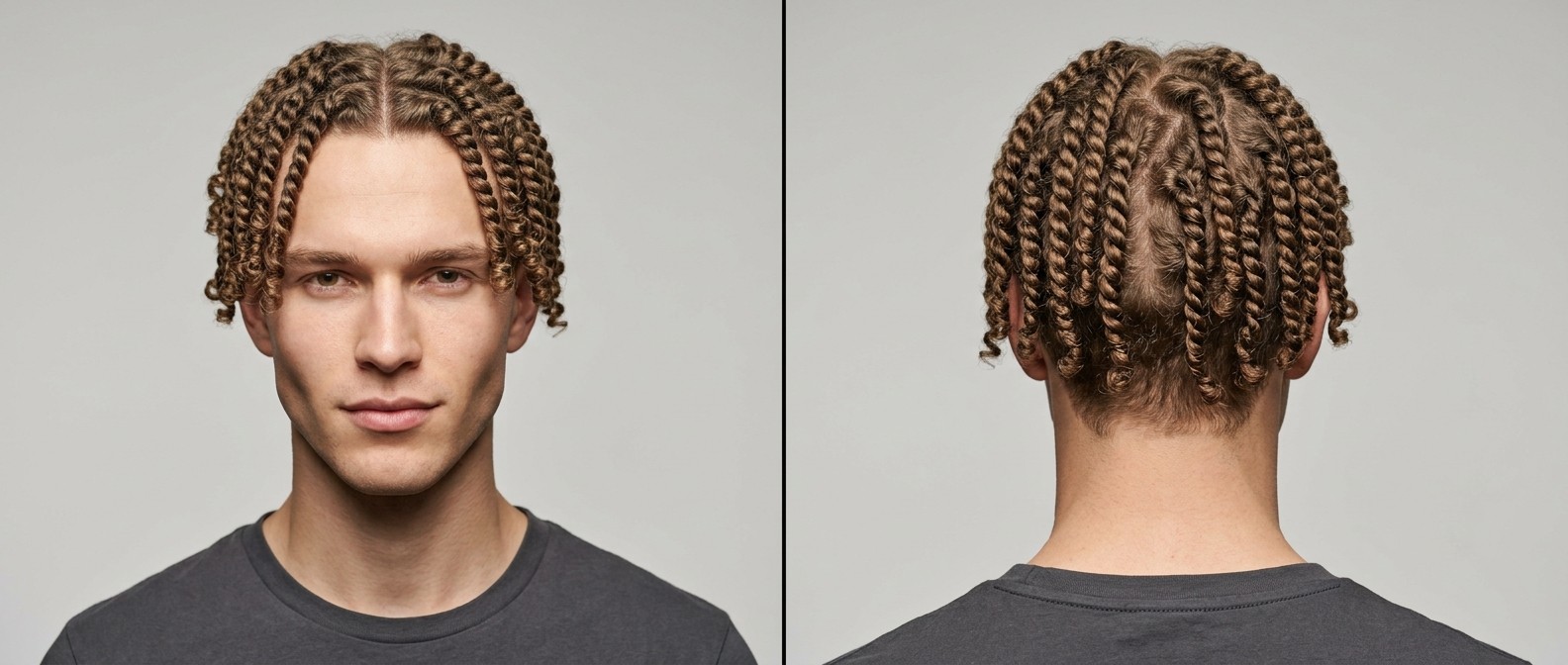
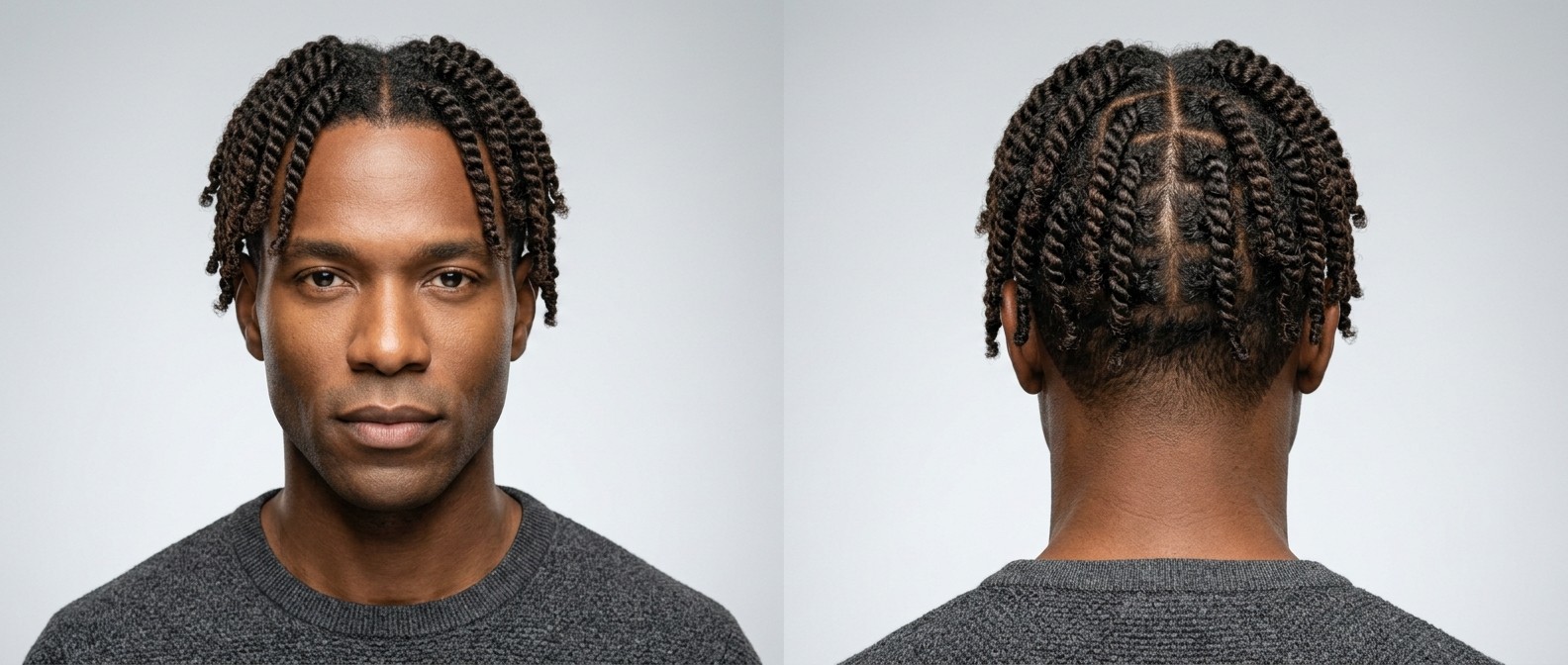
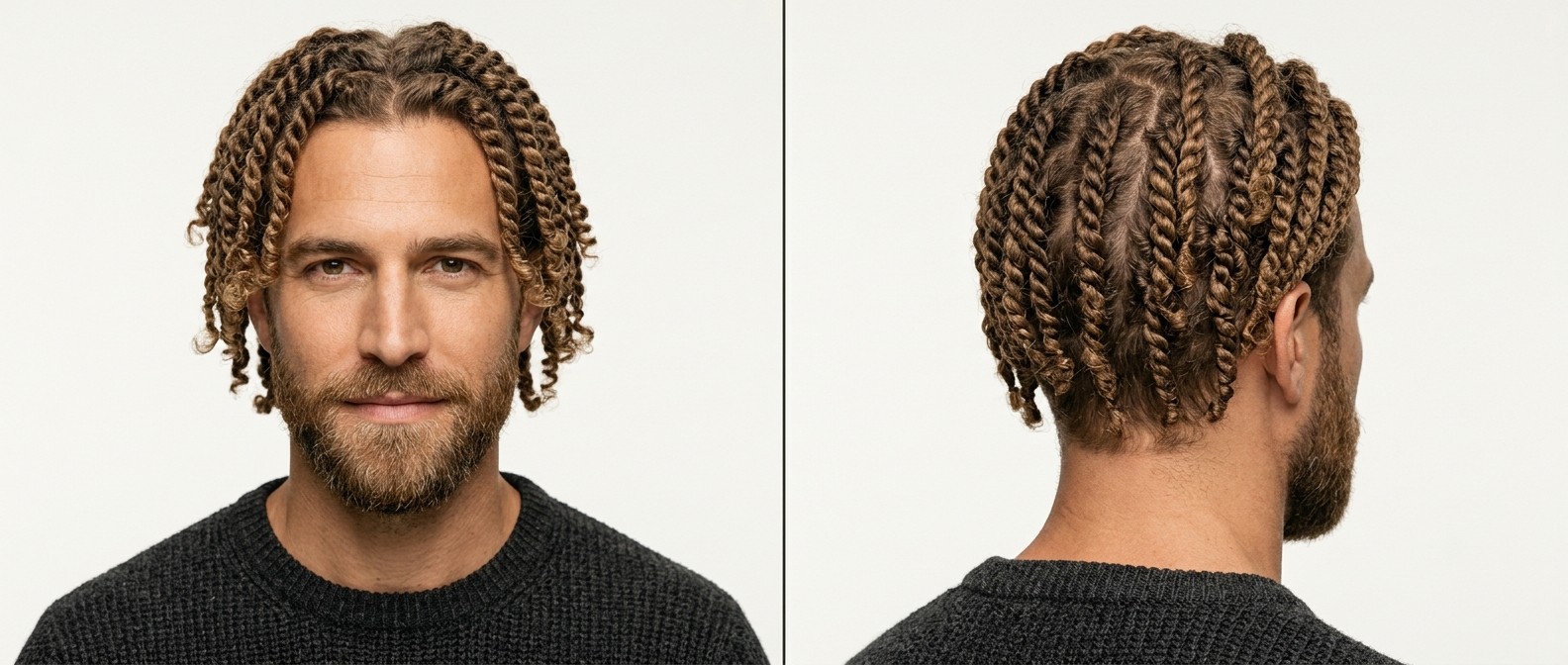
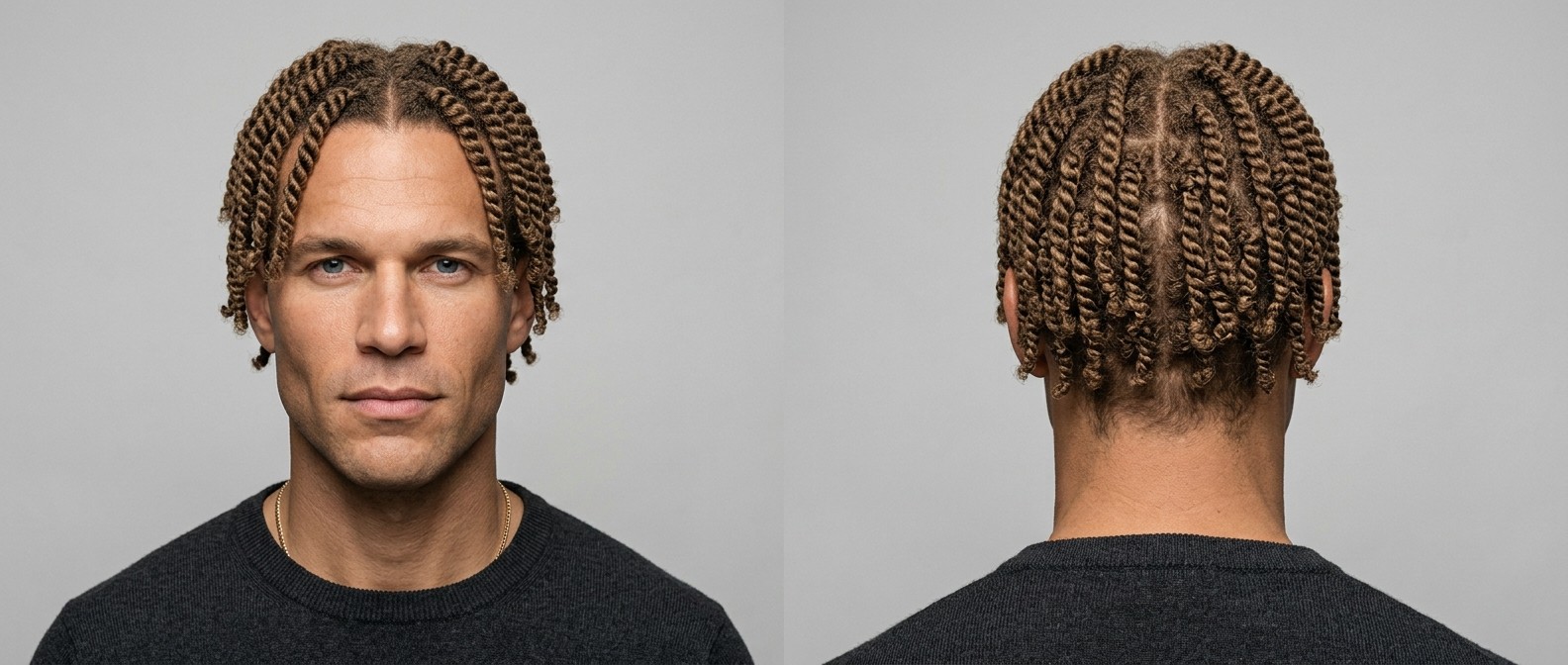
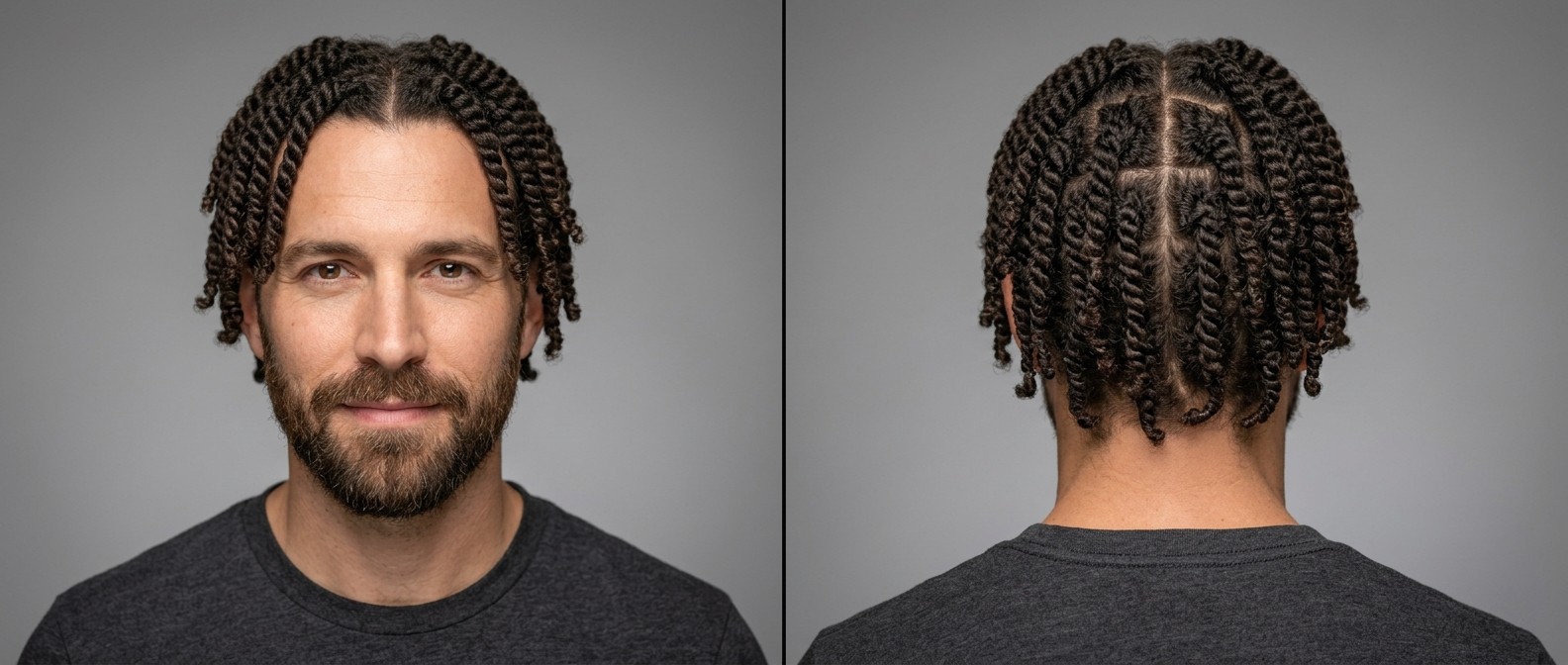
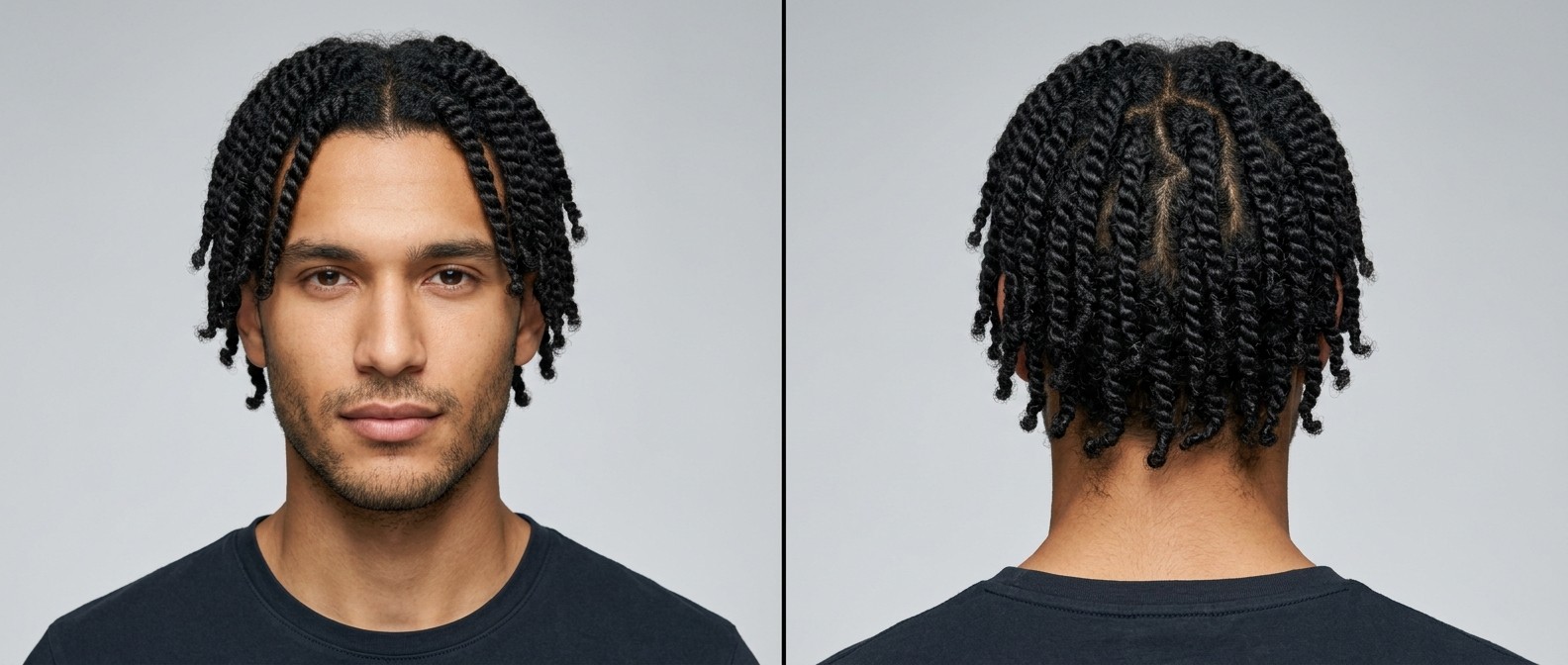
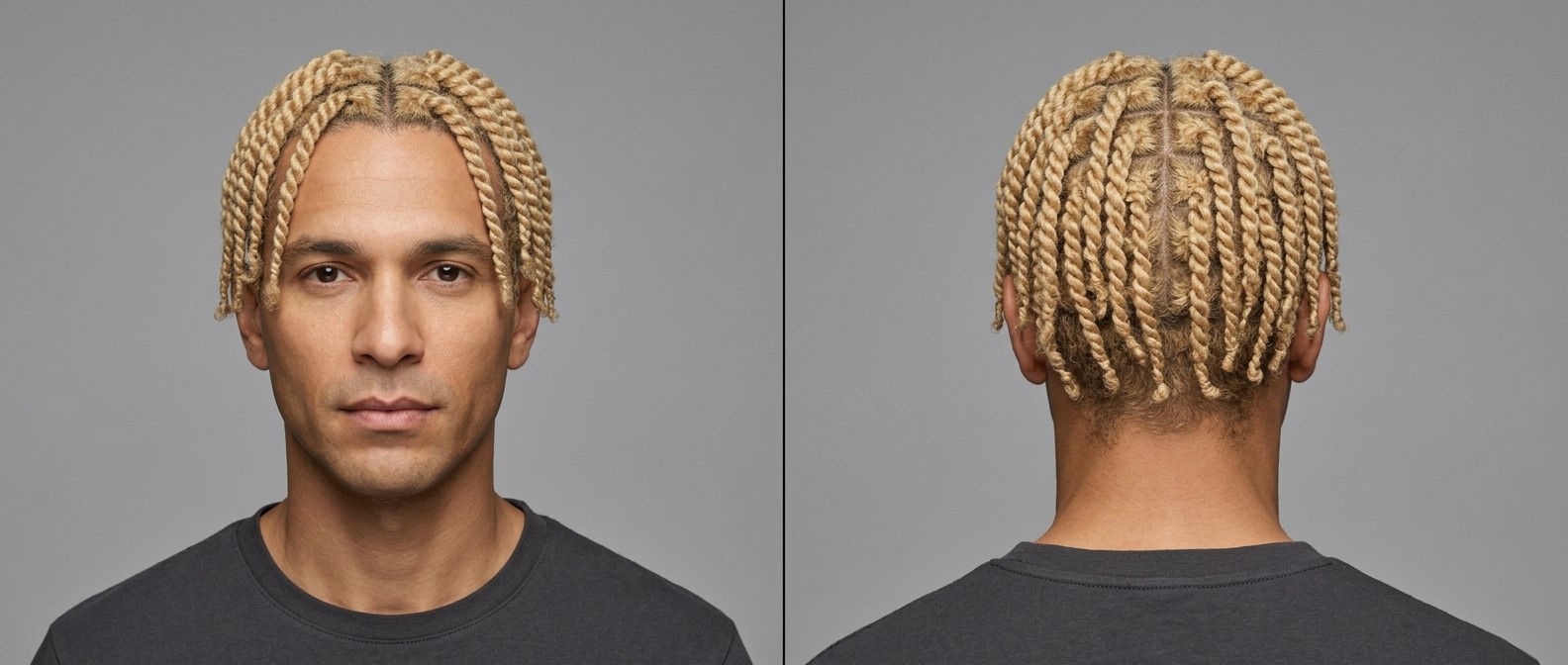
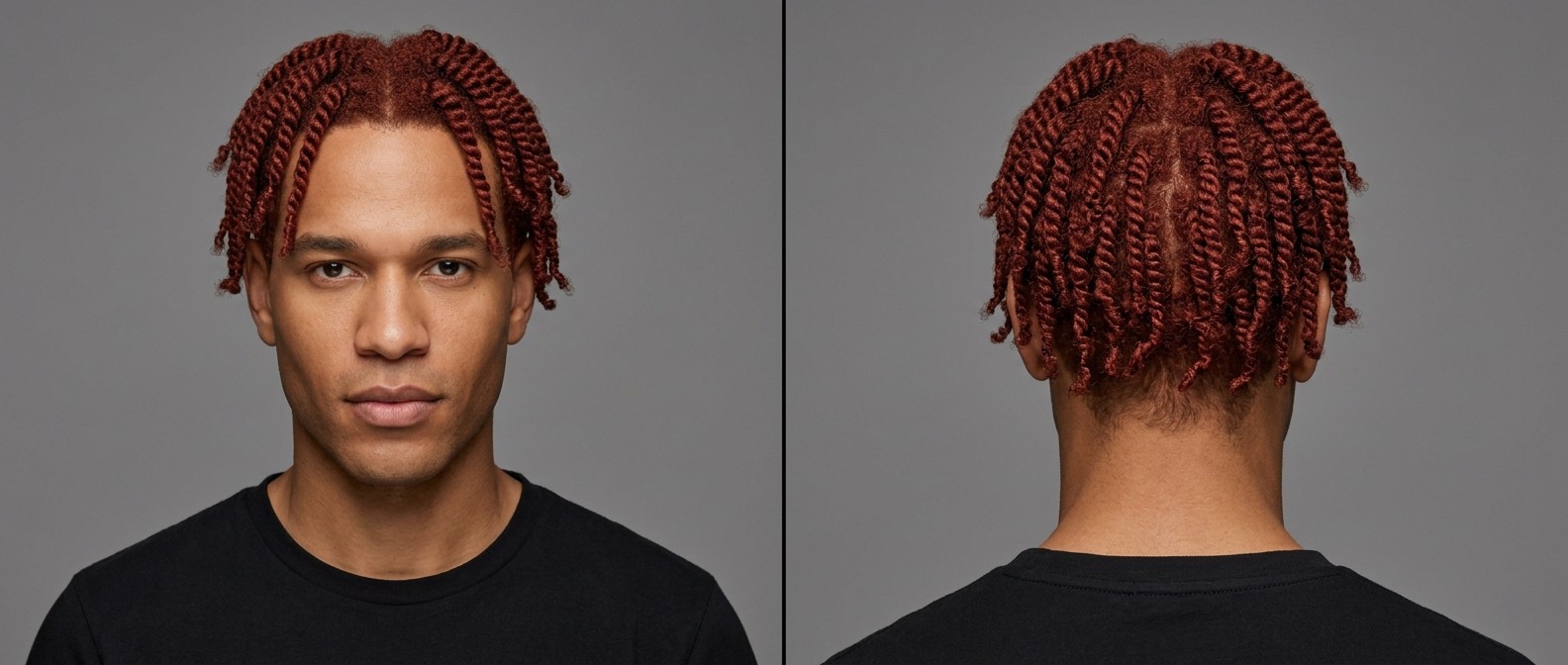
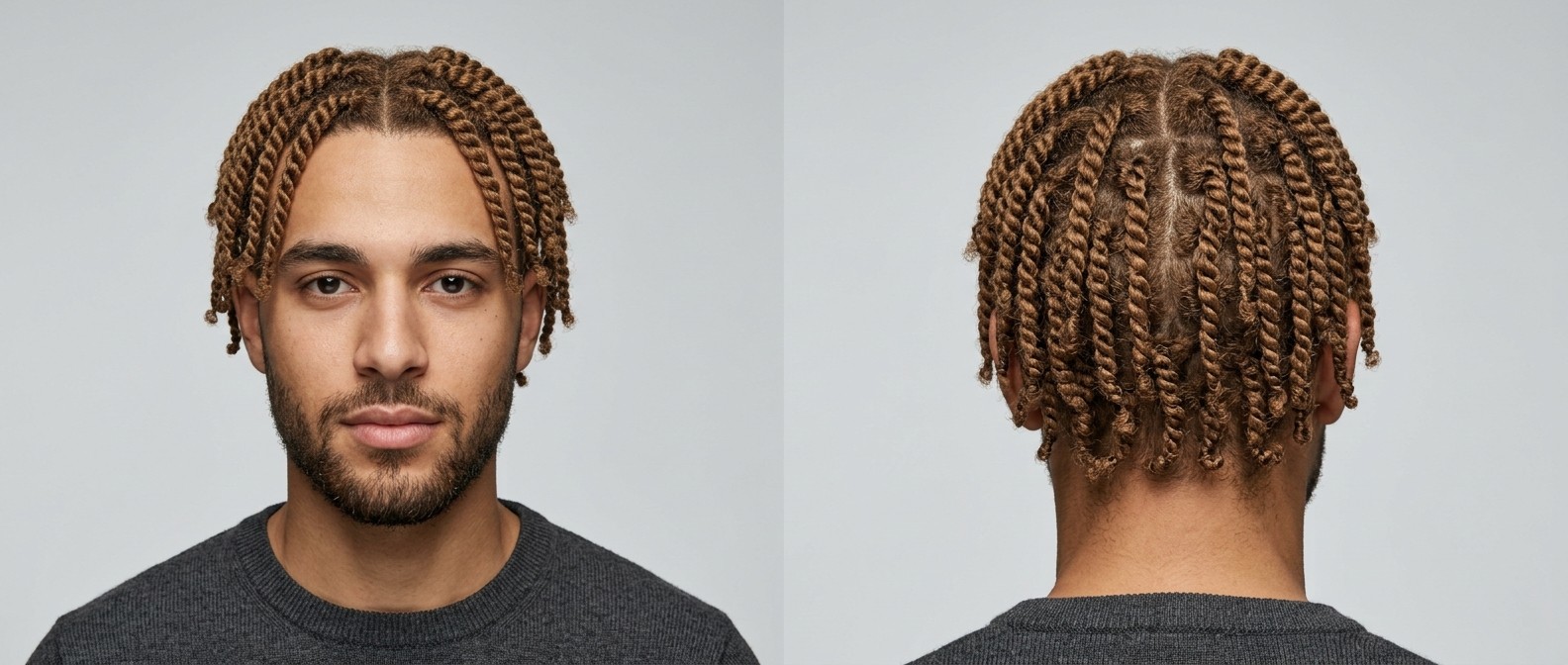
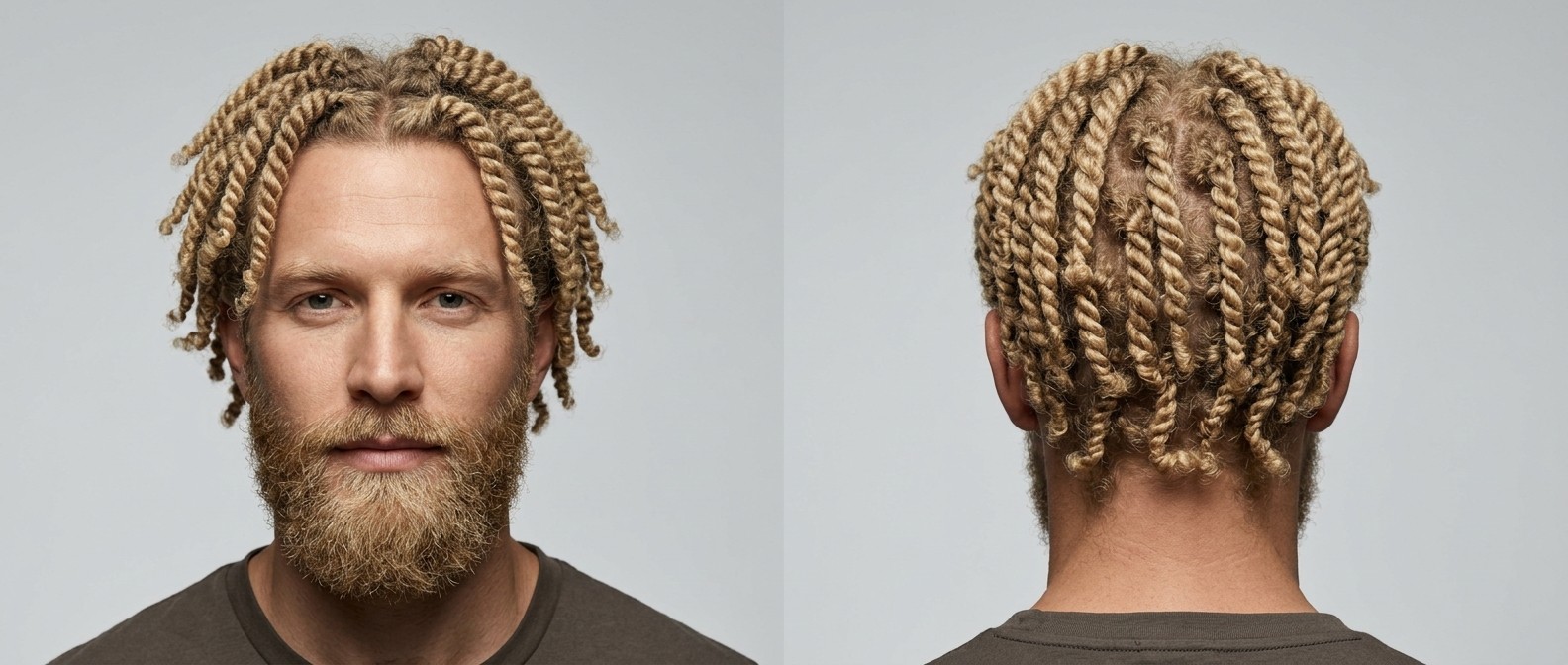
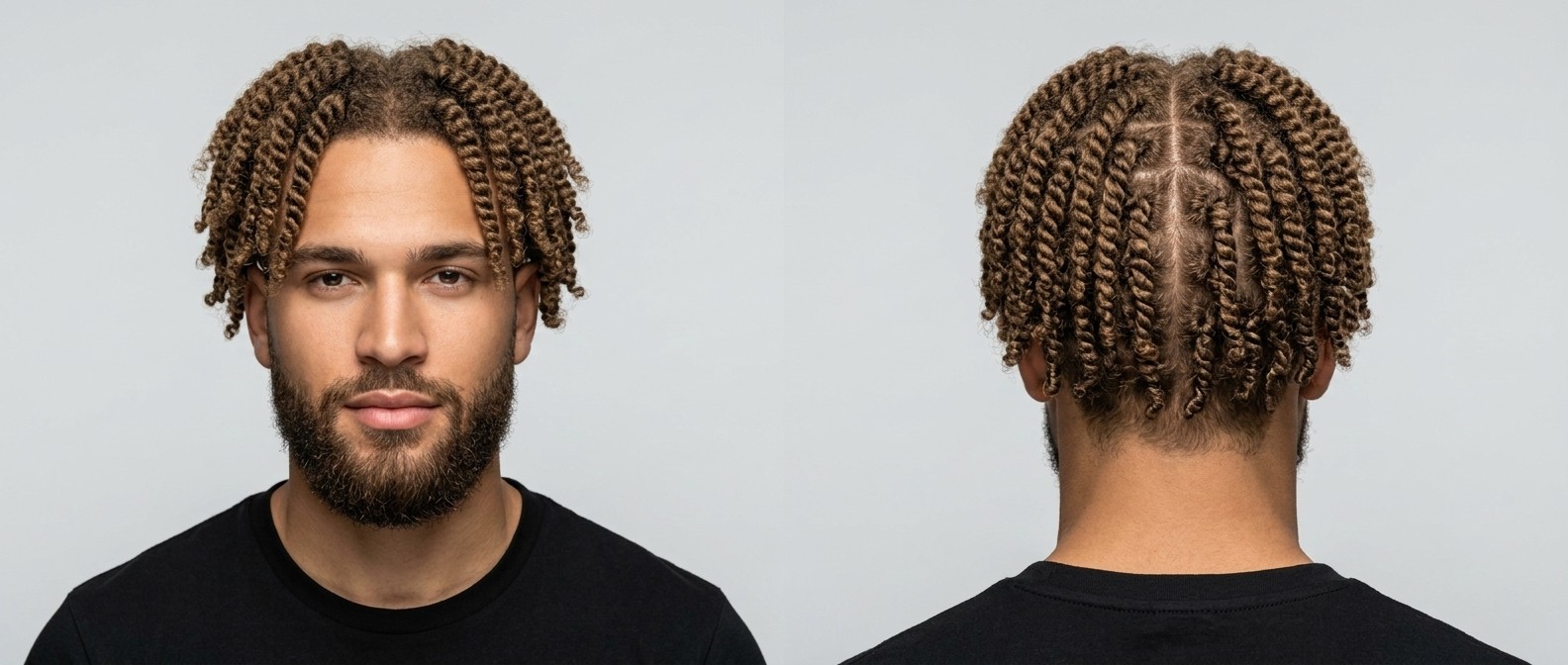
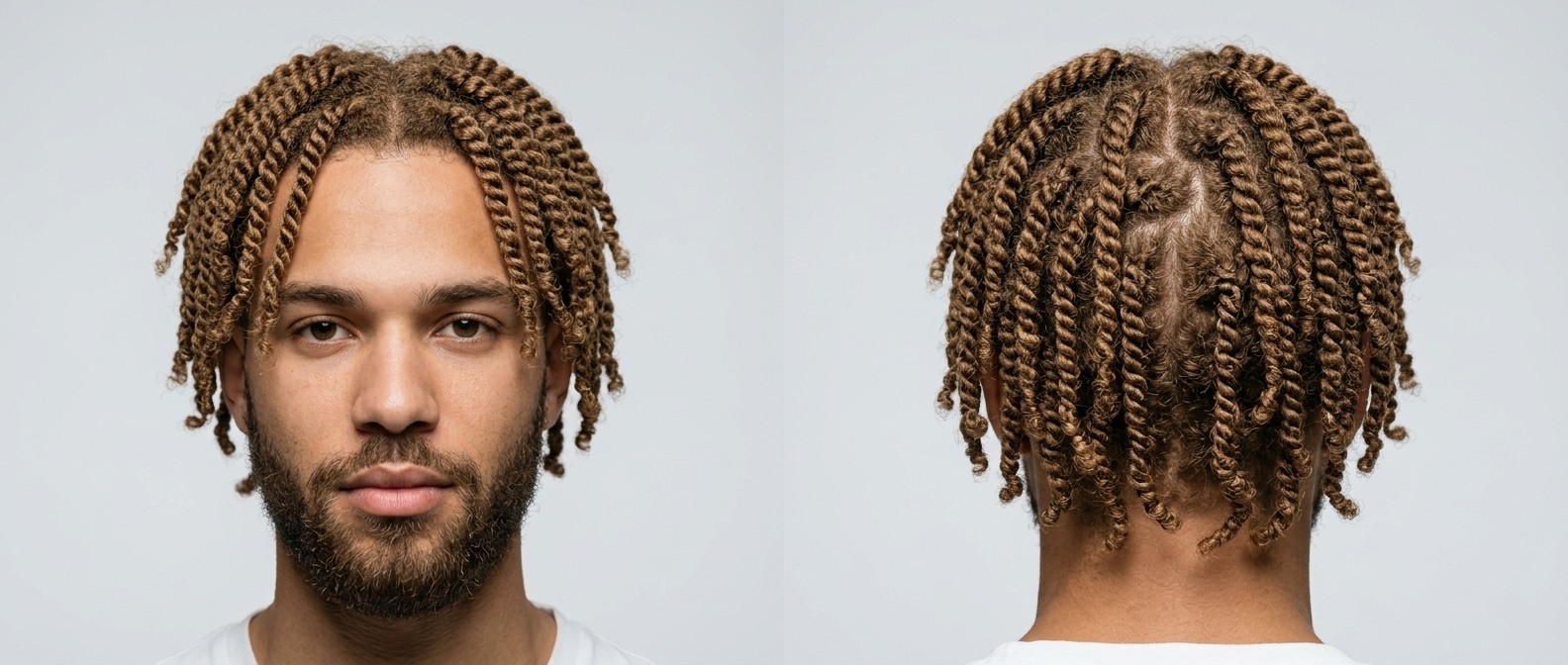
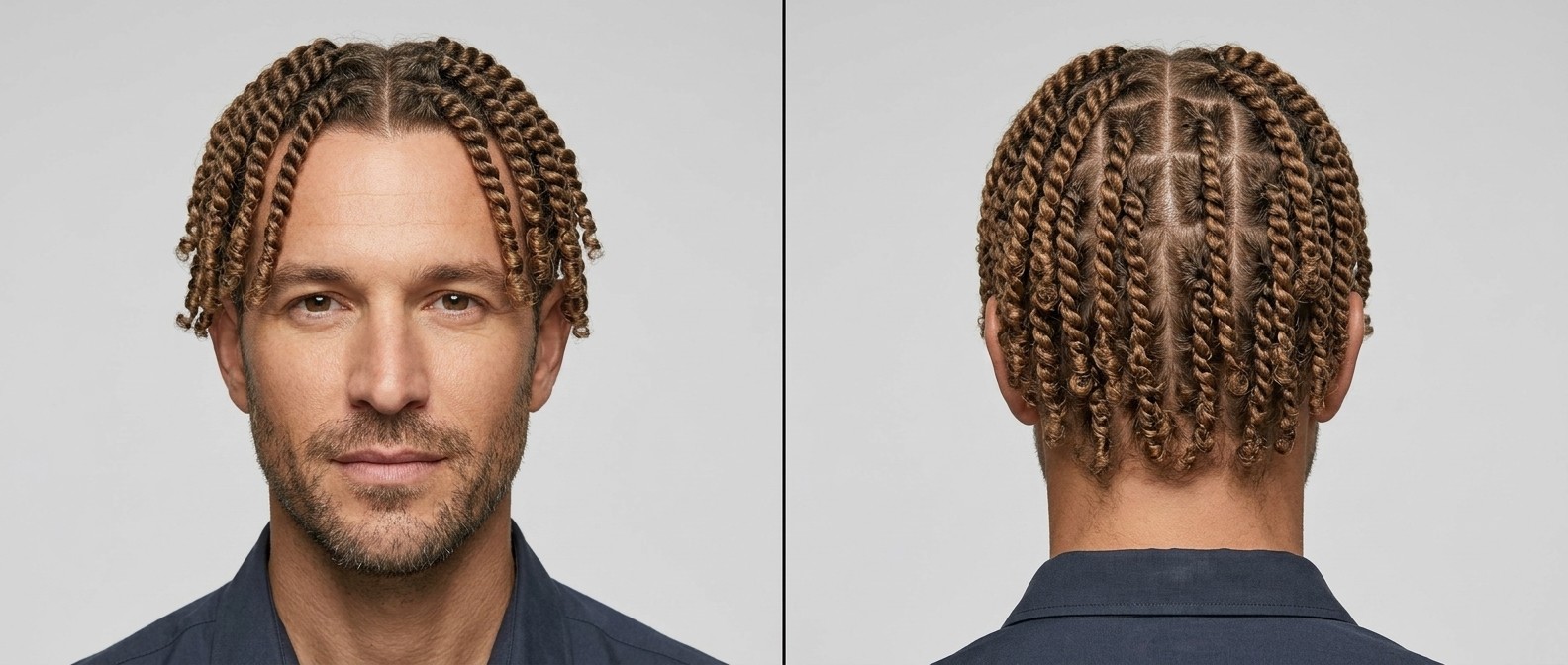
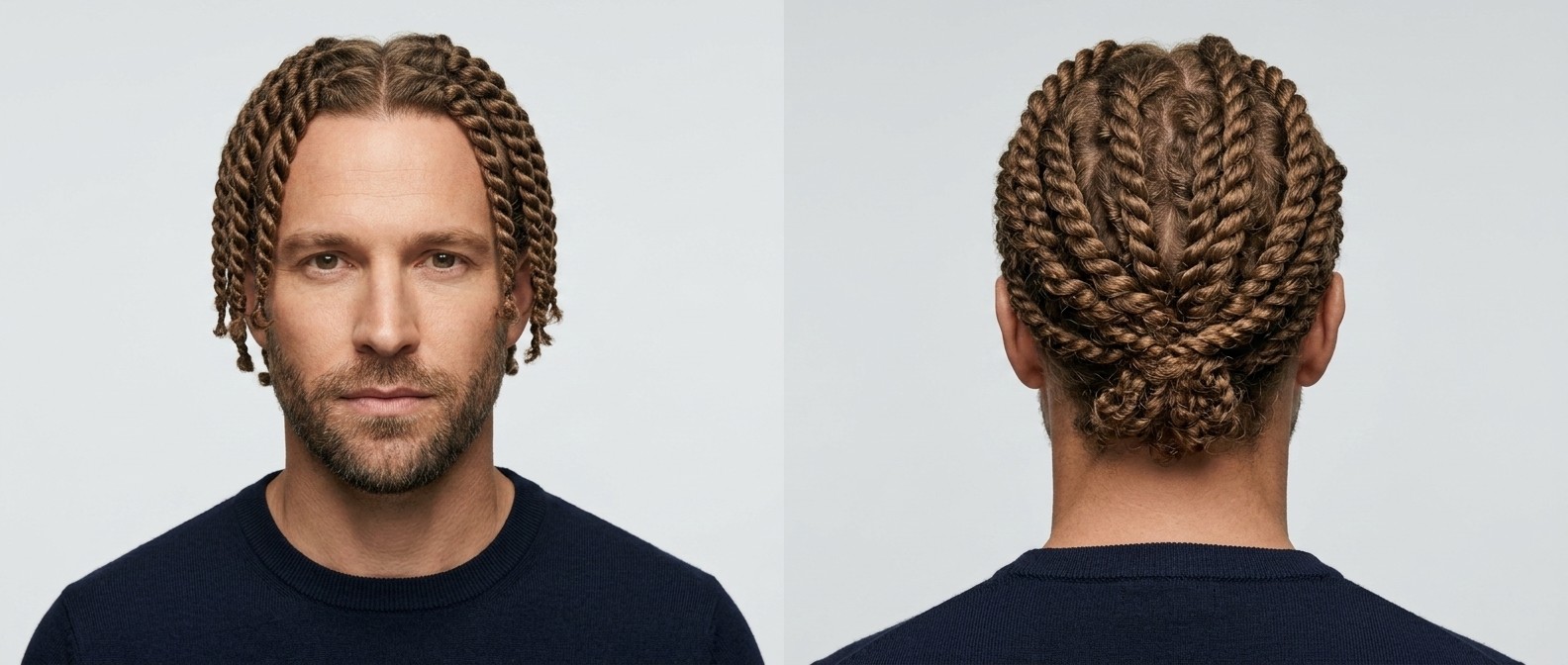
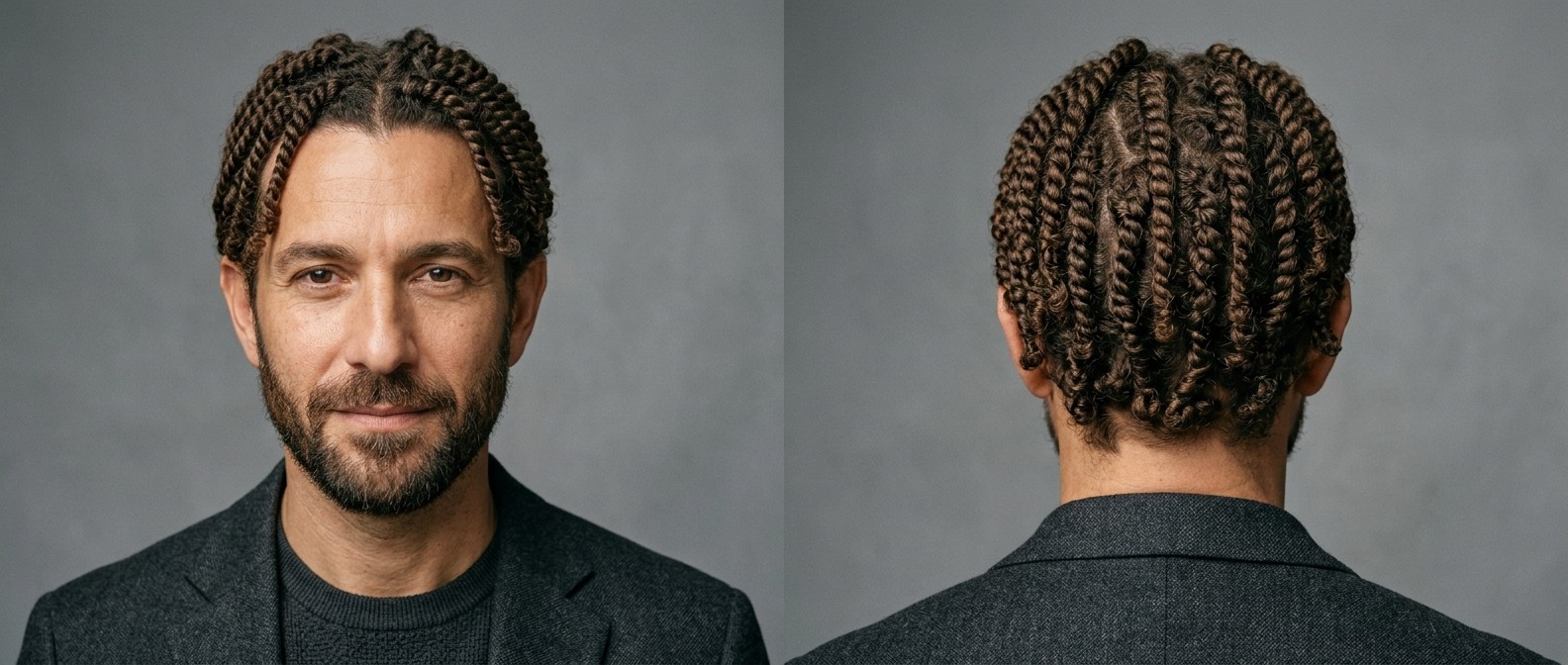
What Are Twists?
Twists — specifically two-strand twists — are created by taking a section of hair, dividing it into two equal parts, and wrapping those parts around each other in a consistent direction from root to tip. The result is a defined, spiraling strand that highlights your hair's natural texture while keeping it organized and protected. Unlike braids, which use three or more strands, twists rely on just two, making them quicker to install and gentler on the hair.
Two-strand twists sit at a unique crossroads in the natural hair world. They function as a finished style you can wear for weeks, as the foundation for a twist-out (a popular unraveled, defined curl look), or as a starter method for dreadlocks. This versatility makes them one of the most practical and popular choices for men with textured hair who want options without commitment.
The size of each twist depends on the section size — thin sections create pencil-width twists for a more refined look, while larger sections produce chunky, bold twists with a more relaxed vibe. Most men opt for medium twists that balance style with installation speed.
Who Should Get Twists?
Twists are ideal for men with type 3a to 4c hair — the natural curl and coil pattern helps the twists hold their shape and grip together. Tighter textures (4a-4c) hold twists most securely, while looser curls (3a-3b) may need a small amount of styling product for grip.
- Minimum hair length: 2 inches for short twists, 4+ inches for defined, hanging twists
- Best hair textures: 3a through 4c — curlier textures hold better
- Installation time: 1-3 hours depending on hair length and twist size
- Perfect for: men exploring natural hair, those considering locs, or anyone wanting a quick protective style
If you're considering dreadlocks but aren't ready for the full commitment, twists give you a preview of the look. You can wear them, see how you feel, and decide later whether to maintain them into starter locs or unravel them with zero permanent changes to your hair.
How to Install and Style Twists
Start with freshly washed, conditioned, and detangled hair. Section your hair into a grid pattern using a rat-tail comb — the section size determines your twist thickness. Apply a twisting cream or butter to each section for moisture, definition, and hold. Take the section, split it in two, and begin wrapping the strands around each other in a consistent direction.
Twist firmly enough to create definition but not so tightly that you feel tension on your scalp. Work your way across your entire head, twisting each section from root to end. Some men twist the ends around their finger at the bottom to create a coiled tip that stays put.
For a twist-out, install your twists on damp hair, let them dry completely (overnight is best), then gently unravel each twist. The result is a defined, stretched curl pattern with incredible volume and texture. Apply a light oil before unraveling to reduce frizz and add shine.
What to Tell Your Barber or Stylist
If you're getting twists professionally, specify the size, length, and purpose. Tell your stylist whether you want small, medium, or large twists. Mention if you're planning to wear them as-is or use them for a twist-out — the technique differs slightly. For twist-outs, the stylist may twist more tightly and use a stronger hold product.
If you want twists as starter locs, tell your stylist explicitly — they'll use a different sectioning pattern and may apply a locking gel instead of regular twisting cream. Ask about combining twists with other elements: "Can you add a fade on the sides?" or "I want twists on top with a taper" are common and effective requests. Bring photos for reference, as twist sizes and patterns vary dramatically.
Twist Maintenance and Care
Twists typically last 2-4 weeks before they need to be redone, though this varies with hair type and activity level. Tighter textures hold longer, while looser curls may need retwisting sooner. Active men who sweat heavily may need to refresh every 1-2 weeks.
- Sleep in a satin durag or bonnet every night — this is non-negotiable for maintaining twist definition
- Moisturize daily with a water-based spray and seal with a lightweight oil
- Avoid touching and fidgeting with your twists — handling causes frizz and unraveling
- To wash, use a diluted shampoo and gently squeeze through twists without rubbing
- Retwist any loose sections promptly rather than redoing the entire head
Twist Variations and Advanced Styles
Flat twists are twisted flat against the scalp like cornrows, creating a sleek, close-to-the-head pattern. They're great for men who want a protective style with a lower profile. Twists with a fade combine twisted hair on top with clean faded sides — a hugely popular modern combination that looks sharp and professional.
Marley twists incorporate textured synthetic hair for added length and fullness, creating a bigger, bolder look. Spring twists use pre-curled synthetic hair that bounces and moves naturally. For a unique texture, try three-strand twists (also called rope twists) — they're tighter and last longer than standard two-strand twists, with a slightly different visual texture that stands out from the crowd.