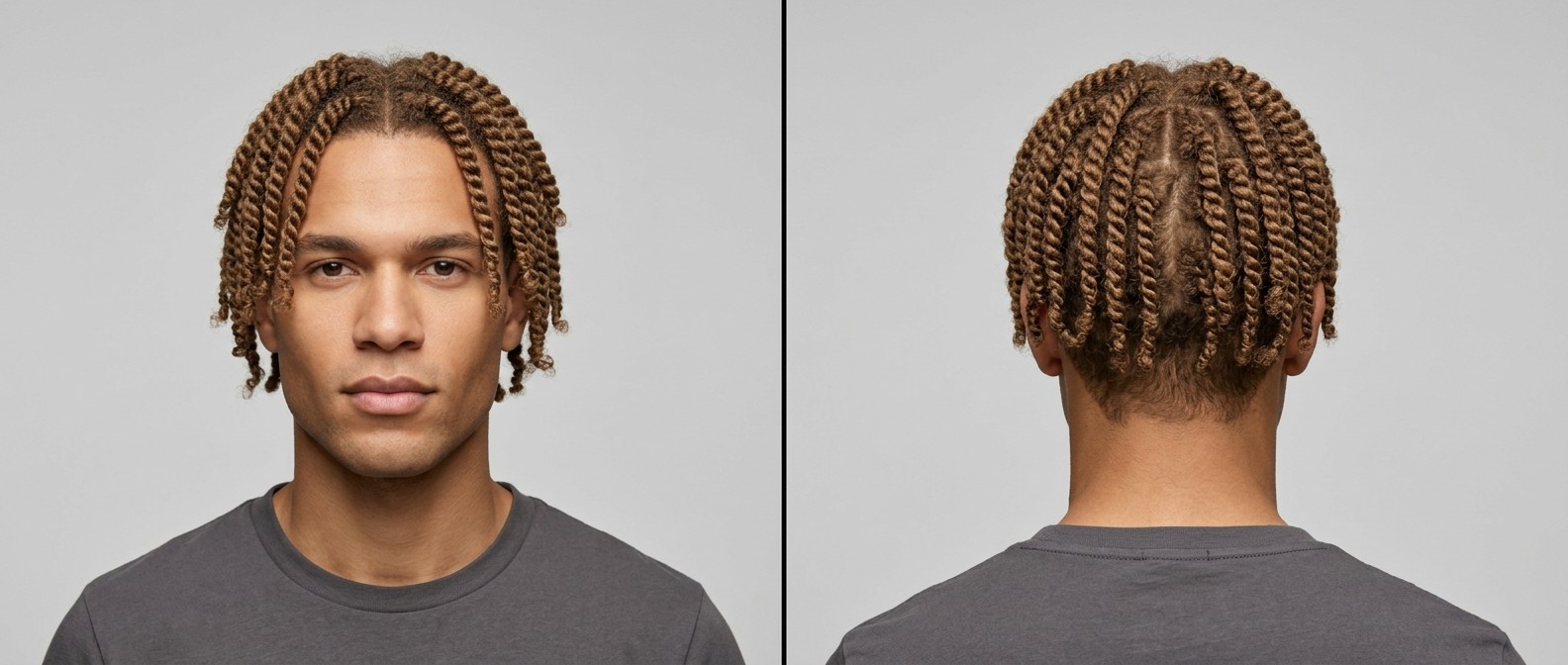
Add one front-facing photo. We send it to the AI together with this exact cut — and you get a photorealistic preview of yourself wearing it.
1
Your photo
Front view · neutral face · even light
2
This haircut
Already included
Front and back reference — taken from this page
3
Your preview
Your result appears here
![]()
![]()
Generated for you, not published anywhere
How do you rate this tool?
- Reading your photo
- Matching the cut
- Rendering your preview
How to take a photo that works
Do
- Face the camera straight on
- Even daylight, no harsh shadow
- Head and shoulders in frame
- Hair fully visible, nothing covering it
Avoid
- Hats, caps, hoods, sunglasses
- Steep angles or a tilted head
- Group photos or heavy filters
- Backlight that darkens the face
Caramel Two-Strand Twists with Clean Middle Part and Tapered Nape
 Top
Medium (5-10 cm)
Top
Medium (5-10 cm)
 Sides
Short (6-20 mm)
Sides
Short (6-20 mm)
 Hair Type
Very Curly / Afro (Type 4)
Hair Type
Very Curly / Afro (Type 4)
 Face Shape
Square
Face Shape
Square
 Maintenance
Medium
Maintenance
Medium
 Thickness
Medium / Normal
Thickness
Medium / Normal
About This Style
This striking variation of two-strand twists showcases a perfectly executed middle part that allows the medium-length textured hair to cascade naturally, framing the face with exceptional symmetry. The light brown, caramel-toned hair beautifully highlights the intricate, rope-like structure of each individual twist, bringing immense depth, shadow, and visual interest to the overall silhouette. A subtle, neatly trimmed taper at the nape keeps the perimeter clean and modern while allowing the hanging twists to take center stage.
This protective style is an outstanding choice for men with Type 4 very curly or afro-textured hair who are seeking a perfect balance between a laid-back aesthetic and a meticulously groomed appearance. It exceptionally complements a square face shape, as the vertical drop of the twists softens strong jawlines while simultaneously elongating the facial profile for a balanced look.
Whether you are navigating a creative professional environment, hitting the gym, or enjoying a casual weekend outing, this highly versatile look transitions effortlessly. It requires minimal daily manipulation once installed, making it highly practical for busy, active lifestyles while consistently projecting an aura of effortless, refined confidence.
This protective style is an outstanding choice for men with Type 4 very curly or afro-textured hair who are seeking a perfect balance between a laid-back aesthetic and a meticulously groomed appearance. It exceptionally complements a square face shape, as the vertical drop of the twists softens strong jawlines while simultaneously elongating the facial profile for a balanced look.
Whether you are navigating a creative professional environment, hitting the gym, or enjoying a casual weekend outing, this highly versatile look transitions effortlessly. It requires minimal daily manipulation once installed, making it highly practical for busy, active lifestyles while consistently projecting an aura of effortless, refined confidence.
Key Features
- Distinctive two-strand twist technique creating uniform, rope-like cylindrical textures throughout the entire head, maximizing natural volume.
- Prominent, clean middle parting that dictates an even, symmetrical flow of hair down both sides of the face, enhancing structural balance.
- Medium-length twists (ranging from 5-10 cm) that fall naturally to the cheekbones and jawline, creating a squared, framing silhouette.
- Subtle undercut or taper at the very nape and sideburns (kept short at 6-20 mm) to maintain a crisp, clean perimeter underneath the hanging twists.
- Light brown and caramel hair color that naturally enhances the visual contrast, highlighting the intricate twisting pattern and shadowing.
- Uniform sectioning base grids visible at the scalp, demonstrating precise parting and meticulous barbering techniques.
Getting the Cut
- Request a thorough wash, deep conditioning treatment, and detangling session to properly prepare the Type 4 hair for sectioning and twisting.
- Ask the stylist to create a precise, straight middle part starting from the front hairline and extending smoothly down to the upper crown area.
- Instruct the barber to section the hair into uniform, medium-sized square bases (approximately 1 inch by 1 inch) evenly across the entire scalp.
- Specify the classic two-strand twist method, ensuring consistent, firm tension from the root to the ends so the twists hang cleanly without unraveling.
- Ask for a subtle, natural edge-up around the front hairline using trimmers, keeping the line crisp without pushing it back into the twist bases.
- Request a low taper fade at the nape of the neck (using a #1 or #2 guard, 3-6mm) to keep the neckline perfectly clean and manageable under the twists.
- Have the very ends of the twists delicately snipped with shears if there are any straggly or uneven tips, ensuring a uniform baseline length all around.
Daily Routine
- Begin your morning routine by gently removing your silk or satin durag or sleep bonnet, which is absolutely essential for protecting the twists from overnight frizz.
- Lightly mist the twists with a continuous fine-mist spray bottle filled with a mixture of distilled water and a few drops of liquid leave-in conditioner to rehydrate the hair.
- Warm a dime-sized amount of lightweight hair oil (such as premium argan, jojoba, or sweet almond oil) between your palms to seal in the moisture and add a healthy, natural sheen.
- Gently scrunch and pat the oil into the twists from the mid-shaft down to the ends, deliberately avoiding the scalp to prevent unwanted product buildup and clogged pores.
- Use your fingers to gently separate any individual twists that may have clumped together during sleep, restoring the natural middle part and symmetrical downward flow.
- Apply a tiny amount of edge control gel to your fingertips and lightly smooth down the front hairline and sideburns for a crisp, polished, and professional finish.
- Allow the hair to air dry completely naturally; strictly avoid using a blow dryer as the heat and forceful airflow can introduce frizz and unravel the delicate twist structure.
Products & Tools
- Lightweight liquid leave-in conditioner spray to maintain daily hydration and softness without weighing down the twists or causing buildup.
- Natural sealing oil (such as jojoba, sweet almond, or argan oil) for medium shine, moisture retention, and preventing brittle ends.
- Premium edge control paste or pomade with a firm hold and matte to low-shine finish for effectively taming flyaways along the front hairline.
- High-quality silk or satin durag or sleep bonnet to protect the style from friction, moisture loss, and frizz during the night.
- Continuous fine-mist spray bottle for the even, gentle distribution of water and liquid hydration products across the twists.
- Professional rat-tail comb with a metal pintail for creating the precise middle part and crisp sectioning bases during installation.
Maintenance
- Schedule a dedicated visit to your barber or loctician every 3-4 weeks to have the twists professionally taken down, the hair deeply cleansed, and the style re-installed.
- Wash the hair sparingly with a gentle, sulfate-free shampoo while the twists are in (every 1-2 weeks), focusing strictly on massaging the scalp to avoid unraveling the lengths.
- Always sleep with a satin pillowcase or wear a protective head covering to prevent traditional cotton sheets from absorbing your hair's natural moisture and causing breakage.
- Strictly avoid heavy waxes, thick greases, or creamy styling products that can easily leave visible white residue and buildup trapped deep inside the twists.
- Keep your hands out of your hair during the day; excessive touching transfers dirt, absorbs essential oils, and causes the twists to become frizzy prematurely.
Best For
Face Shapes: Exceptionally ideal for square and oval faces, as the cascading downward flow of the twists softens angular jawlines and provides excellent, symmetrical facial framing.
Hair Types: Specifically suited for Very Curly to Afro-textured hair (Type 4), which naturally holds the two-strand twist structure securely without the need for rubber bands.
Lifestyles: Perfect for guys with active, athletic, or highly busy routines who desperately need a reliable wake up and go style requiring minimal daily manipulation.
Ages: Highly popular and flattering among men in their 20s and 30s who are actively seeking a stylish, modern, and highly functional protective hairstyle.
Pro Tips
- To prevent the twists from unraveling at the ends, use a tiny dab of firm-hold styling gel or curl defining cream right at the tips when initially twisting the hair.
- During colder, drier winter months, significantly increase your use of moisturizing oils and leave-in sprays, as Type 4 hair in twists is highly susceptible to cold-weather dryness and breakage.
- If your scalp feels itchy between washes, use a targeted witch hazel or tea tree oil scalp serum instead of aggressively scratching, which disrupts the roots and causes frizz.
- Never twist the hair too tightly at the root during installation; excessive tension can lead to severe scalp discomfort, headaches, and eventual traction alopecia.
Related Hairstyles
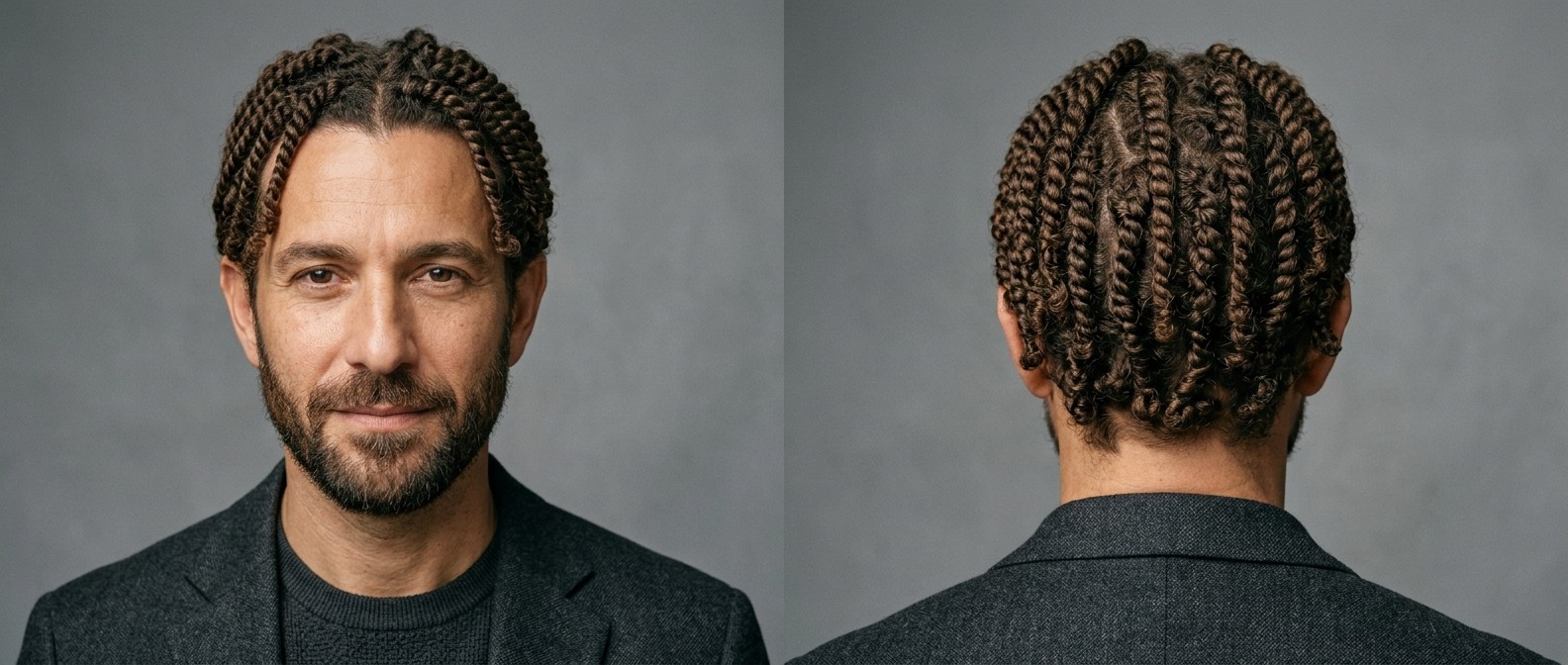
Twists
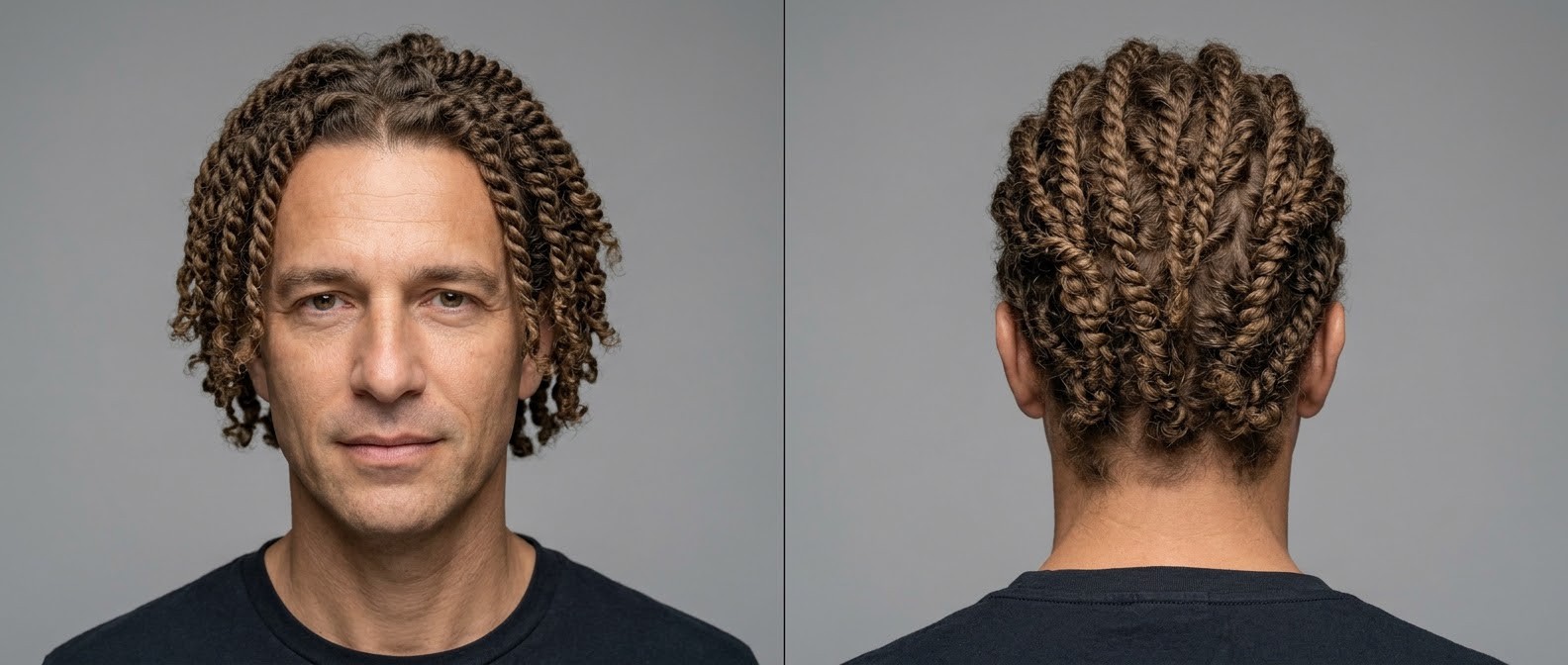
Mature Two-Strand Rope Twists with Clean Center Part
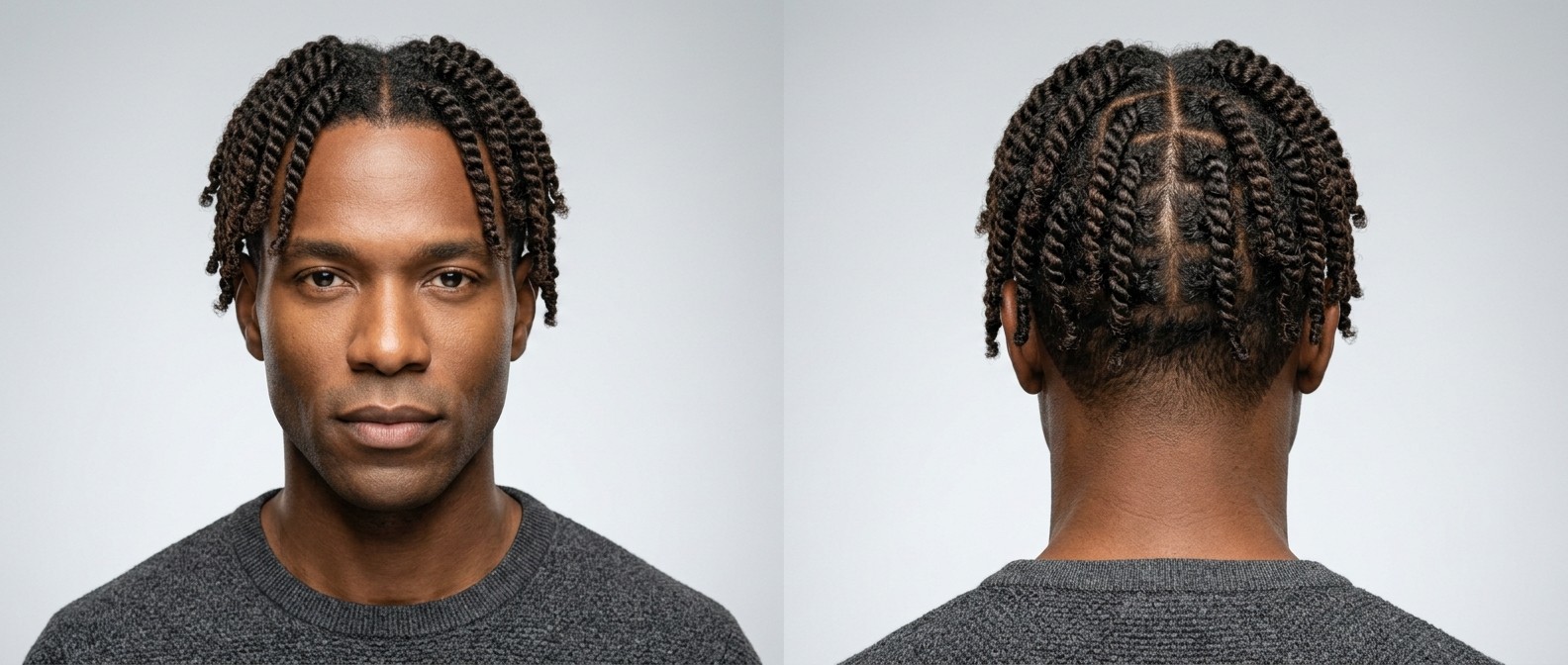
Twists
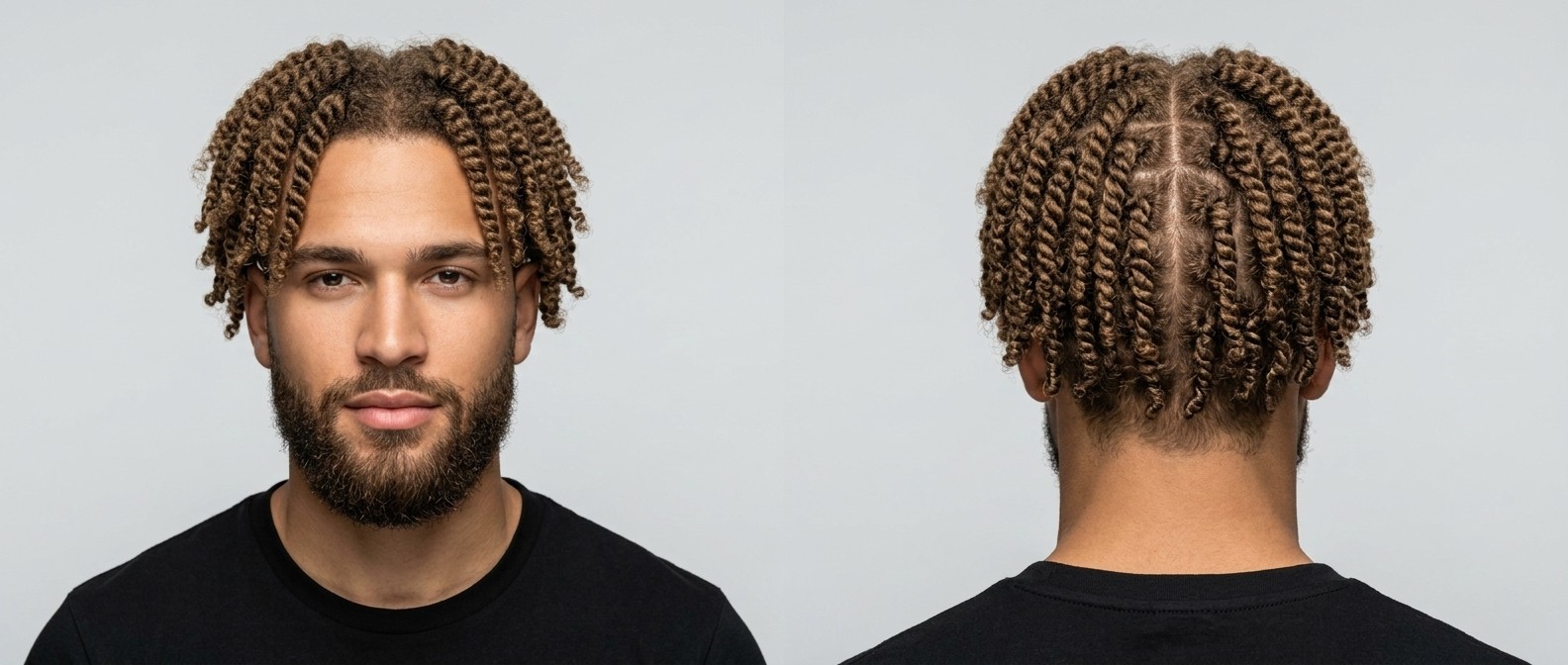
Neat Two-Strand Twists with Center Part and Low Nape Taper
Twists
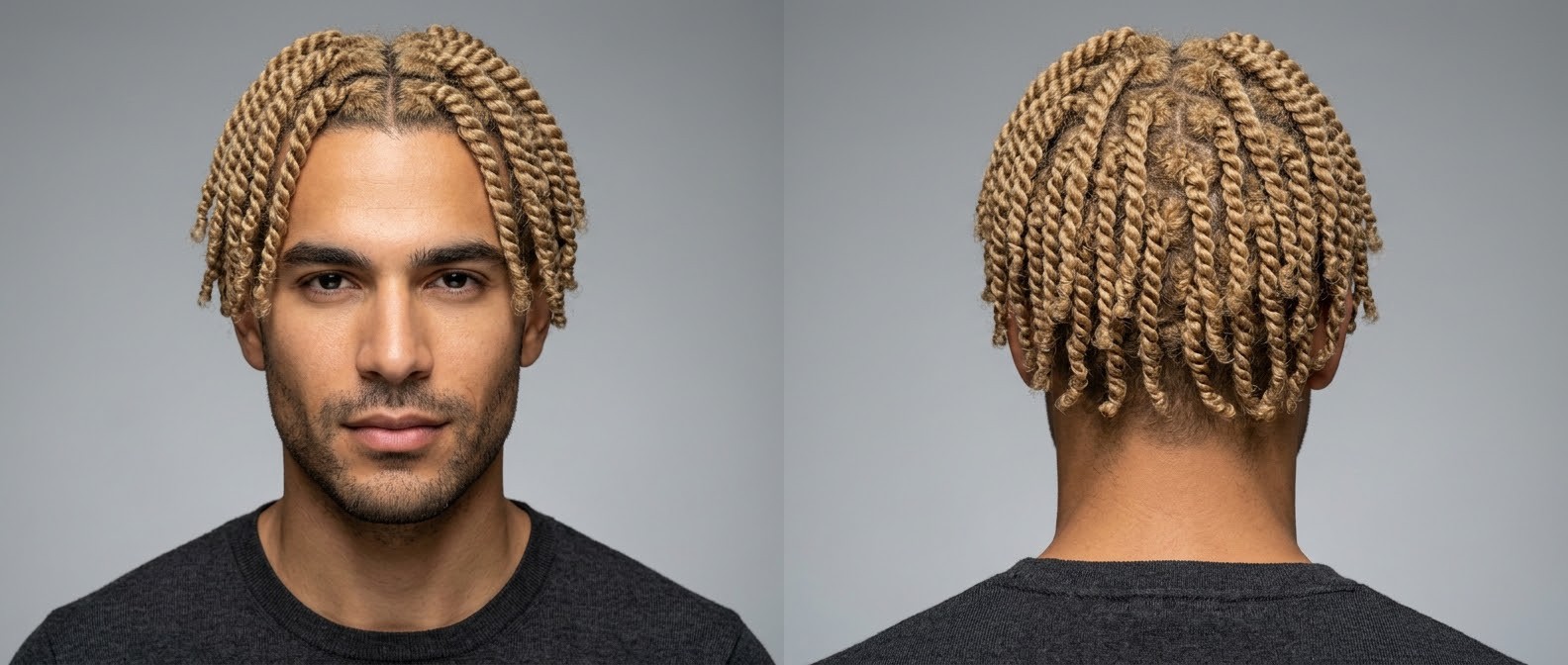
Men's Mid-Length Two-Strand Twists with Center Part
Twists
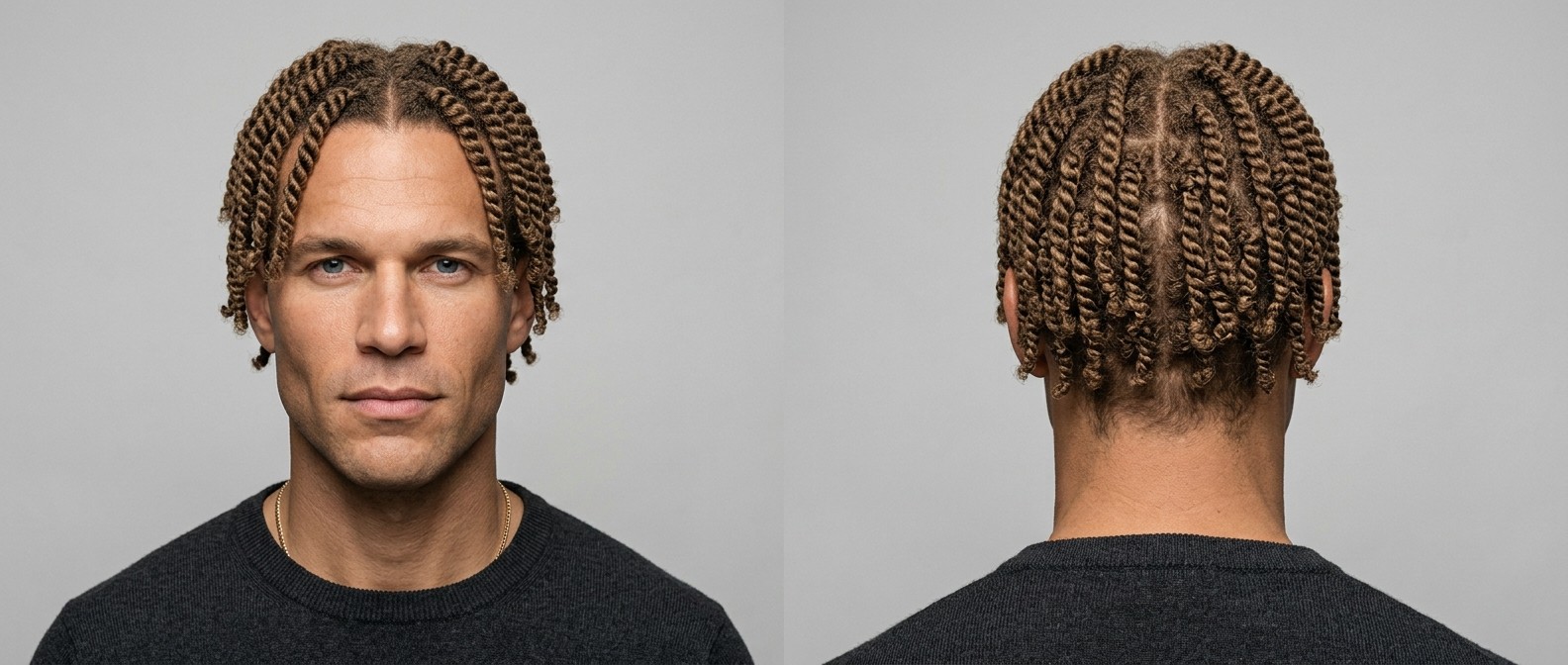
Men's Light Brown Two-Strand Twists with Center Part and Box Sections
Twists
Blonde Two-Strand Twists with Middle Part for Thick Curly Hair
Twists