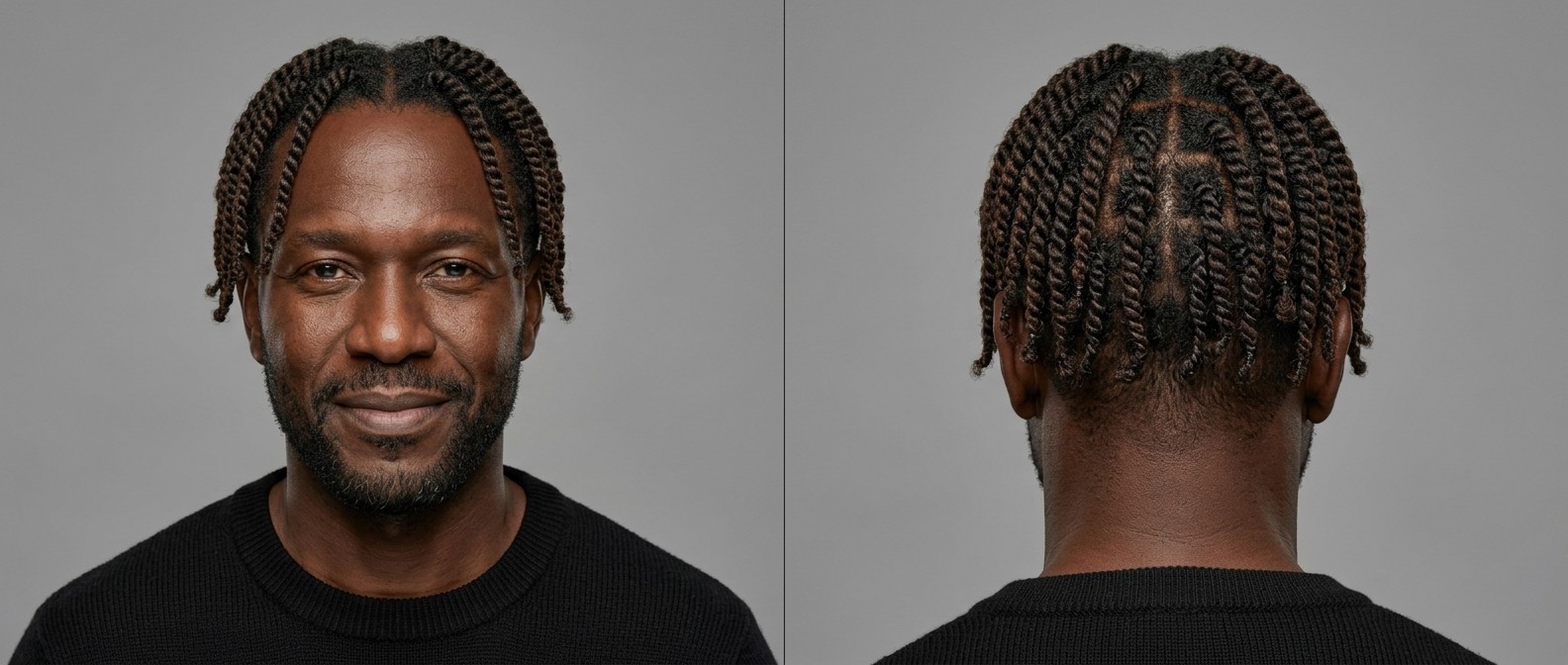
Add one front-facing photo. We send it to the AI together with this exact cut — and you get a photorealistic preview of yourself wearing it.
1
Your photo
Front view · neutral face · even light
2
This haircut
Already included
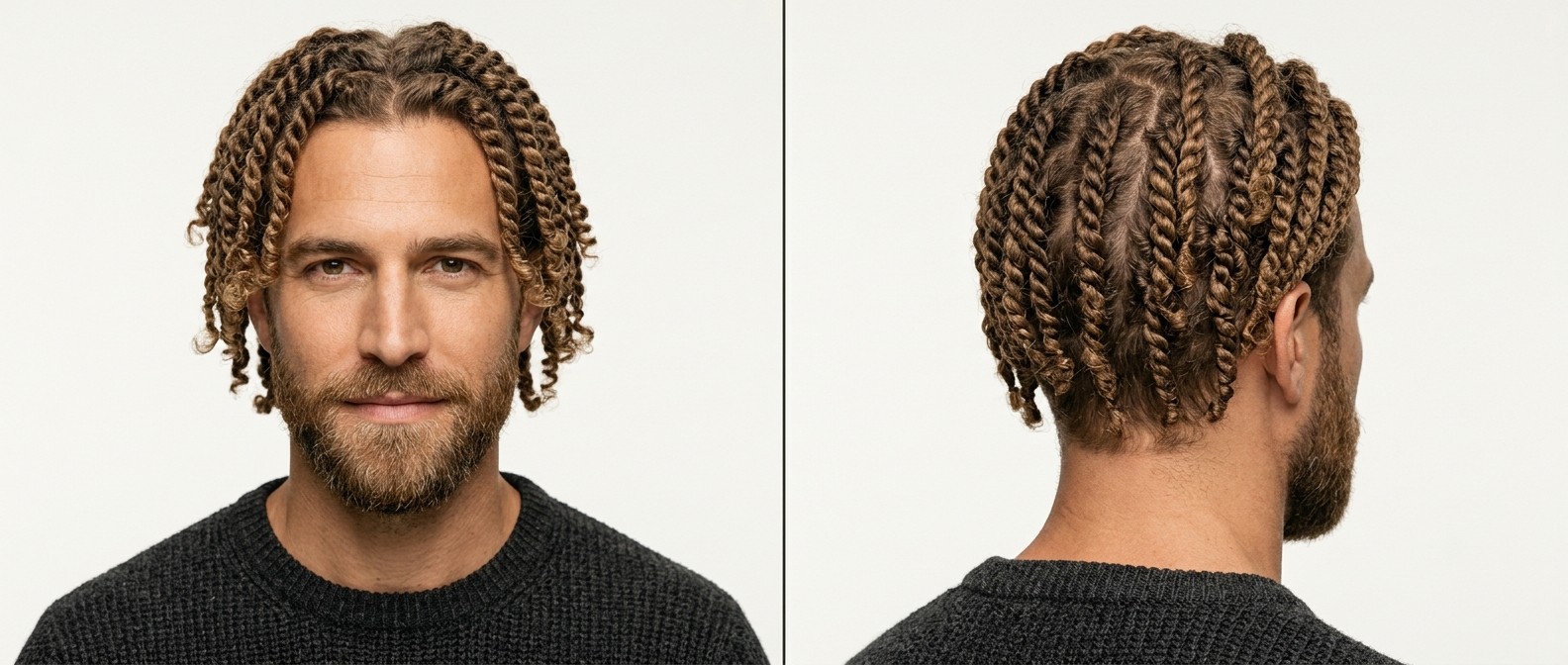
Front and back reference — taken from this page
3
Your preview
Your result appears here
![]()
![]()
Generated for you, not published anywhere
How do you rate this tool?
- Reading your photo
- Matching the cut
- Rendering your preview
How to take a photo that works
Do
- Face the camera straight on
- Even daylight, no harsh shadow
- Head and shoulders in frame
- Hair fully visible, nothing covering it
Avoid
- Hats, caps, hoods, sunglasses
- Steep angles or a tilted head
- Group photos or heavy filters
- Backlight that darkens the face
Classic Two-Strand Box Twists with Center Part for Men
 Top
Long (10-20 cm)
Top
Long (10-20 cm)
 Sides
Short (6-20 mm)
Sides
Short (6-20 mm)
 Hair Type
Very Curly / Afro (Type 4)
Hair Type
Very Curly / Afro (Type 4)
 Face Shape
Oval
Face Shape
Oval
 Maintenance
Medium
Maintenance
Medium
 Thickness
Medium / Normal
Thickness
Medium / Normal
About This Style
This sophisticated variation of two-strand twists showcases a masterful blend of geometric precision and relaxed, natural flow. When you examine the intricate details, you will notice the immaculate square-shaped partings cleanly sectioned across the crown and the back of the head. These foundational boxes create an organized, highly intentional grid that contrasts beautifully with the organic drape of the twists themselves. The style features long, uniform twists that cascade elegantly from a distinct center part, falling right to the jawline. The twists are meticulously crafted with medium thickness, a size that perfectly complements the dense, coily nature of Type 4 afro-textured hair by allowing it to lock in moisture while maintaining a flexible, swinging motion. The way these twists frame your face adds a refined, artistic touch that elevates your overall aesthetic from standard to exceptional.
This hairstyle is exceptionally well-suited for you if you are a mature gentleman looking to embrace your natural hair texture while maintaining a polished, distinguished appearance. It beautifully complements an oval face shape, as the downward flow of the twists draws the eye vertically without adding unnecessary width to the sides of your head. The addition of a neatly groomed, short beard grounds the look perfectly, providing a strong, masculine balance to the longer, softer hair on top and descending down the sides. It creates a seamless transition from your facial hair to your scalp.
Ideal for creative professionals, artists, and those in modern work environments, this look bridges the gap between casual ease and intentional styling. While it requires minimal daily styling time on your part, the precise foundational grid work means you always step out looking completely put-together. It is a fantastic choice for men who want a low-manipulation protective style that still speaks volumes about their personal style, cultural pride, and meticulous attention to detail.
This hairstyle is exceptionally well-suited for you if you are a mature gentleman looking to embrace your natural hair texture while maintaining a polished, distinguished appearance. It beautifully complements an oval face shape, as the downward flow of the twists draws the eye vertically without adding unnecessary width to the sides of your head. The addition of a neatly groomed, short beard grounds the look perfectly, providing a strong, masculine balance to the longer, softer hair on top and descending down the sides. It creates a seamless transition from your facial hair to your scalp.
Ideal for creative professionals, artists, and those in modern work environments, this look bridges the gap between casual ease and intentional styling. While it requires minimal daily styling time on your part, the precise foundational grid work means you always step out looking completely put-together. It is a fantastic choice for men who want a low-manipulation protective style that still speaks volumes about their personal style, cultural pride, and meticulous attention to detail.
Key Features
- A prominent, razor-straight center part that symmetrically divides the front sections, creating a perfectly balanced facial framing effect for your features.
- Meticulously sectioned square box partings visible across the scalp, providing an organized, highly geometric foundation that highlights the scalp.
- Uniform two-strand twists measuring 10-20 cm in length, showcasing excellent tension, consistent medium thickness, and flawless execution from root to tip.
- A natural, downward hair flow direction where the twists cascade effortlessly over the sides and back, creating a relaxed, draped silhouette that moves with you.
- Highly textured Type 4 afro hair tightly and securely coiling within each individual twist to lock in essential moisture and prevent the ends from unraveling.
- Cleanly maintained lower edges and nape area that keep the absolute perimeter looking sharp and intentional beneath the longer, free-hanging twists.
Getting the Cut
- Request a thorough clarifying wash and deep conditioning treatment to properly prepare your scalp and hair for a long-term protective twist style.
- Ask your stylist to create a precise, highly defined center part starting directly from your front hairline and extending smoothly toward the crown of your head.
- Instruct your braider or loctician to section the rest of your head using clean, geometric square (box) partings, keeping them approximately one inch in width for uniformity.
- Specify the creation of traditional two-strand twists using a medium-firm tension to ensure longevity and neatness without causing any painful scalp stress.
- Ask the stylist to keep the twists falling naturally downward during installation, ensuring the roots are directed toward the floor rather than sticking out horizontally.
- Request a very tight taper or crisp line-up around your extreme perimeter, specifically the nape and sideburns, using a #1 guard or trimmers to keep the edges sharp.
- Have your barber shape your facial hair into a neat, short beard that connects seamlessly with your hairline, utilizing a #2 guard for an even, well-groomed length.
Daily Routine
- Remove your silk or satin bonnet or durag carefully in the morning to avoid causing unnecessary friction, frizz, or disruption to your twists.
- Lightly mist your twists and your exposed scalp with a water-based leave-in conditioner or a refreshing aloe vera spray to quickly rehydrate the hair.
- Apply a few drops of a lightweight, penetrating oil, such as jojoba, sweet almond, or argan oil, directly to your fingertips and rub them together.
- Gently massage the warming oil directly into your exposed scalp along the square partings to stimulate blood flow, prevent dryness, and eliminate flaking.
- Glide your lightly oiled palms firmly but gently down the entire length of your twists to seal in the morning moisture and add a healthy, natural sheen.
- Use your fingers to carefully separate any individual twists that may have intertwined or clumped together overnight, ensuring they fall naturally around your face.
- Finish your routine by applying a small dab of edge control or pomade to your front hairline and center part, smoothing it down with a soft bristle brush for a polished look.
Products & Tools
- A high-quality, water-based hydrating mist or liquid leave-in conditioner spray for your daily moisture replenishment without causing heavy product buildup.
- A lightweight, nourishing scalp oil blend (featuring ingredients like jojoba, sweet almond, or tea tree) for soothing the skin and locking in hydration.
- A medium-hold twisting cream, styling butter, or locking gel used during the initial installation process to provide grip, smooth flyaways, and prevent unraveling.
- A soft-hold, non-flaking edge control gel or pomade to seamlessly lay down baby hairs and flyaways strictly along your front hairline and center part.
- A professional metal rat-tail comb for creating the precise, sharp square partings, navigating the dense hair, and establishing the distinct center line.
- A soft boar bristle edge brush or dedicated detailing brush for smoothing the hairline, distributing edge control, and blending your beard edges.
- A premium silk or satin bonnet, durag, or pillowcase to rigorously protect your twists from moisture-robbing cotton friction and lint accumulation while you sleep.
Maintenance
- Schedule a professional maintenance appointment with your loctician or barber every 3 to 4 weeks to have the twists taken down, properly detangled, washed, and re-installed.
- Wash your hair and scalp carefully every 2 weeks while the twists are still installed, utilizing a mesh stocking cap over your head to minimize frizz and disruption during shampooing.
- Always sleep with a dedicated satin or silk covering (like a bonnet or durag) every single night to lock in your hair's natural moisture and prevent the twists from becoming fuzzy.
- Strictly avoid using heavy beeswax, thick petroleum greases, or dense pomades on your scalp, as these will aggressively attract dirt and create severe, hard-to-wash product buildup within the twists.
- Keep your hands out of your hair as much as possible during the day to prevent premature unraveling, reduce frizz, and stop the introduction of environmental lint to your style.
Best For
Men with oval, diamond, or heart-shaped faces, as the downward, vertical flow of the twists beautifully frames the cheeks and elegantly elongates the jawline.
Highly textured Type 4 (coily and kinky) hair types, which possess the natural grip and density required to hold the two-strand twist structure securely without needing rubber bands.
Mature gentlemen, specifically those aged 45 and older, who are looking for a highly sophisticated, distinguished protective style that fully embraces their natural texture.
Creative professionals, artists, musicians, or anyone with a flexible lifestyle that actively encourages expressive, culturally rich, and visually striking hairstyles.
Individuals seeking a low-daily-maintenance morning routine while still demanding a highly intentional, meticulously groomed, and structurally impressive appearance.
Pro Tips
- Ensure your hair is completely detangled and lightly blow-dried (stretched) on a cool setting before twisting to achieve maximum length, reduce shrinkage, and secure a smoother finish.
- Never allow your stylist to twist the hair too tightly at the root; excessive tension can quickly lead to traction alopecia, severe scalp irritation, and permanent follicle damage.
- During the colder, drier winter months, proactively increase your use of lightweight penetrating oils to combat the lack of environmental humidity and keep your twists supple and healthy.
- When eventually taking the twists out for a wash day, generously coat your fingers in a slippery oil or conditioner to provide slip, melt away tangles, and minimize breakage during the detangling process.
Related Hairstyles
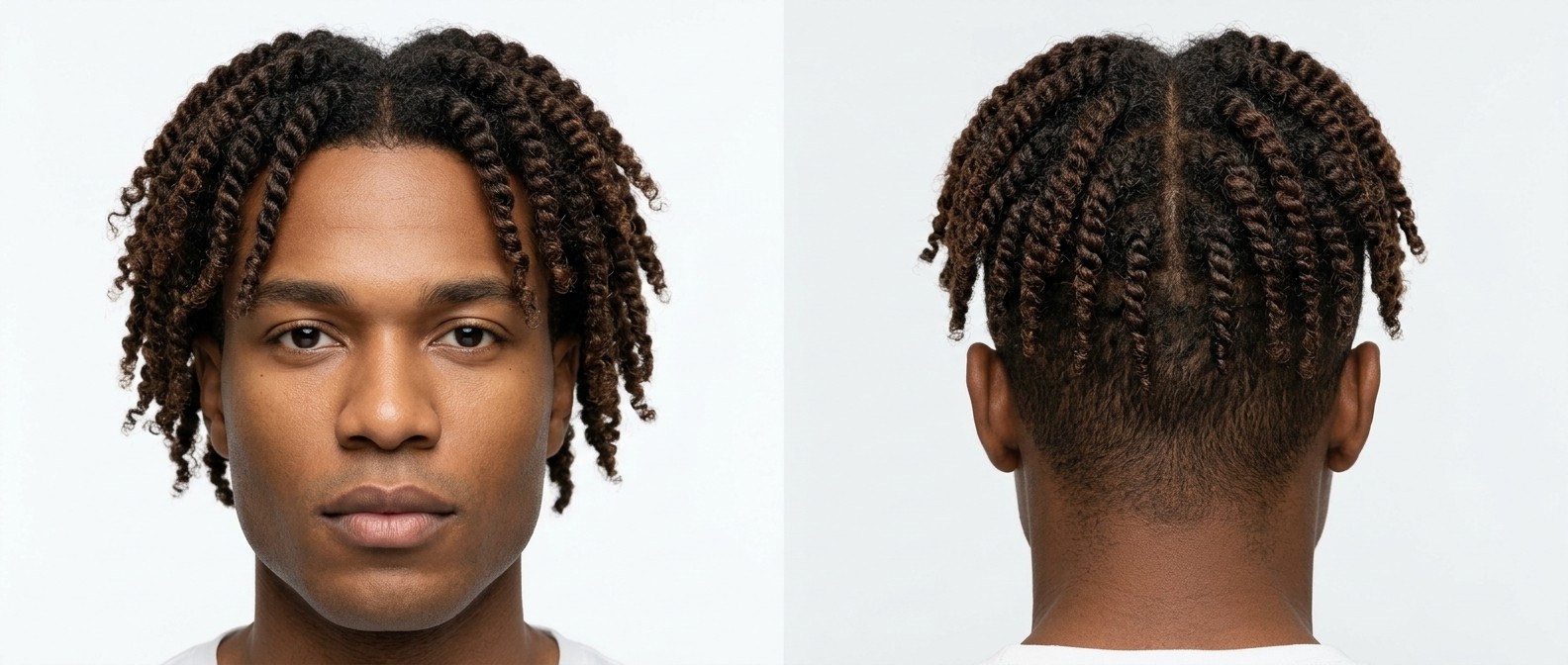
Twists
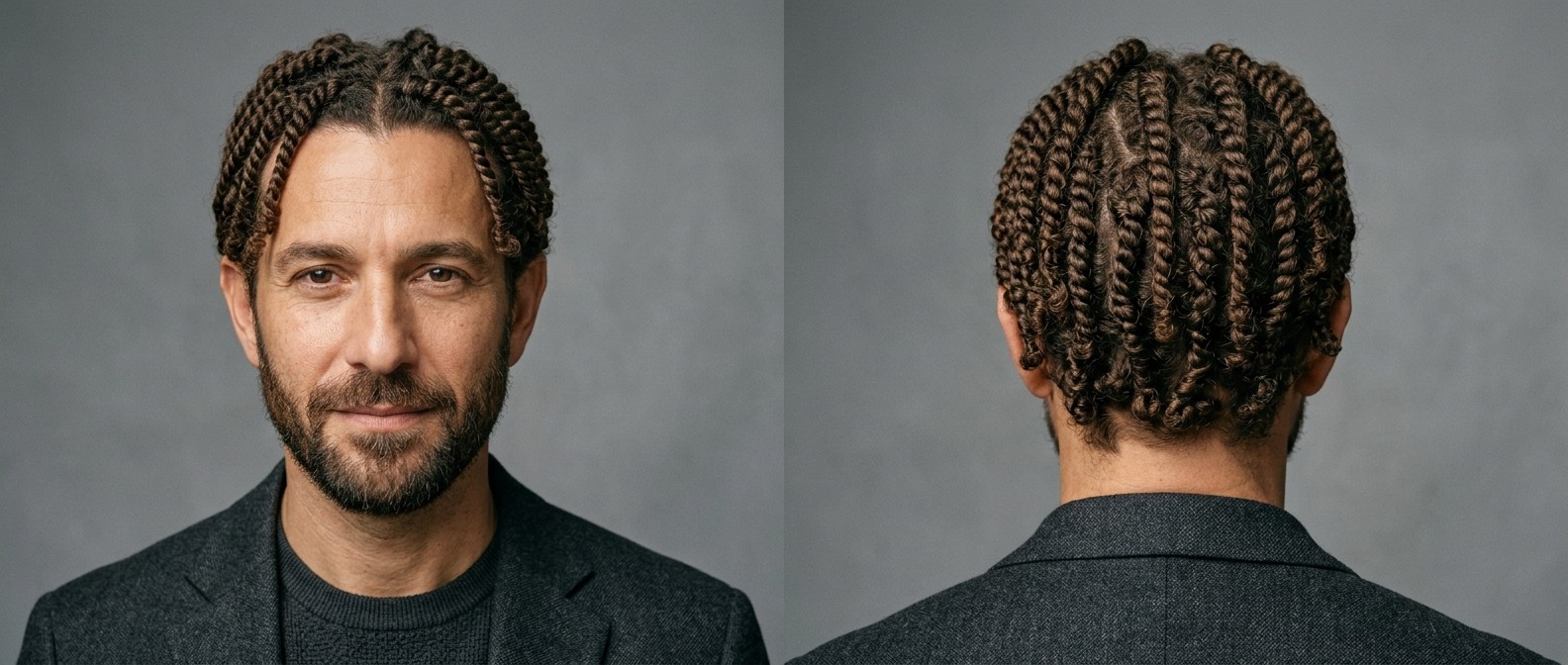
Distinctive Middle-Parted Two-Strand Twists with Tapered Nape
Twists
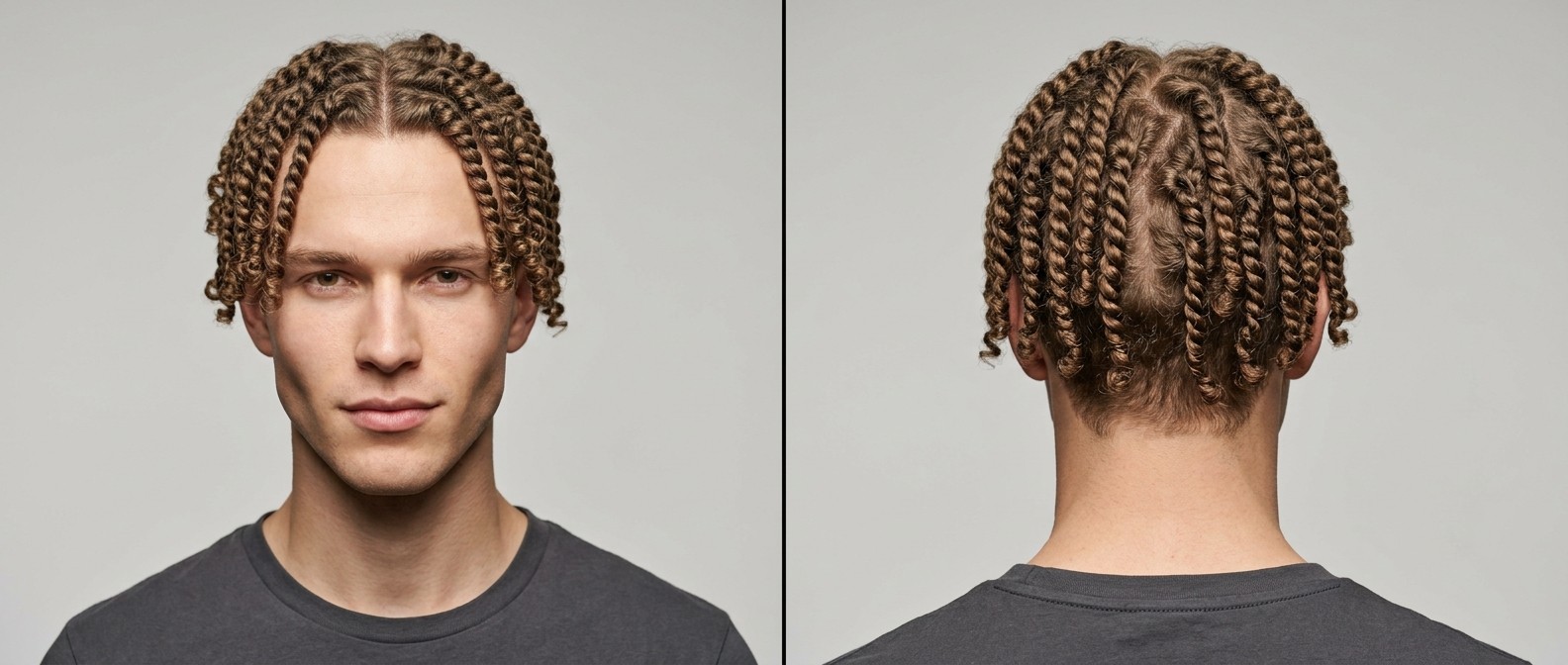
Mature Two-Strand Rope Twists with Clean Center Part
Twists
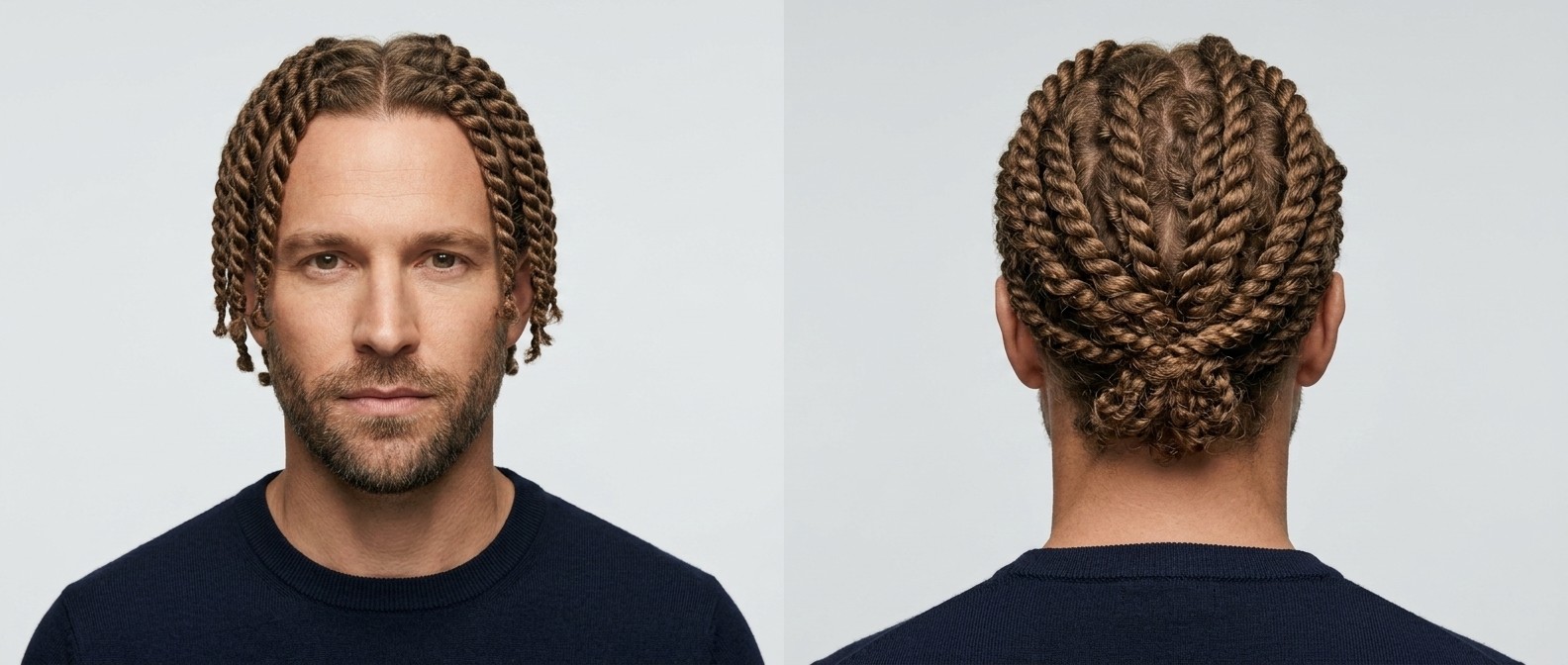
Center-Parted Two-Strand Twists for Medium Curly Hair
Twists
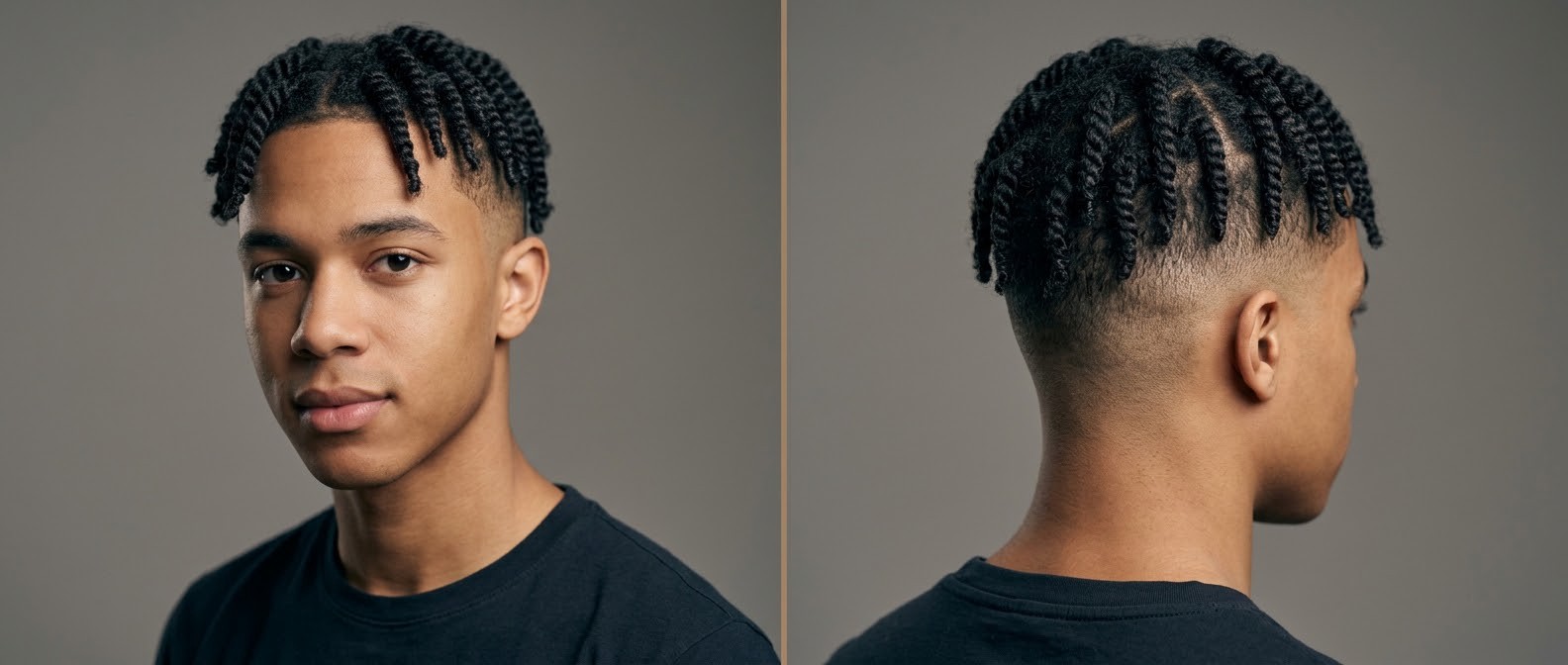
Pulled-Back Two-Strand Rope Twists with Face-Framing Tendrils
Twists
Defined Two-Strand Twists with Clean Mid-Level Drop Fade
Twists