Add one front-facing photo. We send it to the AI together with this exact cut — and you get a photorealistic preview of yourself wearing it.
1
Your photo
Front view · neutral face · even light
2
This haircut
Already included
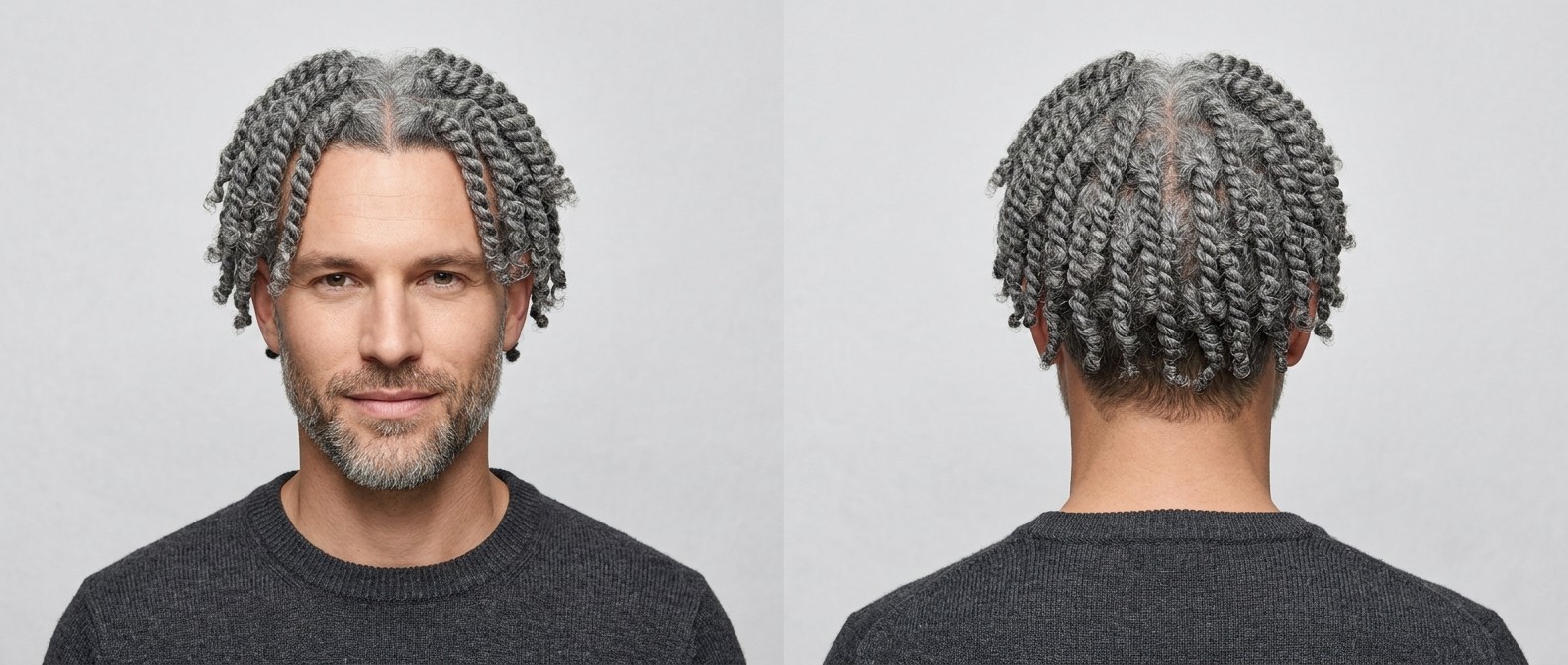
Front and back reference — taken from this page
3
Your preview
Your result appears here
![]()
![]()
Generated for you, not published anywhere
How do you rate this tool?
- Reading your photo
- Matching the cut
- Rendering your preview
How to take a photo that works
Do
- Face the camera straight on
- Even daylight, no harsh shadow
- Head and shoulders in frame
- Hair fully visible, nothing covering it
Avoid
- Hats, caps, hoods, sunglasses
- Steep angles or a tilted head
- Group photos or heavy filters
- Backlight that darkens the face
Striking Gray Two-Strand Twists with a Sharp Center Part
 Top
Long (10-20 cm)
Top
Long (10-20 cm)
 Sides
Short (6-20 mm)
Sides
Short (6-20 mm)
 Hair Type
Very Curly / Afro (Type 4)
Hair Type
Very Curly / Afro (Type 4)
 Face Shape
Oval
Face Shape
Oval
 Maintenance
Medium
Maintenance
Medium
 Thickness
Thick / Dense
Thickness
Thick / Dense
About This Style
This striking variation of two-strand twists immediately commands attention through its brilliant silver-gray color and immaculate, uniform sectioning. What you are looking at is a masterful protective style that has been expertly adapted for a dense, highly textured hair profile. The prominent center part creates a flawlessly symmetrical, framing effect around the oval face shape, allowing the thick, rope-like twists to cascade naturally down the sides and back of the head. The stark contrast between the intricate, coiled texture of the long twists and the neatly groomed, short gray beard adds a rugged yet highly refined aesthetic that is impossible to ignore. Every individual twist is crafted with precision, showcasing the natural volume and density of the hair while keeping it perfectly controlled and stylized.
This hairstyle is an exceptional choice for the modern man who wants to confidently embrace his natural graying process while maintaining a highly stylized, fashion-forward appearance. It perfectly suits individuals with thick, highly textured hair who are seeking a medium-maintenance look that transitions effortlessly from casual everyday wear to more creative, artistic environments. The style offers a practical yet bold statement, keeping long, dense hair managed, protected from environmental damage, and deeply moisturized, all while showcasing its unique texture and striking metallic color palette.
This hairstyle is an exceptional choice for the modern man who wants to confidently embrace his natural graying process while maintaining a highly stylized, fashion-forward appearance. It perfectly suits individuals with thick, highly textured hair who are seeking a medium-maintenance look that transitions effortlessly from casual everyday wear to more creative, artistic environments. The style offers a practical yet bold statement, keeping long, dense hair managed, protected from environmental damage, and deeply moisturized, all while showcasing its unique texture and striking metallic color palette.
Key Features
- Prominent, razor-straight center part that divides the hair into perfectly symmetrical halves, anchoring the entire visual silhouette of the style.
- Thick, highly uniform two-strand twists created from dense, heavily textured hair, offering a distinct rope-like, coiled visual texture that stands out.
- Long top and crown lengths (ranging from 10 to 20 cm) that allow the heavy twists to fall naturally, creating a framing effect around the cheekbones and jawline.
- A subtle, short taper at the very nape of the neck (6-20 mm) to keep the bottom edge clean, sharp, and manageable while the upper canopy remains long.
- Brilliant silver and dark gray color variations that naturally highlight the intricate woven pattern and structural depth of each individual twist.
- A rounded, cascading overall silhouette that distributes the heavy volume evenly around the head, preventing the style from looking overly bulky on the top or sides.
Getting the Cut
- Request a thorough, in-depth consultation to assess your hair's density and ensure the texture can support thick, uniform two-strand twists without unraveling prematurely.
- Ask the stylist to section the hair with a highly precise, razor-straight center part extending from the front hairline all the way back to the crown of the head.
- Instruct them to create meticulous, grid-like square partings across the entire scalp to ensure that every single twist is perfectly uniform in thickness, weight, and density.
- Request that the main body of the hair be left at its absolute maximum length (between 10 and 20 cm) to allow for sufficient twisting and a natural, heavy downward fall.
- Ask for a very low, subtle taper at the nape of the neck using a #2 or #3 clipper guard (6-10 mm) to clean up the bottom edge, creating a neat finish beneath the long twists.
- Have the barber edge up the perimeter of the natural front and side hairlines very lightly with detail trimmers, keeping the lines straight and crisp but avoiding pushing the hairline back.
- Request that a high-quality, firm-hold twisting cream or locking gel be applied generously during the twisting process to lock in essential moisture and secure the ends tightly.
Daily Routine
- Start your daily morning routine by lightly misting your entire scalp and the length of the twists with a hydrating leave-in conditioner spray or plain filtered water to refresh the hair.
- Apply a few drops of a premium, lightweight hair oil—such as argan, jojoba, or sweet almond oil—directly to your fingertips and gently massage it into your scalp to stimulate blood flow and prevent dryness.
- Carefully glide your lightly oiled palms over the outer surface of the twists to smooth down any overnight frizz, tame flyaways, and restore shine without disrupting the tightly coiled structure.
- If any individual twists have become slightly loose at the roots overnight, gently pinch the base of the twist and give it a quick, firm clockwise twirl to retighten the tension and maintain a neat appearance.
- Use your fingers to carefully adjust the prominent center part, ensuring that the twists fall symmetrically on both sides of your face and hang naturally without crossing over each other.
- Strictly avoid using a blow dryer, diffuser, or any other heat styling tools, as this protective style is meant to air dry naturally; applied heat will inevitably cause the twists to frizz, expand, and unravel.
- Finish the routine by applying a tiny amount of matte-finish edge control paste to your front hairline using a small edge brush, if you desire a sharper, more polished perimeter for the day's activities.
Products & Tools
- Premium hydrating twist and lock gel or cream (medium to firm hold, natural finish) to securely bind the hair strands together during the initial twisting and styling phase.
- High-quality, lightweight scalp oil (such as pure argan, jojoba, or sweet almond oil) to maintain deep moisture levels and add a healthy, non-greasy shine to the coarse gray hair.
- Daily moisturizing leave-in conditioning spray infused with aloe vera or glycerin to keep the highly textured hair hydrated, soft, and protected against environmental breakage.
- Professional metal-tipped rat tail comb for executing the razor-sharp center part and mapping out the precise, uniform grid sections across the scalp before twisting.
- Premium silk or satin durag, bonnet, or pillowcase to rigorously protect the delicate twists from friction, moisture loss, and severe frizz while you are sleeping.
- Edge control paste (firm hold, matte finish) and a specialized soft-bristle edge brush for meticulously detailing and laying down the perimeter hairline.
Maintenance
- Schedule a visit with your barber or specialized loctician every 3 to 4 weeks to have the nape taper professionally cleaned up and the twists carefully retwisted at the new root growth.
- Wash your hair no more than bi-weekly using a gentle, moisturizing, sulfate-free shampoo; focus the lather strictly on the scalp and let the suds rinse through the twists to avoid disturbing the style.
- Always sleep with a dedicated silk or satin head covering; failing to do so will allow a standard cotton pillowcase to draw out vital moisture, resulting in severe frizz and unraveled ends.
- Consciously avoid over-manipulating, pulling, or constantly touching the twists throughout the day, as the continuous friction from your hands will cause the hair to frizz and unravel prematurely.
- Strictly steer clear of heavy, petroleum-based waxes or thick pomades that can cause stubborn, hard-to-remove product buildup and completely dull the striking, natural silver-gray color of your hair.
Best For
Oval, diamond, and square face shapes, as the heavy, cascading symmetrical twists help to beautifully frame the face, soften sharp jawlines, and balance overall facial proportions.
Very curly, highly textured hair types (specifically Type 4) that are naturally thick and dense enough to support the creation of substantial, rope-like twists without looking sparse or thin.
Men aged 25 to 35, and well beyond, who are looking for a highly stylish, contemporary way to confidently embrace their natural graying process or salt-and-pepper hair coloring.
Creative, casual, and everyday active lifestyles that allow for expressive, medium-maintenance protective hairstyles that don't require hours of daily morning grooming.
Pro Tips
- To make the brilliant silver and gray color truly pop and shine, occasionally incorporate a high-quality purple-toning shampoo into your wash routine to effectively neutralize any unwanted brassy or yellow tones.
- A very common mistake during the installation process is twisting the hair far too tightly at the root; ensure your stylist uses firm tension for neatness but strictly avoids causing traction alopecia or lingering scalp pain.
- During the cold, dry winter months, significantly increase your daily usage of leave-in conditioning sprays and sealing scalp oils, as gray, highly textured hair is exceptionally prone to severe dryness and brittleness.
- If the ends of your twists begin to unravel between professional appointments, apply a small dab of locking gel to the tips and tightly coil them around your index finger to instantly restore their neat, uniform appearance.
Related Hairstyles
Twists
Center-Parted Two-Strand Twists for Medium Curly Hair
Twists
Classic Center-Parted Two-Strand Twists for Medium Hair

Twists
Classic Two-Strand Twists with Center Part and Tapered Nape
Twists
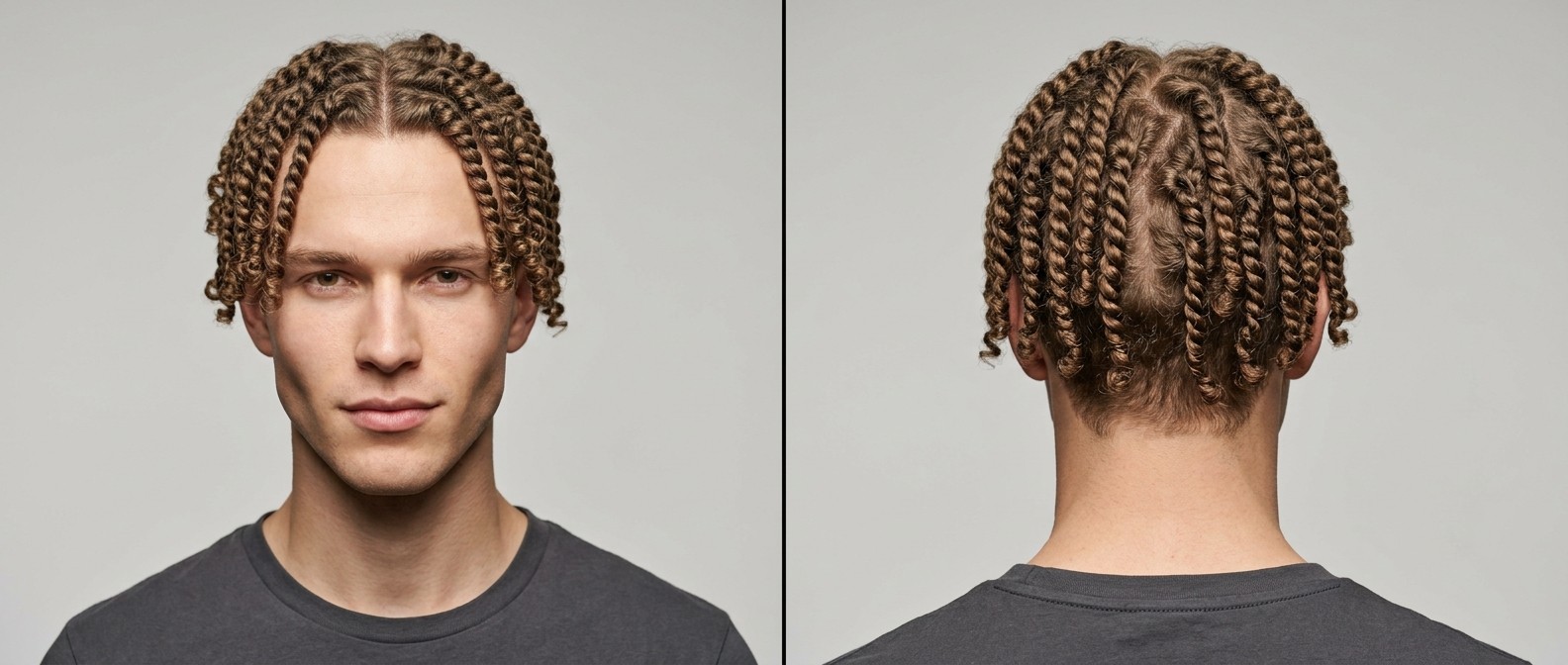
Men's Light Brown Two-Strand Twists with Center Part and Box Sections
Twists
Crimson Two-Strand Twists with Geometric Box Parting

Twists