Add one front-facing photo. We send it to the AI together with this exact cut — and you get a photorealistic preview of yourself wearing it.
1
Your photo
Front view · neutral face · even light
2
This haircut
Already included
Front and back reference — taken from this page
3
Your preview
Your result appears here
![]()
![]()
Generated for you, not published anywhere
How do you rate this tool?
- Reading your photo
- Matching the cut
- Rendering your preview
How to take a photo that works
Do
- Face the camera straight on
- Even daylight, no harsh shadow
- Head and shoulders in frame
- Hair fully visible, nothing covering it
Avoid
- Hats, caps, hoods, sunglasses
- Steep angles or a tilted head
- Group photos or heavy filters
- Backlight that darkens the face
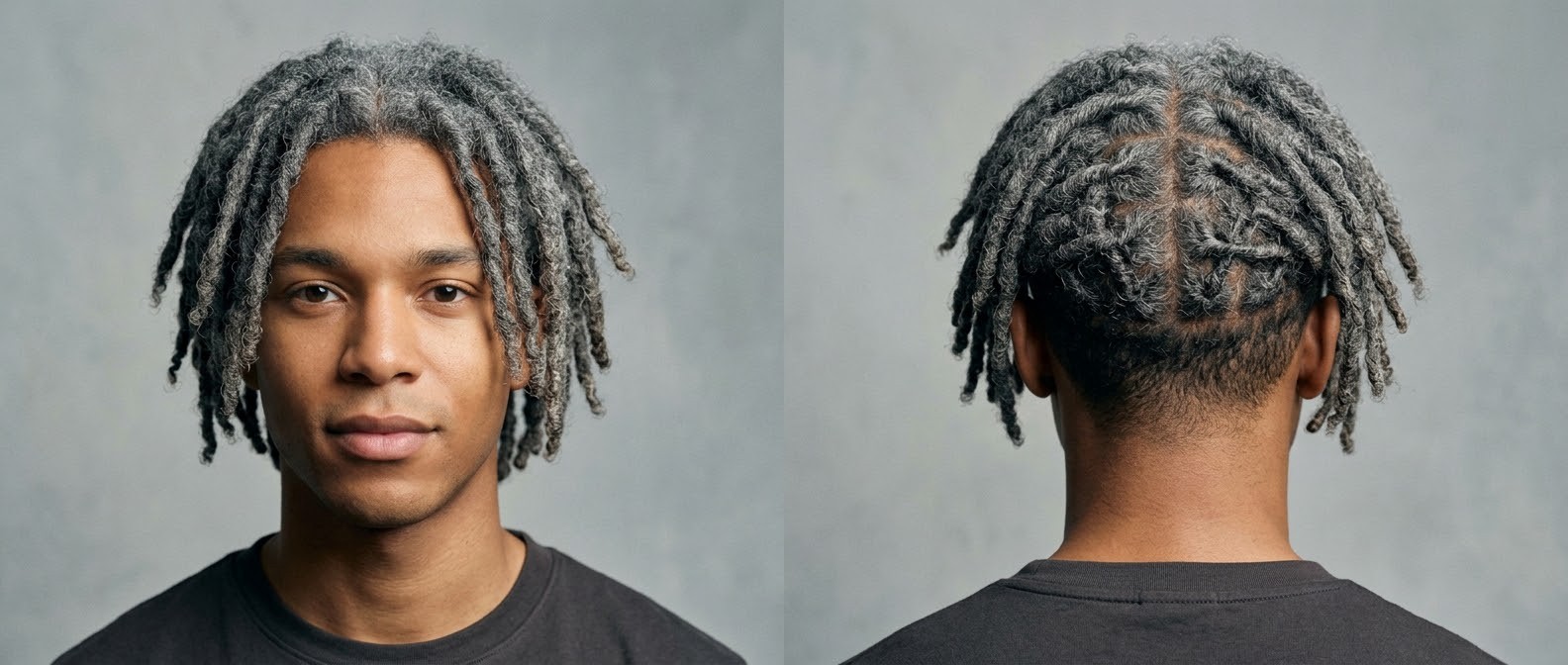
Silver Gray Medium Dreadlocks with Precision Grid Parting and Nape Undercut
 Top
Long (10-20 cm)
 Sides
Long (5+ cm)
 Hair Type
Very Curly / Afro (Type 4)
 Face Shape
Heart
 Maintenance
Medium
 Thickness
Thick / Dense
About This Style
Look closely at this striking variation of medium-length dreadlocks, characterized by its stunning natural silver-gray hue and absolute precision parting. What immediately catches the eye when analyzing this style is the immaculate grid pattern visible directly on the scalp. This geometric foundation creates a highly organized, structured base for the locs to grow from, showcasing the meticulous work of a skilled loctician. The dreadlocks themselves are cultivated to a medium thickness, falling naturally to the jawline and collarbone, framing the face symmetrically with a very distinct, intentional middle part. Furthermore, the lower nape features a subtle taper or undercut, allowing the longer dreads from the crown to cascade cleanly without creating excess, unwanted bulk at the neckline.
This specific loc style is an exceptional choice if you possess thick, Type 4 afro-textured hair and desire a look that perfectly balances rugged, natural texture with high-end structural precision. It exceptionally complements a heart-shaped face, as the strategic volume and drape at the jawline help to balance out a naturally wider forehead. The striking natural gray coloring adds a bold, distinguished, and highly artistic edge to a youthful face, making it a standout choice for casual, creative, and fashion-forward environments. It speaks volumes about a lifestyle that deeply values authenticity, cultural roots, and artistic expression, all while maintaining a remarkably neat, well-groomed, and professional appearance.
This specific loc style is an exceptional choice if you possess thick, Type 4 afro-textured hair and desire a look that perfectly balances rugged, natural texture with high-end structural precision. It exceptionally complements a heart-shaped face, as the strategic volume and drape at the jawline help to balance out a naturally wider forehead. The striking natural gray coloring adds a bold, distinguished, and highly artistic edge to a youthful face, making it a standout choice for casual, creative, and fashion-forward environments. It speaks volumes about a lifestyle that deeply values authenticity, cultural roots, and artistic expression, all while maintaining a remarkably neat, well-groomed, and professional appearance.
Key Features
- Striking natural silver-gray hair coloring that provides incredibly high visual contrast and delivers a unique, distinguished aesthetic that stands out in any crowd.
- Precision geometric grid parting system executed across the entire scalp, creating distinct, uniform square sections that serve as the foundation for each individual dreadlock.
- Medium-length locs (approximately 10 to 20 centimeters) that fall freely and organically around the face, specifically reaching the jawline and upper neck area for optimal framing.
- A sharp, clean middle part that allows the dreadlocks to curtain symmetrically on both sides, perfectly framing and complementing a heart-shaped facial structure.
- A subtle nape undercut or low taper that strategically removes heavy bulk from the lower rear hairline, significantly enhancing the natural drape and movement of the longer top locs.
- Tightly coiled, mature cylindrical dreadlock texture featuring minimal natural frizz, presenting an authentic, lived-in finish that highlights the thick, dense Type 4 hair type.
Getting the Cut
- Request a full head of medium-sized traditional dreadlocks or large microlocs, explicitly stating whether you are starting from scratch with coils or maintaining already mature locs.
- Ask your loctician for a strict, ruler-straight grid parting pattern across the entire scalp, ensuring every single loc is rooted in a clear, uniform square base for maximum neatness.
- Specify the creation of a distinct, permanent middle part to intentionally guide the natural fall and symmetrical framing of the dreadlocks around your specific facial features.
- Request a low taper fade or subtle undercut at the nape of the neck, utilizing a #1 or #2 clipper guard, to effectively remove heavy bulk and keep the neckline looking crisp.
- Instruct the professional to use the palm-rolling or interlocking technique during maintenance to keep the roots tight and ensure the cylindrical shape remains perfectly uniform.
- Ensure the front hairline is kept relatively natural but neatly detailed with professional trimmers, strictly avoiding pushing the natural hairline back to prevent future traction issues.
- Discuss and establish a strict maintenance schedule for professional root retwisting every 4 to 6 weeks to guarantee the geometric grid pattern remains sharp and highly visible.
Daily Routine
- Start your daily morning grooming routine by carefully removing your protective silk or satin durag, bonnet, or wrap to reveal your well-preserved dreadlocks.
- Lightly mist your entire scalp and the length of your locs with a hydrating botanical spray containing aloe vera juice or rosewater to awaken the roots and infuse essential moisture.
- Apply a few carefully measured drops of a lightweight, natural carrier oil, such as golden jojoba or sweet almond oil, directly to the scalp along the exposed geometric grid parts.
- Massage the applied oil gently into the scalp using the pads of your fingertips in circular motions to stimulate healthy blood flow and actively prevent dryness or winter flaking.
- Use your fingers to gently separate and detangle any individual locs that may have naturally intertwined overnight, ensuring the central middle part falls cleanly and symmetrically.
- Smooth a very minimal, pea-sized amount of lightweight locking gel or edge control pomade along the front hairline if you prefer a slightly sharper, more defined perimeter for the day.
- Allow the dreadlocks to air dry completely and naturally, letting them fall organically around your face and neck to achieve that effortlessly relaxed, everyday casual aesthetic.
Products & Tools
- Hydrating botanical mist or a continuous fine-mist spray bottle filled with a custom mixture of distilled water and aloe vera juice for crucial daily moisture replenishment.
- High-quality, lightweight scalp oil (such as pure jojoba, sweet almond, or a diluted peppermint oil blend) to deeply nourish the roots without causing any heavy product buildup.
- Premium locking gel or a natural beeswax-free alternative specifically formulated for root retwisting, providing excellent hold while minimizing frizz during your maintenance routine.
- A professional-grade rat-tail comb featuring a fine metal end, which is absolutely essential for creating, defining, and maintaining the sharp, precise grid parting sections.
- A premium silk or satin sleep bonnet, durag, or high-thread-count pillowcase to rigorously protect the locs from abrasive friction, lint accumulation, and overnight moisture loss.
Maintenance
- Schedule professional retwisting and maintenance appointments consistently every 4 to 6 weeks to maintain the crisp grid parting and actively prevent the roots from matting together.
- Wash your dreadlocks thoroughly every 2 to 3 weeks using a specialized residue-free, clarifying shampoo to effectively prevent any product buildup or trapped debris inside the loc matrix.
- Always sleep with a dedicated silk or satin head covering to meticulously protect your hair from environmental lint accumulation and to preserve the hair's natural moisture balance.
- Strictly avoid using heavy, creamy deep conditioners or thick styling waxes, as these dense products can easily become permanently trapped inside the dreadlock and cause mildew.
- Thoroughly dry your locs immediately after washing, utilizing a professional hooded dryer or sitting in direct sunlight, to absolutely ensure no moisture remains sitting in the dense core.
Best For
Face Shapes: Exceptionally suited for heart, oval, and diamond facial structures, as the symmetrical facial framing perfectly balances wider foreheads while beautifully accentuating a strong jawline.
Hair Types: Ideal for Type 4 afro-textured hair (both coily and kinky patterns), which naturally locks with ease and holds the tight, cylindrical dreadlock structure perfectly over time.
Lifestyles: Highly recommended for creative professionals, musicians, artists, and individuals who embrace a casual, expressive, yet meticulously groomed everyday personal style.
Ages: Perfect for 18 to 25-year-olds looking for a bold, artistic statement piece, though the striking natural gray color adds a uniquely mature, highly fashionable twist to the overall look.
Pro Tips
- To maintain the vibrant, striking silver-gray color of your locs, occasionally incorporate a high-quality purple-toning shampoo into your wash routine to neutralize any unwanted brassy or yellow undertones.
- If you experience mild scalp tension or tenderness immediately after a fresh retwist session, apply a soothing, diluted peppermint or tea tree oil spray to quickly alleviate discomfort and reduce inflammation.
- Keep stubborn lint completely out of your locs by being highly mindful of the materials you wear; always utilize a protective silk layer or hood when wearing fuzzy cotton sweaters and heavy winter hoodies.
- Embrace a little bit of natural frizz as your locs mature; constantly over-twisting the roots in a futile attempt to achieve flawless perfection can easily lead to severe root thinning and traction alopecia.
Related Hairstyles

Dreadlocks
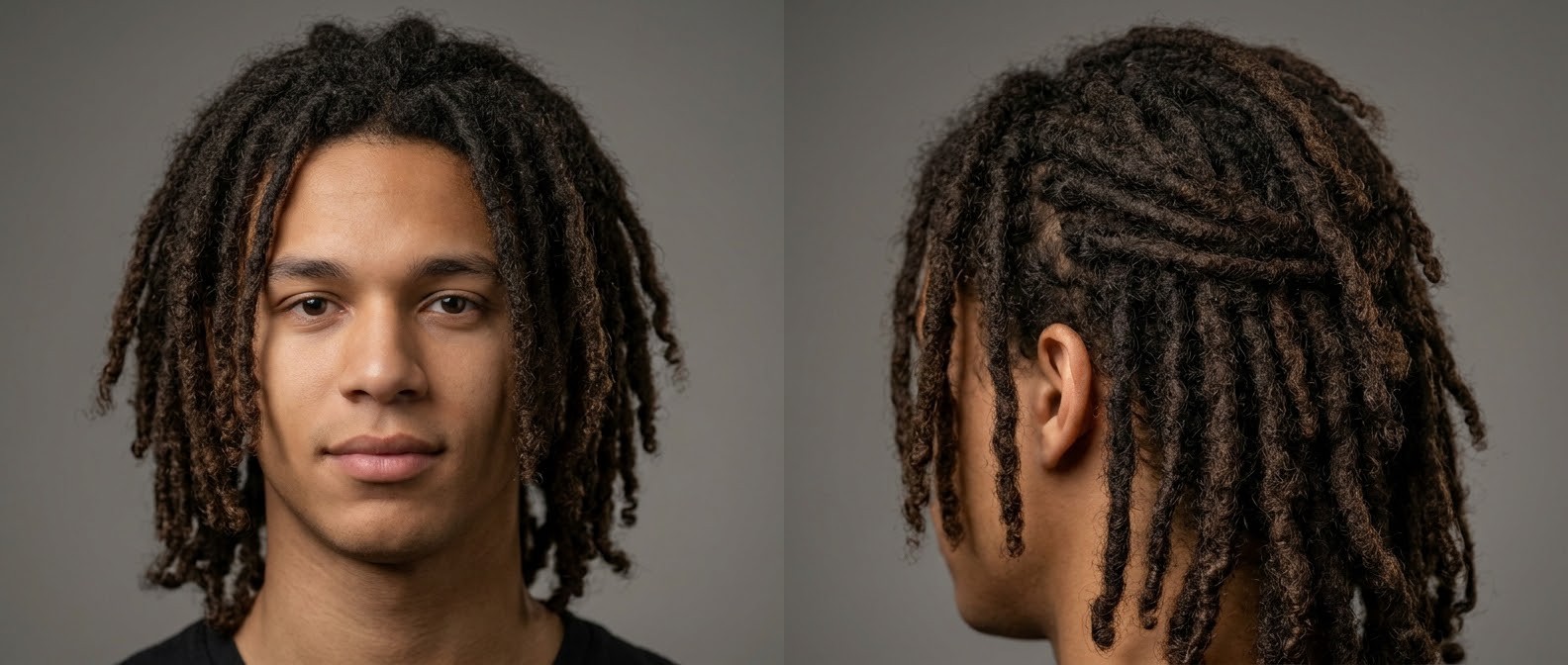
Vibrant Copper Dreadlocks with Subtle Undercut and Full Beard
Dreadlocks
Men's Medium-Long Natural Dreadlocks with Curly Ends
Dreadlocks
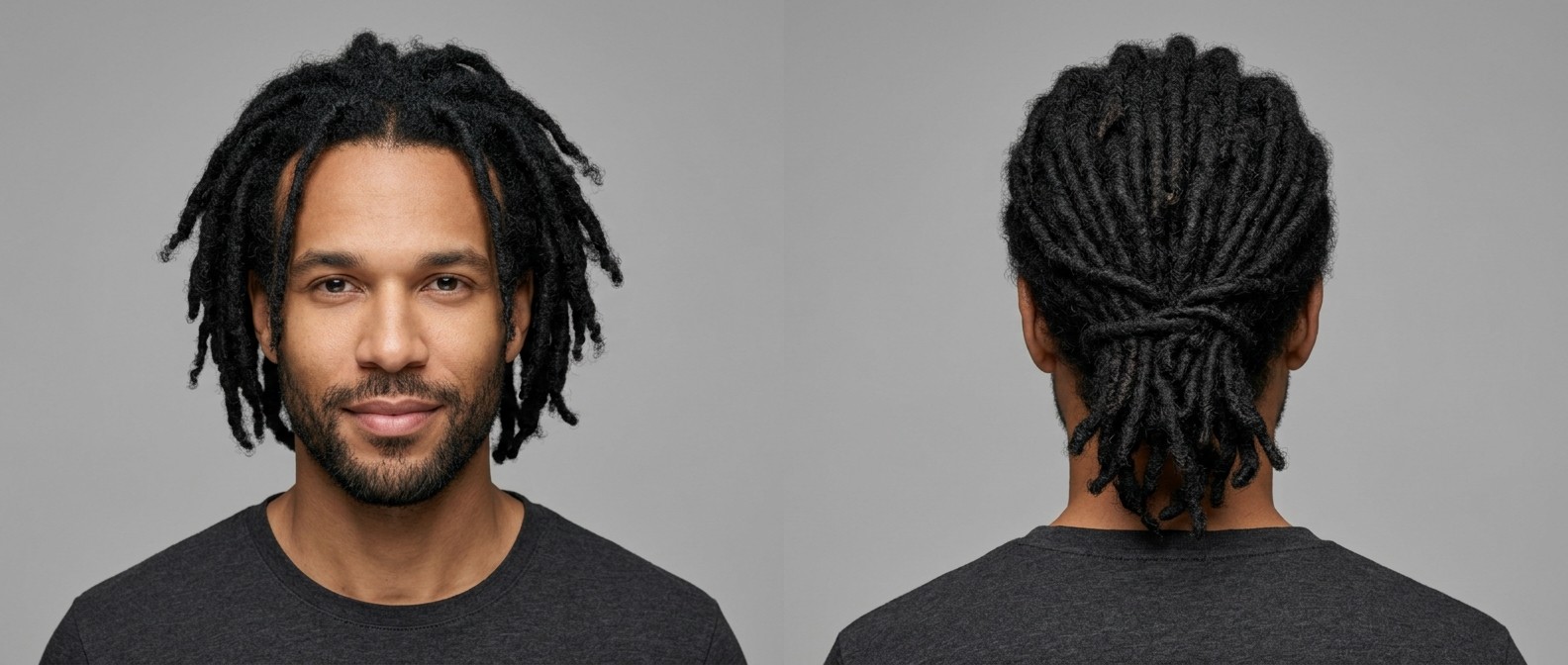
Medium-Length Cylindrical Dreadlocks with Natural Tied-Back Knot
Dreadlocks
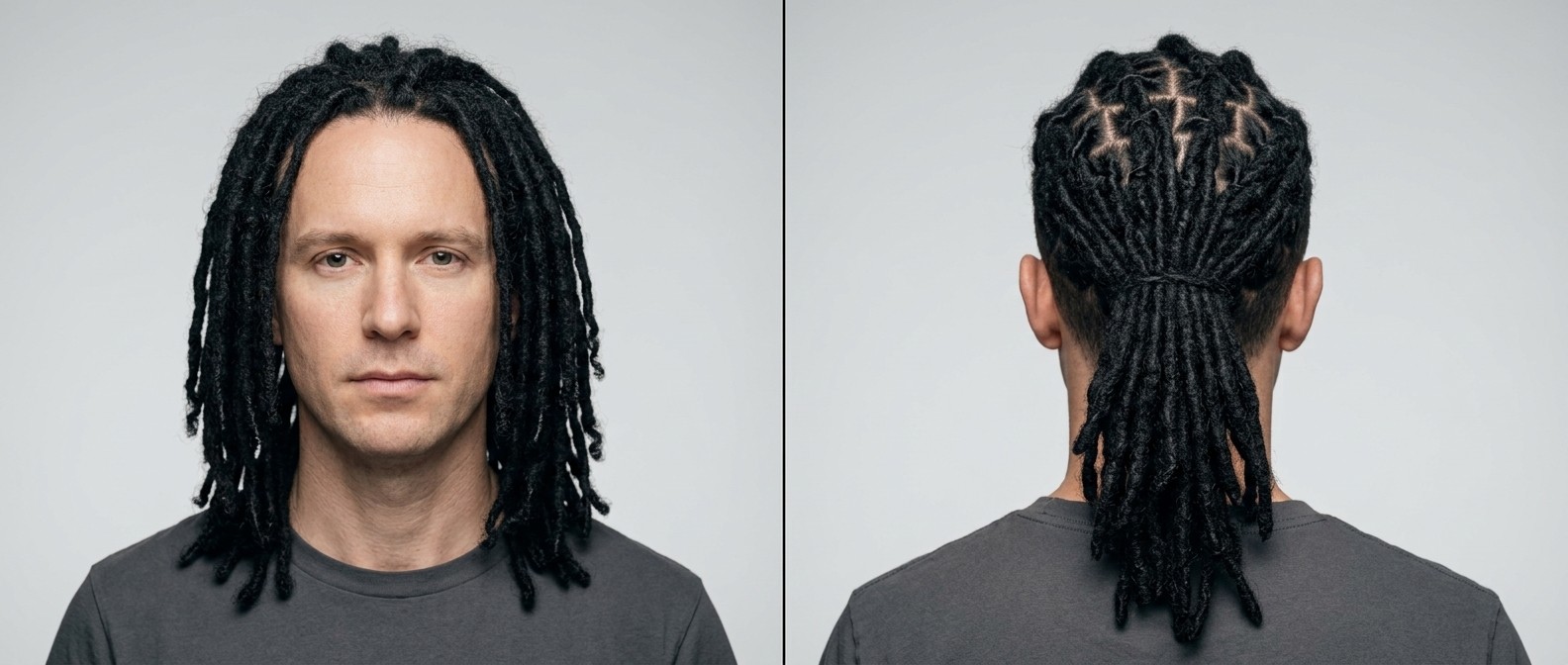
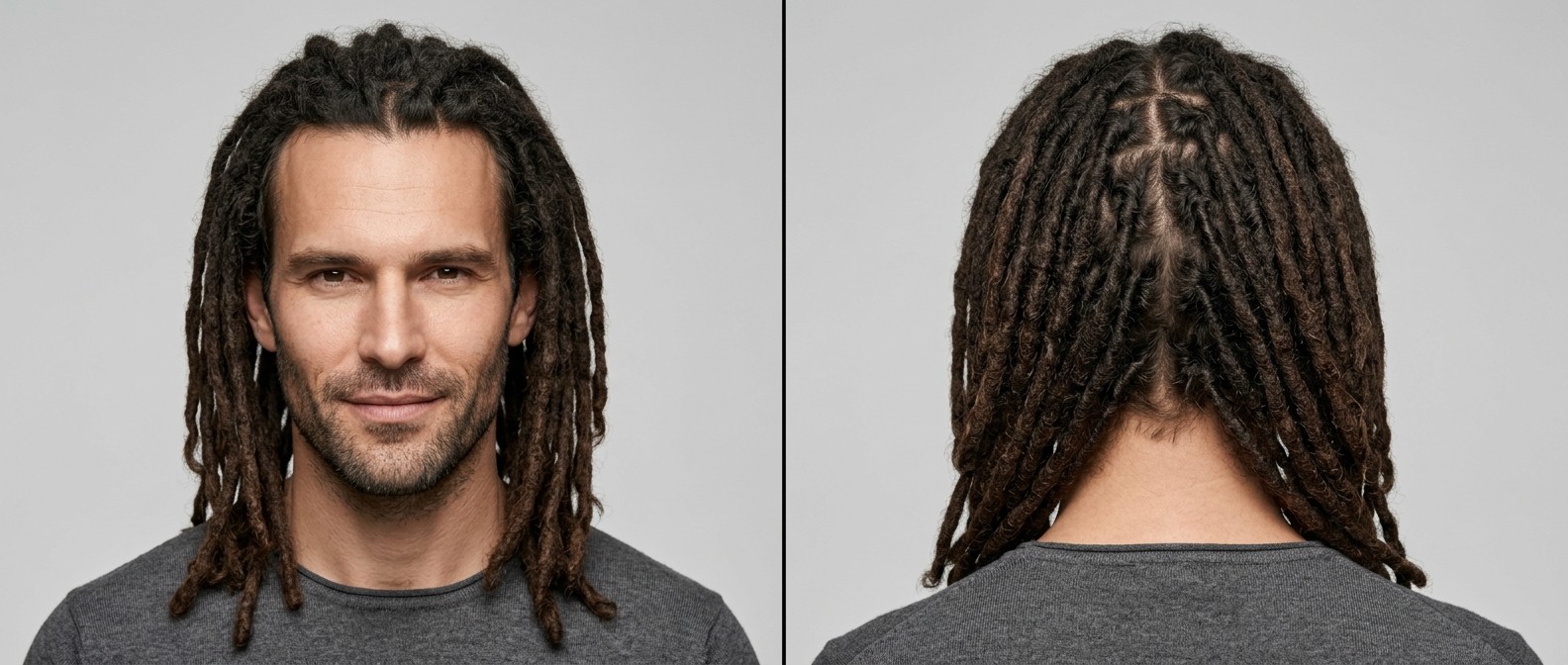
Long Structured Dreadlocks with Geometric Root Parting
Dreadlocks
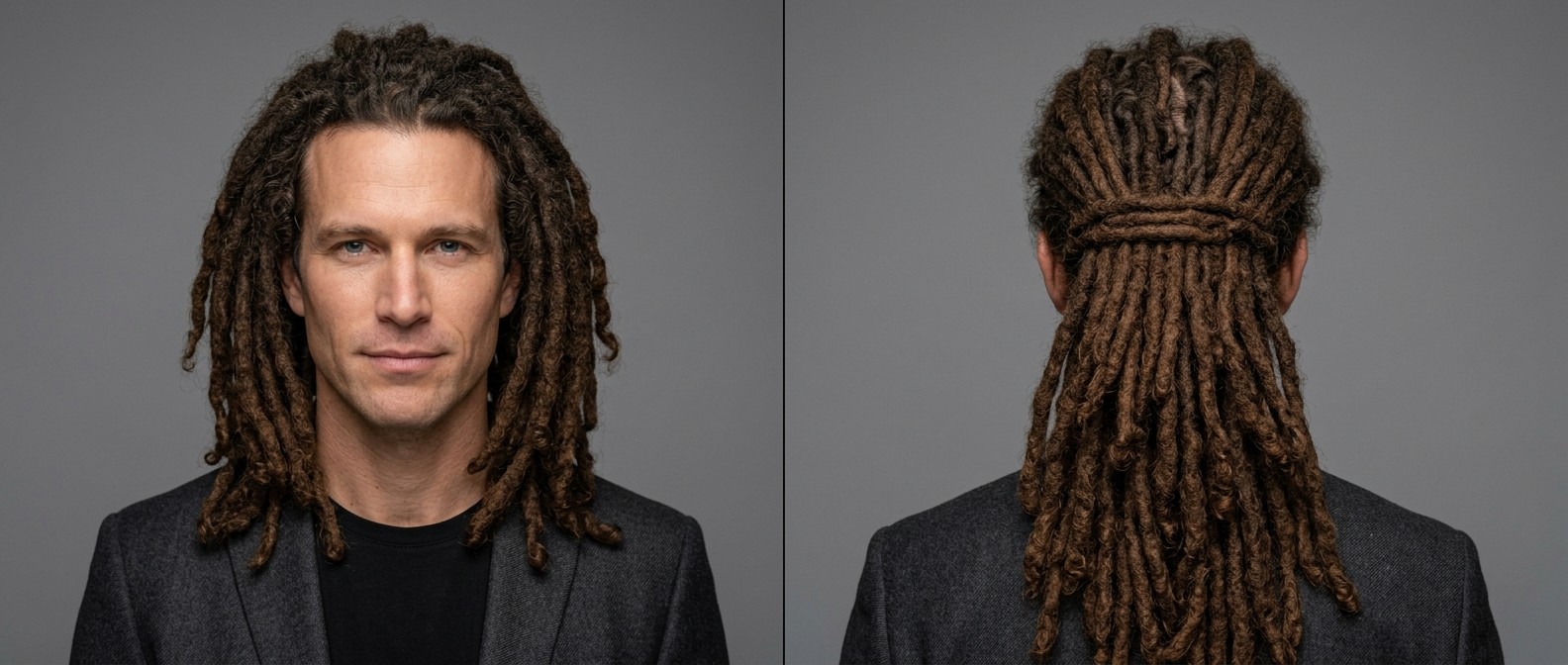
Long Mature Brown Dreadlocks with Half-Up Tied Crown
Dreadlocks