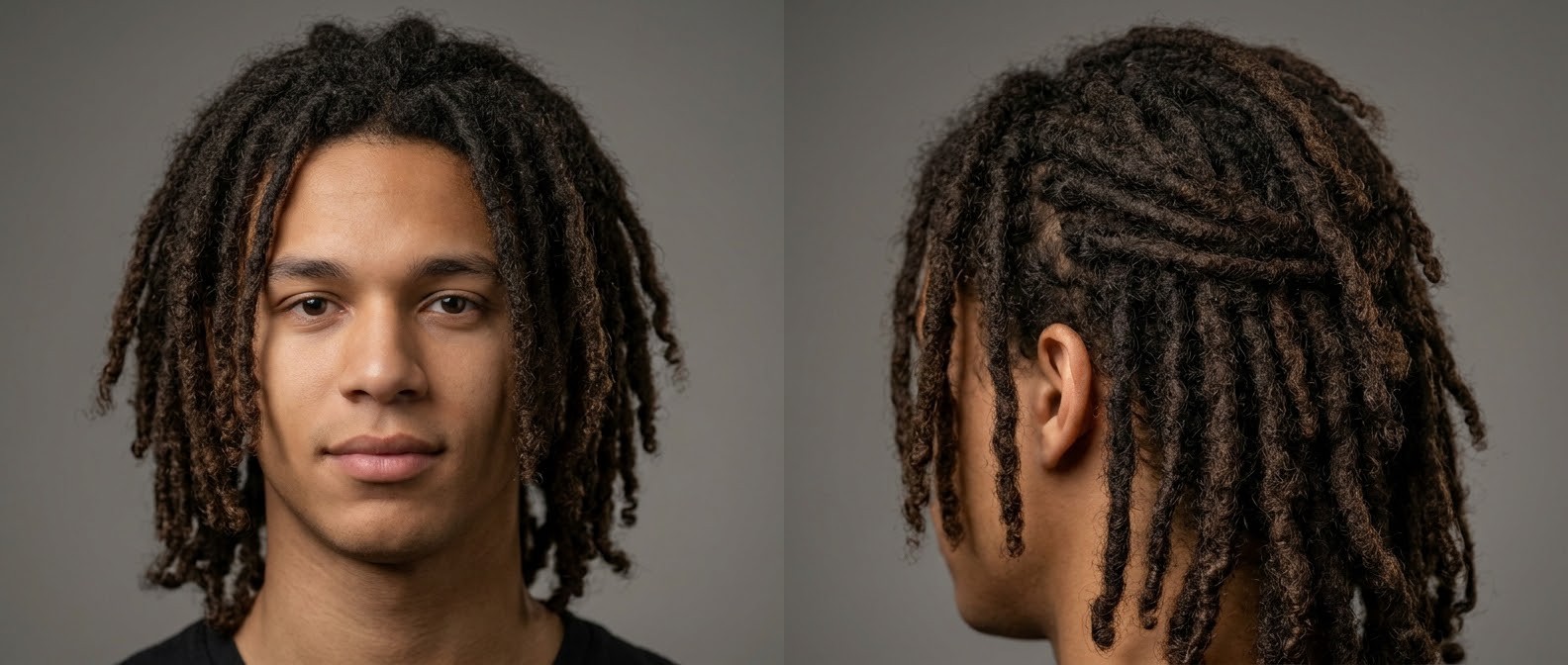
Add one front-facing photo. We send it to the AI together with this exact cut — and you get a photorealistic preview of yourself wearing it.
1
Your photo
Front view · neutral face · even light
2
This haircut
Already included
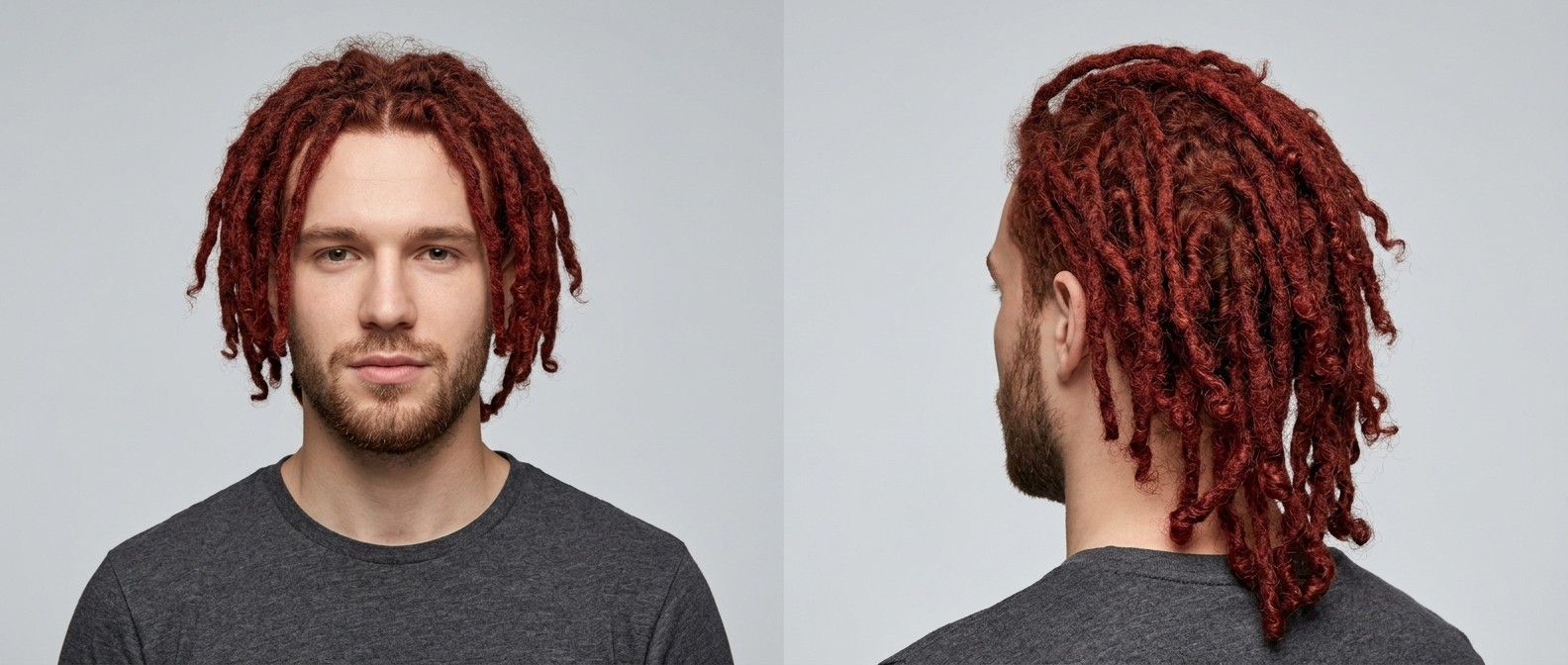
Front and back reference — taken from this page
3
Your preview
Your result appears here
![]()
![]()
Generated for you, not published anywhere
How do you rate this tool?
- Reading your photo
- Matching the cut
- Rendering your preview
How to take a photo that works
Do
- Face the camera straight on
- Even daylight, no harsh shadow
- Head and shoulders in frame
- Hair fully visible, nothing covering it
Avoid
- Hats, caps, hoods, sunglasses
- Steep angles or a tilted head
- Group photos or heavy filters
- Backlight that darkens the face
Men's Medium-Long Natural Dreadlocks with Curly Ends
 Top
Long (10-20 cm)
 Sides
Long (5+ cm)
 Hair Type
Very Curly / Afro (Type 4)
 Face Shape
Oval
 Maintenance
Medium
 Thickness
Thick / Dense
About This Style
This striking medium-to-long dreadlock style is a masterclass in embracing natural texture, volume, and organic movement. What immediately stands out in this specific variation is the free-flowing nature of the locs, specifically the unsealed, curly ends that add a softer, highly dynamic finish compared to traditional blunt-tipped dreads. The hair is meticulously sectioned to allow a natural, cascading fall around the face, framing oval and angular features perfectly while maintaining substantial, impressive density throughout the sides and back. The lack of a fade or undercut means the silhouette is beautifully full, celebrating the hair's natural density and thickness.
Ideal for the creative professional, musician, or artistic soul, this look commands immediate attention without ever feeling overly manicured or rigid. It perfectly suits guys with very curly or Type 4 hair who want a low-manipulation style that still offers immense earthy versatility. Whether you are heading to an upscale art gallery opening, performing on stage, or enjoying a casual weekend hangout, this full-head loc style projects supreme confidence, authenticity, and a deeply rooted sense of personal style. The rich, multi-dimensional brown tones, coupled with subtle, naturally sun-kissed highlights at the tips, further enhance the visual depth and structural complexity of this thick, dense canopy of hair.
Ideal for the creative professional, musician, or artistic soul, this look commands immediate attention without ever feeling overly manicured or rigid. It perfectly suits guys with very curly or Type 4 hair who want a low-manipulation style that still offers immense earthy versatility. Whether you are heading to an upscale art gallery opening, performing on stage, or enjoying a casual weekend hangout, this full-head loc style projects supreme confidence, authenticity, and a deeply rooted sense of personal style. The rich, multi-dimensional brown tones, coupled with subtle, naturally sun-kissed highlights at the tips, further enhance the visual depth and structural complexity of this thick, dense canopy of hair.
Key Features
- Full-head dreadlock installation with an entirely natural perimeter, featuring no tapered, faded, or shaved sides, which maintains a beautifully uniform density from front to back.
- Unsealed, naturally curly tips that provide a significantly softer, highly textured, and dynamic perimeter compared to traditional blunt or crocheted dreadlock ends.
- Medium-to-long overall length (ranging between 10-20 cm) that allows the hair to fall naturally past the ears and rest comfortably near the collarbone.
- Organic, staggered brick-lay parting system at the scalp that actively prevents harsh, visible grid lines and encourages maximum natural volume at the roots.
- Free-flowing, downward directional fall, allowing the individual locs to frame the face organically without rigid styling or forced positioning.
- Rich, multi-dimensional brown coloring that showcases naturally lighter, sun-kissed ends, adding significant visual depth and highlighting the coiled texture of the tips.
Getting the Cut
- Request a full-head dreadlock installation or a comprehensive maintenance session, explicitly stating you want to keep the full perimeter intact with no shaved sides, tapers, or undercuts.
- Ask for medium-sized, pencil-thick sections utilizing a strategic brick-lay or diamond parting pattern; this maximizes overall volume and ensures no harsh scalp lines are visible when the hair falls naturally.
- Specify clearly that you want to leave the ends of the locs unsealed and naturally curly, instructing the loctician to avoid blunting, rounding, or folding the tips with a crochet needle.
- Instruct the loctician to use the comb coil or two-strand twist method to start or maintain the roots, tailoring the exact technique to your specific curl pattern and hair density.
- Ask for a thorough, gentle palm-rolling session from the roots down to the mid-shaft to encourage tight, cylindrical locking while carefully preserving the loose, textured ends.
- Request a highly natural hairline cleanup using trimmers only if absolutely necessary for stray hairs, strictly avoiding pushing the natural hairline back or creating artificial, sharp corners.
- Discuss establishing a consistent maintenance schedule of 6 to 8 weeks for root retwisting, ensuring new growth remains tidy and structured without causing undue tension or traction alopecia.
Daily Routine
- Start your morning grooming routine by carefully removing your satin or silk sleep cap, allowing the dreadlocks to drop and settle naturally into their resting position.
- Lightly and evenly mist your entire canopy of locs and your scalp with a premium hydrating spray containing aloe vera, rosewater, or vegetable glycerin to wake up the roots and refresh the curly ends.
- Apply a dime-sized amount of a lightweight, nourishing locking oil—such as pure jojoba, sweet almond, or peppermint oil—to your fingertips and gently massage it directly into your scalp to stimulate circulation and prevent dryness.
- Use the palms of your hands to lightly smooth down the mid-lengths of the locs, effectively taming any overnight surface frizz without disrupting the established cylindrical shape of the dreads.
- Scrunch the unsealed, curly ends gently with your hands, pulsing upward slightly to reactivate the natural curl pattern, restore moisture to the oldest parts of the hair, and add lively bounce.
- Arrange the front-facing locs so they cascade and frame your face organically, creating a rough, natural center part or an asymmetrical off-center part depending on your daily preference and face shape.
- Allow the hair to air dry completely if you used a generous amount of hydration mist, strictly avoiding the use of heavy styling gels, holding sprays, or waxes that can cause stubborn internal buildup.
Products & Tools
- Premium hydrating mist or pure rosewater spray (provides a lightweight, residue-free finish essential for daily moisture without buildup).
- Natural, cold-pressed scalp oil such as jojoba, sweet almond, or argan oil (delivers light hold, high shine, and essential scalp nourishment).
- High-quality, residue-free dreadlock clarifying shampoo (delivers a deeply cleansing, clarifying finish vital for bi-weekly wash days).
- High-grade satin or silk sleep bonnet, durag, or pillowcase (an absolutely essential tool for overnight friction protection and moisture retention).
- Large microfiber hair towel (crucial for gentle, lint-free, and rapid moisture absorption after washing your locs).
- Soft-bristled boar hair edge brush (used only for very light, optional hairline detailing and smoothing baby hairs if desired).
Maintenance
- Schedule professional root retwisting appointments with your trusted loctician strictly every 6 to 8 weeks to effectively manage new growth without causing root thinning.
- Wash your locs thoroughly every 2 to 3 weeks using a specialized residue-free dreadlock shampoo to actively prevent product buildup, scalp irritation, and lint accumulation inside the loc matrix.
- Always sleep with a silk or satin head covering, or use a silk pillowcase, to retain essential hair moisture and prevent friction-induced frizz and breakage overnight.
- Strictly avoid the use of heavy beeswax, thick styling creams, or standard commercial cream conditioners, as these substances easily get trapped and rot inside the dense loc structure.
- Ensure your locs are 100% dry all the way to the core after washing before going to bed or tying them up, utilizing a hooded dryer if necessary, to prevent internal mildew and damp odors.
Best For
Face Shapes: Exceptionally ideal for oval, square, and heart-shaped faces, as the long, vertical, face-framing locs help to soften sharp jawlines and elongate the overall facial profile beautifully.
Hair Types: Specifically and perfectly suited for Very Curly to Afro-textured hair (Type 4) which possesses the necessary tight coil pattern to lock naturally, efficiently, and hold the cylindrical shape long-term.
Lifestyles: Absolutely perfect for creative, artistic, or relaxed professional environments where expressive, culturally rich, and highly textured natural styling is welcomed and celebrated.
Thickness: Requires a foundation of thick, dense hair to successfully achieve this full, voluminous canopy without the style looking sparse, stringy, or showing too much scalp.
Pro Tips
- Never over-twist your roots during maintenance sessions; applying excessive tension for the sake of a neat look can quickly lead to permanent follicle damage, thinning, and traction alopecia.
- To keep the unsealed, curly ends looking fresh and vibrant, occasionally apply a microscopic drop of lightweight, water-based leave-in conditioner specifically and exclusively to the curly tips.
- During harsh winter months, proactively increase your scalp oiling and hydration misting frequency, as artificial indoor heating systems can severely dry out and brittle locked hair.
- Make it a strict habit to regularly and gently separate your locs at the roots with your fingers after every wash to prevent individual dreads from marrying or combining into one massive loc.
Related Hairstyles
Dreadlocks
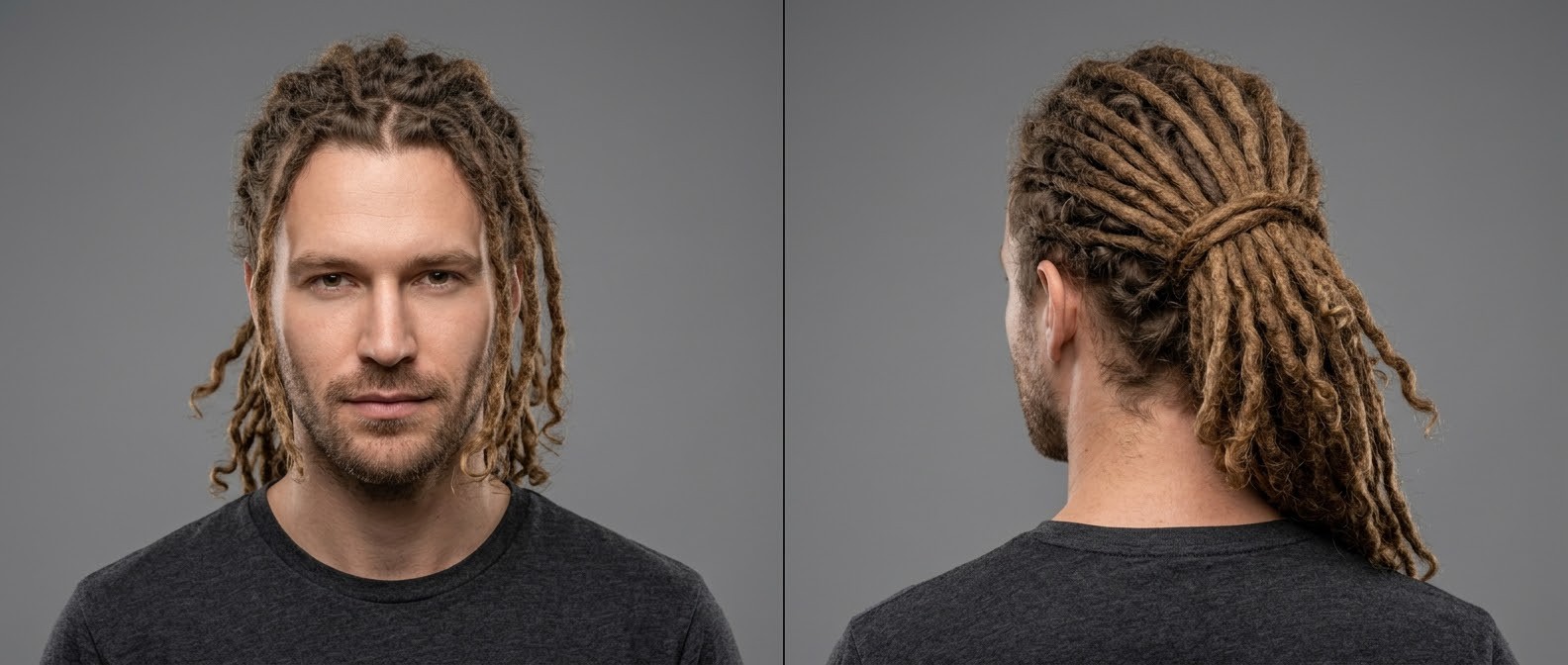
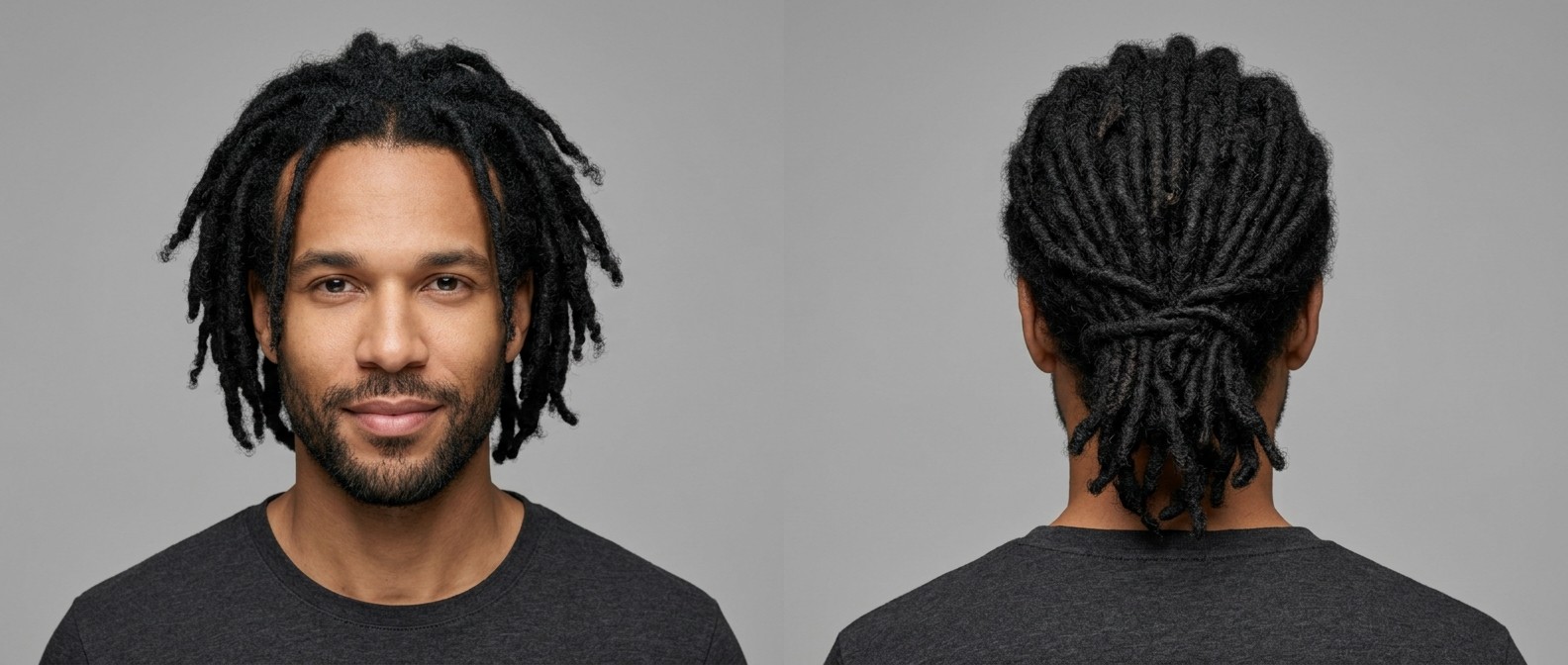
Long Light Brown Caucasian Dreadlocks with Half-Up Tie and Curly Tips
Dreadlocks
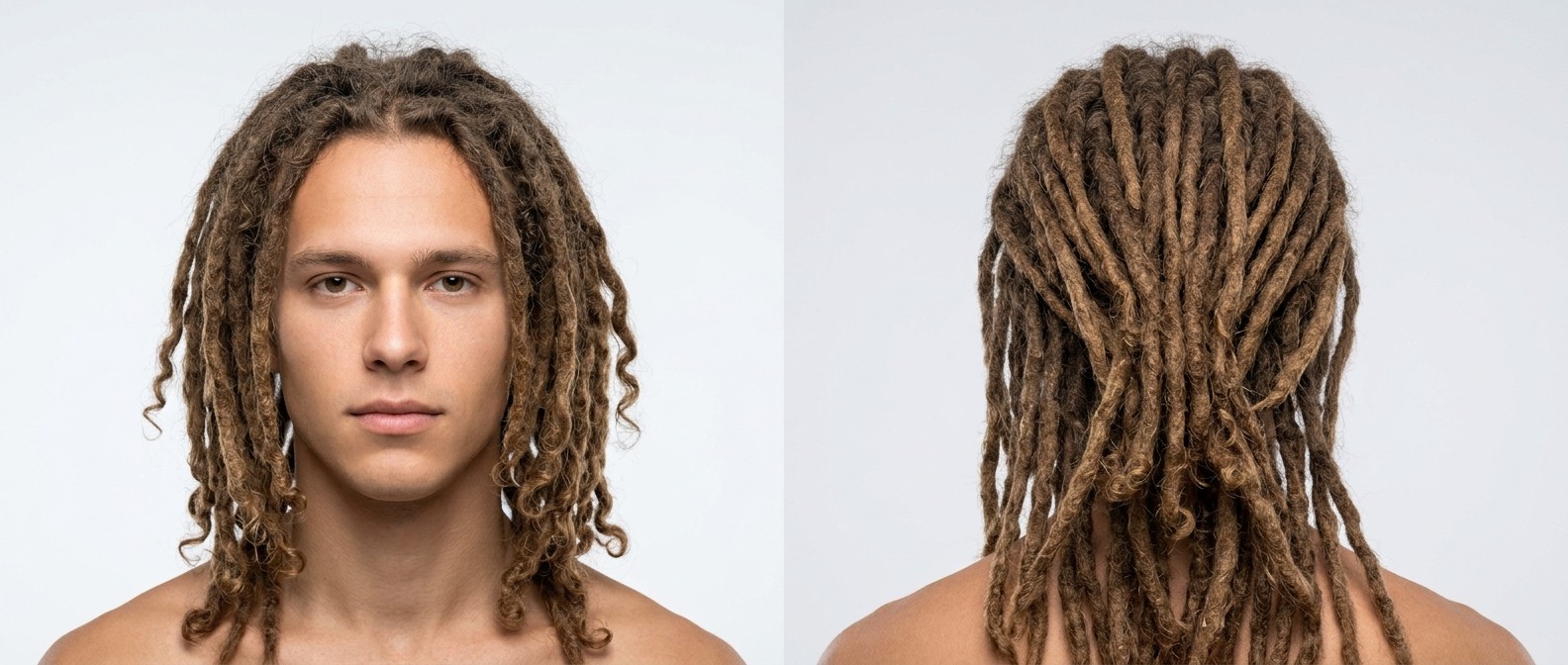
Medium-Length Cylindrical Dreadlocks with Natural Tied-Back Knot
Dreadlocks
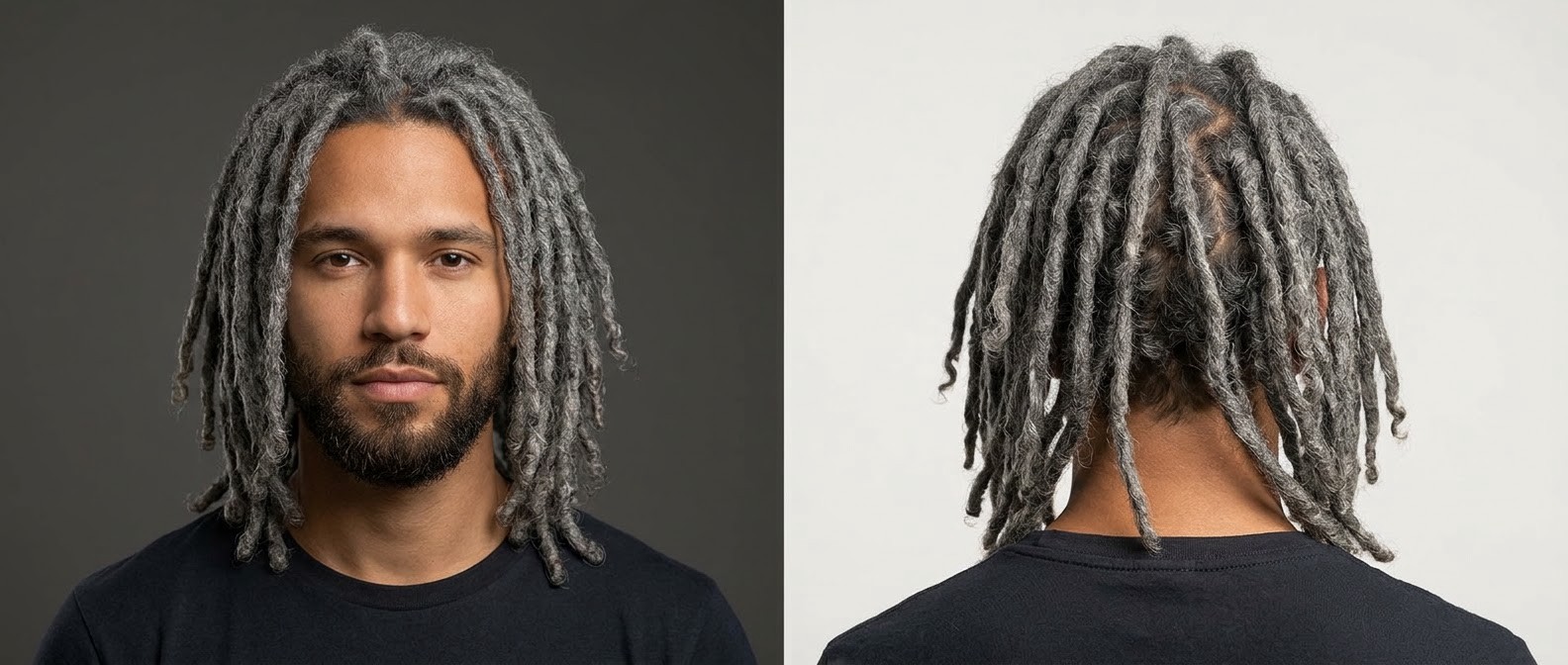
Long Natural Light Brown Dreadlocks with Loose Curly Ends
Dreadlocks
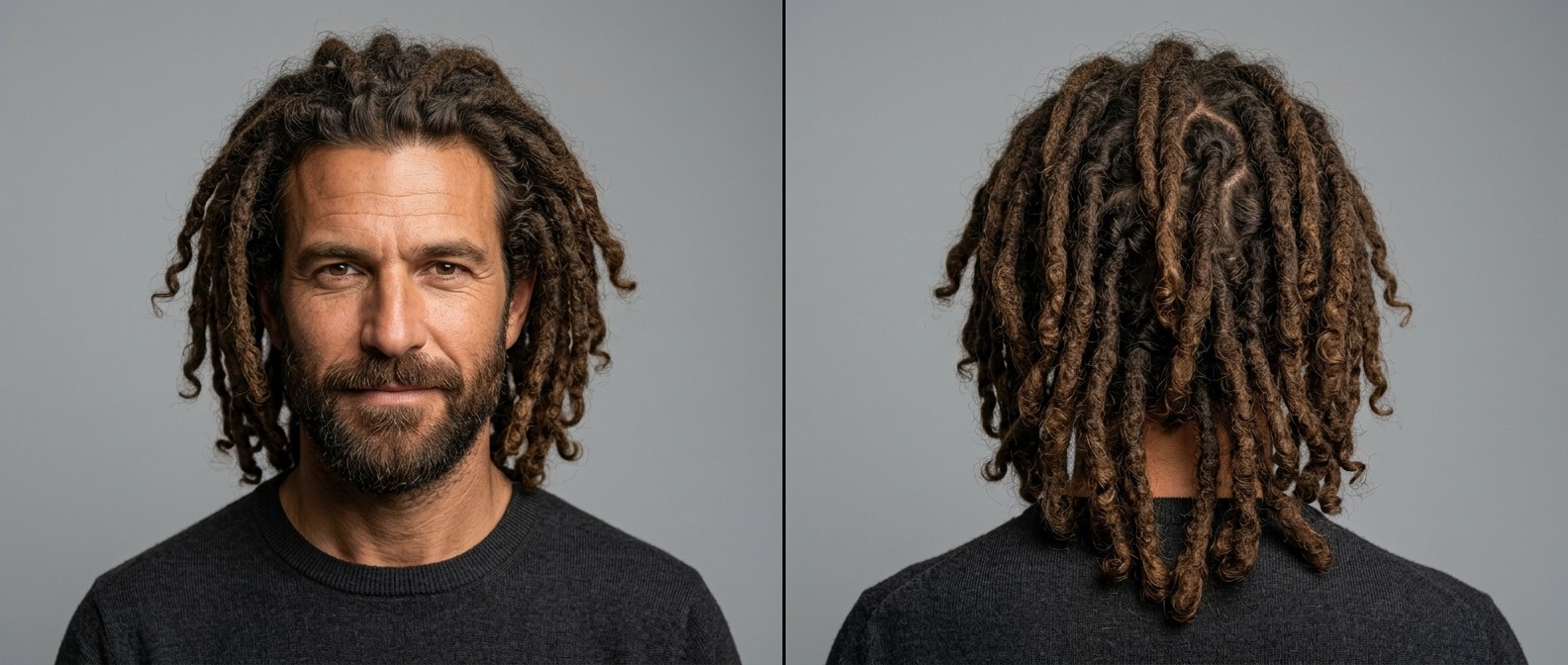
Medium-Long Silver Gray Dreadlocks with Loose Curly Ends
Dreadlocks
Shoulder-Length Natural Brown Dreadlocks with Loose Curly Ends
Dreadlocks