Add one front-facing photo. We send it to the AI together with this exact cut — and you get a photorealistic preview of yourself wearing it.
1
Your photo
Front view · neutral face · even light
2
This haircut
Already included
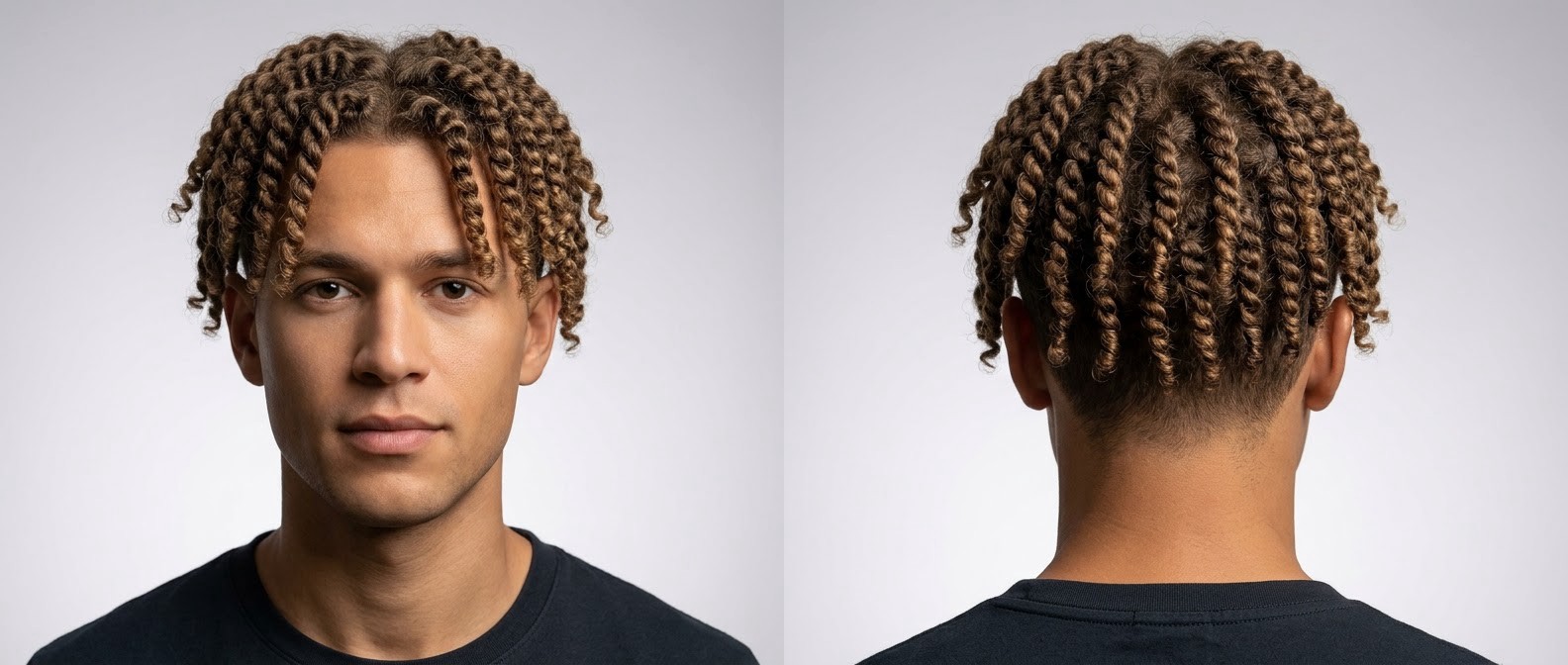
Front and back reference — taken from this page
3
Your preview
Your result appears here
![]()
![]()
Generated for you, not published anywhere
How do you rate this tool?
- Reading your photo
- Matching the cut
- Rendering your preview
How to take a photo that works
Do
- Face the camera straight on
- Even daylight, no harsh shadow
- Head and shoulders in frame
- Hair fully visible, nothing covering it
Avoid
- Hats, caps, hoods, sunglasses
- Steep angles or a tilted head
- Group photos or heavy filters
- Backlight that darkens the face
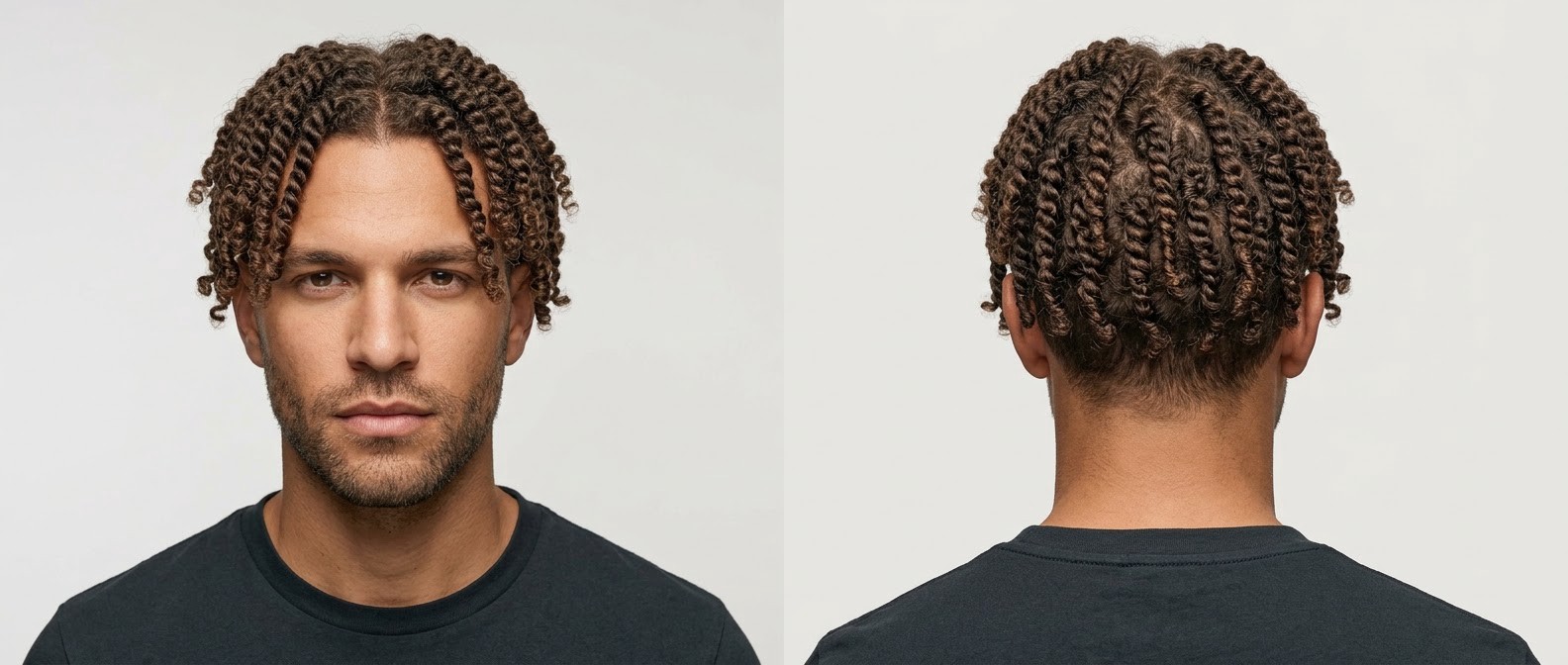
Medium Two-Strand Twists with Middle Part and Tapered Nape
 Top
Short (2-5 cm)
 Sides
Short (6-20 mm)
 Hair Type
Curly (Type 3)
 Face Shape
Diamond
 Maintenance
Medium
 Thickness
Thick / Dense
About This Style
What you are looking at is a masterful execution of two-strand twists tailored for thick, Type 3 curly hair. This variation stands out due to its striking symmetry, anchored by a clean middle part that allows the twists to cascade naturally around the face. The twists are meticulously sectioned, creating a uniform, rope-like texture that highlights the natural volume and density of the hair while keeping it neatly contained. At the back, the twists fall neatly over the crown, stopping just above a subtly tapered nape that keeps the overall silhouette looking sharp and intentional.
This style is an exceptional choice if you have a diamond face shape, as the twists add balanced width near the temples and cheekbones, softening angular jawlines and drawing attention to your best facial features. It is highly versatile, bridging the gap between a laid-back, everyday casual aesthetic and a polished, styled look.
Because the twists act as a fantastic protective style, it is perfect for guys with active lifestyles who want to minimize daily manipulation, avoid constant detangling, and maintain a distinct, fashion-forward appearance with minimal morning effort. The combination of the hanging twists and the clean perimeter creates a look that is both rugged and refined.
Key Features
- Prominent, precise middle part that dictates the symmetrical, downward flow of the twists framing the face and highlighting facial symmetry.
- Uniform two-strand twist technique applied consistently throughout, providing a thick, rope-like texture that showcases hair density.
- Clean, subtle taper at the very base of the nape, contrasting the hanging twists above and keeping the neckline looking meticulously tidy.
- Naturally coiled, curly ends that seal the twists organically and prevent unraveling without the use of damaging rubber bands.
- Voluminous, rounded silhouette that builds natural weight and movement around the parietal ridge, crown, and sides of the head.
- Defined, grid-like sectioning at the scalp which adds a layer of geometric visual interest to the root area when viewed up close.
Getting the Cut
- Request a full-head, two-strand twist service, ensuring your hair is thoroughly washed, deeply conditioned, detangled, and blow-dried slightly to stretch the curls before twisting.
- Ask the stylist to create a precise, straight middle part starting from the front hairline and extending all the way back to the crown of the head.
- Instruct them to use a brick-lay or neat grid sectioning pattern, keeping the individual sections roughly one-inch square to maintain uniform twist thickness and avoid scalp tension.
- Ask for a firm but comfortable tension at the roots using a high-quality twisting butter or light pomade to ensure style longevity without causing traction alopecia.
- Request a very low, subtle taper fade at the nape of the neck using a #1 or #2 clipper guard, strictly to clean up the neckline underneath the overhanging twists.
- Have them leave the ends of the twists naturally coiled, applying a touch of hydrating curling cream to lock the ends rather than using blunt scissor cuts.
Daily Routine
- Wake up and carefully remove your silk or satin durag or bonnet, which is absolutely essential for protecting the twists from friction and frizz overnight.
- Lightly mist your exposed scalp and the entire length of the twists with a refreshing spray or a diluted mixture of water and leave-in conditioner to rehydrate the hair.
- Apply a dime-sized amount of lightweight hair oil (like argan, sweet almond, or jojoba oil) to your palms and gently smooth it down the length of the twists to add shine and seal in moisture.
- Use your fingertips to gently massage your scalp in circular motions, promoting healthy blood flow and loosening any stiffness at the roots without disturbing the twist pattern.
- Carefully separate any individual twists that may have clumped or tangled together during sleep, ensuring they fall naturally and symmetrically from the middle part.
- Apply a tiny amount of edge control pomade to your front hairline if you desire a sharper, more polished look for the day, smoothing it in seamlessly with a soft bristle edge brush.
Products & Tools
- Lightweight twisting cream or butter (medium hold, natural finish) to provide essential slip, moisture, and definition during the twisting process.
- Hydrating leave-in conditioner spray to refresh the hair daily, combat dryness, and soothe the scalp without causing heavy product buildup.
- Natural hair oil blend (argan, sweet almond, or jojoba) to seal the hair cuticle, lock in hydration, and impart a healthy, non-greasy shine.
- Rat-tail comb with a metal tip for creating precise, sharp parts, clean sectioning grids, and ensuring immaculate scalp visibility.
- Satin or silk durag, bonnet, or pillowcase to rigorously protect the style from cotton friction and moisture loss while you are sleeping.
- Soft boar bristle brush specifically designated for laying down the hairline, distributing natural oils, and cleaning up the perimeter edges.
Maintenance
- Schedule a professional barber or stylist visit every 3 to 4 weeks to have the nape taper touched up and the twists completely taken down, washed, and redone to prevent unwanted loc-ing.
- Avoid washing your hair completely under the showerhead while the twists are in; instead, use a witch hazel or micellar water solution on a cotton pad to gently cleanse the exposed scalp.
- Always sleep with your hair fully covered in a high-quality silk or satin headwrap to prevent the twists from becoming frizzy, unraveling prematurely, or drying out from cotton pillowcases.
- Refrain from constantly touching, pulling, or playing with the twists throughout the day, as the continuous friction and oils from your hands will introduce unwanted frizz and disrupt the pattern.
Best For
Diamond, oval, and heart face shapes, as the natural volume at the sides perfectly balances sharper cheekbones, softens angular jawlines, and frames the face symmetrically.
Men with Type 3 curly hair that is inherently thick and dense, providing the necessary bulk and structural integrity for full, rope-like twists that hang well.
Guys aged 25-35 looking for a highly stylish, low-maintenance protective style that seamlessly transitions between creative professional work environments and casual weekend outings.
Anyone seeking a streamlined morning grooming routine that takes well under 10 minutes, as the foundational style is already set and simply requires basic refreshing.
Pro Tips
- Never attempt to twist the hair while it is soaking wet; working with damp or slightly blow-dried hair prevents the twists from shrinking excessively and losing length as they fully dry.
- If your ends refuse to stay naturally coiled and begin to unravel, use a tiny dab of strong-hold edge gel right at the very tip and twirl it tightly around your index finger to lock it in place.
- During colder, drier months, proactively increase your use of lightweight scalp oils, as indoor central heating can rapidly dry out the exposed scalp grids between your twist sections.
Related Hairstyles
Twists
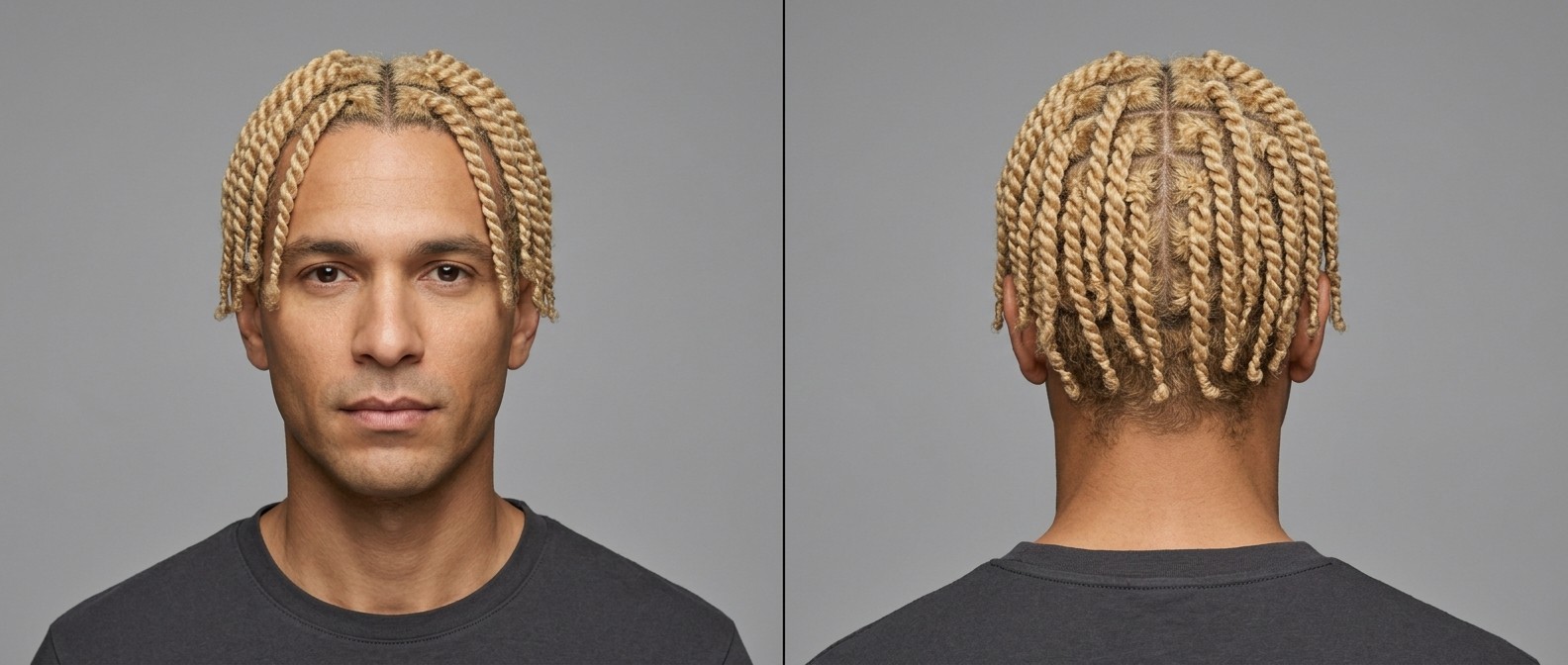
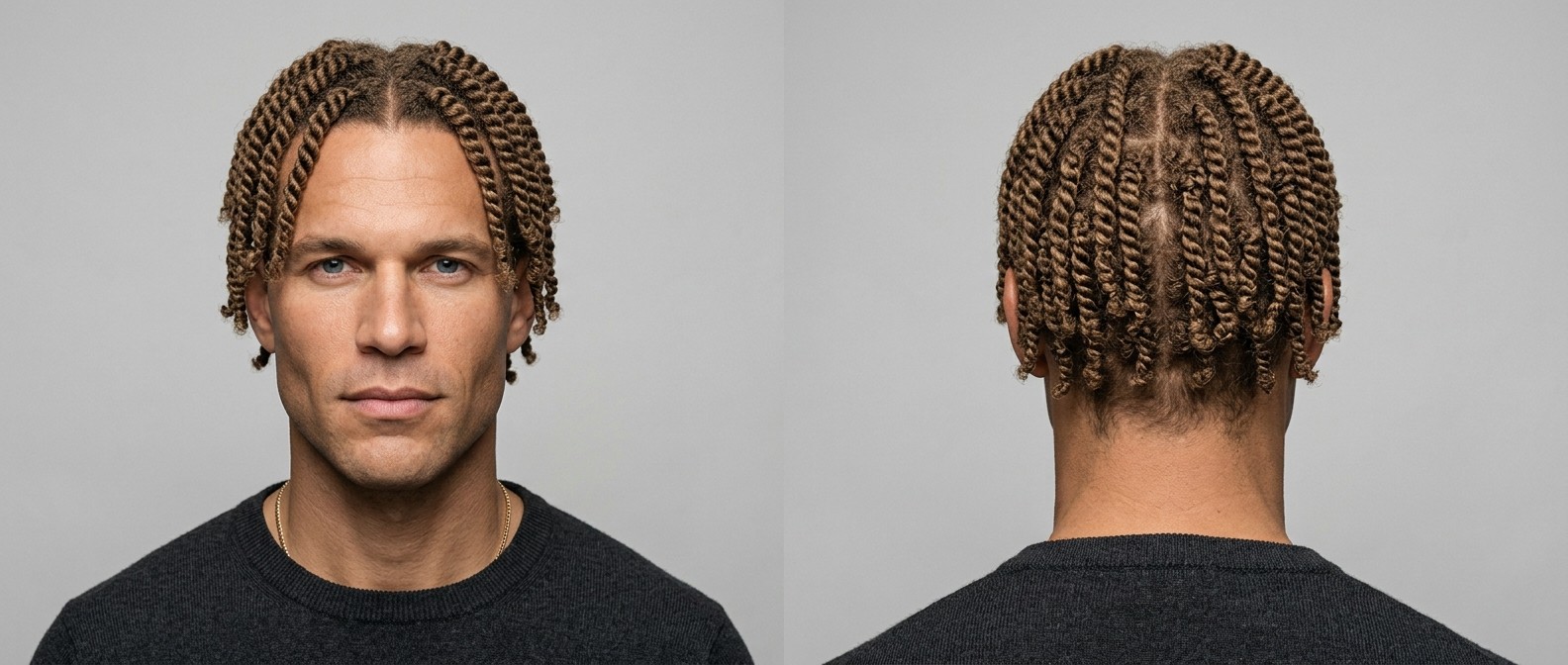
Symmetrical Blonde Two-Strand Twists with Precision Grid Parting
Twists
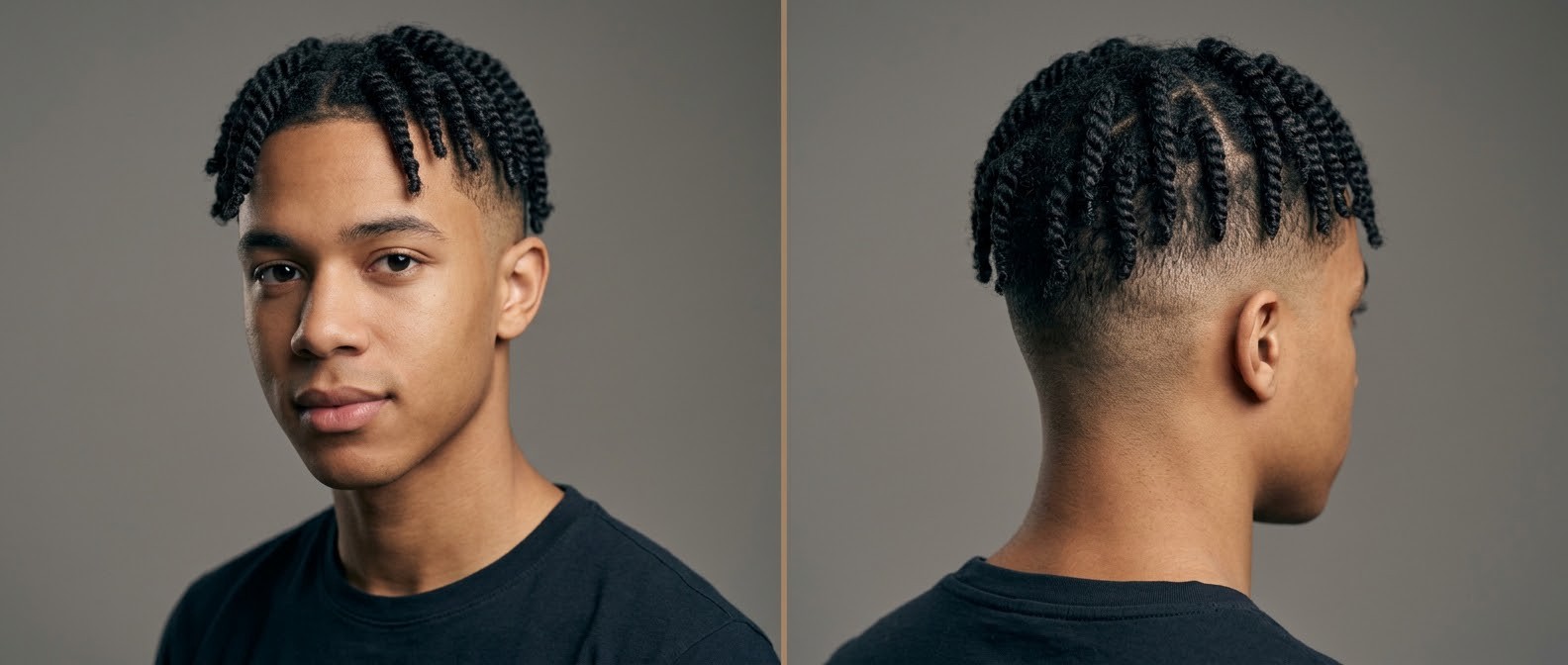
Classic Center-Parted Two-Strand Twists for Medium Hair
Twists
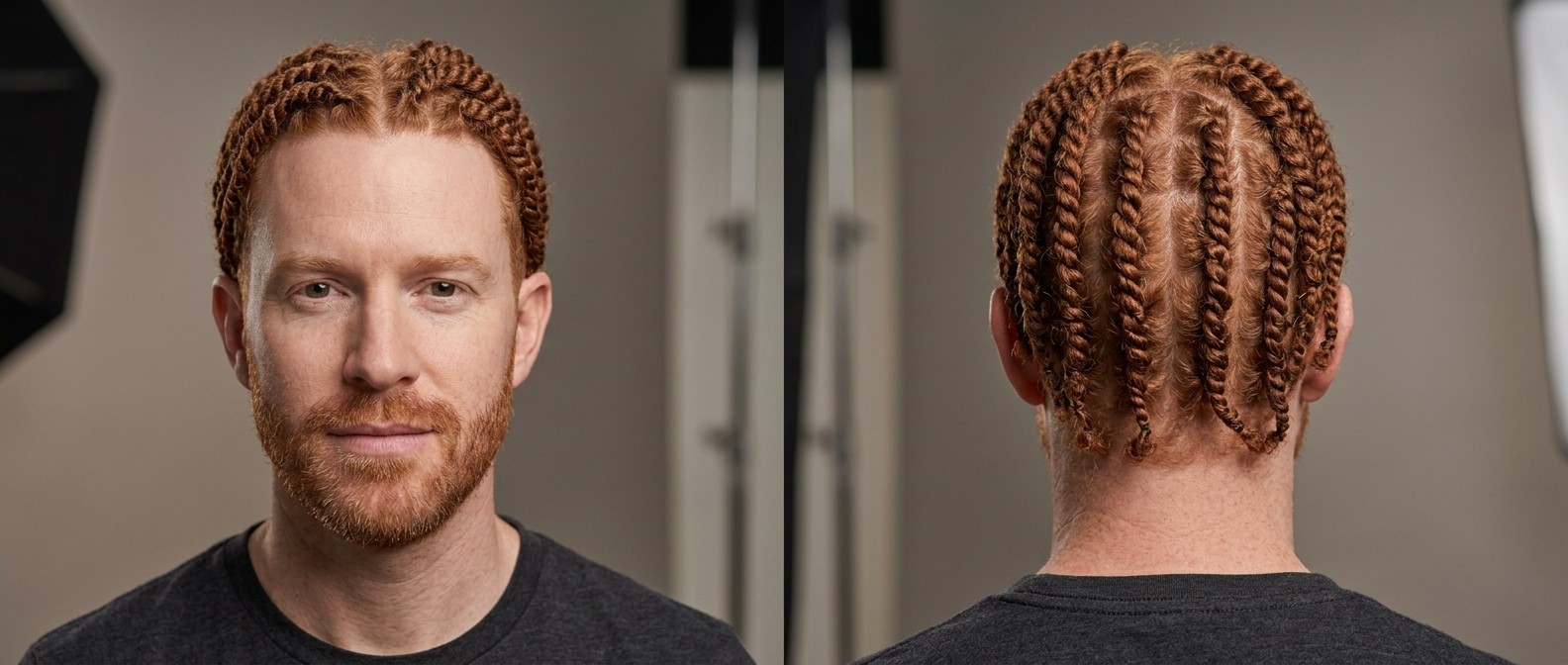
Defined Two-Strand Twists with Clean Mid-Level Drop Fade
Twists
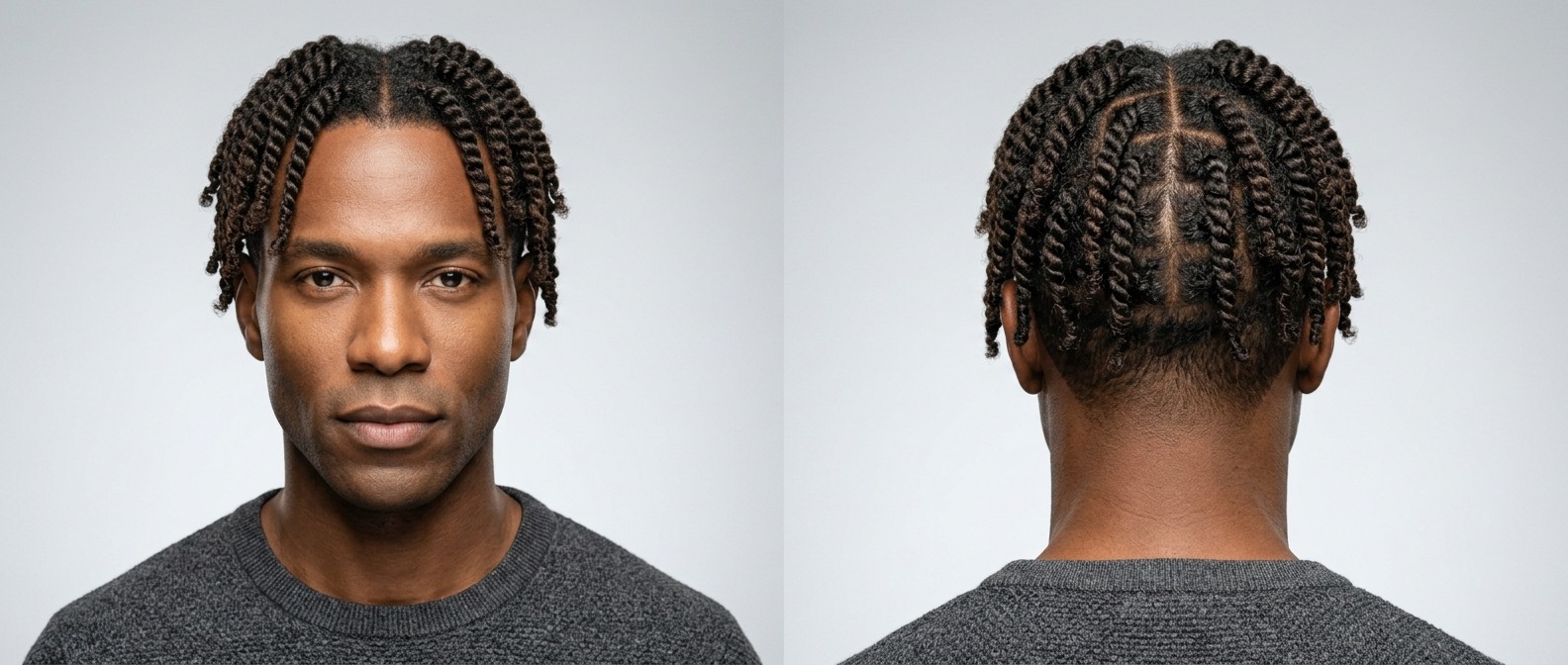
Red Two-Strand Twists with Uniform Sectioning for Thick Hair
Twists
Neat Two-Strand Twists with Center Part and Low Nape Taper
Twists