Add one front-facing photo. We send it to the AI together with this exact cut — and you get a photorealistic preview of yourself wearing it.
1
Your photo
Front view · neutral face · even light
2
This haircut
Already included
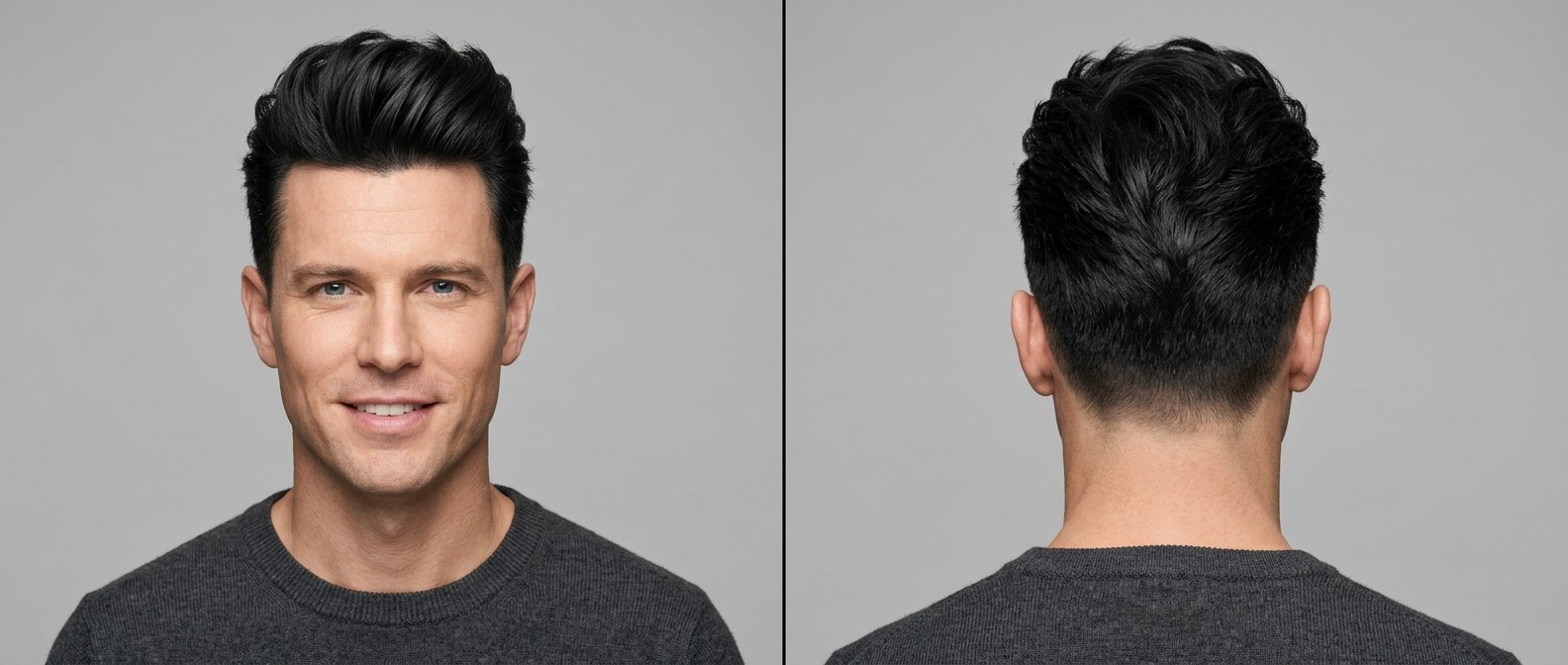
Front and back reference — taken from this page
3
Your preview
Your result appears here
![]()
![]()
Generated for you, not published anywhere
How do you rate this tool?
- Reading your photo
- Matching the cut
- Rendering your preview
How to take a photo that works
Do
- Face the camera straight on
- Even daylight, no harsh shadow
- Head and shoulders in frame
- Hair fully visible, nothing covering it
Avoid
- Hats, caps, hoods, sunglasses
- Steep angles or a tilted head
- Group photos or heavy filters
- Backlight that darkens the face
Classic Textured Quiff with Soft Tapered Sides for Straight Hair
 Top
Medium (5-10 cm)
Top
Medium (5-10 cm)
 Sides
Short (6-20 mm)
Sides
Short (6-20 mm)
 Hair Type
Straight (Type 1)
Hair Type
Straight (Type 1)
 Face Shape
Oval
Face Shape
Oval
 Maintenance
Medium
Maintenance
Medium
 Thickness
Medium / Normal
Thickness
Medium / Normal
About This Style
The classic textured quiff presented here is a masterclass in balancing refined volume with everyday wearability. By keeping the top at a versatile medium length of five to ten centimeters, this cut allows for substantial elevation at the front while maintaining a sleek, controlled silhouette. The sides are kept relatively short—around six to twenty millimeters—but they are not aggressively faded down to the skin. Instead, they provide a mature, polished frame that beautifully complements an oval face shape. Notice how the natural widow's peak is embraced rather than hidden in this photograph; the upward and backward sweep of the quiff integrates the hairline seamlessly into the style's overall flow, turning a common hairline trait into a striking focal point.
Looking at the back profile, the hair is masterfully blended from the longer top down through the crown and into the nape. The crown features a subtle, natural texture that prevents the straight, dense hair from looking too rigid or helmet-like from behind. The taper down the nape of the neck is clean but notably soft, preserving a natural growth pattern rather than opting for a harsh, squared-off blocked neckline. This specific attention to detail in the back ensures the haircut remains looking sharp and grows out gracefully even weeks after your last barber visit.
This variation is exceptionally well-suited for the modern professional who needs a look that transitions effortlessly from the boardroom to casual weekend outings. The rich black, straight hair is styled with just enough product to offer structural hold without appearing overly stiff, wet, or greasy. You get a commanding presence through the height at the front edge, while the softly tapered back ensures the style remains grounded. It is a timeless, highly adaptable choice for men in their thirties and forties seeking a sophisticated yet manageable daily aesthetic.
Looking at the back profile, the hair is masterfully blended from the longer top down through the crown and into the nape. The crown features a subtle, natural texture that prevents the straight, dense hair from looking too rigid or helmet-like from behind. The taper down the nape of the neck is clean but notably soft, preserving a natural growth pattern rather than opting for a harsh, squared-off blocked neckline. This specific attention to detail in the back ensures the haircut remains looking sharp and grows out gracefully even weeks after your last barber visit.
This variation is exceptionally well-suited for the modern professional who needs a look that transitions effortlessly from the boardroom to casual weekend outings. The rich black, straight hair is styled with just enough product to offer structural hold without appearing overly stiff, wet, or greasy. You get a commanding presence through the height at the front edge, while the softly tapered back ensures the style remains grounded. It is a timeless, highly adaptable choice for men in their thirties and forties seeking a sophisticated yet manageable daily aesthetic.
Key Features
- Substantial frontal volume that arches upward and slightly backward for a commanding, structured silhouette.
- Smooth, gradual length transition from the medium-length top down to the short, neatly tapered sides and back.
- Strategic texturing throughout the crown to prevent the straight, thick hair from looking flat or helmet-like.
- Natural integration of the widow's peak hairline, using the upward trajectory to create a flattering V-shaped base.
- Clean, softly tapered neckline that follows the natural growth pattern rather than a harsh, blocked edge.
- Semi-matte to natural shine finish that highlights the thick, straight hair structure without looking wet or greasy.
Getting the Cut
- Request a classic quiff with about two to four inches (5-10 cm) of length left on the top, specifically leaving the fringe longest for maximum volume.
- Ask for a scissor-over-comb technique or a #3 to #4 clipper guard on the sides and back to maintain a conservative, professional length (6-20 mm).
- Instruct the barber to taper the nape naturally, avoiding a harsh blocked neckline to ensure a smoother, more natural grow-out phase.
- Request point cutting or slide cutting through the top section to remove excess bulk and encourage natural texture in your straight, medium-thick hair.
- Ask them to leave enough weight around the parietal ridge (the transition area between the top and sides) so the hair blends smoothly without a severe undercut disconnection.
- Mention your widow's peak and ask them to cut the front profile so the longer hairs can easily sweep up and back, integrating the peak into the style's central lift.
- Request that the crown be blended softly into the back so that the hair lays flat and follows the natural whorl without sticking up.
Daily Routine
- Start your morning routine by towel-drying freshly washed hair until it is slightly damp but no longer dripping wet.
- Apply a small, dime-sized amount of pre-styling volumizing spray or sea salt spray to the roots at the front to establish a strong foundation for the lift.
- Use a blow dryer on medium heat and medium speed, employing a vented brush to pull the front hair upward and backward, lifting directly from the roots.
- Ensure you are holding the blow dryer at least six inches away from your hair to avoid heat damage while directing the airflow exactly where you need the volume.
- As you move to the crown and back, brush the hair in its natural downward and slightly backward growth pattern to smooth the cuticle.
- Once the hair is completely dry and the quiff's shape is set, switch the blow dryer to the cold shot setting for ten seconds to lock in the volume and close the hair cuticles.
- Scoop out a moderate amount (about the size of an almond) of matte clay or medium-hold styling paste, warming it thoroughly between your palms until it becomes completely invisible.
- Run your coated hands through the top of your hair from front to back, using your fingertips to piece out the texture and pinch the front into a cohesive, upward sweep.
Products & Tools
- Volumizing pre-styler or sea salt spray to provide essential root lift and heat protection before blow-drying.
- Medium-hold, matte-finish styling clay or paste to secure the quiff's structure without adding heavy shine or greasiness.
- High-quality blow dryer equipped with a concentrator nozzle attachment for precise airflow direction during the styling process.
- Vented radial brush or a classic skeleton brush to allow air to pass through the hair while pulling it upward for maximum volume.
- Wide-tooth comb for initial detangling and evenly distributing the pre-styling product through damp hair.
Maintenance
- Schedule barber visits every three to four weeks to keep the sides crisp and prevent the heavy top from losing its structured shape.
- Wash your hair with a clarifying shampoo two to three times a week to prevent the moderate styling clay from building up and weighing down your volume.
- Use a lightweight, hydrating conditioner after washing to keep the straight hair smooth and manageable without sacrificing its natural body.
- Avoid sleeping with heavy styling products left in your hair; rinse them out before bed to prevent clogged pores and pillowcase stains.
- Refrain from wearing tight hats or beanies for extended periods, as this will crush the quiff's volume and can train the hair to lay flat.
Best For
Exceptionally flattering for oval and square face shapes, as the upward volume elongates the face and balances strong features.
Ideal for men with straight, Type 1 hair that has medium to normal thickness, providing enough density to support the quiff's height.
Perfect for professionals aged 35 to 45 who need a versatile, polished appearance that suits both corporate environments and casual settings.
A great match for individuals with a widow's peak, turning a potential hairline challenge into a defining, stylish feature.
Excellent for men looking for a medium-maintenance style that only takes 5 to 10 minutes to execute each morning.
Pro Tips
- Avoid using heavy pomades or gels, as the high moisture content will cause your straight hair to separate and the quiff to collapse under its own weight.
- If you struggle with the widow's peak separating, use a tiny bit of extra clay specifically at the roots of the peak to bind those hairs with the longer strands behind them.
- During humid summer months, finish your styling routine with a light mist of humidity-resistant hairspray to lock the volume in place all day.
- When blow-drying, always make sure the roots are 100% dry; any leftover moisture at the base will cause the style to fall flat within hours.
- To refresh the style later in the day, slightly dampen your hands and push the hair back into place rather than adding more product.
Related Hairstyles
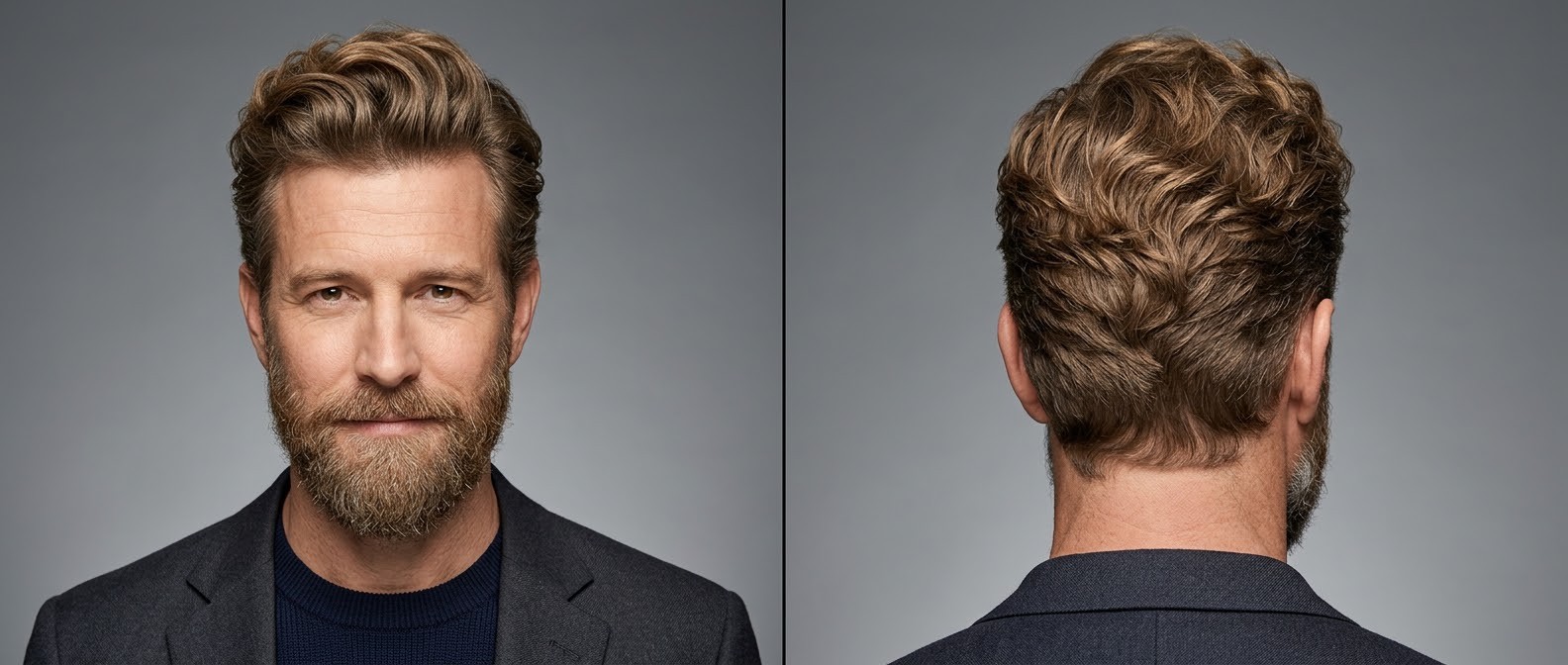
Quiff
Wavy Textured Quiff with Soft Scissor-Cut Sides and Full Beard
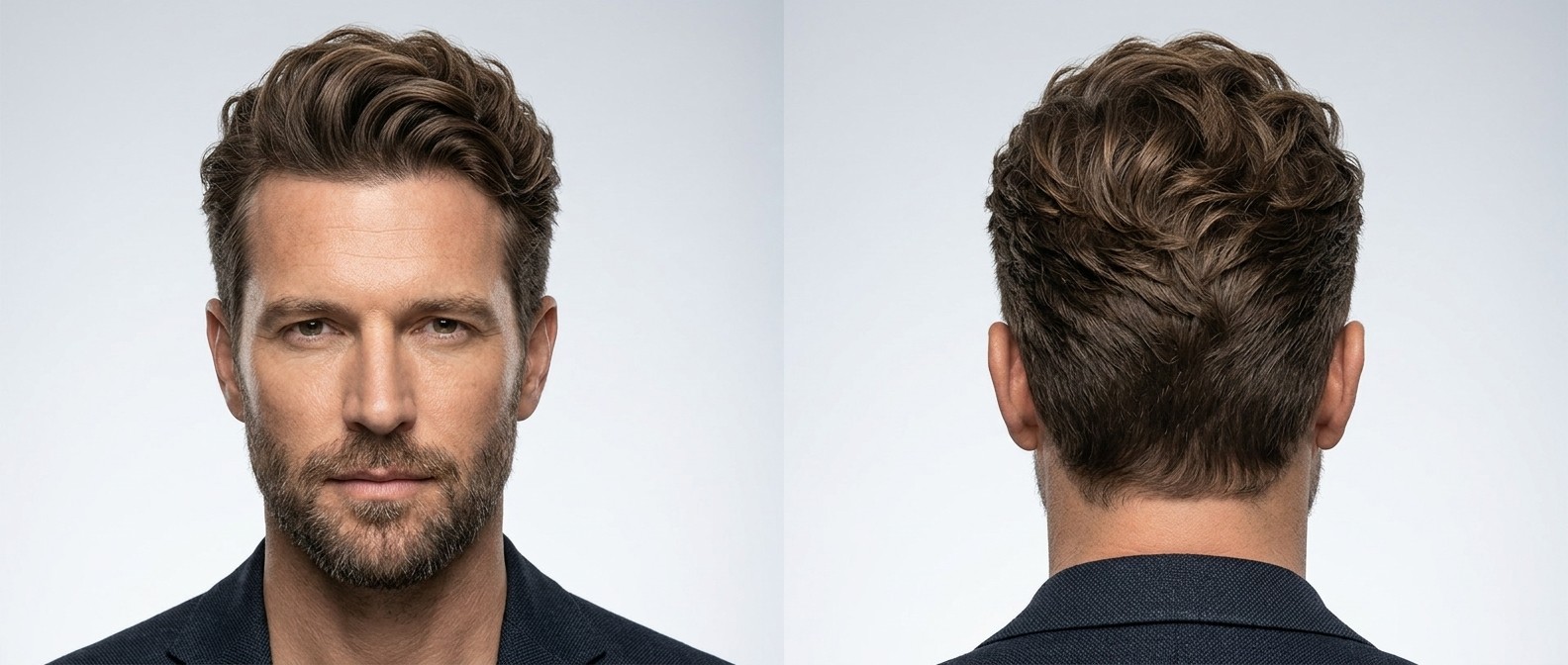
Quiff
Textured Wavy Quiff with Tapered Sides for Mature Men
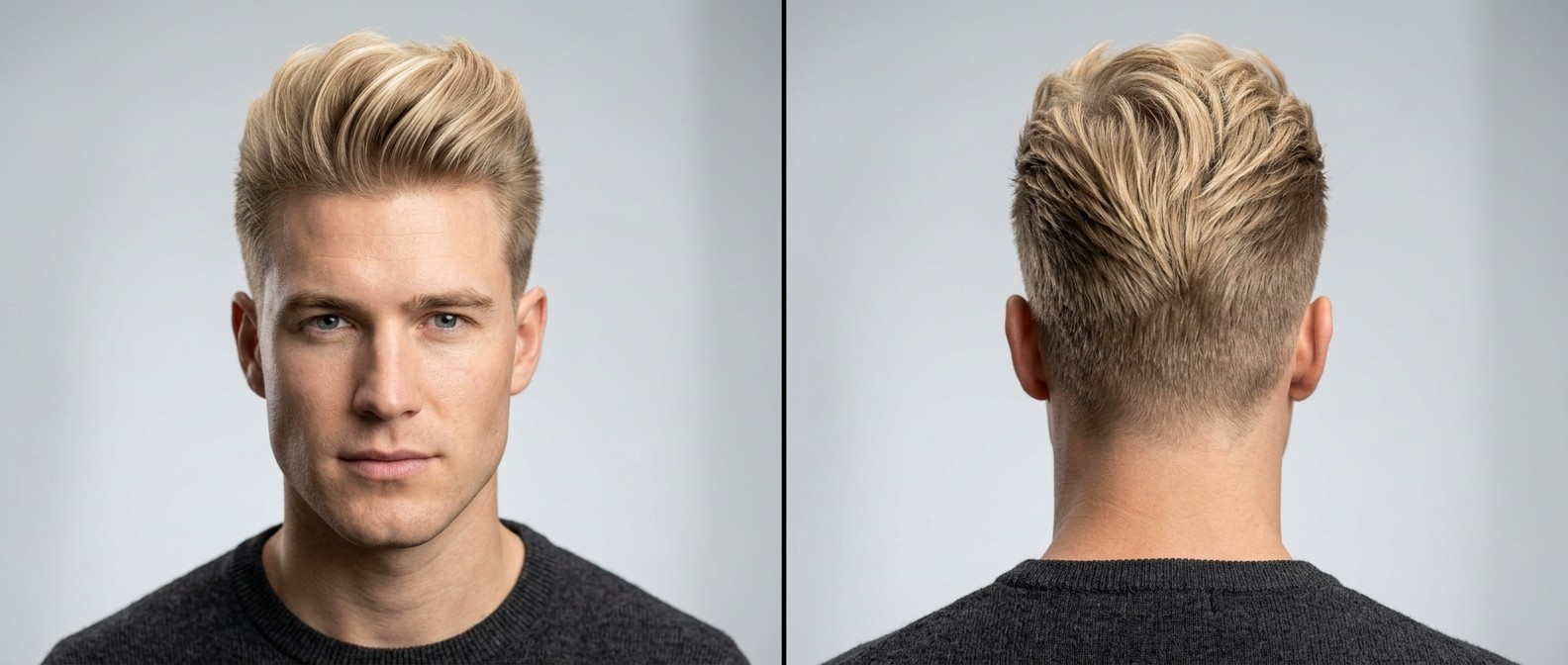
Quiff
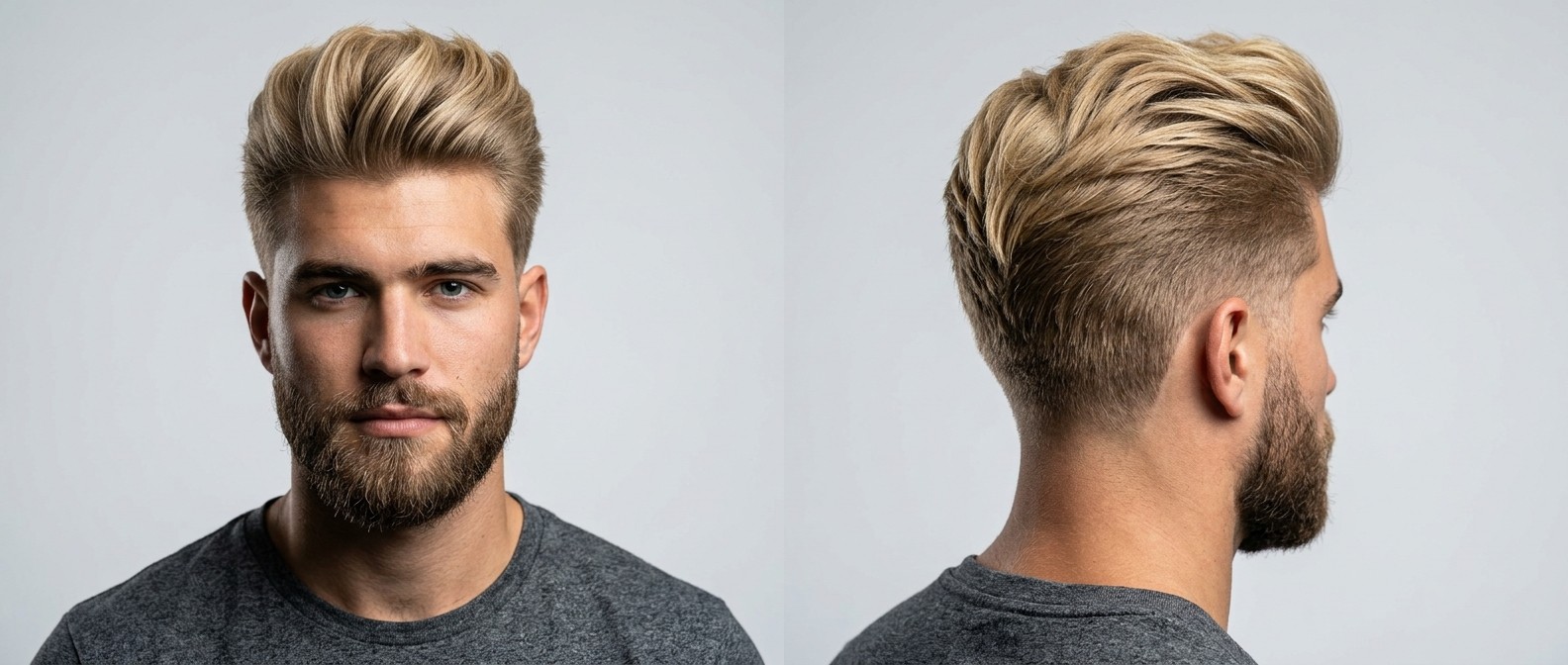
Textured Blonde Quiff with High Volume and Precision Tapered Sides
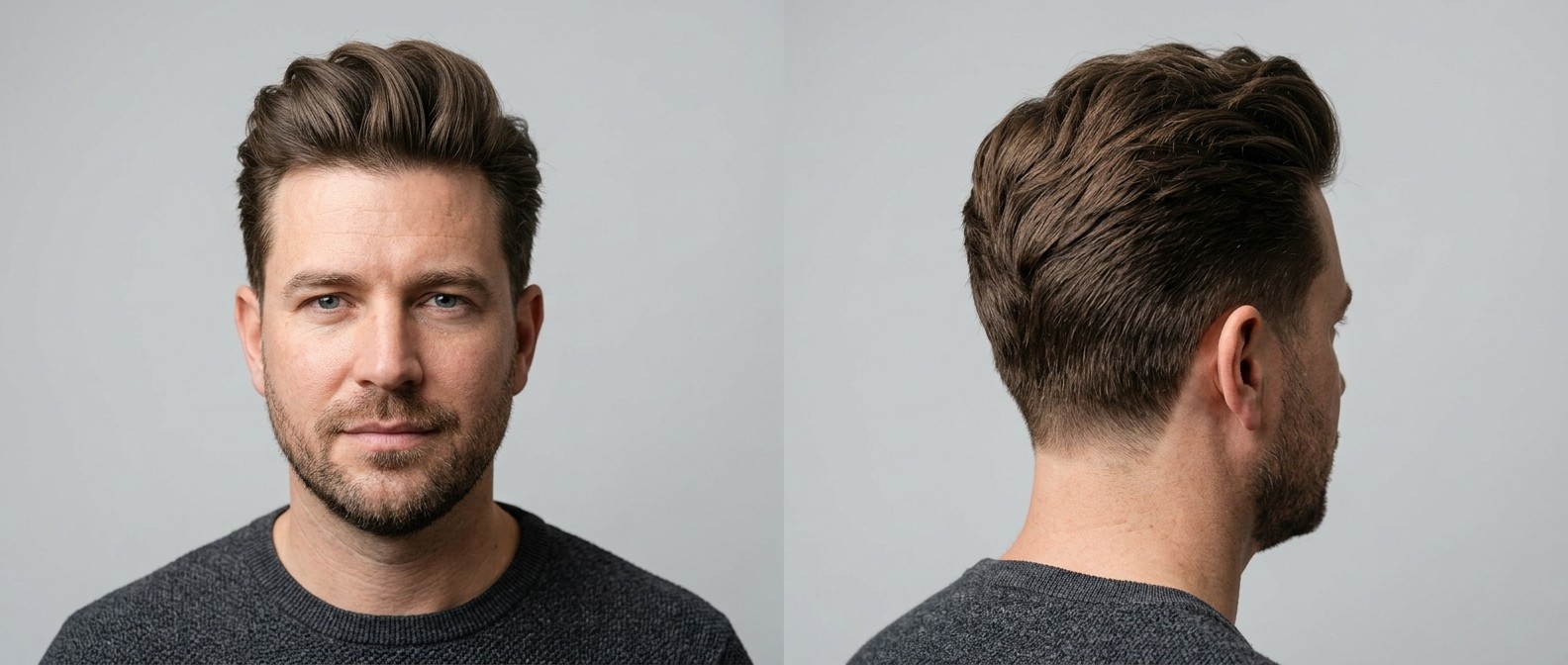
Quiff
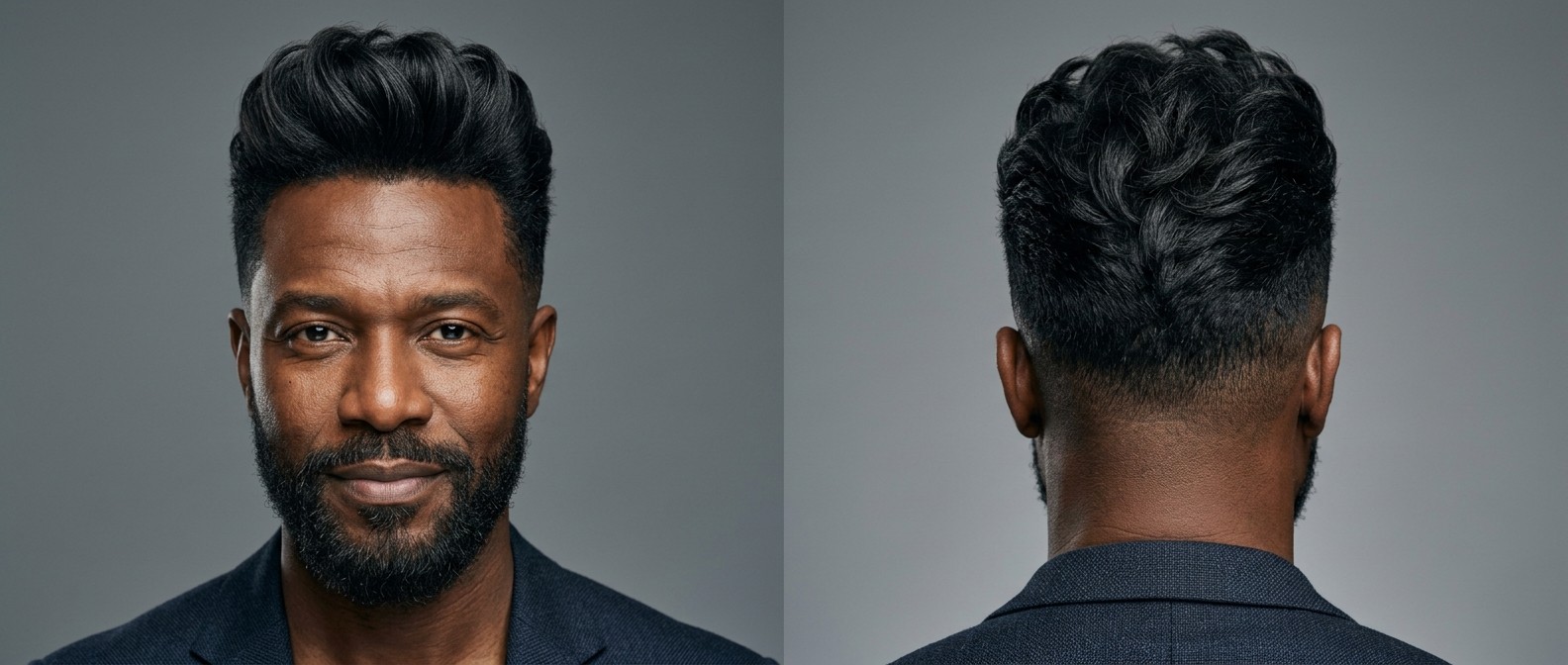
Classic Textured Quiff with Soft Tapered Sides for Thick Hair
Quiff
High-Volume Textured Blonde Quiff with Crisp Low Drop Fade and Beard Blend
Quiff