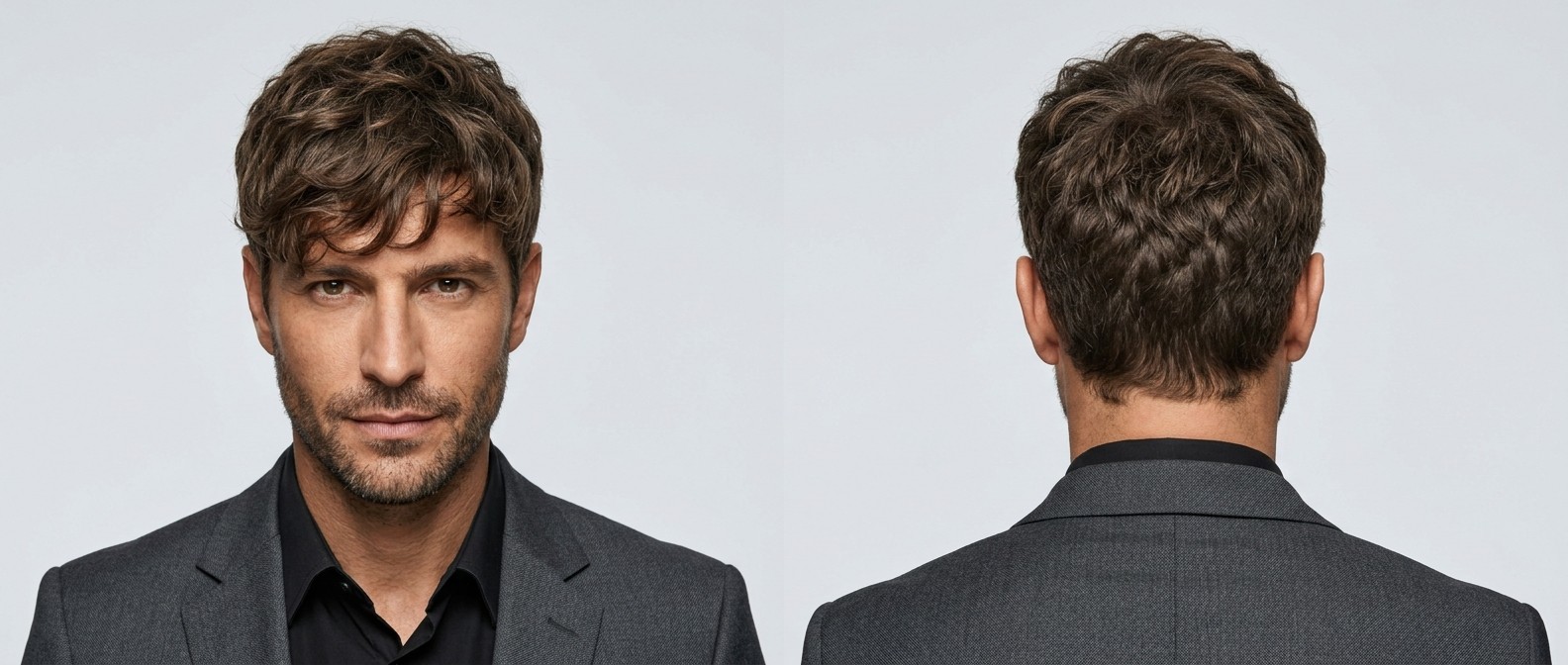
Add one front-facing photo. We send it to the AI together with this exact cut — and you get a photorealistic preview of yourself wearing it.
1
Your photo
Front view · neutral face · even light
2
This haircut
Already included
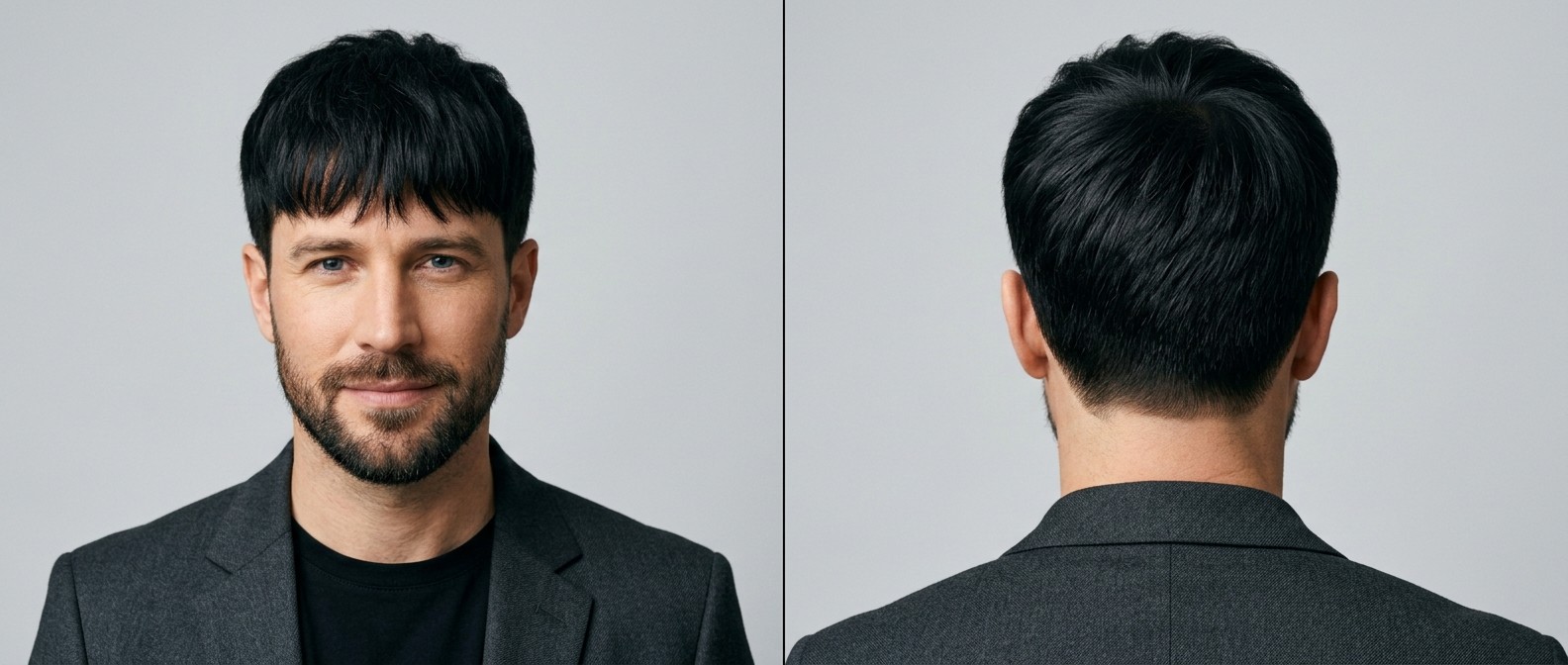
Front and back reference — taken from this page
3
Your preview
Your result appears here
![]()
![]()
Generated for you, not published anywhere
How do you rate this tool?
- Reading your photo
- Matching the cut
- Rendering your preview
How to take a photo that works
Do
- Face the camera straight on
- Even daylight, no harsh shadow
- Head and shoulders in frame
- Hair fully visible, nothing covering it
Avoid
- Hats, caps, hoods, sunglasses
- Steep angles or a tilted head
- Group photos or heavy filters
- Backlight that darkens the face
Textured Wavy Fringe with Medium Scissor-Cut Sides
 Top
Medium (5-10 cm)
Top
Medium (5-10 cm)
 Sides
Medium (2-5 cm)
Sides
Medium (2-5 cm)
 Hair Type
Wavy (Type 2)
Hair Type
Wavy (Type 2)
 Face Shape
Oval
Face Shape
Oval
 Maintenance
Low
Maintenance
Low
 Thickness
Thick / Dense
Thickness
Thick / Dense
About This Style
This textured wavy fringe is the epitome of effortless, masculine style, perfectly balancing a relaxed aesthetic with a polished, professional silhouette. Looking closely at the cut in the photo, the hair is styled forward to create a sweeping, piecey fringe that rests naturally across the mid-forehead. This breaks up the hairline beautifully without overwhelming the face or obstructing the eyes. The natural type 2 waves are heavily utilized here, enhanced by strategic point cutting that removes bulk while maximizing movement and separation.
What makes this variation truly stand out is the seamless transition from the medium-length top (around 5 to 10 centimeters) down to the scissor-cut sides and back. Instead of a harsh clipper fade, the sides are kept at a moderate 2 to 5 centimeters, creating a softer, more mature framing around the ears. Looking at the back profile, the hair maintains a substantial weight and fullness, tapering gently down the nape of the neck. This soft graduation ensures the style grows out beautifully, extending the time needed between barber visits. The crown is left slightly longer to accommodate the natural swirl and prevent the hair from sticking up awkwardly. It is an incredibly versatile choice that suits an active, low-maintenance lifestyle while still looking sharp enough to pair beautifully with a tailored suit, as seen in the photo, or a casual weekend outfit. The subtle stubble beard complements the slightly rugged yet refined nature of the textured canopy perfectly, creating a highly cohesive aesthetic.
What makes this variation truly stand out is the seamless transition from the medium-length top (around 5 to 10 centimeters) down to the scissor-cut sides and back. Instead of a harsh clipper fade, the sides are kept at a moderate 2 to 5 centimeters, creating a softer, more mature framing around the ears. Looking at the back profile, the hair maintains a substantial weight and fullness, tapering gently down the nape of the neck. This soft graduation ensures the style grows out beautifully, extending the time needed between barber visits. The crown is left slightly longer to accommodate the natural swirl and prevent the hair from sticking up awkwardly. It is an incredibly versatile choice that suits an active, low-maintenance lifestyle while still looking sharp enough to pair beautifully with a tailored suit, as seen in the photo, or a casual weekend outfit. The subtle stubble beard complements the slightly rugged yet refined nature of the textured canopy perfectly, creating a highly cohesive aesthetic.
Key Features
- Sweeping, heavily textured frontal fringe that rests softly across the mid-forehead to balance facial proportions.
- Scissor-cut, medium-length sides (2-5 cm) that avoid the harshness of a skin fade and provide a mature frame.
- Deep point-cutting and texturizing throughout the top canopy to enhance the natural wave pattern and create piecey separation.
- Seamless, tapered blending at the parietal ridge for a cohesive, rounded silhouette that flows naturally from top to bottom.
- Natural, matte finish that emphasizes individual hair strands rather than a slicked-together mass.
- Soft, natural neckline taper at the back that grows out gracefully over several weeks without forming a harsh line.
Getting the Cut
- Ask for a purely scissor-over-comb cut on the sides and back, leaving about 1 to 2 inches (2-5 cm) of length to keep a soft, natural frame around the ears.
- Request a medium length on the top canopy, roughly 2 to 4 inches (5-10 cm), leaving it slightly longer toward the front to create the sweeping fringe.
- Instruct the barber to deeply point-cut and add texture to the top section to remove excess bulk and encourage your natural waves to clump together.
- Ask for a seamless, rounded blend at the parietal ridge so the top flows naturally into the sides without any distinct disconnection or undercut.
- Specify a soft, tapered neckline using scissors rather than a hard, blocked-off clipper line, ensuring a much more natural grow-out phase.
- Request that the fringe be cut at a slight, soft angle, allowing it to sweep organically to your preferred side while blending smoothly into the temporal region.
- Ask the barber to pay special attention to the crown, leaving enough weight so your natural hair whorl lays flat rather than sticking up.
Daily Routine
- Start your routine with towel-dried hair that is slightly damp, ensuring it isn't dripping wet before you begin applying any styling product.
- Scoop a dime-sized amount of matte clay or texturizing paste into your palms and rub them together vigorously until the product is warm and completely transparent.
- Work the product gently through your hair, starting from the back crown and moving forward, ensuring even distribution down to the roots without flattening the volume.
- Use your fingers to push and sweep the hair forward toward your forehead, encouraging the natural wave pattern to form and settle into place.
- Once the general forward shape is set, gently pinch and twist small sections of the fringe and top canopy to create distinct, piecey texture and definition.
- Allow the hair to air dry completely for the most natural, effortless finish, or use a blow dryer on low heat with a diffuser attachment if you need to speed up the process.
- Make any final adjustments by gently scrunching the ends to lock in the wave and ensure the fringe sits exactly where you want it across your forehead.
Products & Tools
- Matte styling clay or texturizing paste (medium hold, no-shine finish) to provide workable structure without unwanted stiffness or crunch.
- Sea salt spray (optional pre-styler) to add grit, volume, and enhance the natural wave pattern before applying your main styling clay.
- Wide-tooth comb for initial detangling out of the shower, though actual styling should primarily be done with your fingers to maintain the wavy texture.
- Blow dryer with a diffuser attachment (optional) for quick, frizz-free drying on a low heat and low speed setting.
- Clarifying shampoo to use once a week to remove stubborn product buildup and keep your thick hair manageable and healthy.
Maintenance
- Schedule a maintenance trim every 5 to 8 weeks to keep the fringe at the optimal length and prevent the dense sides from looking puffy or unkempt.
- Wash your hair 2 to 3 times a week with a hydrating shampoo and conditioner to maintain the health, elasticity, and moisture of your natural waves.
- Avoid heavy, oil-based pomades or strong-hold gels, as these will weigh down your thick hair and ruin the effortless, airy texture of the fringe.
- On non-wash days, simply rinse your hair with warm water and apply a small amount of sea salt spray to reactivate the texture and reset the waves.
- Sleep on a silk or satin pillowcase to reduce friction, which helps prevent frizz, breakage, and keeps the wave pattern reasonably intact overnight.
- Regularly massage your scalp during washing to promote blood flow and ensure the dense hair follicles remain healthy and clear of product buildup.
Best For
Oval, oblong, and diamond face shapes, as the forward-swept fringe helps to visually shorten the forehead and balance overall facial proportions perfectly.
Men with thick, dense, and naturally wavy (Type 2) hair types who want a style that embraces their natural texture rather than fighting against it.
Professionals in their 30s and 40s seeking a mature, highly stylish cut that bridges the gap between casual weekends and formal office settings.
Guys with a low-maintenance lifestyle who want a great-looking style requiring only 1 to 5 minutes of simple finger-styling in the morning.
Those with straight to normal hairlines who have enough density at the front to support a full, textured canopy.
Pro Tips
- Less is absolutely more when it comes to styling products; applying too much clay will make your dense hair look greasy and collapse the natural volume.
- If your hair is exceptionally thick, ask your barber to use thinning shears specifically at the crown and parietal ridge to prevent a bulky, mushroom-like silhouette.
- During humid summer months, lean entirely on sea salt spray and air drying to let the natural waves thrive without feeling sticky or weighed down.
- Train your fringe by consistently sweeping it in the same direction while damp, which will help it fall naturally into place over time.
- To avoid a flat appearance at the back, make sure you are working your styling product all the way through to the crown, not just focusing on the front fringe.
Related Hairstyles
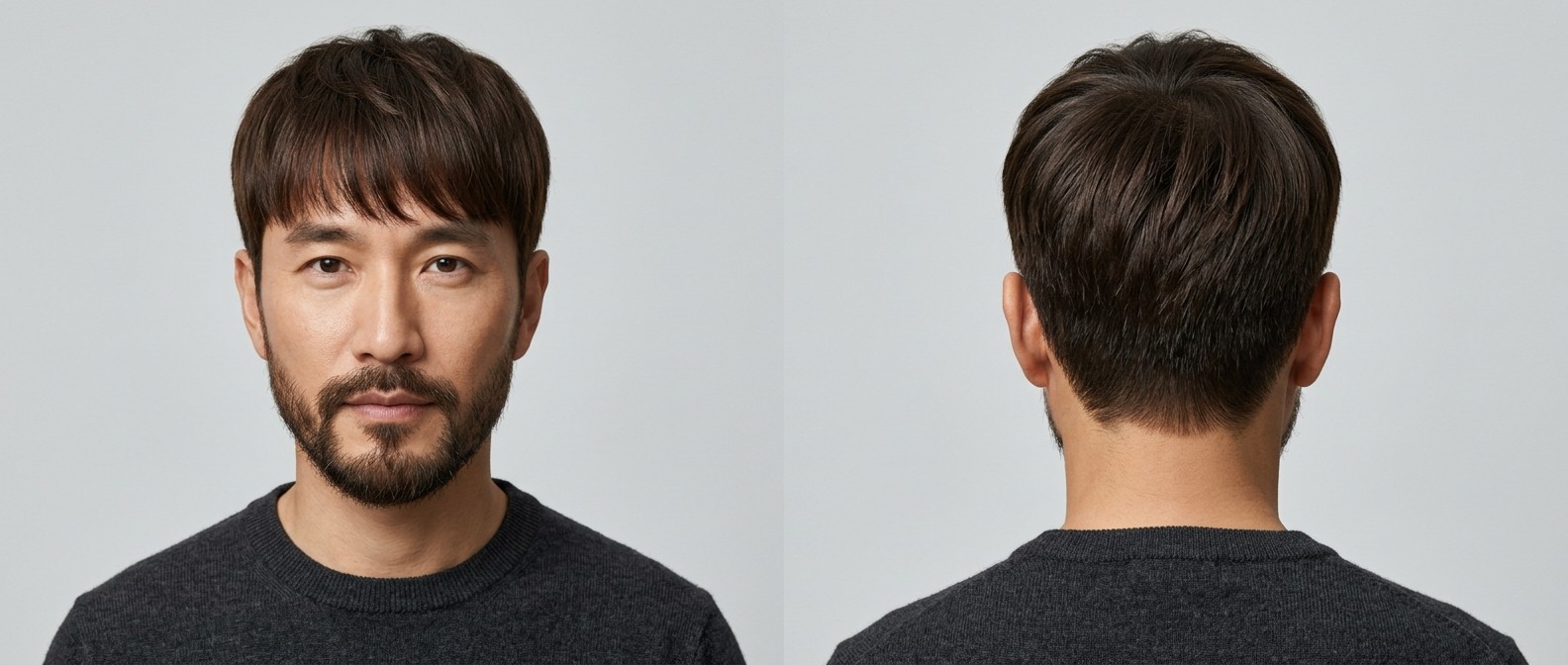
Fringe
Mature Asian Textured Fringe with Medium Tapered Sides
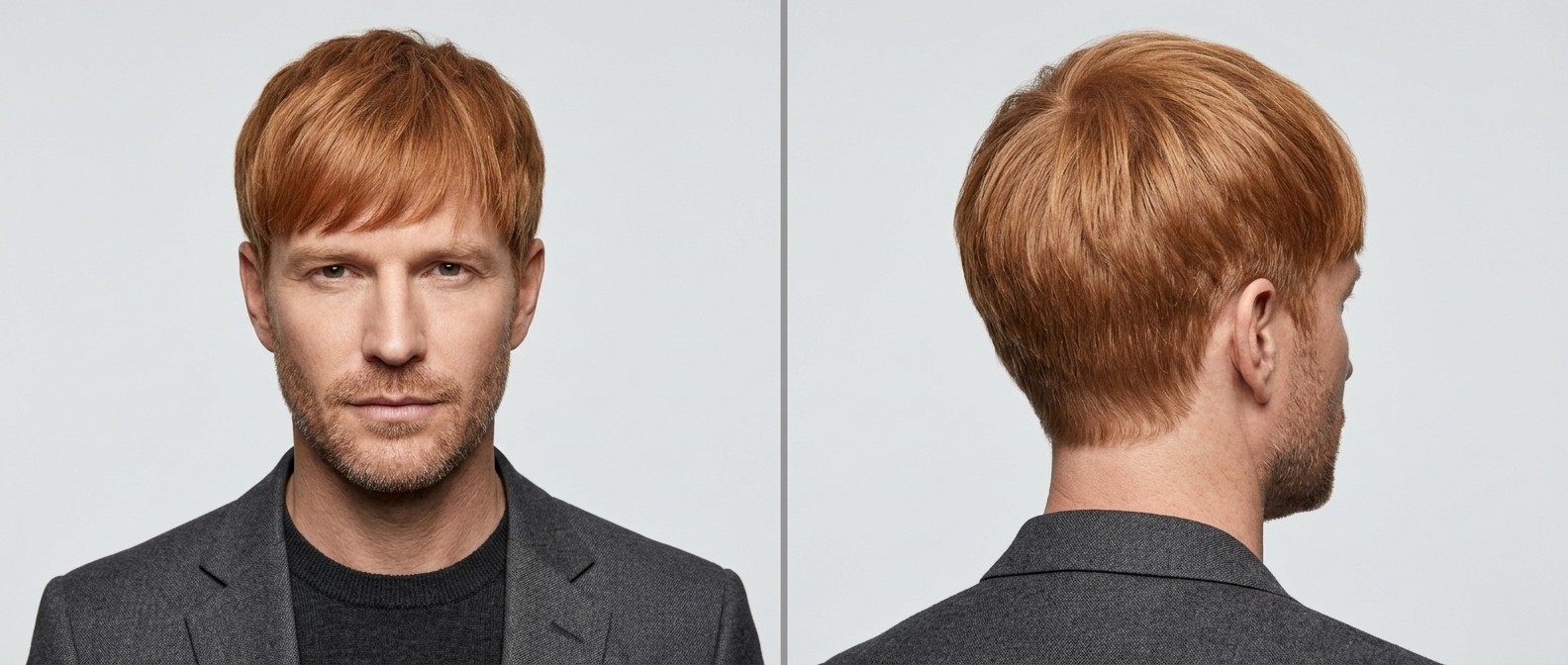
Fringe
Textured Forward Fringe with Tapered Sides for Straight Hair
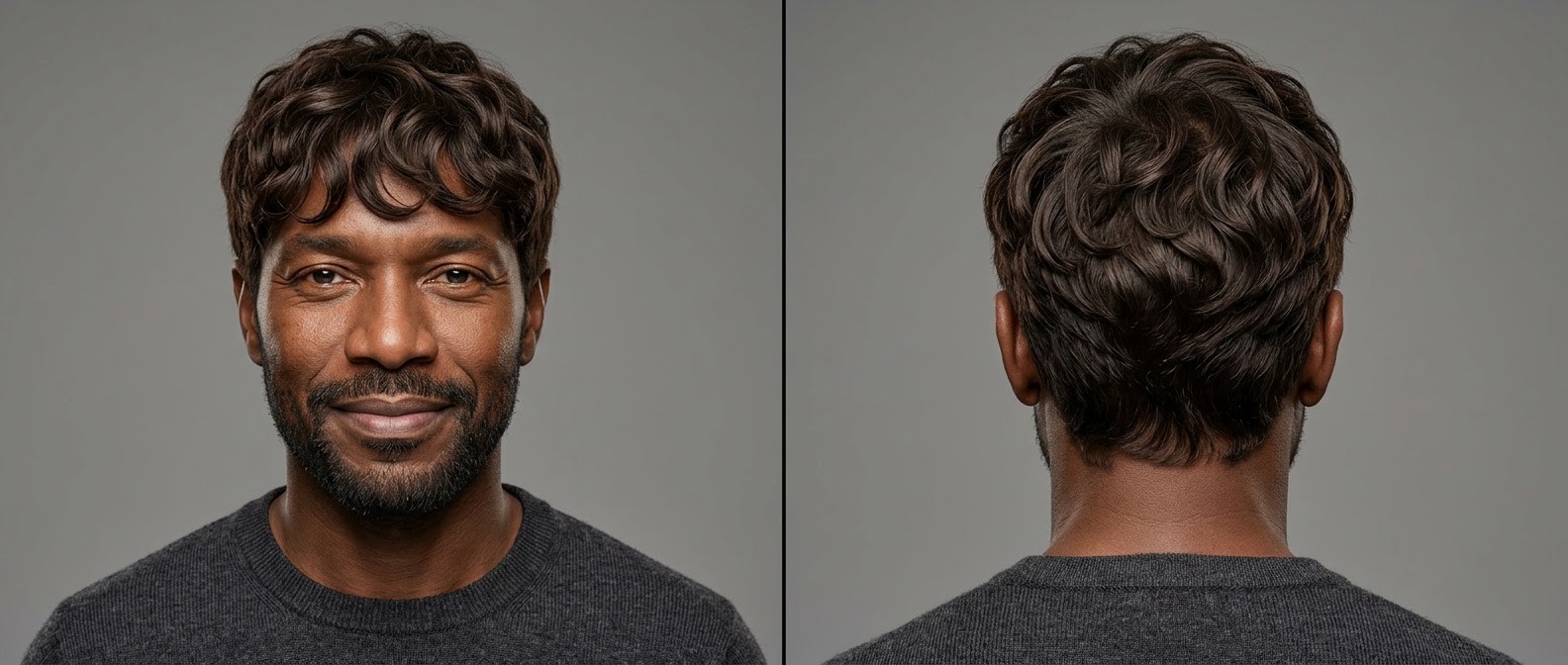
Fringe
Wavy Textured Fringe with Soft Layered Taper for Mature Men

Fringe
Men's Textured Forward Fringe Haircut for Thick Hair
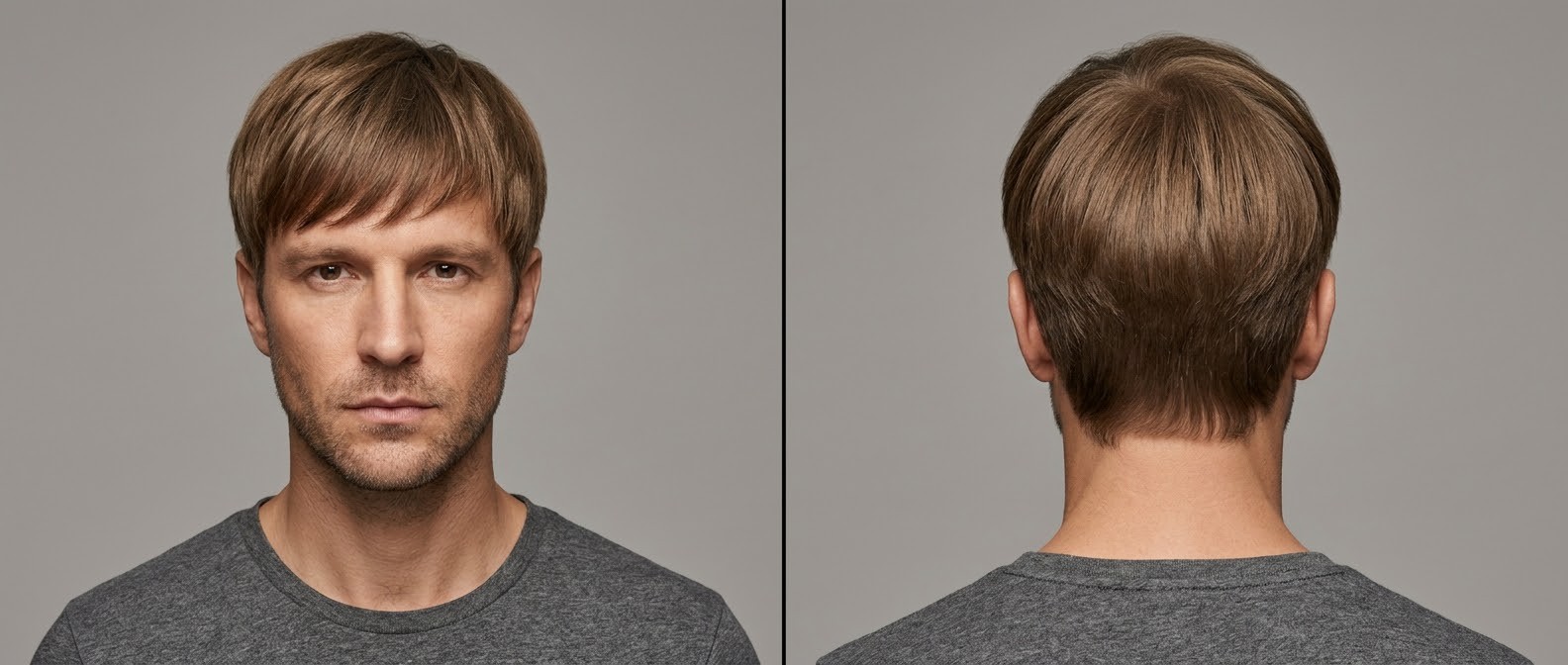
Fringe
Effortless Swept Forward Fringe with Medium Tapered Layers
Fringe