Add one front-facing photo. We send it to the AI together with this exact cut — and you get a photorealistic preview of yourself wearing it.
1
Your photo
Front view · neutral face · even light
2
This haircut
Already included
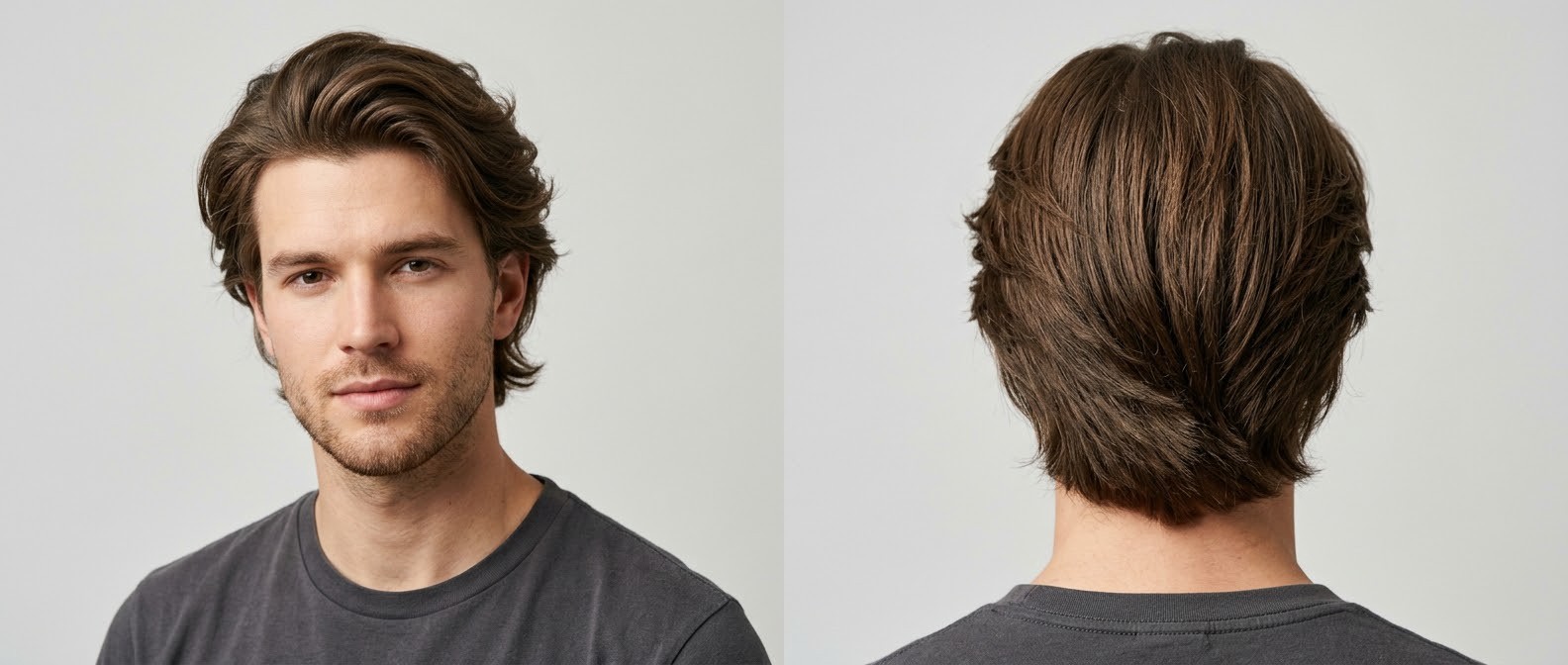
Front and back reference — taken from this page
3
Your preview
Your result appears here
![]()
![]()
Generated for you, not published anywhere
How do you rate this tool?
- Reading your photo
- Matching the cut
- Rendering your preview
How to take a photo that works
Do
- Face the camera straight on
- Even daylight, no harsh shadow
- Head and shoulders in frame
- Hair fully visible, nothing covering it
Avoid
- Hats, caps, hoods, sunglasses
- Steep angles or a tilted head
- Group photos or heavy filters
- Backlight that darkens the face
Swept-Back Thick Flow Hair with Natural Matte Texture
 Top
Very Long (20+ cm)
Top
Very Long (20+ cm)
 Sides
Medium (2-5 cm)
Sides
Medium (2-5 cm)
 Hair Type
Straight (Type 1)
Hair Type
Straight (Type 1)
 Face Shape
Oval
Face Shape
Oval
 Maintenance
Medium
Maintenance
Medium
 Thickness
Thick / Dense
Thickness
Thick / Dense
About This Style
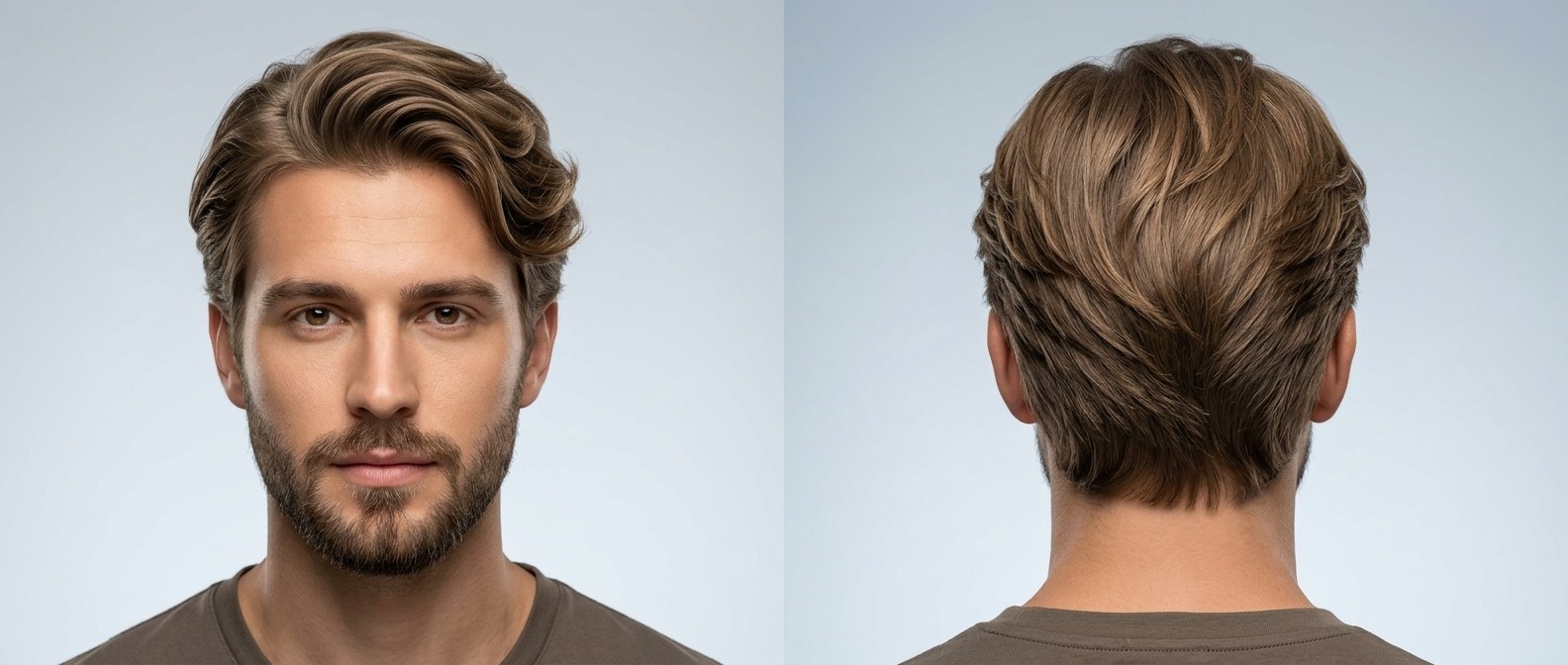
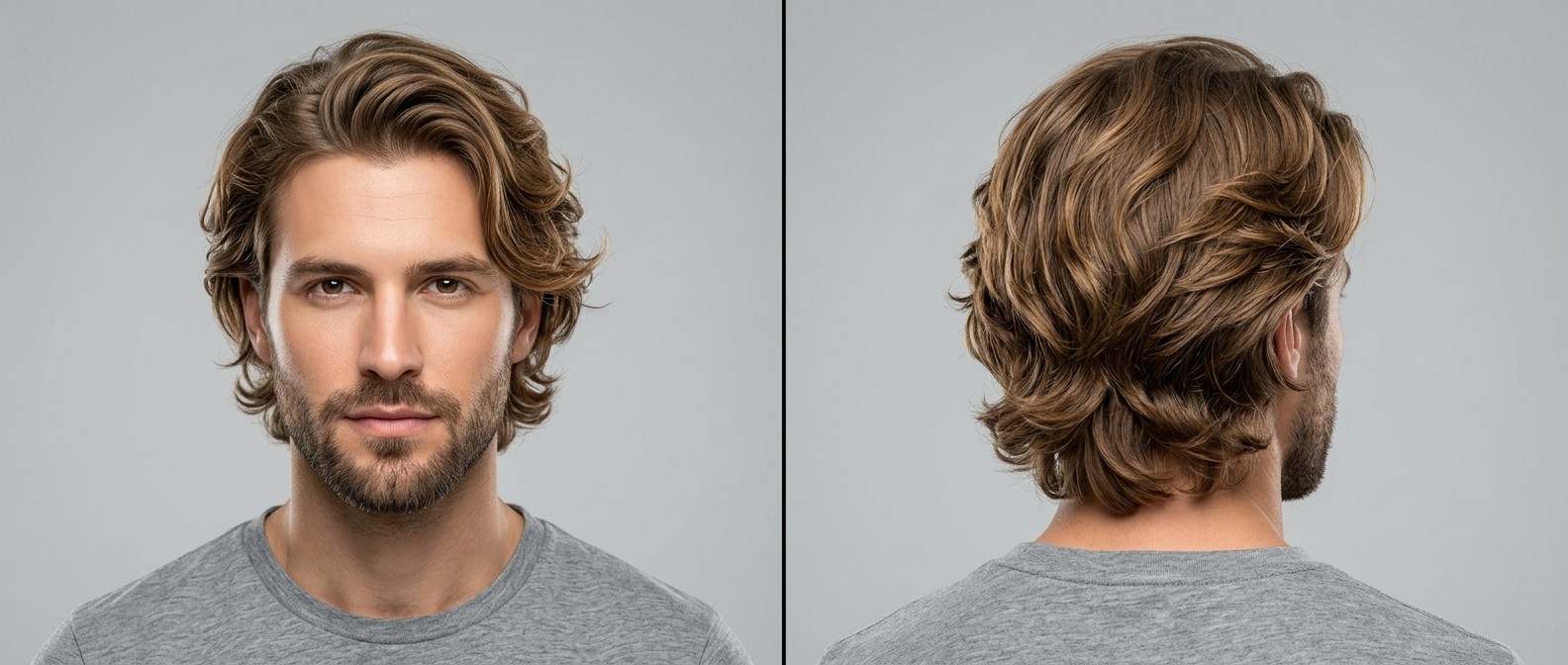
The swept-back thick flow hairstyle, often referred to as the classic "bro flow," is a masterclass in relaxed, effortless grooming. This specific variation capitalizes on very long top lengths seamlessly blended into medium, ear-tucked sides, creating a dynamic silhouette that naturally sweeps backwards. The aesthetic is inherently artistic and creative, offering a laid-back yet intentionally styled appearance that perfectly bridges the gap between casual weekends and modern professional environments.
Because it relies heavily on the natural weight and density of thick, straight hair, this style forms a handsome frame around oval face shapes. The subtle layering throughout the back prevents the hair from looking blocky, allowing it to taper gracefully toward the nape of the neck while maintaining a full, healthy appearance. If you have a lifestyle that appreciates a touch of rugged sophistication, this low-tension, high-volume flow is an exceptional choice that grows out beautifully between barber visits, ensuring you look styled even on low-effort days.
Because it relies heavily on the natural weight and density of thick, straight hair, this style forms a handsome frame around oval face shapes. The subtle layering throughout the back prevents the hair from looking blocky, allowing it to taper gracefully toward the nape of the neck while maintaining a full, healthy appearance. If you have a lifestyle that appreciates a touch of rugged sophistication, this low-tension, high-volume flow is an exceptional choice that grows out beautifully between barber visits, ensuring you look styled even on low-effort days.
Key Features
- Sweeping back-and-away directional flow that opens up the face while maintaining significant, touchable volume at the front hairline.
- Very long top section (20+ cm) that seamlessly transitions into medium sides (2-5 cm) specifically designed to tuck neatly behind the ears.
- Soft, textured layering through the back that removes excess bulk and allows the hair to lay flat against the crown without puffing out.
- Natural, matte finish that emphasizes thick, dense hair without appearing greasy, wet, or overly structured by heavy products.
- Relaxed, continuous silhouette that relies on the hair's natural weight and straight texture rather than rigid holding techniques.
Getting the Cut
- Request a classic all-scissor flow haircut, keeping the top extremely long (at least 20 cm) to allow for a natural, uninterrupted backward sweep.
- Ask for the sides to be left around 3 to 5 centimeters long, specifically instructing the barber to leave enough length to comfortably tuck behind the ears.
- Specify deep point-cutting techniques throughout the top and crown to introduce internal texture and prevent the thick hair from looking like a solid, heavy helmet.
- Request square layering in the back to manage the intense density, tapering down gently toward the nape of the neck while leaving a soft, natural hairline.
- Ask the barber to over-direct the front sections when cutting to ensure maximum length is preserved at the fringe, which is absolutely crucial for that signature swept-back volume.
- Have them use thinning shears sparingly, targeting only on the heaviest parts of the bulk, ensuring the ends remain blunt enough to hold the overall structural shape.
Daily Routine
- Start with towel-dried, slightly damp hair after showering, ensuring it is completely free of excess dripping water before applying any styling products.
- Dispense a nickel-sized amount of sea salt spray or light styling cream into your palms and work it evenly from the roots all the way to the ends.
- Using a high-quality blow dryer on medium heat and medium speed, begin drying the hair while simultaneously brushing it straight back with a vented styling brush.
- Focus the airflow directly at the front roots while lifting upward and backward with your brush to lock in that essential front volume and trajectory.
- Once the hair is about 90 percent dry, use your fingers to rake through the side sections, tucking them cleanly behind your ears to establish the final shape.
- Finish by applying a dime-sized amount of matte paste or clay, warming it thoroughly in your hands before lightly grazing the surface to tame flyaways and provide a flexible hold.
Products & Tools
- Pre-styling sea salt spray or lightweight thickening tonic to add essential grit and foundational volume without weighing down the thick strands.
- Matte styling paste or flexible clay offering a moderate hold and a completely natural, no-shine finish for the final structural touches.
- High-quality blow dryer equipped with a concentrator nozzle to precisely direct airflow and control the hair direction during the styling process.
- Vented styling brush to allow hot air to pass through easily while smoothly guiding the long top sections backward.
- Wide-tooth comb for detangling wet hair gently in the shower without causing breakage to the long, dense fibers.
Maintenance
- Schedule maintenance trims every 5 to 8 weeks to manage split ends and prevent the heavy back section from developing an unruly, mullet-like shape.
- Wash your hair 2 to 3 times a week using a hydrating sulfate-free shampoo to preserve natural scalp oils that keep thick hair soft and manageable.
- Apply a lightweight leave-in conditioner on non-wash days to maintain optimal moisture levels and prevent the long ends from becoming dry or frizzy.
- Avoid wearing tight hats while your hair is damp, as this completely crushes root volume and creates a stubborn, unwanted crease across the top.
- Sleep on a silk or satin pillowcase to drastically reduce friction, preventing morning tangles and preserving the sweeping flow of the style.
Best For
Oval, diamond, and heart face shapes, as the swept-back volume beautifully elongates the face and highlights strong, angular jawlines.
Thick, dense, and straight (Type 1) hair types that possess enough natural weight to hold the flowing shape without puffing outward uncomfortably.
Men aged 18-25 seeking a highly creative, artistic aesthetic that perfectly balances relaxed vibes with intentional, high-quality grooming.
Lifestyles that permit a medium-maintenance daily routine and do not require strict, highly conservative corporate dress codes.
Pro Tips
- Train your hair to fall backward naturally by consistently wearing a baseball cap backward for 20 minutes after showering while the hair is air drying.
- Avoid heavy pomades or wet-look gels; they will clump your thick straight hair together and completely ruin the airy, natural flow of the style.
- During humid summer months, rely heavily on sea salt spray for texture rather than heavy creams, which can make the hair look greasy as you sweat.
- If the sides stubbornly refuse to stay tucked, ask your barber to thin out the specific area directly behind the ear to significantly reduce push-back.
Related Hairstyles
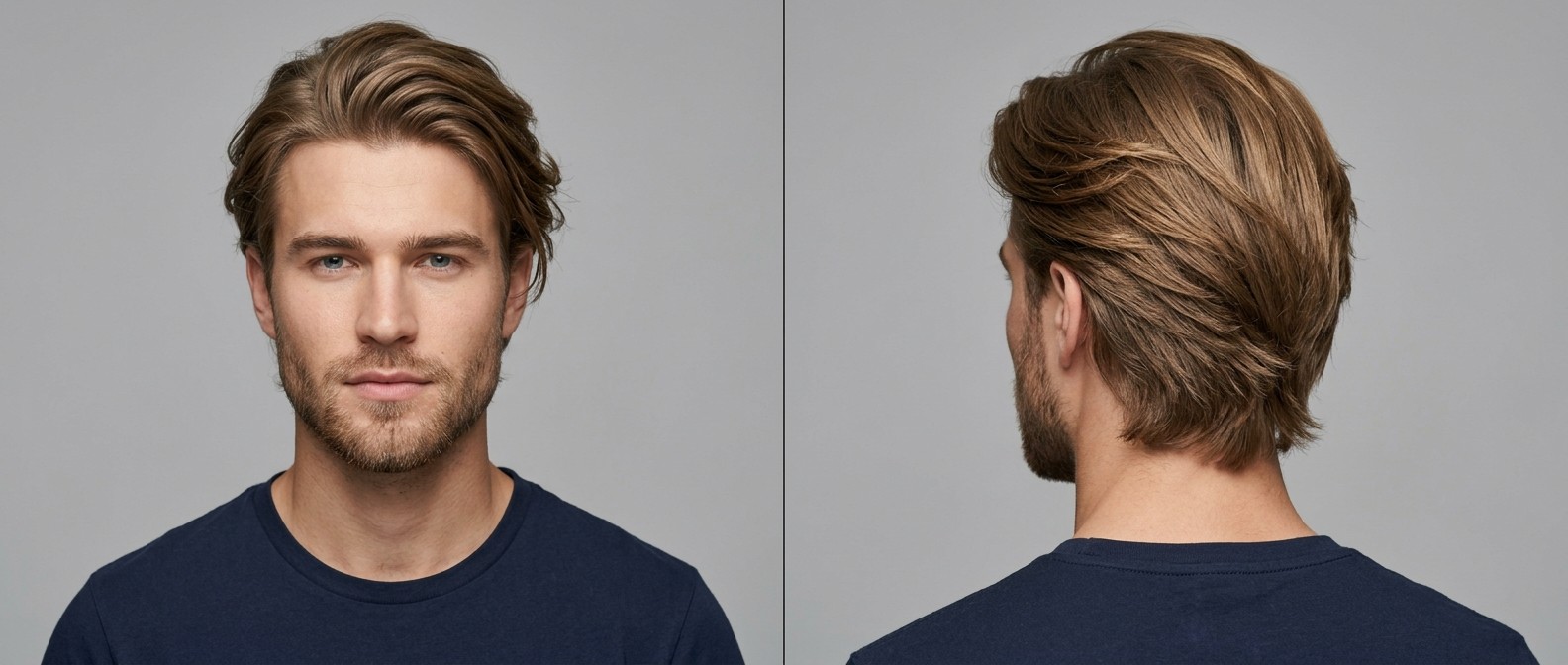
Flow Hair
Classic Layered Swept-Back Flow Haircut with Natural Texture
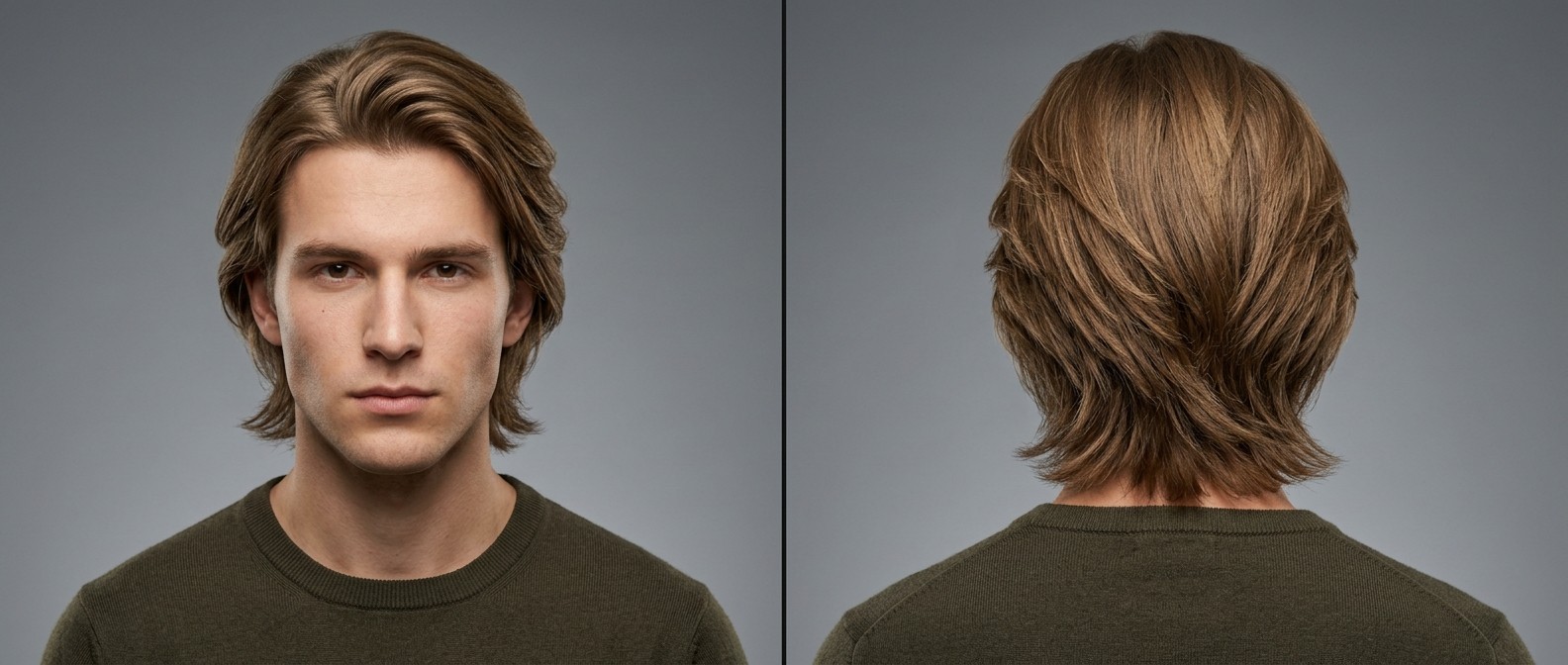
Flow Hair
Swept-Back Layered Flow Haircut for Thick Straight Hair
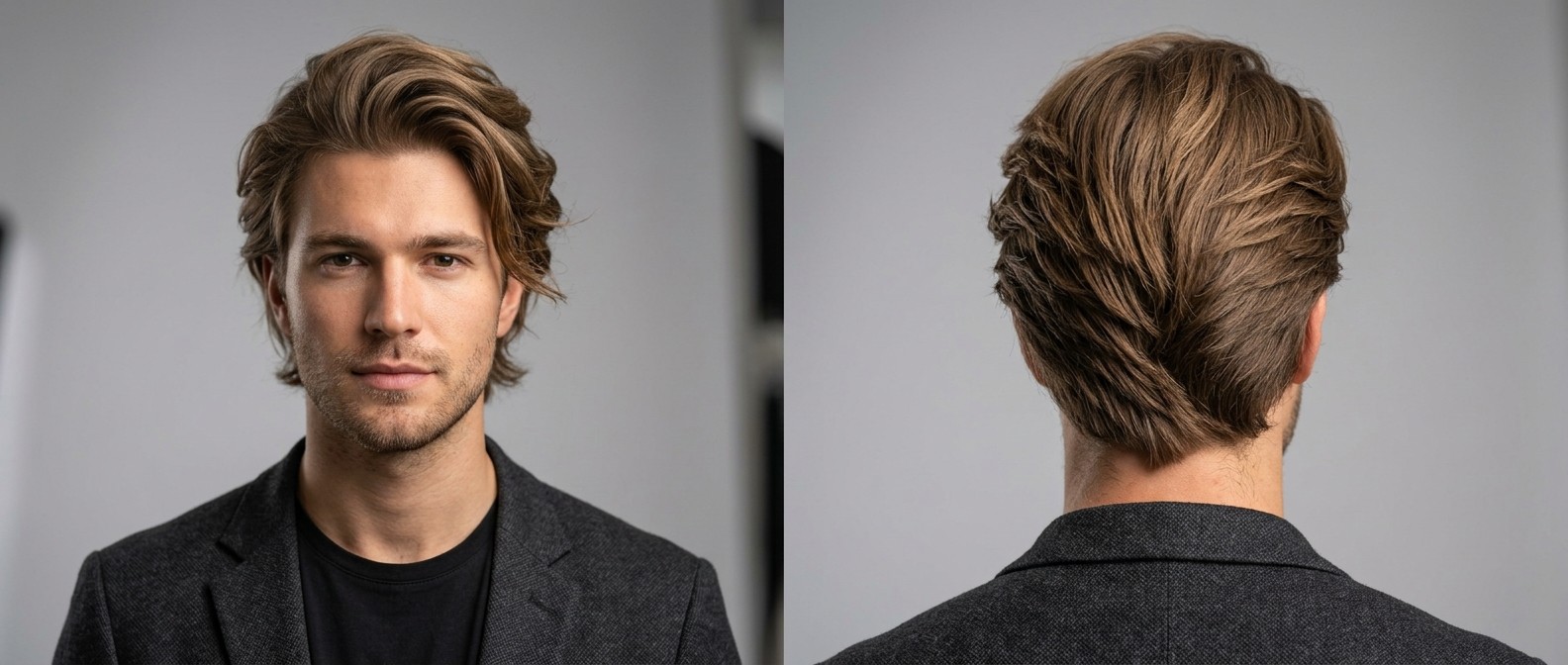
Flow Hair
Swept-Back Layered Bro Flow Haircut with Textured V-Shape Nape

Flow Hair
The Classic Wavy Bro Flow: Medium Layered Men's Hairstyle
Flow Hair
Classic Swept-Back Flow Hairstyle with Layered Wavy Texture
Flow Hair