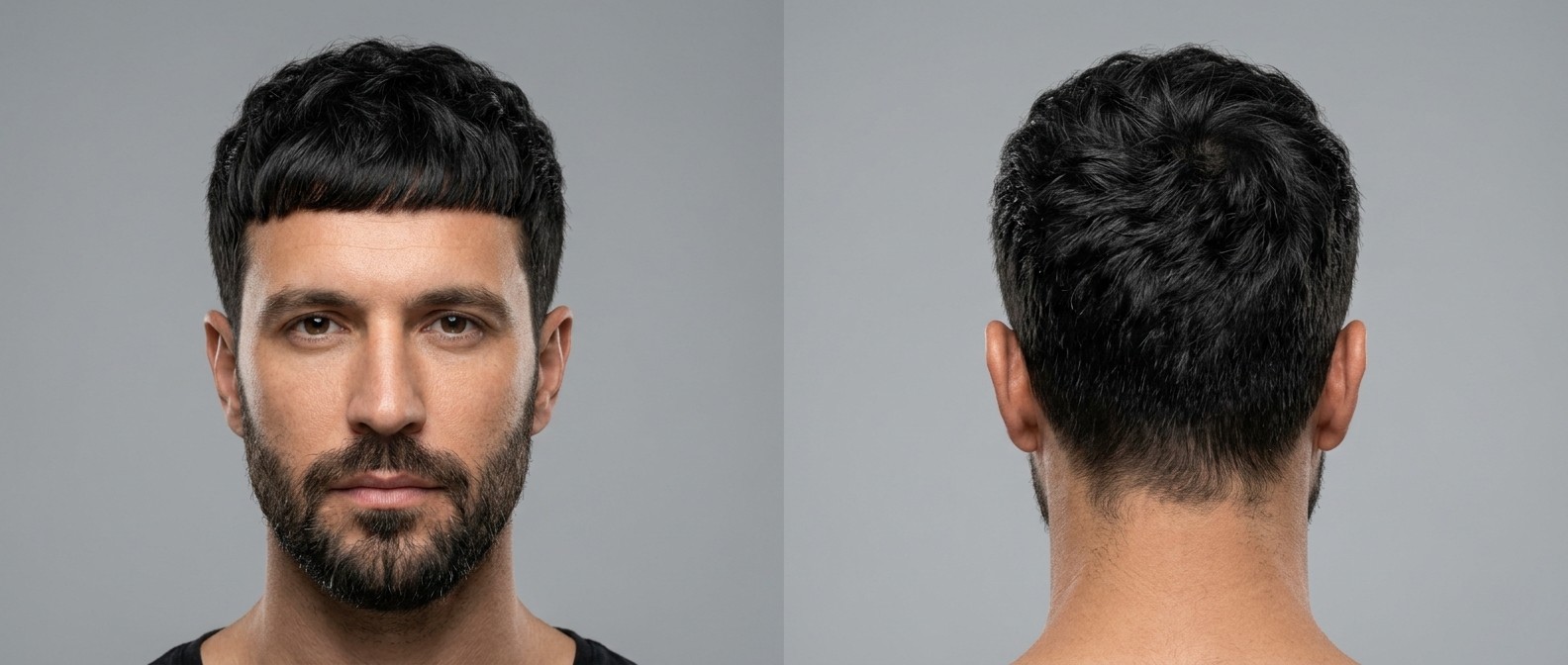
Add one front-facing photo. We send it to the AI together with this exact cut — and you get a photorealistic preview of yourself wearing it.
1
Your photo
Front view · neutral face · even light
2
This haircut
Already included
Front and back reference — taken from this page
3
Your preview
Your result appears here
![]()
![]()
Generated for you, not published anywhere
How do you rate this tool?
- Reading your photo
- Matching the cut
- Rendering your preview
How to take a photo that works
Do
- Face the camera straight on
- Even daylight, no harsh shadow
- Head and shoulders in frame
- Hair fully visible, nothing covering it
Avoid
- Hats, caps, hoods, sunglasses
- Steep angles or a tilted head
- Group photos or heavy filters
- Backlight that darkens the face
Textured Wavy Edgar Cut With Blunt Fringe and Tight Tapered Sides
 Top
Short (2-5 cm)
Top
Short (2-5 cm)
 Sides
Shaved / Skin (0 mm)
Sides
Shaved / Skin (0 mm)
 Hair Type
Wavy (Type 2)
Hair Type
Wavy (Type 2)
 Face Shape
Rectangular
Face Shape
Rectangular
 Maintenance
Medium
Maintenance
Medium
 Thickness
Medium / Normal
Thickness
Medium / Normal
About This Style
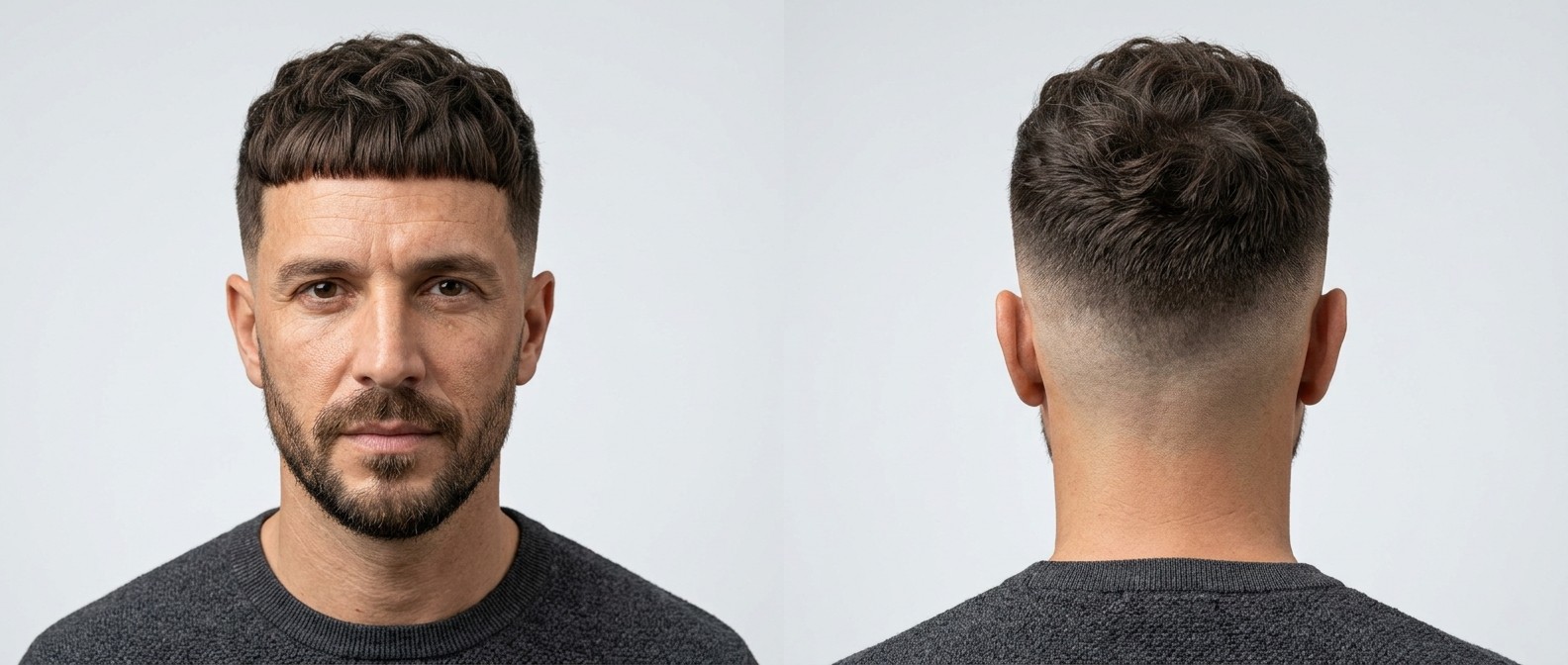
This modern interpretation of the Edgar cut masterfully blends sharp, geometric lines with natural, wavy texture to create a truly captivating look. Looking closely at the provided photo, the defining element is undeniably the blunt, straight-cut fringe that sits squarely across the mid-forehead. This precise line creates a striking visual contrast against the heavily textured, almost chaotic waves that dominate the top section. The hair originates from a distinct, natural whorl at the back of the crown, deliberately styled to flow entirely forward. This forward momentum builds excellent volume and dynamic movement before terminating abruptly at the precise, low hairline. The sides are kept exceptionally tight, dropping down into a meticulously clean taper fade that highlights the sharp, masculine angles of a rectangular face shape while seamlessly connecting to a well-groomed, short beard. This particular style is an exceptional choice for mature men in their thirties or forties who want to project a creative, artistic edge without sacrificing an ounce of sophistication. It perfectly suits medium to thick wavy hair (Type 2), smartly utilizing the hair's natural movement and body to prevent the blunt cut from looking too severe, flat, or helmet-like. Because the daily styling requires minimal product and just a few minutes of your morning routine, it fits effortlessly into a fast-paced, demanding lifestyle while ensuring you always maintain a bold, fashion-forward aesthetic that stands out in any room.
Key Features
- Prominent, razor-sharp blunt fringe cut in a perfectly straight, horizontal line across the mid-forehead to create a strong geometric focal point.
- Heavily textured top section (kept between 2 to 5 cm) that perfectly utilizes your natural Type 2 waves for a choppy, highly dynamic, and visually interesting appearance.
- Hair flows distinctly and intentionally forward from the crown's natural whorl, creating a sweeping canopy that feeds directly into the heavy front bangs.
- Tightly shaved sides (down to a 0mm skin fade at the very base) that create a stark, modern disconnect and heavily emphasize the wavy volume sitting on top.
- Clean, expertly tapered neckline at the back that blends smoothly into the skin, avoiding any harsh, unnatural blocked-off lines at the nape.
- Seamless, carefully faded integration with facial hair, beautifully balancing the heavy, textured canopy on top with a structured, well-kept beard below.
Getting the Cut
- Request a classic Edgar cut silhouette, but specifically emphasize that you want a highly textured, wavy top left at approximately 2 to 5 centimeters in length.
- Ask for a blunt, straight fringe that sits exactly horizontally across the mid-forehead, ensuring it is tailored perfectly to complement your specific low hairline.
- Instruct the barber to point-cut the top heavily; this crucial texturizing step removes excess bulk and encourages your natural Type 2 waves to stand up and create movement.
- Specify a tight skin taper or a 0mm shaved fade on the sides and back to create a stark, aggressive contrast with the heavier, wavy top section.
- Ensure the hair right at the crown is left slightly longer than the rest, which allows the natural growth pattern to flow smoothly forward without sticking straight up.
- Ask for the sideburns and temple area to be sharply lined up with trimmers and blended seamlessly into your beard for a cohesive facial framing.
- Request a clean, tapered finish at the nape of the neck rather than a harsh, blocked-off line, ensuring a smooth transition as the hair grows out between visits.
Daily Routine
- Start your routine with towel-dried hair that is still slightly damp, ensuring your natural waves and texture are fully reset from the night before.
- Apply a dime-sized amount of a high-quality, lightweight sea salt spray or texturizing pre-styler evenly from the back crown all the way to the front fringe.
- Use your fingers to aggressively push and rake the hair forward from the crown toward your forehead while blow-drying on a medium heat and medium speed setting.
- Once the hair reaches about 80 percent dry, immediately switch your blow dryer to the cold shot setting to lock those forward-flowing waves and volume into place.
- Scoop a small, pea-sized amount of premium matte clay or texturizing styling paste, warming it thoroughly between your palms until it becomes completely invisible.
- Scrunch the product vigorously into the top canopy of your hair to define the choppy texture, being careful to avoid the very ends of the blunt fringe to keep that line clean.
- Use a fine-tooth comb very lightly, and only on the extreme front edge of the bangs, to ensure the straight line sits perfectly horizontal and sharp against your forehead.
Products & Tools
- Premium matte styling clay or texturizing paste (offering a medium, pliable hold with a zero-shine finish) to define your waves without weighing them down or making them look greasy.
- High-quality sea salt spray to provide essential foundational grit, significantly enhance your natural Type 2 texture, and add crucial volume to the crown area.
- Professional-grade blow dryer equipped with a standard concentrator nozzle to precisely direct airflow strictly forward from the back of the head to the front.
- Fine-tooth styling comb, utilized specifically for micro-detailing and perfectly straightening the blunt fringe line across your forehead.
- Your own fingers, which serve as the absolute best styling tool for scrunching the top canopy and creating that messy, deeply artistic separation.
Maintenance
- Schedule standing barber visits every 1 to 2 weeks without fail to maintain the crisp 0mm shaved sides and keep the blunt fringe line perfectly sharp and geometric.
- Wash your hair only 2 to 3 times a week using a hydrating, sulfate-free moisturizing shampoo to keep your natural waves healthy and prevent unwanted frizz.
- Consistently use a lightweight, nourishing conditioner strictly on the top section to maintain the health and integrity of the 2-5 cm textured hair.
- Strictly avoid using heavy, oil-based pomades, wet-look gels, or strong-hold hairsprays, as these will clump your delicate waves together and completely ruin the dry, textured aesthetic.
- Sleep on a high-quality silk or satin pillowcase every night to drastically reduce friction, prevent breakage, and preserve the forward-flowing direction of the cut.
Best For
Rectangular and oval face shapes, as the distinct blunt fringe visually shortens the face and perfectly balances out highly angular, masculine jawlines.
Men with medium to normal hair thickness who naturally possess a wavy (Type 2) texture that can be easily manipulated into choppy layers.
Individuals aged 35 to 45 who are specifically looking for a youthful, creative, and highly artistic style that still remains sophisticated enough for daily wear.
Busy professionals and creatives who need a low-maintenance, quick 1-5 minute morning styling routine that still delivers maximum visual impact.
Those with naturally low hairlines, as the forward-swept, heavy bangs easily disguise any hairline irregularities while highlighting the eyes.
Pro Tips
- Never let the front fringe grow past the mid-forehead point; a too-long Edgar cut quickly loses its deliberate, geometric impact and begins to look like a poorly styled bowl cut.
- If your natural waves are particularly unruly or thick, specifically ask your barber to use thinning shears at the crown to prevent a bulky, unflattering "mushroom" silhouette from forming.
- During highly humid summer months, slightly increase your daily use of matte clay to effectively combat environmental frizz and maintain the distinct separation of your textured layers.
- Always ensure you are styling the hair strictly forward from the crown; attempting to brush or part this specific cut to the side completely defeats the purpose of the classic Edgar shape.
Related Hairstyles
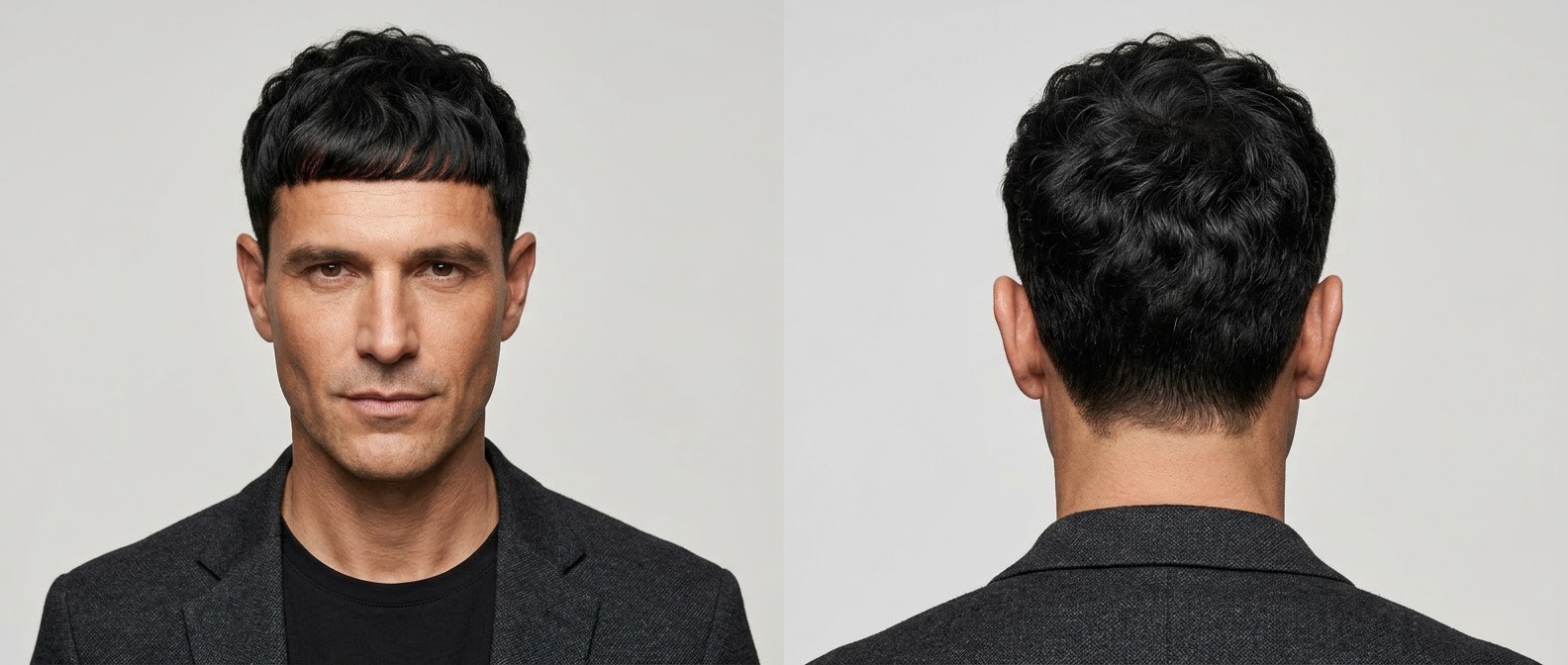
Edgar Cut
Textured Wavy Edgar Haircut for Mature Men with Tapered Sides
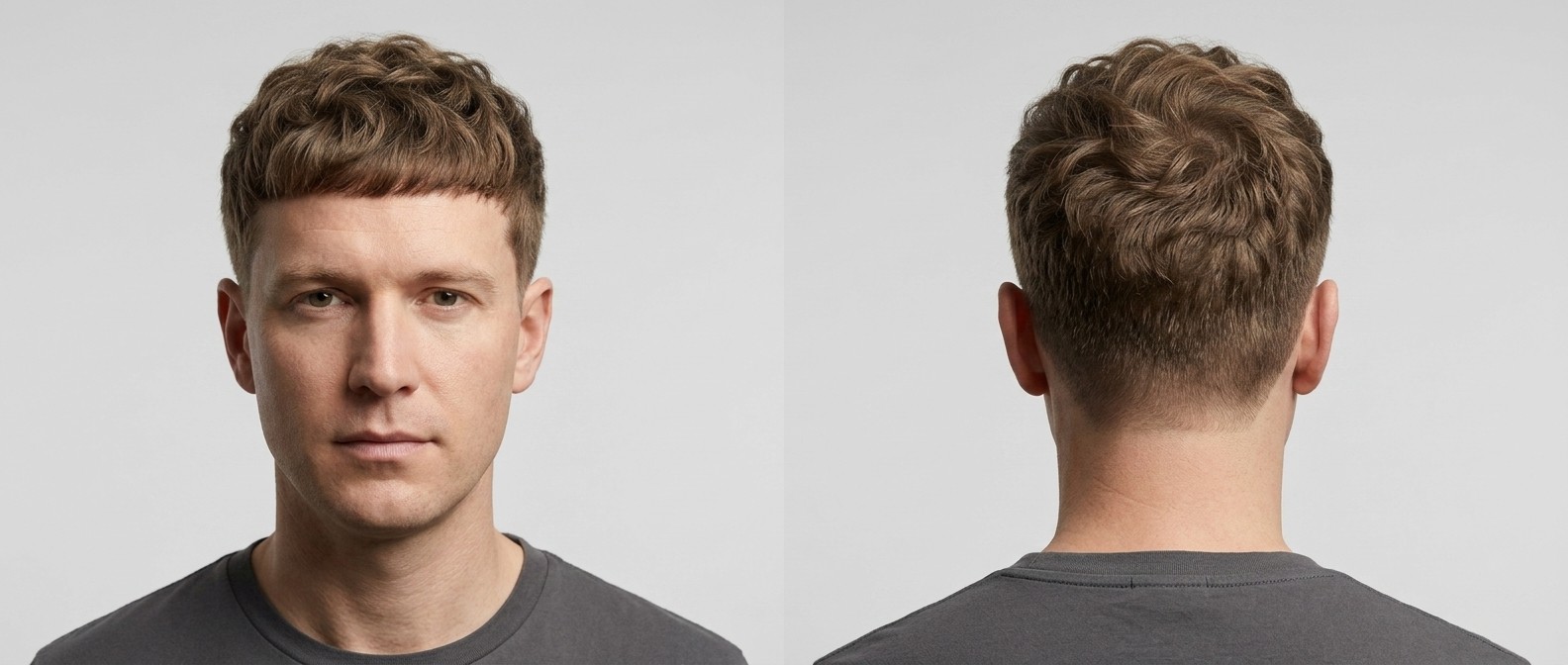
Edgar Cut
Wavy Textured Edgar Cut with Blunt Fringe and Tapered Sides
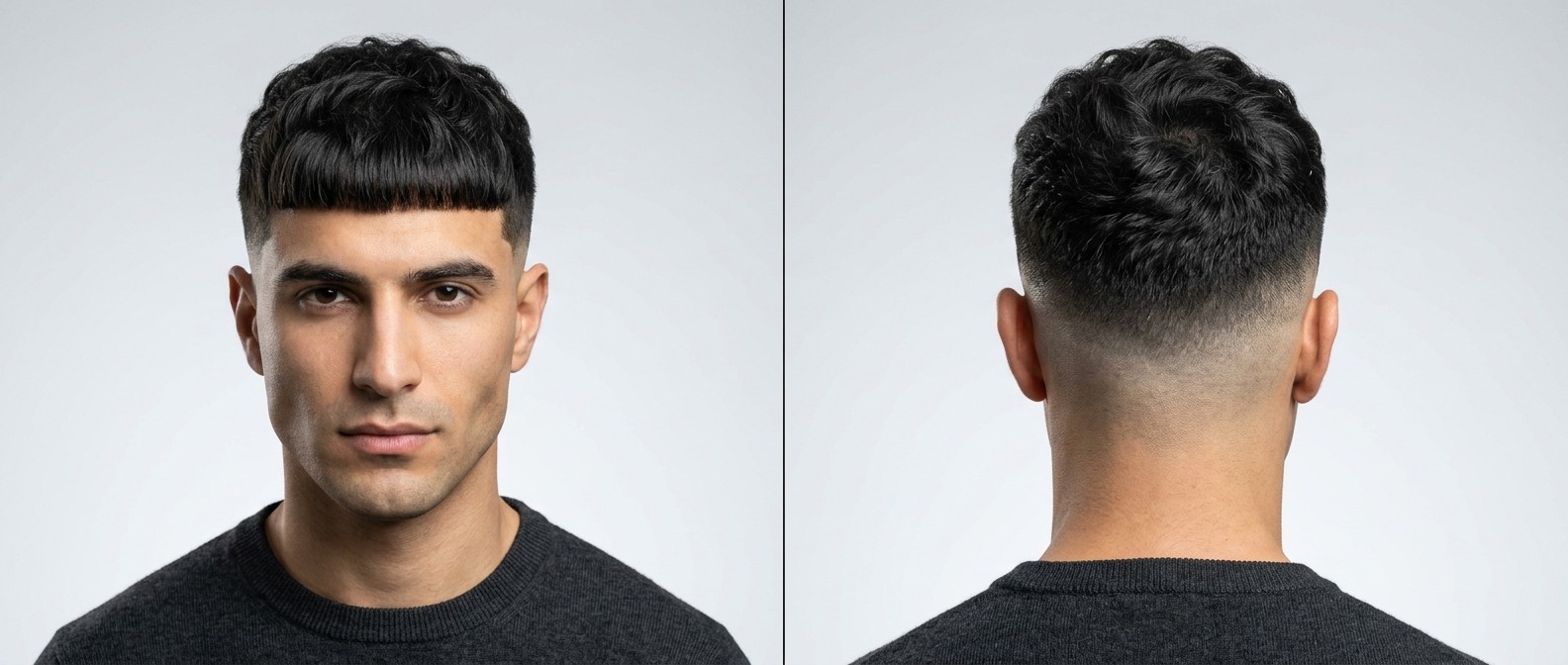
Edgar Cut
Wavy Edgar Cut with High Skin Fade and Blunt Textured Fringe
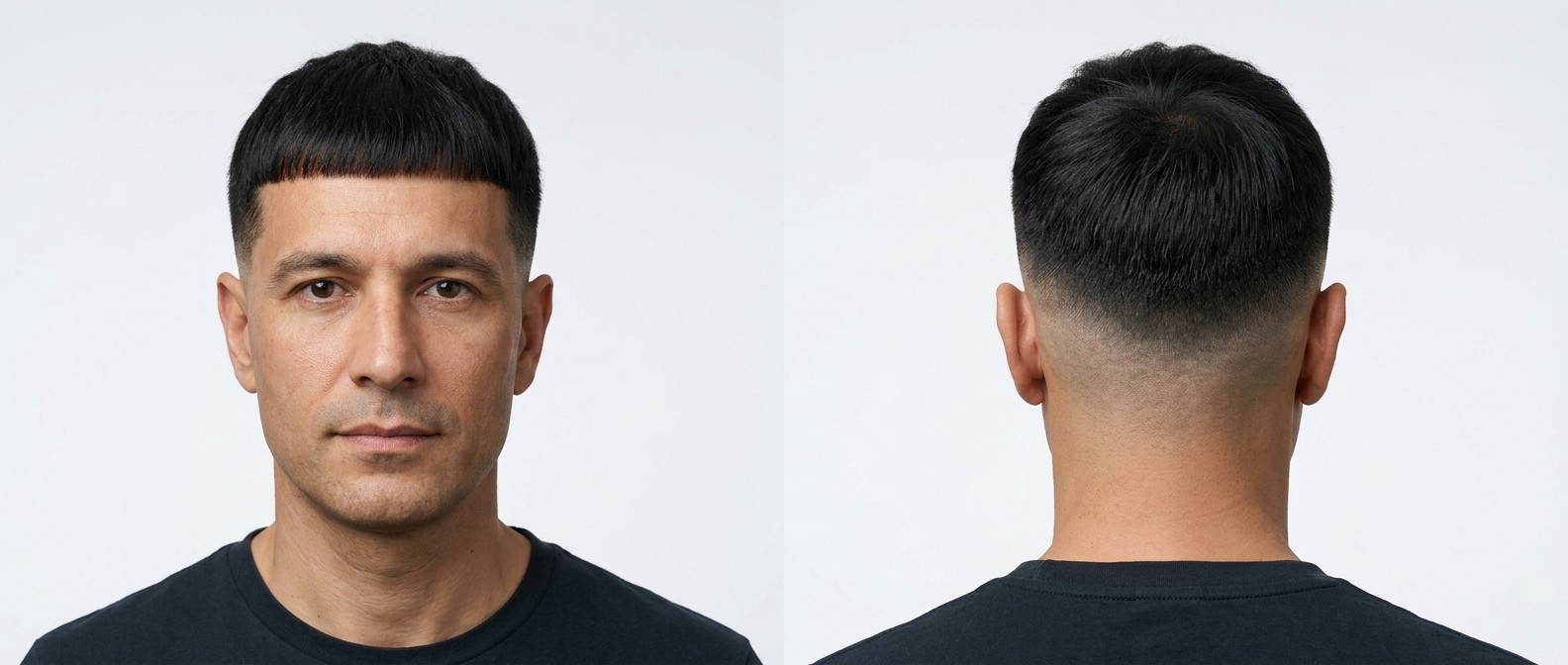
Edgar Cut
Classic Straight Edgar Cut with Sharp Blunt Fringe and High Skin Fade
Edgar Cut
Textured Wavy Edgar Cut with High Skin Fade for Men
Edgar Cut