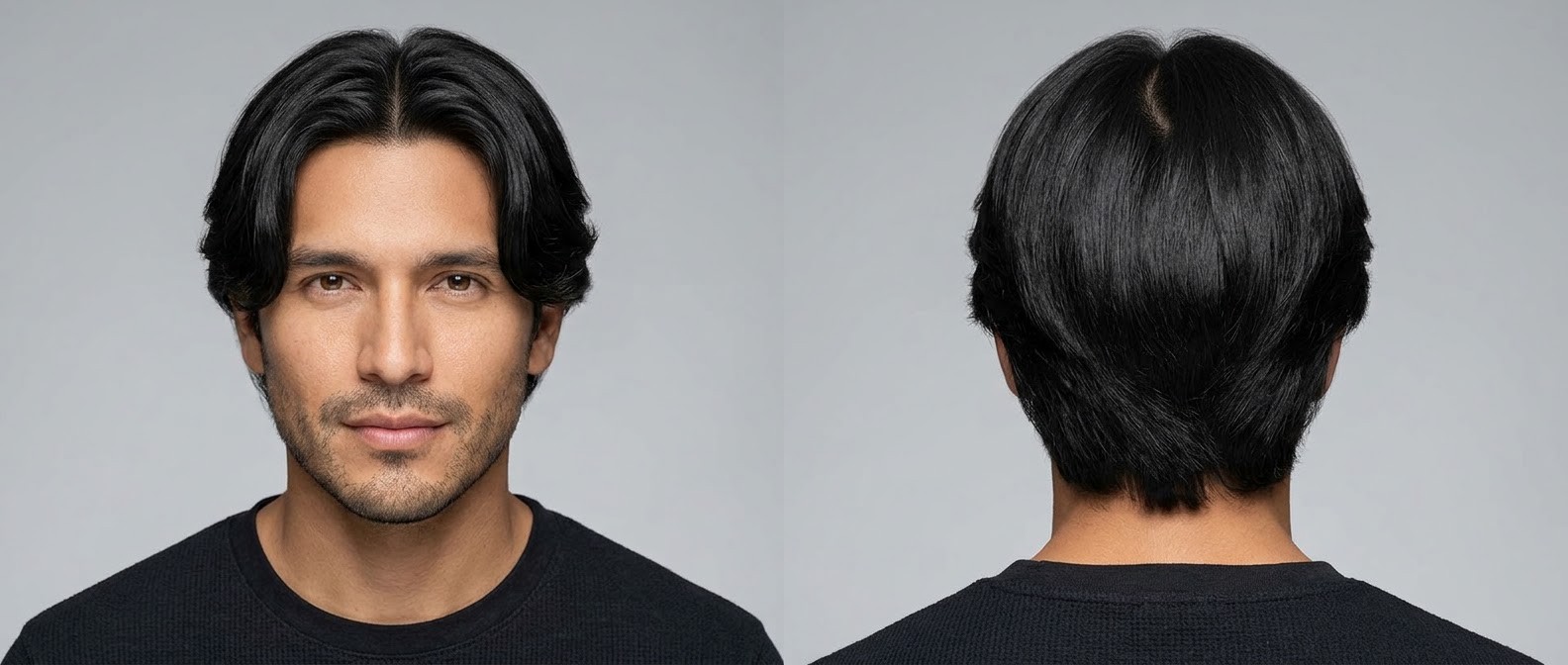
Add one front-facing photo. We send it to the AI together with this exact cut — and you get a photorealistic preview of yourself wearing it.
1
Your photo
Front view · neutral face · even light
2
This haircut
Already included
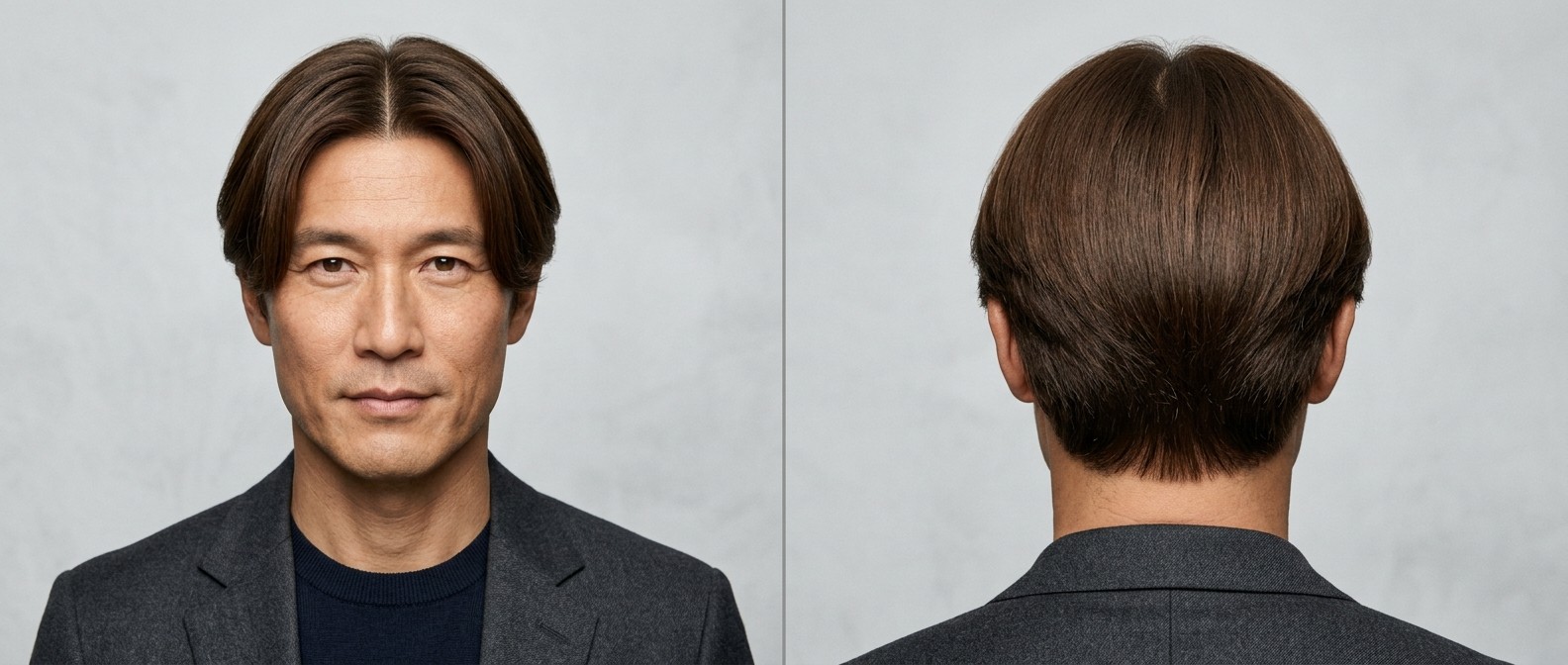
Front and back reference — taken from this page
3
Your preview
Your result appears here
![]()
![]()
Generated for you, not published anywhere
How do you rate this tool?
- Reading your photo
- Matching the cut
- Rendering your preview
How to take a photo that works
Do
- Face the camera straight on
- Even daylight, no harsh shadow
- Head and shoulders in frame
- Hair fully visible, nothing covering it
Avoid
- Hats, caps, hoods, sunglasses
- Steep angles or a tilted head
- Group photos or heavy filters
- Backlight that darkens the face
Classic Center-Part Curtains with Concealed Taper for Thick Hair
 Top
Long (10-20 cm)
 Sides
Short (6-20 mm)
 Hair Type
Straight (Type 1)
 Face Shape
Heart
 Maintenance
Medium
 Thickness
Thick / Dense
About This Style
The classic center-part curtains hairstyle is a timeless aesthetic that has been brilliantly modernized for today's creative professional. As seen in the photograph, this specific variation capitalizes on thick, dense, straight black hair, allowing the long top lengths to fall naturally with a distinct middle part that frames the face perfectly. The front sections gently curve right at the cheekbones, providing excellent symmetry and softening the wider forehead of a heart-shaped face. Because dense, straight hair can easily become unmanageable and overly voluminous on the sides, this style utilizes a highly effective barbering secret: keeping the underlying side and back lengths short (around 6 to 20 millimeters) while allowing the long top canopy (10 to 20 centimeters) to drape over them. This removes massive amounts of bulk, ensuring the silhouette remains sleek and head-hugging rather than round and puffy.
This aesthetic is incredibly well-suited for men in creative, artistic, or flexible professional fields who want a look that balances relaxed approachability with intentional grooming. The rich, dark texture of the straight hair reflects light beautifully, indicating a healthy, well-maintained grooming routine. Paired with a neat, evenly trimmed stubble beard, the hairstyle strikes the perfect balance between rugged masculinity and refined elegance. It is a highly versatile choice that transitions effortlessly from a casual design studio environment to an upscale evening gallery opening, giving you an effortlessly cool vibe.
What makes this particular cut stand out is how masterfully it manages the inherent heaviness of dense, Type 1 straight hair. By incorporating subtle internal texturizing and that hidden shorter length underneath, the style maintains its structural integrity and fluid movement. It requires only medium maintenance, making it a practical yet highly stylish option for the modern man who doesn't mind spending five to ten minutes in front of the mirror each morning to perfect the sweep and flow of the curtains.
Key Features
- Striking center part that divides the thick, dense hair evenly to create perfect facial symmetry and frame the cheekbones flawlessly.
- Long top lengths (approximately 10 to 20 centimeters) that provide the necessary weight for the hair to cascade downwards naturally without puffing out.
- Concealed shorter lengths on the sides and back (6 to 20 millimeters) functioning as a subtle undercut to remove excessive bulk from the dense hair.
- Seamless internal layering throughout the long canopy to reduce the natural heaviness of Type 1 straight hair while maintaining a cohesive, flowing silhouette.
- A natural, backward-flowing direction on the visible side sections that tucks neatly behind the ears or sits flush against the temples.
- A glossy, healthy finish that highlights the rich black color and showcases the hair's natural vitality, density, and straight texture.
Getting the Cut
- Request a classic center-parted curtains style, leaving the top canopy length between 10 to 20 centimeters to ensure it falls properly around your cheekbones.
- Ask for a disconnected, hidden undercut on the sides and back, taken down to about 6 to 20 millimeters using clippers, to remove the bulk from your dense hair.
- Instruct your barber to ensure the long top hair completely covers the shorter undercut, creating a seamless drape that sits flat against the sides of your head.
- Ask them to use point-cutting techniques with scissors throughout the interior of the long sections to remove weight and allow the straight hair to move freely.
- Specify that the front fringe sections should be angled slightly so they sweep back effortlessly and blend into the overall flow when pushed away from your face.
- Request a soft taper at the very base of the nape so that if the wind blows the longer hair aside, the underlying neckline still looks exceptionally clean and intentional.
- Remind them to check the balance of the middle part while the hair is both wet and dry, ensuring the heavy density doesn't cause one side to sit higher or look bulkier than the other.
Daily Routine
- Begin your morning routine by washing and towel-drying your hair until it is slightly damp, leaving just enough moisture to help distribute your styling products evenly.
- Apply a dime-sized amount of a lightweight smoothing cream or a low-hold styling mousse thoroughly from the roots to the ends to tame frizz and add foundational control.
- Use a fine-tooth comb to establish a precise, clean middle part, drawing a straight line from your front hairline back towards the crown of your head.
- Attach a concentrator nozzle to your blow dryer and set it to a medium heat and medium speed setting to prevent heat damage while providing enough power to shape the dense hair.
- Using a vented brush, blow-dry the hair by pulling the front sections down and slightly backwards, directing the airflow away from the face to create that signature curtain swoop.
- Once the hair is fully dry, switch your blow dryer to the cold shot setting and blast the roots along the part line to lock the volume and direction in place for the rest of the day.
- Finish the look by rubbing a tiny amount of flexible-hold pomade or styling paste between your palms and gently running your fingers through the mid-lengths and ends to add definition and a natural shine.
Products & Tools
- Lightweight smoothing cream or styling mousse to provide a foundational, flexible hold without weighing down the thick, straight hair strands.
- Flexible-hold, medium-shine pomade or styling paste for finishing touches, adding definition to the ends, and controlling any stubborn flyaways.
- High-quality blow dryer equipped with a concentrator nozzle attachment for precise, directional airflow during the styling and swooping process.
- Vented styling brush to allow heat to pass through the dense hair easily, speeding up drying time while effectively shaping the curtain fringe.
- Fine-tooth carbon comb for creating a sharp, perfectly straight middle part and detangling the hair smoothly without causing static electricity.
Maintenance
- Schedule maintenance trims with your barber every 5 to 8 weeks to manage the hidden undercut length and keep the long ends looking healthy, as thick hair can quickly lose its shape.
- Wash your hair 2 to 3 times a week using a hydrating shampoo and a rich conditioner to maintain the glossy, healthy appearance essential for this flowing style.
- Avoid using heavy, wax-based products that can build up on the scalp and make straight, dense hair look greasy, separated, or weighed down.
- Consider using a silk or satin pillowcase overnight to reduce friction, prevent tangles, and keep the hair cuticle exceptionally smooth while you sleep.
- Incorporate a clarifying shampoo into your routine once a month to remove any residual styling product buildup and keep the scalp environment optimal for hair growth.
Best For
Face Shapes: Ideal for Heart, Oval, and Diamond face shapes, as the center part and sweeping fringe help soften wider foreheads and beautifully balance the facial proportions.
Hair Types: Perfectly suited for Type 1 straight hair, particularly those with thick and dense textures that can support the weight of the longer style without looking stringy.
Lifestyles: Excellent for men in creative, artistic, or flexible professional environments who appreciate a relaxed yet highly intentional and fashionable aesthetic.
Age Ranges: Highly flattering for men in the 35-45 age bracket, offering a distinguished, youthful, and contemporary appearance when paired with a well-groomed stubble beard.
Pro Tips
- If your straight hair struggles to hold the backward sweep, ask your barber to texturize the ends slightly more; this creates invisible support and friction within the hair shaft.
- During humid seasons, swap your finishing paste for a light anti-frizz serum to maintain that sleek, glossy finish without adding unnecessary weight that could flatten the roots.
- A common styling mistake is parting the hair too far back; keep the defined middle part restricted to the front and mid-scalp, letting the crown hair fall forward naturally.
- Train your hair to fall into the middle part by consistently combing it into place when wet immediately after showering, which helps redirect the natural growth pattern over time.
Related Hairstyles
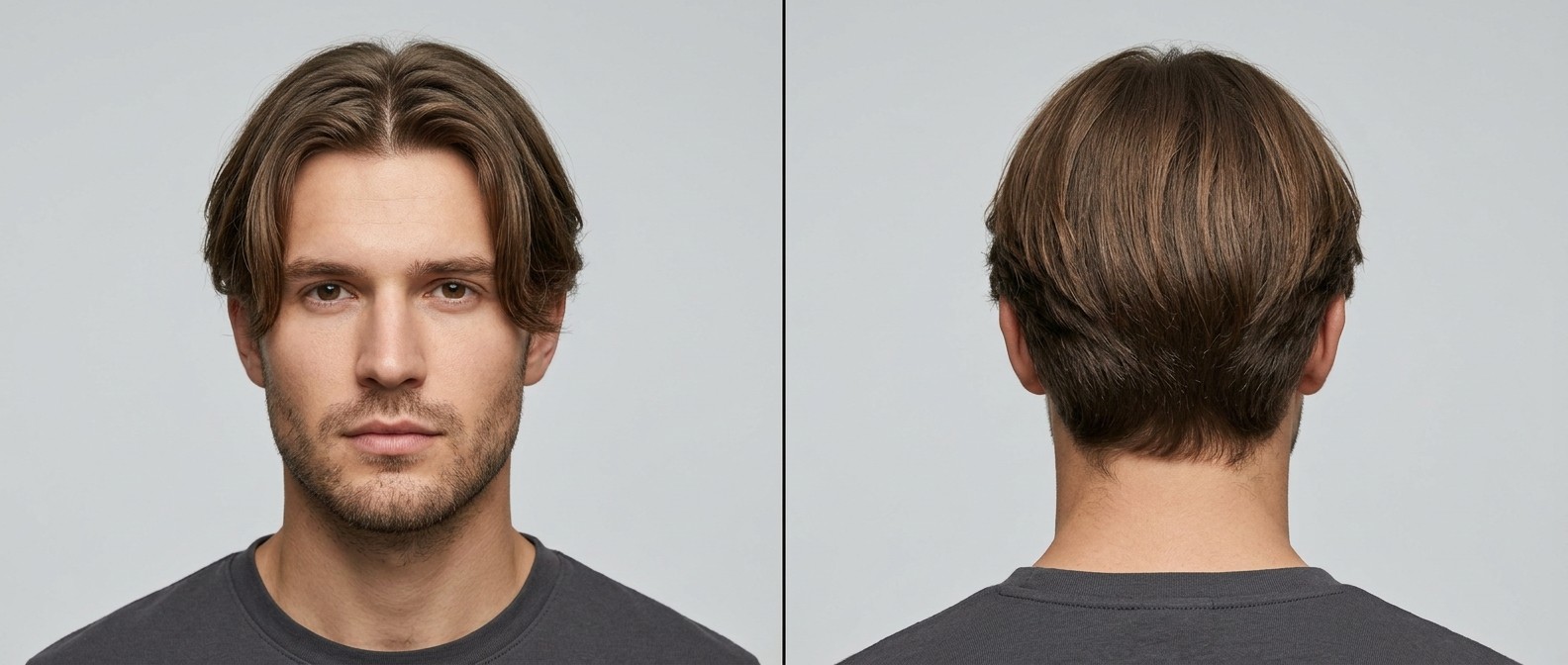
Curtains
Classic Middle Part Curtains Haircut for Men | Style Guide
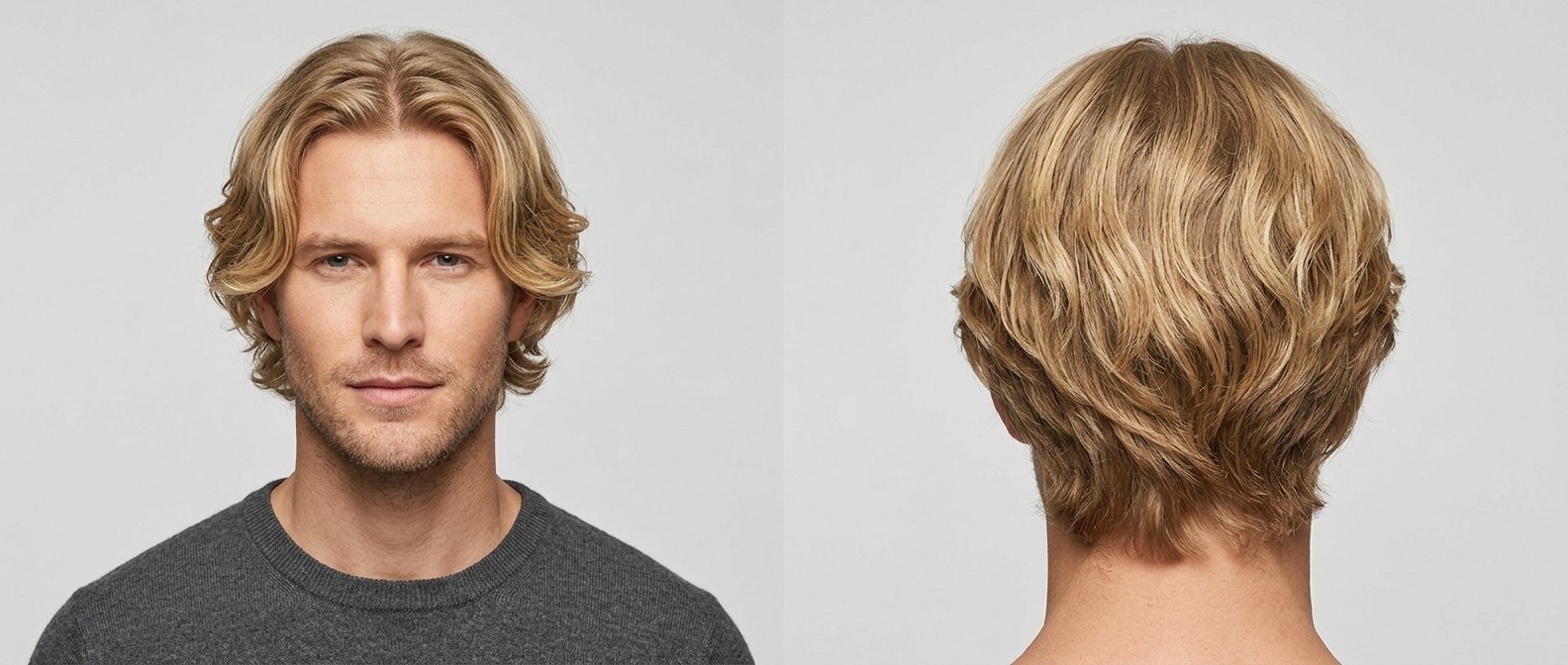
Curtains
Wavy Blonde Curtains with Layered Flow and Center Part
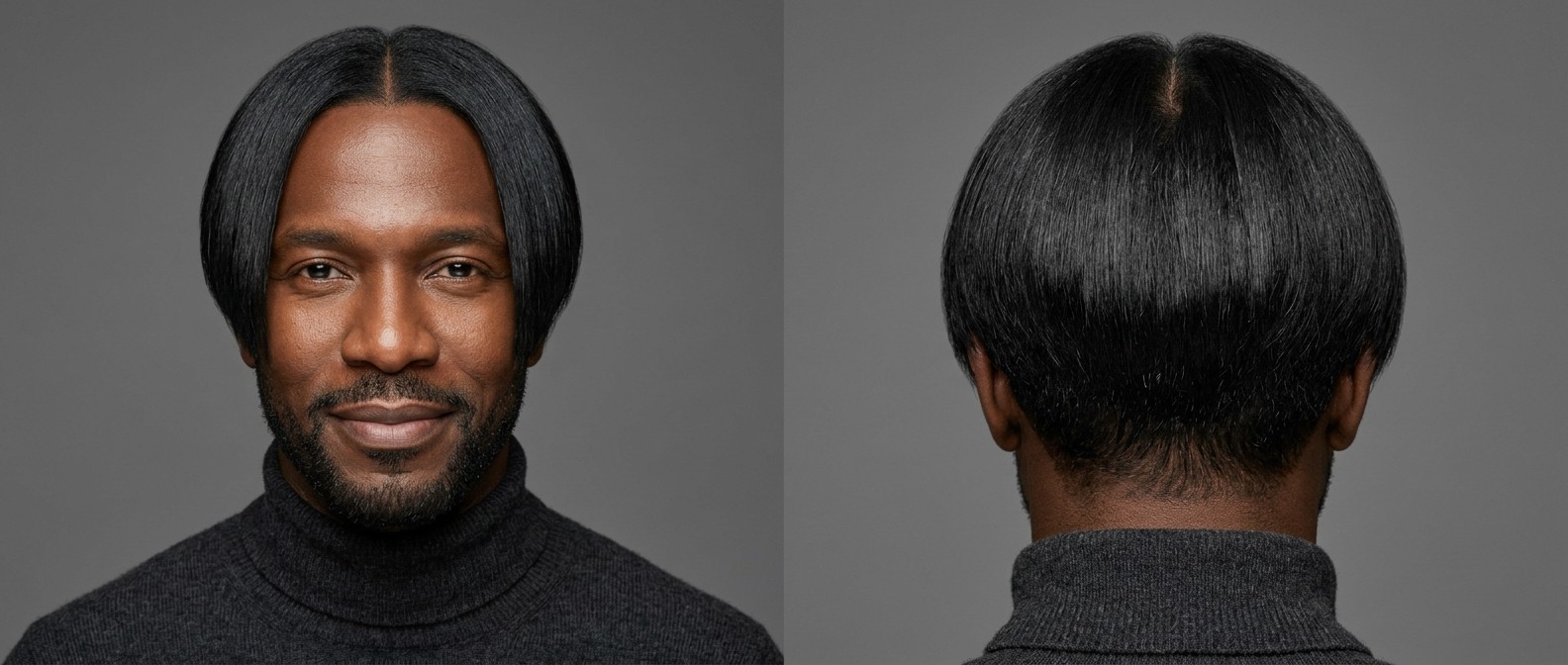
Curtains
Sleek Straightened Curtains with Precision Middle Part for Black Men
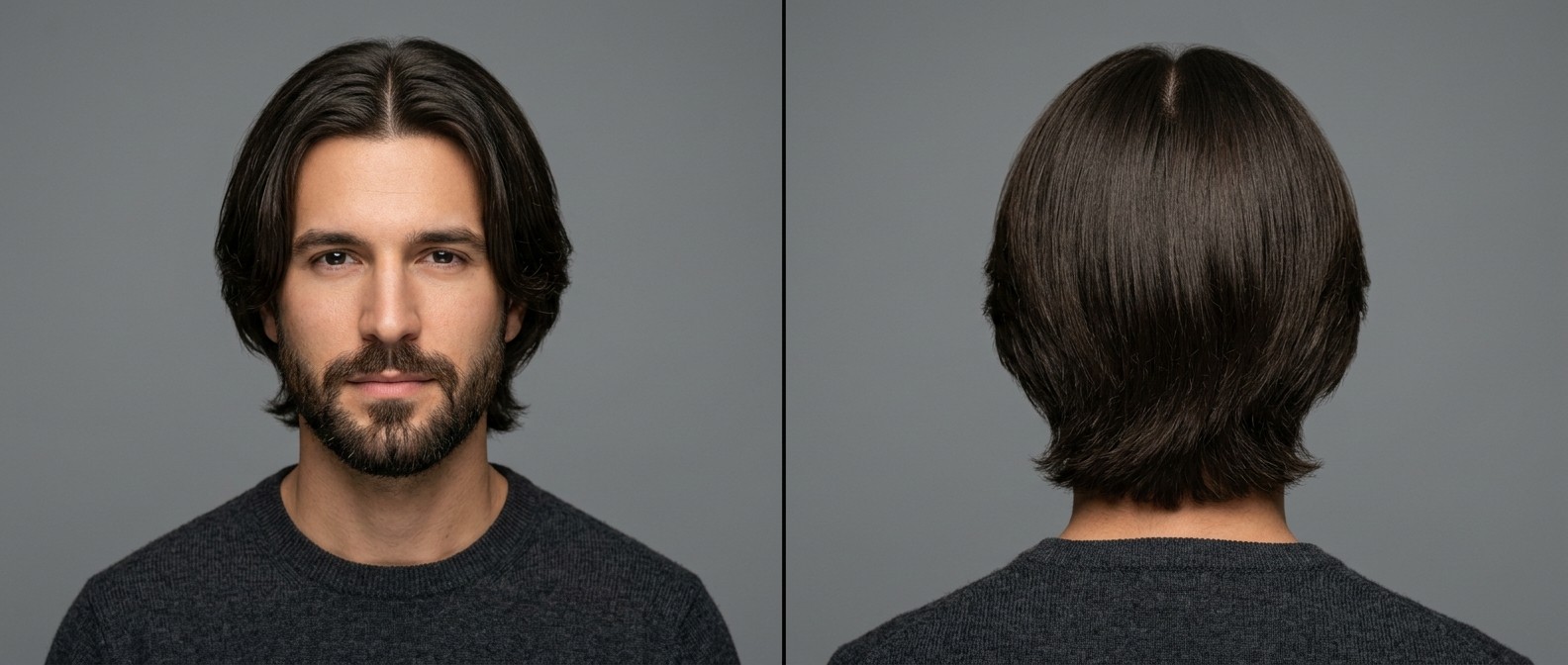
Curtains
Modern Layered Curtains Hairstyle with Symmetrical Flow
Curtains
Classic Copper Curtains with Scissor-Tapered Nape and Full Beard
Curtains