Add one front-facing photo. We send it to the AI together with this exact cut — and you get a photorealistic preview of yourself wearing it.
1
Your photo
Front view · neutral face · even light
2
This haircut
Already included
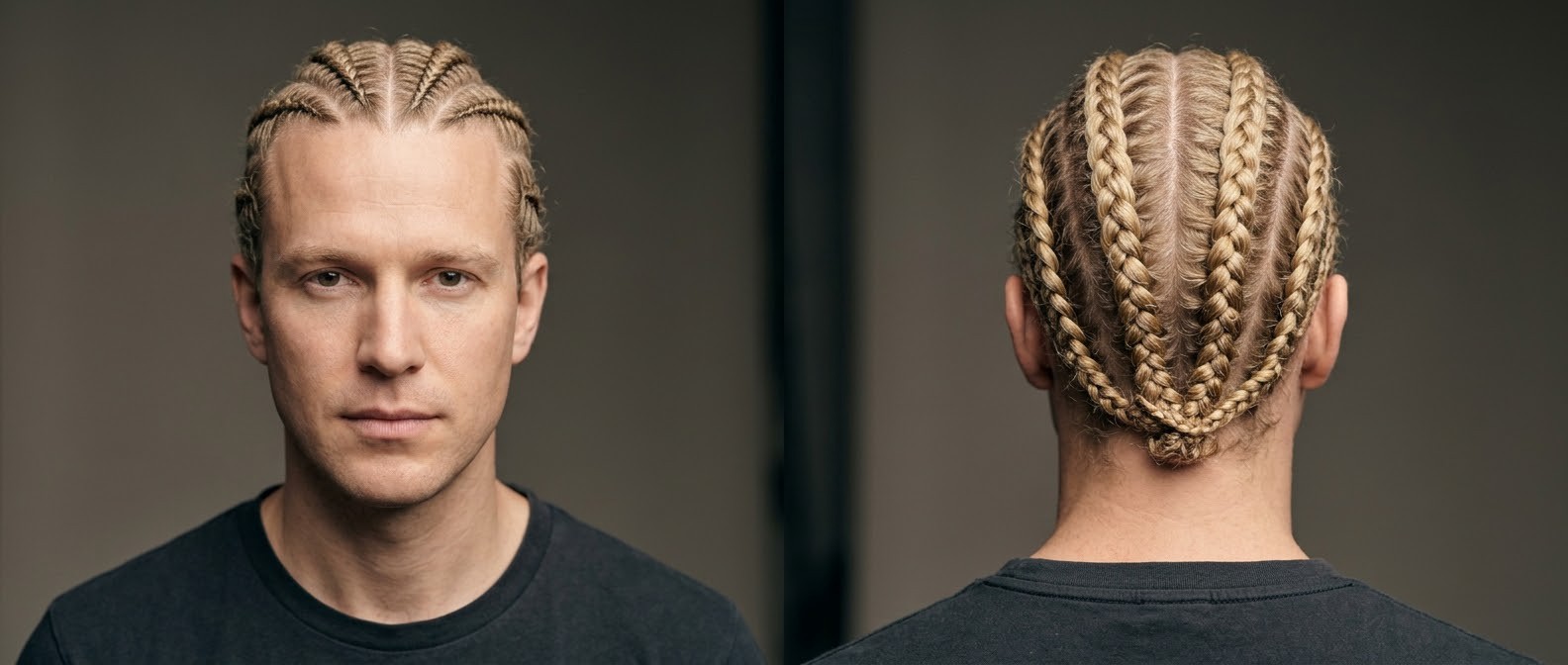
Front and back reference — taken from this page
3
Your preview
Your result appears here
![]()
![]()
Generated for you, not published anywhere
How do you rate this tool?
- Reading your photo
- Matching the cut
- Rendering your preview
How to take a photo that works
Do
- Face the camera straight on
- Even daylight, no harsh shadow
- Head and shoulders in frame
- Hair fully visible, nothing covering it
Avoid
- Hats, caps, hoods, sunglasses
- Steep angles or a tilted head
- Group photos or heavy filters
- Backlight that darkens the face
Symmetrical Straight-Back Blonde Cornrows with Nape Knot
 Top
Medium (5-10 cm)
 Sides
Medium (2-5 cm)
 Hair Type
Curly (Type 3)
 Face Shape
Oval
 Maintenance
Medium
 Thickness
Thick / Dense
About This Style
This striking variation of men's cornrows showcases a highly symmetrical, straight-back braiding technique that will instantly command attention in any room you enter. Your thick, dense blonde hair is meticulously sectioned into five prominent, raised braids that travel from the very front of your straight hairline directly down to the nape of the neck. What makes this particular style stand out so vividly is the incredibly precise, razor-sharp parting of the scalp and the masterful way the braids converge at the back, tucking neatly into a subtle, low knot. It is a bold, artistic statement that requires structural precision, a skilled braider, and healthy hair density to truly achieve this striking three-dimensional volume.
Perfectly suited for oval face shapes and strong, straight hairlines, this look frames your face beautifully by pulling all the volume completely away from your forehead and highlighting your natural bone structure. It is an ideal choice if you are a creative professional or someone who embraces an artistic lifestyle, wanting a distinctive, sophisticated aesthetic that flawlessly manages thick hair. Because the braids lock everything in place, you are left with a highly structured silhouette that requires absolutely no daily manipulation, giving you a powerful, clean look from morning until night.
Perfectly suited for oval face shapes and strong, straight hairlines, this look frames your face beautifully by pulling all the volume completely away from your forehead and highlighting your natural bone structure. It is an ideal choice if you are a creative professional or someone who embraces an artistic lifestyle, wanting a distinctive, sophisticated aesthetic that flawlessly manages thick hair. Because the braids lock everything in place, you are left with a highly structured silhouette that requires absolutely no daily manipulation, giving you a powerful, clean look from morning until night.
Key Features
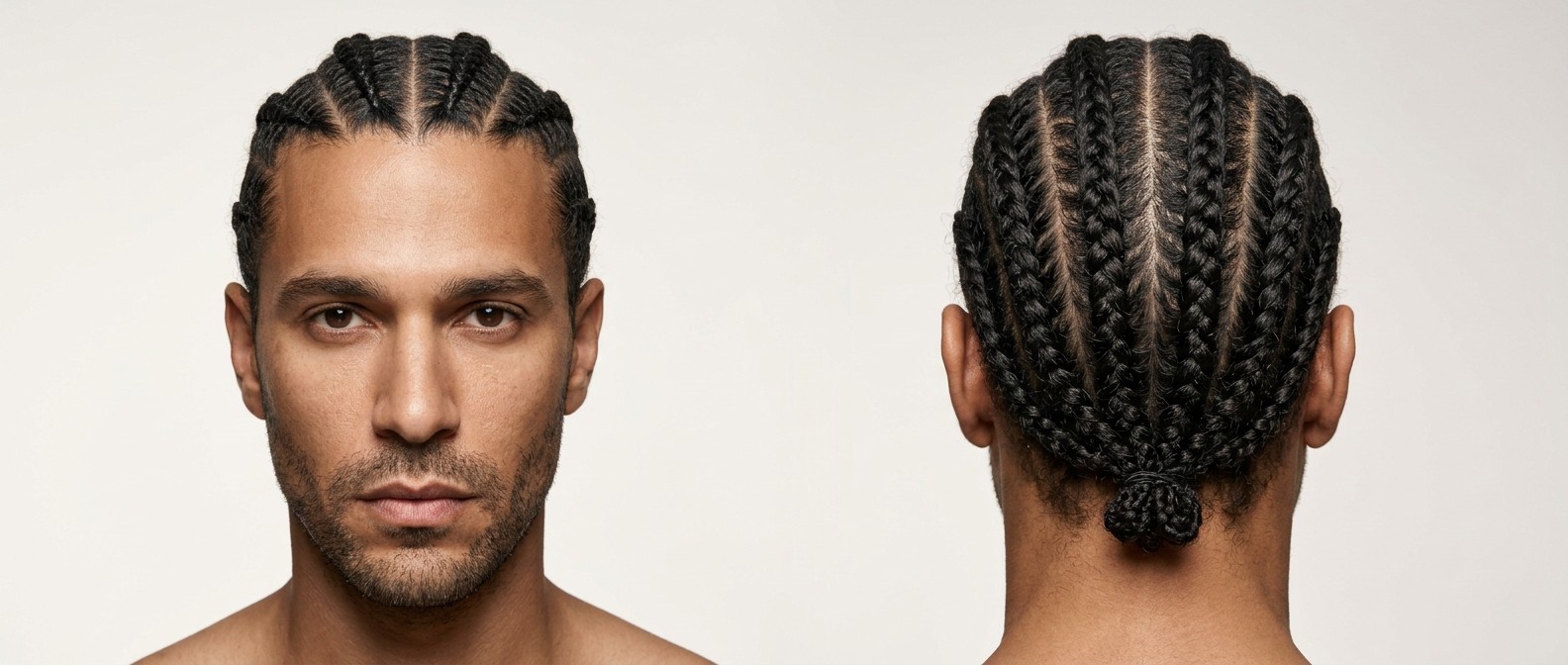
- Five thick, highly symmetrical straight-back cornrows extending flawlessly from the front hairline all the way to the nape of the neck.
- Extremely precise, linear scalp partings that create a striking geometric contrast against the raised, densely packed braids.
- Hair flow is directed entirely backward in uniform columns, completely clearing the face and exposing the forehead and jawline.
- All individual braids converge at the lower nape of the neck, secured neatly into a small, compact tucked knot for a polished finish.
- High-tension underhand braiding technique creates a prominent, raised three-dimensional silhouette that emphasizes your natural hair density.
- Uniform medium length across the top and sides is integrated seamlessly into the continuous, tight braided structure without any loose ends.
Getting the Cut
- Request a thorough wash and a high-heat blow-dry using a comb attachment to stretch your hair, maximizing the workable length for the braider.
- Ask your stylist to carefully section the hair into exactly five equal, straight-back columns starting from the front hairline down to the nape.
- Ensure the partings are created using a fine-tooth metal rat tail comb to guarantee absolute precision and clean, highly visible scalp lines.
- Specify the underhand braiding technique, commonly known as cornrows or Dutch braids, to ensure the braids sit prominently raised above the scalp.
- Request firm, consistent tension throughout the entire braiding process to accommodate your thick, dense hair texture and prevent premature frizzing.
- Ask the braider to integrate the slightly shorter side hairs carefully into the outermost braids, utilizing a firm-hold styling jam for extra grip.
- Instruct the stylist to gather the ends of all five completed braids at the nape of the neck and secure them tightly into a small, flat tucked knot.
Daily Routine
- Remove your silk or satin durag or bonnet very carefully each morning to avoid disturbing the braids' tension and preserving the neatness.
- Inspect the precise scalp partings in the mirror and gently pat down any minor flyaways or frizz that may have surfaced on the braids overnight.
- Since this specific style requires zero daily styling products, completely avoid applying heavy creams, waxes, or gels that could cause buildup.
- If your scalp feels tight or dry, apply a very light mist of natural hydrating oil spray directly to the exposed scalp lines, avoiding the actual hair.
- Smooth your hands lightly over the raised braids from the front hairline to the back of your head to ensure the silhouette remains sleek and compact.
- Check the small tucked knot at the nape of the neck to ensure the elastic band or the tucked ends are still secure, tight, and laying flat.
- Step out the door with confidence—this zero-product, ultra-low-maintenance protective style is fully ready for the day in under one minute of prep.
Products & Tools
- Fine-tooth metal rat tail comb for executing razor-sharp, perfectly symmetrical scalp partings before the braiding process begins.
- Firm-hold braiding jam or edge control gel, utilized exclusively during the initial braiding process to provide grip and lock down short flyaways.
- Small, snag-free clear or blonde elastic bands designed to securely tie off the ends of the braids and construct the neat nape knot.
- High-quality silk or satin durag or sleep bonnet to protect the style overnight, reduce friction, and maintain the braids' structural tension.
- Lightweight scalp soothing oil or spray with a low-residue finish to alleviate tension itch and moisturize the skin without causing product buildup.
- Professional blow dryer equipped with a detangling comb attachment to properly prep, smooth, and stretch the hair prior to braiding.
Maintenance
- Schedule your re-braiding appointments strictly every 3 to 4 weeks to maintain overall neatness and prevent your hair from matting at the roots.
- Avoid submerging your head in water or engaging in frequent heavy washing, as excessive moisture will cause the braids to frizz and loosen prematurely.
- If washing is absolutely necessary before your next barber visit, use a heavily diluted shampoo focused exclusively on cleansing the exposed scalp partings.
- Always sleep with a silk or satin head covering to significantly reduce overnight friction, retain natural moisture, and preserve the sharp partings.
- Keep your exposed scalp moisturized lightly with specialized oils, but strictly avoid heavy hair greases that will trap dirt and cause visible flaking.
Best For
Oval face shapes, as the tightly pulled-back style highlights your balanced facial proportions and bone structure without hiding the forehead.
Thick, dense hair types that provide more than enough natural bulk to create these beautifully raised, three-dimensional braided columns.
Men aged 35 to 45 who are looking for a bold, artistic, and highly structured aesthetic that stands out from traditional short haircuts.
Creative professionals and those with artistic lifestyles where unconventional, striking grooming choices are not only accepted but celebrated.
Normal to straight hairlines that can comfortably support the continuous tension of straight-back braiding without looking receded.
Pro Tips
- Insist that your braider does not pull too tightly at the front hairline; excessive tension can lead to traction alopecia, especially on finer Caucasian hair.
- If the hair on your sides is on the shorter end of the medium spectrum, ensure the braider uses adequate grip products so those sections don't unravel early.
- During the intense summer months, make sure to apply a spray-on SPF directly to the exposed scalp partings to prevent severe and painful sunburns.
- Always allow your hair and scalp to rest completely unbraided for at least a few days between your 3-4 week appointments to preserve long-term follicle health.
Related Hairstyles
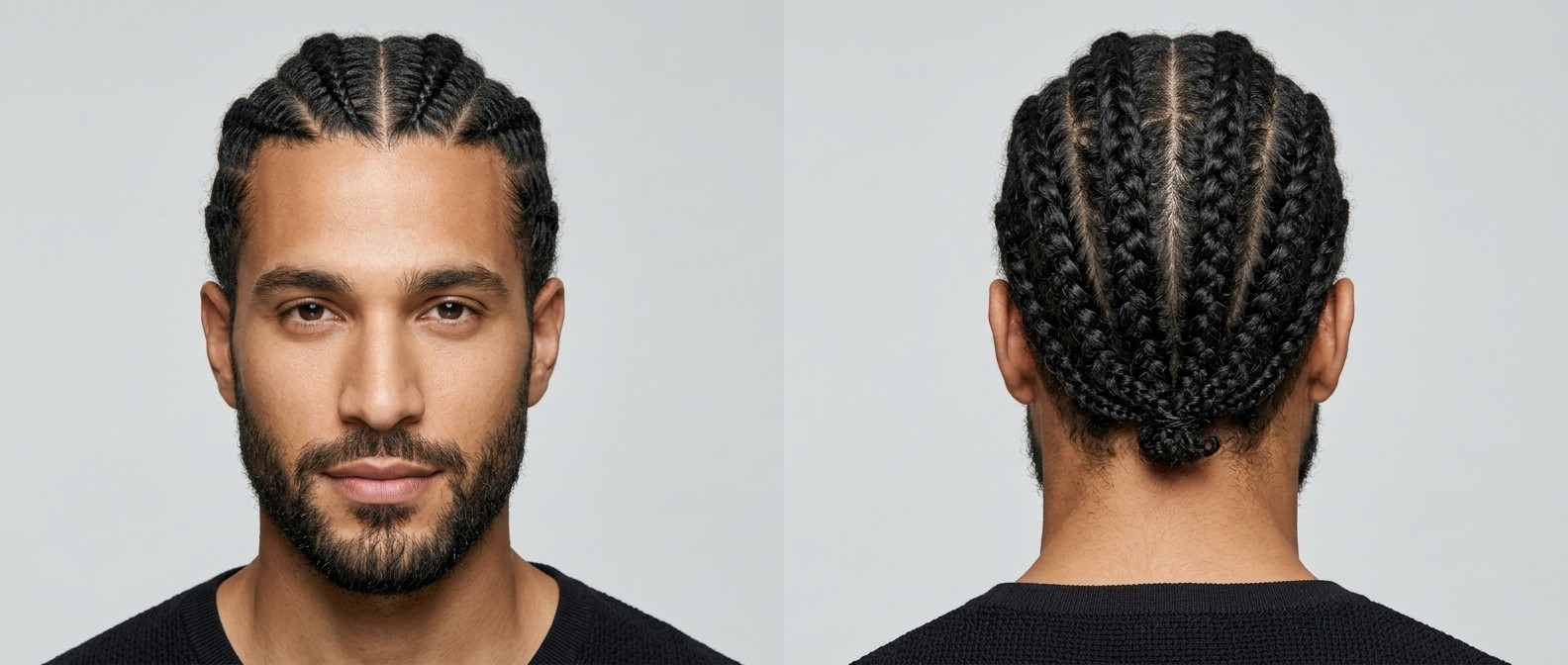
Cornrows
Classic Straight-Back Cornrows with Neat Nape Knot and Beard
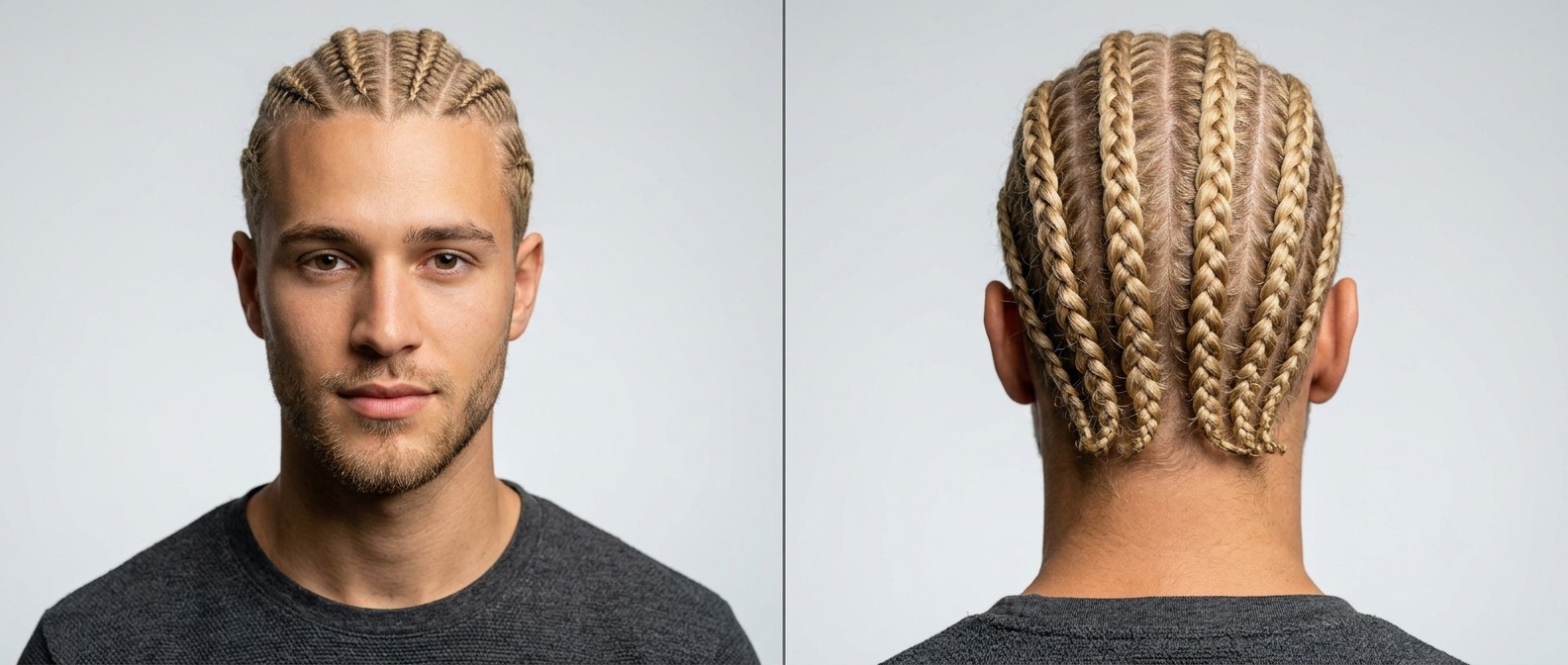
Cornrows
Classic Straight-Back Blonde Cornrows for Medium Length Hair
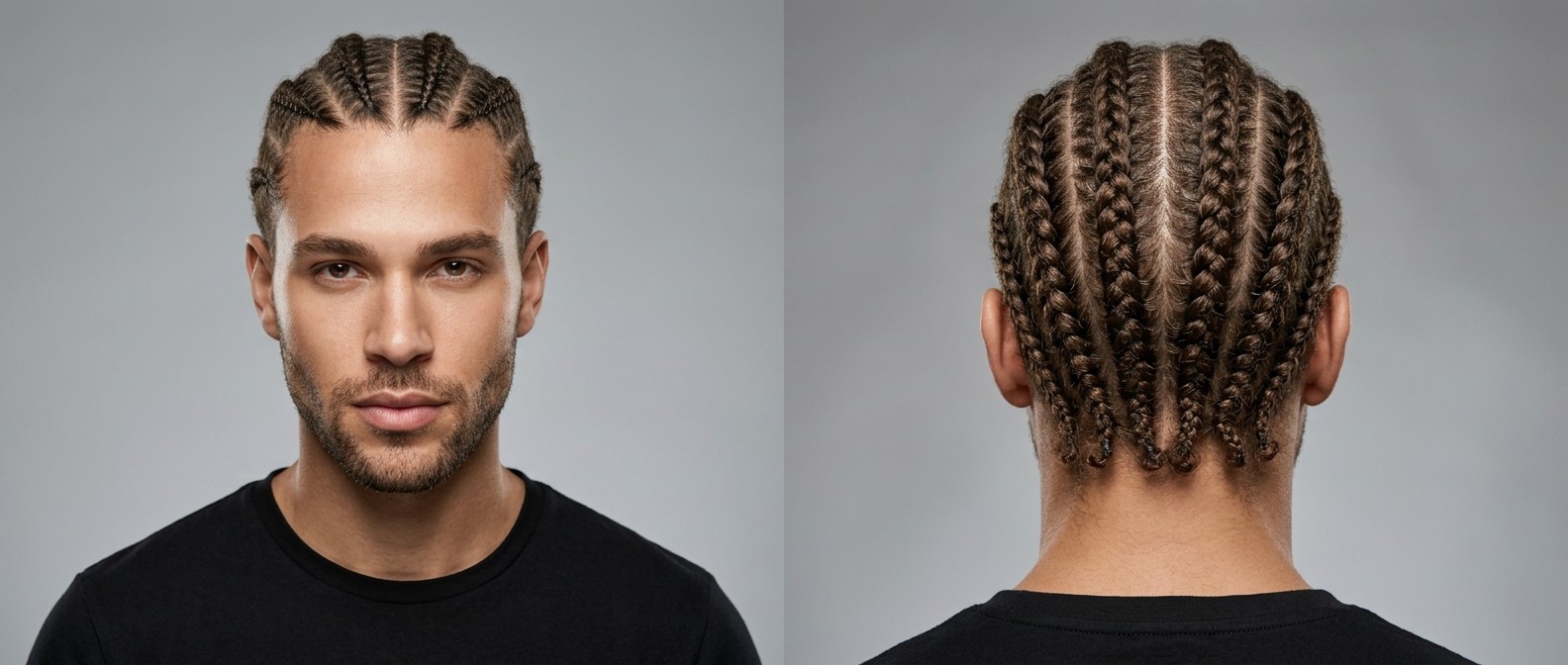
Cornrows
Classic Straight-Back Cornrows with Clean Geometric Partings
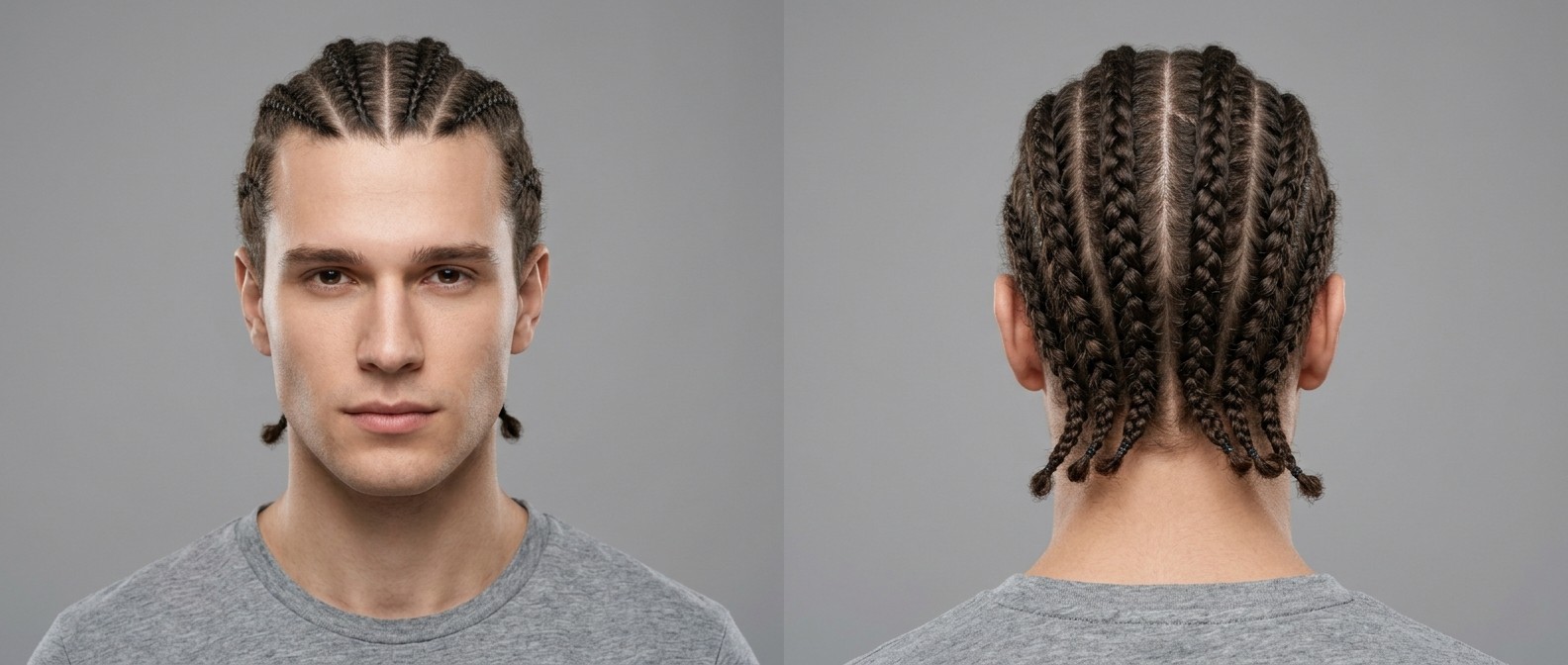
Cornrows
Symmetrical Straight-Back Cornrows for Thick Curly Men's Hair
Cornrows
Classic Straight-Back Cornrows Featuring a Neat Nape Knot
Cornrows