
Add one front-facing photo. We send it to the AI together with this exact cut — and you get a photorealistic preview of yourself wearing it.
1
Your photo
Front view · neutral face · even light
2
This haircut
Already included
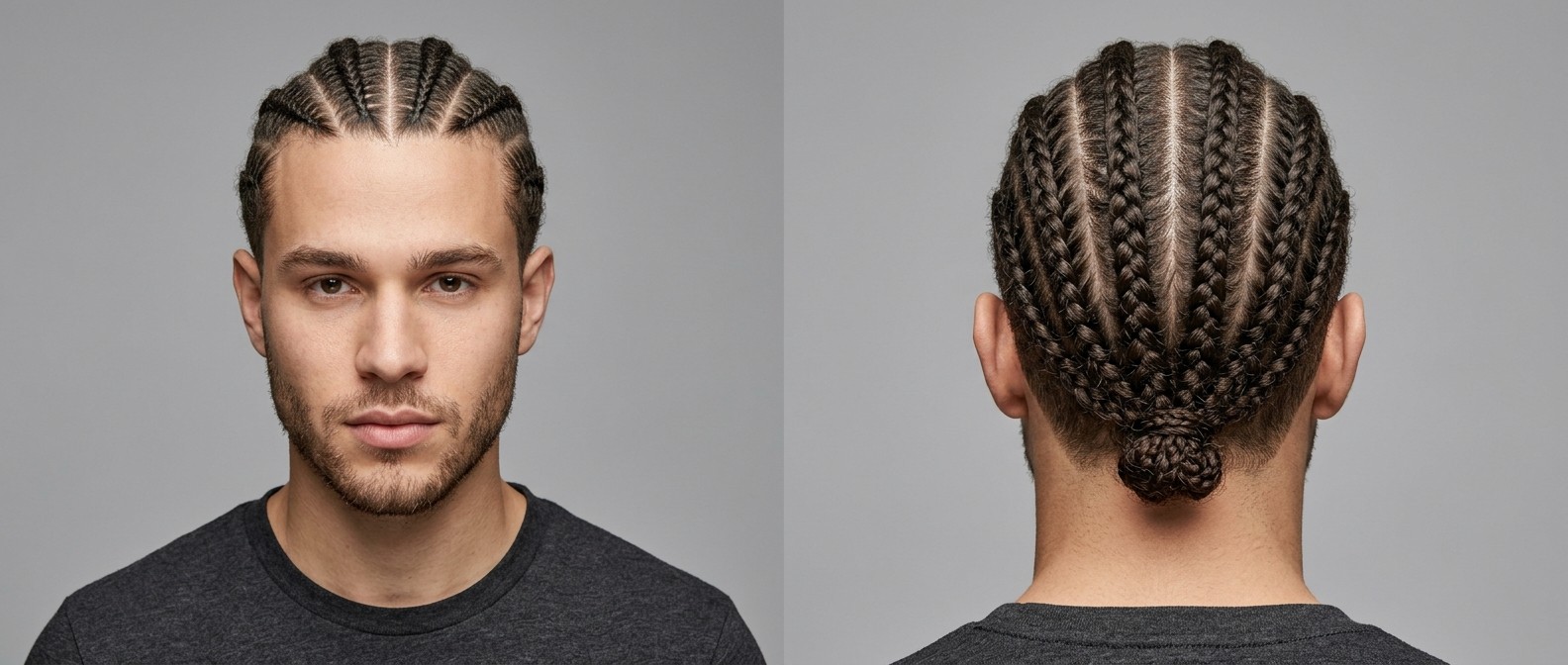
Front and back reference — taken from this page
3
Your preview
Your result appears here
![]()
![]()
Generated for you, not published anywhere
How do you rate this tool?
- Reading your photo
- Matching the cut
- Rendering your preview
How to take a photo that works
Do
- Face the camera straight on
- Even daylight, no harsh shadow
- Head and shoulders in frame
- Hair fully visible, nothing covering it
Avoid
- Hats, caps, hoods, sunglasses
- Steep angles or a tilted head
- Group photos or heavy filters
- Backlight that darkens the face
Straight-Back Cornrows with Looped Nape Knot for Light Brown Hair
 Top
Medium (5-10 cm)
Top
Medium (5-10 cm)
 Sides
Medium (2-5 cm)
Sides
Medium (2-5 cm)
 Hair Type
Curly (Type 3)
Hair Type
Curly (Type 3)
 Face Shape
Diamond
Face Shape
Diamond
 Maintenance
Medium
Maintenance
Medium
 Thickness
Medium / Normal
Thickness
Medium / Normal
About This Style
This striking variation of straight-back cornrows offers a clean, highly structured aesthetic that perfectly complements a diamond face shape. As you can see in the photo, your hair is meticulously sectioned into perfectly straight, parallel rows that travel from the natural front hairline all the way down to the nape of the neck. The light brown, naturally curly hair is woven tightly to the scalp, showcasing exceptional parting precision and scalp visibility that adds a geometric, almost architectural element to your overall look. The contrast between the tightly tensioned braids and the natural, softer texture of a full, well-groomed beard creates a rugged yet refined masculine profile.
What makes this style particularly distinctive is the finishing detail at the back: the braids converge at the lower nape and are secured into a tight, looped knot, keeping the ends neatly tucked away. This is an excellent choice for the modern man seeking a protective, low-daily-maintenance style that still exudes a strong, deliberate edge. Ideal for casual, everyday wear or active lifestyles, this look requires under a minute of morning styling time once completed, though it demands regular professional upkeep every three to four weeks to maintain those razor-sharp parts and prevent flyaways.
What makes this style particularly distinctive is the finishing detail at the back: the braids converge at the lower nape and are secured into a tight, looped knot, keeping the ends neatly tucked away. This is an excellent choice for the modern man seeking a protective, low-daily-maintenance style that still exudes a strong, deliberate edge. Ideal for casual, everyday wear or active lifestyles, this look requires under a minute of morning styling time once completed, though it demands regular professional upkeep every three to four weeks to maintain those razor-sharp parts and prevent flyaways.
Key Features
- Perfectly straight, parallel parting lines running from the front hairline to the nape, creating striking geometric symmetry.
- Tight, uniform underhand braiding technique (cornrows) that keeps the medium-thickness hair secured flat against the scalp.
- A centralized convergence point at the lower neckline where all individual braids are neatly gathered together.
- A small, looped tie-off knot at the base of the neck, securing the ends and preventing the braids from unraveling.
- Seamless integration with a natural, straight front hairline, avoiding harsh edge-ups for a more organic transition.
- High-contrast visual texture between the smooth, tensioned braids and the natural, softer texture of the accompanying full beard.
Getting the Cut
- Request a thorough wash and detangling session to prep your naturally curly hair for smooth, tension-free braiding.
- Ask for 6 to 8 even, straight-back sections using a rat-tail comb to ensure razor-sharp, parallel parting lines from the forehead to the nape.
- Specify an underhand braiding technique to make the braids sit raised and prominent on top of the scalp rather than blending in.
- Instruct the braider to maintain firm, consistent tension throughout the process to prevent early frizz, but not so tight that it causes scalp damage or headaches.
- Ask to leave the natural, straight front hairline intact without using trimmers for a hard line-up, keeping the look slightly more natural at the forehead.
- Request that all the completed braids be gathered at the lower center of the nape and secured together with a snag-free elastic.
- Have them loop the ends of the braids through the elastic one final time to create a neat, tucked-in knot rather than leaving the braided tails hanging loose.
Daily Routine
- Because this is a protective style, your daily morning styling time is virtually zero, but proper preparation and maintenance are key to longevity.
- Wake up and carefully remove your silk or satin durag or bonnet, which is essential for protecting the braids from friction while you sleep.
- Lightly mist your scalp and braids with a lightweight, hydrating leave-in conditioner or a dedicated braid spray to keep the hair moisturized and prevent flaking.
- Apply a few drops of natural scalp oil (like jojoba, argan, or tea tree oil) directly to the exposed parted areas using your fingertips, massaging very gently to avoid disturbing the braids.
- Smooth down any minor flyaways or frizz along the hairline using a tiny dab of edge control paste or light pomade.
- Use a soft-bristled toothbrush or an edge brush to gently sweep the edge control product into the very beginning of the braids for a polished finish.
- Ensure the elastic band at the nape is still secure; if the looped knot has loosened overnight, quickly re-tie it using a fresh, snag-free hair tie.
Products & Tools
- Metal-tipped rat-tail comb for creating ultra-precise, straight parting lines before braiding.
- Snag-free, metal-less elastic hair bands to secure the nape knot without causing hair breakage.
- Lightweight braid spray or leave-in conditioning mist to hydrate the scalp and hair daily.
- Natural scalp oil (jojoba or peppermint blend) in a precision applicator bottle to soothe the scalp and reduce tension itch.
- Edge control paste or a medium-hold, low-shine pomade for laying down hairline flyaways.
- Soft-bristled edge brush or clean toothbrush for detailing the front hairline.
- Silk or satin durag or sleep cap to protect the style from friction overnight.
Maintenance
- Schedule a visit to your braider or stylist every 3 to 4 weeks to have the style taken down, deep conditioned, and re-braided to prevent matting.
- Avoid heavy, traditional shampooing while the braids are in; instead, use a specialized dry shampoo or a witch hazel solution on a cotton pad to cleanse the exposed scalp.
- Never sleep without a silk or satin head covering; cotton pillowcases will instantly draw out moisture and cause severe frizz and breakage.
- Avoid applying heavy waxes, clays, or thick gels over the braids, as these will cause severe product buildup that is difficult to wash out.
- If your scalp feels excessively tight or painful after the initial braiding, apply a warm, damp towel to the head to help relax the tension slightly.
Best For
Face Shapes: Diamond, Oval, and Square faces; the tight, pulled-back nature highlights strong bone structure and jawlines.
Hair Types: Ideal for Type 3 curly hair or textured hair that has enough natural grip to hold the braids securely without slipping.
Age & Lifestyle: Perfect for men aged 35 to 45 seeking a distinguished, low-maintenance protective style that suits casual or creative professional environments.
Complementary Features: Pairs exceptionally well with a medium-to-long full beard, which balances the sleekness of the braided head with rugged facial texture.
Pro Tips
- Give your hair a break of at least a few days between braiding installations to allow your scalp to rest and prevent traction alopecia.
- To minimize frizz during the initial braiding process, ensure the hair is blow-dried straight or thoroughly detangled with a blow-dryer comb attachment first.
- During summer months or active gym sessions, be diligent about wiping sweat from the scalp immediately to prevent odor and premature loosening of the braids.
- If you notice the nape knot getting fuzzy, you can carefully re-braid just the hanging tails without taking out the on-scalp cornrows.
Related Hairstyles
Cornrows
Straight-Back Cornrows with Braided Nape Knot for Men
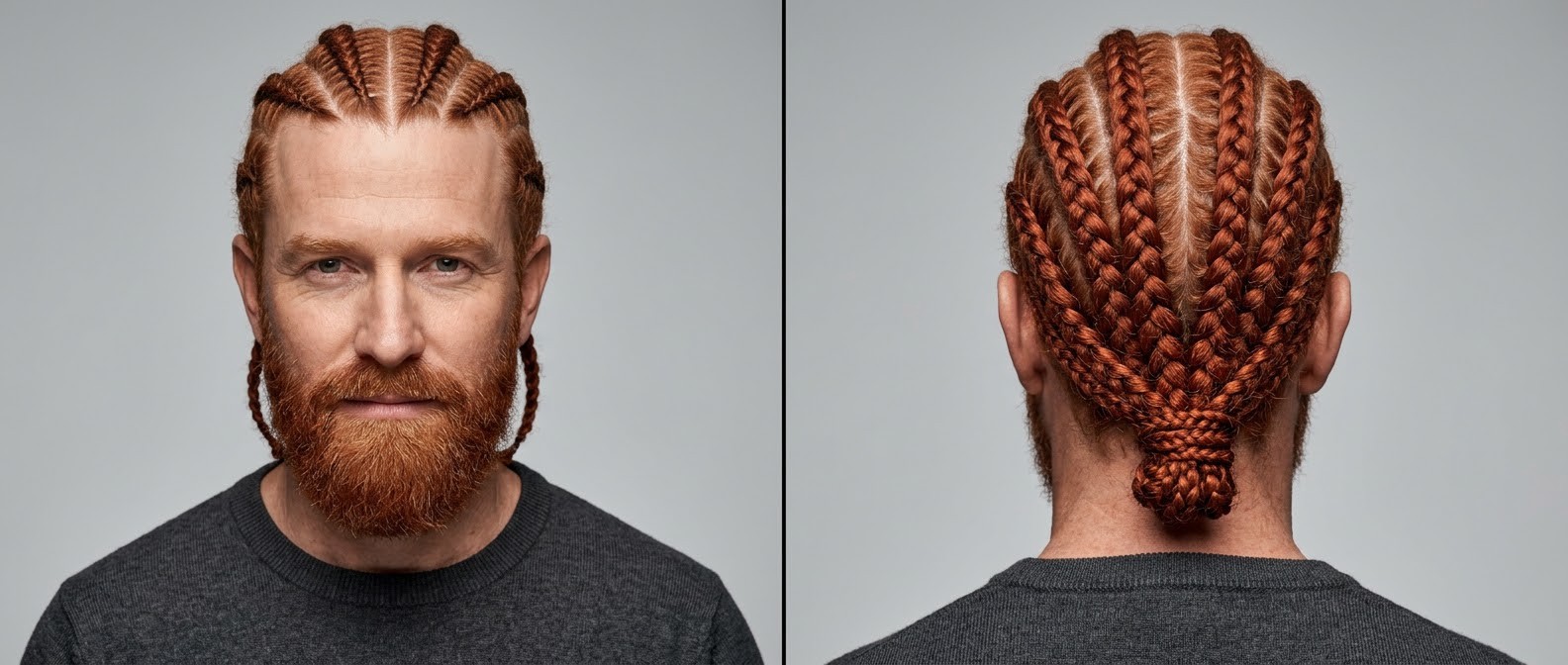
Cornrows
Crimson Red Straight-Back Cornrows with Intricate Braided Nape Knot

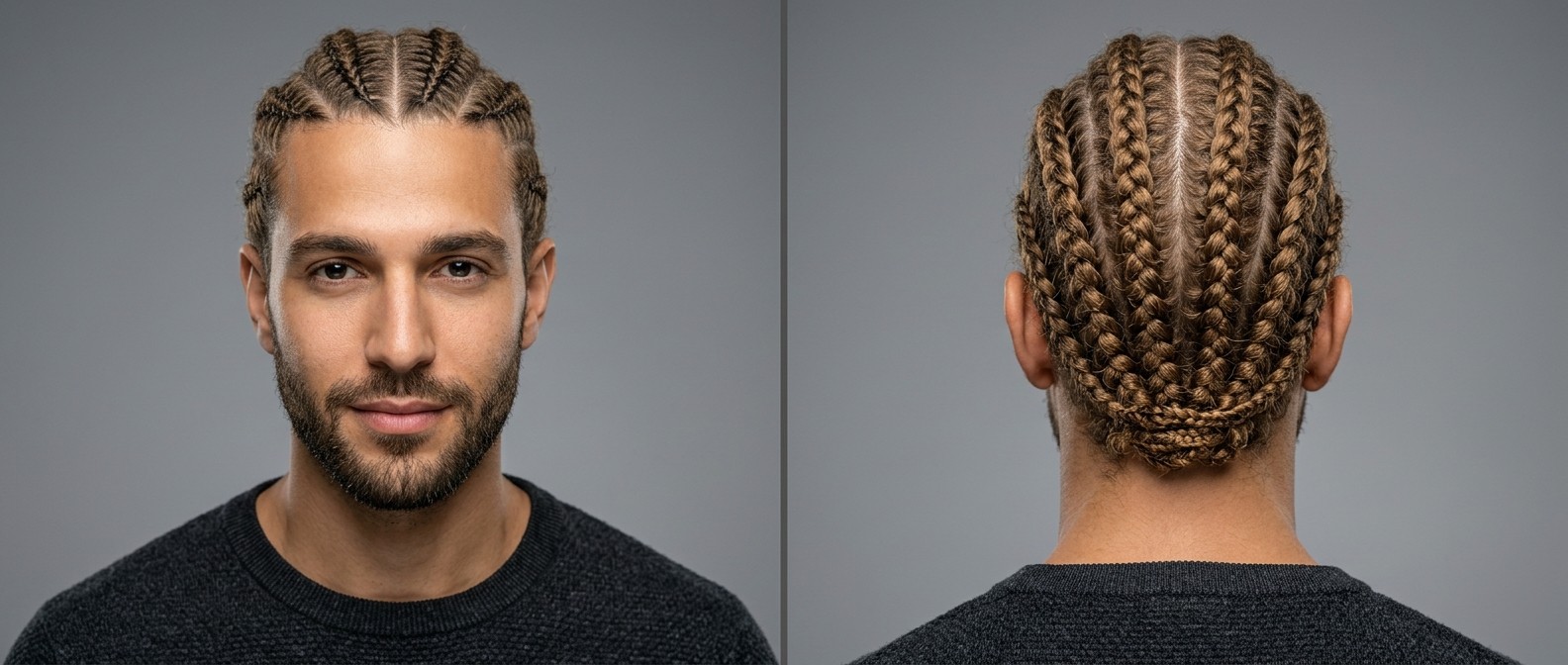
Cornrows
Classic Straight-Back Cornrows for Thick Light Brown Hair
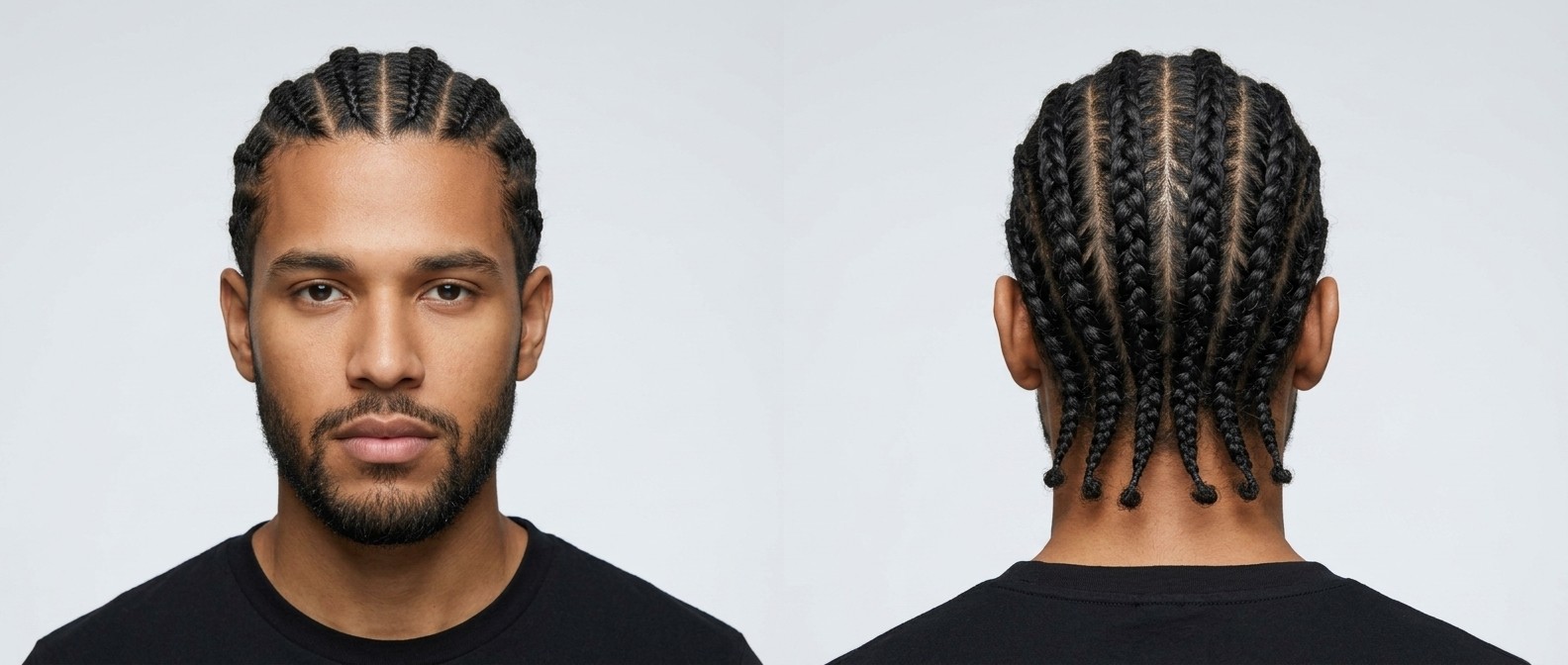
Cornrows
Classic Straight-Back Cornrows for Thick Curly Hair
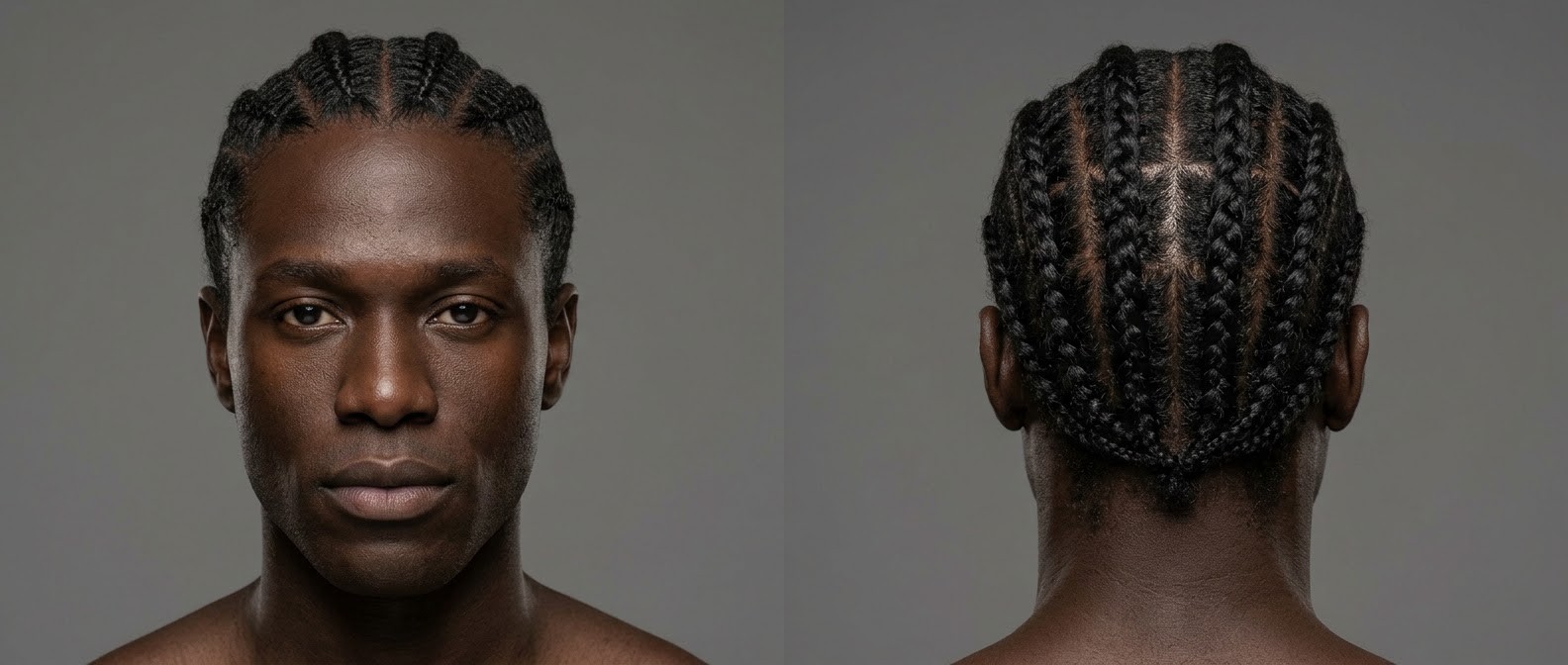
Cornrows
Classic Straight-Back Cornrows for Medium to Long Type 4 Hair
Cornrows