Add one front-facing photo. We send it to the AI together with this exact cut — and you get a photorealistic preview of yourself wearing it.
1
Your photo
Front view · neutral face · even light
2
This haircut
Already included
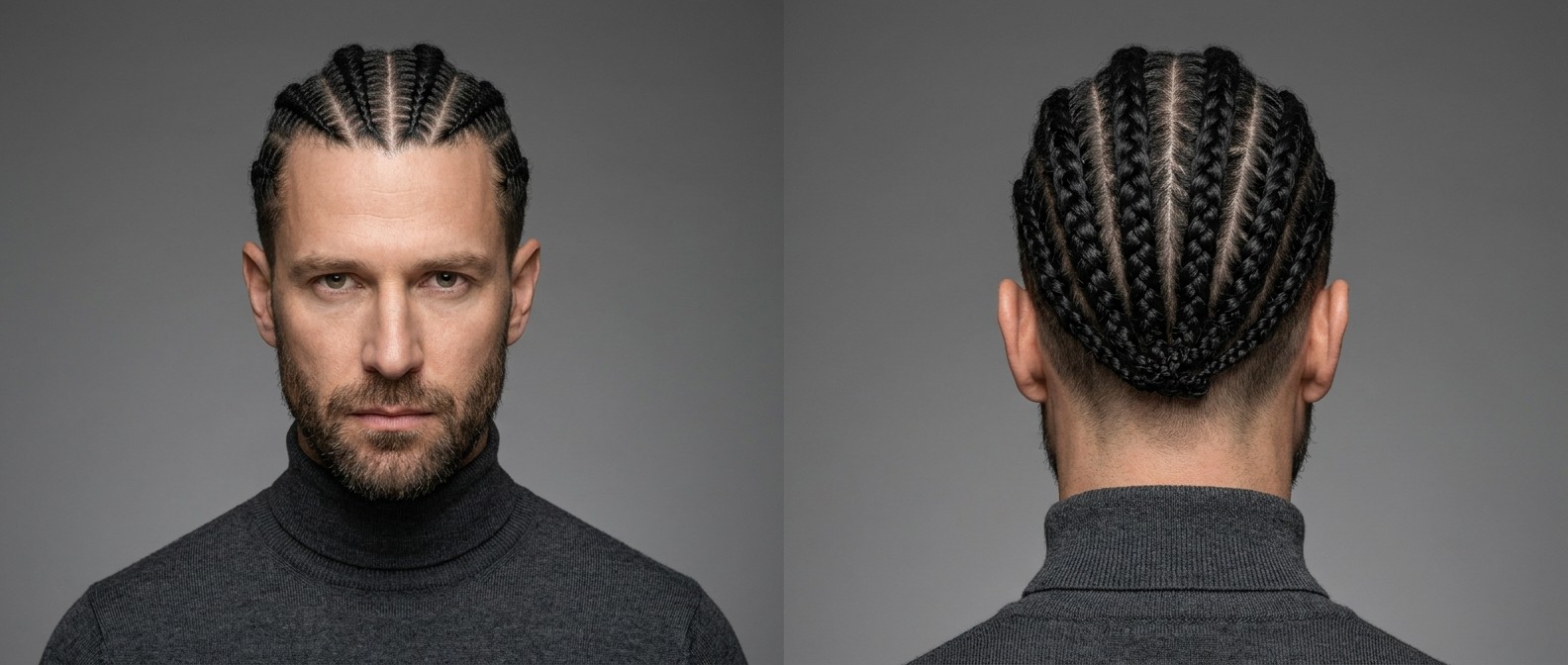
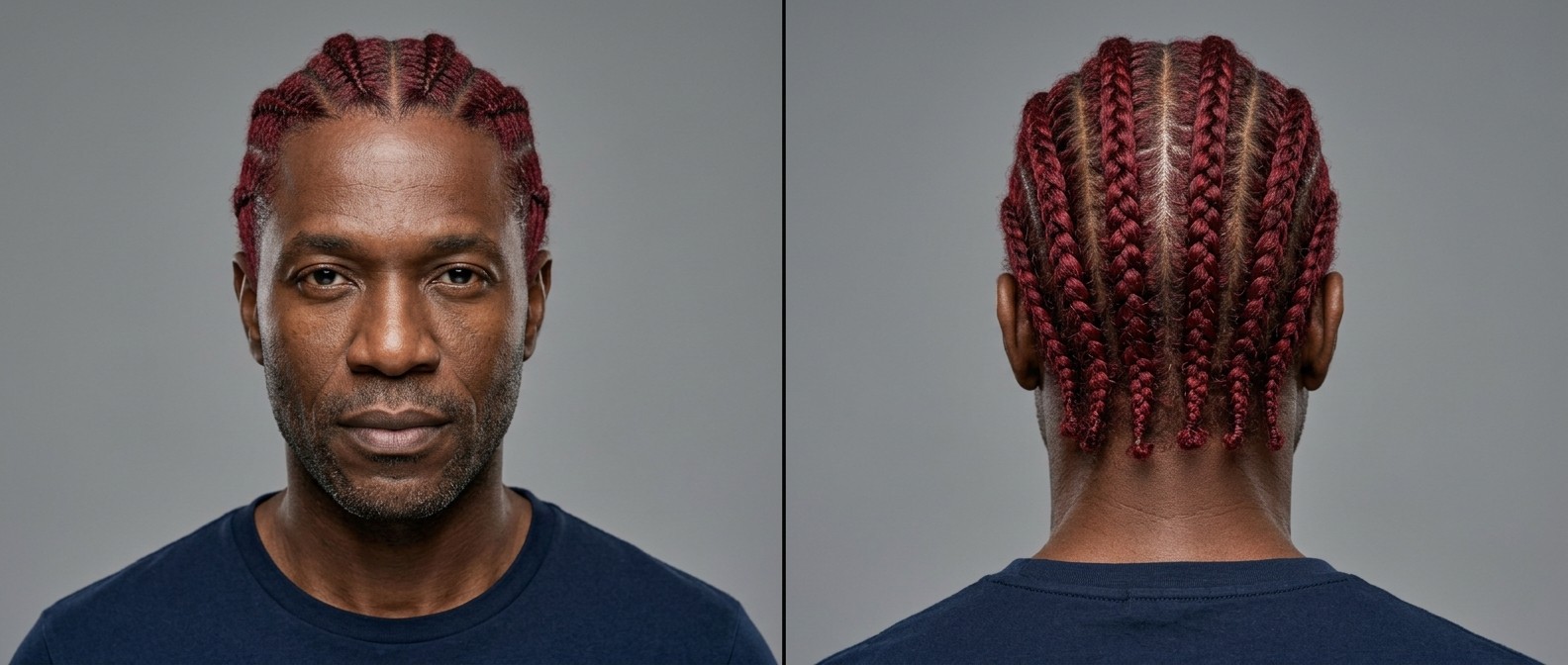
Front and back reference — taken from this page
3
Your preview
Your result appears here
![]()
![]()
Generated for you, not published anywhere
How do you rate this tool?
- Reading your photo
- Matching the cut
- Rendering your preview
How to take a photo that works
Do
- Face the camera straight on
- Even daylight, no harsh shadow
- Head and shoulders in frame
- Hair fully visible, nothing covering it
Avoid
- Hats, caps, hoods, sunglasses
- Steep angles or a tilted head
- Group photos or heavy filters
- Backlight that darkens the face
Classic Straight-Back Cornrow Braids for Men with Thick, Dense Curly Hair
 Top
Medium (5-10 cm)
Top
Medium (5-10 cm)
 Sides
Medium (2-5 cm)
Sides
Medium (2-5 cm)
 Hair Type
Curly (Type 3)
Hair Type
Curly (Type 3)
 Face Shape
Rectangular
Face Shape
Rectangular
 Maintenance
Medium
Maintenance
Medium
 Thickness
Thick / Dense
Thickness
Thick / Dense
About This Style
The classic straight-back cornrow style showcased here is a masterclass in clean, structured hair management, particularly suited for men with thick, dense, curly hair. By braiding the hair directly back from a normal, straight hairline to the nape of the neck, this look offers an incredibly sharp silhouette that perfectly complements a strong, rectangular face shape. The symmetry of the braids draws the eye harmoniously down the center of the head, creating a polished yet rugged aesthetic when paired with a short beard. This specific variation stands out due to its seamless integration of medium-length hair into tight, uniform rows without excessive bulk. It is an exceptional choice for the active man seeking a minimal daily routine. With a morning styling time of under one minute, it fits effortlessly into a casual lifestyle while maintaining a highly groomed, urban appearance all day long.
Key Features
- Uniform, straight-back braiding pattern that runs parallel from the front hairline down to the nape of the neck.
- Tight, clean parting lines exposing the scalp to create a striking, highly geometric visual contrast.
- Medium-length hair seamlessly integrated into flush, scalp-hugging rows that minimize unwanted volume.
- Braids converge slightly at the lower back of the head, locking in the ends securely and neatly.
- Sleek, low-profile silhouette that perfectly controls the natural volume of thick, Type 3 curly hair.
- Natural hairline is preserved and highlighted without sharp edge-up clippers, keeping a softer edge.
Getting the Cut
- Request a classic straight-back cornrow style, utilizing the entire head of hair without any faded sides or undercuts.
- Ask the braider to create symmetrical sections, ensuring the parting lines are razor-straight from the front hairline to the nape.
- Specify that you want the braids to sit tight and flush against the scalp to firmly control your thick, dense hair texture.
- Instruct them to use a medium-firm tension—tight enough to secure the Type 3 curls and last 3-4 weeks, but not so tight it damages follicles.
- Ask to leave the front natural hairline intact without a harsh box-out or lineup, maintaining a more natural, lived-in aesthetic.
- Request that the ends of the braids be neatly tied off at the very bottom of the nape, allowing them to lay completely flat.
- Have them apply a lightweight braiding gel during the parting process to ensure flyaways are captured cleanly and securely.
Daily Routine
- Wake up and carefully remove your silk or satin durag or bonnet, which is crucial for protecting the braids overnight.
- Take a lightweight, hydrating leave-in conditioner spray and lightly mist the entire scalp and braids to refresh and prevent dryness.
- Gently pat the moisture into the braids using your hands; do not rub vigorously, as this will cause unnecessary frizz and loosen the style.
- Apply a dime-sized amount of lightweight scalp oil to your fingertips and carefully massage it down the exposed parting lines to soothe skin.
- If you notice any minor flyaways along the hairline, apply a tiny dab of edge control or medium-hold pomade using a soft-bristle brush.
- Finish the morning routine by ensuring your short facial hair is brushed and moistened with beard oil to complement the clean lines.
Products & Tools
- Premium silk or satin durag to protect the braided style from damaging friction while sleeping.
- Pointed metal rat-tail comb for creating precise, razor-sharp parting lines during the initial braiding process.
- Lightweight hydrating spray or liquid leave-in conditioner to maintain hair moisture without causing product buildup.
- Natural scalp oil (such as jojoba, tea tree, or argan oil) with a dropper applicator for precision moisturizing.
- Medium-hold, flake-free braiding gel or pomade to lock in flyaways and keep the hairline looking exceptionally neat.
- Soft-bristle edge brush dedicated to gently smoothing down the front hairline and any stray baby hairs.
Maintenance
- Schedule a visit to your braider or barber every 3-4 weeks to have the cornrows taken down, washed, and re-braided to prevent matting.
- Wash the hair carefully with a mesh stocking cap placed over the braids every 1-2 weeks to keep the scalp clean without ruining the style.
- Always sleep with a silk or satin head covering to prevent cotton pillowcases from drawing out essential moisture and creating frizz.
- Avoid heavy, wax-based styling products that can easily get trapped within the braided sections and cause severe, hard-to-remove buildup.
- Keep your scalp consistently hydrated with light oils to prevent flaking and itchiness along the exposed parts.
Best For
Men with strong, rectangular or square face shapes, as the straight-back lines beautifully complement angular jawlines.
Thick, dense, curly hair (Type 3), providing the necessary grip and structure for substantial, long-lasting braids.
Men aged 45 and older looking for a distinguished, low-maintenance, yet highly stylish everyday grooming solution.
Highly active lifestyles or athletes who need their hair completely secured, tightly bound, and out of their face.
Casual, everyday occasions demanding a consistently neat, structured, and effortlessly polished appearance.
Pro Tips
- Never force a braid that is too tight; excessive tension can lead to traction alopecia along the fragile front hairline over time.
- Ensure your hair is at least 5 cm long all around before attempting this style so the braids hold securely without prematurely unraveling.
- During colder months, be extra diligent with scalp moisturizing, as indoor heating can severely dry out the exposed skin between the parts.
- Give your hair a complete break for a few days between braiding sessions to allow the scalp to breathe and naturally recover.
Related Hairstyles
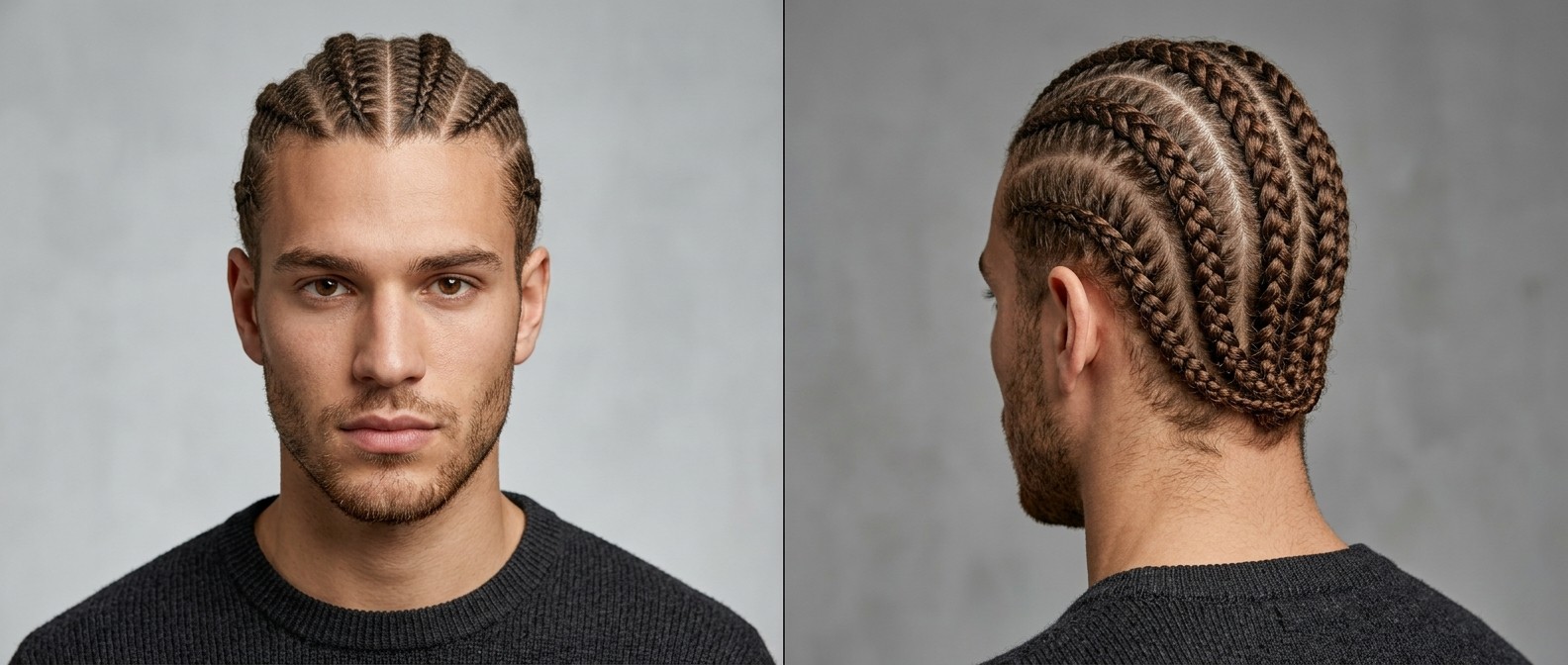
Cornrows
Thick Straight-Back Braided Cornrows for Medium Brown Hair
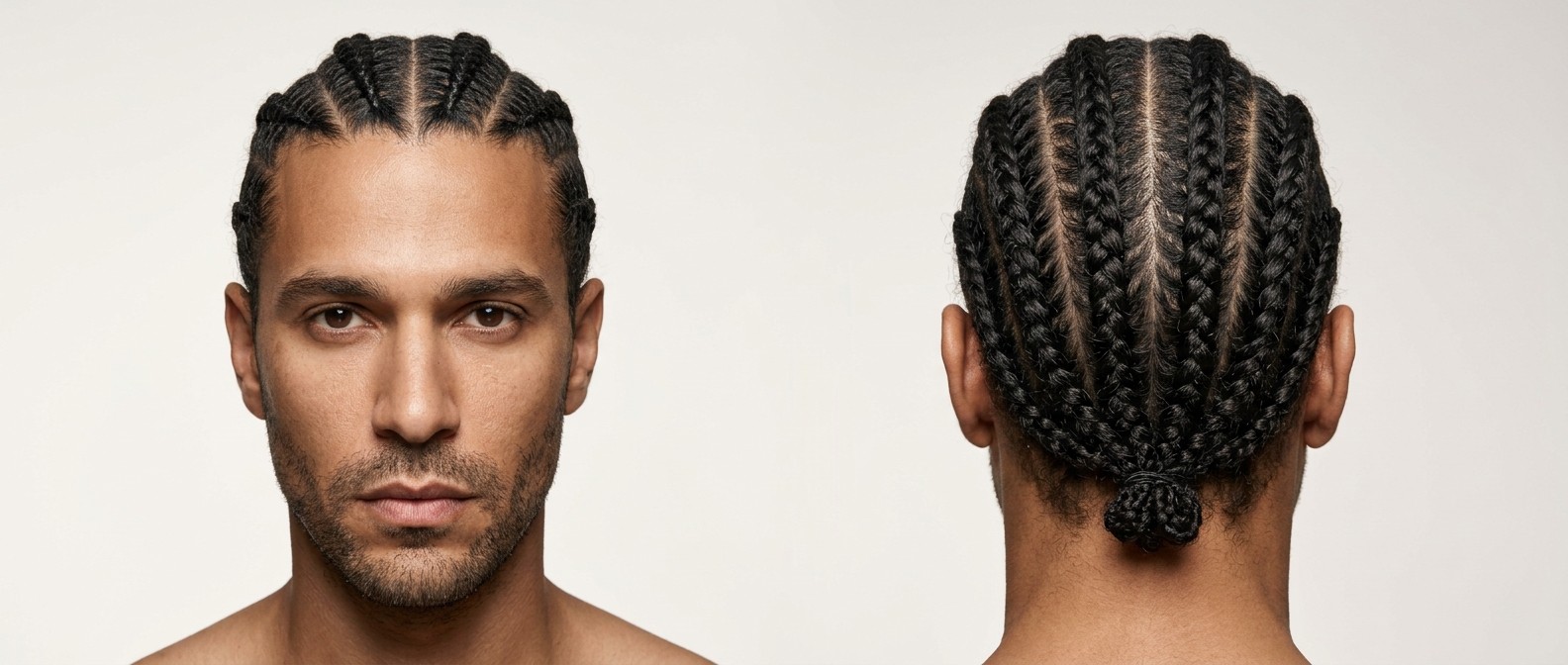
Cornrows
Classic Straight-Back Cornrows Featuring a Neat Nape Knot
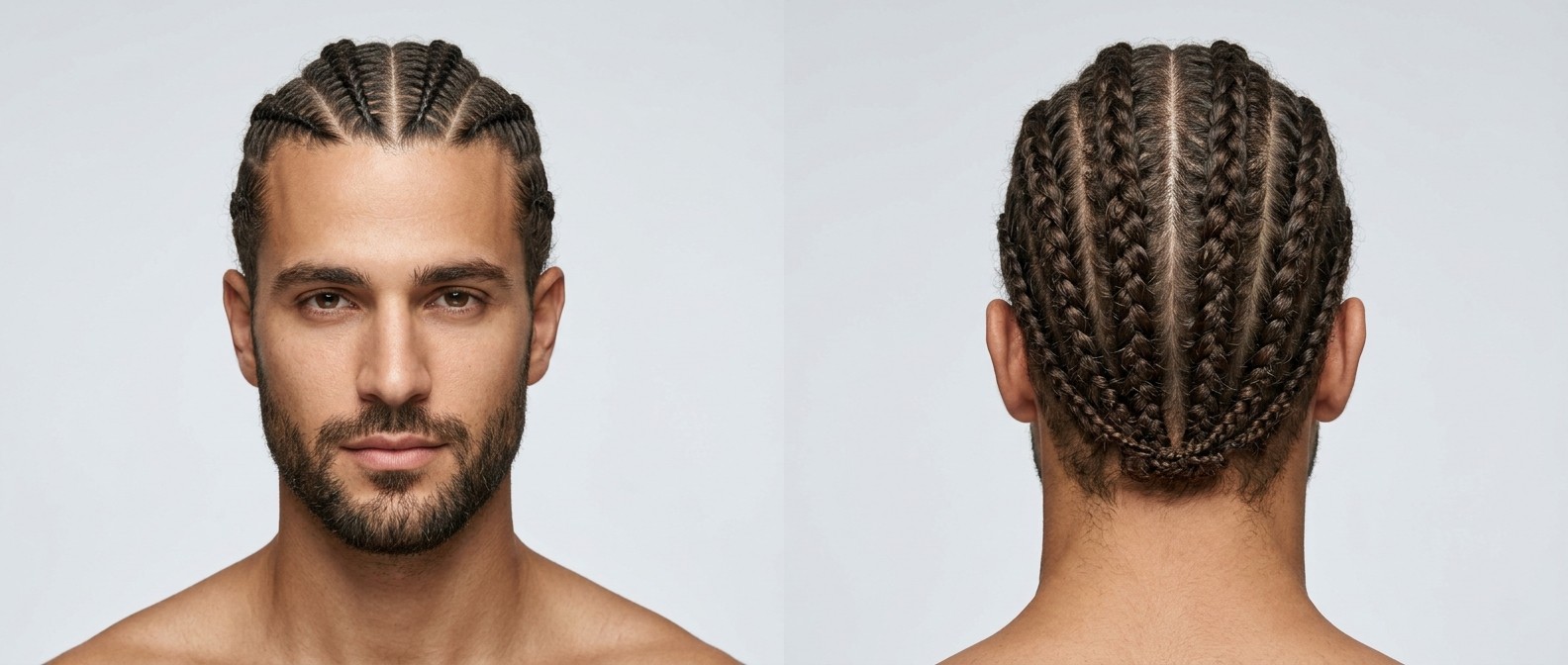
Cornrows
Classic Straight-Back Cornrows for Medium-to-Long Curly Hair Profiles
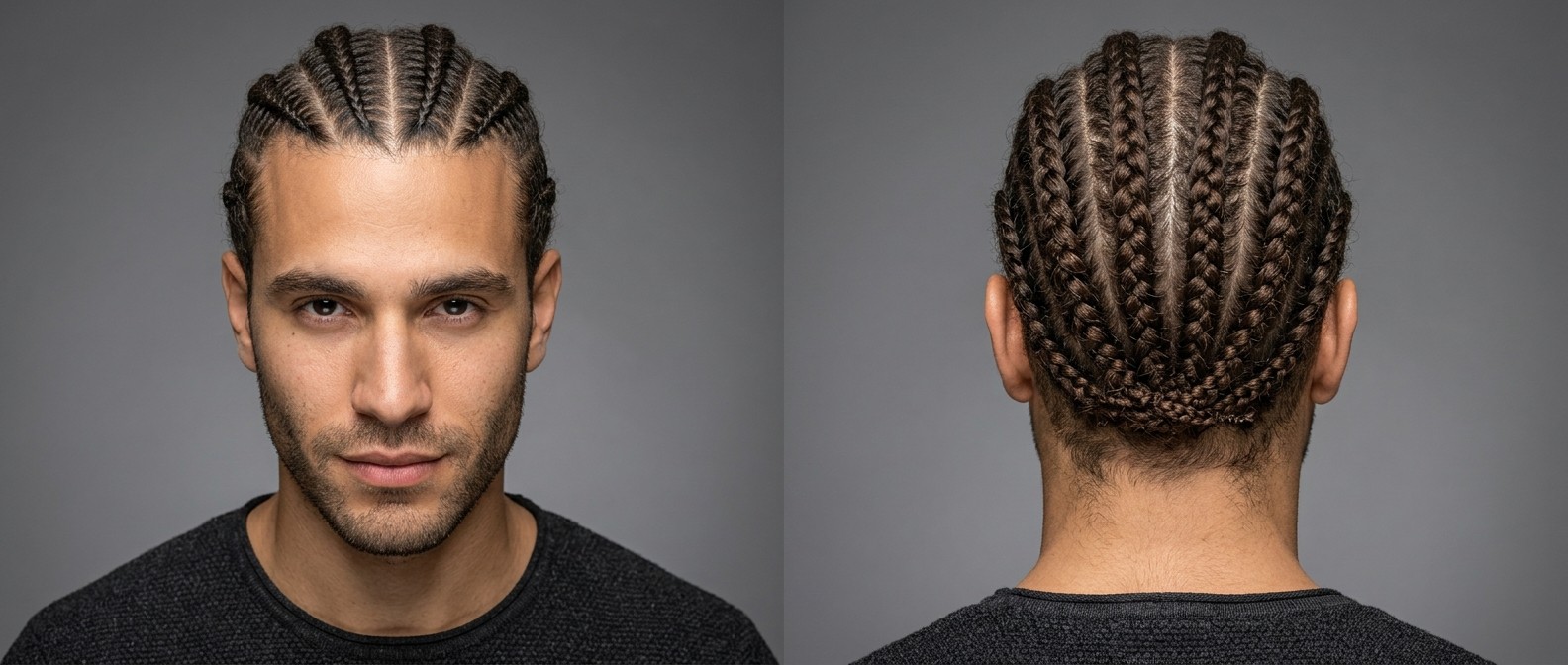
Cornrows
Classic Straight-Back Cornrows with Symmetrical Parting and Tucked Nape
Cornrows
Bold Crimson Red Straight-Back Cornrows for Rectangular Faces
Cornrows