Add one front-facing photo. We send it to the AI together with this exact cut — and you get a photorealistic preview of yourself wearing it.
1
Your photo
Front view · neutral face · even light
2
This haircut
Already included
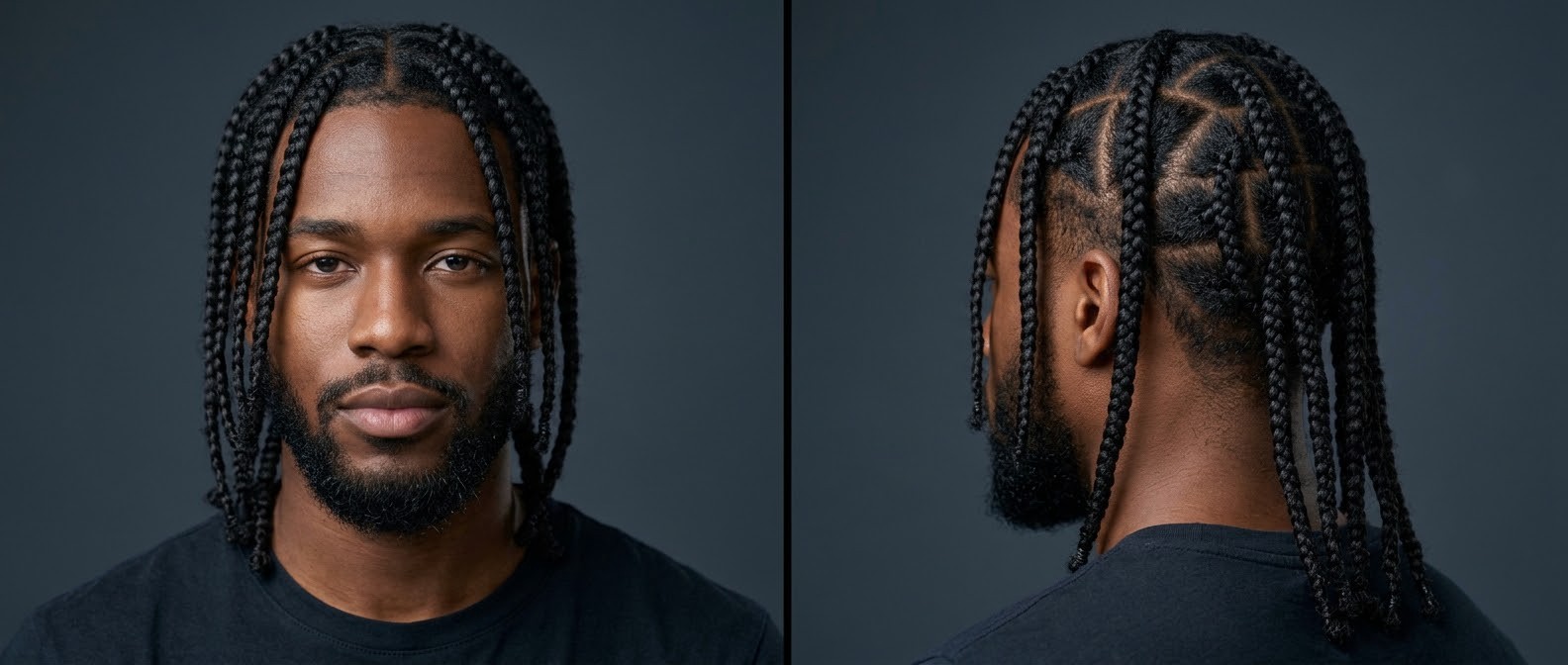
Front and back reference — taken from this page
3
Your preview
Your result appears here
![]()
![]()
Generated for you, not published anywhere
How do you rate this tool?
- Reading your photo
- Matching the cut
- Rendering your preview
How to take a photo that works
Do
- Face the camera straight on
- Even daylight, no harsh shadow
- Head and shoulders in frame
- Hair fully visible, nothing covering it
Avoid
- Hats, caps, hoods, sunglasses
- Steep angles or a tilted head
- Group photos or heavy filters
- Backlight that darkens the face
Long Box Braids with Geometric Triangle Partings and Middle Part
 Top
Very Long (20+ cm)
 Sides
Long (5+ cm)
 Hair Type
Curly (Type 3)
 Face Shape
Rectangular
 Maintenance
Low
 Thickness
Thick / Dense
About This Style
This striking variation of long box braids showcases meticulous geometric parting and a commanding, artistic silhouette. Looking closely at the precise scalp divisions, you can see an intricate combination of triangular and traditional box-shaped sections that add a profound layer of architectural interest to the overall style. The braids themselves are exceptionally thick, uniform, and fall gracefully past the collarbone, framing the face with a distinct, razor-sharp middle part. This style perfectly complements a rectangular face shape, as the vertical lines of the long braids naturally soften the jawline while simultaneously highlighting strong facial features and a meticulously groomed, dense beard. Ideal for men with thick, dense hair who want a low-maintenance yet highly expressive look, this braided style is a true testament to skilled protective styling. Whether you are navigating a creative workspace, attending artistic events, or simply seeking a sophisticated everyday aesthetic, these braids offer incredible versatility and undeniable presence. The natural weight of the very long hair ensures the braids lay flawlessly flat and flow naturally with your movements, requiring virtually zero daily styling time. It is a powerful, culturally rich look that seamlessly merges traditional African braiding techniques with modern, precise barbering aesthetics.
Key Features
- Prominent, razor-sharp middle part that symmetrically frames the face and perfectly balances rectangular facial structures.
- Intricate geometric scalp partings featuring a masterful mix of sharp triangular designs and traditional square box sections.
- Very long, uniform braid extensions that fall smoothly past the shoulders and rest naturally around the collarbone area.
- Clean, crisp hairline integration that transitions seamlessly into the tightly braided sections without displaying excess tension.
- Dense, thick braid texture that beautifully showcases the natural volume, health, and structural strength of the hair.
- Natural downward flow and substantial weight that keeps the braids laying perfectly flat against the sides of the head and neck.
- A well-groomed, integrated short beard that grounds the lower half of the face and complements the length of the braids.
Getting the Cut
- Request a thorough wash, deep conditioning treatment, and careful detangling session to properly prepare your thick hair for the braiding process.
- Ask the braider to map out a highly precise, laser-straight center part starting from the front hairline and extending all the way back to the crown.
- Specify that you want intricate geometric partings on the sides and back, specifically blending sharp triangular sections with classic square box parts.
- Instruct the stylist to create medium-to-thick individual plaits, ensuring consistent sizing, tension, and product distribution from the roots to the very ends.
- Ask for the protective braids to be extended to a very long length (measuring 20+ cm), ensuring they reach well past the collarbone for maximum visual impact.
- Request medium, comfortable tension at the roots to strictly prevent traction alopecia while still maintaining those crisp, clean parting lines visible on the scalp.
- Have the stylist carefully dip the ends of the braids in boiling hot water to permanently seal the synthetic hair and prevent any unraveling over the coming weeks.
- Ask your barber to line up your beard and clean up the very front hairline lightly, ensuring the edges look sharp and intentional without pushing the natural hairline back.
Daily Routine
- Wake up and gently remove your protective silk or satin durag, bonnet, or headscarf, which successfully preserved your braids and edges from friction overnight.
- Lightly mist your entire scalp with a soothing, water-based aloe vera or tea tree oil braid spray to instantly alleviate any morning dryness, itchiness, or tension.
- Apply a dime-sized amount of lightweight, nourishing hair oil or serum to your fingertips and gently massage it directly into the exposed geometric scalp partings.
- Smooth down any minor flyaways or frizz along the front hairline or the length of the braids using a touch of premium edge control or a lightweight styling mousse.
- Let the heavy braids fall naturally into their designated center-parted position, using your hands to gently guide them over your shoulders and down your chest.
- If desired for a change of pace, gather the top section of the braids into a quick half-up man bun or simply let them hang loose for a zero-effort, under-one-minute daily routine.
- Apply a few drops of high-quality conditioning beard oil to your facial hair and brush it downward with a boar bristle brush to complete the highly polished, artistic aesthetic.
Products & Tools
- Fine-tooth rat-tail comb with a sturdy metal pin, essential for creating razor-sharp geometric, triangular, and box-shaped scalp partings.
- Hydrating, water-based braid spray or soothing scalp mist to consistently maintain moisture levels and prevent any dry, flaky itchiness.
- Lightweight, penetrating scalp oil (such as a jojoba, sweet almond, or peppermint blend) to deeply nourish the roots without causing heavy product buildup.
- Premium edge control gel or pomade with a firm, non-flaking hold to keep the front hairline, sideburns, and baby hairs looking incredibly neat.
- High-quality silk or satin durag, bonnet, or pillowcase to rigorously protect the braids from damaging friction, lint, and frizz while you sleep.
- Foaming styling mousse for laying down stray flyaways along the entire length of the braids, keeping the plaits looking fresh and uniform.
Maintenance
- Sleep with a premium silk or satin head covering every single night without fail to prevent frizz, retain moisture, and preserve the crispness of the geometric partings.
- Wash your scalp every 2 to 3 weeks using a diluted clarifying shampoo in an applicator bottle, focusing the lather only on the roots to avoid roughing up the length of the braids.
- Strictly avoid using heavy, creamy leave-in conditioners, thick butters, or waxes that can easily cause stubborn, unsightly white buildup at the base of your braids.
- Schedule a professional touch-up around the hairline or a complete re-braid appointment every 5 to 8 weeks to maintain optimal scalp health and prevent severe hair matting.
- Keep your scalp properly moisturized with a light, soothing oil 2-3 times a week, applying it directly and precisely to the exposed geometric parted lines.
Best For
Face Shapes: Exceptionally flattering for rectangular, oval, and square faces, as the long, straight vertical lines of the braids naturally elongate the face and soften a sharp jawline.
Hair Types: Perfectly suited for thick, dense Type 3 curly or Type 4 coily hair that has the natural grip and texture required to securely hold the braided structure in place.
Lifestyles: An outstanding choice for creative, artistic, or highly athletic individuals seeking a stylish, statement-making, yet incredibly low-maintenance protective hairstyle.
Age Ranges: Highly ideal for young adults (18-25) and modern, fashion-forward professionals who want a bold, expressive look that requires minimal daily styling effort.
Pro Tips
- Never sacrifice your long-term scalp health for a tighter, fresher look; always ensure your braider uses comfortable tension to avoid permanent hair loss or traction alopecia.
- To effectively refresh the style mid-month and tame any emerging frizz, apply a generous amount of foaming wrap lotion over the braids, tie them down tightly with a durag, and let it fully dry.
- During colder, drier months, pay extra attention to ensuring your scalp is properly oiled and hydrated, as indoor heating systems can dry out the exposed scalp partings very quickly.
- Do not be afraid to experiment with different versatile tie-back styles, such as a low ponytail, a half-up top knot, or a full bun when working out or during extremely hot weather.
Related Hairstyles
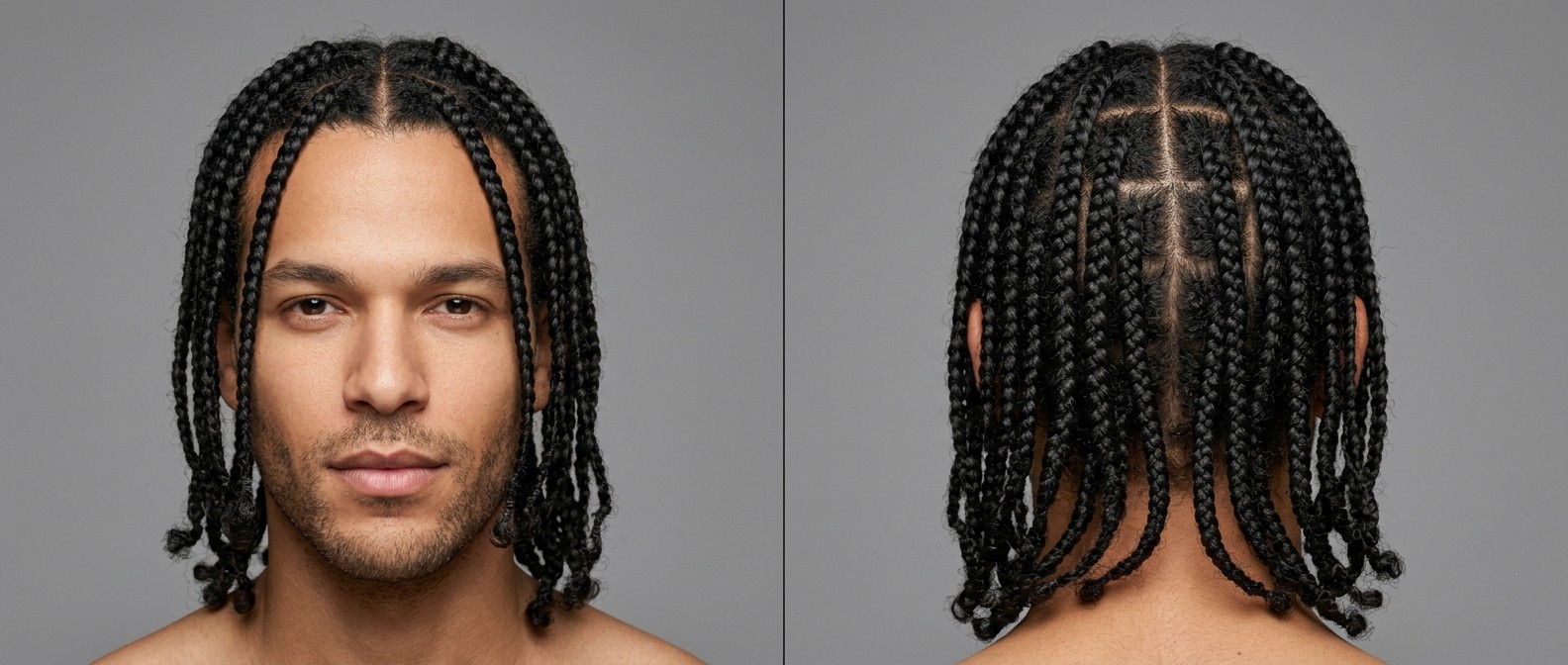
Box Braids
Classic Medium Box Braids with Distinctive Square Parting and Natural Ends

Box Braids
Blonde Box Braids for Men with Middle Part and Square Sections
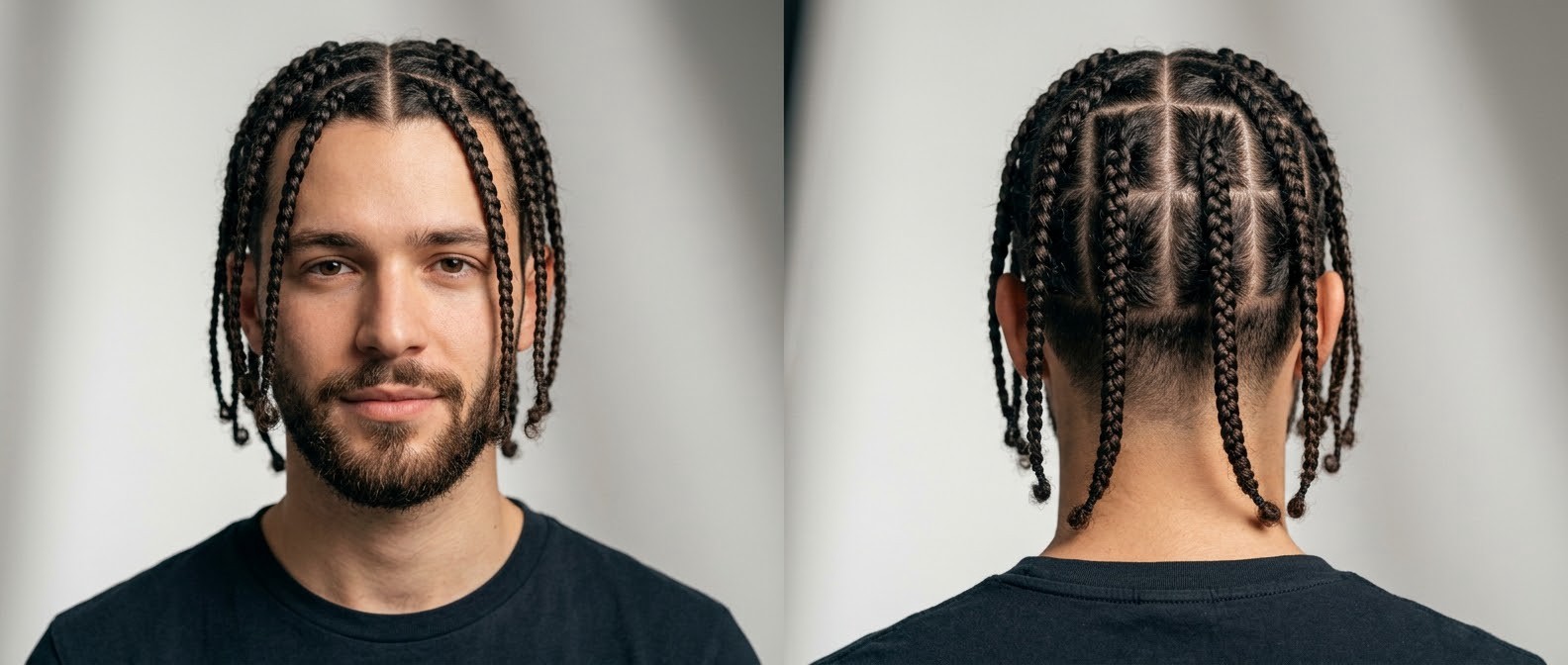
Box Braids
Men's Long Box Braids with Precision Square Parting
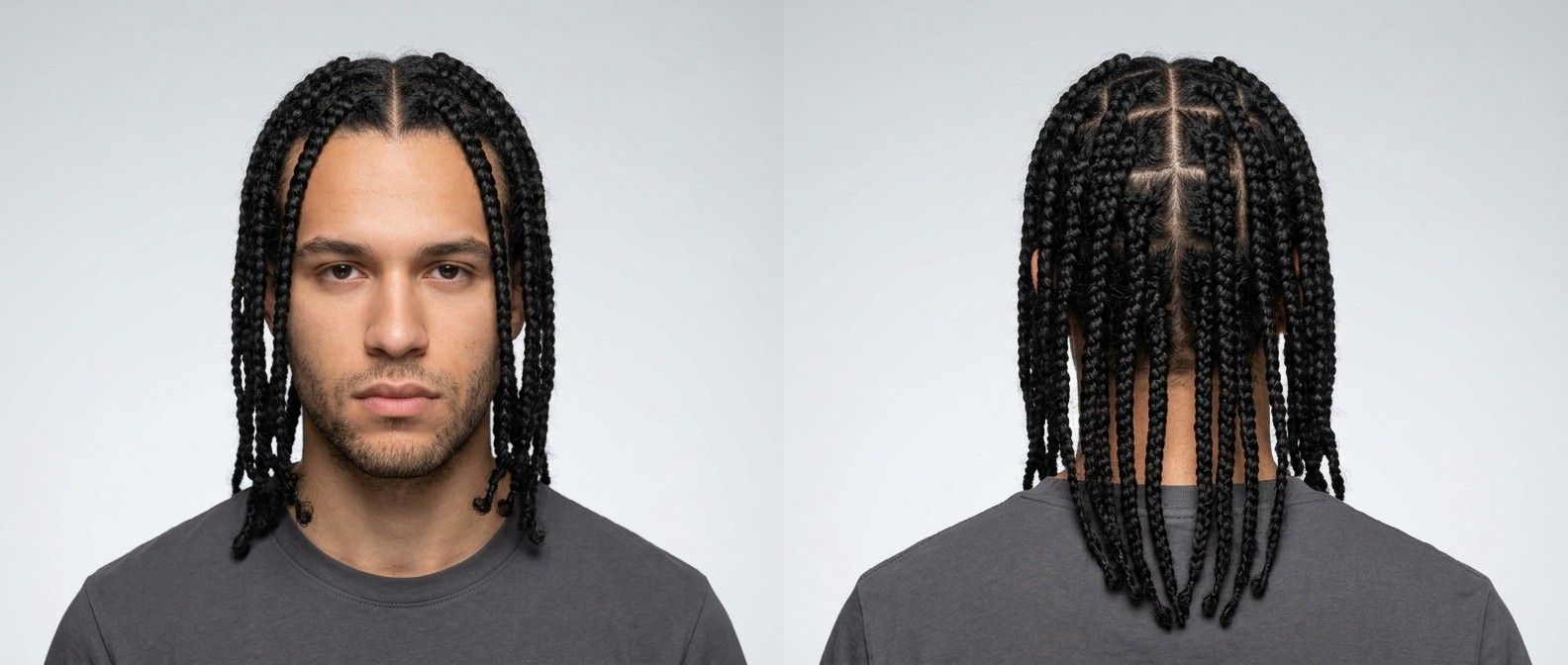
Box Braids
Classic Long Box Braids with Crisp Square Partings
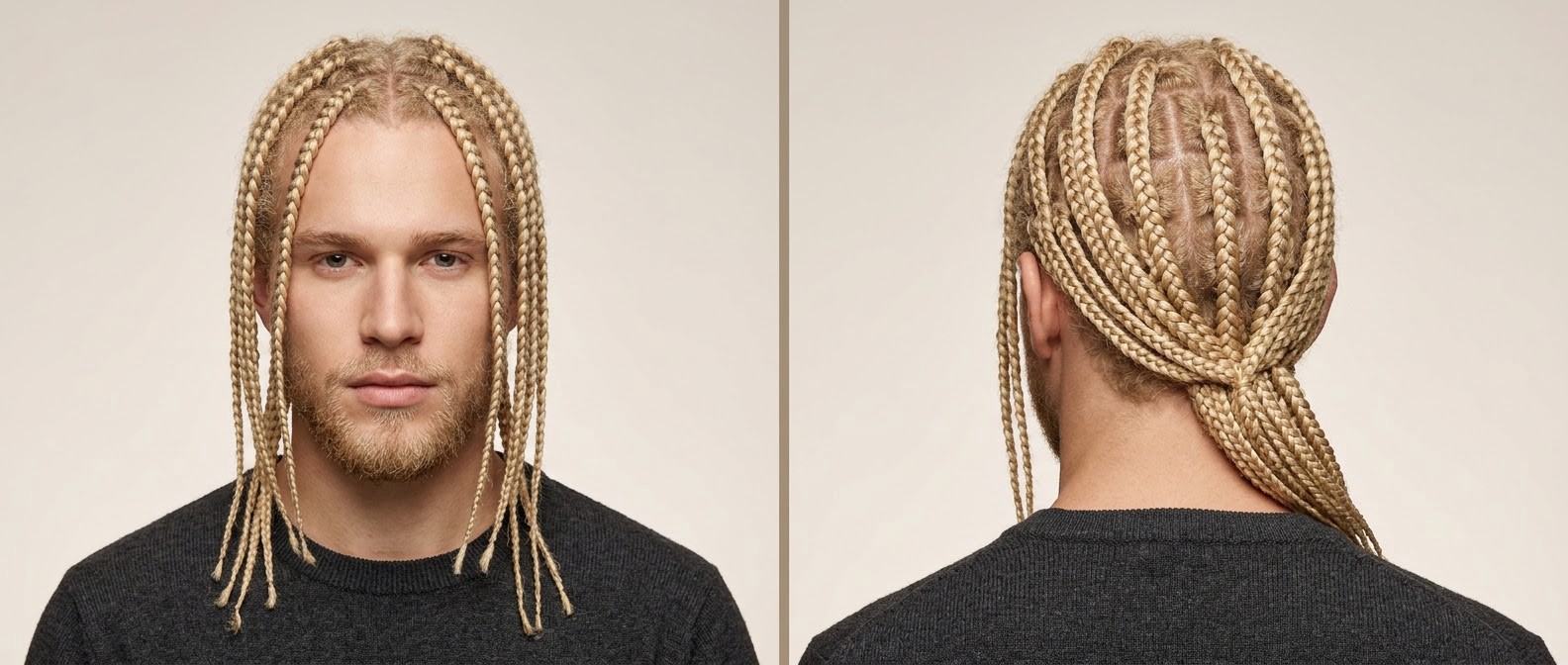
Box Braids
Blonde Box Braids for Men with Center Part and Low Ponytail

Box Braids