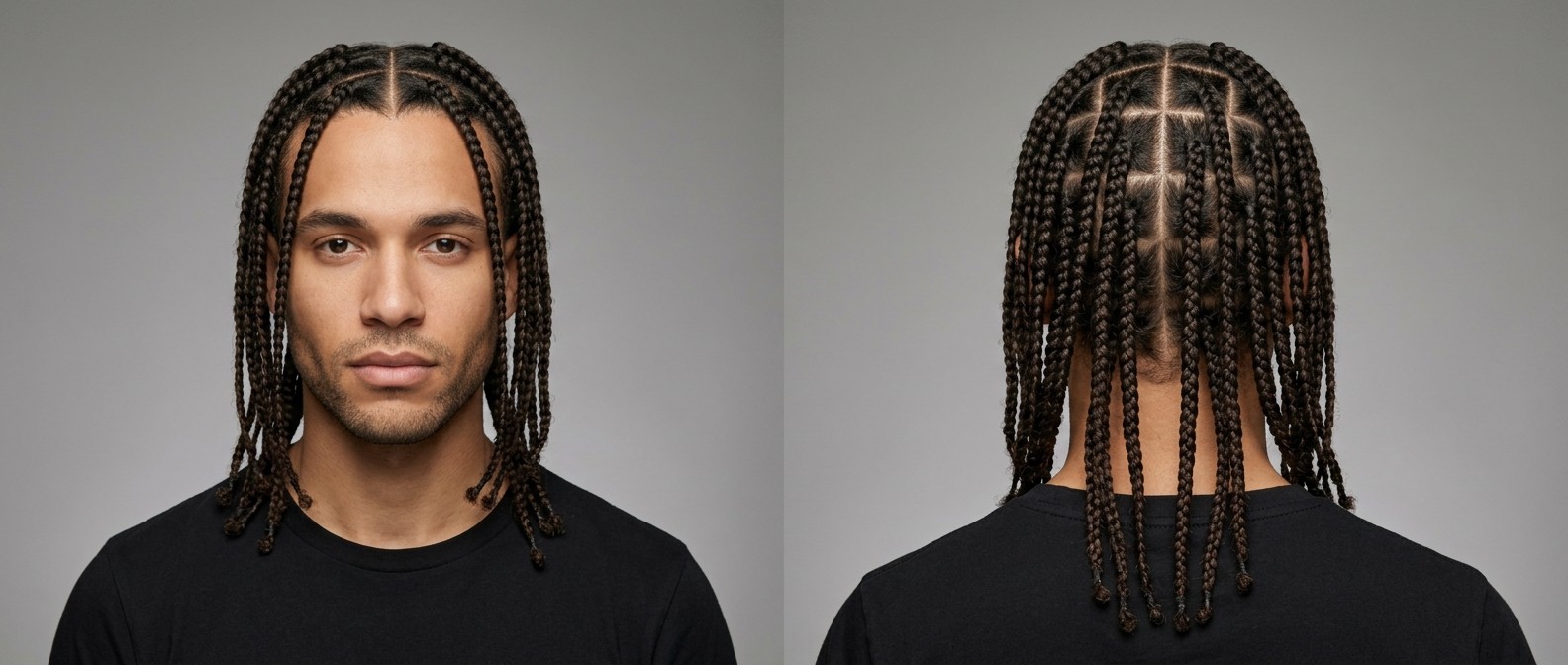
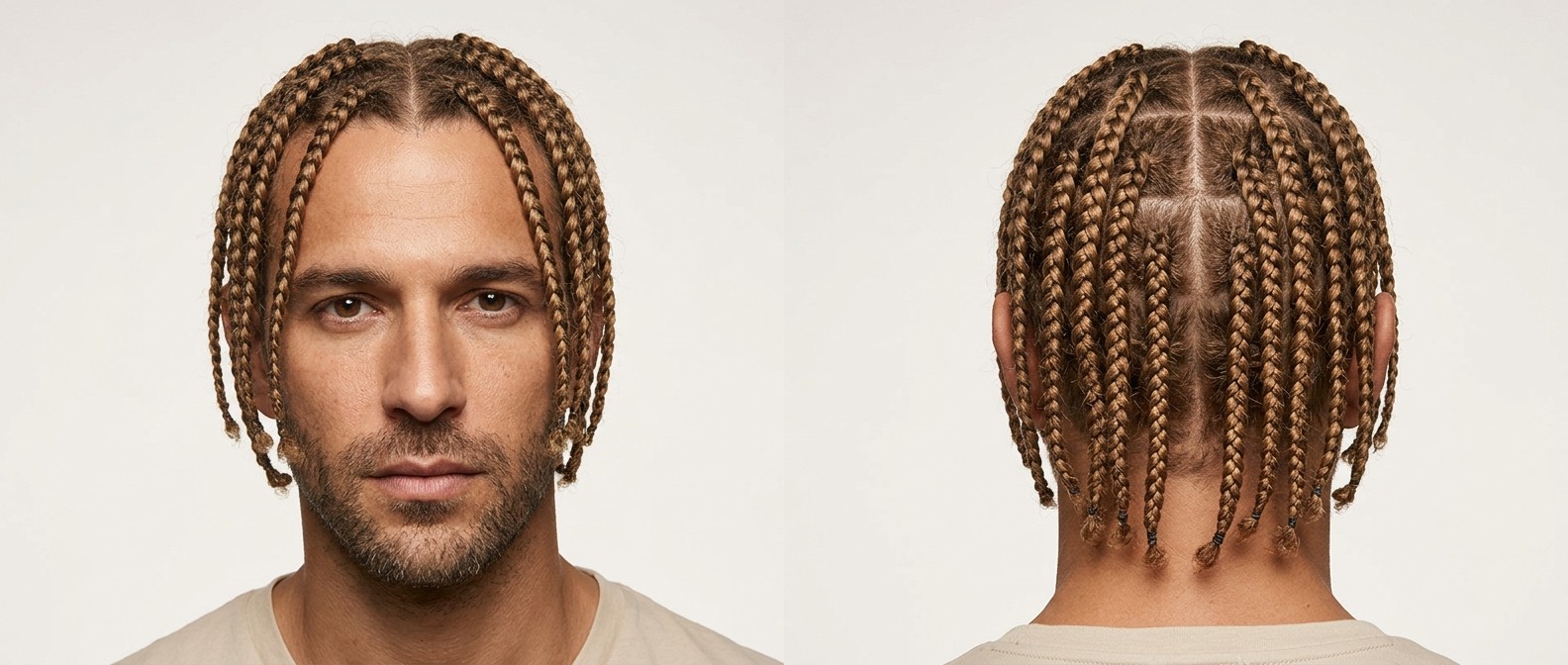
Classic Center-Parted Long Box Braids with Precise Grid Pattern
 Top
Long (10-20 cm)
Top
Long (10-20 cm)
 Sides
Long (5+ cm)
Sides
Long (5+ cm)
 Hair Type
Very Curly / Afro (Type 4)
Hair Type
Very Curly / Afro (Type 4)
 Face Shape
Diamond
Face Shape
Diamond
 Maintenance
Medium
Maintenance
Medium
 Thickness
Medium / Normal
Thickness
Medium / Normal
About This Style
These classic center-parted long box braids showcase exceptional precision and artistry, defined by their immaculate grid pattern and uniform braid thickness. Looking closely at the back profile, the scalp is masterfully sectioned into perfectly geometric squares, creating a visually striking foundation that allows the braids to fall naturally and symmetrically. The dark brown hair is woven tightly from the root, cascading down past the collarbone in a relaxed, effortless flow that frames the face beautifully. The tension applied is visibly consistent, resulting in braids that are smooth, identical in width, and free of buckling.
This particular variation is highly suited for individuals with a diamond face shape, as the vertical lines of the long braids help balance wider cheekbones while complementing a straight, well-defined hairline. The style thrives in creative and artistic environments, projecting a confident, culturally rich aesthetic that stands out in any crowd. Because the heavy lifting is completely handled during the initial installation process by a professional, this look offers the ultimate convenience. It is an outstanding choice for busy creatives or professionals who desire a highly stylized, fashion-forward appearance without dedicating any significant time to a daily morning mirror routine.
This particular variation is highly suited for individuals with a diamond face shape, as the vertical lines of the long braids help balance wider cheekbones while complementing a straight, well-defined hairline. The style thrives in creative and artistic environments, projecting a confident, culturally rich aesthetic that stands out in any crowd. Because the heavy lifting is completely handled during the initial installation process by a professional, this look offers the ultimate convenience. It is an outstanding choice for busy creatives or professionals who desire a highly stylized, fashion-forward appearance without dedicating any significant time to a daily morning mirror routine.
Key Features
- Immaculate geometric parting system featuring perfectly aligned square boxes that stretch uniformly across the entire scalp.
- A distinct, razor-straight center part that dictates the symmetrical, curtain-like flow of the long braids around the face.
- Uniform, medium-thickness braids that maintain incredibly consistent tension and structural size from the root down to the secured tips.
- Extended length falling well past the shoulders, creating an elongated, vertical silhouette that naturally slims and contours the facial structure.
- Clean, straight hairline integration where the front foundational boxes align perfectly with the natural forehead contours without creating excessive tension.
- Unraveled, slightly knotted ends that prevent the braids from slipping while maintaining a clean, flexible, and natural finished appearance.
Getting the Cut
- Request a thorough wash, deep conditioning treatment, and full detangling session to properly prepare your Type 4 hair for long-term tension styling.
- Ask your braider or barber for traditional box braids with a strict, meticulously mapped geometric square grid pattern across the entire scalp.
- Specify that you want a highly defined, razor-straight center part extending directly from the front hairline all the way back to the crown.
- Request medium-sized foundational boxes (approximately one inch by one inch) to achieve the specific density and uniform braid thickness shown in the reference photo.
- Instruct the stylist to braid the hair all the way down to the very ends, ensuring consistent hand tension throughout so the braids do not buckle, warp, or look uneven.
- Ask them to secure the ends using a subtle knotting technique or by simply twirling the ends rather than using bulky rubber bands, keeping the finish looking natural.
- Request that they apply a soothing scalp oil, tea tree serum, or tension-relief spray immediately after finishing the installation to prevent initial irritation and hydrate the exposed skin.
Daily Routine
- Remove your silk or satin bonnet carefully upon waking up to ensure you do not accidentally pull, snag, or create friction against the braids at the delicate root area.
- Gently shake your head from side to side to allow the long box braids to naturally fall back into their intended symmetrical, center-parted position.
- Lightly massage your exposed scalp using only the soft pads of your fingers to stimulate blood flow, distribute natural oils, and relieve any lingering tension from the braiding process.
- If you notice any flyaways or frizz developing near the geometric parts, lightly tap them down with a tiny amount of lightweight holding mousse, though daily styling products are generally unnecessary.
- Use your fingers to manually separate any braids that may have tangled or twisted together overnight, ensuring each individual braid hangs freely and moves independently.
- Check your front hairline and center part in the mirror; if desired, use a dedicated soft-bristle edge brush to gently smooth any baby hairs into place, keeping the overall aesthetic remarkably sharp and clean.
Products & Tools
- Silk or satin bonnet and pillowcase: Absolutely essential for overnight protection to prevent harsh friction, moisture loss, and premature fuzziness at the roots.
- Metal rat-tail comb: The crucial precision tool required for your stylist to create those razor-sharp, perfectly straight geometric box parts on the scalp.
- Lightweight scalp soothing oil (tea tree, jojoba, or peppermint based): Provides necessary daily hydration and relieves scalp tension without causing heavy product buildup.
- Non-flaking edge control gel or lightweight styling mousse: Optional but helpful for taming flyaways along the hairline and keeping the grid looking incredibly fresh between washes.
- Soft-bristle edge brush: Used specifically for gently laying down baby hairs along the straight hairline without aggressively disturbing the sensitive braid roots.
Maintenance
- Schedule professional maintenance or a complete re-braiding appointment every 5 to 8 weeks to prevent severe root matting, locking, and potential hair breakage.
- Cleanse your scalp every two weeks using a diluted clarifying shampoo in an applicator bottle, focusing strictly on massaging the exposed scalp rather than aggressively scrubbing the length of the braids.
- Always sleep with your hair completely wrapped in a premium silk scarf or bonnet; never go to sleep on wet braids as this can easily cause mildew and unpleasant damp odors.
- Strictly avoid applying heavy, creamy styling products or thick waxes that can easily get permanently trapped inside the woven braid structure and cause unsightly white buildup.
- Apply a lightweight leave-in conditioner spray to the length of the braids weekly to ensure your natural hair remains moisturized and supple inside the protective style.
Best For
Face Shapes: Ideal for diamond and oval faces, as the long, vertical lines of the braids beautifully frame the face, draw the eye downward, and perfectly balance prominent cheekbones.
Hair Types: Perfectly suited for Very Curly to Afro-textured hair (Type 4), which naturally provides the necessary internal grip and sturdy structure to hold the braids securely for weeks.
Lifestyles: Excellent for highly active individuals, athletes, or busy professionals who desperately need a stylish, zero-maintenance look that takes literally under a minute to manage daily.
Occasions: Fits seamlessly into creative, artistic, and fashion-forward environments where personal expression and bold, structured aesthetics are highly valued.
Pro Tips
- Never ignore pain or extreme discomfort during the installation process; if the braider is pulling too tightly, speak up immediately to prevent permanent damage like traction alopecia.
- To easily refresh the style mid-way through your 5-8 week cycle, generously apply a foaming wrap lotion over the braids, tie them down securely with a durag, and let them fully dry to eliminate surface frizz.
- During the colder winter months, ensure your braids are completely dry before stepping outside, as freezing temperatures can make wet natural hair incredibly brittle and highly prone to snapping.
- Keep a small bottle of witch hazel on hand to gently wipe down your scalp with a cotton swab if you experience itching but aren't ready for a full wash day.
Related Hairstyles
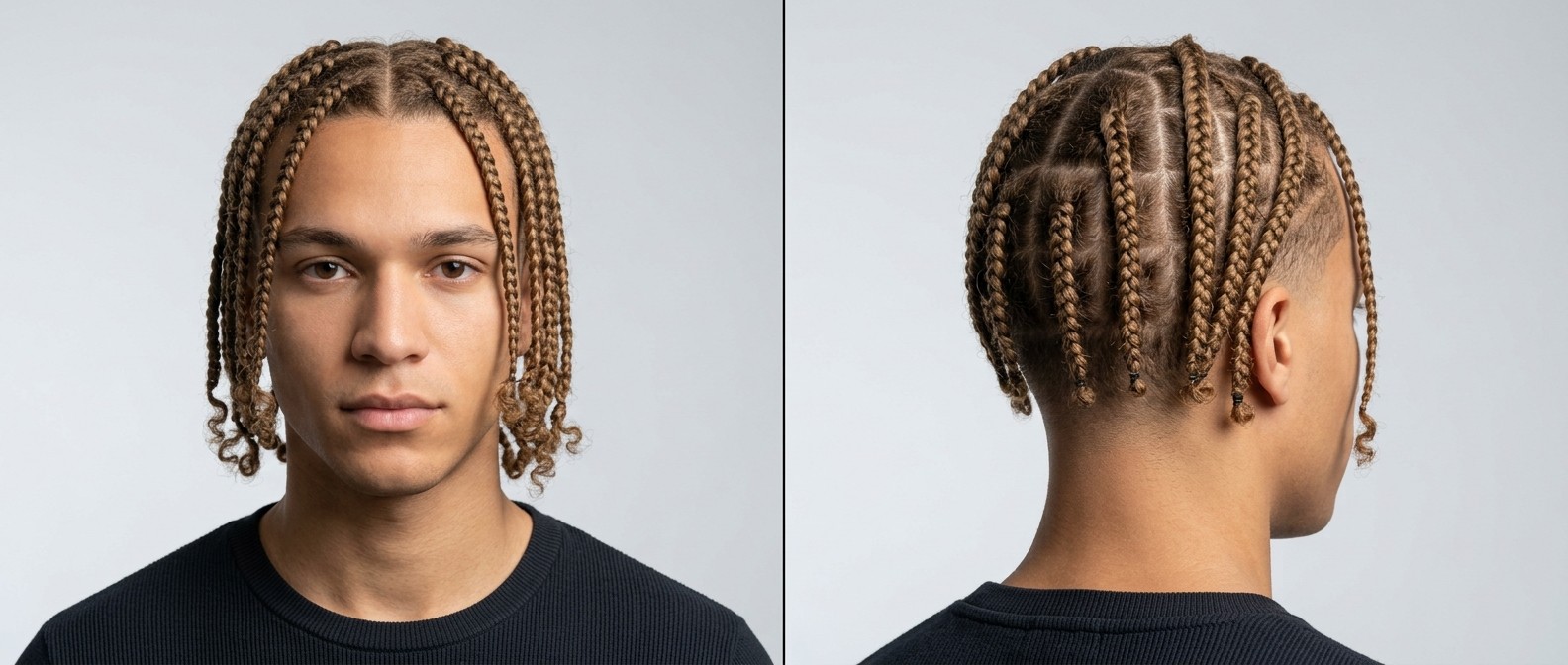
Box Braids
Light Brown Box Braids with Middle Part and Subtle Nape Taper
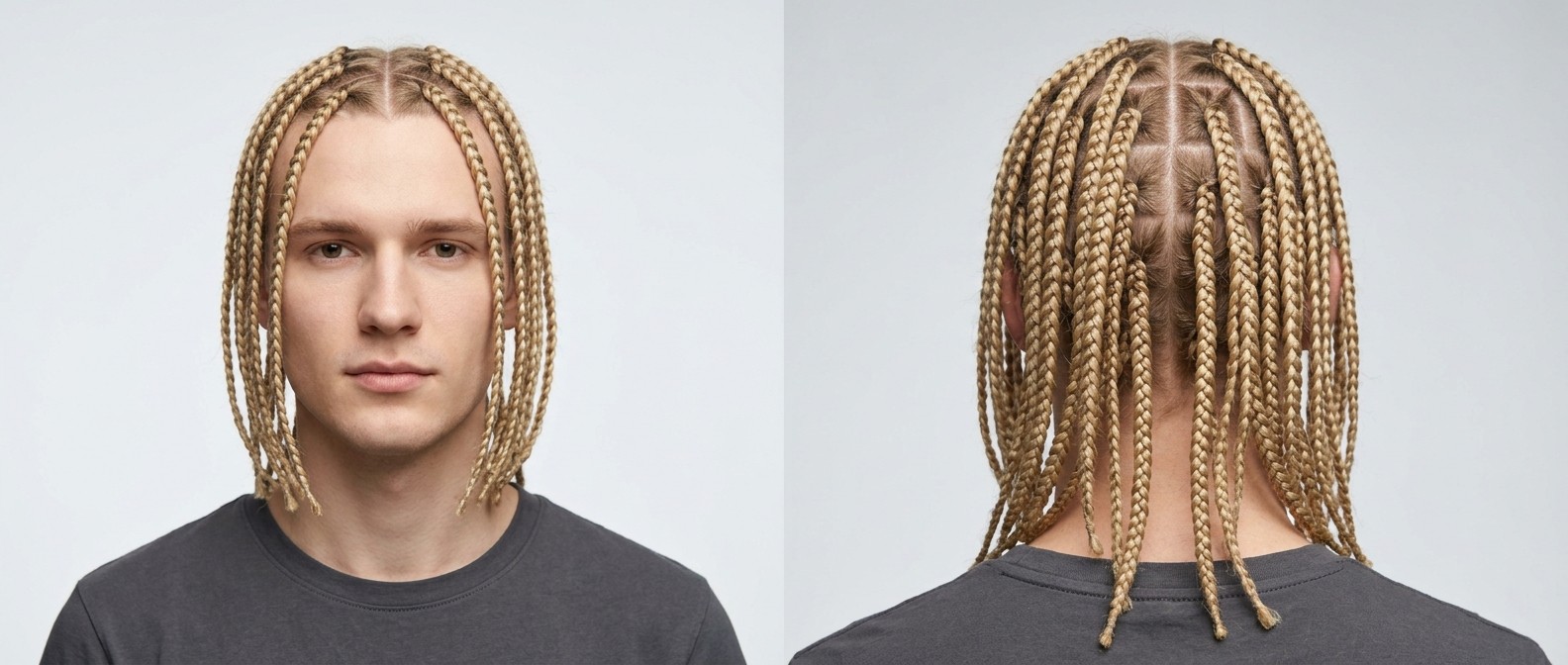
Box Braids
Long Blonde Box Braids with Precision Square Parting
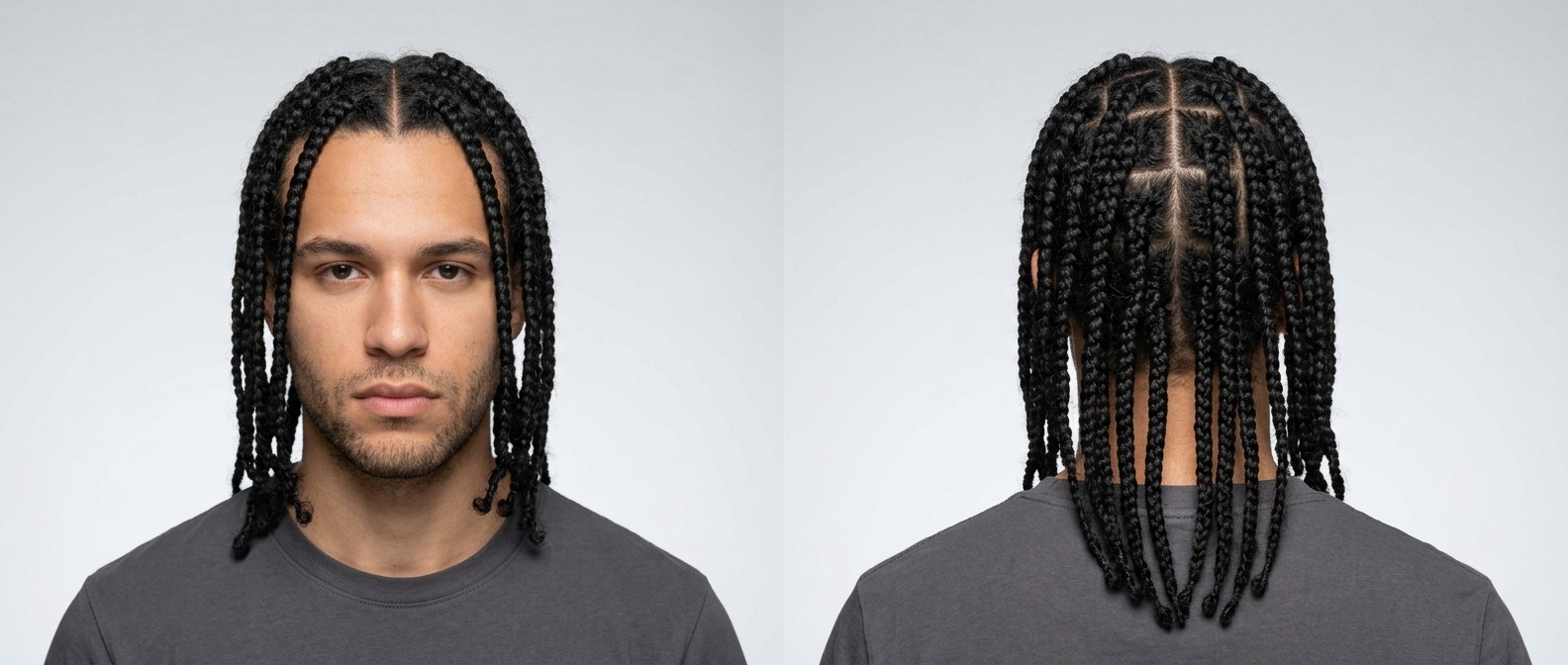
Box Braids
Classic Long Box Braids with Crisp Square Partings
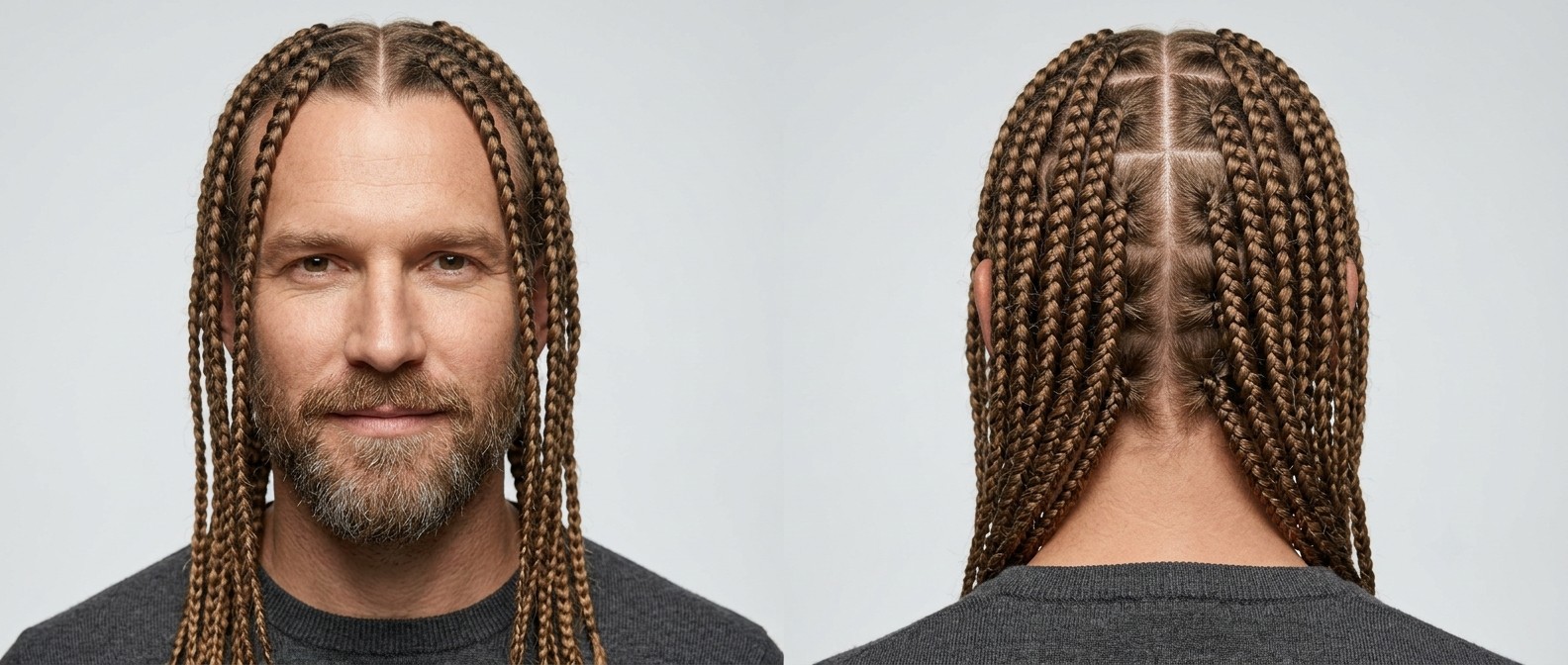
Box Braids
Precision Square-Parted Long Box Braids with Full Beard
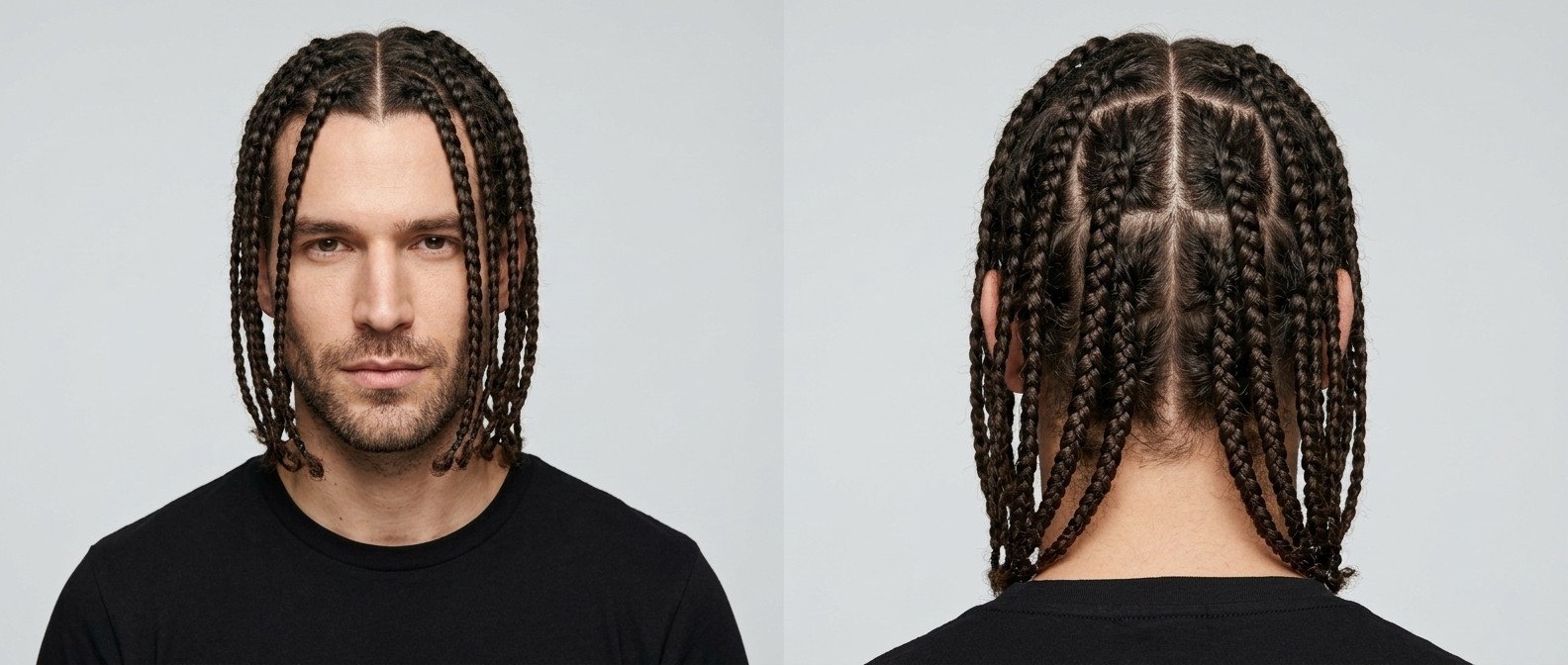
Box Braids
Long Symmetrical Box Braids with Distinct Square Parting for Thick Hair
Box Braids