Daily Care Routine for Men's Box Braids: The Ultimate Expert Guide
Master the essential daily care routine for men's box braids. Learn expert techniques for scalp hydration, nighttime protection, and preventing frizz.
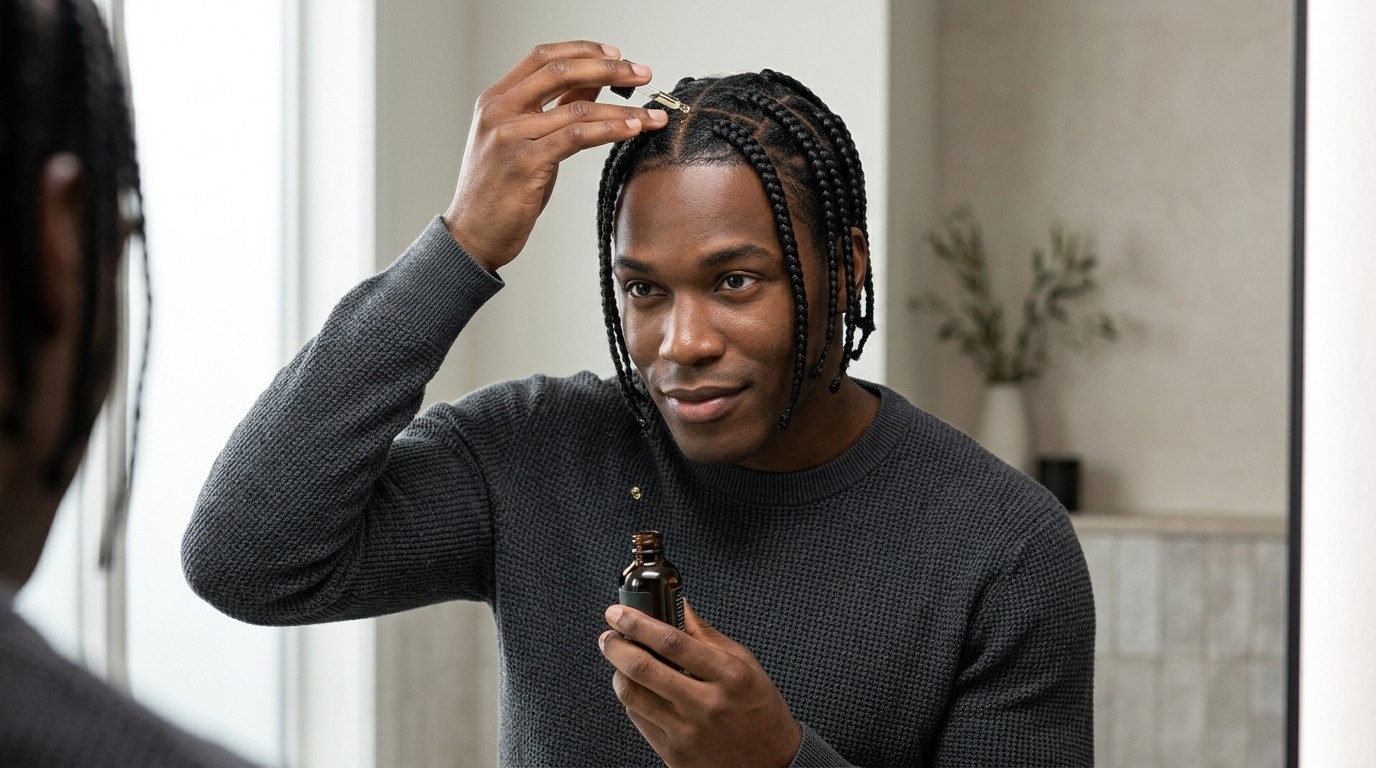
Let's start with the hard truth: sitting in the braider's chair for four to six hours is actually the easy part. Once you step out of the salon rocking fresh Box Braids, the real responsibility begins. Protective styling is a massive commitment to the health of your natural hair. Far too many men assume that once their hair is braided up, they can completely ignore it for two months. This is a fast track to severe breakage, intense scalp irritation, and premature frizz that ruins the crisp look of your new style.
Drawing from extensive professional styling experience, it is clear that a dedicated daily care routine is the absolute secret to keeping those plaits looking sharp and healthy from day one to week six. Whether you are growing your hair out or simply taking a break from daily styling, understanding how to maintain your braids will make the difference between a protective style that promotes growth and one that damages your follicles. This comprehensive guide will walk you through the exact daily steps, products, and techniques required to master your braid maintenance.
The Anatomy of a Protective Style: Why Daily Care is Non-Negotiable
Before diving into the actual routine, you need to understand what happens to your hair and scalp when you get braided up. Protective styling is designed to tuck the fragile ends of your hair away from environmental damage, friction, and daily manipulation. However, this process fundamentally changes how your scalp functions. When your hair is sectioned into a tight grid, massive portions of your scalp are suddenly exposed to the elements. The natural sebum (oil) your scalp produces can no longer travel down the hair shaft to moisturize your ends naturally.
Just like intricate Cornrows or mature Dreadlocks, the individual sections of your scalp are now bearing the concentrated weight of tightly woven natural strands, often combined with synthetic extensions. This continuous tension at the root means your hair follicles are under stress. Without daily hydration and nourishment, the scalp dries out, the hair becomes brittle, and the roots can literally snap under the tension. A proactive daily routine replaces the natural moisture cycle that the braiding process interrupted.

The Morning Moisture Protocol: Waking Up Your Braids
Your morning routine sets the tone for how your hair will look and feel throughout the day. When you wake up and remove your nighttime protection, your braids will likely be compressed, and your scalp might feel slightly tight. The very first step you must take is reintroducing moisture. In the world of textured hair care, water is the ultimate moisturizer. You cannot hydrate your hair with thick greases or pomades; those products only seal the hair. You need actual liquid hydration.
Invest in a high-quality continuous spray bottle. Fill it with a mixture of distilled water and a few generous squirts of a lightweight, water-based leave-in conditioner. Lightly mist your entire head, focusing primarily on the exposed scalp and the roots of the braids. You do not need to soak your hair—a gentle dampness is all that is required to awaken the hair cuticles. If you have ever researched the science of managing natural curls and coils, you already know that daily moisture retention is the foundational pillar of long-term hair health.
Once the moisture is applied, gently pat it into your scalp using your fingertips. Never vigorously rub your head, as this creates friction and immediately generates frizz at the roots. Allow the water and leave-in conditioner mixture to absorb for a minute or two before moving on to the sealing phase.
Scalp Nourishment and Oil Sealing
Now that your scalp and roots are hydrated, you must lock that moisture in. This is where oils come into play. A massive mistake many men make is reaching for heavy, petroleum-based products. While a thick wax might be perfect for holding a classic Pompadour in place, heavy greases have absolutely no business being applied to the roots of a braided style. They cause severe product buildup, clog your pores, and attract dirt and lint like a magnet.
Instead, you need a lightweight, penetrating carrier oil. Jojoba oil, sweet almond oil, and argan oil are phenomenal choices because their molecular structure closely mimics the natural sebum produced by your scalp. Apply a few drops of your chosen oil directly to your fingertips—not directly pouring it onto your head—and massage it gently into the grid lines of your exposed scalp. This targeted massage stimulates blood flow to the follicles, which encourages hair growth and relieves the tension caused by the tight plaits.

If you are experiencing the dreaded "braid itch"—often caused by the alkaline coating found on synthetic braiding hair—you can mix a drop or two of peppermint oil or tea tree oil into your carrier oil. These essential oils provide a soothing, cooling sensation that instantly calms inflammation. Proper scalp health is a universal rule in barbering; just as proper fade and buzz cut maintenance relies on a clean, moisturized canvas, braided styles demand an even higher level of dermal attention because the skin is constantly exposed.
The Nighttime Defense Strategy
If you do everything right during the day but neglect your hair at night, your braids will look old and frizzy within a week. Friction is the ultimate enemy of any protective style. Standard cotton pillowcases act like moisture vampires, aggressively sucking all the hydration and oils out of your hair while you sleep. Furthermore, the rough texture of cotton catches on the cuticles of your hair, pulling at the roots and creating massive amounts of frizz.

Establishing a strict nighttime ritual is the single most effective way to extend the life of your hairstyle. Here are the non-negotiable steps you must take every single night before your head hits the pillow:
- Secure the length: If your braids are long enough, gather them loosely and tie them back with a soft scrunchie into a low Ponytail to prevent them from tangling or whipping around while you toss and turn.
- Cover up with silk or satin: Always wear a high-quality silky durag, a satin bonnet, or completely wrap your head in a silk scarf. This creates a frictionless barrier that locks in moisture.
- Invest in a satin pillowcase: As a secondary backup for those restless nights when your durag inevitably slips off, a satin pillowcase ensures your hair still rests on a frictionless surface.
- Apply a targeted nighttime serum: Massage a few drops of a heavier, deeply penetrating oil—like Jamaican black castor oil—right into the hairline and edges before wrapping it up to reinforce the most fragile parts of your hair overnight.
Mid-Week Cleansing and Itch Relief
One of the most common questions men ask is how to wash their hair when it is braided. The reality is that you cannot wash your braids every single day. Unlike a loose Afro or a messy, unconstructed style, aggressively scrubbing your head in the shower will instantly destroy the neatness of the roots and cause your natural hair to unravel from the extensions.
However, you still need to keep your scalp clean. Sweat, dead skin cells, and environmental pollutants will build up over the weeks. To manage this without ruining your style, you need to employ the "dry wash" method. Once a week, take a cotton pad or a soft microfiber cloth and dampen it with witch hazel or a diluted apple cider vinegar solution. Carefully wipe down the exposed grid lines of your scalp. This gently lifts away dirt, neutralizes odors, and dissolves excess oil without requiring you to soak your entire head.
When it is finally time for a full water wash—usually recommended every two to three weeks—you must be highly strategic. Dilute a clarifying shampoo in an applicator bottle with warm water. Apply the soapy water directly to your scalp and gently massage with the pads of your fingers in a single directional motion. Let the suds naturally run down the length of the braids to cleanse them. Never bunch the braids up and rub them together, as this will cause irreversible frizz and matting.
Safe Styling Practices to Prevent Traction Alopecia
Box braids offer incredible versatility. You can let them hang freely, tie them half-up, or pull them into a sharp, tight Man Bun or a high Top Knot. However, how you style your braids on a daily basis plays a massive role in your long-term hair health. Men often make the mistake of pulling their fresh, tight braids up into a high bun on the very first day. This is a critical error.
When the braids are fresh, the tension at the root is already at its maximum. Pulling them upward adds severe additional stress to the delicate hairs along your hairline and nape. Over time, this constant pulling leads to a medical condition called traction alopecia, which causes permanent hair loss and a receding hairline. To prevent this, you must leave your braids down and loose for at least the first week to allow the roots to settle and loosen naturally.
Even when the braids have loosened up, you should avoid wearing tight up-dos every single day. Switch up your styling routine. Let them hang down on Mondays and Tuesdays, tie them back loosely on Wednesdays, and perhaps put them in a bun for the weekend. Giving your scalp regular breaks from pulling is essential. If you find that your scalp is simply too sensitive to handle the weight and tension of traditional box braids, you might want to consider Twists for your next style, as they generally require less tension at the root and are lighter on the hair follicle.
The Takedown: Recognizing the Expiration Date
No matter how flawless your daily care routine is, every protective style has a strict expiration date. Leaving your braids in for too long is just as damaging as not taking care of them at all. The absolute maximum lifespan for this style is six to eight weeks. Beyond this point, several dangerous things begin to happen.
First, as your natural hair grows, the heavy braid moves further away from the scalp. This means the heavy extension is now hanging onto a very thin, fragile piece of new growth, significantly increasing the risk of the hair snapping off completely. Second, the shed hair that naturally falls out of your scalp every day (averaging 50 to 100 strands) is trapped inside the braid. After two months, this trapped shed hair will begin to lock and mat at the root. If you let it mat too severely, you will end up having to cut your natural hair off during the takedown process. The same mechanical logic applies to any long-term textured style, which is why the principles behind preventing breakage in constantly manipulated hair are worth reading before you commit to another round of braids.
When it is time to remove them, patience is your best tool. Snip the ends of the extensions far below where your natural hair ends. Carefully unbraid each section, and most importantly, use a detangling spray and your fingers to gently pull apart the buildup and shed hair at the root before you apply any water or shampoo. Wetting matted hair will instantly turn it into a dreadlock.
Final Thoughts on Your Daily Regimen
Committing to a protective style means committing to a new standard of grooming. The routine outlined above might seem extensive at first glance, but in practice, it takes less than five minutes in the morning and five minutes at night. By prioritizing liquid hydration, lightweight oil sealing, and strict nighttime friction protection, you ensure that your hair remains incredibly healthy beneath the synthetic additions. Treat your scalp with respect, avoid unnecessary tension, and your box braids will keep you looking immaculately styled for weeks on end.