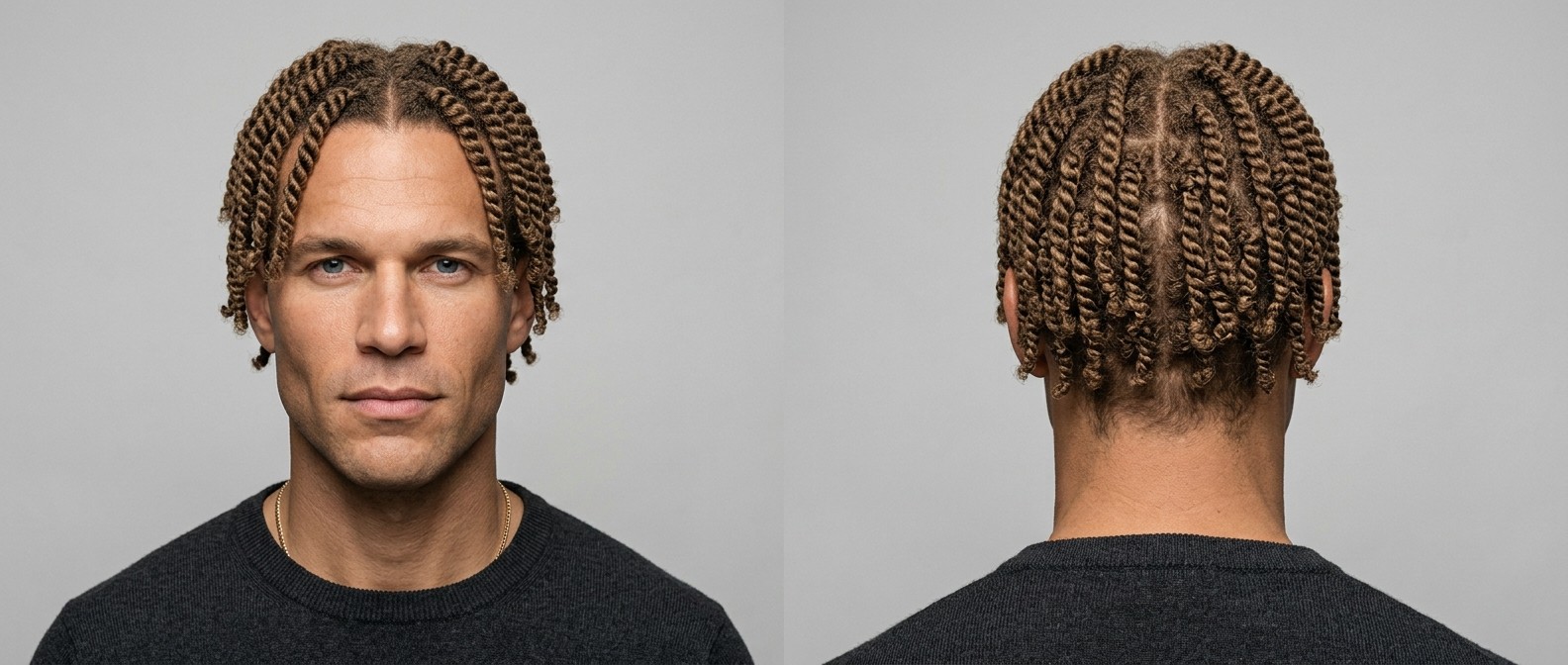
Classic Center-Parted Two-Strand Twists for Medium Hair
 Top
Medium (5-10 cm)
Top
Medium (5-10 cm)
 Sides
Medium (2-5 cm)
Sides
Medium (2-5 cm)
 Hair Type
Very Curly / Afro (Type 4)
Hair Type
Very Curly / Afro (Type 4)
 Face Shape
Square
Face Shape
Square
 Maintenance
Medium
Maintenance
Medium
 Thickness
Thick / Dense
Thickness
Thick / Dense
About This Style
This striking variation of the classic two-strand twist hairstyle showcases a precise, symmetrical center part that immediately draws the eye, framing the face with exceptional balance and architectural precision. The light brown, tightly coiled hair is meticulously sectioned into a neat, grid-like pattern across the entire scalp. This highly intentional parting allows each individual twist to fall naturally and uniformly around the head, creating a visually appealing cascading effect. The medium length of the twists, resting perfectly around ear-level on the sides and just above the nape in the back, creates a cohesive, rounded silhouette that feels both highly structured and effortlessly cool.
What makes this style truly stand out is its remarkable ability to complement a strong, square jawline. The vertical lines created by the hanging twists help to visually elongate the face, while the natural volume at the sides softens more angular facial features. It is an outstanding choice for the modern gentleman seeking a protective style that transitions seamlessly from a casual weekend outing to a relaxed creative workspace. The natural texture of the Type 4 hair is celebrated here, offering a low-daily-maintenance routine that still looks highly styled, incredibly well-kept, and full of dynamic movement.
What makes this style truly stand out is its remarkable ability to complement a strong, square jawline. The vertical lines created by the hanging twists help to visually elongate the face, while the natural volume at the sides softens more angular facial features. It is an outstanding choice for the modern gentleman seeking a protective style that transitions seamlessly from a casual weekend outing to a relaxed creative workspace. The natural texture of the Type 4 hair is celebrated here, offering a low-daily-maintenance routine that still looks highly styled, incredibly well-kept, and full of dynamic movement.
Key Features
- Distinctive center parting that creates perfect symmetry, draws attention to the eyes, and guides the downward flow of the twists.
- Meticulously sectioned square or brick-lay base patterns visible at the scalp, ensuring even weight distribution and a clean, geometric aesthetic.
- Uniform medium length (ranging from 5 to 10 cm) throughout the top and sides, allowing the twists to beautifully frame the face at ear level.
- Tightly wound two-strand twist technique that locks in the natural Type 4 curl pattern, prevents frizz, and maintains structural integrity.
- A rounded, halo-like silhouette that softens angular face shapes while maintaining a highly intentional and groomed appearance.
- Natural downward hair flow dictated by gravity and precise sectioning, requiring minimal daily manipulation to look its absolute best.
Getting the Cut
- Request a thorough clarifying wash and a deep conditioning treatment to properly prep the dense, curly hair for the tension of twisting.
- Ask for a precise, razor-straight center part starting directly from the front hairline all the way down to the crown of the head.
- Instruct the stylist to create uniform, square-shaped sub-sections across the entire scalp using a fine-tooth rat-tail comb for maximum precision.
- Specify the use of the traditional two-strand twist method, ensuring tension is firm at the root for longevity but not pulling excessively on the low hairline.
- Ask the barber to maintain the current medium length across the top and sides, only lightly dusting or trimming split ends with styling shears before the twisting process begins.
- Request a high-quality, lightweight twisting cream or gel to be applied evenly to each individual section to ensure maximum hold, brilliant shine, and minimal frizz over the coming weeks.
- Ask the stylist to finish the ends by twirling them tightly around their index finger to effectively seal the twist and prevent any premature unraveling.
- Ensure the perimeter and nape are kept clean but relatively natural, specifically avoiding any harsh, sharp edge-ups that might sharply contrast with the relaxed, organic vibe of the twists.
Daily Routine
- Start your morning routine by carefully removing your silk or satin bonnet, which is an absolutely crucial step for protecting the twists from friction overnight.
- Lightly mist your entire head with a hydrating leave-in conditioner spray or plain distilled water to gently wake up the scalp and refresh the hair.
- Apply a few drops of a high-quality, lightweight natural oil, such as jojoba, argan, or sweet almond oil, directly to the pads of your fingertips.
- Gently massage the oil directly into your exposed scalp along the parted sections to stimulate blood flow, prevent dryness, and stop annoying flaking.
- Carefully shake your head from side to side to allow the twists to naturally fall back into their designated center-parted position without manual pulling.
- Smooth down any minor flyaways or frizz along the surface of the twists using a very small amount of styling foam or mousse, patting it in gently.
- Strictly avoid using any combs, brushes, or direct heat styling tools, as these will immediately unravel the twists and create unwanted, irreversible frizz.
- Let the hair air dry completely if you used any liquid moisture; this protective style requires only 5 to 10 minutes of active morning effort to look flawless.
Products & Tools
- Fine-tooth rat-tail comb: An absolutely essential tool for creating the sharp center part and the precise, uniform geometric box sections on the scalp.
- High-quality twisting cream or butter: Provides a medium, flexible hold and a natural, healthy sheen without making the hair feel crunchy or stiff.
- Hydrating leave-in conditioning mist: A lightweight daily hydration tool designed to keep the thick, dense hair moisturized without causing heavy product buildup.
- Jojoba, Argan, or Sweet Almond oil: Necessary for maintaining optimal scalp health and effectively sealing moisture into the vulnerable ends of the twists.
- Premium silk or satin bonnet: The most critical tool for nighttime protection to prevent harsh friction, lint accumulation, and the rapid development of frizz.
- Lightweight styling foam or mousse: Offers a light, flexible hold to easily tame surface flyaways and keep the twists looking fresh and neat between washes.
Maintenance
- Schedule a professional barber or stylist visit every 3 to 4 weeks to have the twists properly taken down, deeply washed, and meticulously re-twisted.
- Wash the hair no more than once every two weeks while it remains in twists, focusing the shampoo strictly on the scalp to avoid unravelling the lengths.
- Always sleep with a satin pillowcase or wear a secure silk bonnet to minimize nighttime friction, which is the primary culprit behind frizz and breakage.
- Strictly avoid heavy, wax-based pomades or thick gels that can cause severe, stubborn buildup within the twists and are notoriously difficult to wash out.
- Keep the scalp moisturized lightly every few days, but be careful not to oversaturate the hair, as lingering dampness inside the twists can lead to mildew.
Best For
Face Shapes: Exceptionally ideal for square and oval faces; the vertical drop of the twists beautifully softens sharp jawlines and balances facial proportions.
Hair Types: Specifically designed and best suited for Very Curly or Afro-textured hair (Type 4) that can naturally hold a two-strand twist without easily unravelling.
Thickness: Best suited for thick, dense hair to ensure the resulting twists look full, voluminous, and substantial rather than sparse or stringy.
Lifestyle: Perfect for men seeking a stylish, low-maintenance everyday casual look that simultaneously acts as a reliable protective barrier for long-term hair health.
Pro Tips
- Never attempt to twist the hair while it is completely dry; always ensure it is properly damp and thoroughly detangled to prevent unnecessary breakage and uneven twisting.
- If your twists begin to unravel slightly at the ends over time, apply a tiny dab of styling gel and tightly coil the end around your index finger to reseal it.
- During the colder, drier months, proactively increase your use of leave-in conditioners and natural oils, as the exposed scalp parts are highly prone to winter flakiness.
- Avoid the common styling mistake of making the base sections too large; smaller, tighter sections significantly increase the style's overall longevity and neat appearance.
Related Hairstyles
Twists
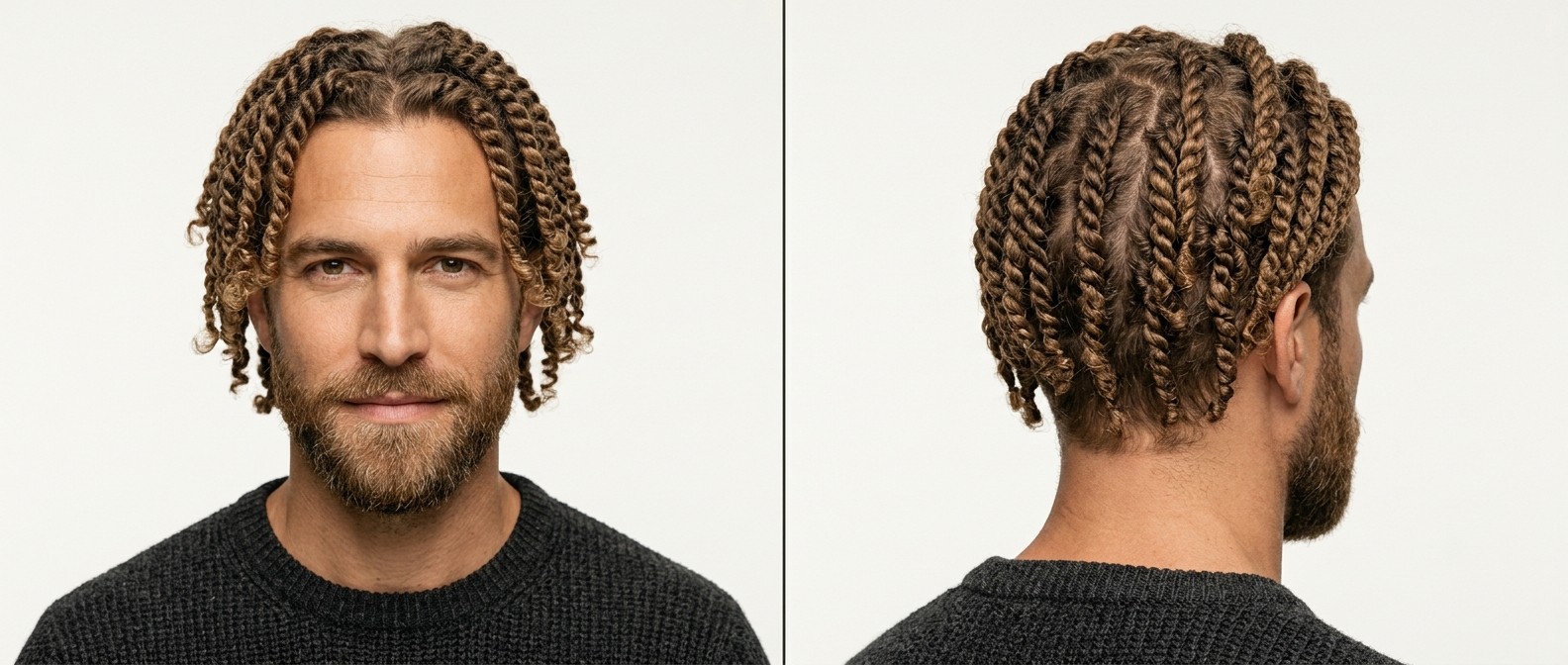
Medium Two-Strand Twists with Defined Partings and Beard
Twists
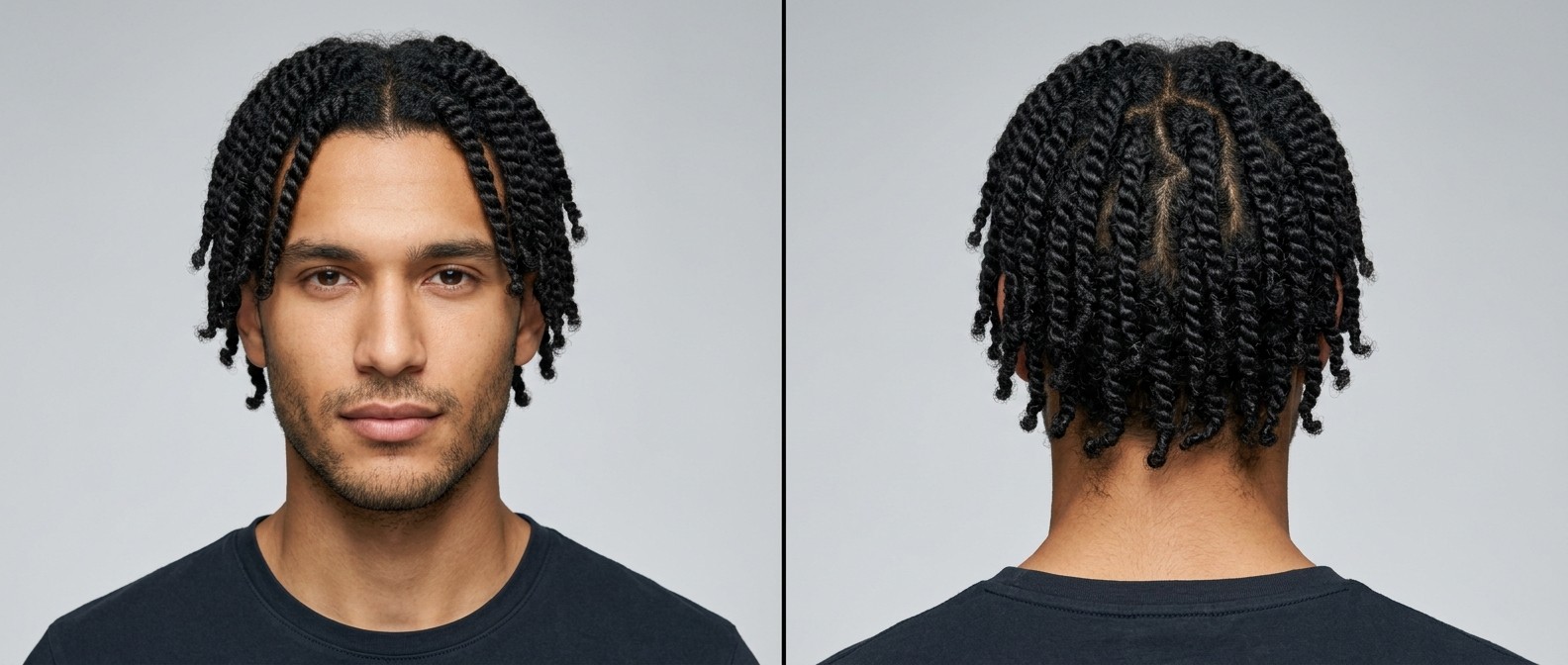
Center-Parted Two-Strand Twists for Dense Type 4 Hair
Twists
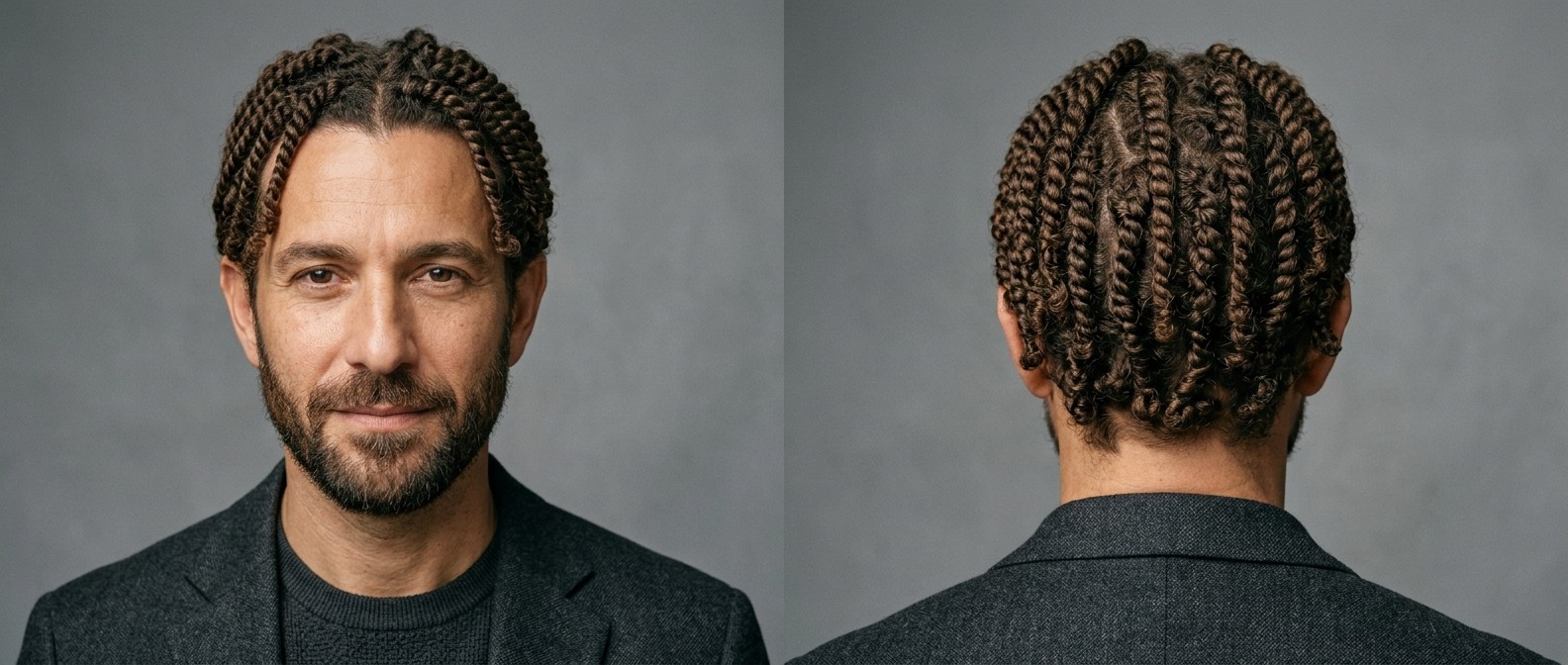
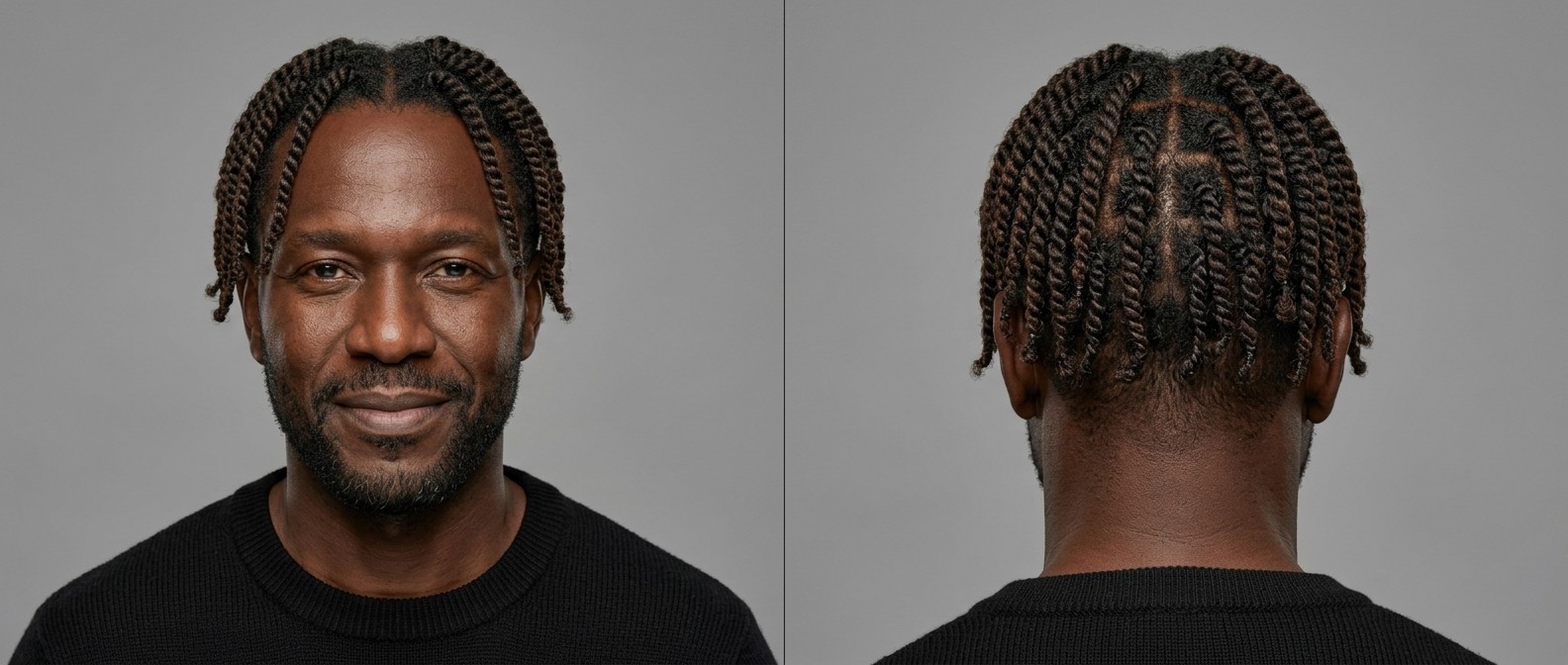
Mature Two-Strand Rope Twists with Clean Center Part
Twists
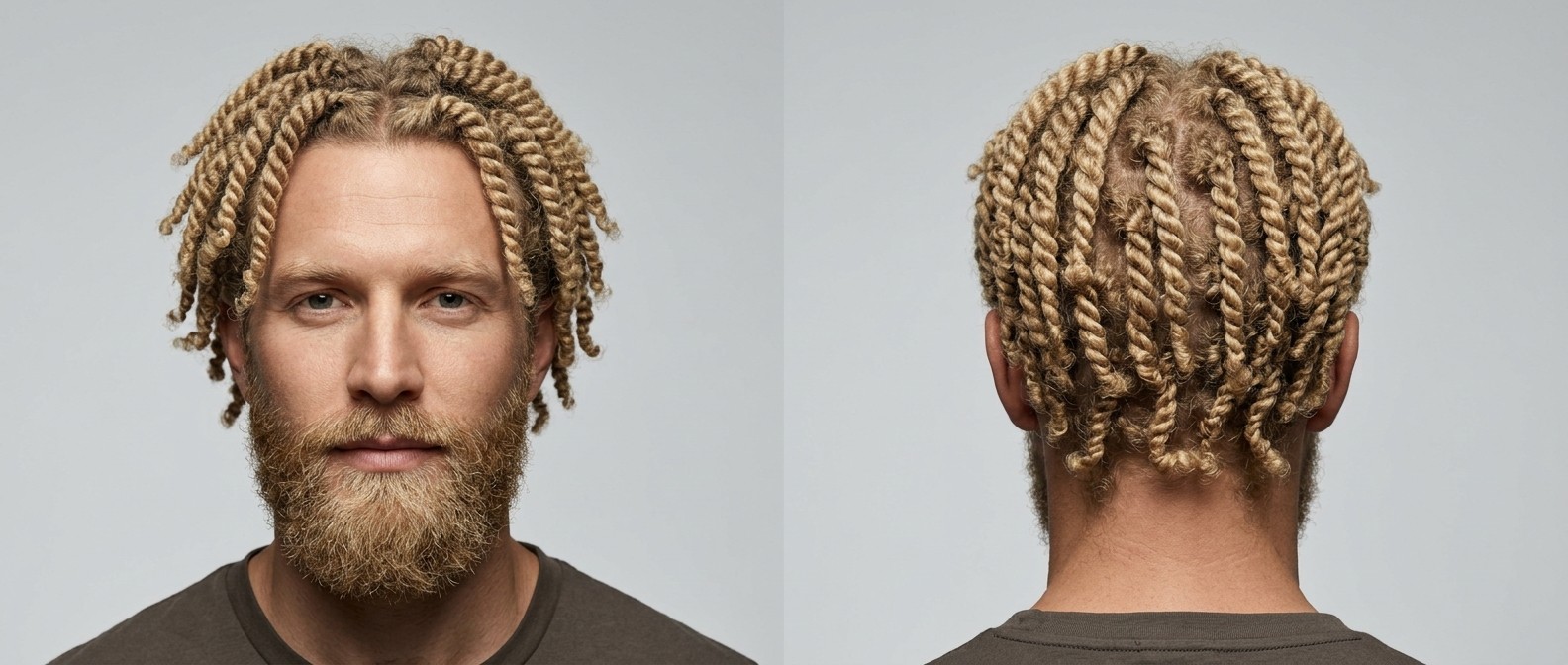
Blonde Two-Strand Twists with Full Textured Beard for Thick Hair
Twists
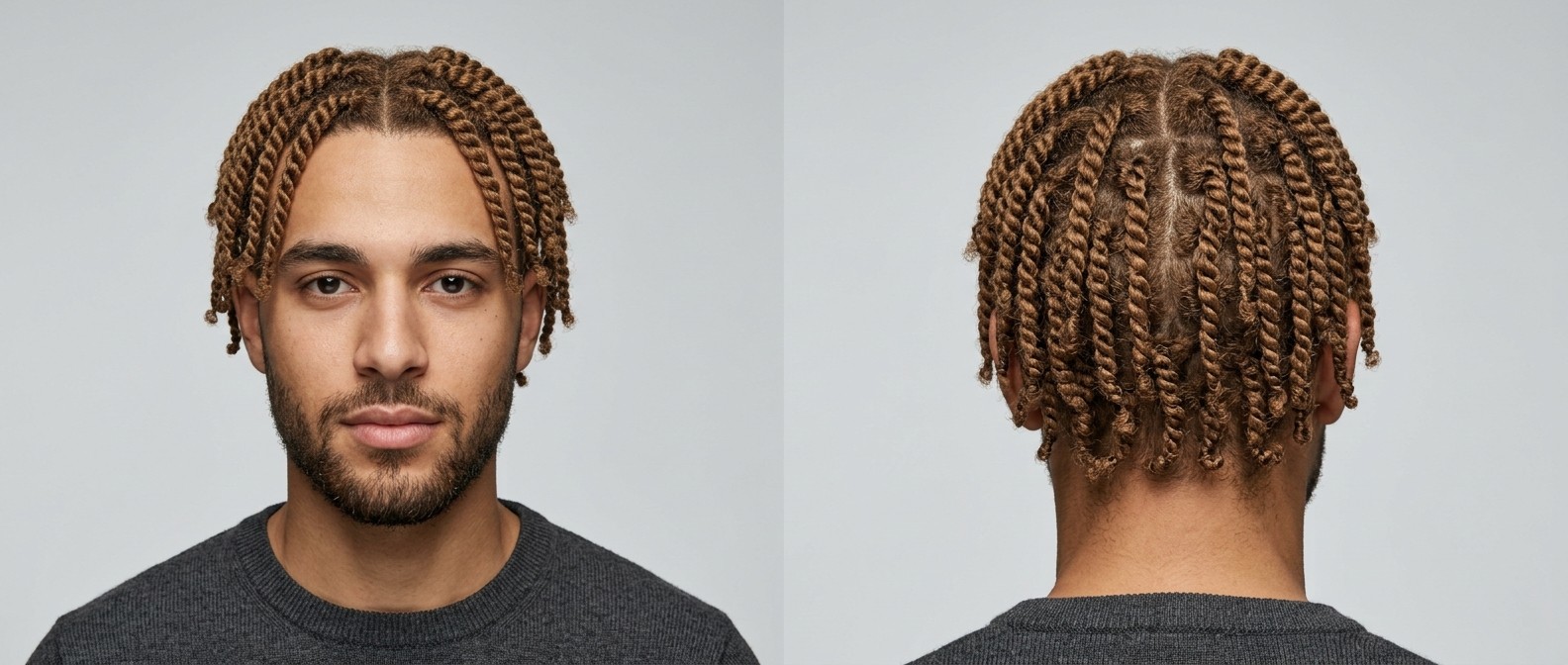
Symmetrical Middle-Parted Two-Strand Twists for Light Brown Hair
Twists