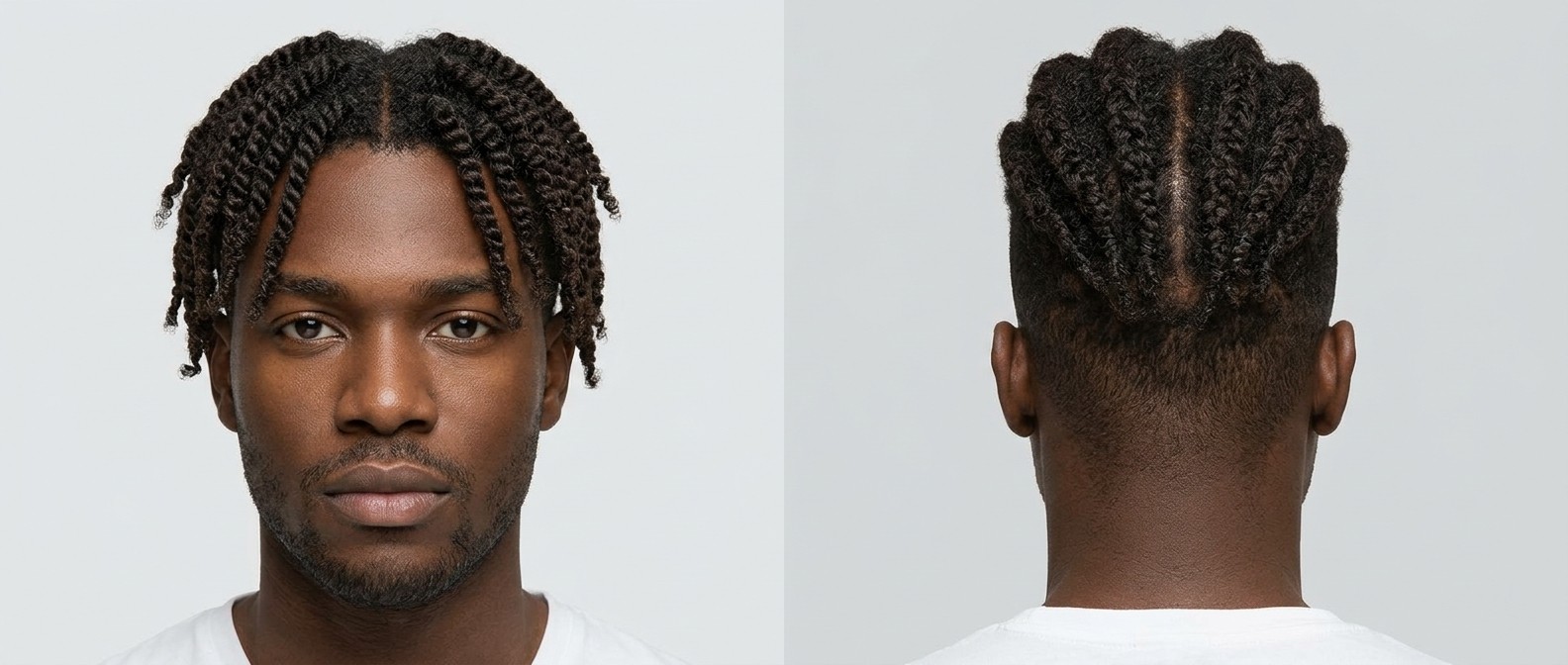
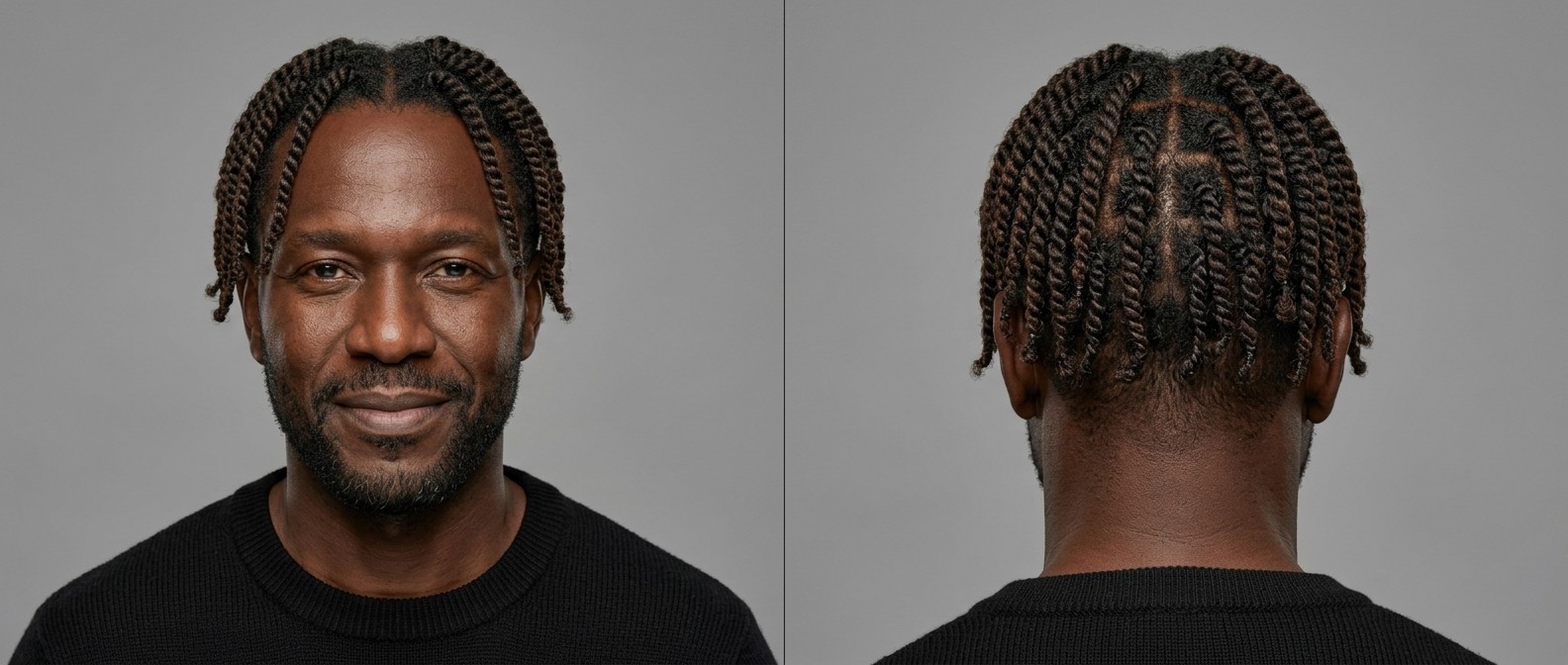
Flat-Twisted Crown with Loose Two-Strand Face-Framing Twists and Taper
 Top
Long (10-20 cm)
Top
Long (10-20 cm)
 Sides
Medium (2-5 cm)
Sides
Medium (2-5 cm)
 Hair Type
Very Curly / Afro (Type 4)
Hair Type
Very Curly / Afro (Type 4)
 Face Shape
Heart
Face Shape
Heart
 Maintenance
Medium
Maintenance
Medium
 Thickness
Medium / Normal
Thickness
Medium / Normal
About This Style
This striking protective hairstyle masterfully blends structural scalp precision with relaxed, face-framing movement. Looking closely at the cut, you will notice a crisp, well-defined middle part anchoring the entire look, while the top sections are expertly flat-twisted backward along the scalp. These tightly secured flat twists transition seamlessly into loose, free-hanging two-strand twists that cascade effortlessly over the forehead and cheekbones, creating a highly modern curtain effect. The lower back and sides are kept at a clean, medium length, providing a subtle taper that emphasizes the volume and intricate texture of the long top without requiring a severe skin fade.
Perfect for the creative or artistic professional, this style brings an elevated, intentional edge to Type 4 afro hair. It exceptionally complements a heart-shaped face by adding balanced, textured volume near the jawline while drawing the eye upward with the symmetrical middle part. The natural low hairline is utilized perfectly to anchor the front-facing twists without looking forced. Whether you are stepping into a gallery opening, performing on stage, or simply navigating a casual weekend, this look signals true confidence and a deep appreciation for detailed grooming.
Perfect for the creative or artistic professional, this style brings an elevated, intentional edge to Type 4 afro hair. It exceptionally complements a heart-shaped face by adding balanced, textured volume near the jawline while drawing the eye upward with the symmetrical middle part. The natural low hairline is utilized perfectly to anchor the front-facing twists without looking forced. Whether you are stepping into a gallery opening, performing on stage, or simply navigating a casual weekend, this look signals true confidence and a deep appreciation for detailed grooming.
Key Features
- Prominent, laser-straight middle part dividing the front canopy into perfectly symmetrical sections.
- Flat-twisted roots running backward along the top of the head to provide structured, neat scalp tension.
- Loose, dangling two-strand twists measuring 10 to 20 centimeters at the front that frame the face like curtains.
- Tapered sides and back kept at a medium length of 2 to 5 centimeters to maintain a tailored, masculine silhouette.
- Seamless transition from tight protective scalp styling at the crown to free-flowing textured ends at the fringe.
- Natural, low-shine finish that beautifully highlights the healthy, dense texture of Type 4 very curly hair.
- Clean, natural hairline edge-up that frames the face without pushing the low hairline back unnecessarily.
Getting the Cut
- Ask for a medium taper fade on the sides and back, leaving exactly 2 to 5 centimeters of length to keep a soft but clean perimeter around the ears and nape.
- Request that the top section of hair be left long, specifically between 10 and 20 centimeters, to allow enough natural length for the twists to hang down properly.
- Instruct the stylist to create a razor-sharp, perfectly centered middle part starting from the low front hairline and extending toward the crown.
- Ask for flat twists to be braided straight back along the scalp, stopping neatly near the upper occipital bone to create a streamlined top silhouette.
- Ensure the ends of the flat twists are finished as loose two-strand twists that fall forward to frame the face symmetrically.
- Request a crisp, natural edge-up along the front hairline and temples, ensuring the barber maintains your natural low hairline without pushing it back.
- Ask for a light shear trim on the very ends of the dangling front twists to ensure they sit evenly at cheekbone level and look intentionally styled.
Daily Routine
- Start your quick 5 to 10-minute morning routine by lightly misting your scalp and twists with a hydrating leave-in conditioner spray to wake up the hair.
- Apply a dime-sized amount of lightweight, nourishing hair oil to your fingertips and gently massage it directly into your exposed scalp to prevent dryness and flaking.
- Smooth a tiny amount of styling mousse or light hold foam over the flat twists on top to lay down any overnight frizz and maintain the crispness of the middle part.
- Gently pull the free-hanging two-strand twists forward with your fingers so they frame your face symmetrically on either side of your prominent middle part.
- Use your lightly oiled fingers to gently twirl the very ends of the loose twists, ensuring they remain tightly coiled and do not unravel during your daily activities.
- Allow the hair to air dry completely for a few minutes before heading out, ensuring the styling mousse sets the flat twists without leaving a hard, crunchy finish.
- Check the medium-length sides and back, giving them a quick pat down or light brush to ensure they look neat and cohesive with the structured top.
Products & Tools
- Hydrating daily leave-in conditioner spray to provide essential moisture to the twists without causing heavy, greasy buildup.
- Natural scalp oil, such as jojoba, peppermint, or argan oil, to soothe the scalp and add a subtle, healthy shine to the hair.
- Lightweight setting mousse or styling foam to lock in the flat twists at the roots and tame flyaways with a flexible, natural hold.
- Metal rat-tail comb for achieving the razor-sharp middle part and sectioning the thick hair precisely before twisting.
- Soft-bristle wave brush to gently lay down the tapered sides and back without disrupting the natural curl pattern.
- Premium silk or satin durag for essential overnight compression to keep the intricate style intact and frizz-free.
Maintenance
- Schedule a professional barber visit every 3 to 4 weeks to clean up the tapered sides, trim the stubble, and refresh the crisp hairline edge-up.
- Wash your hair every 2 to 3 weeks using a targeted scalp cleanser, being extremely careful not to vigorously rub or disturb the structure of the twists.
- Always sleep with a tightly secured silk or satin durag or bonnet to prevent pillow friction, morning frizz, and the premature unraveling of your style.
- Strictly avoid using heavy, wax-based pomades or thick creams that can cause severe, hard-to-wash product buildup within the crevices of the twists.
- Re-twist any loose ends immediately with a touch of gel if you notice them starting to unravel, helping to maintain the uniform, neat structure.
Best For
Heart-shaped faces, as the prominent face-framing twists add necessary width and texture near the jawline to perfectly balance a slightly wider forehead.
Men with Very Curly or Afro-textured hair (specifically Type 4) that features medium to normal thickness, allowing the twists to hold their shape.
Young adults aged 18 to 25 who are seeking a highly creative, artistic aesthetic that seamlessly blends modern streetwear trends with cultural roots.
Individuals with medium-maintenance lifestyles who can comfortably dedicate 5 to 10 minutes a day to basic hydration and styling upkeep.
Men with naturally low hairlines, which provide an excellent, strong starting point for anchoring the backward-flowing flat twists.
Pro Tips
- Keep your scalp thoroughly hydrated; the exposed parted sections are highly prone to dryness, itchiness, and flaking, especially in colder winter months.
- If your twists feel stiff or dry mid-week, use the "baggy method" or a handheld facial steamer to safely infuse warm moisture back into the hair strands.
- Do not let the stylist pull the flat twists too tight; extreme scalp tension can cause traction alopecia and permanently damage your low hairline.
- Adapt the length of the loose front twists depending on your specific work environment; slightly shorter twists offer a more conservative, corporate-friendly look.
- Use a clarifying shampoo when it is finally time to take the style down, as this will effectively strip away weeks of accumulated oils and mousse.
Related Hairstyles
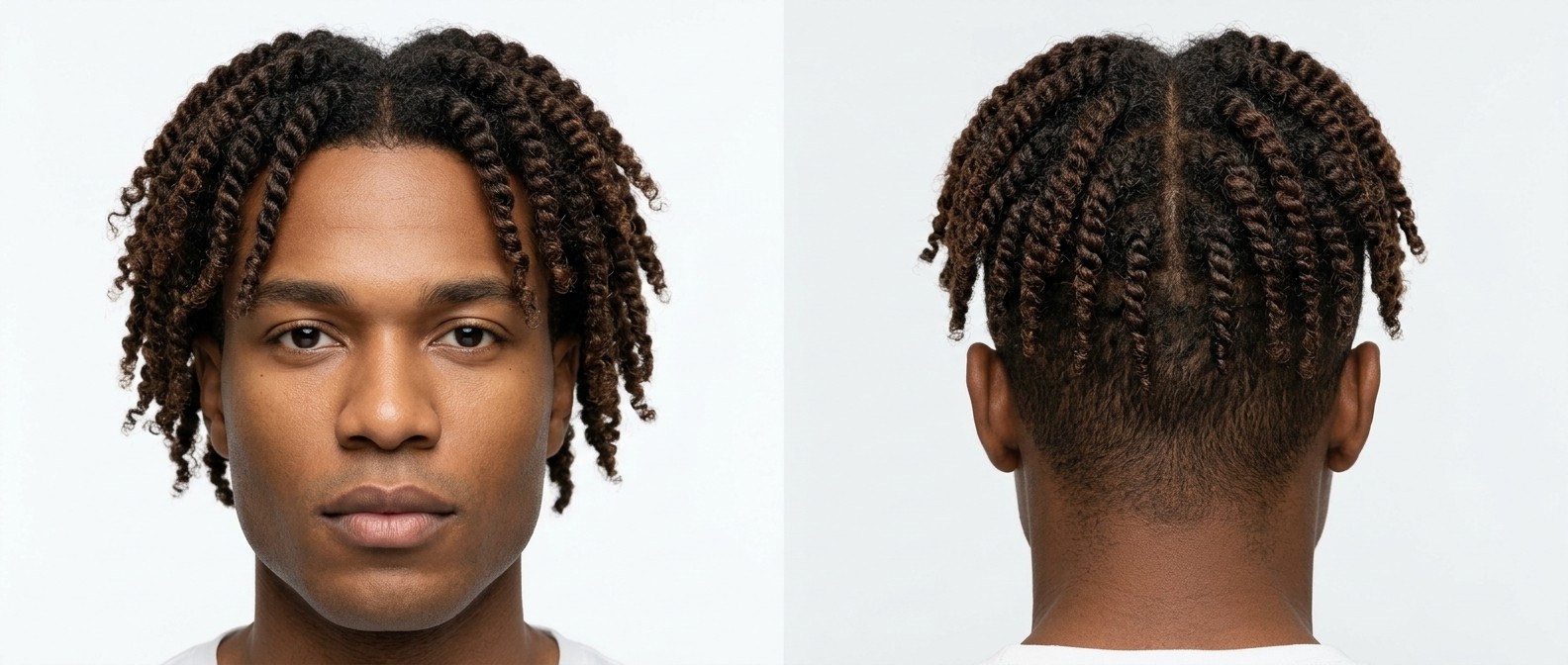
Twists
Distinctive Middle-Parted Two-Strand Twists with Tapered Nape
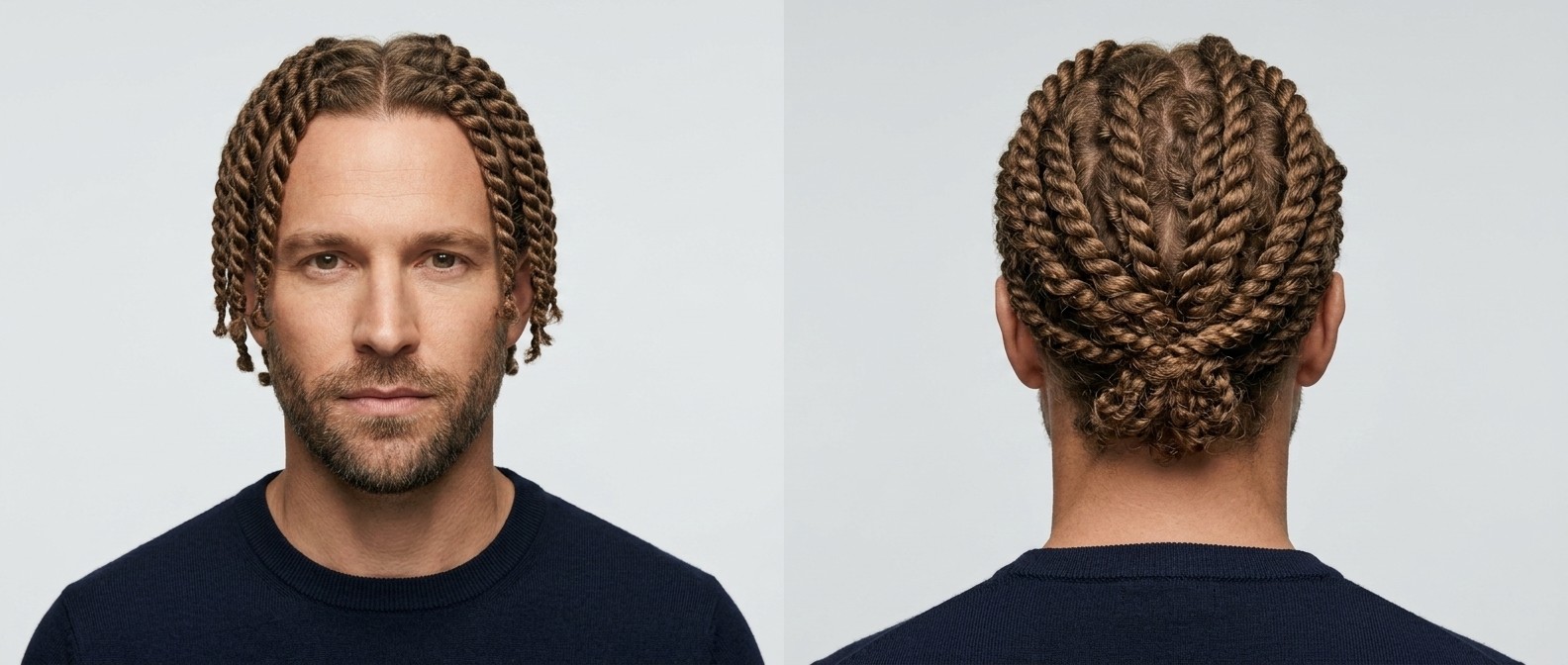
Twists
Pulled-Back Two-Strand Rope Twists with Face-Framing Tendrils
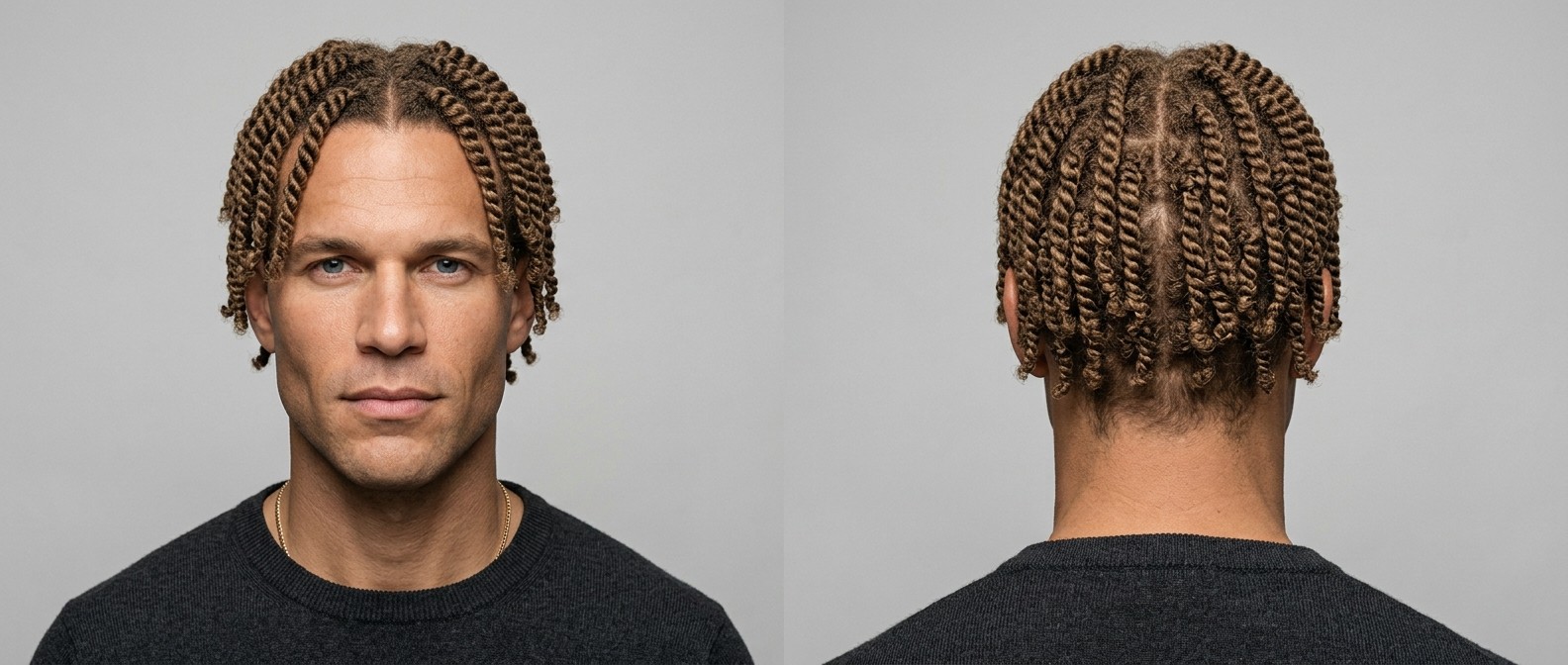
Twists
Classic Center-Parted Two-Strand Twists for Medium Hair
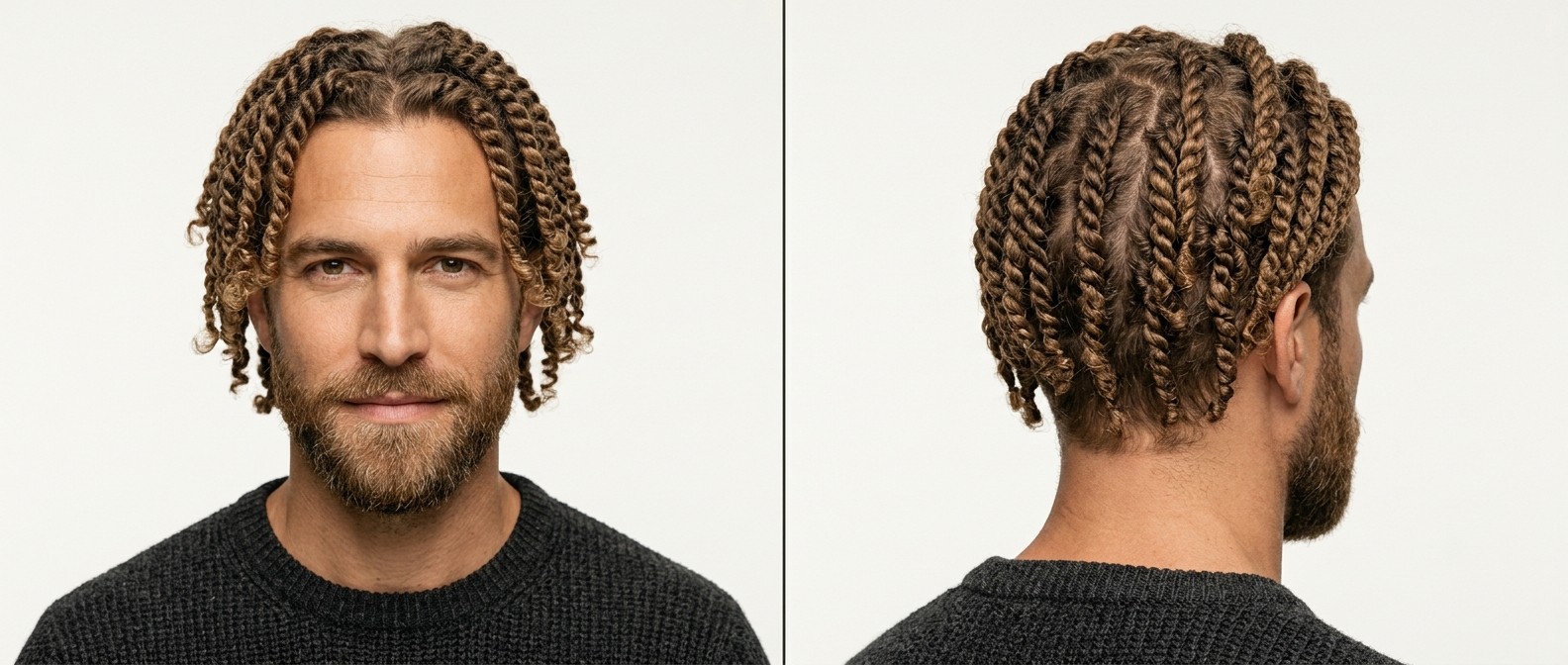
Twists
Medium Two-Strand Twists with Defined Partings and Beard
Twists
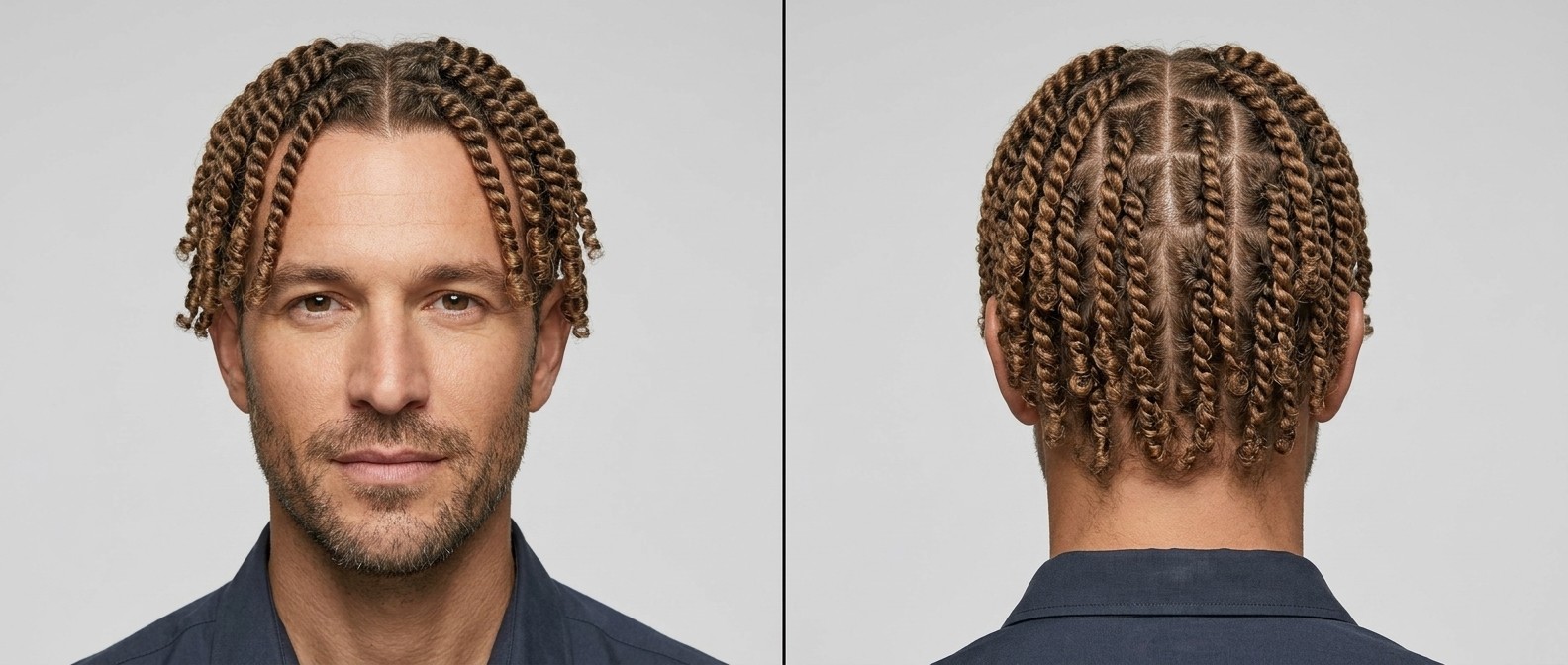
Classic Two-Strand Box Twists with Center Part for Men
Twists