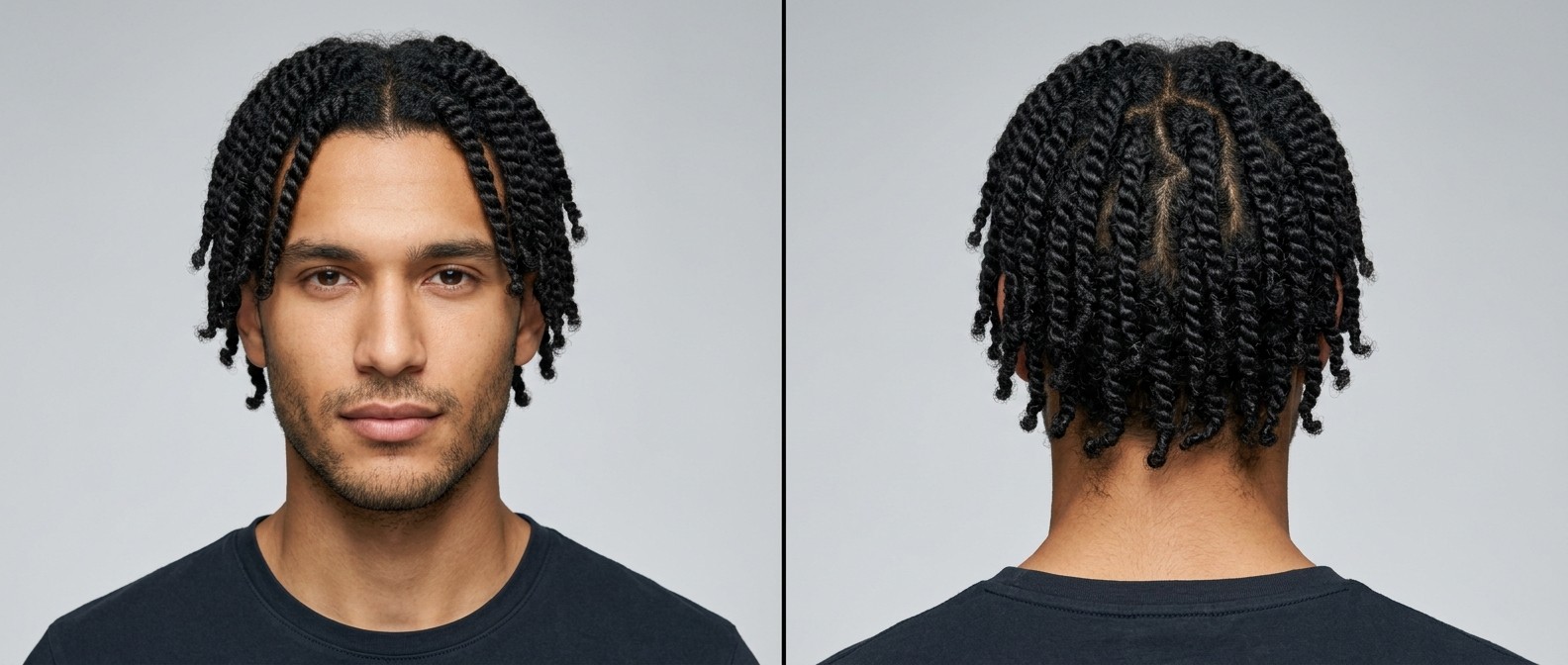
Center-Parted Two-Strand Twists for Dense Type 4 Hair
 Top
Short (2-5 cm)
Top
Short (2-5 cm)
 Sides
Short (6-20 mm)
Sides
Short (6-20 mm)
 Hair Type
Very Curly / Afro (Type 4)
Hair Type
Very Curly / Afro (Type 4)
 Face Shape
Rectangular
Face Shape
Rectangular
 Maintenance
Medium
Maintenance
Medium
 Thickness
Thick / Dense
Thickness
Thick / Dense
About This Style
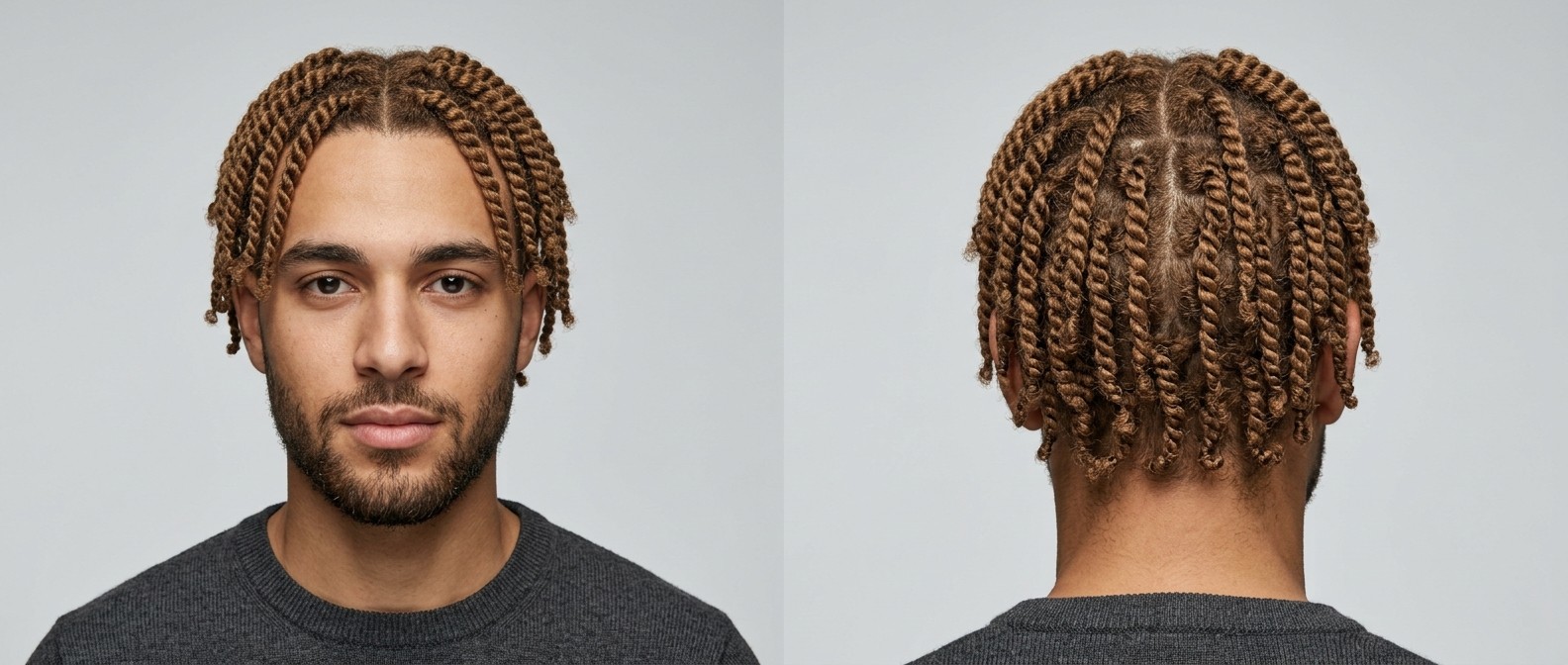
Embrace your natural texture with this striking center-parted two-strand twist hairstyle. Visually, this look is defined by its meticulous grid-like sectioning at the scalp, which allows the dense, Type 4 hair to fall naturally and uniformly around the head. The strong center part creates a symmetrical frame that perfectly complements a rectangular face shape, drawing the eye down and softening angular jawlines. The twists themselves are medium in visual length, falling just past the cheekbones to create a relaxed yet intentional silhouette. On the back of the head, the precision of the bricklay sectioning becomes the star of the show, demonstrating a high level of styling expertise. Each twist is anchored firmly yet without excessive tension, allowing the hair to cascade smoothly down toward the nape of the neck.
This style is the ultimate expression of creative and artistic flair, ideal for the modern man who wants a distinctive look without spending hours in front of the mirror every morning. Because the hair is locked into protective twists, your daily styling time is minimal, allowing you to simply wake up and go. It pairs exceptionally well with a light stubble beard, bridging the gap between rugged masculinity and refined grooming. Whether you are navigating a creative workspace, attending an art gallery opening, or simply expressing your individuality, these twists offer a versatile, low-manipulation aesthetic that speaks volumes about your personal style.
This style is the ultimate expression of creative and artistic flair, ideal for the modern man who wants a distinctive look without spending hours in front of the mirror every morning. Because the hair is locked into protective twists, your daily styling time is minimal, allowing you to simply wake up and go. It pairs exceptionally well with a light stubble beard, bridging the gap between rugged masculinity and refined grooming. Whether you are navigating a creative workspace, attending an art gallery opening, or simply expressing your individuality, these twists offer a versatile, low-manipulation aesthetic that speaks volumes about your personal style.
Key Features
- Distinctive center part that runs continuously from the front hairline to the crown, ensuring perfect facial symmetry.
- Meticulous grid-pattern sectioning visible at the roots, providing a structured foundation for the twists.
- Uniform two-strand twists that fall naturally downward, creating a face-framing silhouette that softens angular features.
- Natural tapered ends on each twist, preventing unraveling while maintaining a clean, finished look.
- Consistent density and volume distributed evenly around the head, leveraging thick hair for a full-bodied aesthetic.
- Low-tension root styling that allows the twists to lay flat and flow organically with the natural shape of the head.
Getting the Cut
- Request a thorough wash and deep conditioning treatment to prepare the thick, Type 4 hair for manipulation.
- Ask the stylist to blow-dry the hair using a tension method or paddle brush to stretch the curls before twisting.
- Specify a precise, straight center part starting from the front hairline and extending slightly past the crown.
- Request grid or bricklay sectioning across the entire head, ensuring each base is roughly one square inch for uniform twist thickness.
- Instruct the stylist to use a firm-hold twisting butter or gel to execute two-strand twists from root to tip.
- Ask for the ends to be finger-coiled tightly with a dab of edge control to prevent the twists from unraveling.
- Request a very tight, precision edge-up along the low hairline and temples using a zero-gapped trimmer to cleanly frame the face.
- Ask the barber to lightly taper the stray hairs at the very base of the nape using a #1 clipper guard for a polished finish.
Daily Routine
- Remove your silk or satin durag or bonnet gently to preserve the neatness of the twists and prevent overnight frizz.
- Lightly mist the twists and your scalp with a hydrating leave-in conditioner or a mix of water and aloe vera juice to wake up the hair.
- Apply a dime-sized amount of lightweight penetrating oil, such as jojoba or argan oil, to your fingertips.
- Gently massage the oil directly into your exposed scalp along the parted sections to alleviate dryness and promote healthy growth.
- Smooth any flyaways or frizz along the length of the twists by lightly gliding your oiled palms downward from the roots to the ends.
- If the twists feel damp from the hydrating mist, use a blow-dryer on a cool setting with a diffuser attachment for 3 to 5 minutes to set the style.
- Apply a tiny amount of edge control pomade to a soft bristle edge brush and gently lay down the baby hairs at your front hairline.
- Check the symmetry of your center part and ensure the twists are falling naturally around your face and neck.
Products & Tools
- Hydrating twisting cream or butter with a medium hold and natural finish to lock in moisture during the initial styling.
- Lightweight scalp oil (like jojoba or sweet almond) to maintain scalp health and add a subtle, non-greasy shine.
- Firm-hold edge control gel with a matte or low-shine finish for keeping the hairline crisp and polished.
- Metal rat-tail comb for executing precise, razor-sharp parts and sectioning the grid accurately.
- Soft boar bristle brush or specialized edge brush for detailing the front hairline without disturbing the twists.
- Blow-dryer with a diffuser attachment to dry the styling products quickly without causing frizz or heat damage.
Maintenance
- Schedule a maintenance appointment with your stylist every 3 to 4 weeks to re-twist the roots and keep the parts looking sharp.
- Limit full washing to once every two weeks to prevent unraveling; use a dry shampoo or witch hazel on a cotton pad to cleanse the scalp in between.
- Always sleep with a silk or satin bonnet, durag, or pillowcase to eliminate friction, retain moisture, and prevent the twists from getting fuzzy.
- Avoid heavy, wax-based products that can cause severe buildup at the roots and make the hair look dull and flaky.
- Keep your hands out of your hair during the day; excessive touching transfers dirt and breaks down the product hold prematurely.
Best For
Perfectly suited for rectangular and square face shapes, as the face-framing twists soften strong, angular jawlines.
Ideal for individuals with very curly, coily, or Afro-textured hair (Type 4) that possesses high density and thickness.
Excellent for young adults in the 18-25 age range looking for a stylish, expressive, and trendy aesthetic.
Highly recommended for creative professionals, artists, and students who want a distinctive look that requires minimal daily styling time.
Great for active lifestyles, as the hair is securely locked away and protected from environmental stress.
Pro Tips
- Common mistake: twisting the hair while it is completely dry. Always twist on damp, moisturized hair to ensure maximum elasticity and a smoother finish.
- Adaptation tip: if your hair is shorter in the back, you can transition the lower sections into flat twists or cornrows that feed into the loose twists.
- Seasonal consideration: during cold, dry winter months, switch to a heavier twisting butter (like shea or mango butter) to prevent the ends from becoming brittle and snapping.
- To maintain the sharpest look, use a clear astringent on a Q-tip to clean the exposed scalp along your parts every few days.
Related Hairstyles
Twists
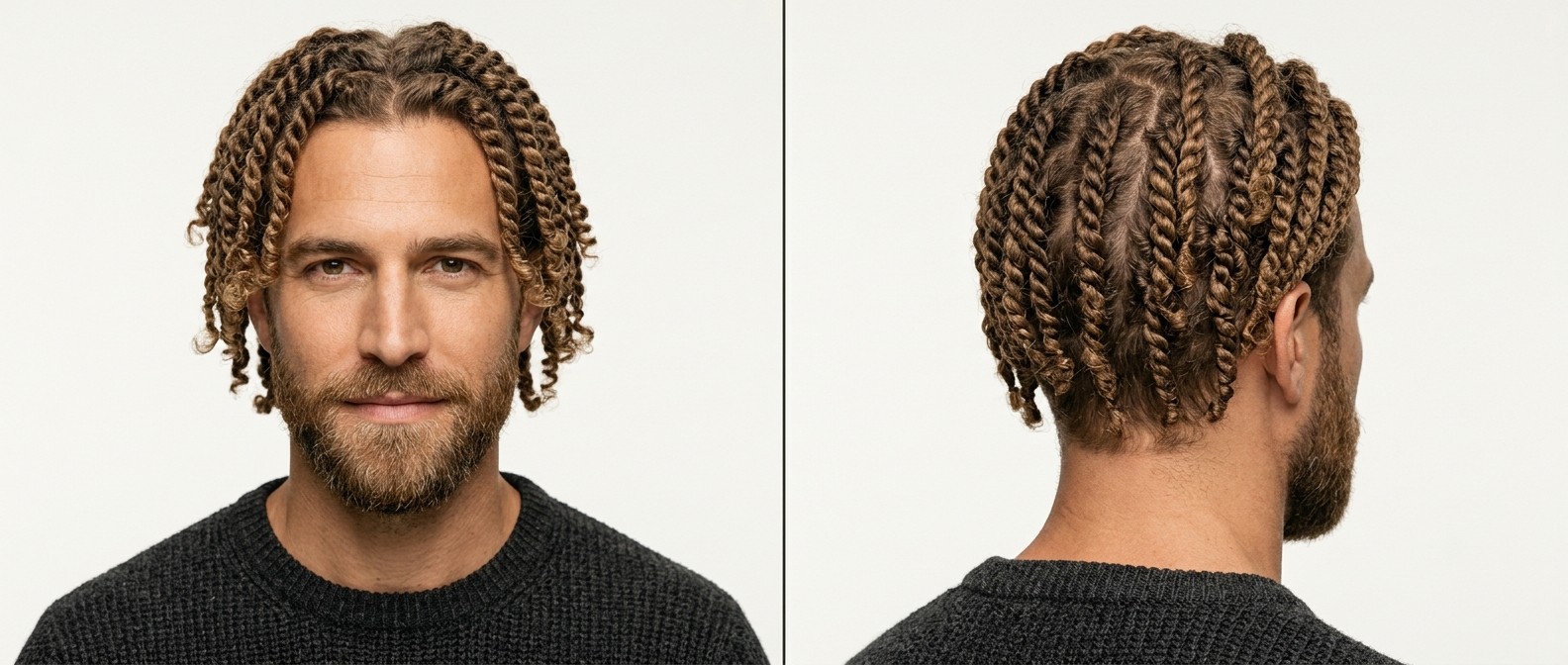
Medium Two-Strand Twists with Defined Partings and Beard
Twists
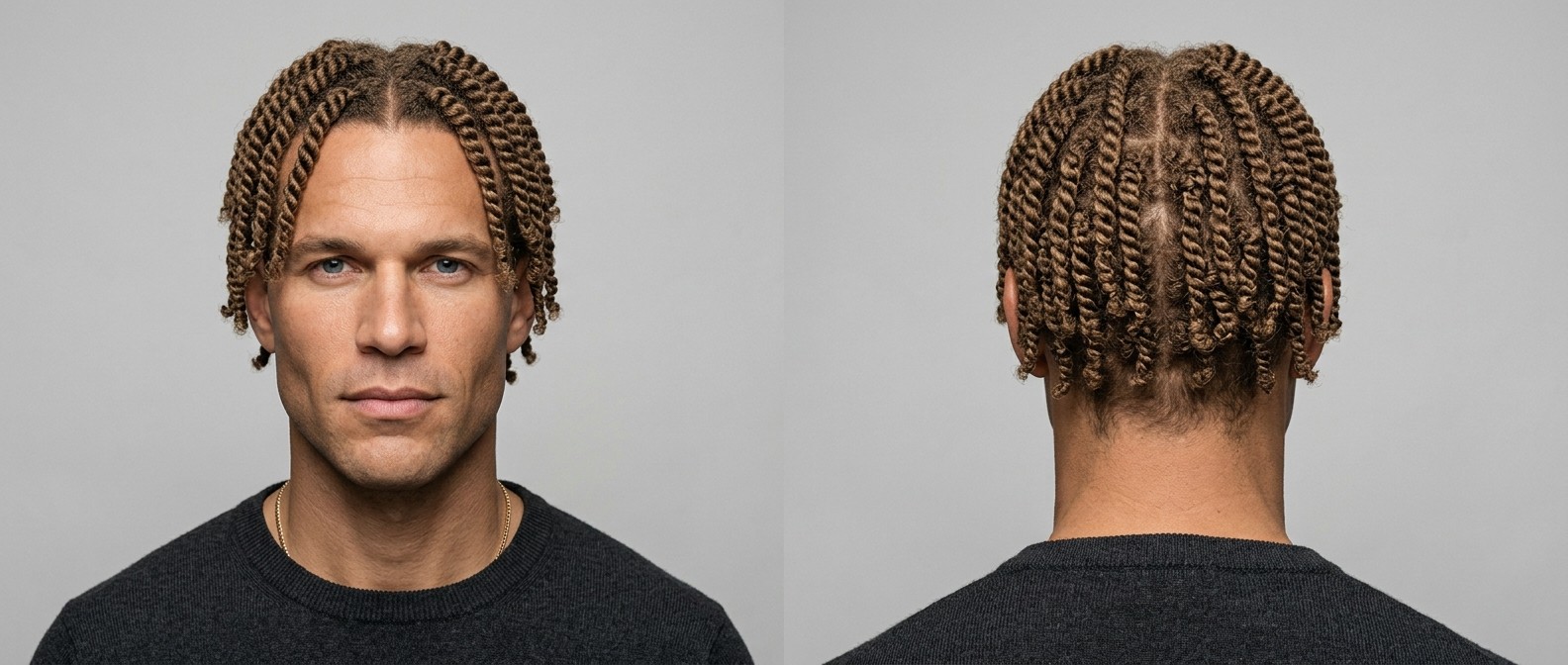
Classic Center-Parted Two-Strand Twists for Medium Hair

Twists
Structured Two-Strand Twists with Geometric Box Parts
Twists
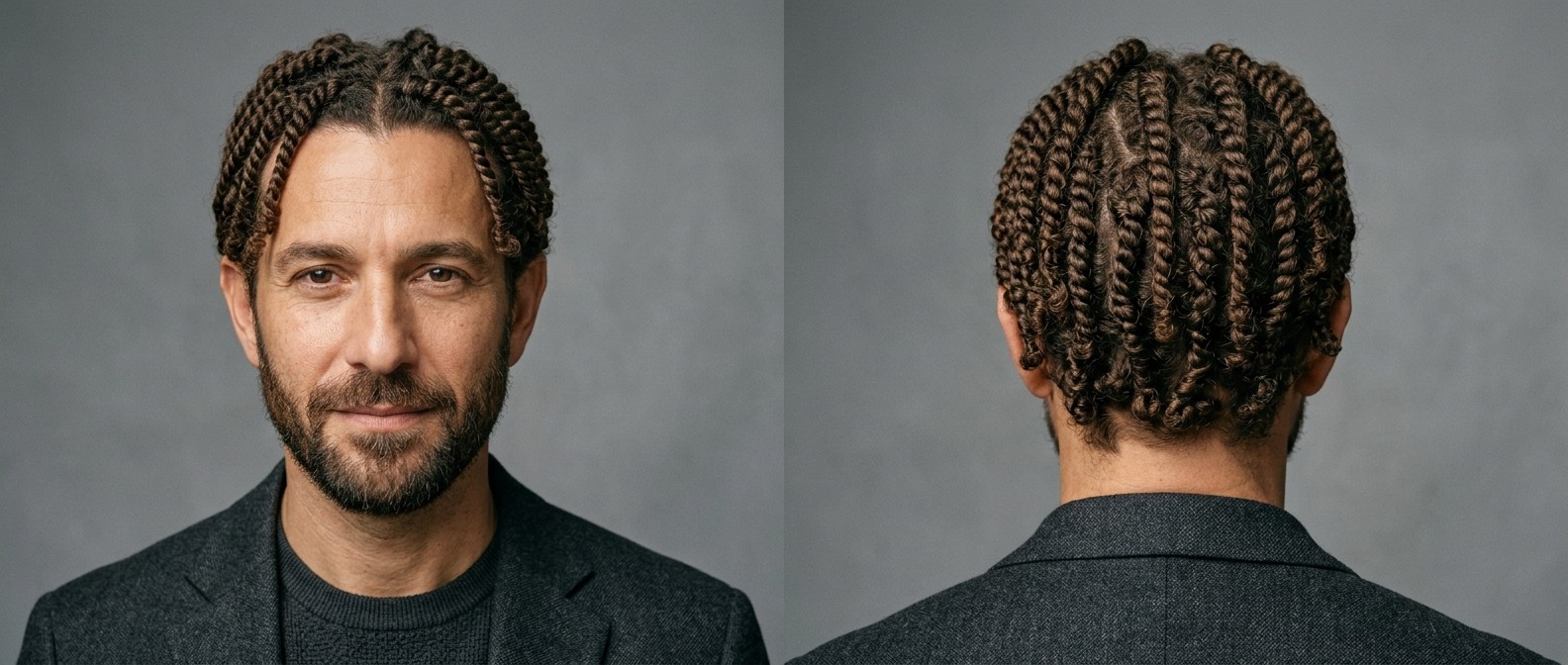
Mature Two-Strand Rope Twists with Clean Center Part
Twists
Symmetrical Middle-Parted Two-Strand Twists for Light Brown Hair
Twists