Add one front-facing photo. We send it to the AI together with this exact cut — and you get a photorealistic preview of yourself wearing it.
1
Your photo
Front view · neutral face · even light
2
This haircut
Already included
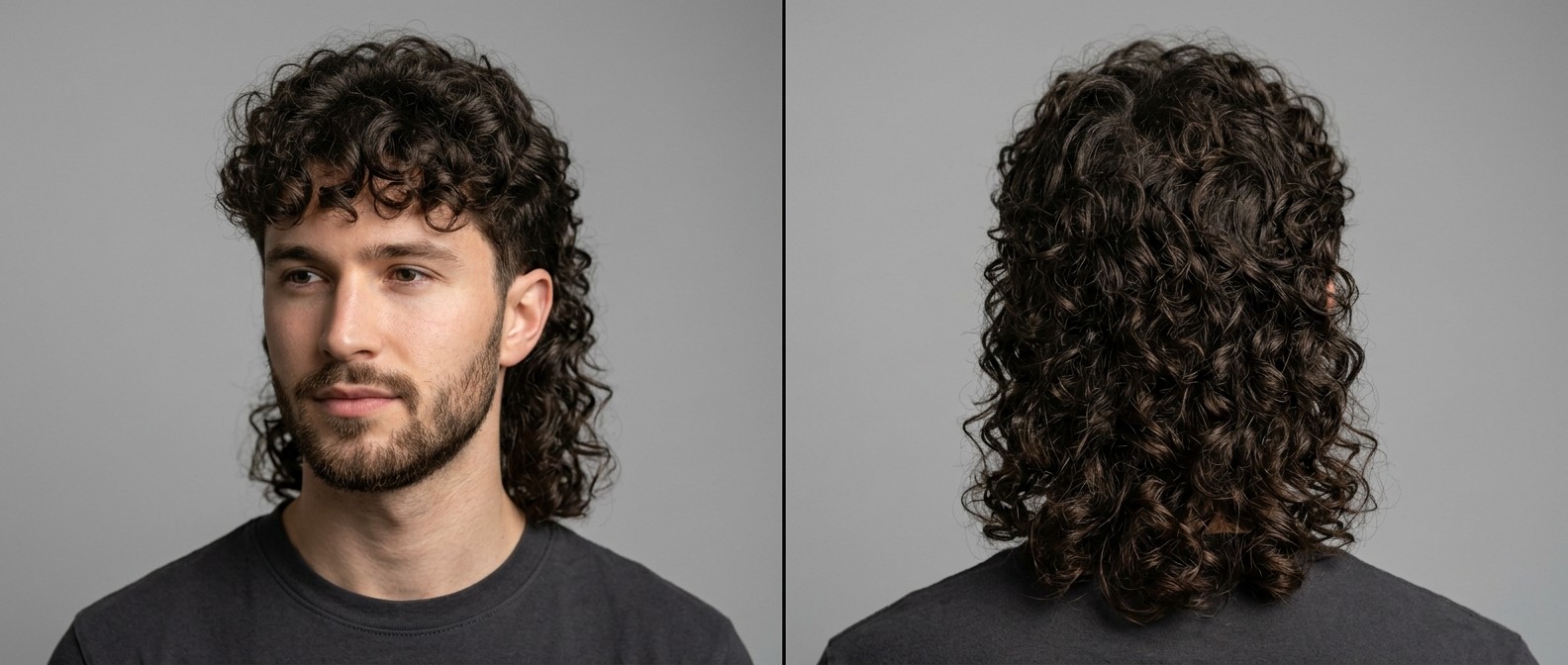
Front and back reference — taken from this page
3
Your preview
Your result appears here
![]()
![]()
Generated for you, not published anywhere
How do you rate this tool?
- Reading your photo
- Matching the cut
- Rendering your preview
How to take a photo that works
Do
- Face the camera straight on
- Even daylight, no harsh shadow
- Head and shoulders in frame
- Hair fully visible, nothing covering it
Avoid
- Hats, caps, hoods, sunglasses
- Steep angles or a tilted head
- Group photos or heavy filters
- Backlight that darkens the face
Thick Type 3 Curly Mullet with Textured Fringe and Tapered Sides
 Top
Medium (5-10 cm)
Top
Medium (5-10 cm)
 Sides
Short (6-20 mm)
Sides
Short (6-20 mm)
 Hair Type
Curly (Type 3)
Hair Type
Curly (Type 3)
 Face Shape
Oval
Face Shape
Oval
 Maintenance
Low
Maintenance
Low
 Thickness
Thick / Dense
Thickness
Thick / Dense
About This Style
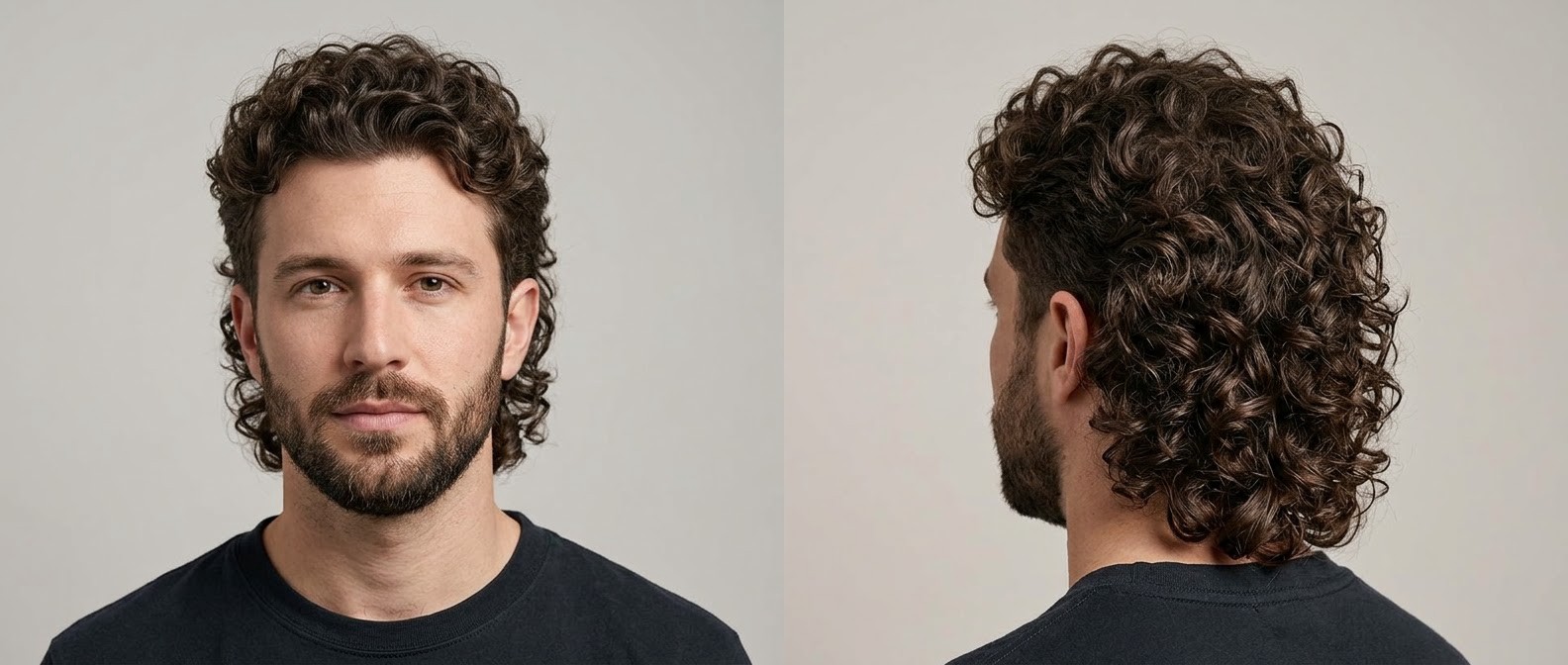
You are looking at a masterclass in texture and volume: the modern curly mullet. This variation takes full advantage of thick, Type 3 curls, transforming a historically controversial cut into a highly fashionable, effortlessly cool statement piece. The front features a medium-length, heavily textured fringe that falls naturally across a straight hairline, framing the upper face with bouncy, defined ringlets. As you move to the sides, the hair is kept relatively short (around 6 to 20 millimeters), creating a subtle taper that tucks neatly above and around the ears without completely exposing the scalp. This creates a crucial visual break before the dramatic cascade in the back, ensuring the sides do not overwhelm the face.
The true showstopper is the rear profile, where dense, dark brown curls flow beautifully down the nape of the neck and upper back. The length here is substantial, allowing the natural curl pattern to form a voluminous, wide, and rounded silhouette. Because the styling requires minimal product and embraces the hair's natural tendency to coil and clump, it perfectly suits a casual, everyday lifestyle. Paired with a short, well-groomed beard, this style offers a rugged yet refined aesthetic. It works exceptionally well for oval face shapes, balancing the vertical length of the back with the structured, shorter sides, creating a harmonious, modern look that commands attention.
The true showstopper is the rear profile, where dense, dark brown curls flow beautifully down the nape of the neck and upper back. The length here is substantial, allowing the natural curl pattern to form a voluminous, wide, and rounded silhouette. Because the styling requires minimal product and embraces the hair's natural tendency to coil and clump, it perfectly suits a casual, everyday lifestyle. Paired with a short, well-groomed beard, this style offers a rugged yet refined aesthetic. It works exceptionally well for oval face shapes, balancing the vertical length of the back with the structured, shorter sides, creating a harmonious, modern look that commands attention.
Key Features
- Dramatic length transition from short, neatly tapered sides to a voluminous, flowing back section that cascades down the nape.
- Rich, dark brown Type 3 curls that provide natural bounce, intense volume, and exceptional three-dimensional texture throughout.
- A relaxed, medium-length curly fringe that rests softly on the forehead, breaking up the straight hairline and framing the eyes.
- Seamless blending around the temple area, where the shorter sides gently integrate with the heavier top and front sections.
- An expansive, rounded silhouette in the back that maximizes the appearance of thick, dense hair without looking unkempt.
Getting the Cut
- Request a modern curly mullet with a clear, deliberate distinction between the shorter tapered sides and the highly elongated, voluminous back.
- Ask for the sides to be taken down to about 6-20mm using a scissors-over-comb technique or a longer clipper guard (like a #4 or #5), keeping just enough length to show the foundational curl pattern without adding width.
- Instruct the barber to leave the top at a medium length (5-10 cm), specifically point-cutting the ends to encourage the curls to clump naturally and reduce unnecessary bulk at the crown.
- Specify a textured, forward-falling fringe that grazes the mid-forehead when dry and fully shrunken, ensuring it blends smoothly into the top section.
- Ask to maintain maximum length in the back, layering it gently throughout the interior so the curls stack nicely and create a rounded, cascading shape rather than a flat, heavy, and unmanageable blanket.
- Request a soft, meticulous taper at the sideburns to blend seamlessly into your short, well-groomed beard, maintaining a cohesive and sharp facial hair transition.
- Remind your stylist to cut the hair while it is damp but to explicitly account for the significant shrinkage that occurs when thick Type 3 curls dry and spring up into their final position.
Daily Routine
- Start your morning styling routine in the shower by thoroughly wetting your hair and applying a rich, hydrating, sulfate-free conditioner to effortlessly detangle the thick curls.
- Gently towel-dry your hair using a dedicated microfiber towel or a soft, old cotton t-shirt, squeezing out the excess moisture without vigorously rubbing, which is the primary cause of unwanted frizz.
- While the hair is still quite damp, dispense a nickel-to-quarter-sized amount of a lightweight curl cream or a high-quality leave-in conditioner directly into your palms and rub them together to emulsify.
- Rake the product evenly through the top, fringe, and long back sections using your fingers, ensuring every individual curl clump is coated from the root down to the tip for maximum definition.
- Scrunch the hair upwards toward your scalp, particularly focusing on the front fringe and the heavy back cascade, to actively encourage and lock in the natural Type 3 coil formation.
- Allow the hair to air dry naturally for your 1 to 5 minutes of active styling time, letting the curls set into their bouncy, defined shape as you go about the rest of your morning routine.
- Once the hair is completely dry, lightly massage the roots at the crown and the back with your fingertips to break any slight product cast, fluff the roots, and maximize the overall volume.
Products & Tools
- Lightweight curl defining cream offering a light hold and a natural, matte finish to enhance the ringlets without weighing them down.
- Hydrating leave-in conditioner spray to quickly refresh the curls on non-wash days and maintain essential moisture levels.
- Wide-tooth detangling comb designed for use exclusively in the shower while the hair is completely coated with a slippery conditioner.
- Microfiber towel to gently blot moisture from the hair without roughing up the delicate cuticle layer of the curls.
- Blow dryer equipped with a large diffuser attachment, strictly for optional use if you need to speed up the drying process on colder mornings.
Maintenance
- Schedule your barber visits every 5 to 8 weeks to maintain the sharp, short tapered sides and trim any split ends in the longer back section.
- Limit washing with a harsh shampoo to just 1 or 2 times per week to prevent stripping the natural sebum oils that your thick, dense curls desperately require.
- Sleep on a high-quality silk or satin pillowcase to drastically reduce overnight friction, preventing morning frizz and keeping the curls intact.
- Avoid running fine-tooth combs or dry bristle brushes through your hair under any circumstances, as this will instantly break the curl clumps and create an unmanageable, frizzy halo.
Best For
Face Shapes: Oval and diamond faces, as the balanced curly fringe and elongated back complement symmetrical proportions beautifully without widening the cheeks.
Hair Types: Naturally curly hair, specifically Type 3 coils, with thick and dense strands that can effortlessly support the dramatic volume of the mullet silhouette.
Demographics: Younger men in the 18 to 25 age bracket looking for a trendy, highly expressive style that stands out from traditional short cuts.
Lifestyles: Casual, creative, or everyday environments where low-maintenance, perfectly imperfect, and highly textured hair is celebrated.
Pro Tips
- Always account for curl shrinkage during the haircutting process; your barber must cut the fringe and the back slightly longer than your desired final dry length.
- If the voluminous back section starts to look too wide, boxy, or triangular over time, ask your stylist to add deep internal layers to remove weight without sacrificing the visible length.
- During dry winter months or in arid climates, temporarily swap your lightweight curl cream for a slightly richer styling butter to lock in moisture and combat static frizz.
Related Hairstyles
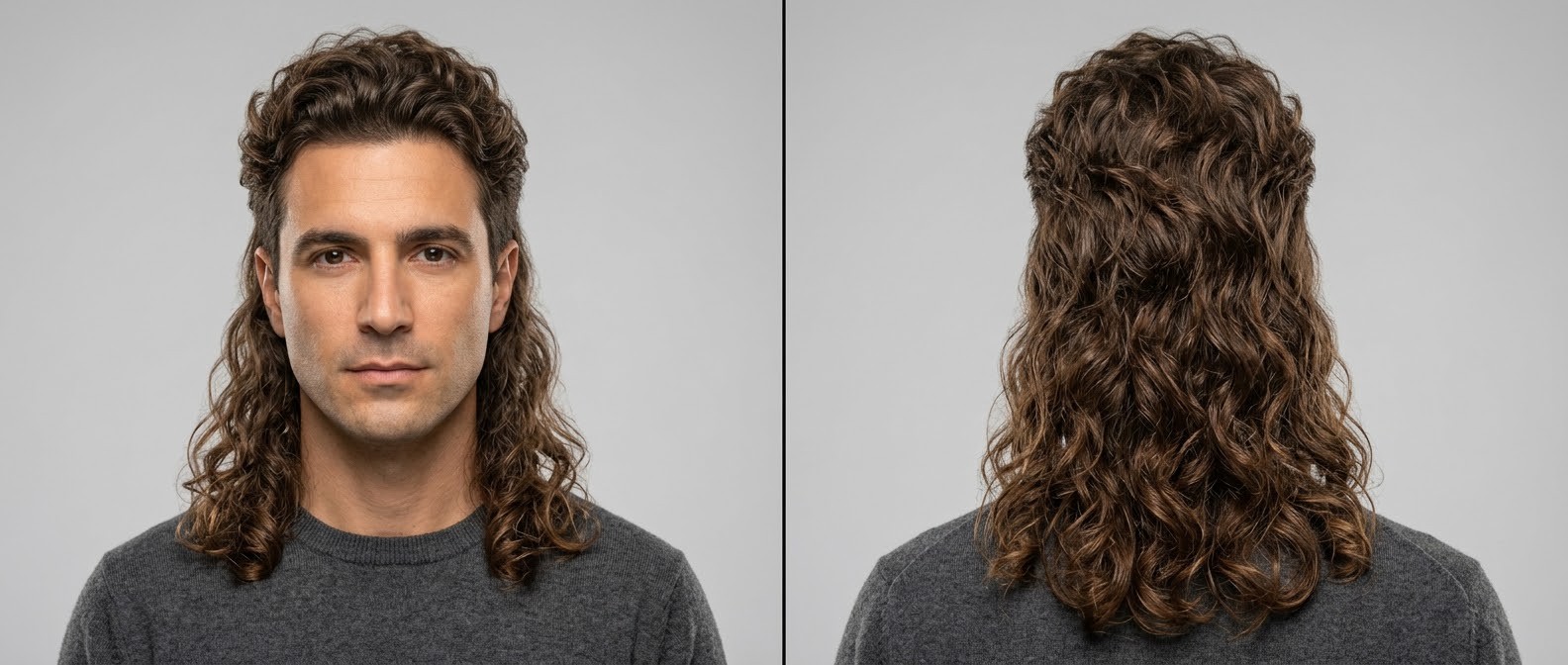
Mullet
Modern Wavy Mullet Haircut: Swept-Back Short Top with Long Cascading Curls
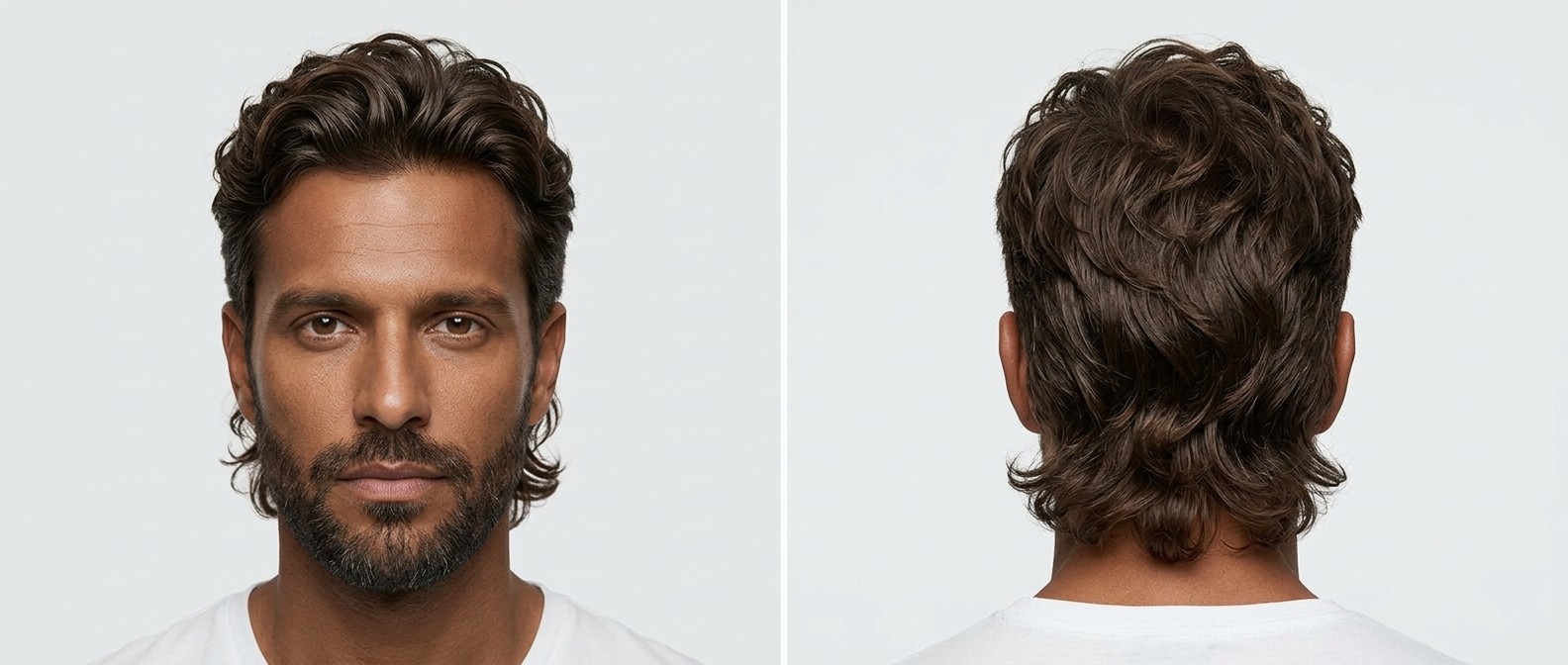
Mullet
Modern Wavy Mullet with Swept-Back Top and Layered Nape
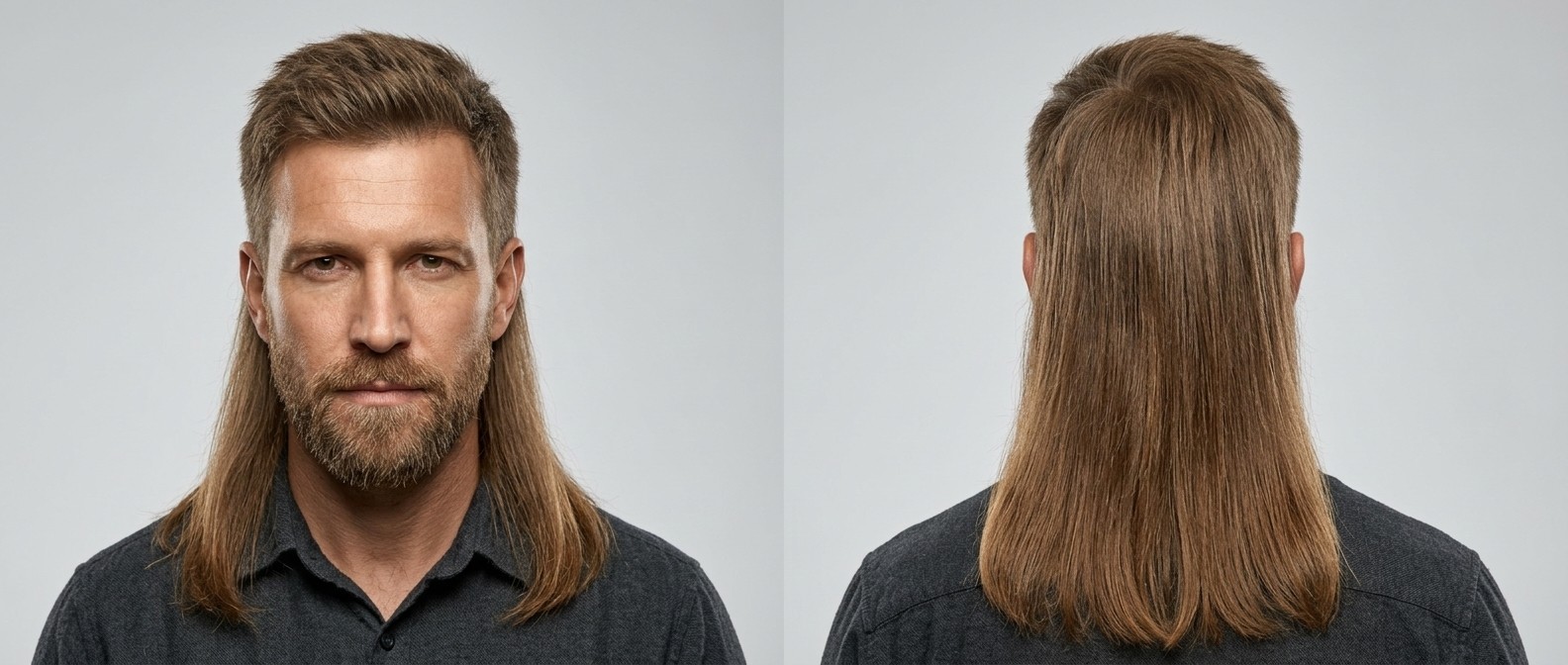
Mullet
Extreme Straight Mullet with Short Textured Crown and Long Back
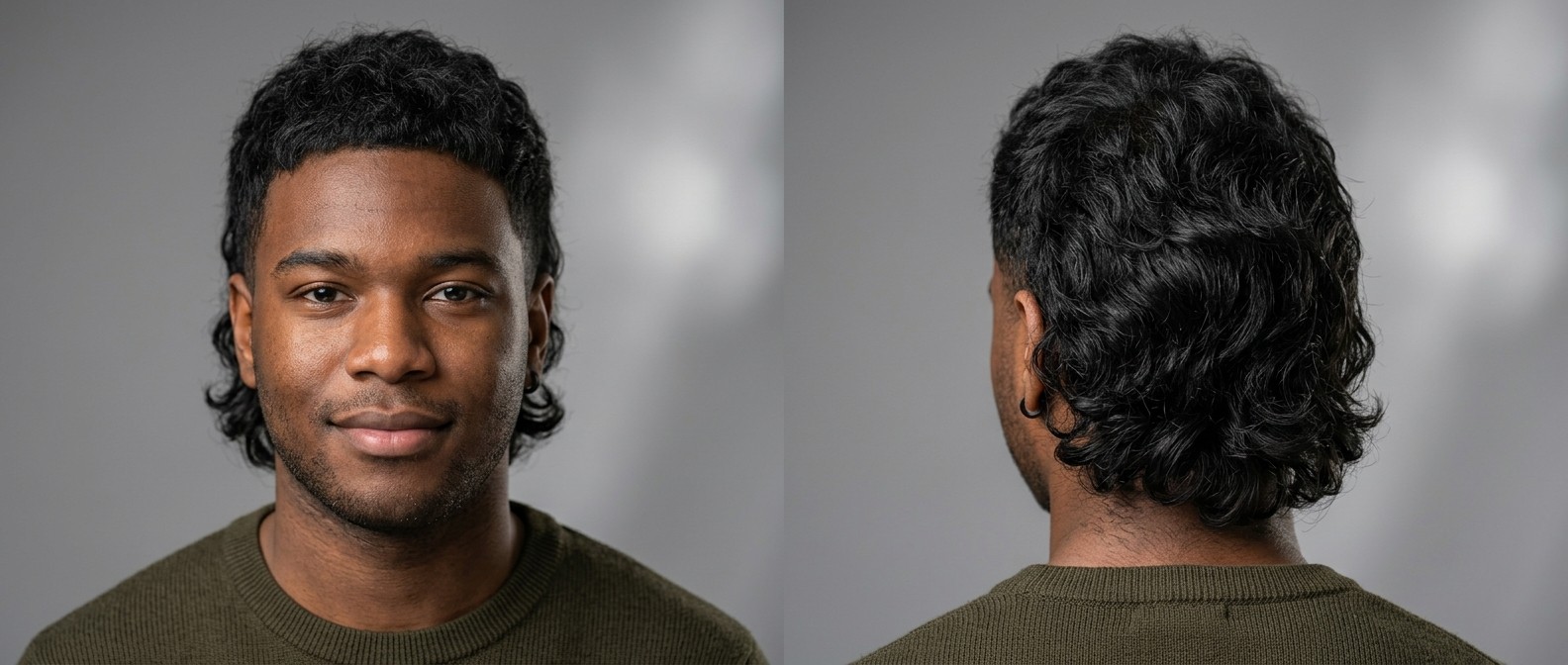
Mullet
Modern Wavy Mullet with Textured Fringe for Thick Black Hair
Mullet
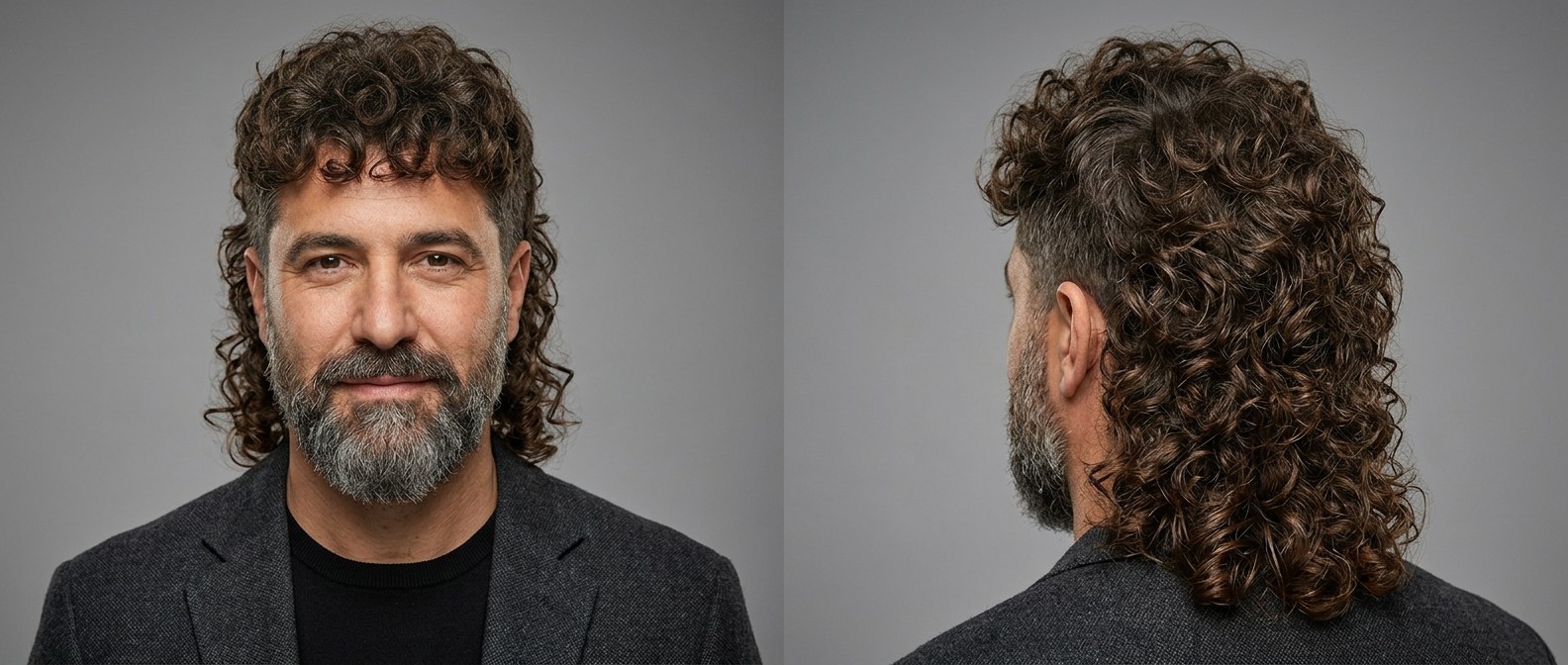
Modern Curly Mullet with Textured Tapered Sides and Flowing Back
Mullet