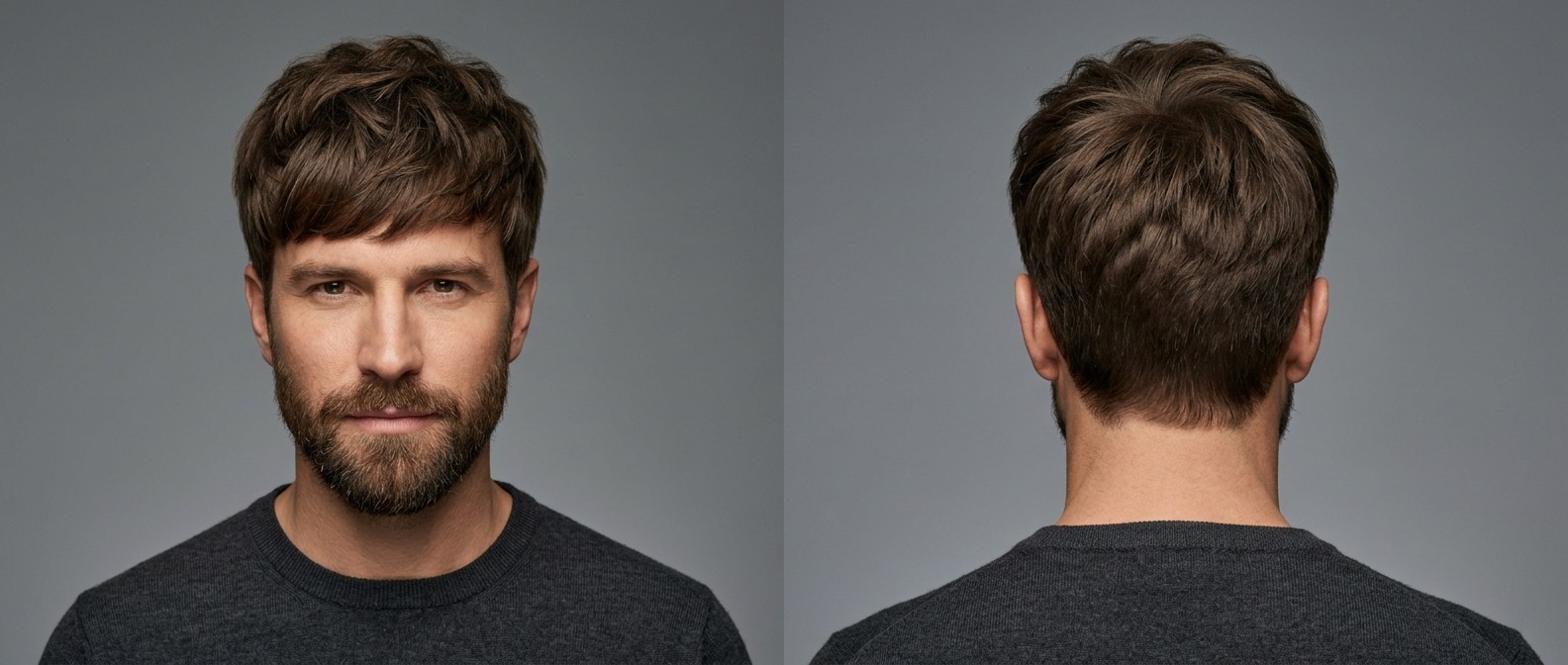
Textured Forward Fringe with Scissor-Cut Medium Sides
 Top
Medium (5-10 cm)
Top
Medium (5-10 cm)
 Sides
Medium (2-5 cm)
Sides
Medium (2-5 cm)
 Hair Type
Straight (Type 1)
Hair Type
Straight (Type 1)
 Face Shape
Oval
Face Shape
Oval
 Maintenance
Low
Maintenance
Low
 Thickness
Thick / Dense
Thickness
Thick / Dense
About This Style
This textured forward fringe is a masterclass in utilizing thick, straight hair to its full potential without requiring hours of daily styling or relying on heavy products. By keeping the top at a medium length of five to ten centimeters and heavily texturizing the ends, the style avoids the heavy, helmet-like appearance that often plagues dense hair types. The fringe sweeps naturally and softly across the forehead, breaking up strong vertical lines and complementing an oval face shape beautifully by adding width and visual interest to the upper third of the face. The sides and back are kept at a balanced two to five centimeters, meticulously scissor-cut to maintain a soft, natural silhouette that seamlessly connects with the facial hair, rather than relying on harsh clippers or aggressive skin fades.
This specific variation is exceptionally well-suited for the modern man who wants a stylish, casual look that doesn't feel overly manicured or stiff. It effortlessly bridges the gap between relaxed weekend wear and approachable office attire. If you have a busy, active lifestyle and prefer a low-maintenance grooming routine, this cut allows you to wake up, apply a minimal amount of matte product, and head out the door in under five minutes. The natural flow and piecey, chopped texture give it a lived-in aesthetic that ages incredibly gracefully between barbershop visits, meaning you won't look unkempt as it grows out over the five to eight-week cycle.
This specific variation is exceptionally well-suited for the modern man who wants a stylish, casual look that doesn't feel overly manicured or stiff. It effortlessly bridges the gap between relaxed weekend wear and approachable office attire. If you have a busy, active lifestyle and prefer a low-maintenance grooming routine, this cut allows you to wake up, apply a minimal amount of matte product, and head out the door in under five minutes. The natural flow and piecey, chopped texture give it a lived-in aesthetic that ages incredibly gracefully between barbershop visits, meaning you won't look unkempt as it grows out over the five to eight-week cycle.
Key Features
- Heavy point-cutting and texturizing techniques used throughout the top section to remove excess bulk and create a piecey, highly dynamic texture.
- A distinct forward-sweeping hair flow that directs the bulk of the natural volume toward the front hairline, creating the signature fringe.
- Soft, scissor-cut sides and back ranging from two to five centimeters, deliberately avoiding the use of harsh clippers or high skin fades.
- A seamlessly blended, fluid transition from the longer top down through the parietal ridge, ensuring no severe disconnections are visible.
- A natural, slightly tapered neckline that maintains a small amount of length for a softer, more grown-in and relaxed appearance at the nape.
- An expertly integrated sideburn area that connects fluidly into a structured, medium-length beard, framing the face with a cohesive border.
Getting the Cut
- Request a scissor-only cut on the sides and back, leaving approximately two to five centimeters of length to maintain a soft, highly natural perimeter.
- Ask for the top to be left at five to ten centimeters, ensuring there is enough length remaining to push forward into a full, forehead-grazing fringe.
- Instruct your barber to use deep point-cutting or a specialized razor technique across the top to remove heavy excess weight and create a choppy, piecey texture in your thick hair.
- Specify that the transition from the top to the sides must be seamlessly blended at the parietal ridge, strictly avoiding any stark disconnections or modern undercuts.
- Ask for the fringe itself to be cut with an uneven, heavily textured edge rather than a blunt, straight line across the forehead to keep the look casual.
- Request a natural, softly tapered neckline at the nape of the neck using a scissor-over-comb method rather than a high, harsh clipper fade.
- Have them meticulously blend the sideburns directly into your beard, maintaining a consistent hair density for a cohesive and unified facial framing effect.
Daily Routine
- Start your morning routine with towel-dried hair that is slightly damp but absolutely not dripping wet, gently patting to remove excess moisture.
- Apply a dime-sized amount of a lightweight pre-styling sea salt spray or thickening tonic to add essential grit and foundational texture to your thick, straight hair.
- Use a high-quality blow dryer set on medium heat and medium speed, using your fingers to continuously push, rake, and direct the hair forward toward your forehead.
- As the hair reaches approximately ninety percent dry, immediately switch to the cold shot setting on your dryer to lock the forward-sweeping shape into place and seal the cuticle.
- Scoop a small, pea-sized amount of matte clay or low-shine styling paste, rubbing it vigorously between your palms until it completely warms up and becomes invisible.
- Work the styling product lightly through the top of your hair, focusing entirely on the mid-shafts and ends rather than the roots to avoid weighing the dense style down.
- Finish the look by pinching and twisting small, individual sections of the fringe and crown to enhance the piecey, choppy texture and create a perfectly imperfect, lived-in finish.
Products & Tools
- Premium matte styling clay or texture paste offering a low to medium flexible hold and a completely natural, no-shine finish that mimics bare hair.
- High-quality sea salt spray for pre-styling to provide essential grip, volume, and separation without making your thick hair feel crunchy or stiff.
- A standard ionic blow dryer equipped with a concentrator nozzle attachment to direct airflow accurately and efficiently during the forward-drying process.
- Your own fingers—the absolute best tool for this specific cut, as traditional brushes or fine-tooth combs will make the style look too uniform and eliminate the desired piecey texture.
- A wide-tooth detangling shower comb strictly for use right out of the shower to safely remove knots and tangles before the actual styling process begins.
Maintenance
- Schedule a routine maintenance trim with your barber every five to eight weeks to keep the heavy fringe out of your eyes and properly reshape the scissor-cut sides.
- Limit your shampooing routine to just two or three times a week to prevent your naturally thick hair from drying out, stripping natural oils, and becoming overly frizzy.
- Consistently use a high-quality hydrating conditioner after every single wash to keep the dense hair shafts smooth, healthy, and incredibly easy to manage.
- Strictly avoid heavy, oil-based pomades or high-hold wet gels, as these will clump your straight hair together and completely ruin the airy, textured aesthetic of the fringe.
- Sleep on a premium silk or satin pillowcase to drastically reduce overnight friction, which helps minimize stubborn morning bedhead and makes your five-minute styling routine even easier.
Best For
Exceptionally ideal for oval, diamond, and heart face shapes, as the heavy forward fringe minimizes forehead length and perfectly balances overall facial proportions.
Perfectly suited for thick, dense, and straight hair types (Type 1) that can naturally support the choppy, heavily layered volume required on the top of the head.
Highly recommended for men in their mid-thirties and forties seeking a contemporary, slightly youthful look that still feels incredibly mature and age-appropriate.
Great for guys with casual, creative, or relaxed professional lifestyles who desperately need a quick, low-maintenance daily routine that still looks entirely put-together.
Pro Tips
- Never ask your barber to use thinning shears directly at the root; always request point-cutting at the ends to remove bulk without causing the thick hair to stand straight up in awkward tufts.
- During particularly humid summer months, swap your heavy daily conditioner for a lightweight, water-based leave-in spray to prevent the fringe from becoming weighed down by excess environmental moisture.
- If your thick hair feels too flat or lifeless on day two, easily reactivate the texture by spritzing a tiny amount of water and aggressively scrunching the ends with dry hands.
Related Hairstyles
Fringe
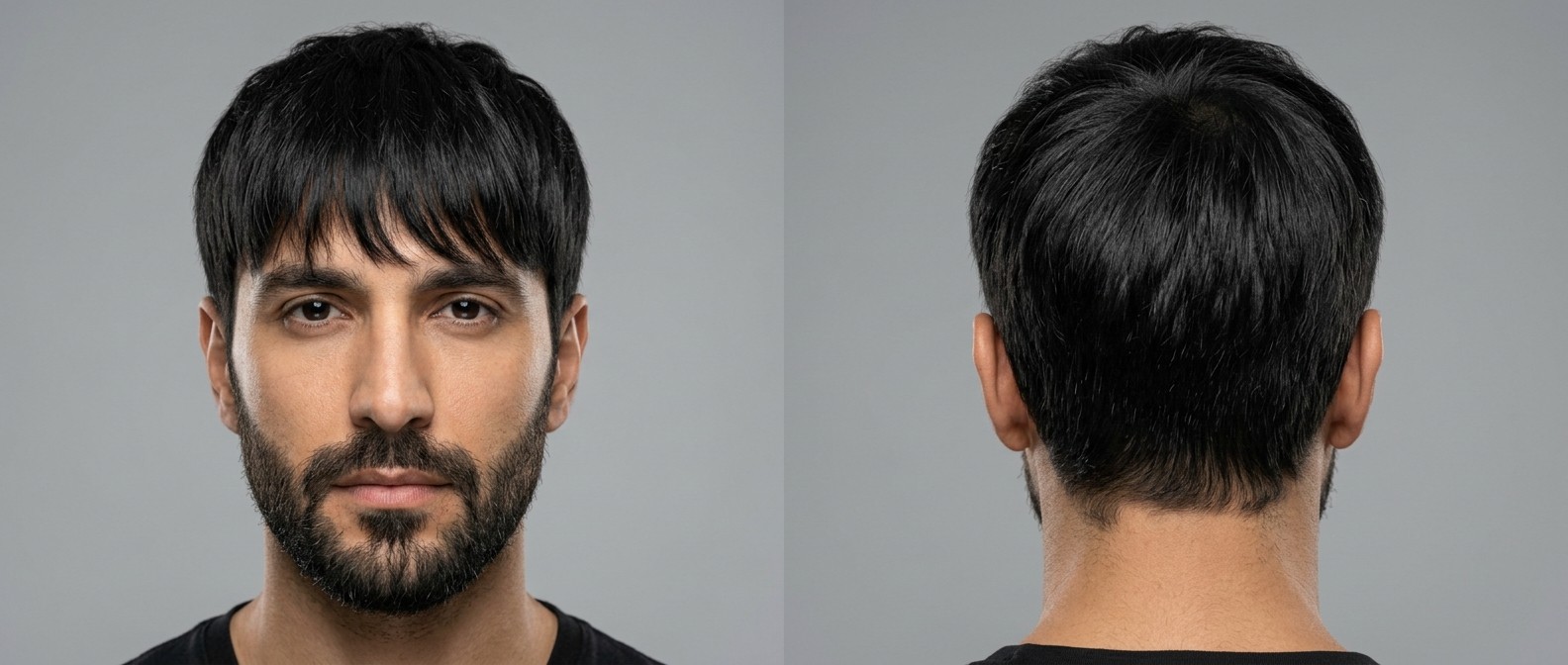
Modern Textured Fringe with Medium Tapered Sides and Back
Fringe
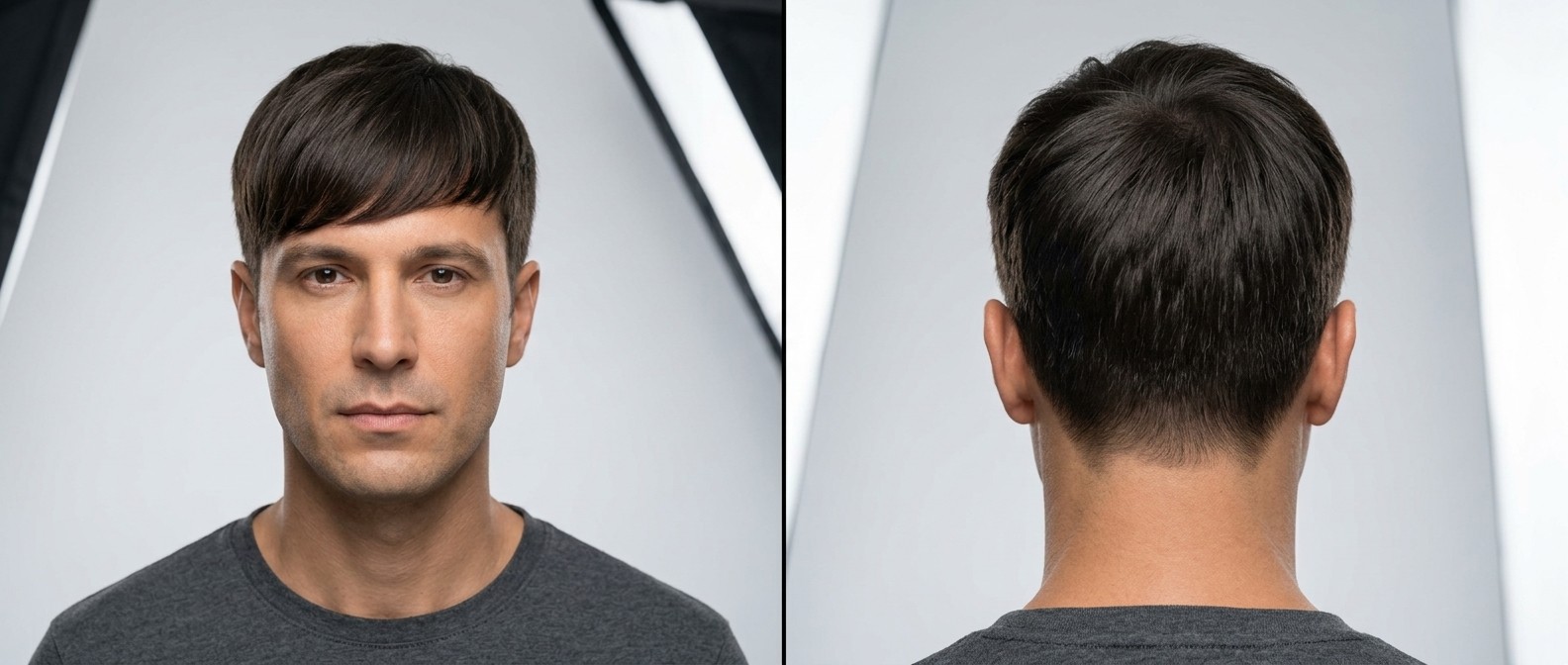
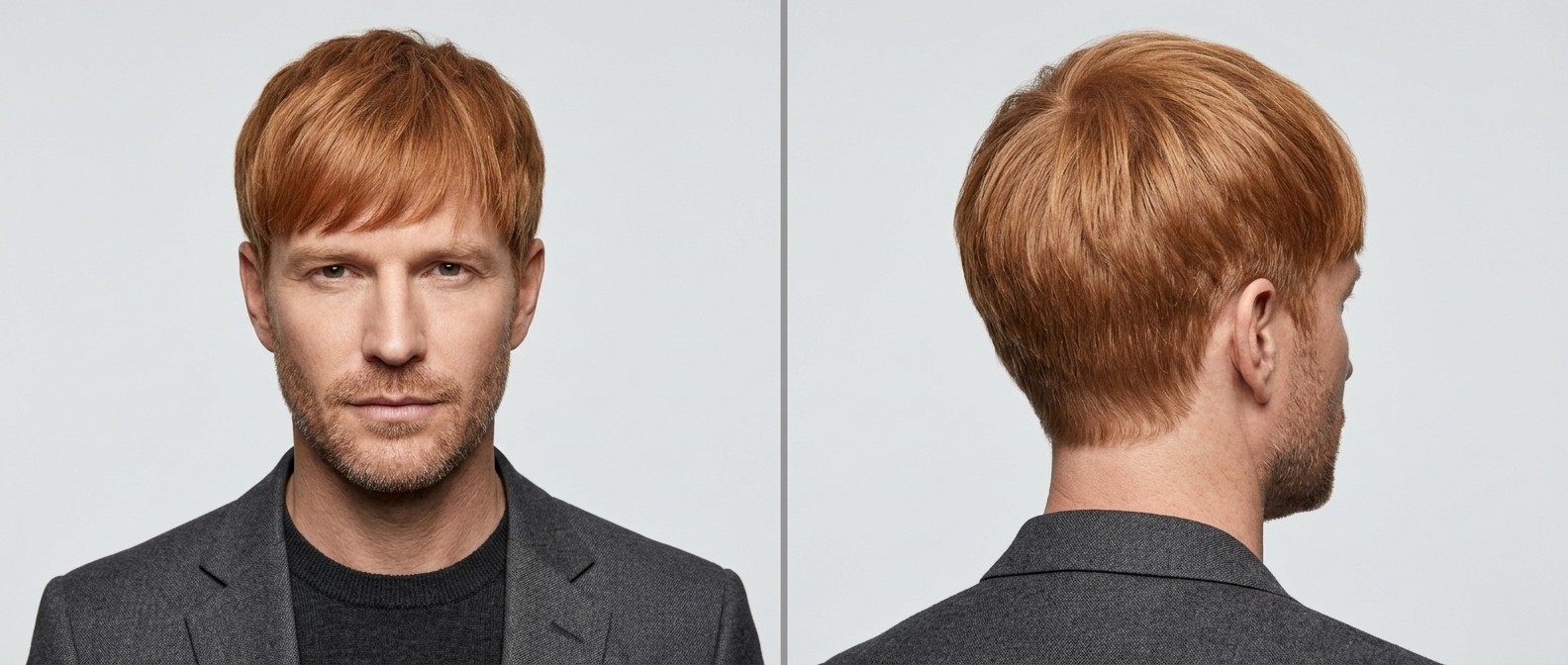
Classic Smooth Forward Fringe with Tapered Short Sides
Fringe
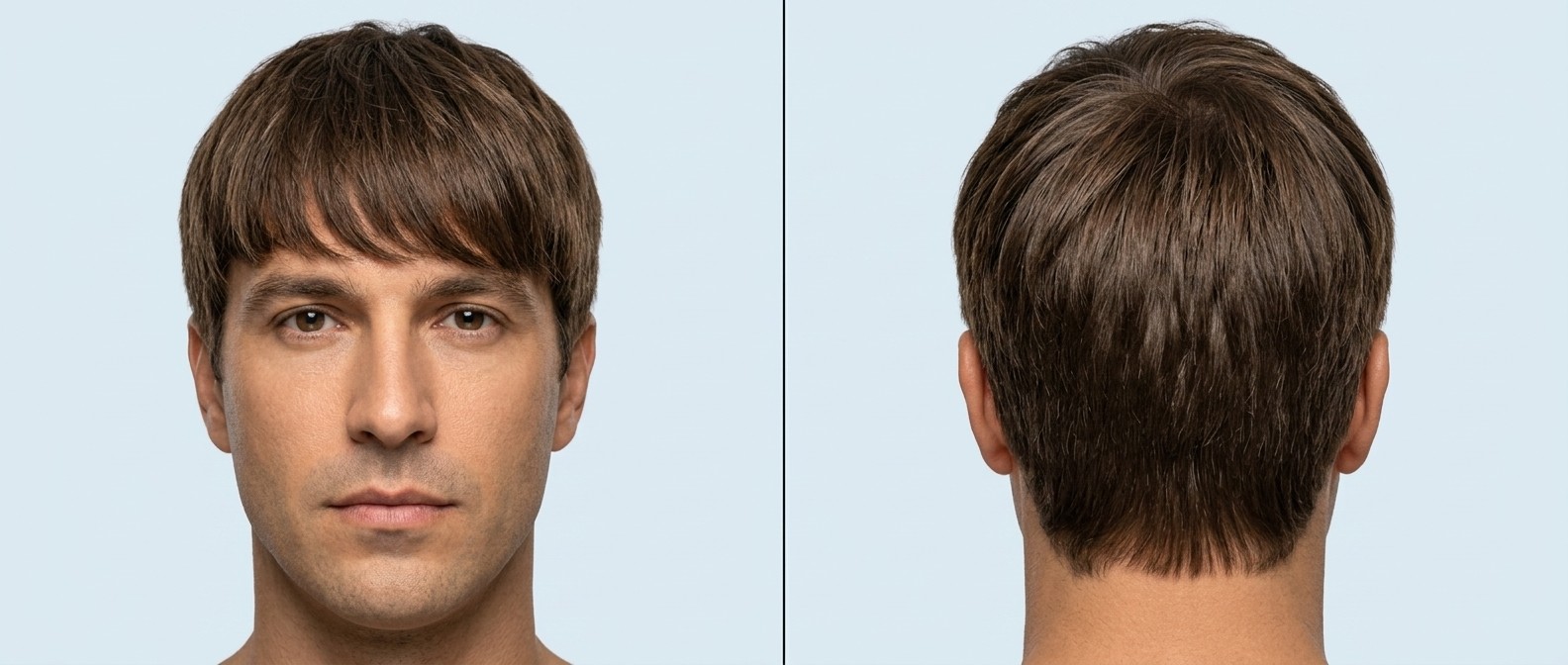
Textured Blunt Fringe with Scissor-Cut Sides for Thick Hair
Fringe
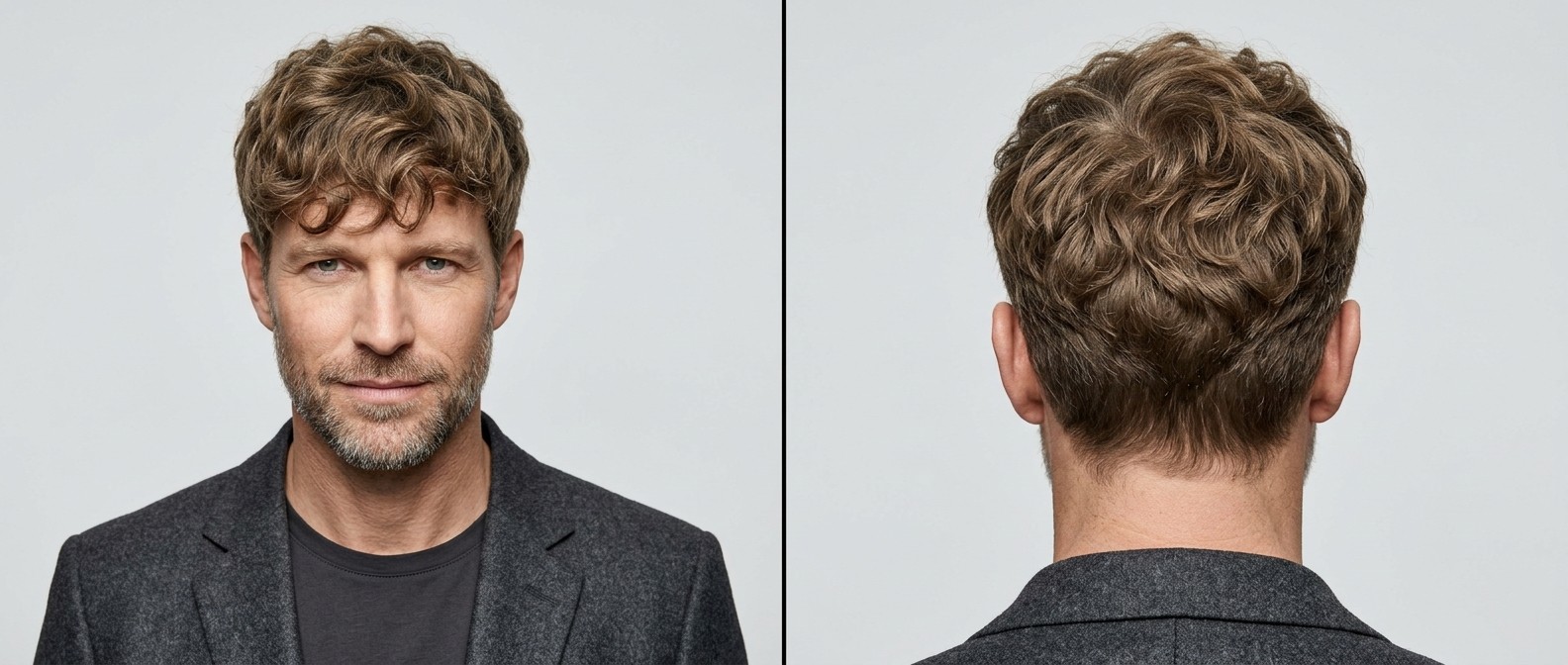
Textured Wavy Fringe with Soft Tapered Sides for Mature Men
Fringe
Textured Forward Fringe with Tapered Sides for Straight Hair
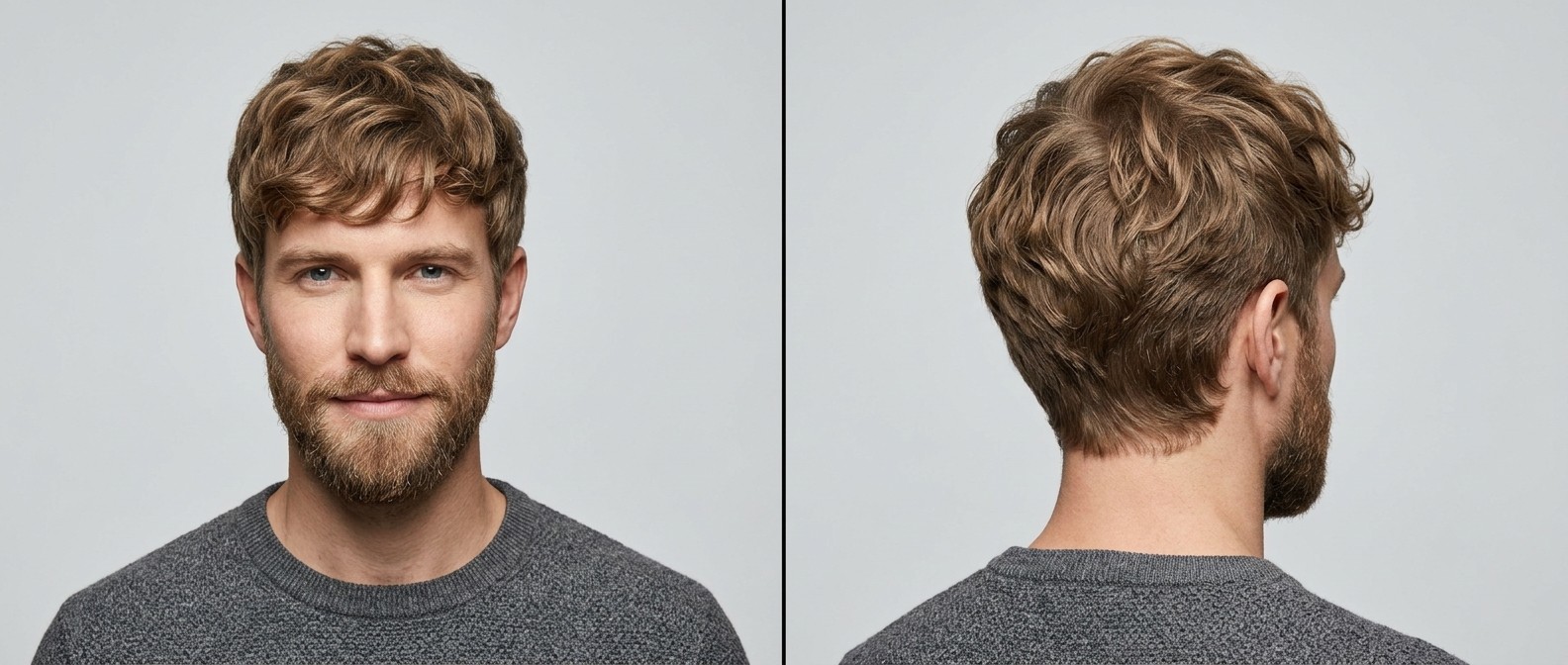
Fringe