Add one front-facing photo. We send it to the AI together with this exact cut — and you get a photorealistic preview of yourself wearing it.
1
Your photo
Front view · neutral face · even light
2
This haircut
Already included
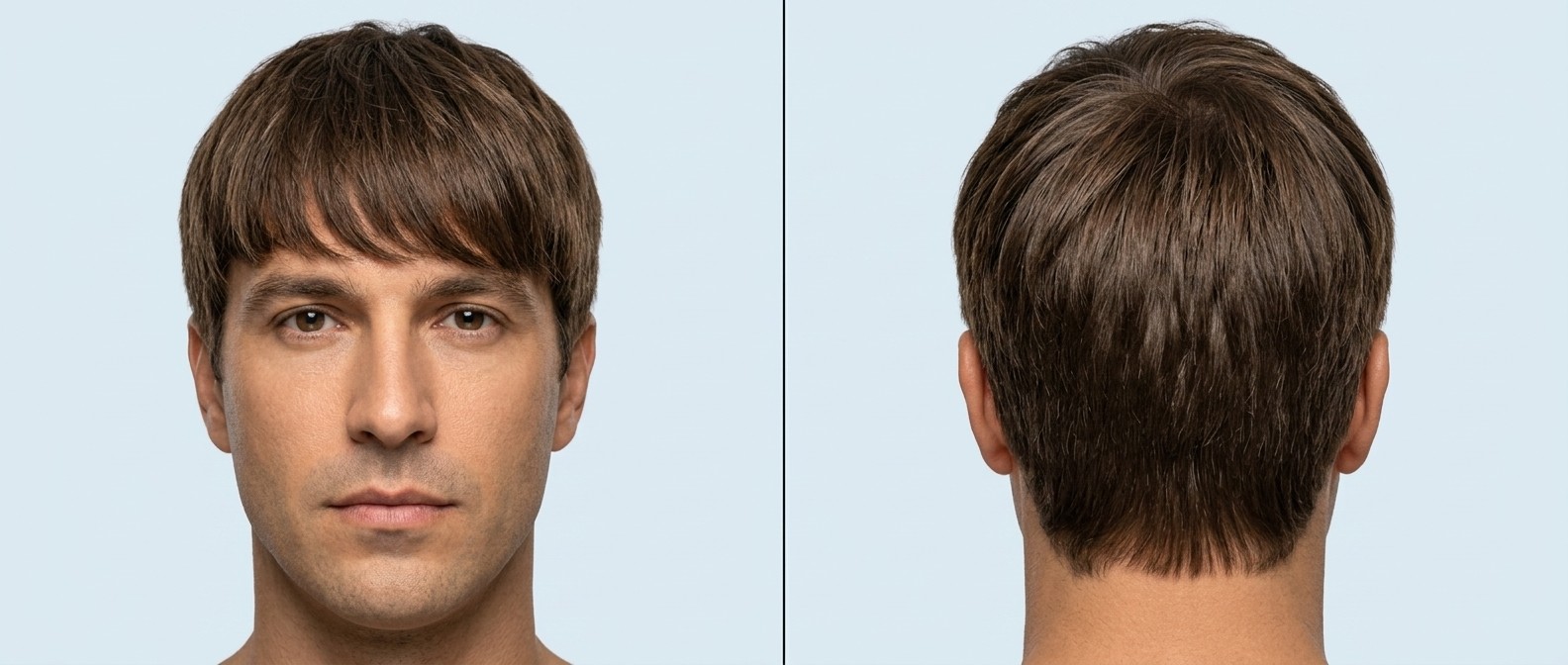
Front and back reference — taken from this page
3
Your preview
Your result appears here
![]()
![]()
Generated for you, not published anywhere
How do you rate this tool?
- Reading your photo
- Matching the cut
- Rendering your preview
How to take a photo that works
Do
- Face the camera straight on
- Even daylight, no harsh shadow
- Head and shoulders in frame
- Hair fully visible, nothing covering it
Avoid
- Hats, caps, hoods, sunglasses
- Steep angles or a tilted head
- Group photos or heavy filters
- Backlight that darkens the face
Textured Blunt Fringe with Scissor-Cut Sides for Thick Hair
 Top
Medium (5-10 cm)
Top
Medium (5-10 cm)
 Sides
Short (6-20 mm)
Sides
Short (6-20 mm)
 Hair Type
Straight (Type 1)
Hair Type
Straight (Type 1)
 Face Shape
Oval
Face Shape
Oval
 Maintenance
Medium
Maintenance
Medium
 Thickness
Thick / Dense
Thickness
Thick / Dense
About This Style
This modern take on the classic men's fringe is an absolute masterclass in utilizing thick, straight hair to your structural advantage. By sweeping the medium-length top canopy forward into a heavily textured but weighty fringe, this style effortlessly conceals a receding hairline while simultaneously framing an oval face shape to perfection. The sides and posterior sections are kept meticulously neat with a longer, tailored scissor cut, providing a seamless, natural transition rather than relying on a stark, high-contrast fade.
What truly sets this sophisticated look apart is its natural, effortless drape and movement. It leans heavily into the hair’s dense, straight texture, requiring only the most minimal application of styling products to maintain its cohesive shape throughout the day. The crown area flows perfectly naturally from the natural whorl downward, creating a smooth, rounded silhouette at the back that beautifully balances the heavier front section.
Ideal for the modern professional or anyone seeking a highly effective, low-fuss everyday look, this cut perfectly bridges the gap between casual weekend ease and structured workplace neatness. It offers an incredibly forgiving, youthful edge that suits both corporate office environments and relaxed weekend outings perfectly, making it a highly versatile staple for men in their late thirties and forties.
What truly sets this sophisticated look apart is its natural, effortless drape and movement. It leans heavily into the hair’s dense, straight texture, requiring only the most minimal application of styling products to maintain its cohesive shape throughout the day. The crown area flows perfectly naturally from the natural whorl downward, creating a smooth, rounded silhouette at the back that beautifully balances the heavier front section.
Ideal for the modern professional or anyone seeking a highly effective, low-fuss everyday look, this cut perfectly bridges the gap between casual weekend ease and structured workplace neatness. It offers an incredibly forgiving, youthful edge that suits both corporate office environments and relaxed weekend outings perfectly, making it a highly versatile staple for men in their late thirties and forties.
Key Features
- Heavy, forward-swept top section that creates a solid, face-framing blunt fringe to anchor the overall aesthetic.
- Natural, scissor-cut lateral sides (maintained around 15mm) that blend smoothly downward without exposing the scalp.
- Seamless, expertly tailored length transition from the medium-length top canopy (5-10cm) into the shorter side sections.
- Crown area that meticulously follows the hair's natural growth pattern, laying flat and sweeping downward flawlessly.
- Tapered but full neckline that maintains a soft, natural edge rather than a sharp, artificially blocked perimeter line.
- Thick, completely straight texture that provides inherent structural volume without ever looking artificially or overly styled.
- Subtly point-cut ends at the very front of the bangs to prevent the fringe from looking too heavy or rigidly helmet-like.
Getting the Cut
- Request a meticulous scissor-over-comb technique for the sides and back, leaving approximately 15mm of length to ensure the scalp remains unexposed.
- Ask your barber to keep the top section at a medium length (around 5 to 10 centimeters), specifically leaving maximum length at the front to build a substantial fringe.
- Instruct the stylist to point-cut the front fringe deeply to break up the bluntness, allowing the hair to lay naturally and softly across the upper forehead.
- Specify that you require a seamless, low-contrast blend between the heavy top canopy and the shorter sides, strictly avoiding any harsh disconnections, steps, or undercut elements.
- Ask them to carefully observe and follow your natural crown whorl at the back, leaving just enough structural weight so the hair lays completely flat and doesn't spike up.
- Request a natural, softly tapered finish at the nape of the neck rather than a harsh, squared-off block line that grows out awkwardly.
- Explicitly mention that your daily styling routine involves brushing the hair forward to cover a receding hairline, ensuring they do not over-thin the crucial front sections.
Daily Routine
- Start your efficient morning styling routine by thoroughly towel-drying your freshly washed hair until it is slightly damp but absolutely not dripping wet.
- Apply a conservative, dime-sized amount of lightweight styling cream or a very light matte paste evenly through the damp top section to establish a foundation of control.
- Utilize a hairdryer set on a medium heat and medium airflow speed, continuously aiming the directional nozzle directly forward from the back crown toward your forehead.
- While blow-drying, actively use your fingers or a professional vented brush to pull the hair forward and slightly downward, encouraging the straight texture to lay perfectly flat.
- Once the hair is one hundred percent dry, use your dry fingertips to gently separate the fringe at the front forehead, breaking up any solid clumps for a much more natural, lived-in finish.
- Smooth down the sides and back sections with the flat palms of your hands to ensure the overall silhouette remains tight, cohesive, and exceptionally well-groomed.
- Strictly avoid using heavy, high-shine gels or dense pomades, as these specific products will weigh down the thick hair shafts and immediately ruin the effortless, casual drape of this specific style.
Products & Tools
- Lightweight matte styling cream or texturizing paste offering a flexible, low hold and a completely natural, no-shine finish.
- Premium sea salt spray (used as an optional pre-styler) to add a necessary touch of foundational grit if your heavy straight hair feels too flat or slippery.
- Standard professional hairdryer equipped with a concentrator nozzle attachment to direct the hot airflow precisely forward during styling.
- High-quality vented styling brush to help smoothly guide the dense hair into its proper place while allowing hot air to circulate efficiently.
- Wide-tooth carbon comb for the initial, damage-free detangling of the medium-length top section immediately after stepping out of the shower.
Maintenance
- Schedule consistent barber visits every 5 to 8 weeks to professionally trim the fringe before it obscures your vision and to keep the scissor-cut sides looking incredibly neat.
- Wash your hair every 2 to 3 days using a high-quality balancing shampoo to actively prevent natural sebum and product buildup that can easily weigh down the front fringe.
- Utilize a lightweight, hydrating conditioner focusing exclusively on the ends of the longer top section to maintain essential moisture without flattening the crucial volume at the roots.
- Strictly avoid wearing tight baseball caps or beanies for extended periods, as they will inevitably cause a stubborn "hat hair" crease across the heavy front section that is hard to remove.
- Keep the posterior neckline looking crisp and clean between your major haircut appointments by performing a quick, careful touch-up with a personal trimmer at home.
Best For
Men presenting with oval, oblong, or diamond face shapes, as the forward-sweeping fringe effectively reduces perceived forehead length and beautifully balances overall facial proportions.
Individuals possessing thick, predominantly straight hair (Type 1), which naturally provides the necessary structural weight, density, and reliable coverage required for this specific cut.
Gentlemen actively dealing with a receding hairline or widow's peak, as the forward-swept top canopy provides excellent, completely natural concealment without looking forced.
Men in the 35-45 age bracket seeking a highly distinguished, contemporary style that demands minimal morning effort while projecting quiet confidence.
Casual, creative, and modern business-casual lifestyles where a relaxed, approachable, yet undeniably neat appearance is highly valued and required.
Pro Tips
- Aggressively avoid over-applying your chosen styling products; thick, straight hair can very quickly look unwashed, greasy, and separate poorly if it is weighed down by heavy creams.
- If you reside in a particularly humid climate, applying a very light dusting of matte styling powder directly at the roots effectively prevents the heavy fringe from sweating and sticking to your forehead.
- Under no circumstances should you let your barber use thinning shears too aggressively on the front perimeter, or you will completely lose the solid, opaque coverage needed to mask a receding hairline.
- During the peak heat of summer, strongly consider asking your barber to taper the sides slightly shorter (around 10mm) for significantly better airflow while keeping the signature top length perfectly intact.
Related Hairstyles
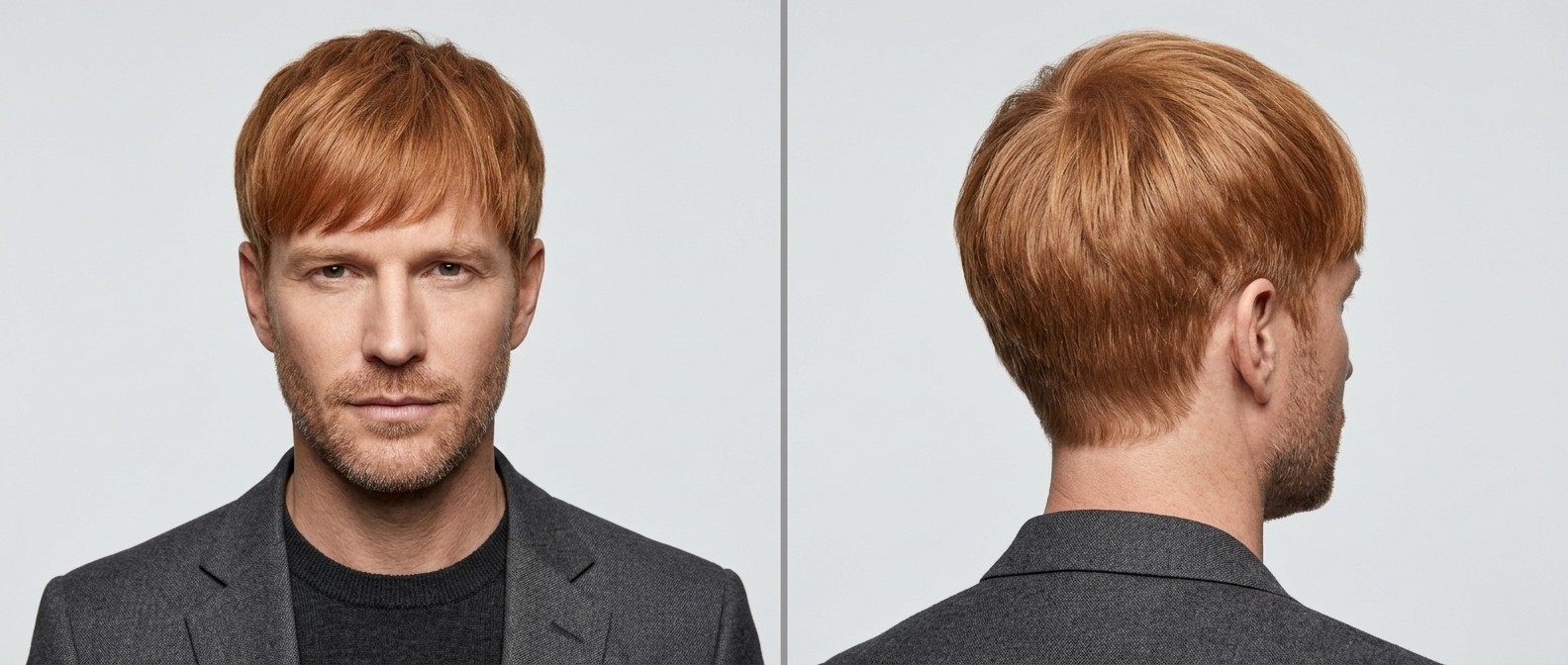
Fringe
Textured Forward Fringe with Tapered Sides for Straight Hair
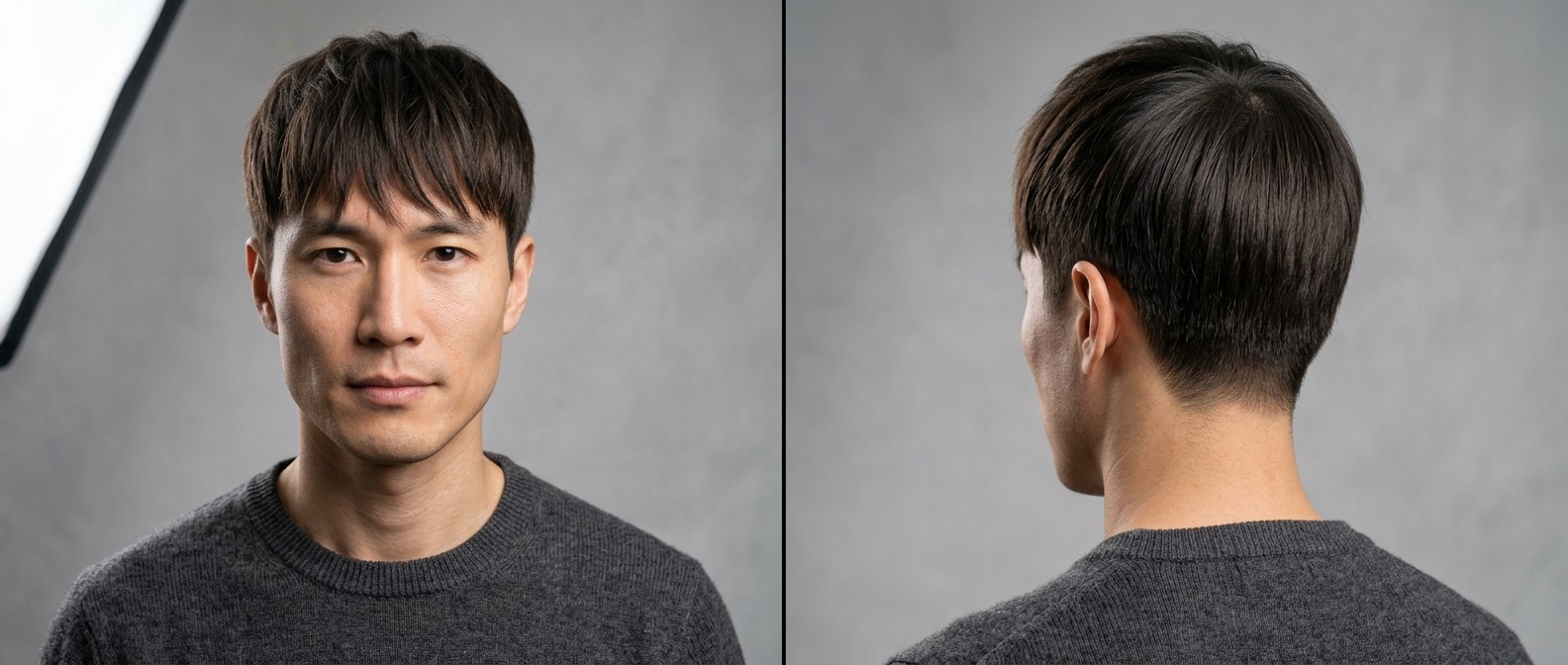
Fringe
Textured Forward Fringe with Soft Scissor-Cut Sides
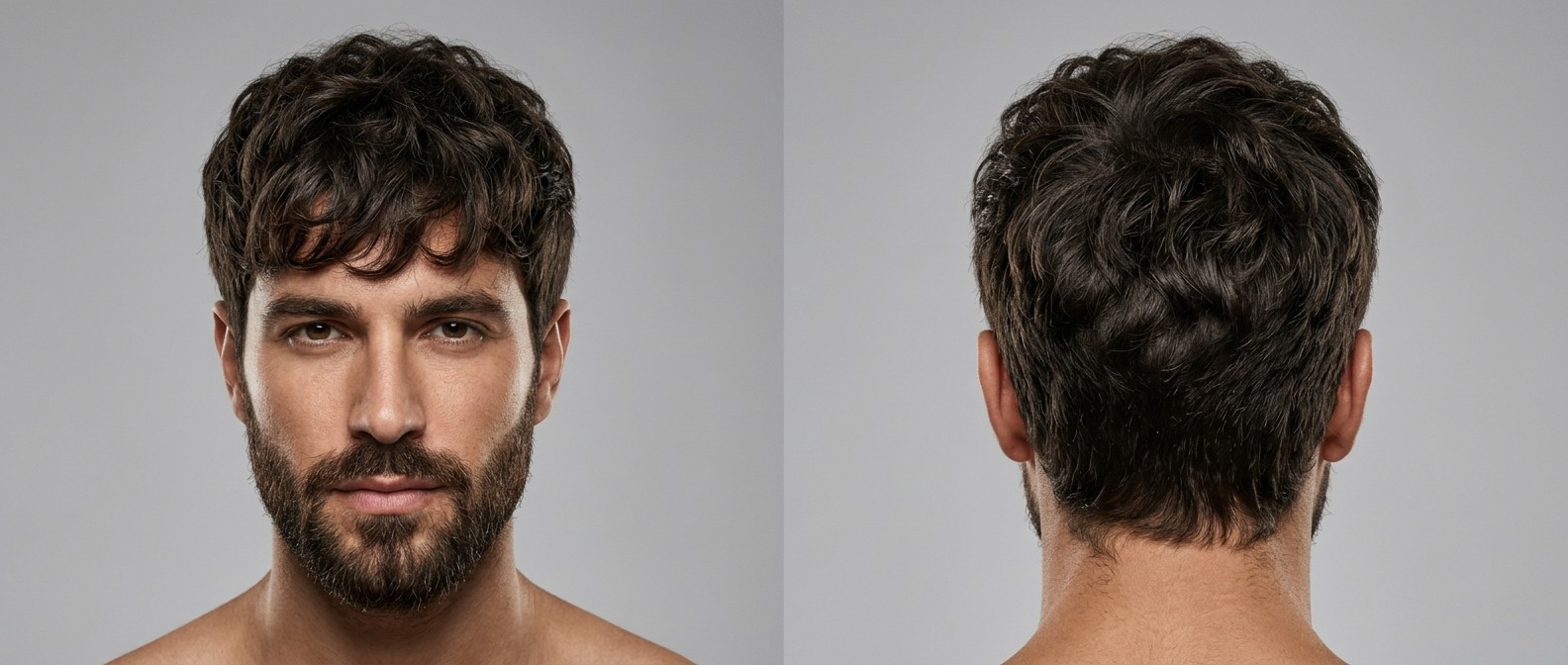
Fringe
Textured Wavy Fringe with Tapered Sides for Thick Hair

Fringe
Casual Textured Wavy Fringe with Soft Layered Sides

Fringe
Men's Textured Forward Fringe Haircut for Thick Hair
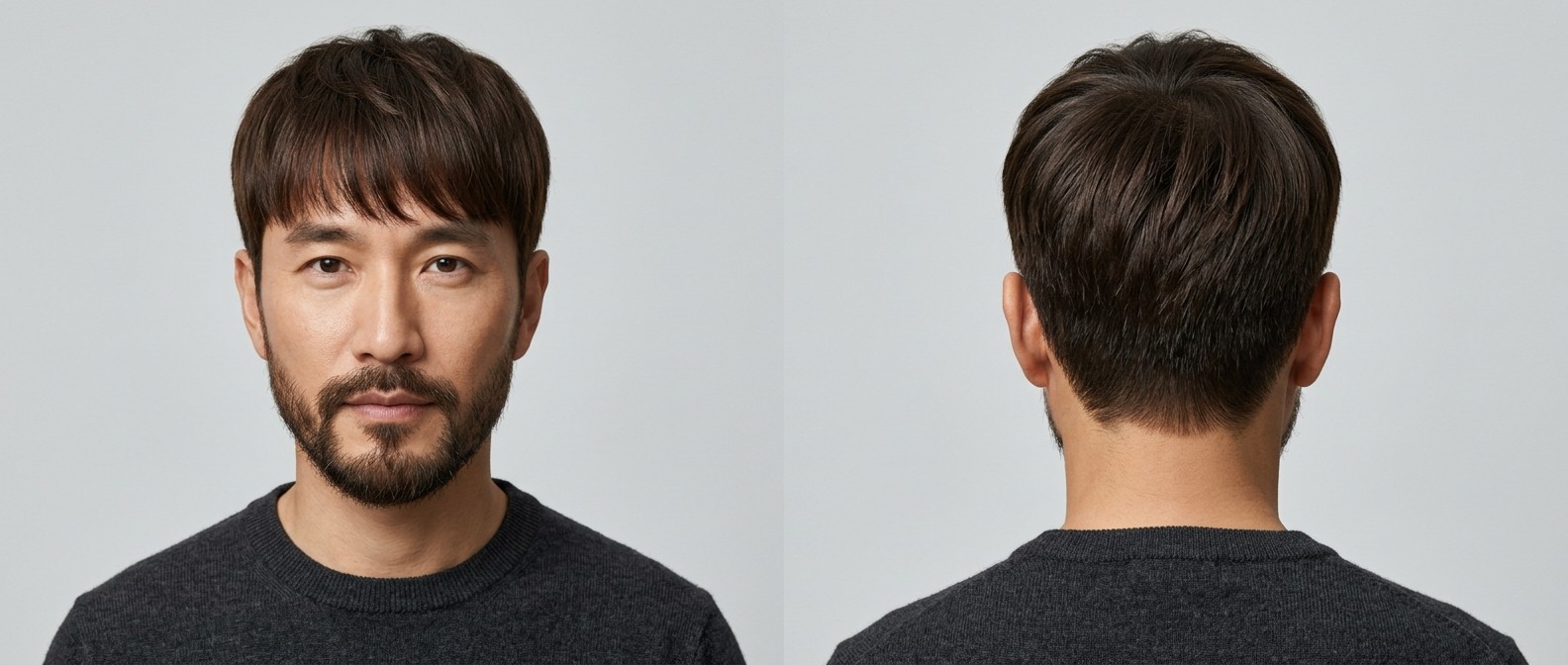
Fringe