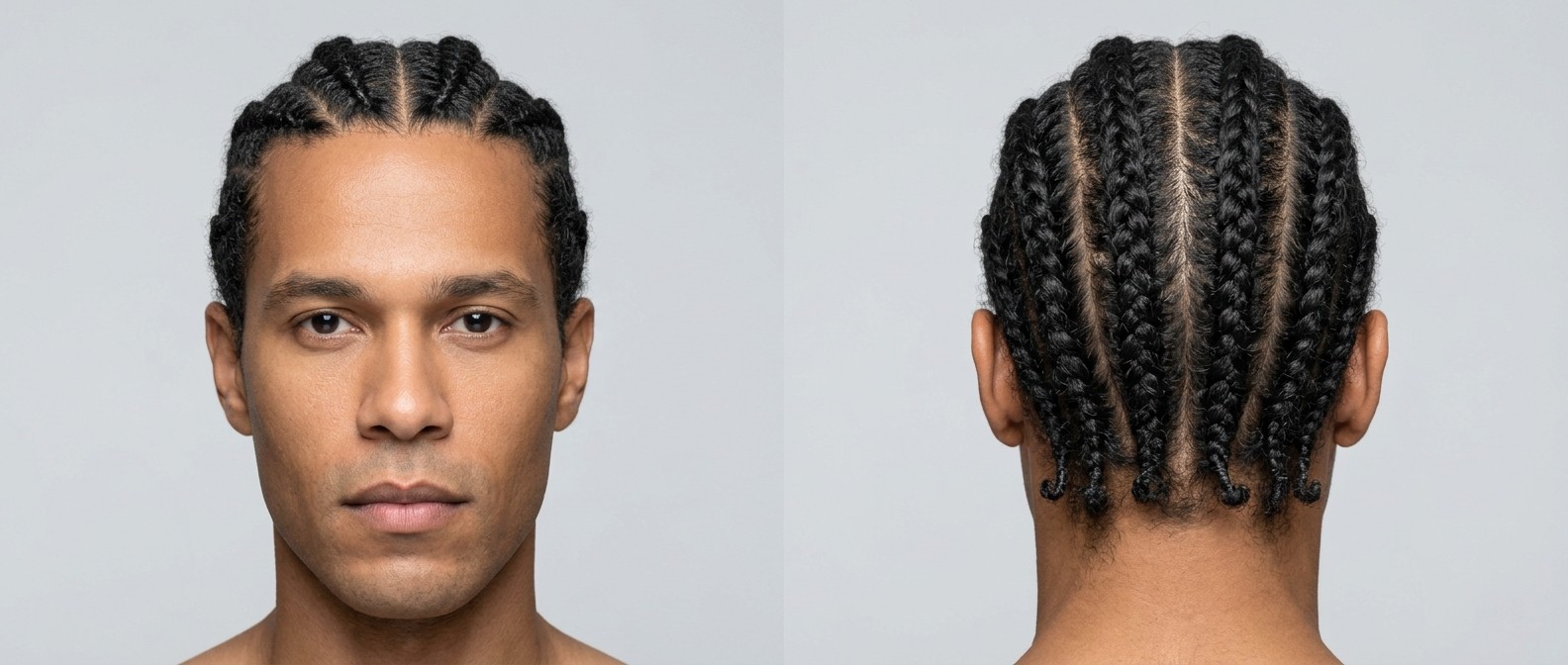
Classic Straight-Back Cornrows with Clean Parts for Men
 Top
Long (10-20 cm)
Top
Long (10-20 cm)
 Sides
Medium (2-5 cm)
Sides
Medium (2-5 cm)
 Hair Type
Very Curly / Afro (Type 4)
Hair Type
Very Curly / Afro (Type 4)
 Face Shape
Rectangular
Face Shape
Rectangular
 Maintenance
Medium
Maintenance
Medium
 Thickness
Medium / Normal
Thickness
Medium / Normal
About This Style
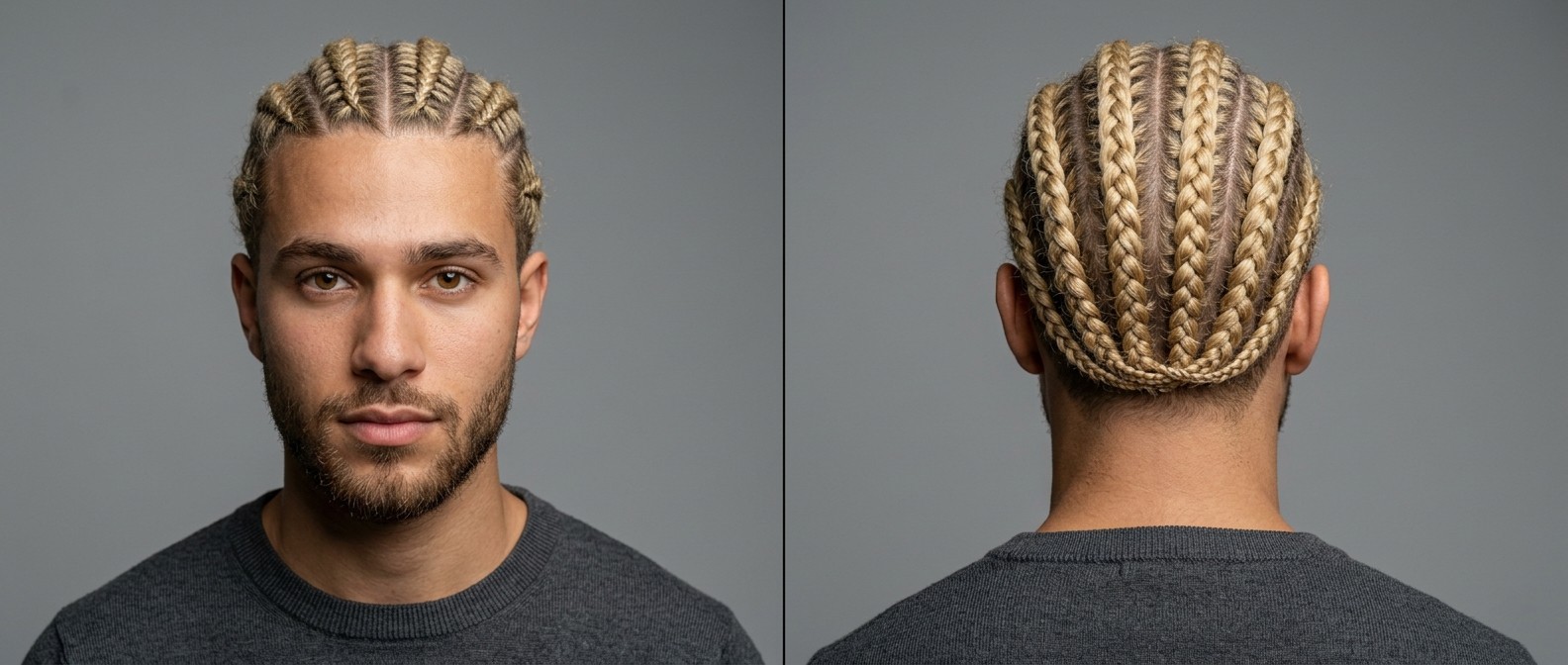
Look at this exceptionally clean, timeless variation of straight-back cornrows. This protective style features perfectly sectioned, parallel braids running uniformly from the low front hairline all the way down to the nape of the neck. What makes this specific look stand out is the meticulous precision of the parting—each section exposes just the right amount of scalp to create a striking geometric contrast against the dark, medium-thick Type 4 hair. The braids themselves are executed with consistent tension, laying flat to the head before finishing with small, naturally coiled ends that hang just below the occipital bone.
If you have a rectangular face shape and a busy lifestyle, this is an incredibly practical yet stylish choice. It complements casual, everyday settings while remaining polished enough for professional environments. Because the styling time is essentially zero on a daily basis, it is the ultimate low-maintenance daily look, even though the initial braiding process takes time. It frames the face beautifully without adding bulk to the sides or top.
Notice how the lack of facial hair on the model emphasizes the sharp, clean lines of the hairline and the structural symmetry of the braids. The straight-back pattern draws the eye backward, highlighting the natural contours of the skull while keeping the hair completely off the face and neck. This variation is a masterclass in minimalist grooming, proving that you do not need complex zigzag parts or intricate designs to make a powerful, confident statement. It is a fundamental, foundational style that respects the natural texture of very curly hair while offering unparalleled daily convenience.
If you have a rectangular face shape and a busy lifestyle, this is an incredibly practical yet stylish choice. It complements casual, everyday settings while remaining polished enough for professional environments. Because the styling time is essentially zero on a daily basis, it is the ultimate low-maintenance daily look, even though the initial braiding process takes time. It frames the face beautifully without adding bulk to the sides or top.
Notice how the lack of facial hair on the model emphasizes the sharp, clean lines of the hairline and the structural symmetry of the braids. The straight-back pattern draws the eye backward, highlighting the natural contours of the skull while keeping the hair completely off the face and neck. This variation is a masterclass in minimalist grooming, proving that you do not need complex zigzag parts or intricate designs to make a powerful, confident statement. It is a fundamental, foundational style that respects the natural texture of very curly hair while offering unparalleled daily convenience.
Key Features
- Symmetrical straight-back braiding pattern featuring exactly eight distinct, evenly spaced rows running uniformly from the front forehead down to the nape of the neck.
- Razor-sharp, parallel partings created with precision to expose clean, straight lines of the scalp, providing a highly geometric and structured aesthetic.
- Consistent, medium-firm braid tension that ensures the hair lies completely flat against the natural curvature of the head without creating raised bumps.
- Natural, unbraided curled tips at the very end of each cornrow that provide a softer, textured finish where the hair rests against the back of the neck.
- Low-profile, streamlined silhouette that perfectly contours the natural shape of the skull, avoiding any unwanted extra height or width on the top or sides.
- Clean, natural front hairline integration that incorporates the hair smoothly into the braids without artificial enhancements or heavy, flaking edge control.
Getting the Cut
- Request a classic straight-back cornrow style consisting of exactly six to eight evenly spaced braids, depending on the specific circumference of your head.
- Ask the stylist or braider to utilize a fine-toothed rat-tail comb to create ultra-precise, parallel parts extending directly from the front hairline to the nape.
- Specify that you want the braids to begin right at your natural, low front hairline, capturing all the baby hairs without pushing the edge back artificially.
- Request a firm but comfortable medium tension during the braiding process—the braids must be secure and flat, but absolutely not tight enough to cause traction bumps.
- Instruct them to braid the hair all the way down the entire 10 to 20 centimeter length, leaving just the final centimeter unbraided so the ends can curl naturally.
- Ask for a very light application of a soothing scalp oil or a lightweight, non-flaking pomade during the parting process to ensure clean lines and to tame any stray flyaways.
Daily Routine
- Wake up and carefully remove your silk or satin durag or bonnet, which is an absolutely essential overnight tool for protecting the braids from friction and frizz while you sleep.
- Gently mist your entire scalp and the full length of the braids with a lightweight, water-based leave-in conditioner or a dedicated braid hydrating spray to restore essential moisture.
- Apply three to five drops of a nourishing natural carrier oil, such as jojoba, argan, or sweet almond oil, directly to the pads of your fingertips.
- Lightly massage the oil into the exposed parted lines of your scalp using gentle circular motions to prevent dry flaking, promote blood circulation, and soothe any tightness.
- Smooth any minor flyaways along the front hairline or the top surface of the braids using a tiny, pea-sized amount of lightweight edge control or a conditioning gel.
- Tie your hair down tightly with a wave cap or silk durag for about ten to fifteen minutes while you get dressed to set the flyaways perfectly flat for the remainder of the day.
Products & Tools
- Professional rat-tail parting comb featuring a metal pin, essential for creating those razor-sharp, perfectly straight lines on the scalp before the braiding begins.
- Lightweight, water-based braid conditioning spray designed to maintain daily hydration levels in Type 4 hair without causing heavy product buildup over time.
- Natural scalp oil blend (such as a mixture of peppermint, tea tree, and jojoba oils) equipped with a narrow dropper applicator for targeted, mess-free scalp nourishment.
- High-quality premium silk or satin durag, sleep bonnet, or wave cap to protect the hair texture, lock in moisture, and prevent severe overnight friction.
- Soft-bristle styling toothbrush or a specialized edge control brush specifically designed for laying down the delicate front hairline with minimal product.
Maintenance
- Schedule a fresh braiding appointment or takedown every three to four weeks to prevent severe matting at the roots and to maintain the crisp sharpness of the scalp parts.
- Wash your scalp bi-weekly using a diluted, residue-free clarifying shampoo applied directly to the exposed scalp lines using a pointed nozzle applicator bottle.
- Always sleep with a satin pillowcase in addition to a secure silk durag to dramatically reduce the risk of friction, frizz generation, and overnight moisture loss.
- Strictly avoid using heavy beeswax, thick petroleum greases, or creamy leave-in conditioners that can easily get trapped inside the tight braid crevices and cause white buildup.
- After showering or working out, ensure your braids dry completely by sitting under a hooded dryer or using a hand dryer on a cool setting to prevent mildew odors.
Best For
Men with Very Curly or Afro-textured hair (Type 4) that is currently at least 10 to 20 centimeters long on top to ensure the braids have enough length to hold securely.
Rectangular, square, or oval face shapes, because the extremely flat silhouette highlights strong facial bone structure, defined cheekbones, and a sharp jawline.
Active individuals, athletes, gym-goers, or anyone with a highly demanding lifestyle seeking a true "get up and go" hairstyle with effectively zero daily styling time.
Guys looking for a highly stylish yet functional protective style that actively promotes healthy hair growth by minimizing daily manipulation, combing, and brushing.
Pro Tips
- Never ignore sharp scalp pain; if the braids feel excessively tight or cause headaches after the first 24 hours, they are causing follicular damage and need to be loosened immediately.
- During the dry, cold winter months, you must increase the frequency of your moisturizing spray routine to prevent your Type 4 hair from becoming brittle and snapping inside the protective braid.
- To significantly extend the life of the style during the final week before your next appointment, apply a light holding mousse, tie it down with a durag, and hit it with a blow dryer on low heat to flatten persistent frizz.
- When it is finally time to take the style out, saturate the braids in a slippery detangling conditioner first to melt away the accumulated shed hair and prevent breakage during the unbraiding process.
Related Hairstyles
Cornrows
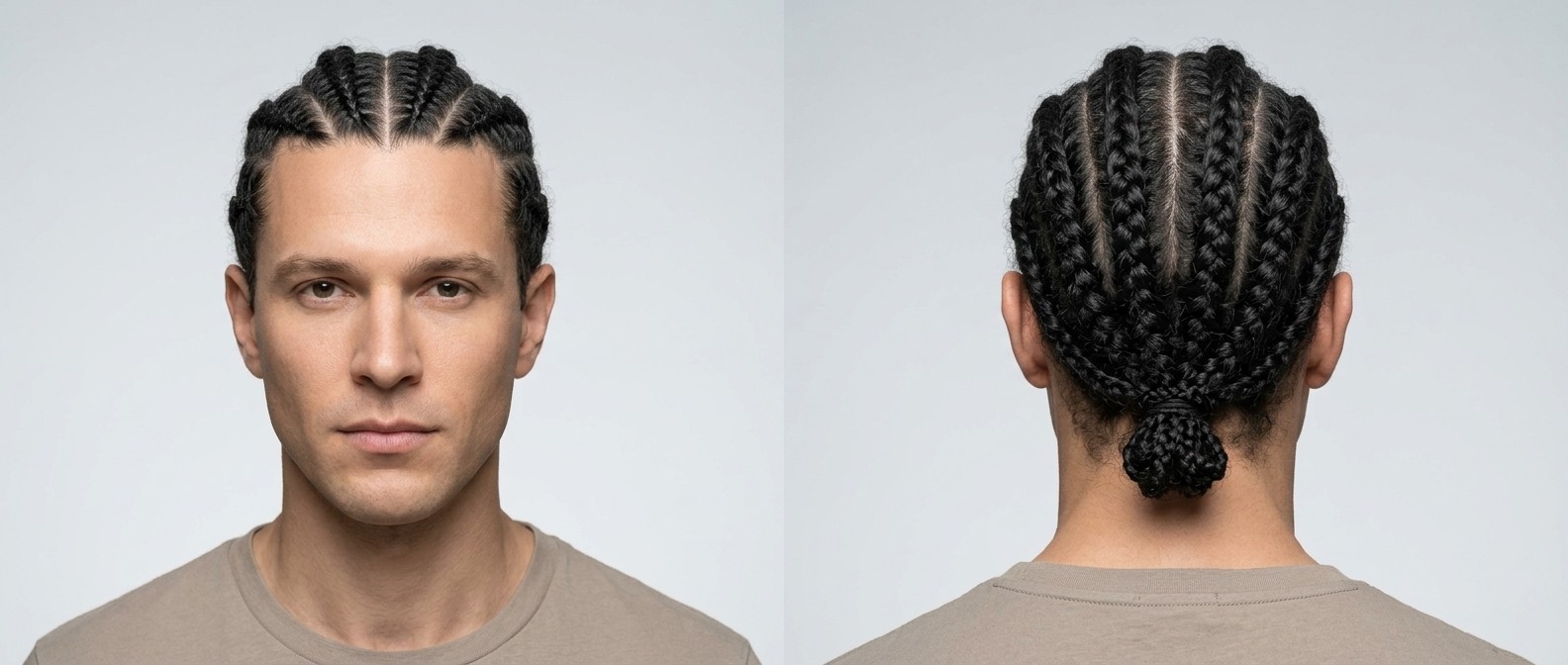
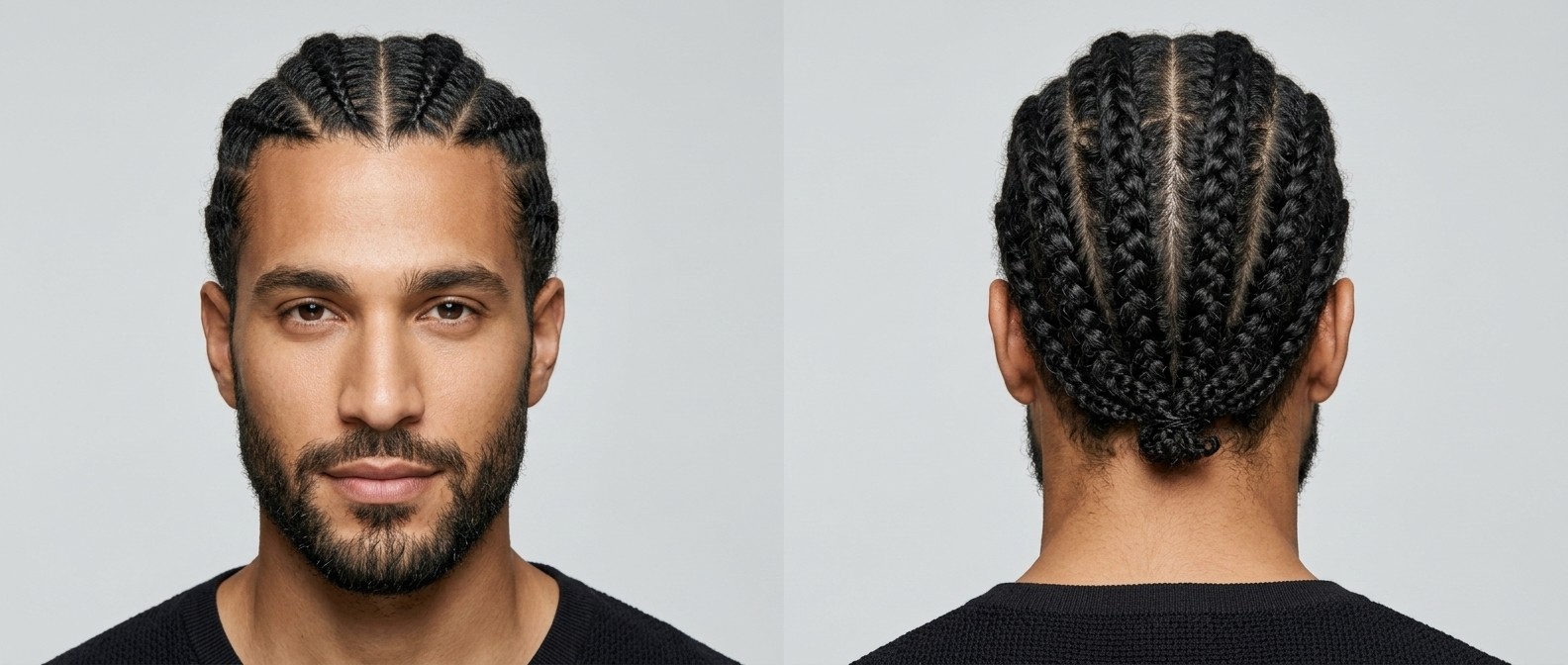
Classic Straight Back Cornrows with a Low Bun for Men
Cornrows
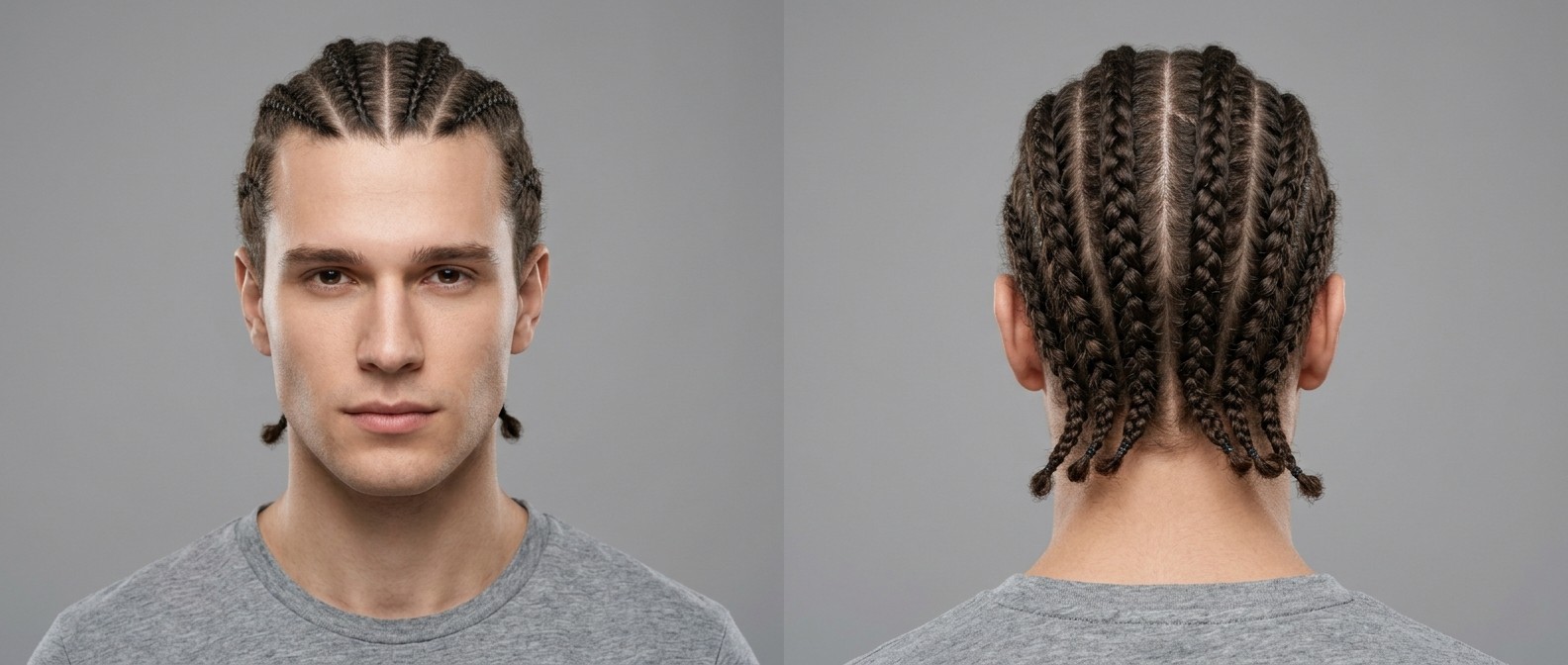
Classic Straight-Back Cornrows with Neat Nape Knot and Beard
Cornrows
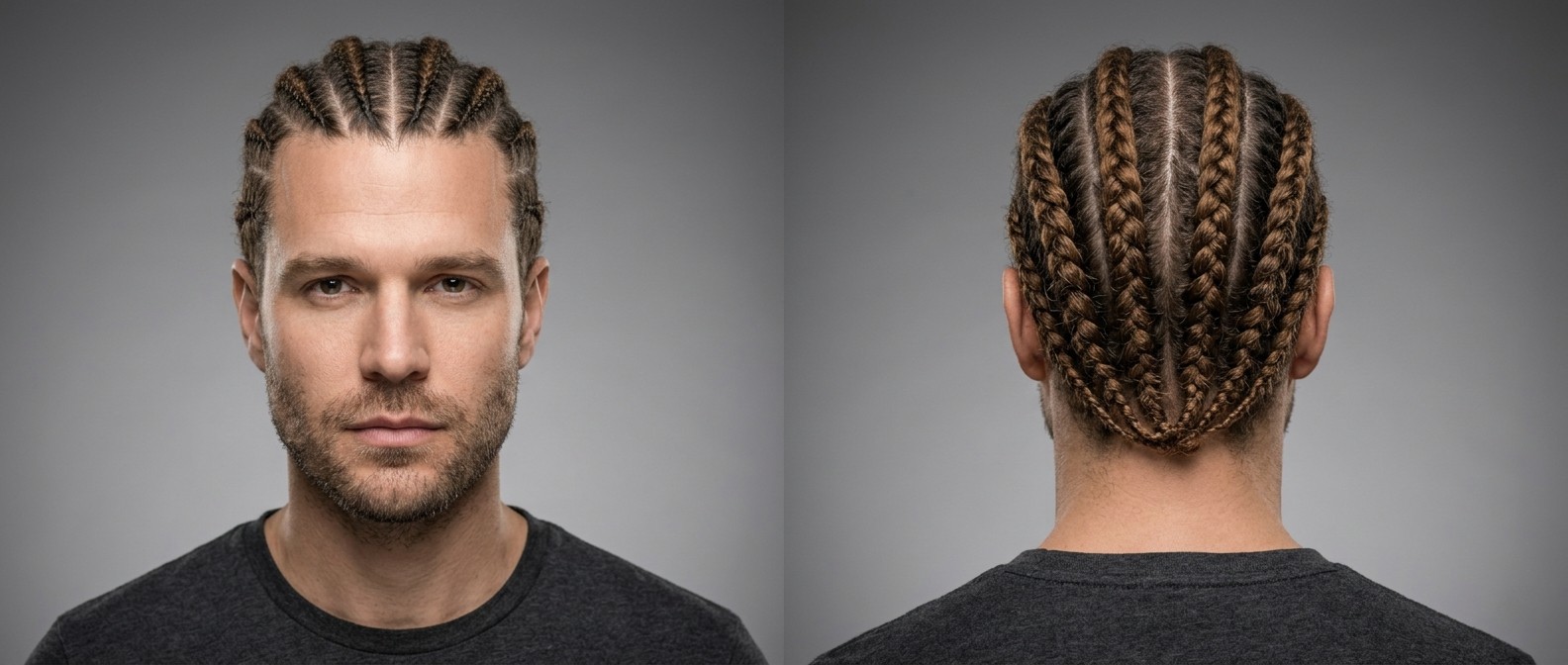
Symmetrical Straight-Back Cornrows for Thick Curly Men's Hair
Cornrows
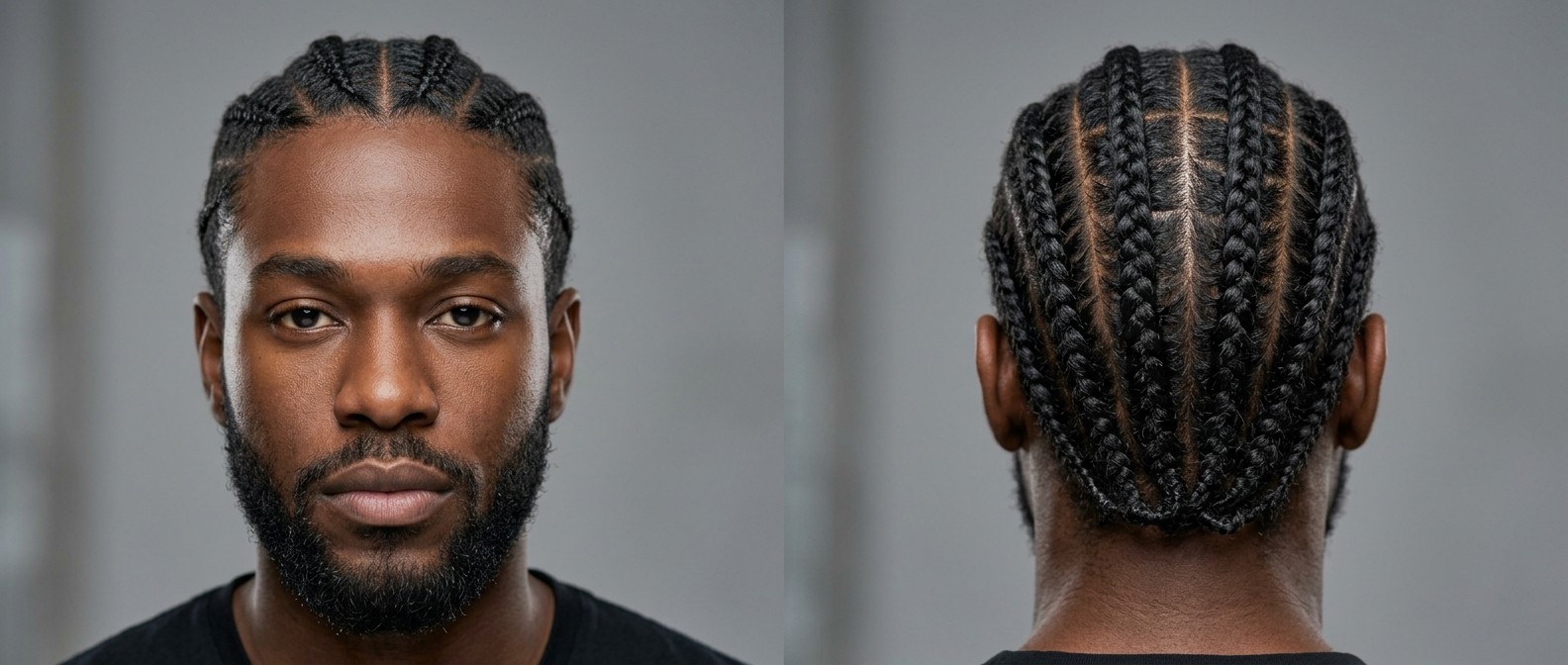
Creative Straight-Back Cornrows for Thick Textured Men's Hair
Cornrows
Classic Straight-Back Cornrows with Clean Grid Parting and Full Beard
Cornrows