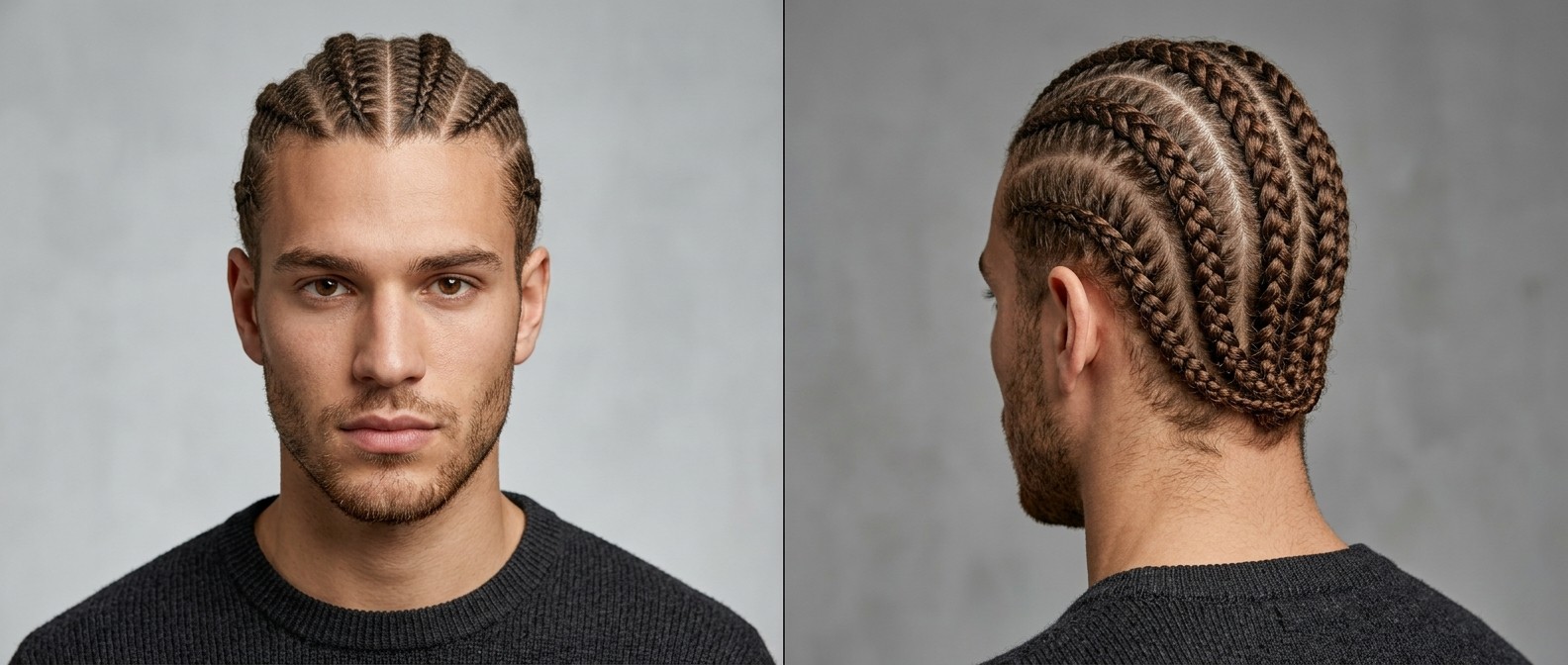
Thick Straight-Back Braided Cornrows for Medium Brown Hair
 Top
Medium (5-10 cm)
Top
Medium (5-10 cm)
 Sides
Medium (2-5 cm)
Sides
Medium (2-5 cm)
 Hair Type
Very Curly / Afro (Type 4)
Hair Type
Very Curly / Afro (Type 4)
 Face Shape
Square
Face Shape
Square
 Maintenance
Medium
Maintenance
Medium
 Thickness
Thick / Dense
Thickness
Thick / Dense
About This Style
This striking straight-back cornrow style showcases a masterful approach to managing thick, highly textured hair. By sectioning the dense brown hair into perfectly symmetrical, parallel rows from the low front hairline to the nape of the neck, this look offers both a commanding visual geometry and exceptional daily convenience. The clean, razor-sharp scalp partings provide a striking contrast against the thick, raised braids, highlighting the meticulous craftsmanship required to execute this classic protective style. The way the medium length hair on top (5-10 cm) seamlessly blends into the slightly shorter sides (2-5 cm) within the braided tracks shows incredible technique. The braids start thin at the front and subtly thicken as they gather more hair toward the crown and nape, creating a beautiful tapered effect. This structural detail not only looks fantastic but ensures the braids lay perfectly flat against the skull.
It is an outstanding choice if you have a strong, square face shape, as the vertical lines of the braids naturally elongate the face while keeping the sides tight and completely out of the way. The lack of bulk on the sides and top emphasizes your sharp jawline, light stubble, and natural bone structure. Whether you are heading to the gym, navigating a busy urban lifestyle, or just looking for a low-maintenance everyday aesthetic, this braided style delivers a polished yet rugged vibe.
Because it requires virtually no daily styling time, it is the ultimate 'get up and go' hairstyle. The natural medium-brown color of the hair gains incredible depth and dimension through the weaving process, catching the light perfectly without the need for styling products. It beautifully bridges the gap between casual streetwear aesthetics and practical hair management for highly textured, dense hair types.
It is an outstanding choice if you have a strong, square face shape, as the vertical lines of the braids naturally elongate the face while keeping the sides tight and completely out of the way. The lack of bulk on the sides and top emphasizes your sharp jawline, light stubble, and natural bone structure. Whether you are heading to the gym, navigating a busy urban lifestyle, or just looking for a low-maintenance everyday aesthetic, this braided style delivers a polished yet rugged vibe.
Because it requires virtually no daily styling time, it is the ultimate 'get up and go' hairstyle. The natural medium-brown color of the hair gains incredible depth and dimension through the weaving process, catching the light perfectly without the need for styling products. It beautifully bridges the gap between casual streetwear aesthetics and practical hair management for highly textured, dense hair types.
Key Features
- Perfectly straight, symmetrical partings running from the front hairline directly to the nape of the neck.
- Thick, uniform braids that sit flush against the scalp, minimizing overall volume while maximizing control.
- Clean, exposed scalp sections between each braid that create a striking geometric contrast.
- Tapered braid ends that are neatly secured at the lower back of the head to prevent unraveling.
- Low, natural front hairline integration where the braids begin seamlessly without excessive tension.
- Subtle tapering effect where braids start slightly thinner at the hairline and gather mass as they move backward.
- Rugged, product-free finish that highlights the natural medium-brown color and dense texture of the hair.
Getting the Cut
- Request a full-head, straight-back cornrow style with approximately 6 to 8 even sections.
- Ask the stylist to use a rattail comb to create razor-sharp, perfectly straight partings from the front hairline to the nape.
- Specify that the braids should be firm and secure to handle thick, dense hair, but not pulled so tight that they damage the low front hairline.
- Ensure the braider incorporates all the medium-length hair smoothly into the tracks without leaving stray flyaways.
- Instruct the stylist to braid all the way down to the very ends of the hair at the nape of the neck.
- Ask for the ends to be securely finished, either by looping, tying off, or using a subtle protective band to prevent unraveling.
- Request that no heavy pomades or gels be used during the braiding process to maintain a natural, matte, product-free finish.
- Ensure the transition from the slightly shorter side length to the top length is managed carefully so no short hairs poke out of the main braids.
- Ask for a consultation on parting symmetry to guarantee the braids align perfectly with your facial features and square jawline.
Daily Routine
- Wake up and remove your silk or satin durag or bonnet, which is essential for protecting the braids overnight from frizz and friction.
- Gently pat your scalp and braids with your hands to smooth down any minor overnight flyaways; your styling time is virtually zero.
- If your scalp feels dry, apply a minimal amount of lightweight scalp oil or leave-in conditioner spray directly to the exposed skin between the partings.
- Massage the oil gently into the scalp using just your fingertips, being extremely careful not to disturb the neatness of the braids.
- Avoid using any heavy styling creams, waxes, or gels, as this style thrives on a clean, natural, product-free aesthetic.
- Check the very ends of the braids at the nape of your neck to ensure the ties or tucked ends are still secure.
- If you have any baby hairs or flyaways right at the low hairline, you can optionally tap them down with a tiny bit of water, but avoid heavy edge control to keep the natural vibe.
- Step out the door; this protective style is designed to be completely hands-off during the day, requiring absolutely no blow-drying, combing, or brushing.
- Throughout the day, trust the style; the dense braiding technique ensures your hair remains completely locked perfectly in place from morning until night.
Products & Tools
- Silk or satin durag or bonnet (essential for overnight protection to maintain neatness and prevent frizz).
- Rattail comb (used strictly by your stylist or braider for creating the precise, straight scalp partings).
- Lightweight scalp oil like jojoba or argan oil (for moisturizing the exposed scalp without causing buildup).
- Hydrating leave-in conditioning spray (optional, for a light moisture refresh mid-week).
- Small, snag-free elastic bands (if needed to secure the very ends of the braids at the nape).
Maintenance
- Schedule a visit to your braider or stylist every 3 to 4 weeks to take out, wash, and re-braid the hair to prevent matting.
- Always wear a silk or satin head covering while sleeping to drastically reduce friction and extend the lifespan of the neat braids.
- Avoid submerging your head completely in water or washing the braids vigorously, as this will cause severe frizz and loosen the style.
- Cleanse the scalp gently using a damp cloth with witch hazel or a specialized dry shampoo foam if you need a refresh between appointments.
- Keep your hands out of your hair during the day to prevent the dense hair from fuzzing up and breaking out of the braids.
- If you work out frequently, make sure to let your scalp completely air dry before putting on a hat or beanie to prevent trapped moisture and odor.
- Use a silk pillowcase in addition to your durag; if your head covering slips off during the night, the pillowcase will act as a secondary line of defense against frizz.
Best For
Perfect for men with very curly, thick, and dense Type 4 hair that requires a medium-maintenance protective style.
Highly complementary for strong, square face shapes, as the tight sides and straight lines highlight the jawline.
Ideal for active, busy lifestyles, athletes, or anyone wanting a stylish look with under one minute of daily styling time.
Great for guys with a low hairline who want to keep their hair completely off their face and neck.
Pro Tips
- Never let a braider pull too tightly at your front hairline; tension alopecia is a real risk and will damage your natural low hairline over time.
- Give your hair a break of at least a few days between braiding appointments to let your scalp breathe and recover from the tension.
- During winter months, pay extra attention to scalp hydration, as indoor heating can severely dry out the exposed skin between your partings.
- If you notice intense itching, a cooling peppermint scalp spray can provide immediate relief without ruining the neatness of the braids.
Related Hairstyles
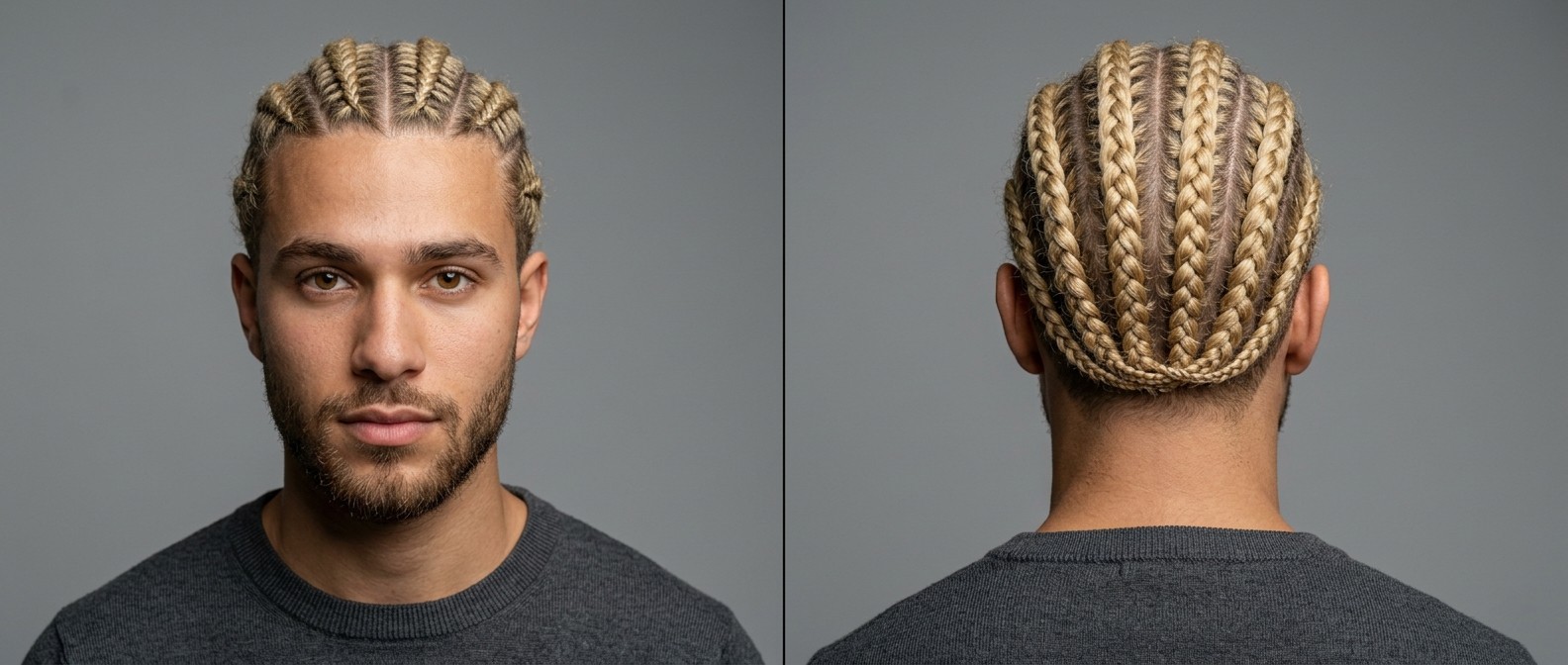
Cornrows
Classic Straight-Back Blonde Cornrows for Thick Curly Hair
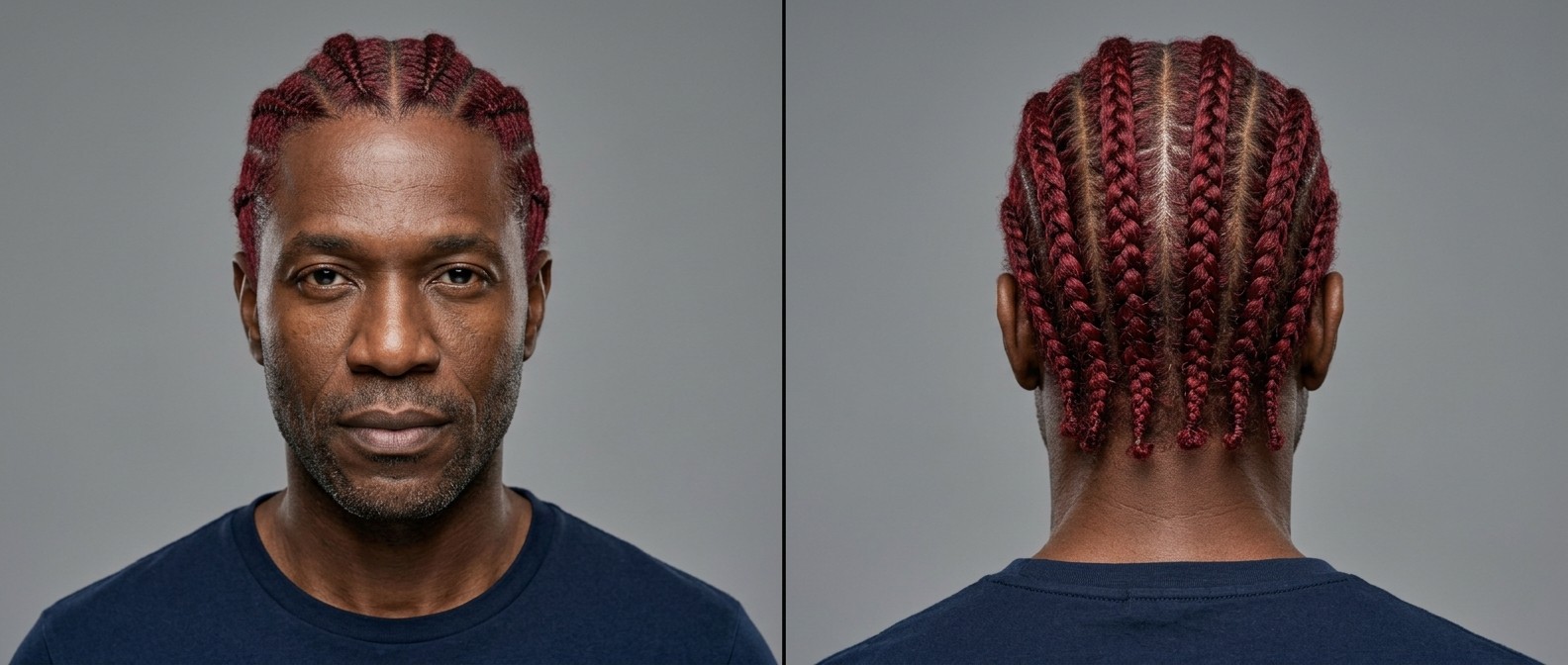
Cornrows
Bold Crimson Red Straight-Back Cornrows for Rectangular Faces
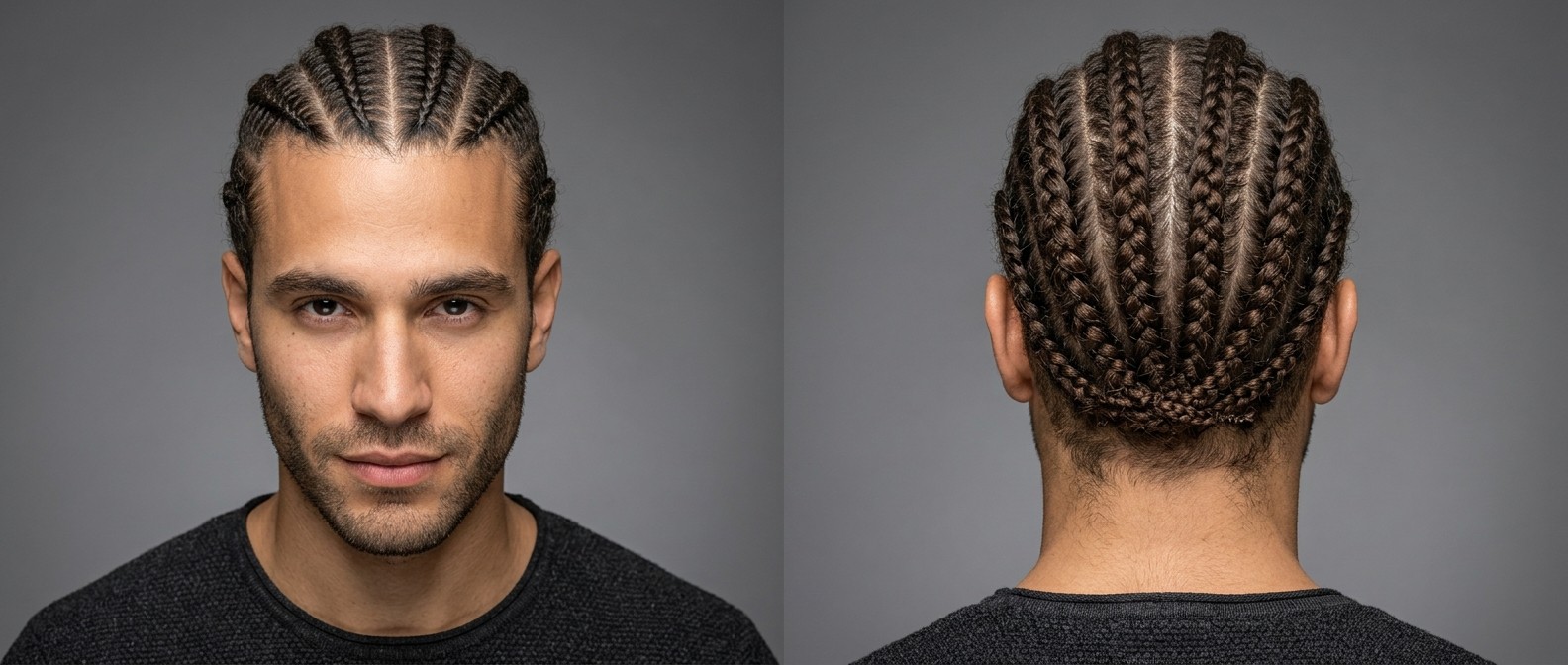
Cornrows
Classic Straight-Back Cornrows with Symmetrical Parting and Tucked Nape
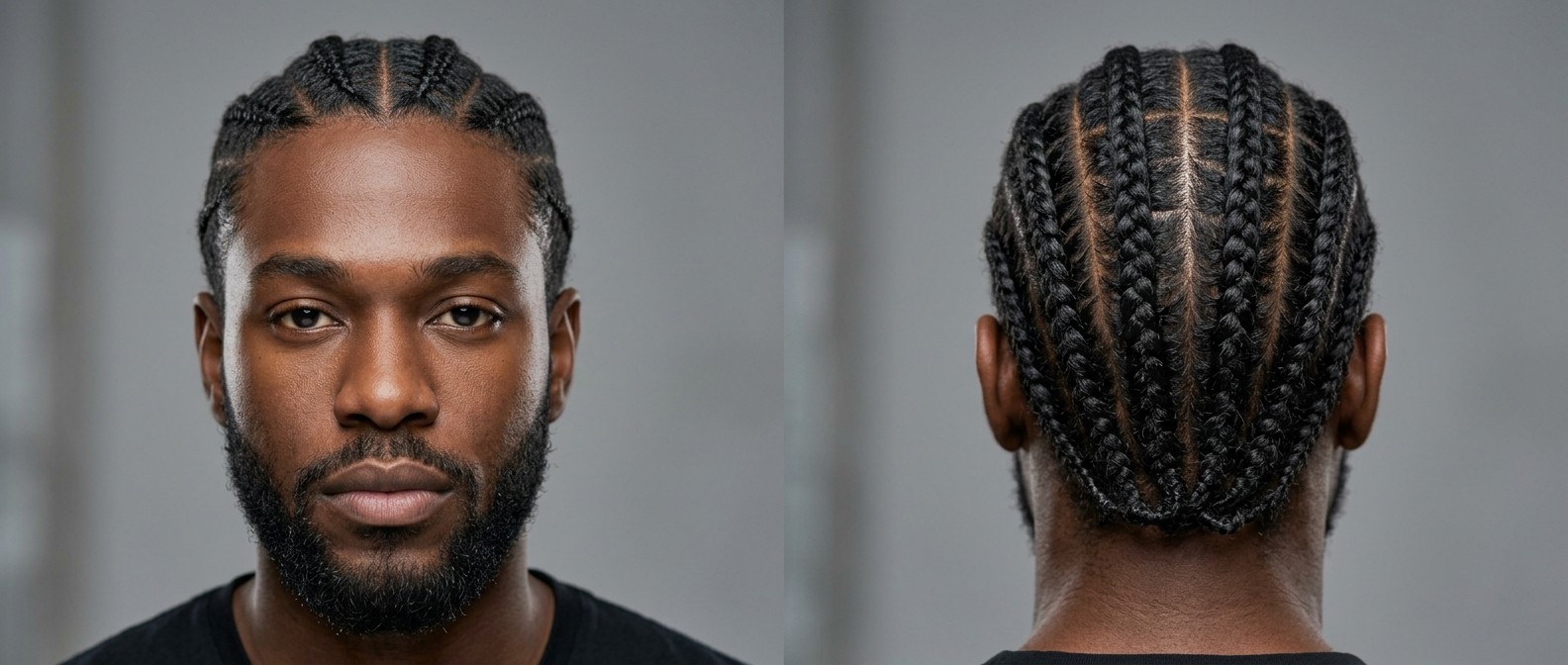
Cornrows
Classic Straight-Back Cornrows with Clean Grid Parting and Full Beard
Cornrows
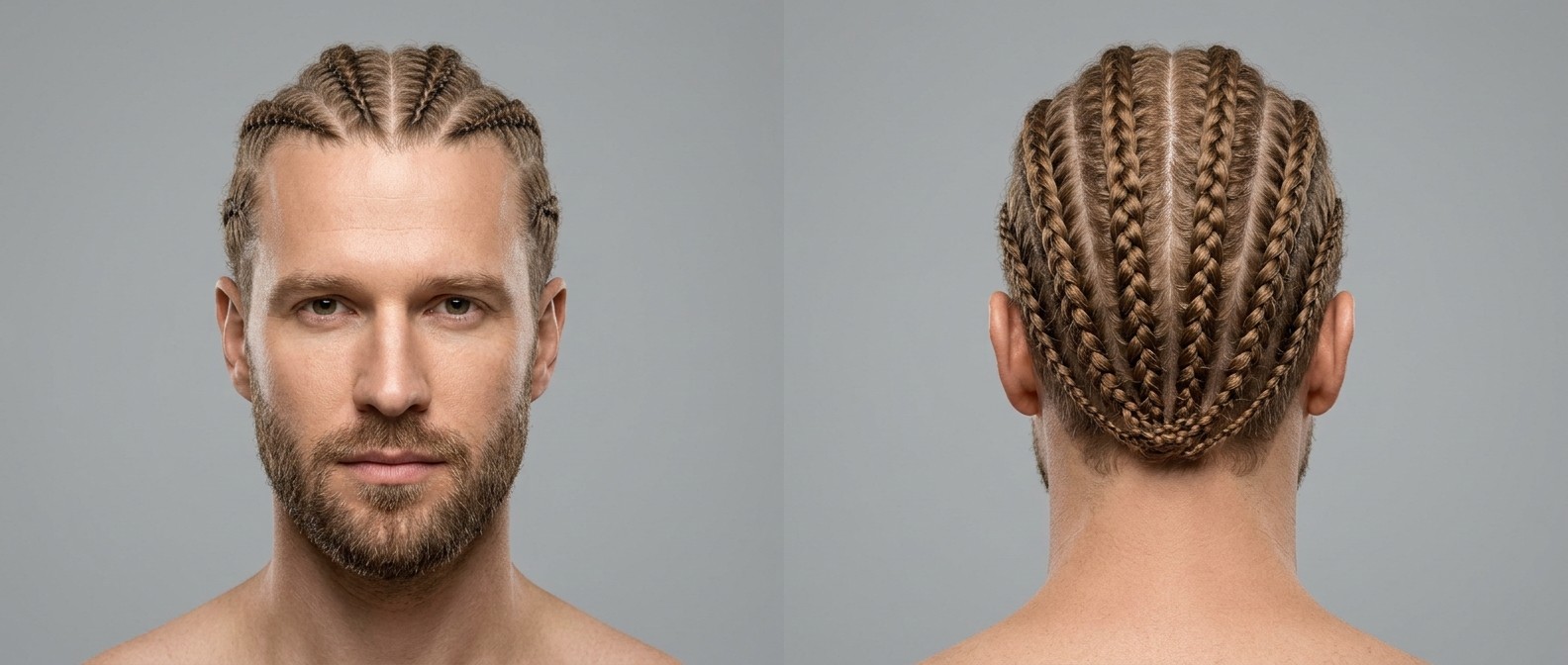
Straight-Back Symmetrical Cornrows for Thick Light Brown Hair
Cornrows