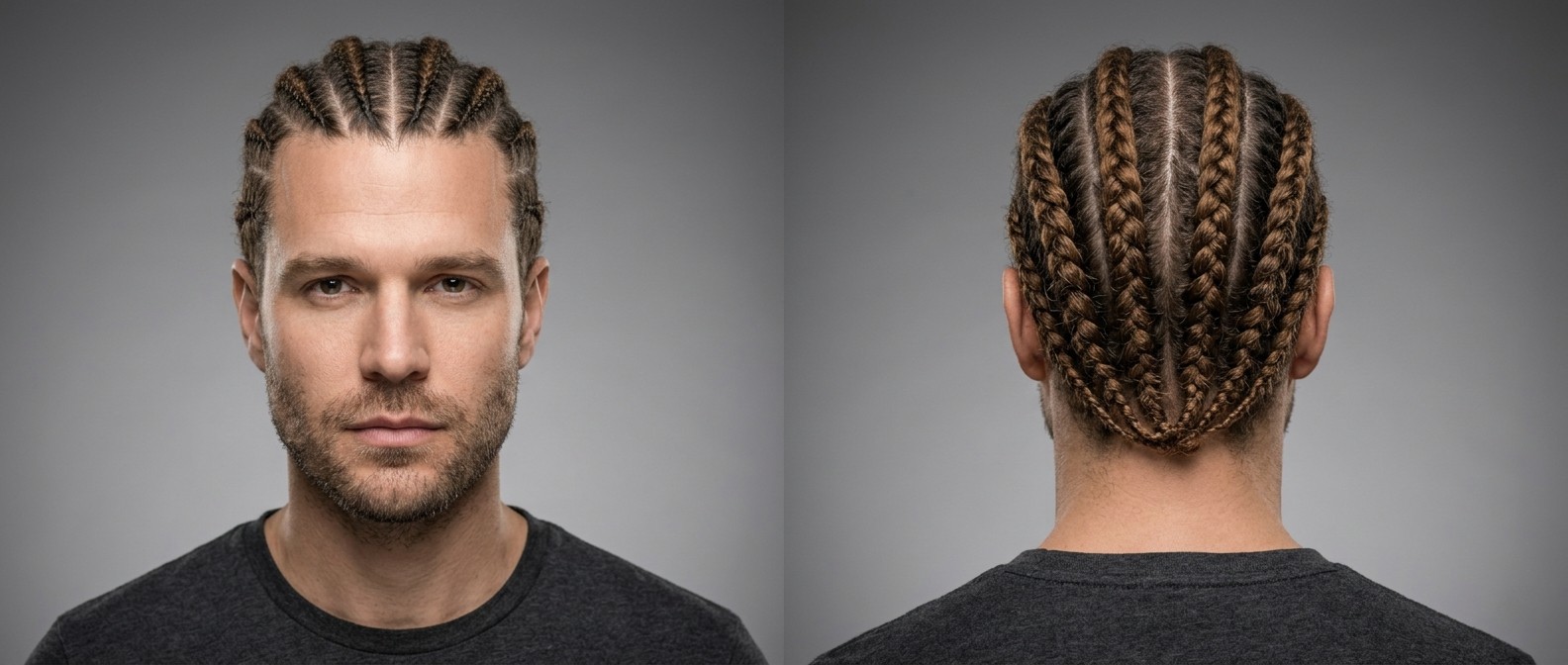
Creative Straight-Back Cornrows for Thick Textured Men's Hair
 Top
Long (10-20 cm)
Top
Long (10-20 cm)
 Sides
Medium (2-5 cm)
Sides
Medium (2-5 cm)
 Hair Type
Very Curly / Afro (Type 4)
Hair Type
Very Curly / Afro (Type 4)
 Face Shape
Square
Face Shape
Square
 Maintenance
Medium
Maintenance
Medium
 Thickness
Thick / Dense
Thickness
Thick / Dense
About This Style
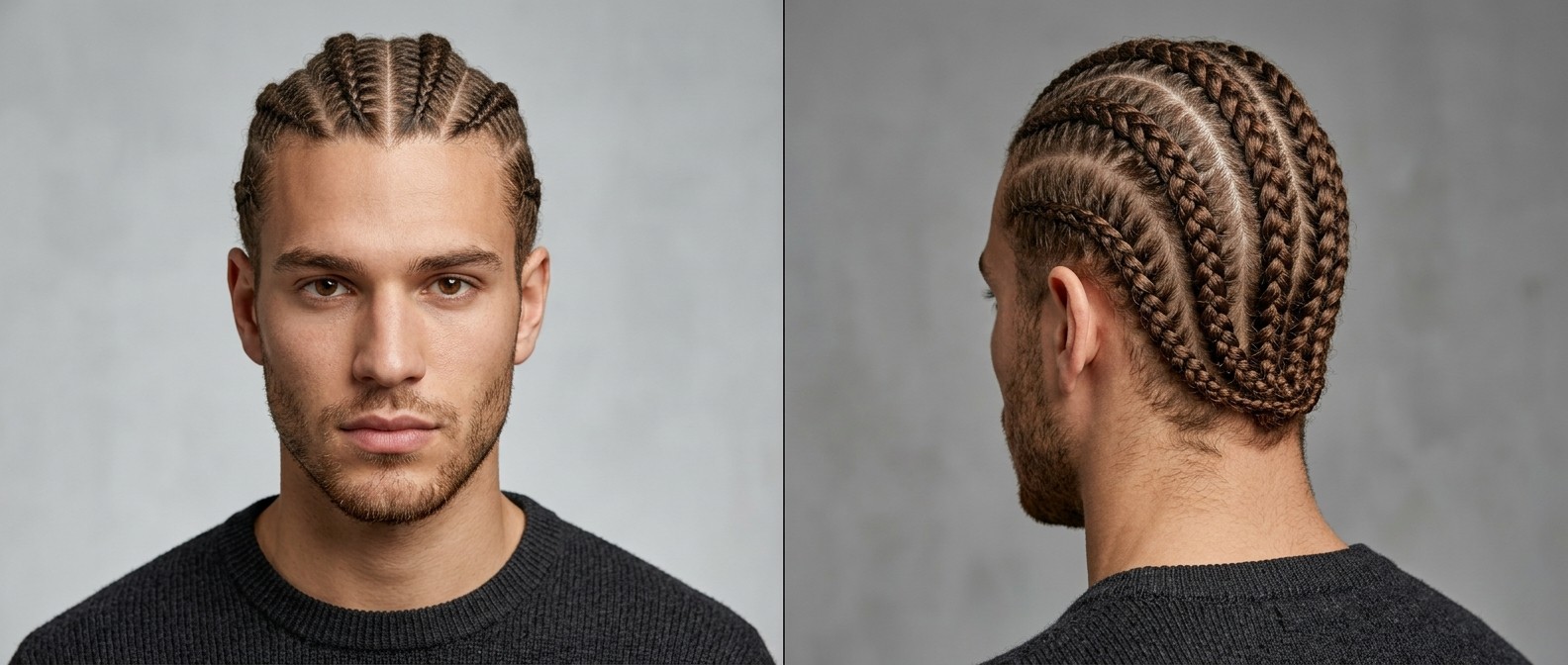
This striking hairstyle showcases six to eight meticulously crafted, thick straight-back cornrows traveling from a low front hairline seamlessly down to the nape of the neck. The light brown hair highlights the intricate underhand weaving technique, emphasizing the dense, thick nature of the hair required to achieve such robust braids. Paired with a strong, square jawline and light facial stubble, the look provides a rugged, highly masculine contrast to the geometric, artistic structure of this traditional protective style.
While straight-back cornrows are a timeless classic, executing them on a canvas of dense, highly textured Type 4 hair creates a bold, three-dimensional silhouette that stands out beautifully in creative and artistic environments. The medium-length sides (2-5 cm) and long top (10-20 cm) are gathered flawlessly into these uniform rows, offering an incredibly clean aesthetic. By leaving the front hairline natural rather than applying a harsh razor edge-up, the style maintains an organic framing that draws the eye vertically to flatter your facial structure.
This is a brilliant choice for the modern man seeking a medium-maintenance routine with maximum visual impact. Because your daily styling time is kept under one minute, it completely frees up your morning schedule. It requires minimal daily styling products, relying instead on the initial expert execution by a skilled braider. You are left with an effortlessly commanding, culturally rich look that easily lasts three to four weeks with the proper nighttime care and scalp hydration.
While straight-back cornrows are a timeless classic, executing them on a canvas of dense, highly textured Type 4 hair creates a bold, three-dimensional silhouette that stands out beautifully in creative and artistic environments. The medium-length sides (2-5 cm) and long top (10-20 cm) are gathered flawlessly into these uniform rows, offering an incredibly clean aesthetic. By leaving the front hairline natural rather than applying a harsh razor edge-up, the style maintains an organic framing that draws the eye vertically to flatter your facial structure.
This is a brilliant choice for the modern man seeking a medium-maintenance routine with maximum visual impact. Because your daily styling time is kept under one minute, it completely frees up your morning schedule. It requires minimal daily styling products, relying instead on the initial expert execution by a skilled braider. You are left with an effortlessly commanding, culturally rich look that easily lasts three to four weeks with the proper nighttime care and scalp hydration.
Key Features
- Symmetrical straight-back braiding pattern featuring uniform, thick rows that run parallel from the front hairline to the nape.
- Deep, clean parting lines that expose the scalp, creating a striking geometric contrast against the densely packed braids.
- Flush, tight tension at the root that expertly manages thick, highly textured hair, keeping the overall silhouette streamlined.
- Seamless integration of medium-length sides and a longer top into continuous, unbroken cornrows that taper neatly at the back.
- A low, natural front hairline that serves as the precise starting point for each braid, avoiding harsh edge-ups for an organic frame.
- Three-dimensional braided texture that catches the light, emphasizing the intricate underhand weaving technique used by the stylist.
- Neatly secured ends tucked or banded at the base of the neck to prevent unraveling and maintain a polished, professional finish.
Getting the Cut
- Request a thorough detangling and blowout session first to stretch your thick, highly textured hair, ensuring smooth parting.
- Ask for classic straight-back cornrows, specifying that you want exactly six to eight medium-to-thick braids depending on your density.
- Instruct the stylist to use a metal rat-tail comb to create ultra-crisp, perfectly straight parts from the front hairline down to the nape.
- Specify an underhand braiding technique (Dutch style) to ensure the cornrows pop outward and sit raised above the scalp for definition.
- Request firm but comfortable tension; the braids must grip the 10-20 cm hair securely without causing scalp bumps or traction alopecia.
- Ask to leave the front hairline natural and low, avoiding sharp razor line-ups on the forehead to keep the look slightly more relaxed.
- Direct the braider to secure the ends of the braids neatly at the nape of the neck using small, clear elastic bands or a tucking method.
Daily Routine
- Remove your silk or satin durag or bonnet immediately upon waking up to reveal your preserved, frizz-free cornrows.
- Inspect your scalp and the length of the braids in the mirror to check for any stray hairs or areas of dryness that developed overnight.
- Apply a lightweight, water-based hydrating spray or leave-in conditioner directly to the scalp and lightly mist over the braids.
- Dispense three to four drops of a natural sealing oil onto your fingertips and gently massage it directly into the exposed parted lines.
- Smooth down any minor flyaways along the hairline or the surface of the braids using a tiny dab of edge control or a light styling foam.
- Allow the moisture to air-dry completely for a few moments while you finish the rest of your morning grooming routine.
Products & Tools
- Pointed metal rat-tail comb for achieving razor-sharp, perfectly straight parting lines before the braiding process begins.
- Lightweight scalp-soothing botanical oil (like jojoba or tea tree) to hydrate the exposed skin and prevent itchiness between washes.
- Soothing water-based braid spray or leave-in conditioning mist to keep the thick hair moisturized and prevent interior breakage.
- High-quality silk or satin durag, bonnet, or pillowcase to eliminate nighttime friction and prevent the hair from frizzing prematurely.
- Soft-bristled edge brush for gently laying down any baby hairs or flyaways at the very front of the low natural hairline.
- Alcohol-free styling mousse or foaming wrap lotion to occasionally set the braids flat and lock in the neatness after a maintenance wash.
Maintenance
- Schedule a visit to your braider every 3-4 weeks for a complete takedown, deep condition, and re-braid to maintain healthy hair growth.
- Wash your hair while it is still braided every 10 to 14 days using a diluted, residue-free clarifying shampoo applied directly to the scalp.
- Always wear a silk or satin head covering every single night without fail; this is the most critical step in preserving the neatness.
- Avoid heavy, petroleum-based greases or thick waxes that will inevitably get trapped inside the braids and lead to severe product buildup.
- Pat your braids completely dry with a microfiber towel after washing; ensure the interior of the braids dries fully to prevent mildew.
- Resist the urge to scratch your scalp with your fingernails if it itches; instead, lightly pat the area or apply an anti-itch serum.
Best For
Face Shapes: Exceptionally flattering for square and oval faces, as the straight-back lines draw the eye vertically to complement the jaw.
Hair Types: Ideal for very curly, coily, or Afro-textured hair (Type 4) because the natural grip holds the braided structure securely.
Hair Thickness: Requires thick, dense hair to achieve the substantial, raised volume of the braids seen in the photo without exposing too much scalp.
Lifestyles: Perfect for highly active individuals or busy professionals who need their hair out of their face with under one minute of styling.
Occasions: Highly suited for creative, artistic, or casual environments where a bold, culturally rich, and highly structured aesthetic is celebrated.
Pro Tips
- Before getting braided, ensure your hair is deeply clarified and intensely moisturized; braiding dry hair significantly increases breakage risk.
- If you experience extreme tightness or headaches immediately after leaving the chair, the braids are too tight; communicate with your stylist.
- During colder winter months, increase the frequency of your oil applications, as dry indoor heating can rapidly deplete scalp moisture.
- When taking the braids down after 3-4 weeks, coat your fingers in a slippery detangling conditioner to gently unweave the hair and minimize shedding.
- Give your hair and scalp a breathing period of at least a few days between braiding sessions to allow the follicles to rest from the tension.
Related Hairstyles
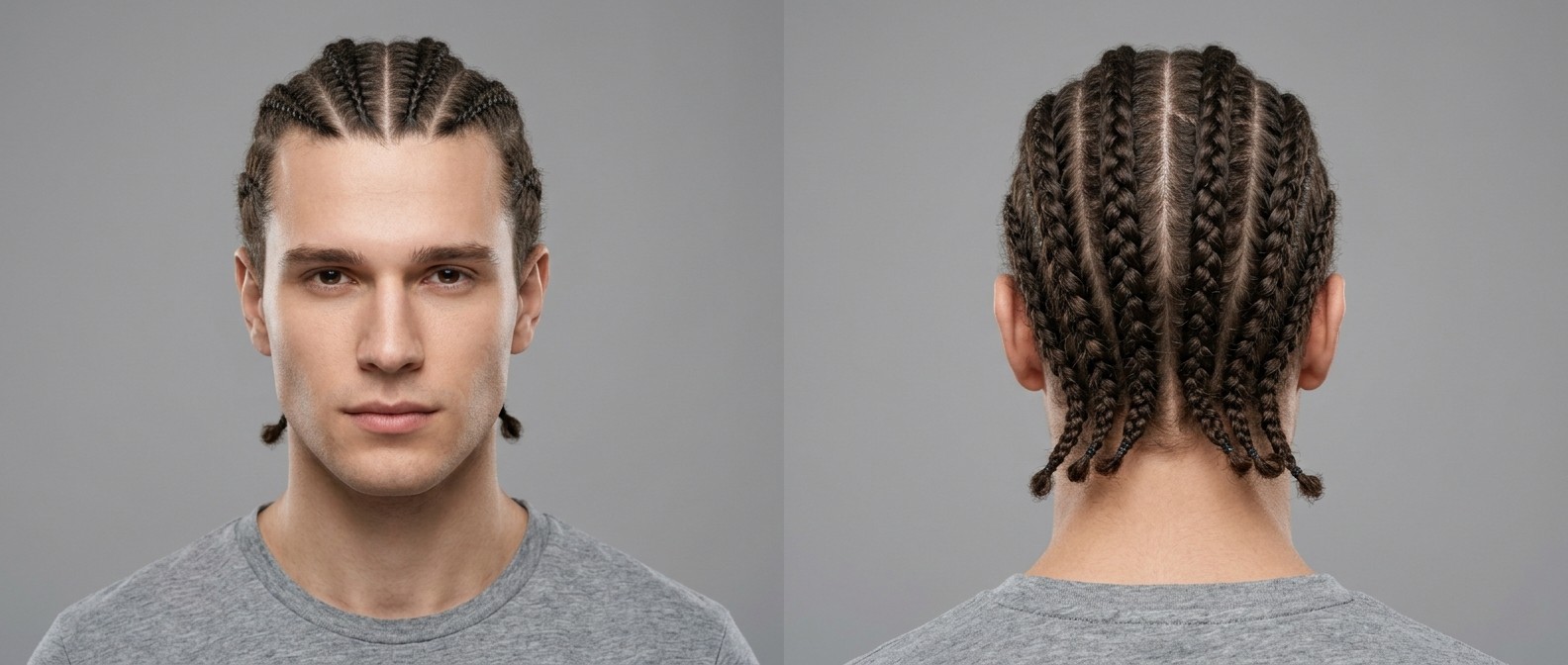
Cornrows
Symmetrical Straight-Back Cornrows for Thick Curly Men's Hair
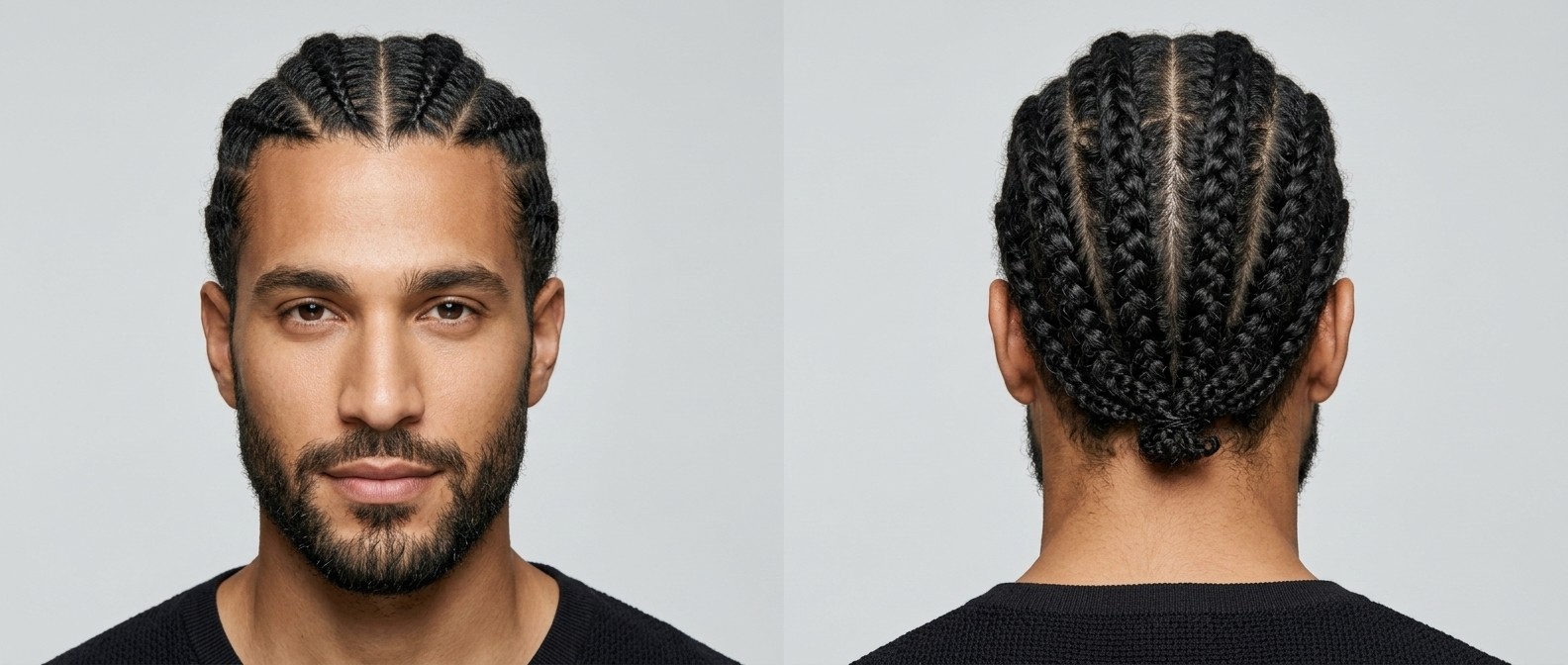
Cornrows
Classic Straight-Back Cornrows with Neat Nape Knot and Beard
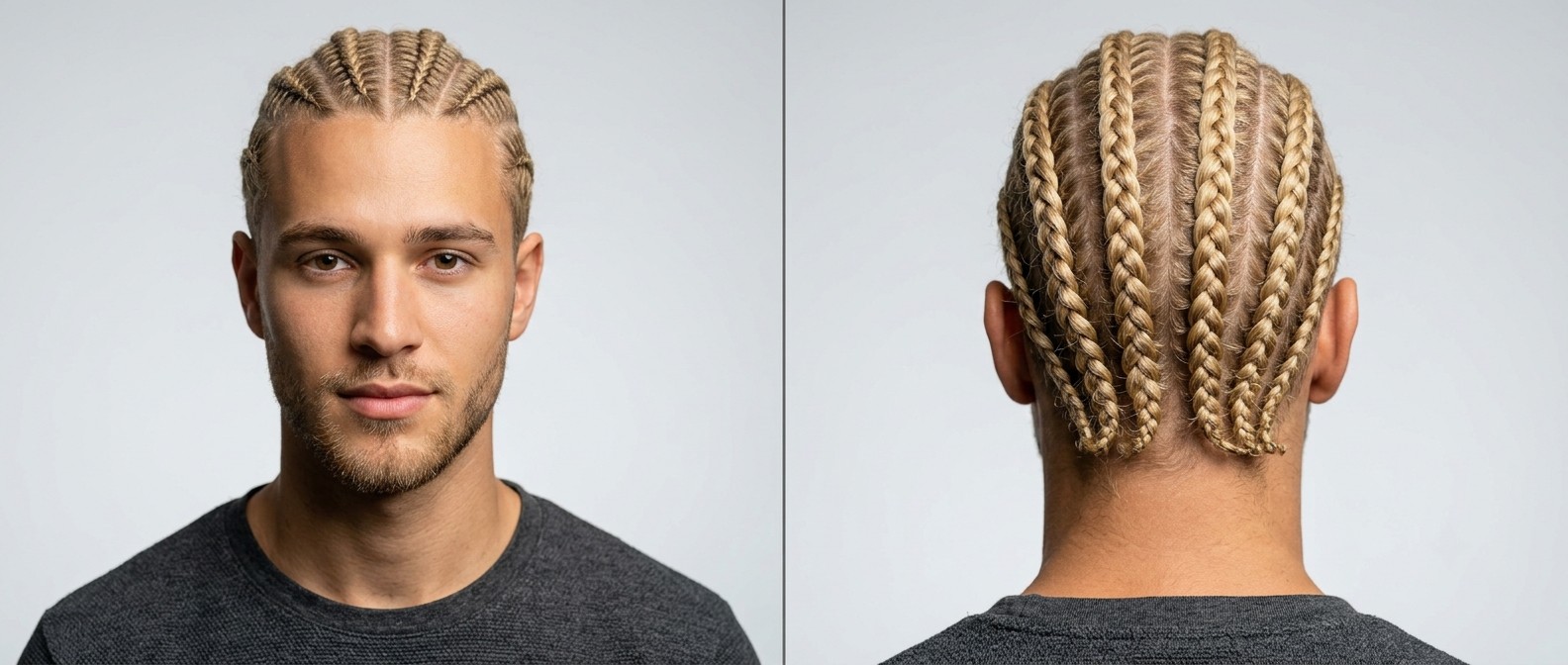
Cornrows
Classic Straight-Back Blonde Cornrows for Medium Length Hair
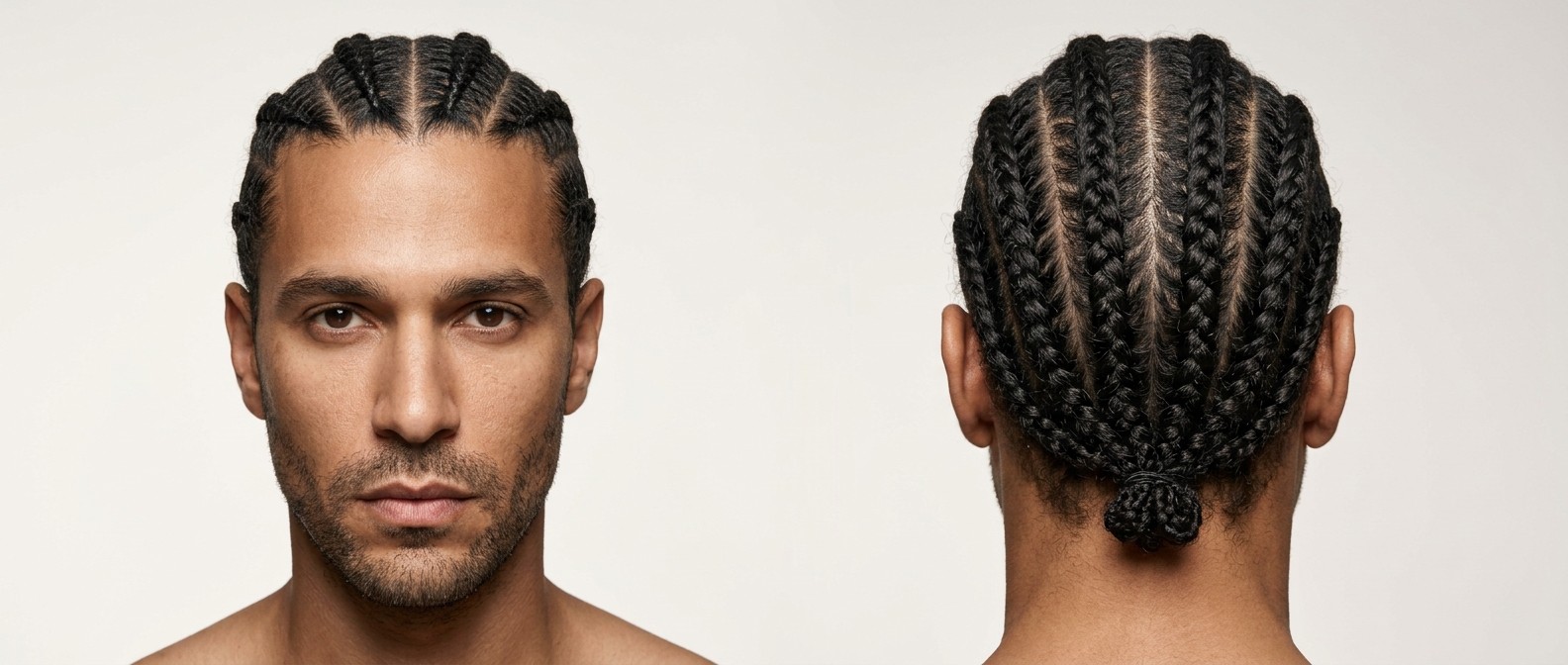
Cornrows
Classic Straight-Back Cornrows Featuring a Neat Nape Knot
Cornrows
Thick Straight-Back Braided Cornrows for Medium Brown Hair
Cornrows