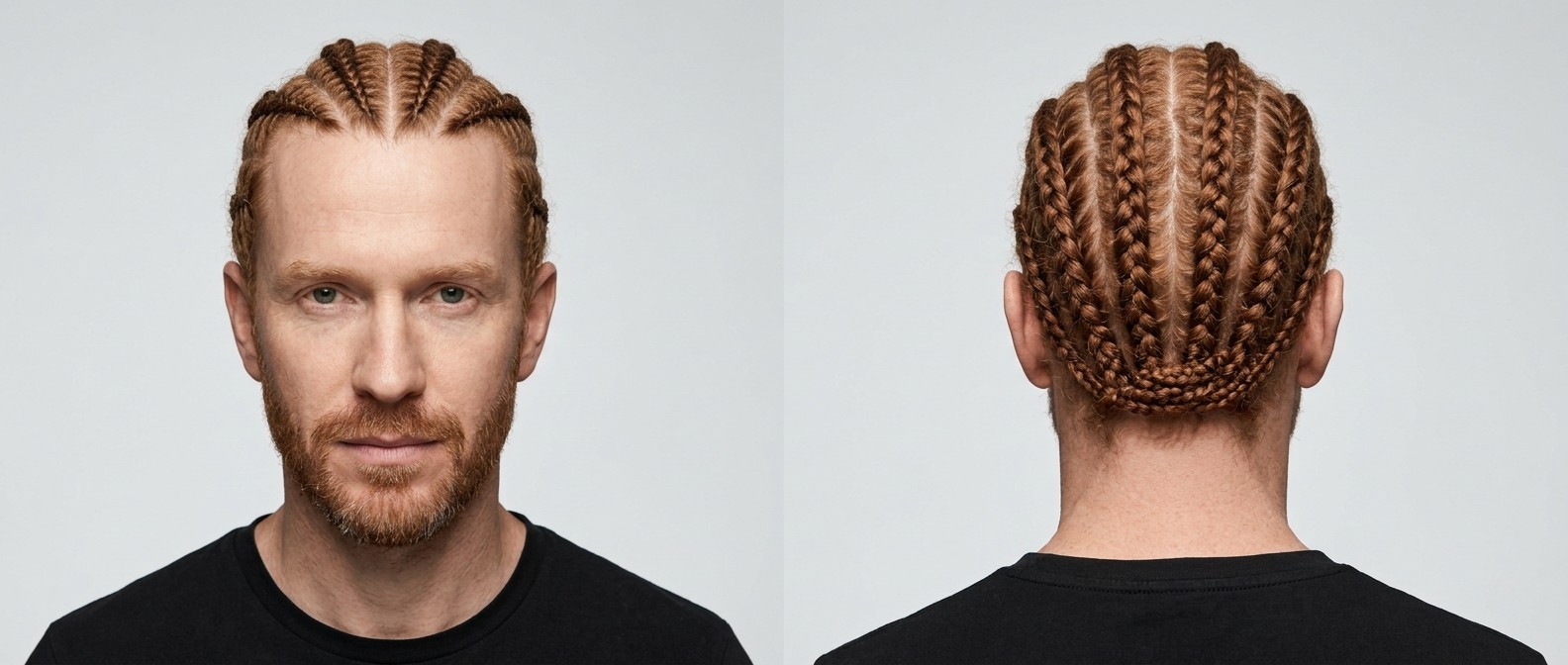
Classic Straight Back Cornrows with Tucked Nape Finish for Men
 Top
Medium (5-10 cm)
Top
Medium (5-10 cm)
 Sides
Medium (2-5 cm)
Sides
Medium (2-5 cm)
 Hair Type
Curly (Type 3)
Hair Type
Curly (Type 3)
 Face Shape
Heart
Face Shape
Heart
 Maintenance
Medium
Maintenance
Medium
 Thickness
Medium / Normal
Thickness
Medium / Normal
About This Style
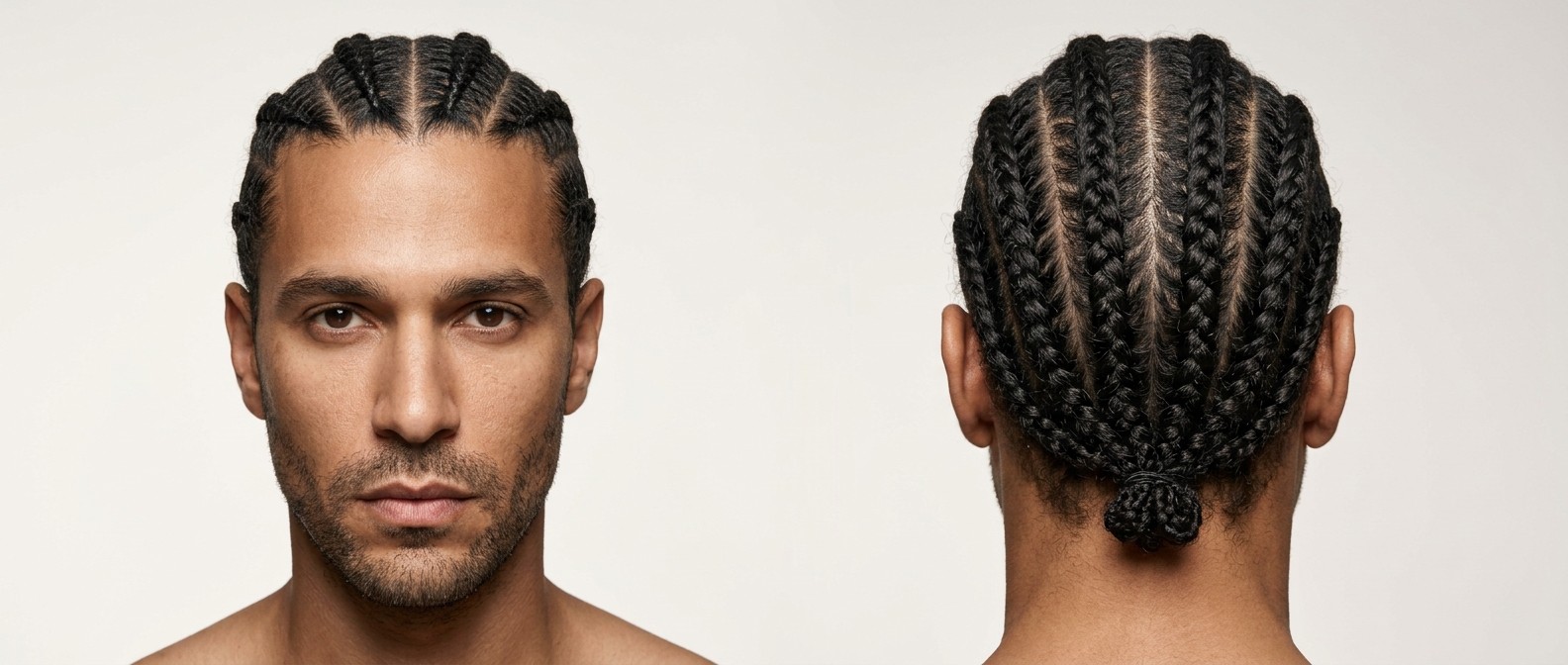
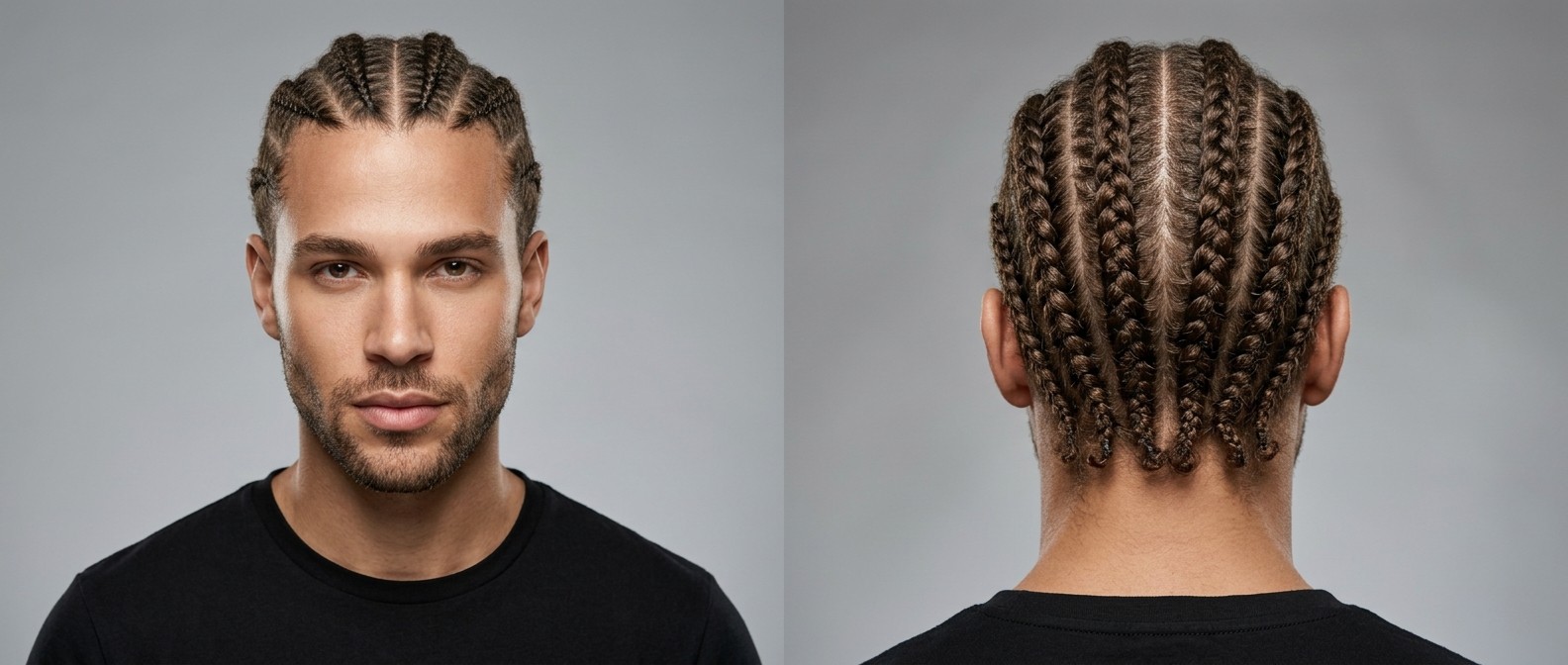
This striking variation of classic straight-back cornrows showcases incredible precision, perfectly suited for the modern man seeking a bold yet structured aesthetic. What immediately stands out in this front-and-back view is the immaculate parting and the tight, uniform braiding that travels seamlessly from the front hairline all the way to the nape of the neck. The braids are meticulously gathered and tucked at the base, creating a clean, seamless finish that prevents loose ends and maintains a highly polished silhouette. This technique beautifully highlights the natural variations in the red hair color, adding incredible depth and visual texture to the overall style.
This protective style is exceptionally flattering for heart-shaped faces, as the linear flow draws the eye backward, balancing facial proportions while keeping focus on strong masculine features like a well-groomed, textured beard. It is an ideal choice for creative professionals, artists, or highly active individuals who want a zero-fuss morning routine without sacrificing a highly stylized, intentional appearance. By keeping the hair secured and completely off the face, this braided look effortlessly bridges the gap between rugged masculinity and refined, modern grooming.
This protective style is exceptionally flattering for heart-shaped faces, as the linear flow draws the eye backward, balancing facial proportions while keeping focus on strong masculine features like a well-groomed, textured beard. It is an ideal choice for creative professionals, artists, or highly active individuals who want a zero-fuss morning routine without sacrificing a highly stylized, intentional appearance. By keeping the hair secured and completely off the face, this braided look effortlessly bridges the gap between rugged masculinity and refined, modern grooming.
Key Features
- Symmetrical, straight-back braiding pattern that creates distinct, linear sections across the entire scalp from hairline to crown.
- Extremely clean, razor-sharp parting lines that expose the natural scalp, creating a striking high contrast against the reddish-brown hair.
- Tight, uniform plaiting technique that keeps Type 3 curly hair perfectly flat, controlled, and secured tightly against the head.
- Seamlessly tucked and interconnected ends at the nape of the neck, forming a rounded, continuous boundary rather than leaving loose hanging tails.
- Low-profile, aerodynamic silhouette that perfectly contours the natural shape of the skull without adding any unwanted volume or bulk.
- Integrated facial hair transition, where the crisp, clean lines of the scalp braids contrast beautifully with the rugged, textured full beard.
Getting the Cut
- Request a thorough detangling session and a gentle blowout to stretch your Type 3 curly hair completely before any braiding begins.
- Ask for classic straight-back cornrows, divided into six to eight perfectly even sections depending on your exact head width and hair density.
- Specify that the parting lines must be razor-straight and highly visible, requesting the use of a fine-tooth rat-tail comb for maximum precision.
- Instruct the braider to use a firm, consistent tension to ensure the braids lay completely flat against the scalp without causing excessive pulling on the delicate front hairline.
- Request that the braids follow the natural curvature of your skull, traveling perfectly straight back from the front hairline down to the occipital bone.
- Ask for the ends of the braids to be intricately connected and tucked horizontally at the nape of the neck to create a seamless, closed loop instead of leaving loose hanging ends.
- Have your barber line up your beard and crisply edge the perimeter of your facial hair to contrast sharply with the tight, neat braids above.
Daily Routine
- Because this is a highly secure protective style, your morning routine requires zero actual styling, brushing, or manipulation of the hair strands.
- Start your day by carefully removing your silk or satin durag, which you must be wearing every single night to prevent frizz and friction against your pillow.
- Lightly mist your entire scalp and the length of the braids with a hydrating leave-in conditioner spray or natural rosewater to refresh the hair and soothe the skin.
- Apply a few drops of a lightweight, nourishing scalp oil directly to the exposed parting lines to prevent dryness and flaking.
- Use your fingertips to gently massage the oil into the scalp using circular motions, being extremely careful not to disturb the neatness of the braids.
- If you notice any minor flyaways or frizz along the front hairline, apply a tiny dab of matte edge control paste and smooth it down with a soft-bristle toothbrush.
- Finish your routine by massaging a high-quality beard oil into your facial hair and brushing it into place, ensuring your beard looks just as polished as your cornrows.
Products & Tools
- Premium silk or satin durag to protect the braids from friction, moisture loss, and frizz while sleeping.
- Hydrating daily mist or lightweight liquid leave-in conditioner spray to maintain moisture without causing product buildup.
- Lightweight, non-comedogenic scalp oil (such as jojoba, sweet almond, or a tea tree oil blend) to nourish the exposed skin.
- Edge control paste or pomade with a firm hold and natural matte finish for taming stubborn hairline flyaways.
- Soft-bristle edge brush or a clean, dedicated toothbrush for the precise application and smoothing of edge control products.
- High-quality, naturally derived beard oil and a firm boar bristle beard brush to maintain facial hair grooming and shine.
Maintenance
- Schedule a professional re-braiding appointment every 3 to 4 weeks to maintain the neatness of the parts and prevent your hair from matting at the roots.
- Strictly avoid heavy, creamy styling products or thick waxes that can cause highly visible white buildup within the tight crevices of the braids.
- Wash your hair carefully every 1 to 2 weeks by wearing a mesh wig cap and gently pressing diluted clarifying shampoo into the scalp, rather than aggressively scrubbing.
- Always sleep with a silk or satin head covering; standard cotton pillowcases will rapidly drain moisture from your hair and cause immediate, irreversible frizz.
- Keep your scalp protected from prolonged, direct sun exposure, as the wide, exposed parting lines are highly susceptible to painful sunburns.
Best For
Face Shapes: Ideal for heart, oval, and square faces, as the tight sides and linear flow emphasize strong bone structure.
Hair Types: Perfectly suited for Type 3 curly hair or Type 4 coily hair that has enough natural grip and texture to hold a tight braid.
Lifestyles: Excellent for highly active men, athletes, or creative professionals wanting a stylish, completely zero-maintenance daily look.
Age Ranges: Highly versatile, looking exceptionally distinguished on men over 45 when paired with a mature, well-groomed beard.
Pro Tips
- Never sacrifice the health of your hairline for a tighter braid; excessive tension can lead to traction alopecia and permanent hair loss over time.
- If your scalp feels excessively tight or itchy after the initial braiding session, apply a soothing peppermint or tea tree oil spray for immediate cooling relief.
- To extend the life of the style, wear a breathable durag or skull cap during intense workouts to prevent excessive sweat from loosening the roots.
- Ensure you have at least 5 to 10 centimeters of even growth on top and sides before attempting this specific tucked-nape variation to ensure the braids hold securely.
Related Hairstyles
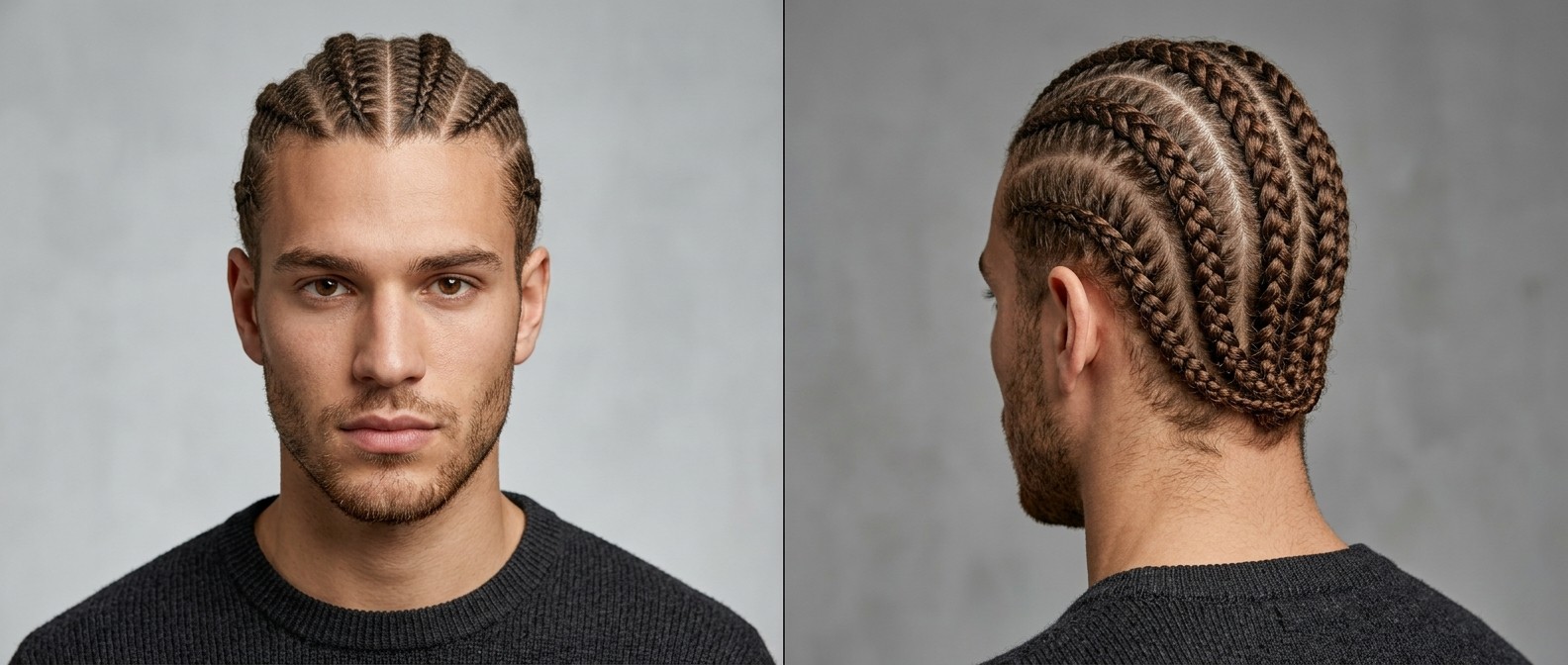
Cornrows
Thick Straight-Back Braided Cornrows for Medium Brown Hair
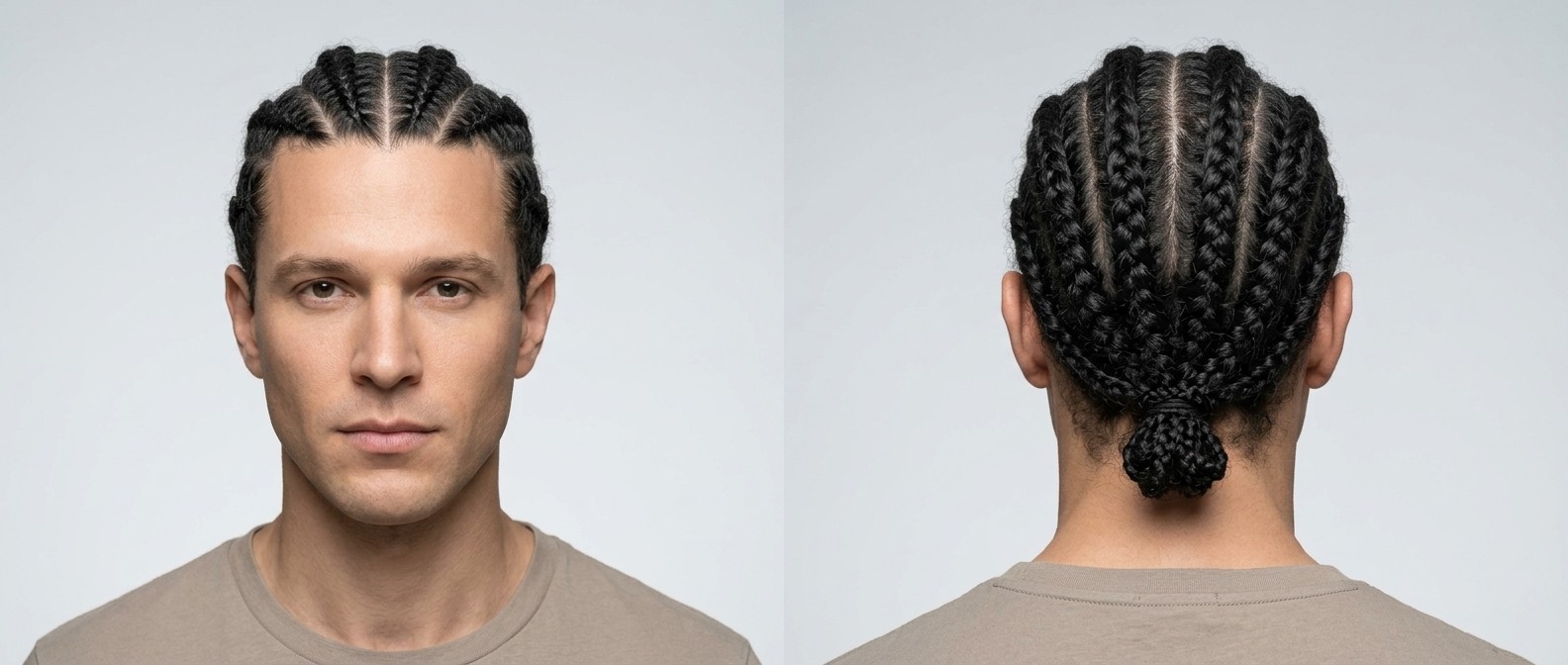
Cornrows
Classic Straight Back Cornrows with a Low Bun for Men
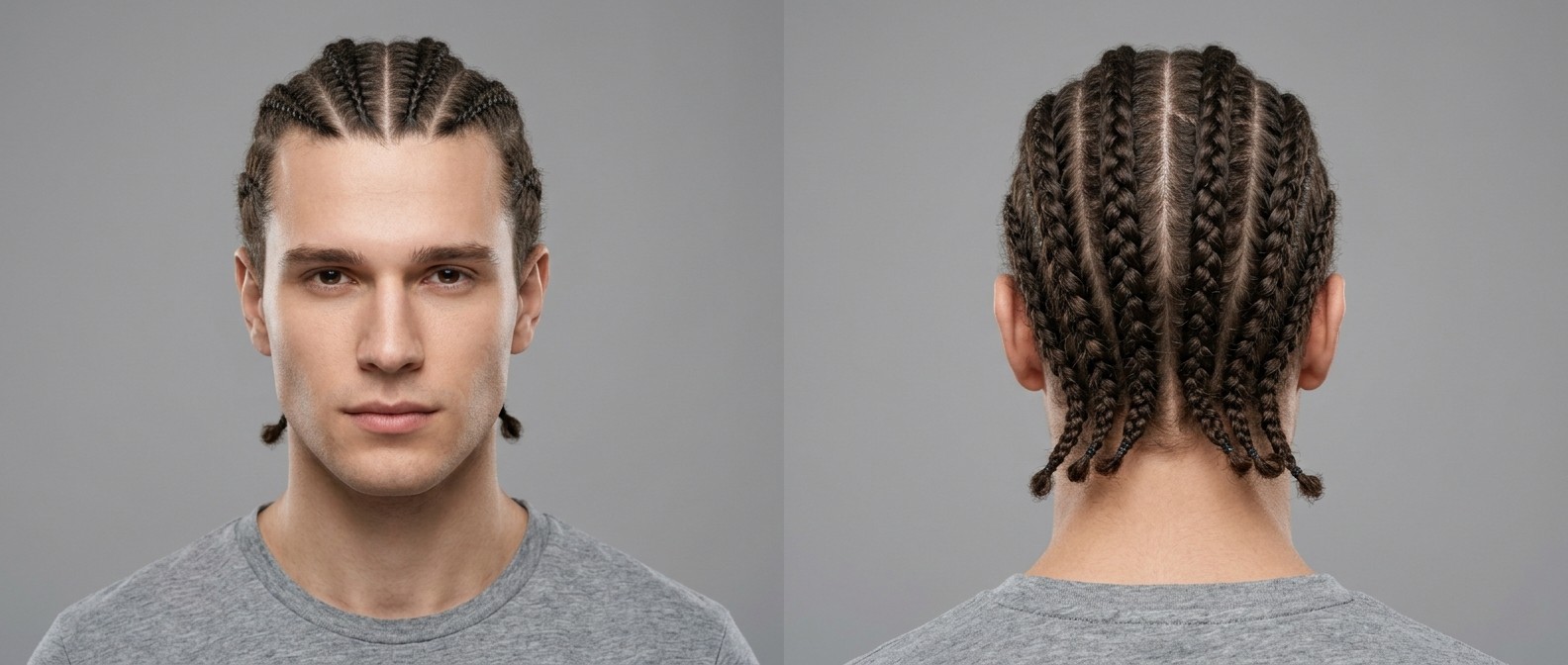
Cornrows
Symmetrical Straight-Back Cornrows for Thick Curly Men's Hair
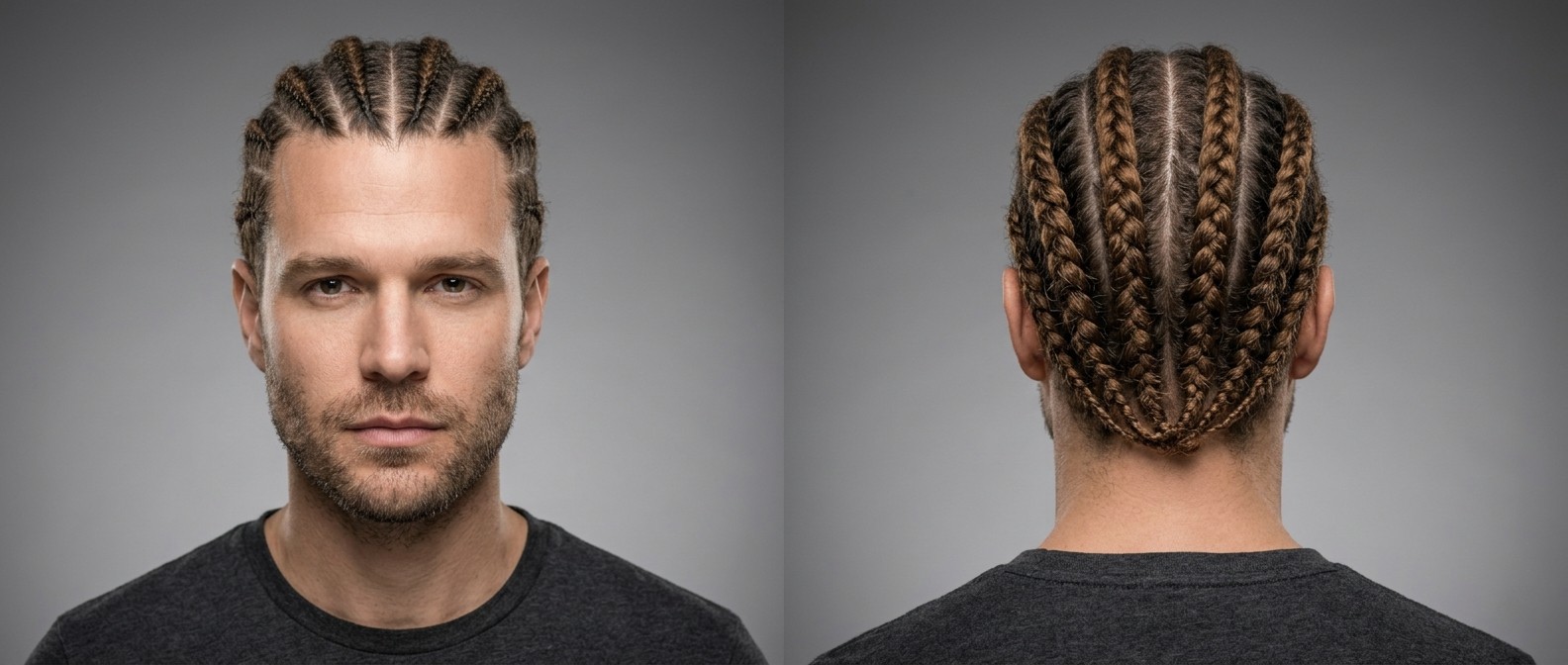
Cornrows
Creative Straight-Back Cornrows for Thick Textured Men's Hair
Cornrows
Classic Straight-Back Cornrows Featuring a Neat Nape Knot
Cornrows