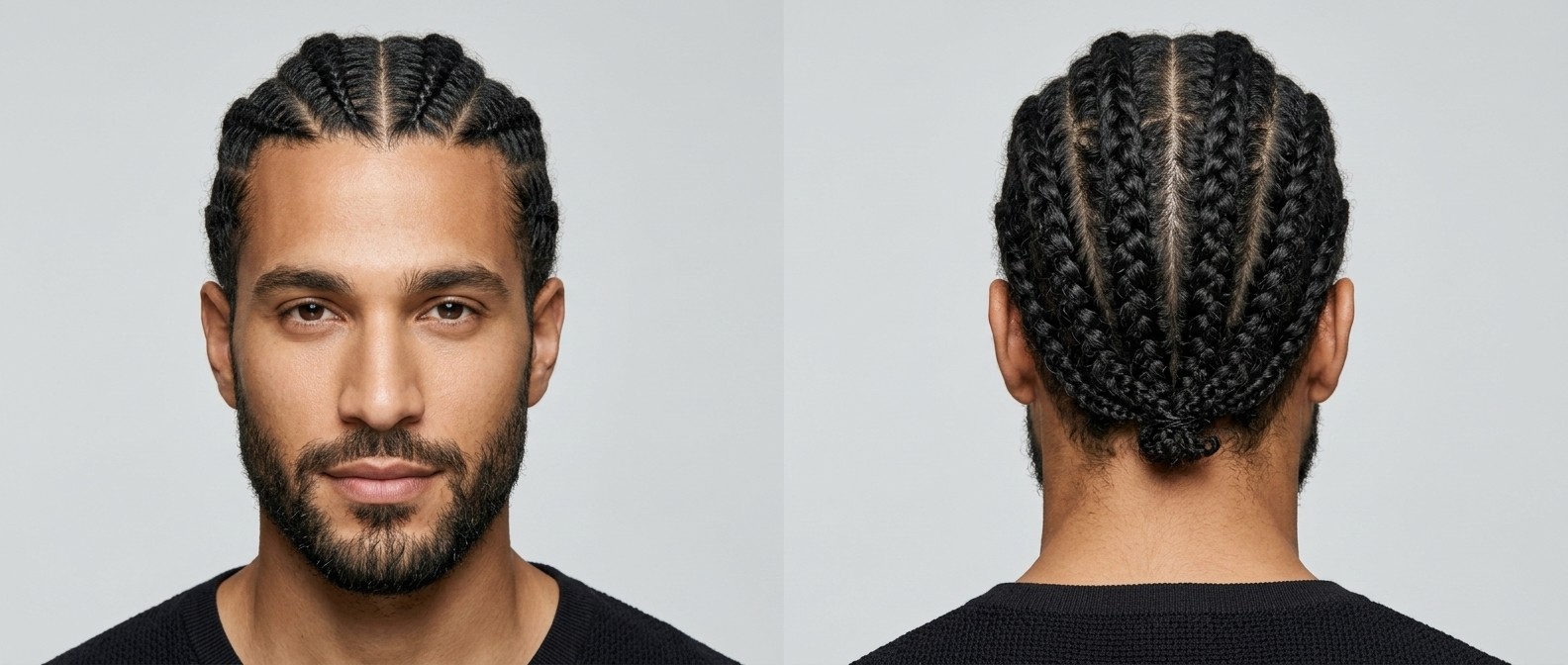
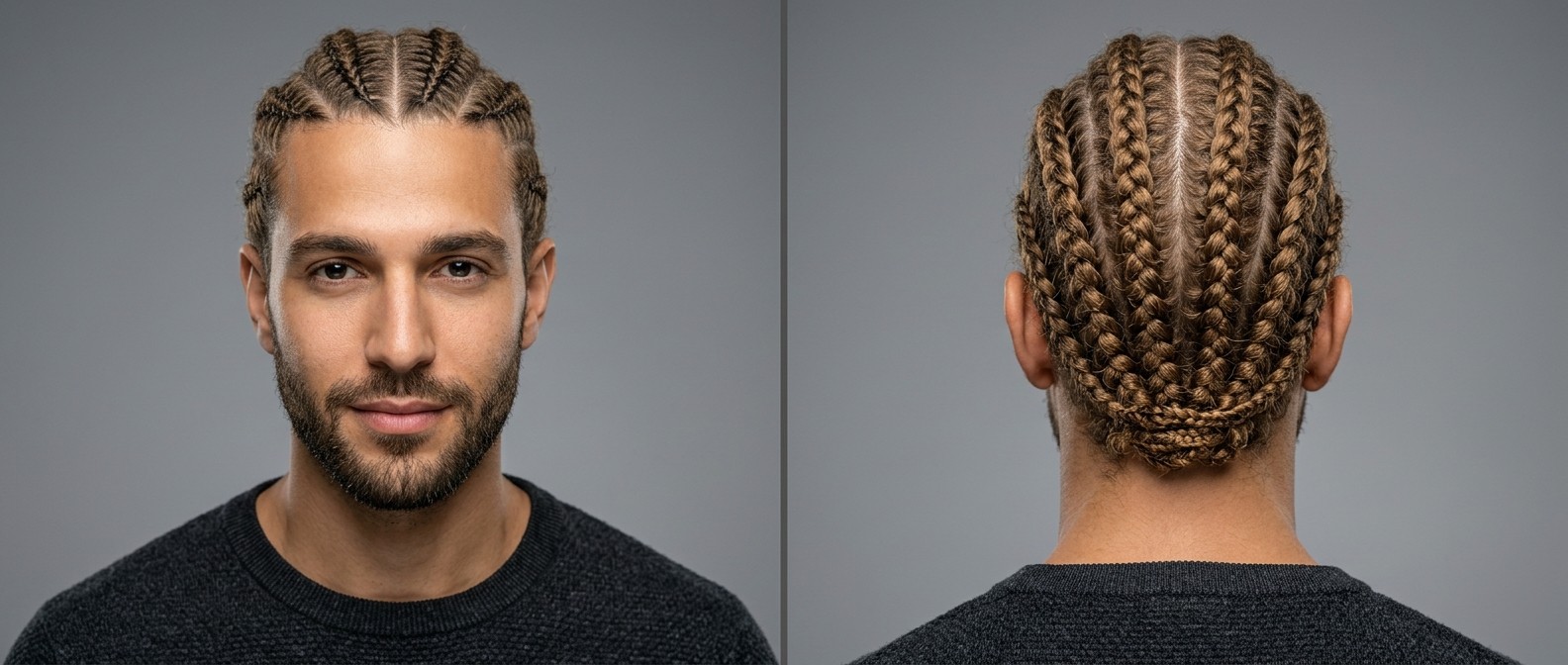
Classic Straight-Back Cornrows with Neat Nape Knot and Beard
 Top
Long (10-20 cm)
Top
Long (10-20 cm)
 Sides
Medium (2-5 cm)
Sides
Medium (2-5 cm)
 Hair Type
Very Curly / Afro (Type 4)
Hair Type
Very Curly / Afro (Type 4)
 Face Shape
Rectangular
Face Shape
Rectangular
 Maintenance
Medium
Maintenance
Medium
 Thickness
Thick / Dense
Thickness
Thick / Dense
About This Style
Looking at this striking variation of classic cornrows, you will immediately notice the immaculate, straight-back braiding technique that creates a powerful, streamlined silhouette. The hair is sectioned into five to six distinct, symmetrical rows that run seamlessly from the low front hairline directly to the nape of the neck, exposing perfectly clean, straight scalp parts. At the back, the medium-to-long thick hair culminates in a subtle, tightly secured knot, keeping the ends protected and completely out of the way. This style is exceptionally well-suited for men who appreciate a creative, artistic aesthetic while maintaining a highly polished, professional edge. It perfectly frames a rectangular face shape, drawing the eye upward and highlighting strong facial features alongside a meticulously groomed short beard. Whether you are navigating an active lifestyle, hitting the gym, or attending an upscale creative event, this versatile braided look offers unparalleled convenience. With zero daily styling products required for the hair itself, it allows you to wake up and instantly look put-together.
Key Features
- Symmetrical straight-back pattern featuring five to six thick, evenly spaced cornrows.
- Razor-sharp, linear partings that expose the scalp and provide striking geometric contrast.
- Continuous hair flow directed straight from the low front hairline to the lower crown and nape.
- Tightly woven, dense texture that controls thick, very curly hair types with absolute precision.
- A small, neatly tucked bun or knot at the nape of the neck to secure the ends and maintain a clean profile.
- Seamless integration with a short, meticulously groomed beard, balancing the sleek upper silhouette.
- Low-profile, head-hugging shape that minimizes volume while maximizing structural definition.
Getting the Cut
- Request a thorough wash, deep conditioning, and detangling session to prepare your thick, curly hair for tension-free braiding.
- Ask your braider or barber for a classic straight-back cornrow pattern, specifically requesting five to six medium-width rows.
- Emphasize the need for razor-sharp, perfectly straight partings using a fine-tooth rat-tail comb to ensure symmetry across the scalp.
- Request that the braids start directly at your natural low hairline, incorporating the hair smoothly without pulling too tightly on the delicate front edges.
- Instruct the stylist to use a firm but comfortable underhand braiding technique to make the cornrows pop and sit raised above the scalp.
- Ask them to braid the hair all the way down to the very ends, ensuring the tension remains consistent throughout the entire length.
- Direct them to gather the hanging braided ends at the nape of your neck and secure them into a tight, flat knot or mini bun using a small band.
- Request a crisp line-up on your facial hair to ensure your short beard perfectly complements the clean, geometric aesthetic of the braids.
Daily Routine
- Wake up and carefully remove your silk or satin durag, which protects your straight-back cornrows from overnight friction.
- Inspect the braids in the mirror, noting that because this style requires absolutely no daily styling products, your morning routine is incredibly fast.
- Take a lightweight, hydrating scalp oil and apply just a few small drops directly to the exposed scalp along the clean partings.
- Gently massage the soothing oil into your skin using the pads of your fingertips, avoiding rubbing the actual braided hair.
- Check the low hairline at the front; if desired, lightly brush the natural baby hairs down with a dry, soft-bristle edge brush.
- Examine the small braided knot at the nape of your neck to ensure the snag-free elastic band is still holding the ends securely in place.
- Give the overall style a quick pat down to ensure the braids are sitting flat and comfortably against your head.
- Step out the door, enjoying a meticulously groomed, artistic hairstyle that literally takes under one minute to manage each morning.
Products & Tools
- Hydrating scalp oil or tea tree serum to prevent dryness and flaking between the tight partings.
- Premium silk or satin durag or bonnet to wear while sleeping, essential for preserving the style's longevity.
- Fine-tooth rat-tail comb for the initial sectioning and creating razor-sharp parts (used exclusively by your stylist).
- Soft-bristle edge brush or a clean toothbrush to gently lay down the front perimeter hairs without using heavy gels.
- Small, snag-free elastic hair bands to secure the braided ends into the neat nape knot.
- Witch hazel or a specialized dry shampoo foam designed for protective styles to cleanse the scalp between washes.
Maintenance
- Schedule an appointment with your braider every 3 to 4 weeks to take out, wash, and re-braid the hair to prevent matting and breakage.
- Avoid heavy, creamy products or thick waxes that can easily get trapped inside the braids and cause severe white buildup.
- Cleanse your scalp weekly using a witch hazel-soaked cotton pad to remove sweat and dirt without frizzing the braids.
- Always sleep with a tightly secured silk durag; cotton pillowcases will drain moisture and cause immediate frizzing of the cornrows.
- Keep your hands out of your hair during the day; excessive touching transfers dirt and loosens the tension of the braids.
- Protect your scalp from sunburn by wearing a hat if you plan to be in direct, intense sunlight for extended periods.
Best For
Rectangular, oval, and square face shapes, as the pulled-back style highlights strong jawlines and facial symmetry.
Men with thick, dense, and very curly or Afro-textured hair (Type 3 and Type 4) that is at least 10-20 cm long.
Active lifestyles, athletes, and gym-goers who need their hair completely secured and out of their face during rigorous workouts.
Creative and artistic professionals who want a look that is both culturally expressive and immaculately groomed.
Anyone seeking a low-maintenance daily routine, as this specific variation requires under one minute of morning preparation.
Pro Tips
- Never allow your stylist to braid your hair with excessive tension; if you see white bumps or feel severe pain, it is too tight and can cause traction alopecia.
- During colder winter months, increase your use of moisturizing scalp oils, as the exposed skin is more susceptible to drying out and flaking.
- If your hair is currently on the shorter side of the medium length, you can ask your braider to feed in a small amount of synthetic hair for better grip.
- To keep the nape knot looking fresh, you can undo just the very ends and re-twist the bun once a week without redoing the entire cornrow.
Related Hairstyles
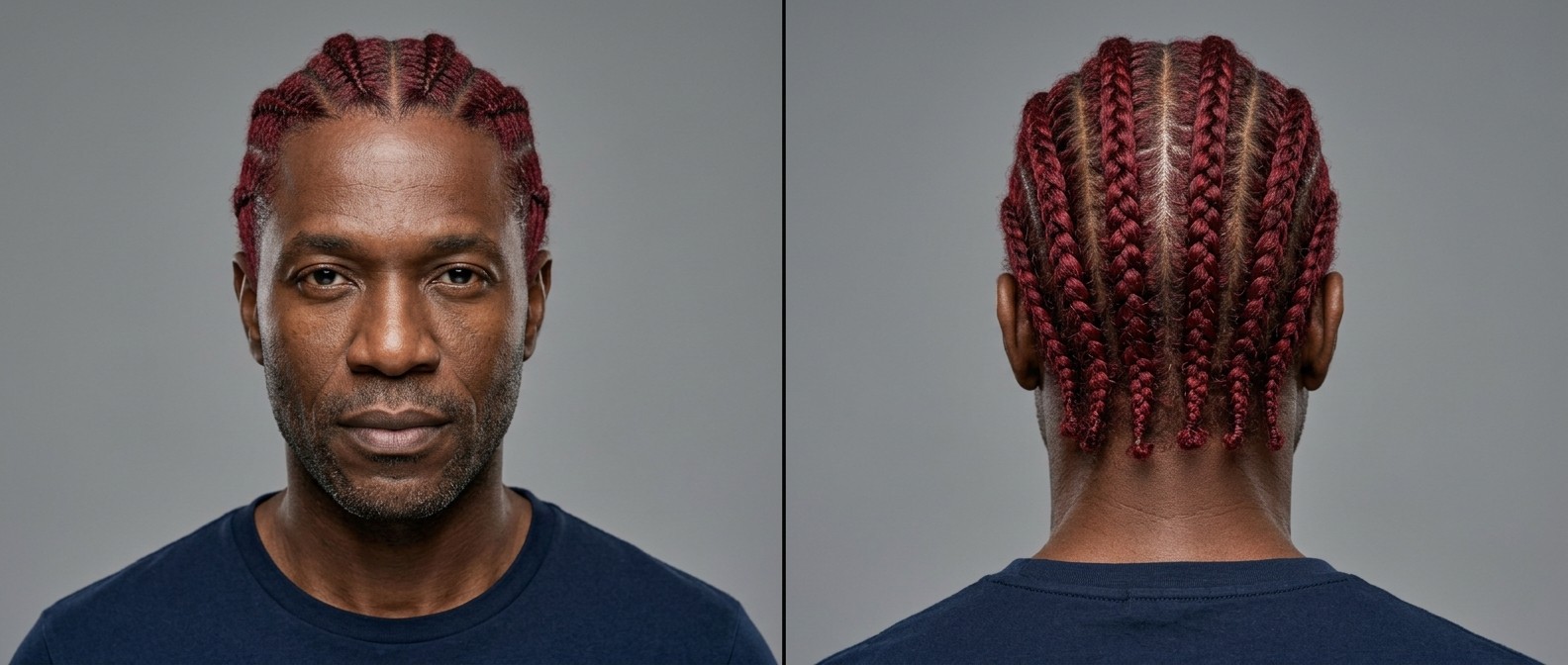
Cornrows
Bold Crimson Red Straight-Back Cornrows for Rectangular Faces
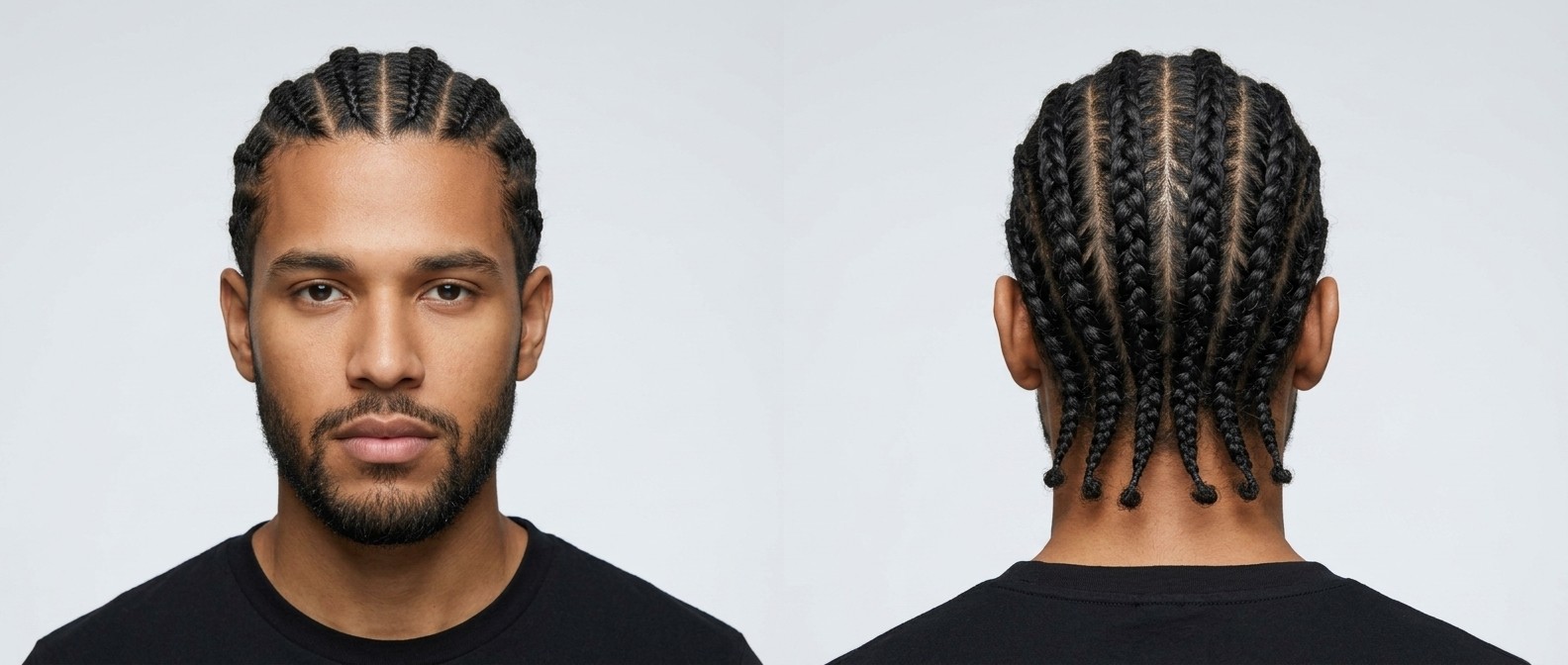
Cornrows
Classic Straight-Back Cornrows for Thick Curly Hair
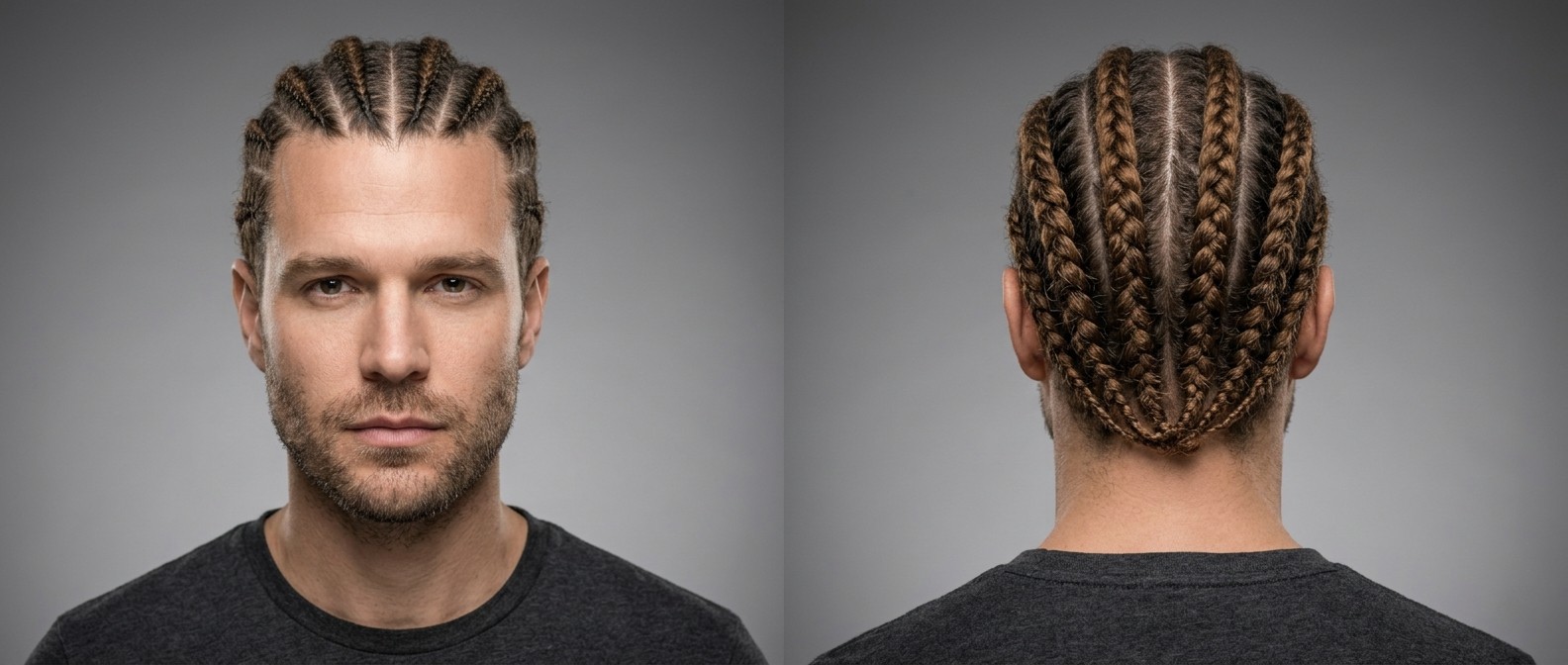
Cornrows
Creative Straight-Back Cornrows for Thick Textured Men's Hair
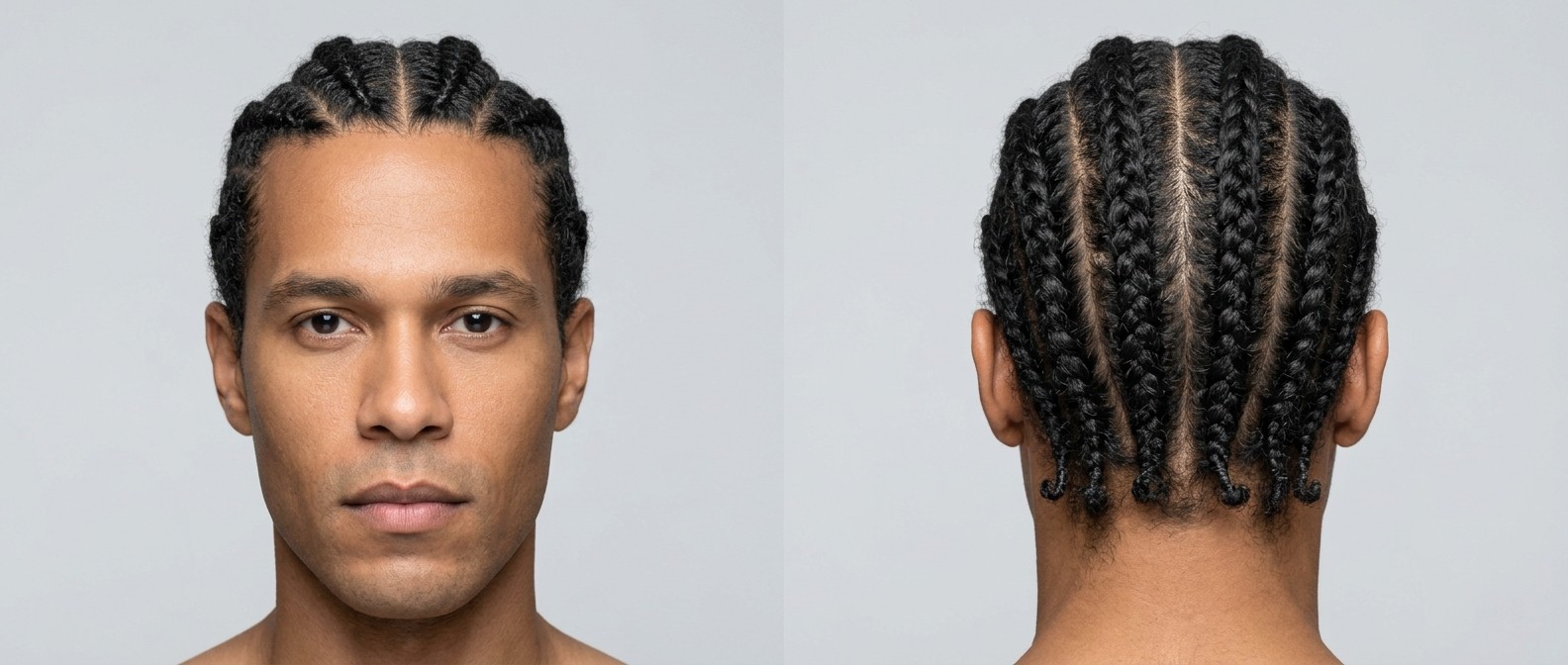
Cornrows
Classic Straight-Back Cornrows with Clean Parts for Men
Cornrows
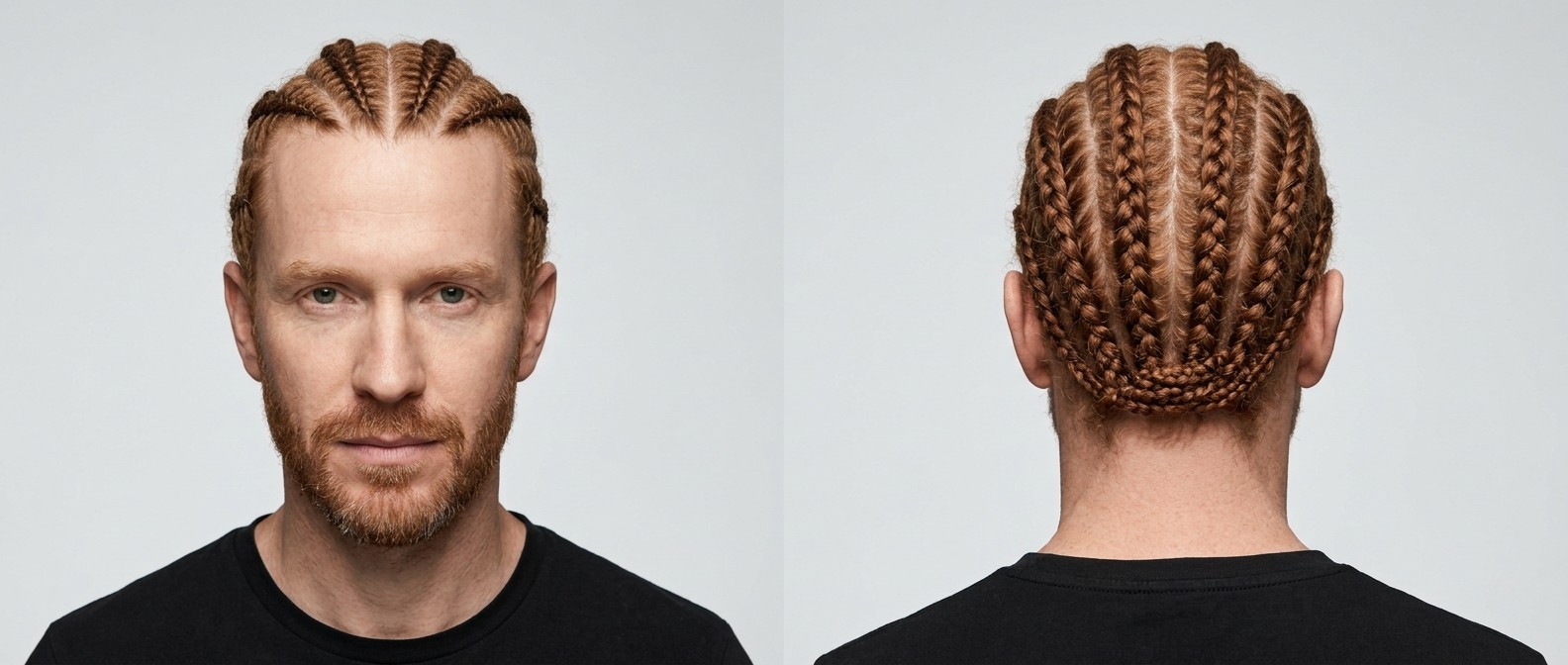
Straight-Back Cornrows with Tucked Nape for Thick Wavy Hair
Cornrows