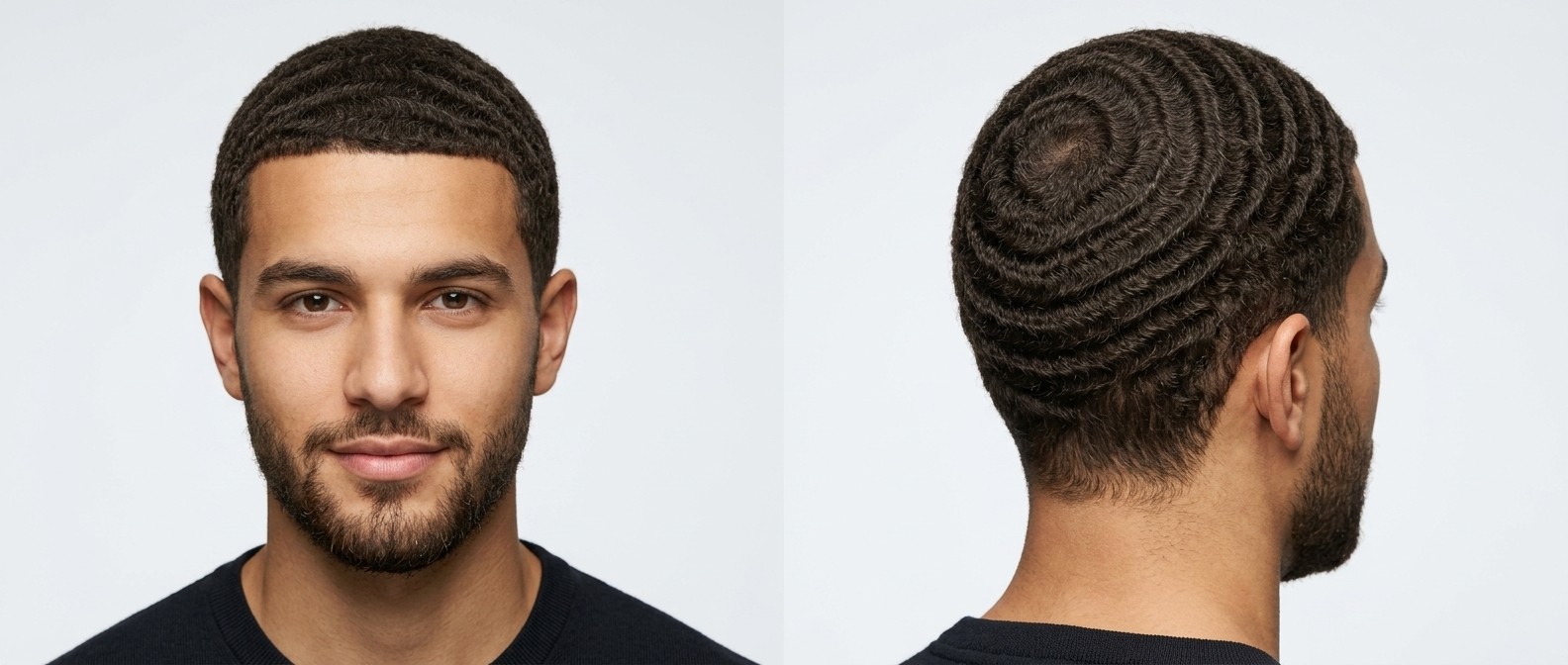
Deep 360 Waves with Crisp Line-Up for Thick Hair
 Top
Short (2-5 cm)
Top
Short (2-5 cm)
 Sides
Very Short (1-6 mm)
Sides
Very Short (1-6 mm)
 Hair Type
Curly (Type 3)
Hair Type
Curly (Type 3)
 Face Shape
Oval
Face Shape
Oval
 Maintenance
High
Maintenance
High
 Thickness
Thick / Dense
Thickness
Thick / Dense
About This Style
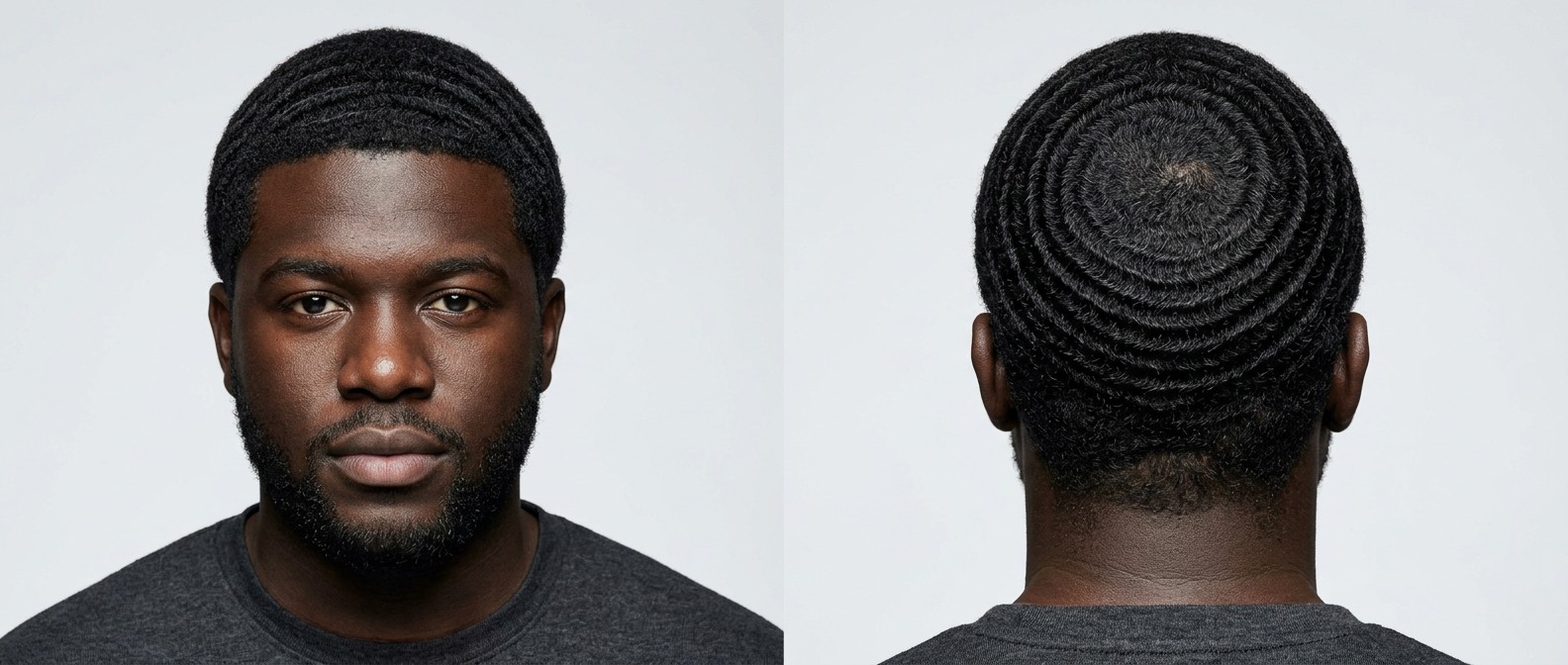
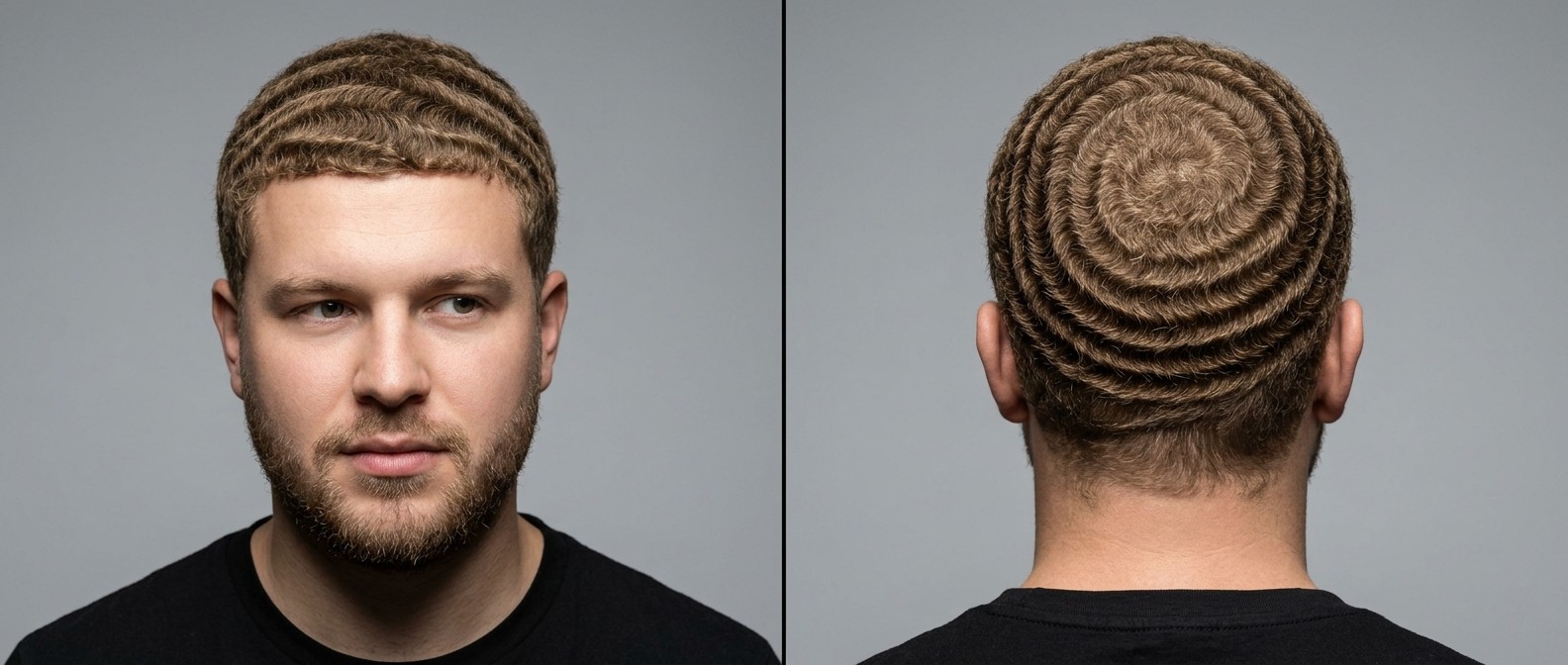
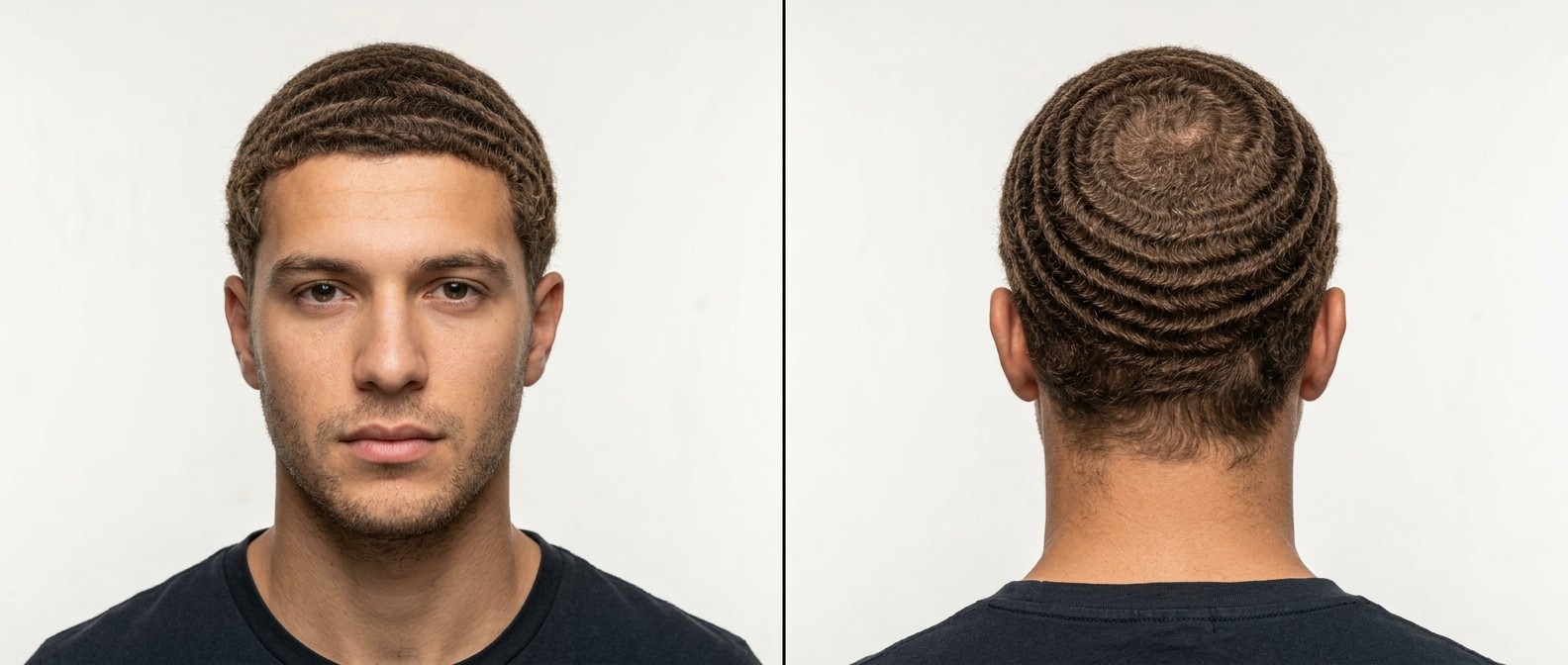
This striking variation of the classic 360 waves showcases an incredibly deep, concentric ripple pattern that radiates perfectly from the crown down to the extremely short sides and nape. What immediately catches the eye in this specific style is the sheer definition and depth of the waves, achieved through meticulous brushing and rigorous training of thick, dense Type 3 curly hair. The front features a razor-sharp, perfectly straight line-up that beautifully frames an oval face, creating a strong, geometric contrast against the flowing, circular texture of the waves themselves. The crown acts as a flawless epicenter, with no visible forks or overlapping patterns, demonstrating a masterclass in hair training.
Perfect for the dedicated grooming enthusiast, this high-maintenance look demands unwavering commitment but delivers an unmatched, hypnotic aesthetic. It pairs exceptionally well with a neatly trimmed short beard, as seen here, bridging the gap between a casual everyday vibe and a highly polished, barber-fresh appearance. If you possess the patience to train your hair daily and want a style that turns heads with its structural precision, this deep-grooved wave pattern is the ultimate flex for thick hair.
Perfect for the dedicated grooming enthusiast, this high-maintenance look demands unwavering commitment but delivers an unmatched, hypnotic aesthetic. It pairs exceptionally well with a neatly trimmed short beard, as seen here, bridging the gap between a casual everyday vibe and a highly polished, barber-fresh appearance. If you possess the patience to train your hair daily and want a style that turns heads with its structural precision, this deep-grooved wave pattern is the ultimate flex for thick hair.
Key Features
- Perfectly trained 360-degree concentric wave pattern radiating flawlessly from a tightly defined crown epicenter.
- Extremely crisp, straight front edge line-up that frames the forehead with sharp geometric precision.
- Deeply grooved, uniform ripples that highlight the natural density, volume, and thickness of dark brown hair.
- Consistent short length across the top (approximately 2-5 cm) that is compressed tightly down to the scalp to form the wave ridges.
- Seamless transition into very short sides (1-6 mm) that maintain the continuous wave flow without breaking the pattern.
- Clean, natural taper at the nape of the neck that refines the perimeter while preserving the bottom tier of the established wave rings.
- High-contrast texture pairing between the deeply rippled scalp and the neatly groomed, shorter facial hair.
Getting the Cut
- Request a uniform length cut all over using a #1.5, #2, or even a #2.5 guard depending on your current wolfing stage, always cutting strictly with the grain of your established wave pattern.
- Emphasize the absolute necessity of not cutting against the grain, as this will instantly destroy the deep ripples you have spent weeks or months brushing into place.
- Ask for a razor-finished, ultra-crisp edge-up along the front hairline, keeping the line as natural and straight as possible without pushing the corners back.
- Specify a slight, precise taper at the sideburns to seamlessly blend the horizontal wave pattern into your vertically growing short beard.
- Request a low, subtle taper at the nape of the neck to clean up the back edges while carefully preserving the bottom continuous ring of your 360 waves.
- Instruct your barber to completely avoid the use of thinning shears or texturizing techniques, as maximum hair density is required to maintain the prominent ridges of the waves.
- Ask them to finish the service by laying the hair down with a hot towel treatment and a light application of holding pomade, brushing strictly in the direction of your crown swirl.
Daily Routine
- Start your rigorous morning routine by dampening your hair slightly with a warm washcloth to soften the hair cuticles, open the pores, and reactivate your styling products from the previous day.
- Apply a dime-sized amount of premium wave pomade or natural wave butter to your palms, rub them together vigorously to generate heat, and smooth it evenly over your head going with the grain.
- Begin your primary brush session using a high-quality medium-bristle wave brush, starting precisely at the crown and brushing outward in consistent, straight strokes toward your hairline, ears, and nape.
- Dedicate a minimum of 10 to 15 minutes to continuous, focused brushing, ensuring you hit every single angle (front, sides, back, and blind spots) evenly to maintain the flawless 360-degree connection.
- Switch over to a soft-bristle brush for the final 3 to 5 minutes of your session to lay down any stray hairs, smooth out the surface frizz, and enhance the natural glossy sheen without disturbing the deep grooves.
- Utilize the plastic bag method by placing a sandwich bag over your hand and rubbing it smoothly over your entire head with the grain to maximize compression and lay down micro-frizz.
- Immediately put on a premium silk or satin durag, ensuring the strings are pulled flat to avoid forehead lines, tying it securely but not too tightly to lock the style in place for at least 30 minutes.
Products & Tools
- Medium-hold to heavy-hold wave pomade or natural wave butter to provide essential moisture, hold, and keep the thick hair compressed against the scalp.
- High-quality medium-bristle curved wave brush designed to perfectly contour to your head shape, pull the curl pattern, and deepen the wave grooves.
- Premium soft-bristle finishing brush to carefully lay down surface frizz, distribute natural oils, and add a polished, glossy finish to your waves.
- Silk or satin durag and an optional wave cap for double compression, which is absolutely essential during styling, wolfing, and sleeping.
- Leave-in conditioner spray or natural hair oils (like argan or jojoba) to maintain vital hair health, prevent breakage, and provide hydration under the pomade.
- Small handheld mirror to use in conjunction with your bathroom mirror, allowing you to check your crown alignment and monitor blind spots while brushing the back of your head.
Maintenance
- Wear your silk or satin durag religiously every single night without exception; this protects your delicate wave pattern from pillow friction and completely eliminates morning bedhead.
- Limit traditional full shampoo washes to once or twice a week, highly utilizing the wash and style method to deeply cleanse the hair without stripping essential oils or losing your wave progress.
- Schedule consistent barber visits every 1 to 2 weeks strictly for sharp line-ups, neck tapers, and light trims to keep the edges looking pristine while you wolf (grow out) the top layers.
- Never brush your hair when it is completely dry and brittle; always use a daily moisturizer, a light oil, or a warm damp towel first to provide slip and prevent severe hair breakage.
- During your wolfing periods, increase your brushing time significantly and consider double-compressing (wearing a wave cap over your durag) to keep the extra length tightly laid down.
Best For
Oval, square, and diamond face shapes, as the extremely low profile and sharp geometric line-up perfectly highlight strong jawlines and balanced facial proportions.
Men with thick, dense Type 3 curly hair that possesses the natural tension and curl diameter needed to form incredibly deep, lasting, and prominent ripples.
Highly disciplined individuals with a dedicated grooming routine who can realistically commit to daily, extended brushing sessions and strict nighttime compression regimens.
Both casual, everyday lifestyles and strict professional environments, thanks to the incredibly neat, meticulously compressed, and highly polished silhouette of the finished style.
Younger demographics, particularly ages 18 to 35, looking for a culturally significant, highly respected hairstyle that showcases immense patience and personal grooming dedication.
Pro Tips
- Always initiate your brushing strokes from the exact center of your crown outward; shifting your starting point even slightly over time will cause unwanted forks and disconnections in your wave pattern.
- Incorporate the wolfing technique by intentionally letting your hair grow much longer than usual between cuts (typically 4 to 8 weeks) while brushing heavily to train deeper, more resilient waves.
- Implement the wash and style method during shower time: lather your hair with a high-quality wave shampoo, brush your pattern into the lather, apply your durag, and rinse the shampoo out with the durag still securely tied on your head.
- During colder, drier winter months, transition away from heavy, pore-clogging pomades and rely more heavily on natural sealing oils and rich butters to prevent scalp flaking and severe product buildup.
- Dedicate extra time to your blind spots (typically the back right and back left corners of the head); these areas are notoriously difficult to wave up and require targeted, mirror-assisted brushing.
Related Hairstyles
360 Waves
Flawless Deep 360 Waves with Crisp Line-Up and Short Beard
360 Waves
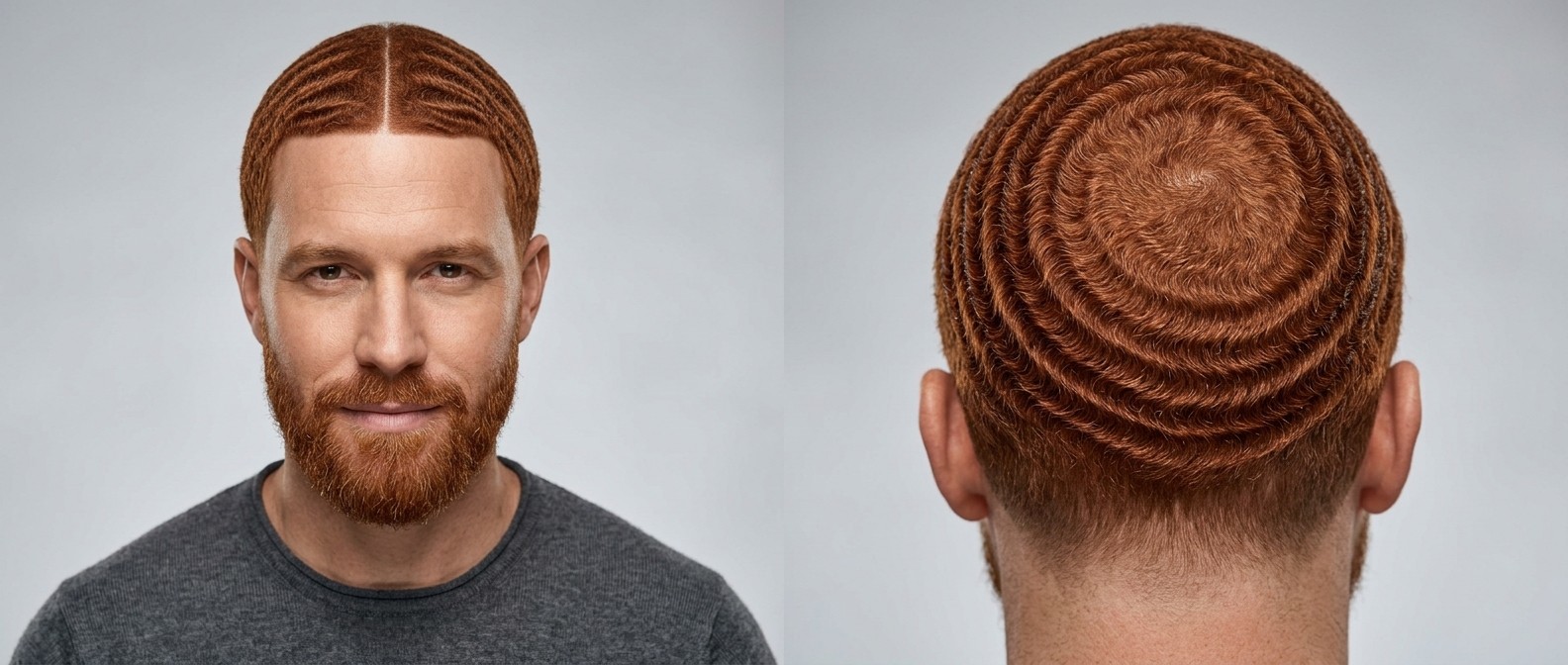
Precision 360 Waves with Sharp Center Part and Full Beard
360 Waves
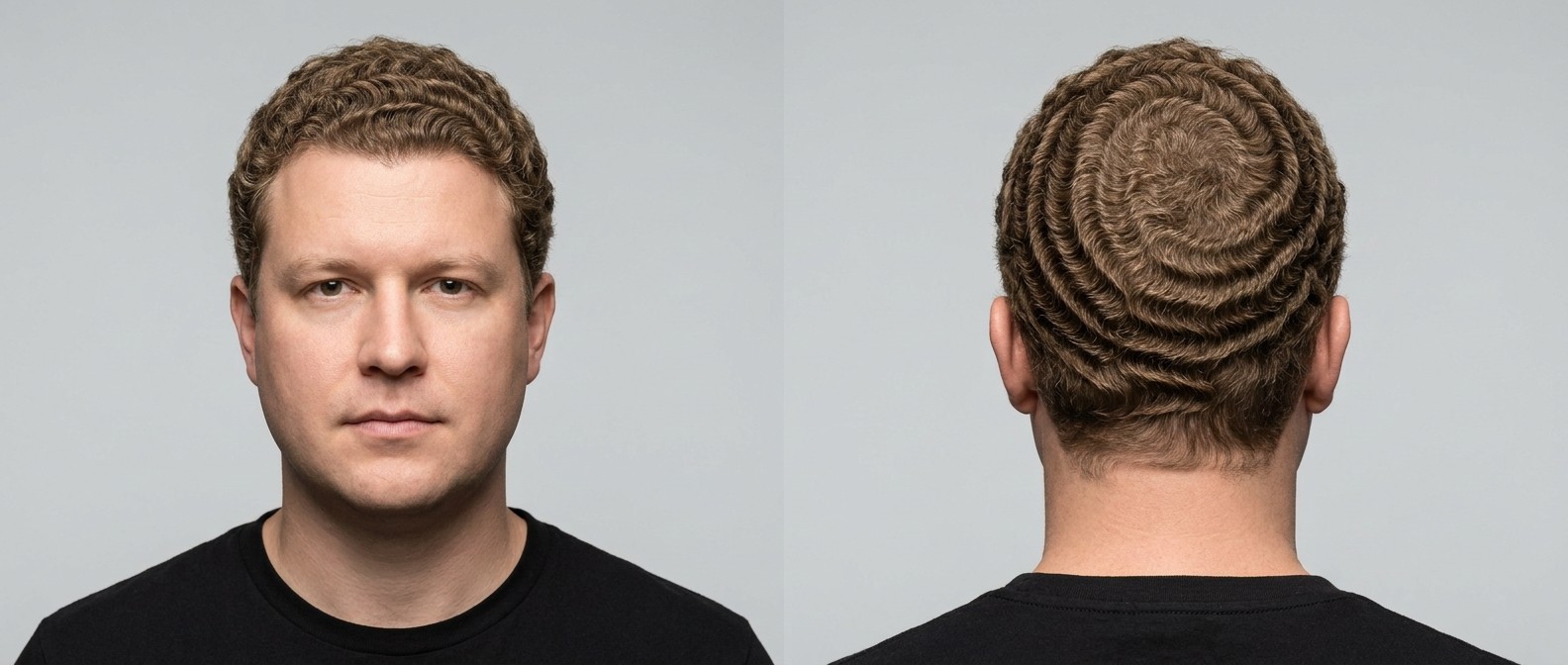
Light Brown 360 Waves with Deep Crown Swirl for Type 3 Hair
360 Waves
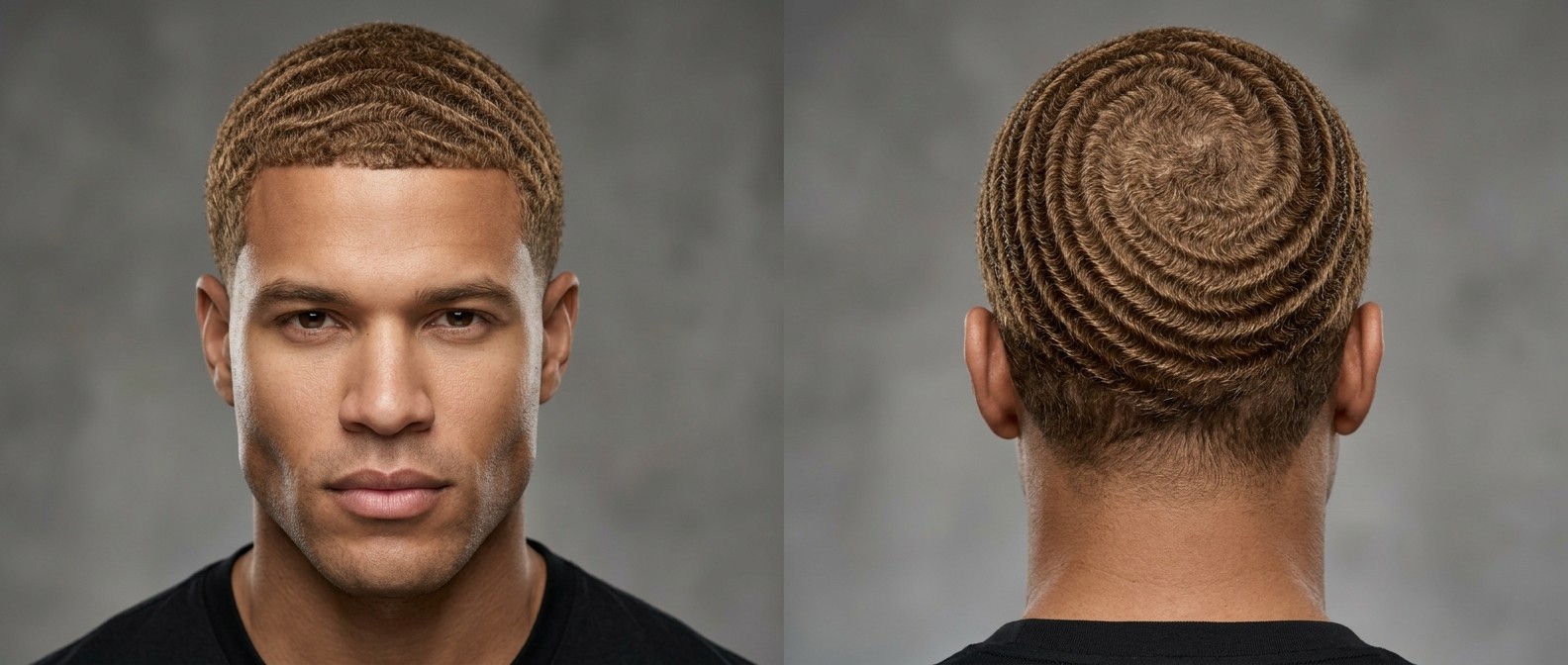
Flawless Light Brown 360 Waves: Swirl Crown & Line Up
360 Waves
Light Brown 360 Waves with Deep Spiral Crown and Tapered Nape
360 Waves