Best Fringe Haircuts for Oblong Faces: The Ultimate Guide
Discover the best fringe haircuts for oblong face shapes. Learn how to balance your proportions, add texture, and style the perfect forward-swept look.
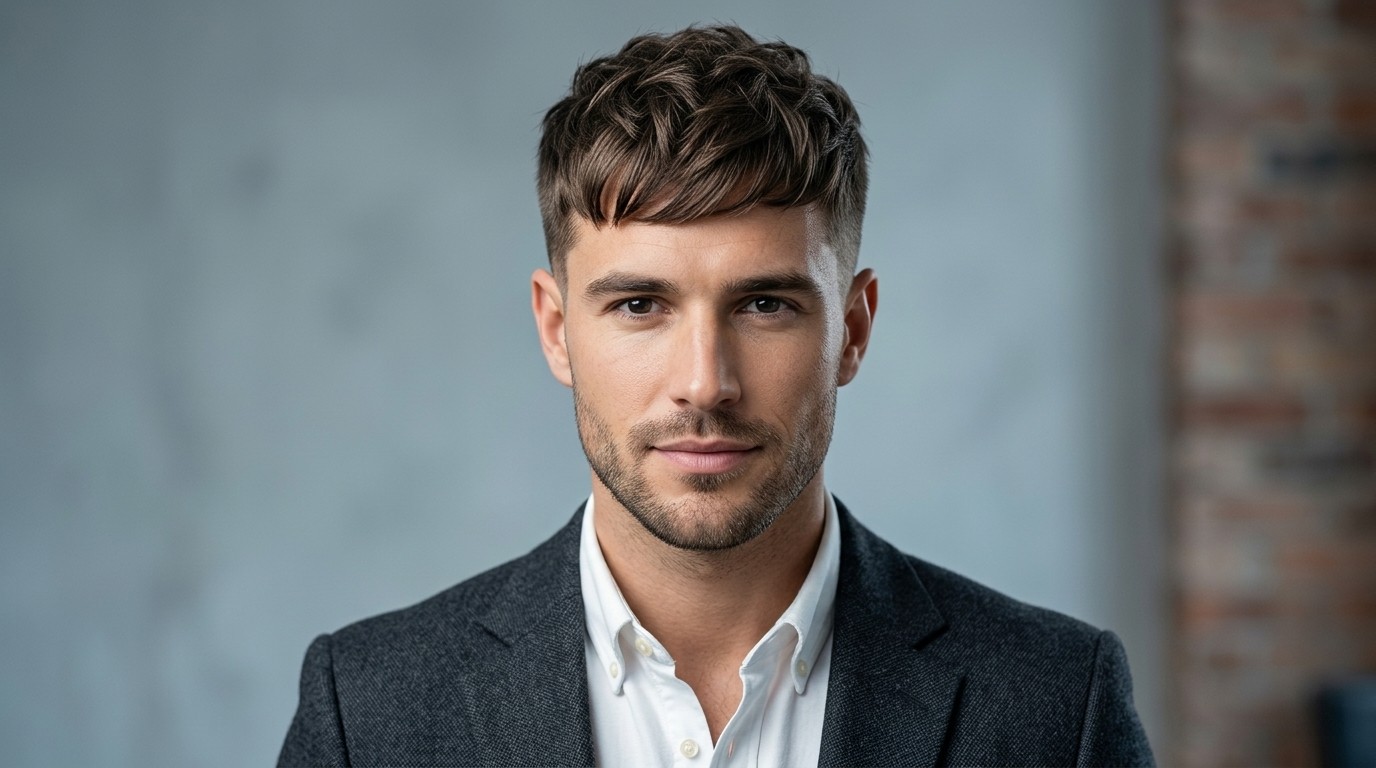
Finding the right haircut is an exercise in optical illusions. For men with an oblong face shape, the goal is straightforward: minimize vertical length and maximize horizontal width. If your face is noticeably longer than it is wide, with a straight cheek line and a slightly rounded or flat jaw, you possess an oblong facial structure. It is a highly distinguished shape, shared by countless actors and models, but it requires a very specific approach at the barber's chair.
Creating the perfect balance means avoiding styles that draw the eye upward. Spiky hair, tall pompadours, and aggressive high fades act like visual elevators, stretching the face even further. Instead, the ultimate cheat code for the oblong face is the fringe. By bringing the hair forward and letting it rest on the forehead, you instantly cut off the top third of the face, creating a more proportionate, squared-off appearance. Let's break down exactly how to master the fringe haircut, the best variations to ask for, and the daily styling techniques required to pull it off flawlessly.
The Geometry of an Oblong Face Shape
To truly master the geometry of the oblong face, one must understand the parietal ridge. This is the widest part of the head, where the skull begins to curve upward toward the crown. For men with longer faces, preserving hair weight exactly at and slightly below the parietal ridge is non-negotiable.
When clippers are taken too high up the sides of the head, the structural width of the face is instantly erased. The sides of the head become a sheer vertical drop, and the eyes are drawn exclusively upward, exaggerating the length of the forehead and chin. Instead, a skilled barber will use a scissor-over-comb technique or a lower clipper guard that flares out slightly as it travels up the side of the head. This subtle flare creates an optical illusion, widening the temples to bring harmony to an elongated facial structure.

The fringe works in tandem with these wider sides. While the sides build horizontal width, the fringe acts as an architectural awning. By covering a significant portion of the forehead, it physically masks vertical space. This combination is the foundational secret to making an oblong face look perfectly balanced, rugged, and masculine.
Top Fringe Hairstyles for Oblong Faces
Not all fringes are created equal. Depending on your hair texture, density, and personal style, certain variations of the forward-swept fringe haircut will serve you better than others. Here are the most effective fringe styles designed specifically to flatter longer face shapes.
The Textured French Crop
The Textured French Crop has dominated men's grooming for several years, and it happens to be the holy grail for oblong faces. This style features a blunt or slightly point-cut fringe that sits straight across the forehead, usually an inch or two above the eyebrows. The top is heavily textured with thinning shears or a razor to create a choppy, messy, and highly dynamic look.

For an oblong face, the key to the French Crop is keeping the sides at a low or mid taper fade rather than a high skin fade. You want to retain a shadow of hair on the sides to prevent the head from looking too narrow. The blunt horizontal line of the fringe provides a stark contrast to the vertical length of the face, aggressively shortening its appearance. It is incredibly easy to style and requires minimal morning maintenance.
The Sweeping Angular Fringe
If a straight-across cut feels too rigid or youthful, the Angular Fringe offers a more sophisticated, asymmetrical alternative. In this style, the hair is kept longer on top and swept diagonally across the forehead, tapering down toward one of the cheekbones.
Asymmetry is a fantastic tool for long faces because it breaks up the predictable vertical lines of the head. The diagonal sweep of the hair naturally draws the observer's eye from side to side rather than up and down. When you are explaining your desired look to the barber, emphasize that you want the fringe to disconnect slightly from the sides, allowing it to hang freely and create a distinct angular shape.
The Heavy Messy Fringe
Men with thick, dense hair are perfectly positioned for the Heavy Messy Fringe. Rather than thinning the hair out, this style uses the natural bulk of the hair to create a heavy canopy over the forehead. The hair is styled forward with a chaotic, bedhead aesthetic that looks effortless but is actually highly controlled.
Because the hair is thick and sits heavy on the forehead, it provides maximum coverage, effectively erasing the upper third of the face. To keep this style from looking like a helmet, barbers will typically use point-cutting techniques on the ends of the hair to soften the perimeter. This ensures the fringe looks lived-in and natural.
The Curly Forward Fringe
Natural curls are an absolute blessing for oblong faces. Curls inherently expand outward, adding massive amounts of horizontal volume to the sides of the head. If you have wavy or curly hair, growing the top out and letting the coils fall forward into a Curly Fringe is one of the most flattering moves you can make.
The chaotic, looping nature of curls destroys any harsh vertical lines. However, curly hair is notoriously thirsty and prone to frizz. If you want this style to look intentional rather than unkempt, maintaining healthy, hydrated curls is an absolute necessity. Using a high-quality leave-in conditioner and a curl-defining cream will ensure your fringe sits perfectly across your brow with defined, bouncy texture.
Crucial Mistakes to Avoid
Understanding what to avoid is just as important as knowing what to ask for. The oblong face is unforgiving when it comes to certain barbering techniques. The most critical mistake is adding unnecessary height to the top of the head. While many men love volume, a towering style is your worst enemy here. If you are ever tempted by the idea of styling a highly elevated textured quiff or a classic rockabilly pompadour, remember that these styles will only stretch your facial proportions further, making your face look exceptionally long.
Another major pitfall is the ultra-tight high skin fade. Taking the sides completely bald all the way up to the temples removes all the lateral weight from the sides of the head. Without that lateral weight, the face appears pinched and narrow. Always opt for low fades, taper fades, or scissor-cut sides that leave at least half an inch of length around the parietal ridge.
Mastering the Styling Routine
A great haircut is only half the battle; the way you style it at home dictates how it looks in the real world. For fringe hairstyles, the goal is texture, separation, and a natural finish. You want the hair to look thick and full without appearing greasy or weighed down.
The golden rule for styling a fringe is to avoid high-shine products like traditional gels or classic oil-based pomades. Shine reflects light, which can make fine hair look thinner and make a fringe look like it is plastered to your forehead. Instead, you must embrace matte-finish products. Understanding which styling product works best for your hair type is the difference between a flat, lifeless bang and a dynamic, textured fringe.

Styling clays and matte pastes are the optimal choices. Clay contains natural minerals that swell the hair shaft, adding incredible thickness and gritty texture. To style, start with towel-dried hair. If you want extra volume and hold, lightly mist your hair with a sea salt spray before blow-drying. When blow-drying, use your fingers to vigorously rub the roots and push the hair forward toward your face. Once the hair is completely dry, scoop out a dime-sized amount of matte clay, emulsify it completely in your palms until it disappears, and rake your hands through your hair from back to front. Pinch individual sections of the fringe to create piecy, separated texture.
Essential Rules for Maintaining Your Fringe
Keeping a fringe looking sharp requires a bit more maintenance than a standard buzz cut or slick back. Because the hair rests directly on your forehead, it interacts with the natural oils of your skin, and the length must be carefully managed so it doesn't impair your vision or look sloppy.
- Schedule regular trims: A fringe can go from perfectly styled to overgrown very quickly. Plan to visit your barber every three to four weeks to have the fringe length point-cut and the sides cleaned up.
- Monitor your skin health: Hair resting on the forehead can trap sweat and oil, potentially leading to breakouts. Ensure you wash your face twice daily and keep your forehead clean.
- Embrace dry shampoo: If your fringe gets oily halfway through the day, a quick blast of dry shampoo at the roots will instantly absorb the grease and restore the matte, fluffy texture.
- Wash with care: Avoid shampooing your hair every single day, as this strips natural oils and leaves the fringe looking frizzy and dry. Wash two to three times a week, but condition daily to keep the hair soft and manageable.
- Keep the sides proportional: As your hair grows out between haircuts, the sides will lose their shape. Use a styling paste to keep the side hair pushed down and tight against the head so it doesn't puff out awkwardly.
Adapting the Fringe for Thinning Hair
Men with oblong faces who are also experiencing hair loss often feel like they are out of options, but a fringe is actually an excellent camouflage technique. If your hairline is receding or the crown is thinning, a forward-swept style pushes the bulk of your remaining hair over the thinner areas.
The trick here is to keep the fringe relatively short and heavily textured. A long, wispy fringe on thinning hair will look stringy and draw attention to the lack of density. By cutting the fringe short (about mid-forehead) and using a volumizing powder, you create the illusion of density. The powder binds to the individual hair strands, making them stand up slightly and appear twice as thick. Combine this with a tight taper on the sides, and you effectively balance your oblong face shape while masking the signs of thinning.
Conclusion
Having an oblong face shape is a strong, highly masculine trait, provided you know how to frame it correctly. By stepping away from towering volume and skin-tight sides, and instead embracing the forward-swept geometry of a fringe, you take complete control of your facial proportions. Whether you opt for a neat, textured French crop, an edgy angular sweep, or a natural curly curtain, the fringe is the ultimate tool in your grooming arsenal. Focus on matte styling products, communicate clearly with your barber about preserving width on the sides, and you will unlock an effortlessly stylish look that perfectly complements your natural bone structure.