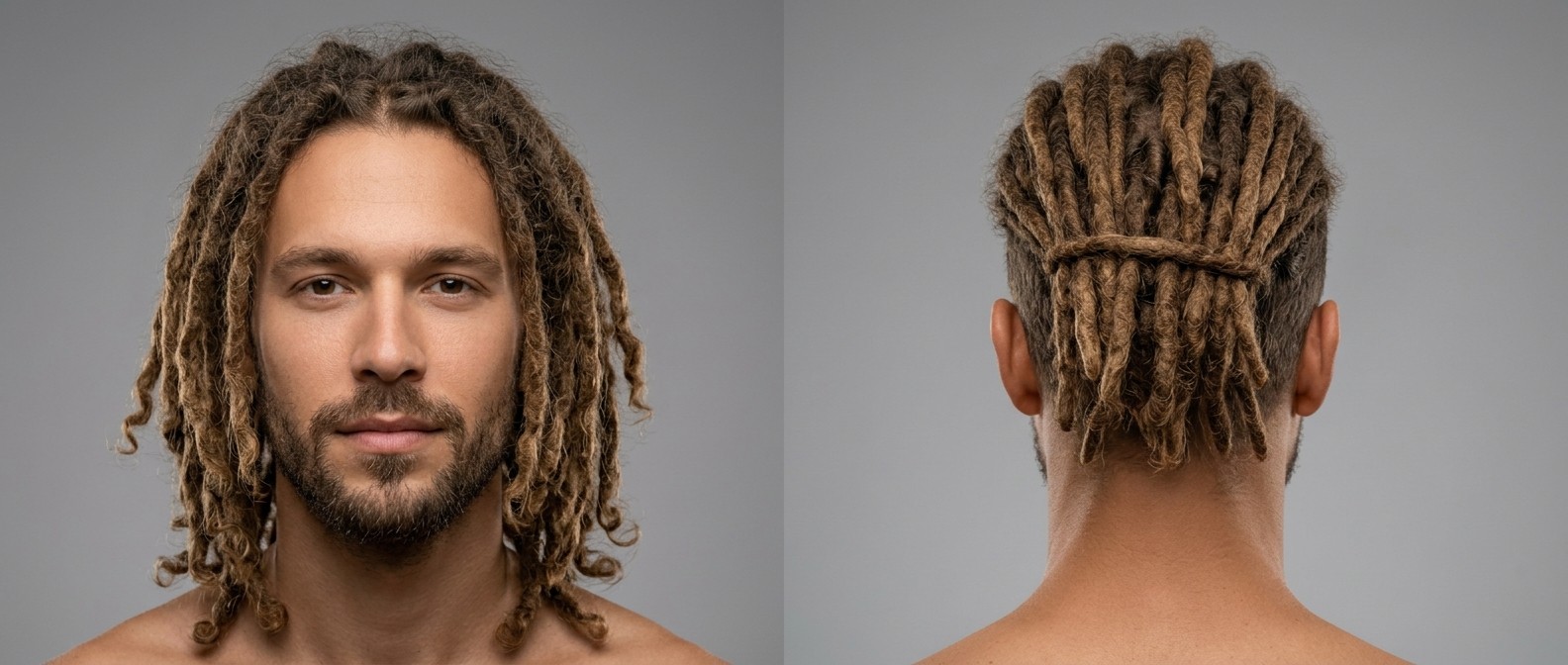
Light Brown Mid-Length Dreadlocks with Loose Curly Ends
 Top
Long (10-20 cm)
Top
Long (10-20 cm)
 Sides
Long (5+ cm)
Sides
Long (5+ cm)
 Hair Type
Curly (Type 3)
Hair Type
Curly (Type 3)
 Face Shape
Oval
Face Shape
Oval
 Maintenance
Medium
Maintenance
Medium
 Thickness
Medium / Normal
Thickness
Medium / Normal
About This Style
Embrace a distinctly creative and artistic aesthetic with these light brown, mid-length dreadlocks tailored specifically for Type 3 curly hair. What immediately stands out in this structural variation is the beautiful textural contrast between the tightly matted cylindrical bodies of the locs and the loose, playfully coiled curly ends that frame the face. This natural, slightly undone finish adds a softer, more approachable vibe compared to traditional blunt-ended dreadlocks, allowing your natural curl pattern to shine through. The light brown hue catches the light beautifully, highlighting the intricate woven texture of each individual loc and creating a multi-dimensional appearance.
The back view reveals a highly practical yet incredibly stylish half-tied method, where the locs themselves are utilized as a natural band to secure the bulk of the hair at the nape of the neck. This keeps the face clear while maintaining a strong, prominent visual profile from all angles. This particular dreadlock style is an exceptional choice for men with oval face shapes and medium-to-normal hair thickness. It perfectly complements a creative, artistic lifestyle, offering a relaxed yet highly intentional appearance. Whether you are heading to a music festival, working in a dynamic creative studio, or simply reflecting your personal artistic flair in your daily life, this look pairs brilliantly with a short, neatly groomed beard. The contrast between the wilder, textured long hair and the sharp, precise facial hair creates a perfectly balanced modern aesthetic.
The back view reveals a highly practical yet incredibly stylish half-tied method, where the locs themselves are utilized as a natural band to secure the bulk of the hair at the nape of the neck. This keeps the face clear while maintaining a strong, prominent visual profile from all angles. This particular dreadlock style is an exceptional choice for men with oval face shapes and medium-to-normal hair thickness. It perfectly complements a creative, artistic lifestyle, offering a relaxed yet highly intentional appearance. Whether you are heading to a music festival, working in a dynamic creative studio, or simply reflecting your personal artistic flair in your daily life, this look pairs brilliantly with a short, neatly groomed beard. The contrast between the wilder, textured long hair and the sharp, precise facial hair creates a perfectly balanced modern aesthetic.
Key Features
- Medium-thickness individual dreadlocks ranging from 10 to 20 centimeters in length cascading evenly across the top, back, and sides.
- Loose, un-matted curly tips displaying a clear Type 3 curl pattern that provides a softer, highly textured transition at the bottom of each loc.
- Natural root development showing slight, intentional frizz that signifies healthy, maturing locs on European/Caucasian hair types.
- Versatile styling capability beautifully demonstrated by the self-tied horizontal knot at the back, using the locs to secure the style without external accessories.
- Symmetrical, face-framing silhouette that cascades naturally down the sides and around the cheeks when the hair is worn completely down.
- Balanced integration with a short, precisely tailored beard that visually grounds the overall artistic and free-flowing aesthetic.
Getting the Cut
- Request a thorough consultation with a specialized loctician experienced in European/Caucasian Type 3 curly hair to ensure the correct sectioning and matting technique for your specific texture.
- Ask for a "crochet method" or "twist and rip" starter technique to establish tight, uniform cylindrical locs while minimizing scalp tension and avoiding early unraveling.
- Specify that you want medium-sized sections (roughly 1-inch squares) across the scalp to achieve a normal lock thickness that will not overwhelm your oval face shape.
- Instruct the stylist to purposely leave the bottom 1 to 2 inches of each dreadlock completely un-matted to preserve and showcase your natural Type 3 curls at the tips.
- Discuss a strategic brick-lay grid pattern for the scalp sectioning so that the locs fall naturally around the face and can be easily pulled back without exposing large, obvious gaps on the scalp.
- Request a neat but not overly manicured root maintenance session, keeping the hairline looking natural and straight without excessive pulling or tension.
- Ask your barber for a precise shape-up on your short beard, keeping the cheek lines incredibly clean and the length uniformly trimmed to contrast the longer, textured hair above.
Daily Routine
- Begin your morning routine by lightly misting your dreadlocks with a refreshing scalp spray or a diluted rosewater and aloe vera mixture to hydrate the roots and awaken the scalp.
- Gently palm-roll a few of the more unruly locs between your hands using a very small amount of natural locking gel to tame excessive frizz along the mid-shafts and encourage a cylindrical shape.
- Apply a lightweight, water-based curl-defining cream specifically to the loose, un-matted curly ends to revive the Type 3 coils, adding bounce and preventing them from looking dry or brittle.
- Gather the dreadlocks from the front and sides, pulling them smoothly and evenly towards the upper nape of your neck to clear your face for the day's activities.
- Select two of the longer locs from the underside of the gathered hair and wrap them horizontally around the main bundle to create a natural, self-tying knot.
- Tuck the ends of the wrapping locs securely under the makeshift band to lock the half-up style firmly in place without needing tight elastic hair ties that can cause breakage.
- Finish the look by massaging a few drops of high-quality beard oil into your short facial hair, brushing it neatly downward with a boar bristle brush to provide a sharp, groomed contrast.
Products & Tools
- Residue-free dreadlock shampoo to maintain clean roots without causing stubborn buildup inside the tightly matted hair shafts.
- Lightweight natural locking gel or aloe-based setting lotion (moderate hold) for palm-rolling and taming mid-shaft frizz without leaving flakes.
- Hydrating curl cream or lightweight leave-in conditioner specifically targeted for the loose, curly tips to keep the coils defined and deeply moisturized.
- Refreshing scalp mist (rosewater, peppermint, or witch hazel based) to soothe the skin, reduce itchiness, and hydrate between wash days.
- Small ergonomic crochet hook (0.5mm to 0.75mm) for occasional, gentle at-home maintenance of loose hairs escaping the loc cylinder.
- Soft boar bristle brush exclusively dedicated to keeping the short beard neat, exfoliating the skin beneath, and evenly distributing beard oils.
Maintenance
- Schedule professional maintenance visits with your loctician every 6 to 8 weeks to tidy up the new root growth and pull in loose hairs using the precise crochet method.
- Wash your dreadlocks no more than once a week using only a specialized residue-free shampoo, ensuring you rinse thoroughly for several minutes to prevent internal soap buildup.
- Sleep with your hair completely wrapped in a large silk or satin sleep cap, or use a satin pillowcase, to drastically reduce nighttime friction and prevent unwanted lint accumulation.
- Strictly avoid heavy waxes, petroleum-based styling products, or regular creamy conditioners on the matted sections, as these will cause severe buildup, mold, and eventual unravelling.
- Ensure your dreadlocks are 100 percent bone-dry after every single wash before tying them up or going to sleep to prevent mildew, root rot, and unpleasant odors from forming inside the loc.
Best For
Face Shapes: Highly flattering for oval and diamond face shapes, as the cascading locs beautifully frame the face without widening the jawline excessively.
Hair Types: Ideal for Type 3 curly hair, which naturally assists in the locking process while leaving gorgeous, bouncy coiled ends.
Lifestyles: Perfect for creative, artistic, or alternative lifestyles where standard corporate grooming codes do not apply and personal expression is valued.
Age Ranges: Exceptionally well-suited for men in their mid-20s to late 30s looking for a mature, grounded, yet highly expressive aesthetic.
Hair Thickness: Works incredibly well for medium to normal hair thickness, ensuring the dreadlocks are substantial without being overly heavy on the neck.
Pro Tips
- When tying your dreadlocks back with your own hair, consciously alternate which specific locs you use each day to prevent excessive tension, stretching, and weakening of those individual strands.
- During dry winter months, proactively increase the hydration of your loose curly ends and your scalp, but be careful to never over-moisturize the matted bodies of the locs themselves.
- A common mistake is twisting or interlocking the roots too tightly during at-home maintenance; always leave a little breathing room at the scalp to prevent traction alopecia and tension headaches.
- If you notice lint getting trapped in your locs, use a pair of tweezers to carefully extract it immediately before it becomes permanently matted into the center of the dreadlock.
- Keep your short beard meticulously trimmed every few days; the sharpness of the facial hair is the secret to making this wilder hairstyle look intentional and fashionable rather than unkempt.
Related Hairstyles
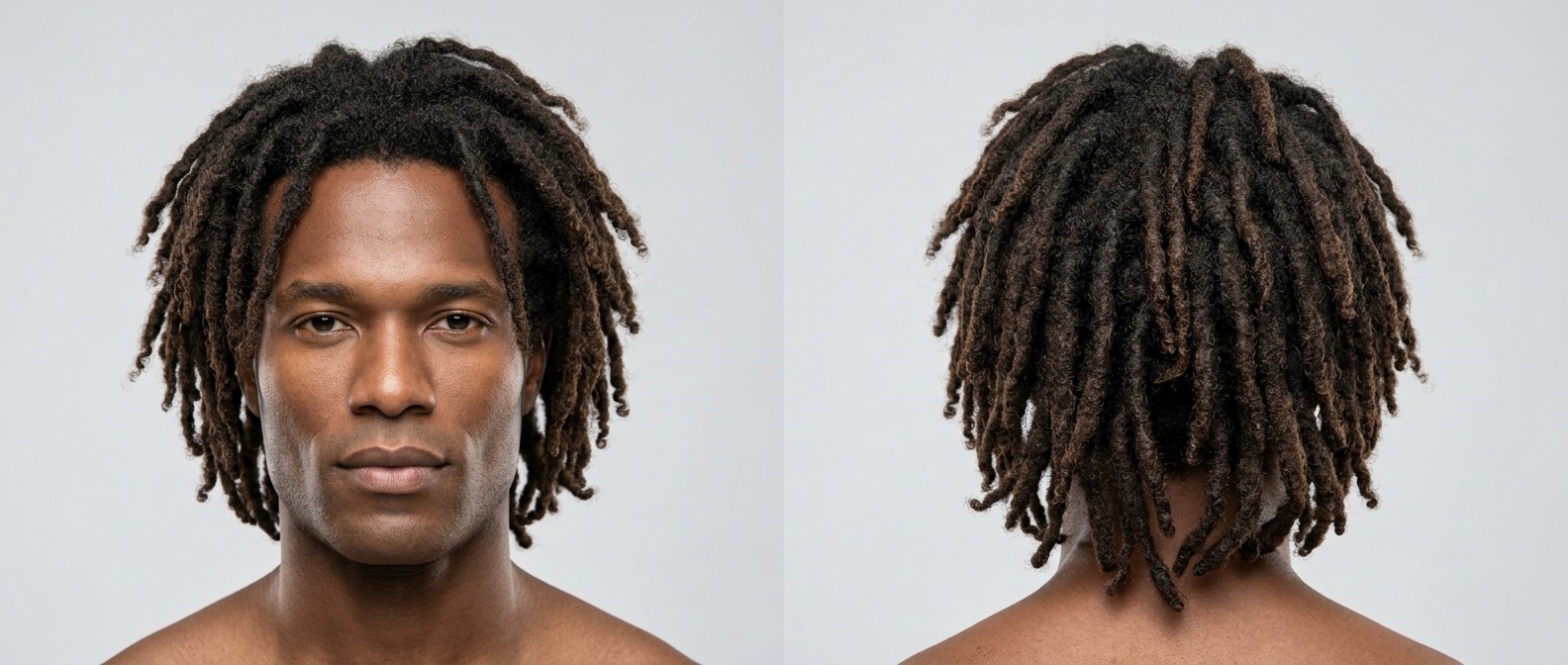
Dreadlocks
Natural Medium-Length Free-Flowing Dreadlocks with Center Part
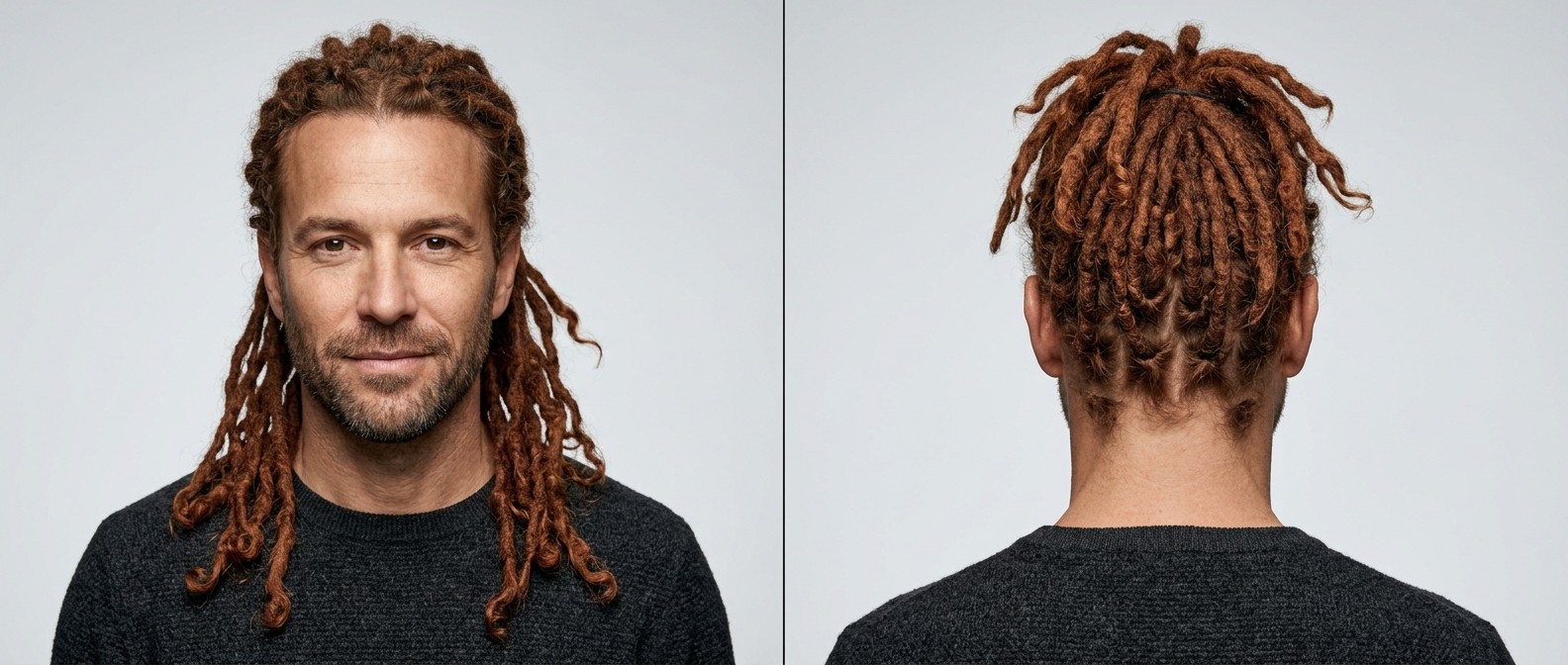
Dreadlocks
Long Copper Dreadlocks in a Half-Up Style for Thick Hair
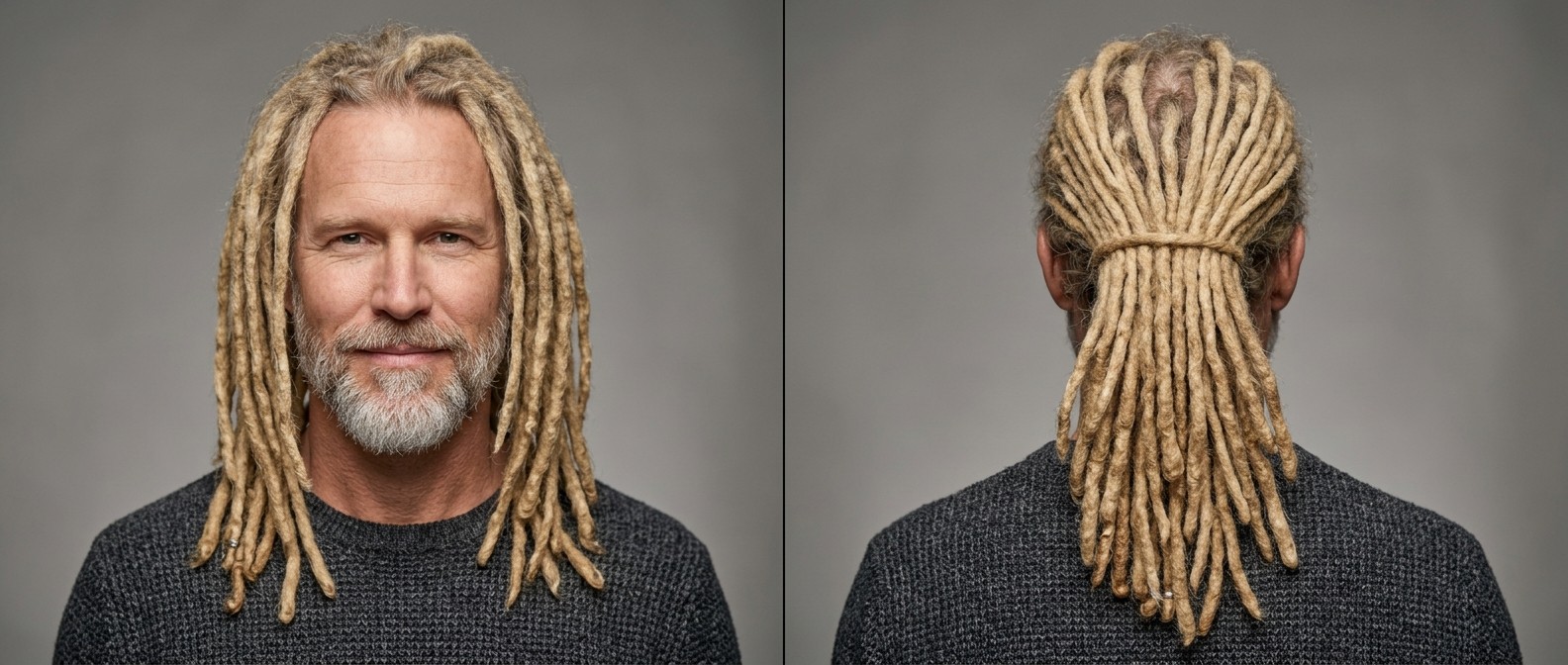
Dreadlocks
Long Blonde Mature Dreadlocks with Natural Half-Tie and Groomed Beard
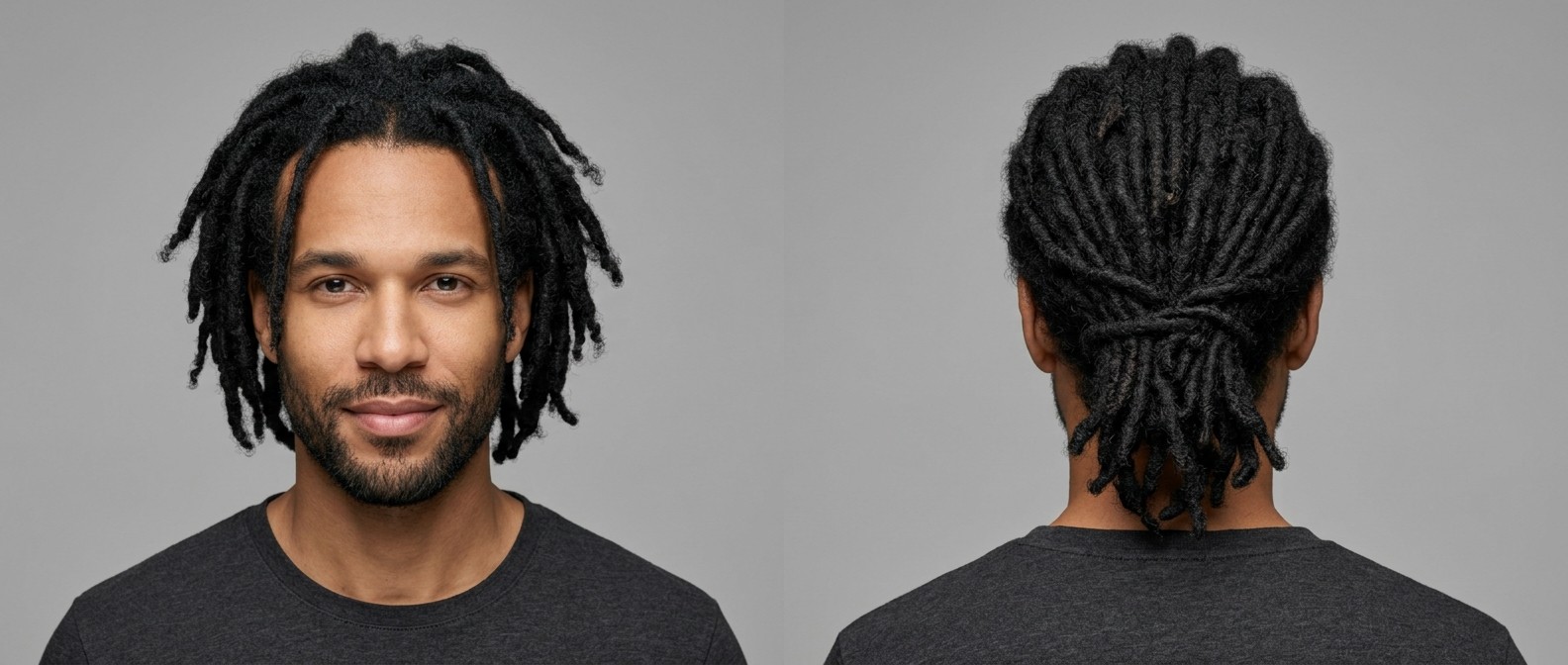
Dreadlocks
Medium-Length Cylindrical Dreadlocks with Natural Tied-Back Knot
Dreadlocks
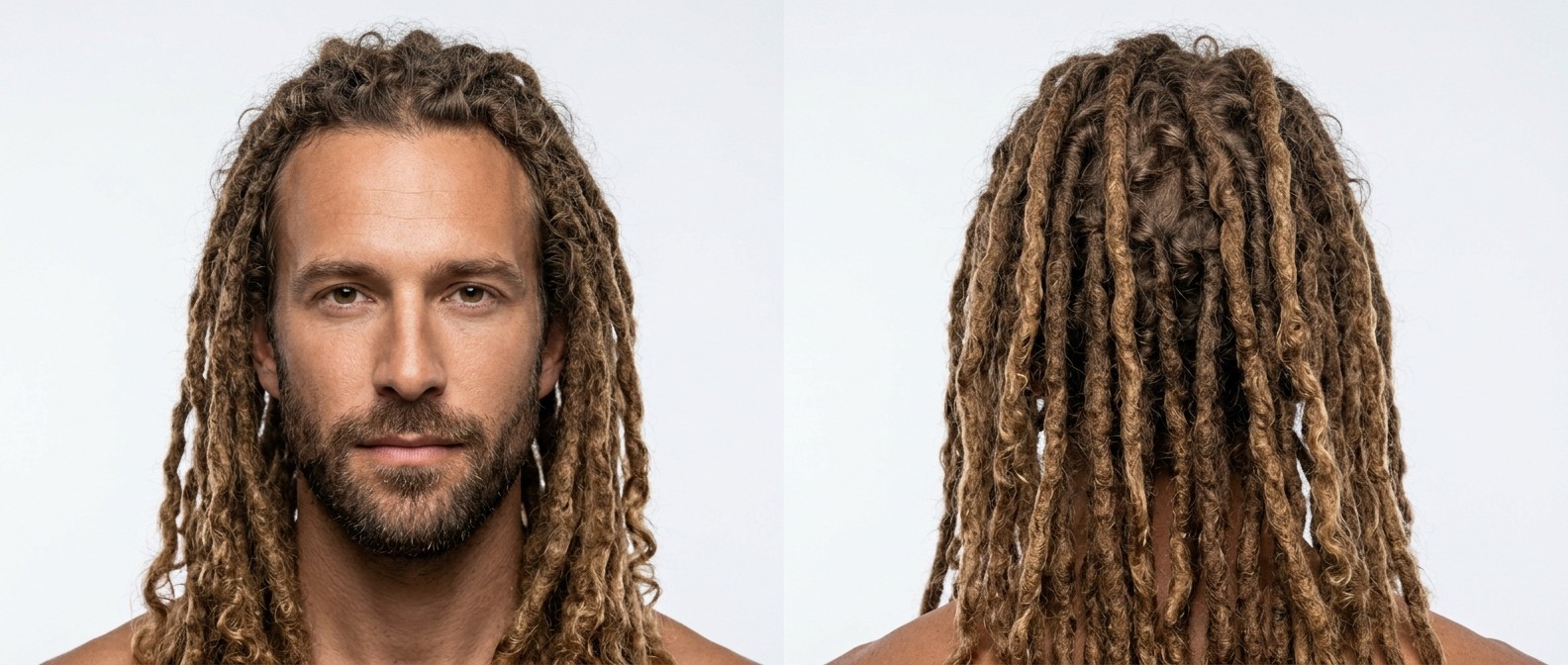
Long Natural Light Brown Dreadlocks with Curly Ends and Short Beard
Dreadlocks