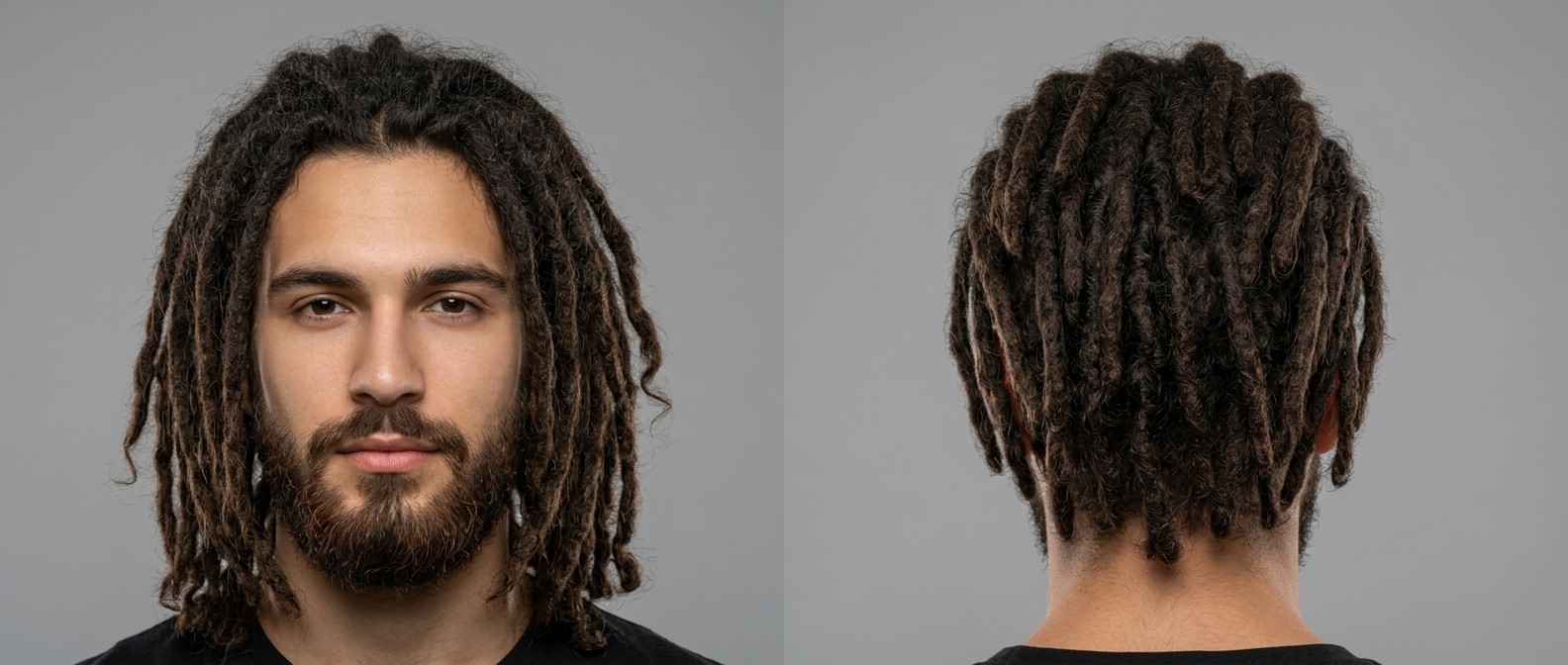
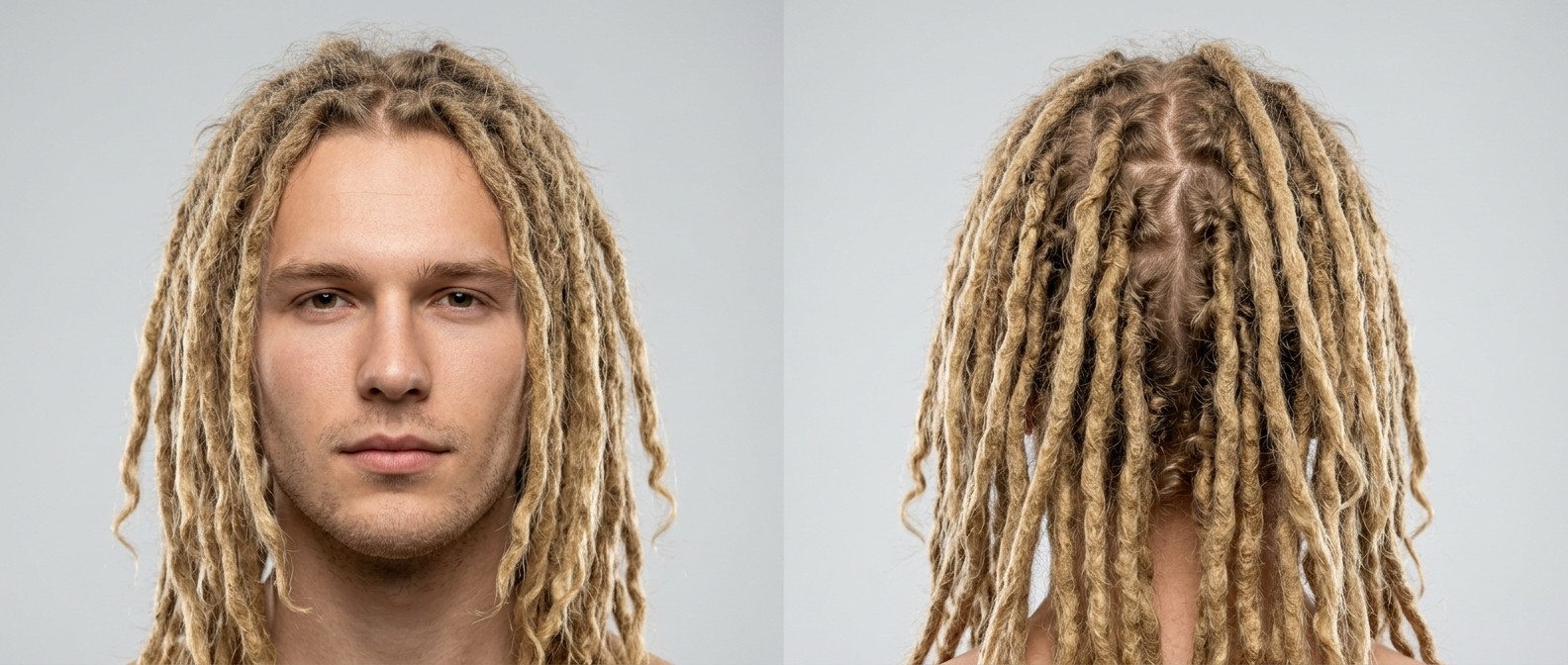
Long Natural Freeform Dreadlocks with Full Beard for Thick Hair
 Top
Very Long (20+ cm)
Top
Very Long (20+ cm)
 Sides
Long (5+ cm)
Sides
Long (5+ cm)
 Hair Type
Curly (Type 3)
Hair Type
Curly (Type 3)
 Face Shape
Square
Face Shape
Square
 Maintenance
Medium
Maintenance
Medium
 Thickness
Thick / Dense
Thickness
Thick / Dense
About This Style
This striking long dreadlock style showcases the incredible potential of type 3 curly hair when allowed to lock and mature naturally over time. Looking directly at the photo, you can see how these medium-thick, densely packed locs cascade effortlessly past the shoulders, framing a strong, square jawline perfectly. The combination of rich dark brown dreadlocks with a well-groomed, full facial beard creates a powerful, masculine aesthetic that brilliantly balances ruggedness with intentional artistic flair. The roots show a healthy, natural texture without being overly manicured or tightly twisted, giving the style a lived-in, authentic, and organic feel. Notice how the ends of the locs remain slightly loose and curly, adding a touch of softness to the heavy silhouette. This look is exceptionally suited for creative professionals, musicians, or anyone with an artistic lifestyle who wants to cultivate a bold, unforgettable signature look. It celebrates the natural volume and immense density of thick Caucasian hair while offering a surprisingly manageable daily styling routine once the locs are fully established and mature.
Key Features
- Dense, medium-thickness cylindrical dreadlocks that extend well past the shoulder length, measuring over 20 centimeters.
- Natural, organic root sectioning that allows the heavy hair to fall comfortably and frame the face without rigid grid lines.
- Slightly unraveled, curly tips that highlight the natural type 3 curl pattern and add a softer, textured finish to the locs.
- Even length distribution from the top, sides, and back, creating a cohesive, full-bodied silhouette that highlights hair density.
- A seamless visual transition from the heavily textured, free-flowing locs to the neatly groomed, dense dark brown facial hair.
- Moderate surface frizz along the loc shafts, which is a completely natural characteristic of mature, naturally locked Caucasian hair.
- Consistent loc thickness from the mid-shaft down to the ends, indicating healthy maturation and proper ongoing maintenance.
Getting the Cut
- Request an in-depth consultation with a specialized loctician who has extensive experience with Caucasian or type 3 curly hair textures.
- Ask for the crochet method combined with the twist and rip technique to establish solid, cylindrical locs from the very first session.
- Specify medium-sized sections (approximately 1 inch by 1 inch) to achieve the dense, abundant, and full-bodied look seen in the reference photo.
- Request organic, brick-lay sectioning at the scalp rather than rigid, geometric grid lines to ensure a more natural, effortless fall.
- Instruct the loctician to leave the very ends of the hair slightly loose and curly rather than blunting or rounding them completely.
- Ask for a precision beard trim using a #3 or #4 clipper guard, tapering down to a clean neck line to provide a groomed contrast to the locs.
- Schedule a professional root maintenance appointment every 6 to 8 weeks to keep new growth neatly incorporated without over-tightening the scalp.
Daily Routine
- Start your morning routine by gently shaking your head side to side to loosen the heavy locs and allow them to fall into their natural resting position.
- Lightly mist your scalp and the entire length of your dreads with a refreshing aloe vera or rosewater hydration spray to awaken the hair.
- Apply a dime-sized amount of lightweight, residue-free locking gel or natural oil to your fingertips and massage it exclusively into the roots to tame frizz.
- Use your palms to gently roll any individual locs that feel flat or have lost their cylindrical shape during sleep, a technique known as palm rolling.
- Arrange the front locs to fall evenly on both sides of your face, ensuring they complement your strong square jawline and full beard.
- Apply a few drops of premium beard oil to your facial hair, massaging it in thoroughly, and use a firm boar bristle brush to shape the beard downward.
- Allow the light moisture on your dreadlocks to air dry completely in the morning before tying them back or covering them with a hat.
Products & Tools
- Clarifying, residue-free dreadlock shampoo to deeply cleanse the scalp without leaving any trapped buildup inside the mature locs.
- Lightweight, water-based hydration mist (preferably aloe or rosewater based) for daily moisture that won't weigh down the heavy hair.
- Natural locking gel or pure aloe vera gel specifically formulated for taming loose root hairs and maintaining new growth between appointments.
- Premium quality beard oil (argan, jojoba, or sweet almond based) to keep your dense facial hair exceptionally soft, healthy, and manageable.
- Ergonomic micro-crochet hook (0.5mm or 0.75mm size) for occasional, gentle stray hair maintenance at home.
- Firm boar bristle beard brush for daily styling, exfoliating the skin beneath, and distributing oils evenly through the beard.
- Extra-large satin or silk-lined sleep cap to protect the long locs from damaging friction and lint accumulation overnight.
Maintenance
- Wash your dreadlocks thoroughly every 1 to 2 weeks using only a specialized residue-free shampoo to prevent internal buildup and potential mildew.
- Ensure your thick locs are completely bone-dry right to the core after washing before going to bed; utilize a hooded dryer or hand-held blow dryer on low heat.
- Protect your hair every night by sleeping with your locs gathered securely in a satin cap or resting on a silk pillowcase to drastically reduce surface frizz.
- Strictly avoid using heavy waxes, thick cream conditioners, or standard commercial shampoos, as these products will inevitably get trapped inside the locked hair matrix.
- Visit your professional loctician every 6 to 8 weeks for essential root maintenance and to expertly separate any locs that are attempting to merge together at the scalp.
- Perform regular palm rolling sessions while you watch TV or relax to encourage the locs to maintain their smooth, cylindrical shape over time.
Best For
Face Shapes: Exceptionally ideal for square, rectangular, and oval faces, as the long, vertical lines of the locs perfectly complement strong, angular jawlines.
Hair Types: Perfectly suited for thick, dense hair with a natural type 3 curl pattern, which catches and locks significantly faster and more securely than straight hair.
Lifestyles: Highly recommended for creative, artistic, or alternative lifestyles where strict corporate grooming codes do not apply and personal expression is valued.
Age Ranges: Incredibly popular among the 18-25 demographic, though it beautifully suits any age group that embraces a natural, low-manipulation aesthetic.
Occasions: A fantastic choice for casual, artistic, and creative environments, acting as a bold, permanent statement piece for your personal style.
Pro Tips
- Never use standard, creamy hair conditioner on your dreadlocks, as it is designed to detangle hair and will rapidly undo the knots you are working so hard to cultivate.
- Make it a habit to palm roll your locs regularly while they are slightly damp after washing to encourage them to mature into smooth, densely packed, uniform cylinders.
- During the colder winter months, be extra diligent about drying your thick dreads completely to avoid dread rot or dangerous mildew forming in the center of the locs.
- Keep your full beard sharply lined up at the cheekbones and neck line to provide a well-groomed, intentional contrast to the wilder, more organic texture of the head hair.
- Embrace the natural frizz that comes with this hair type; attempting to make Caucasian dreadlocks perfectly smooth will only lead to over-manipulation and hair breakage.
Related Hairstyles
Dreadlocks
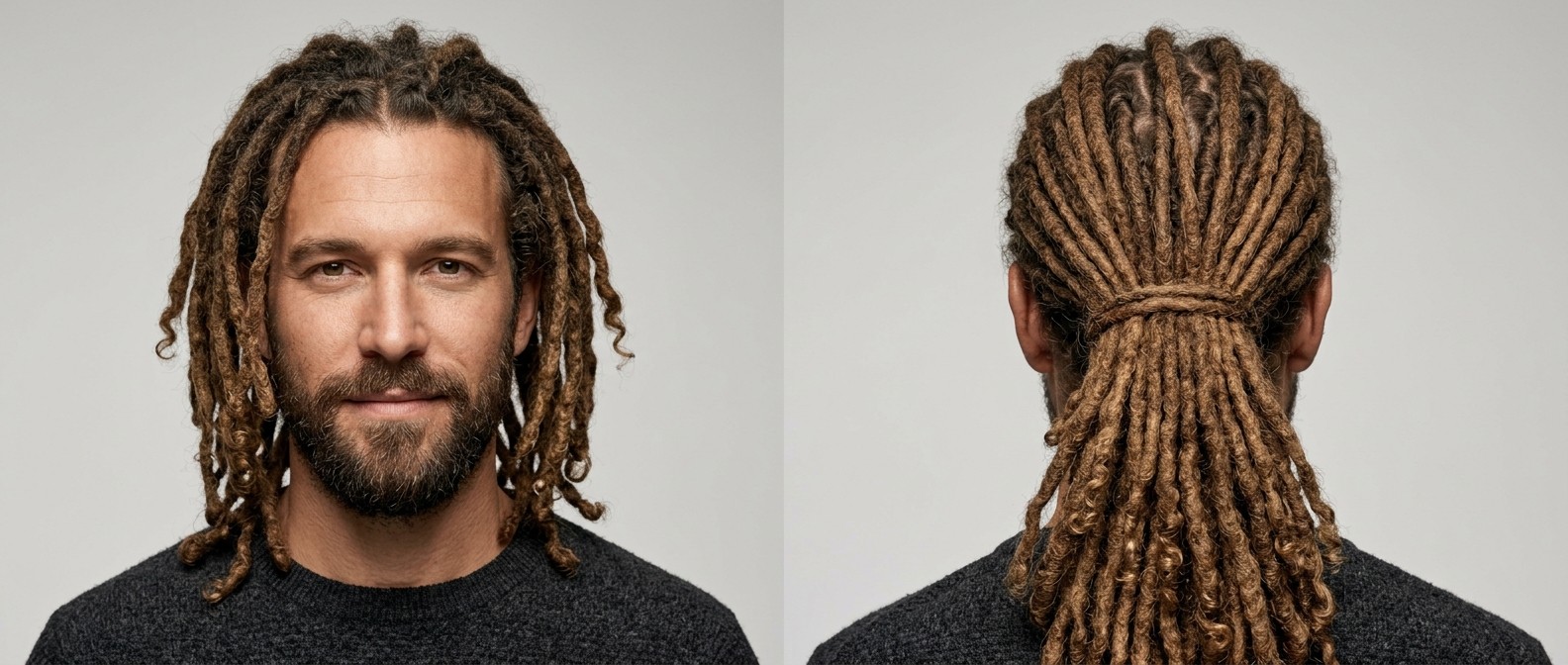
Long Light Brown Tied-Back Dreadlocks with Loose Curly Ends
Dreadlocks
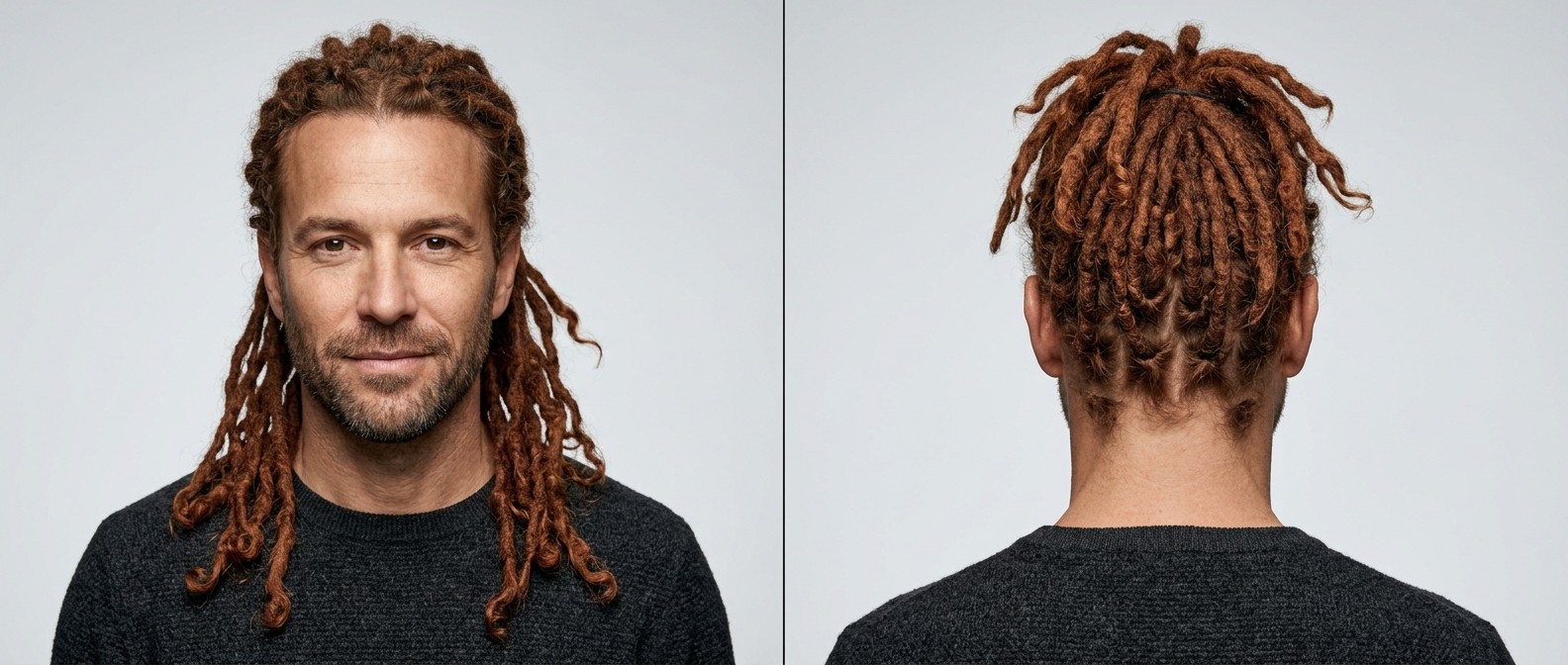
Long Copper Dreadlocks in a Half-Up Style for Thick Hair
Dreadlocks
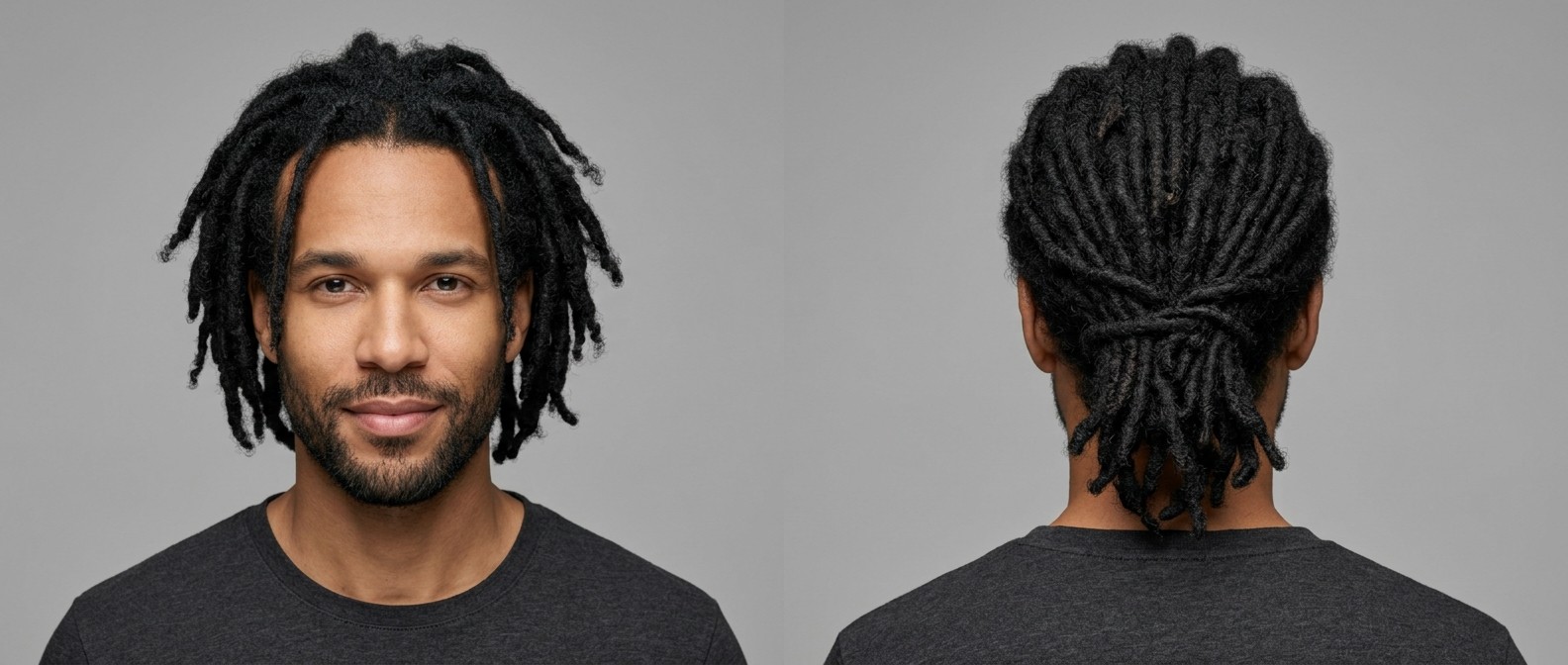
Medium-Length Cylindrical Dreadlocks with Natural Tied-Back Knot
Dreadlocks
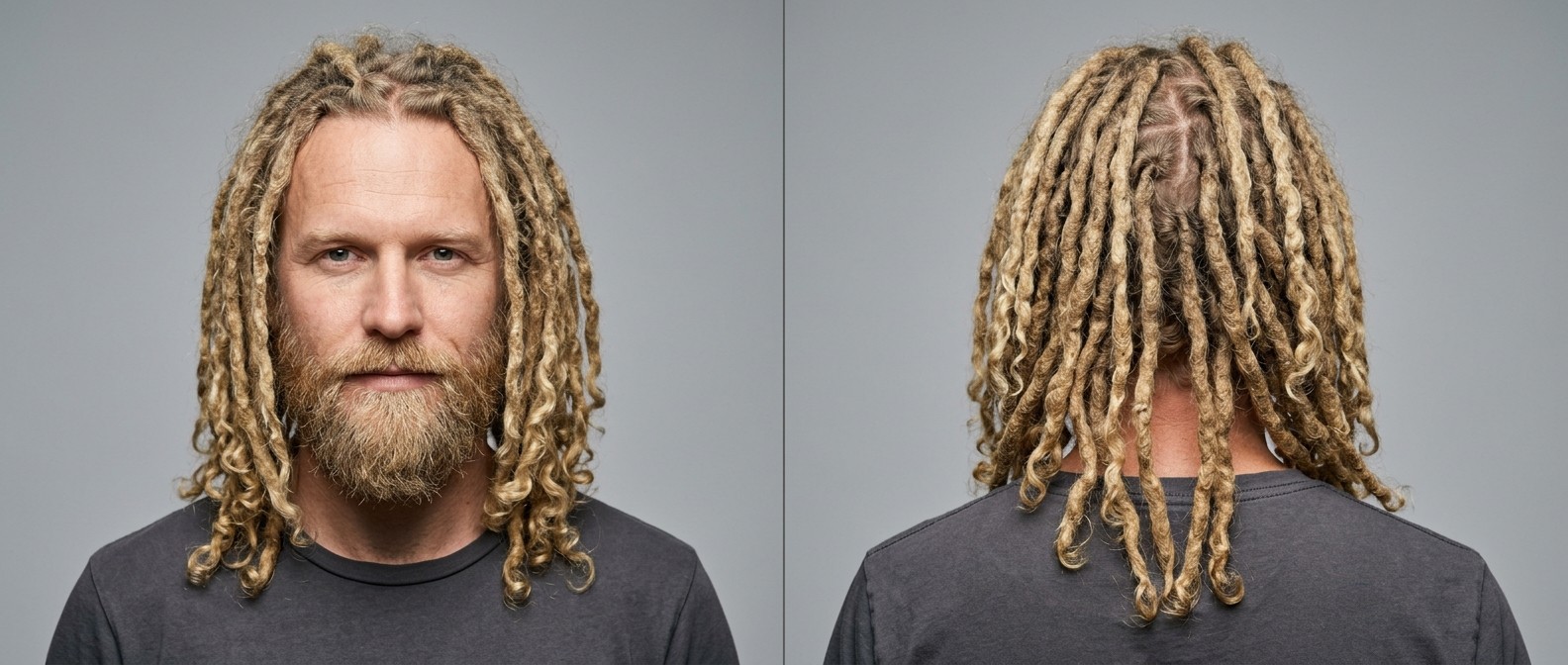
Long Blonde Caucasian Dreadlocks with Loose Curly Ends and Full Groomed Beard
Dreadlocks
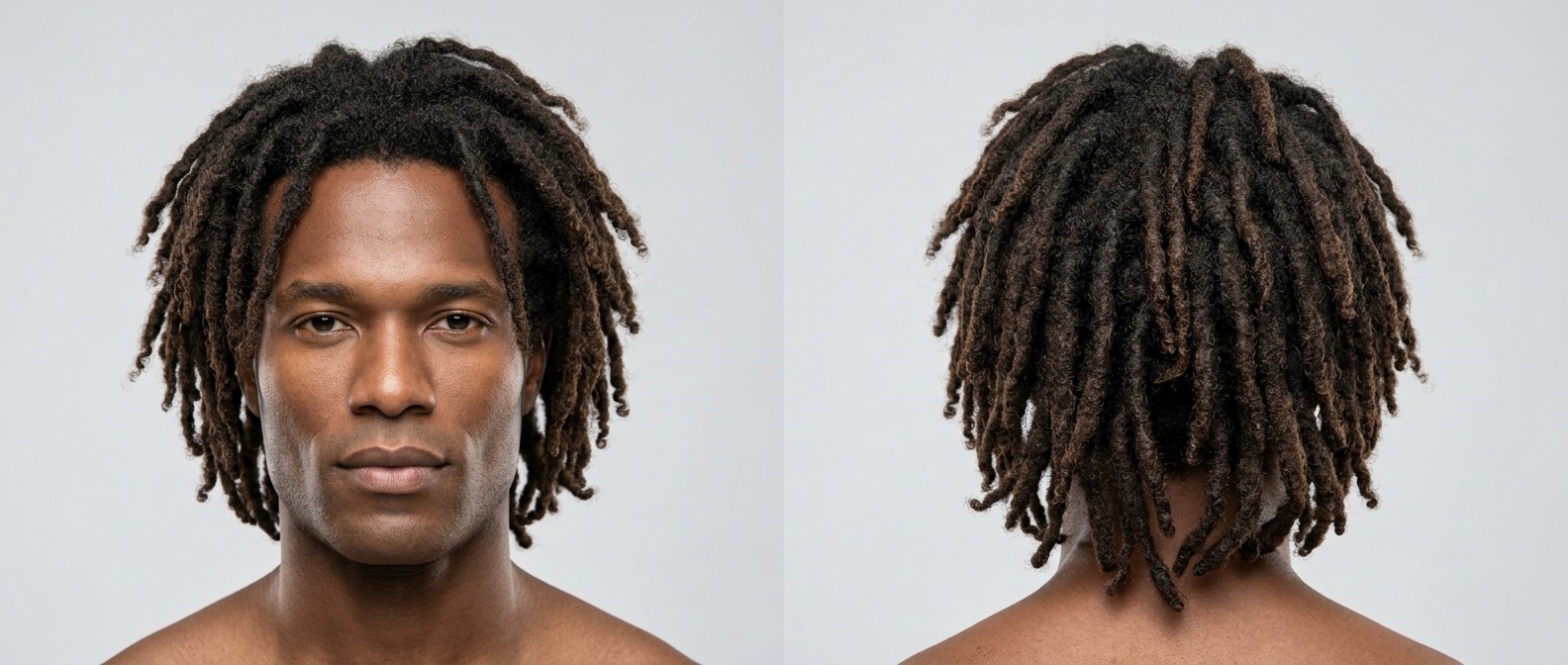
Natural Medium-Length Free-Flowing Dreadlocks with Center Part
Dreadlocks