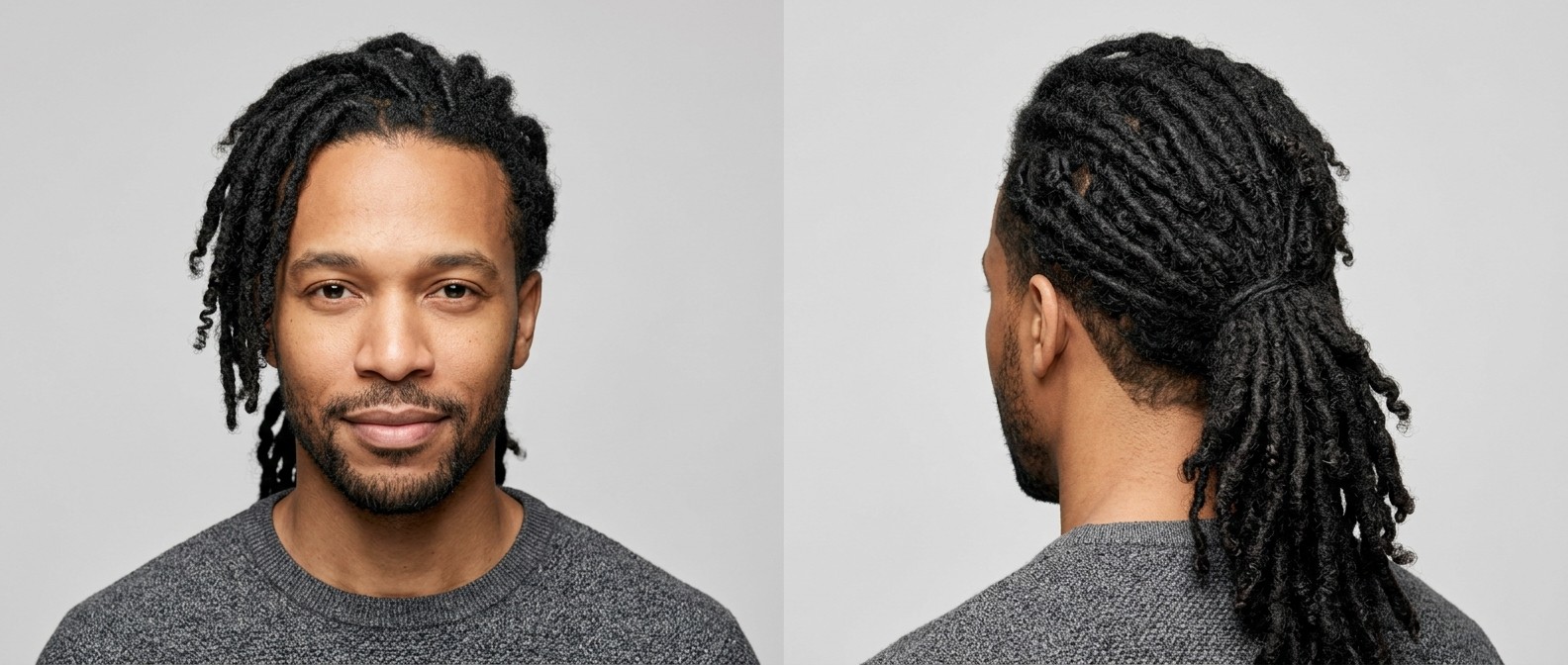
Long Copper Dreadlocks in a Half-Up Style for Thick Hair
 Top
Long (10-20 cm)
Top
Long (10-20 cm)
 Sides
Long (5+ cm)
Sides
Long (5+ cm)
 Hair Type
Curly (Type 3)
Hair Type
Curly (Type 3)
 Face Shape
Oval
Face Shape
Oval
 Maintenance
Medium
Maintenance
Medium
 Thickness
Thick / Dense
Thickness
Thick / Dense
About This Style
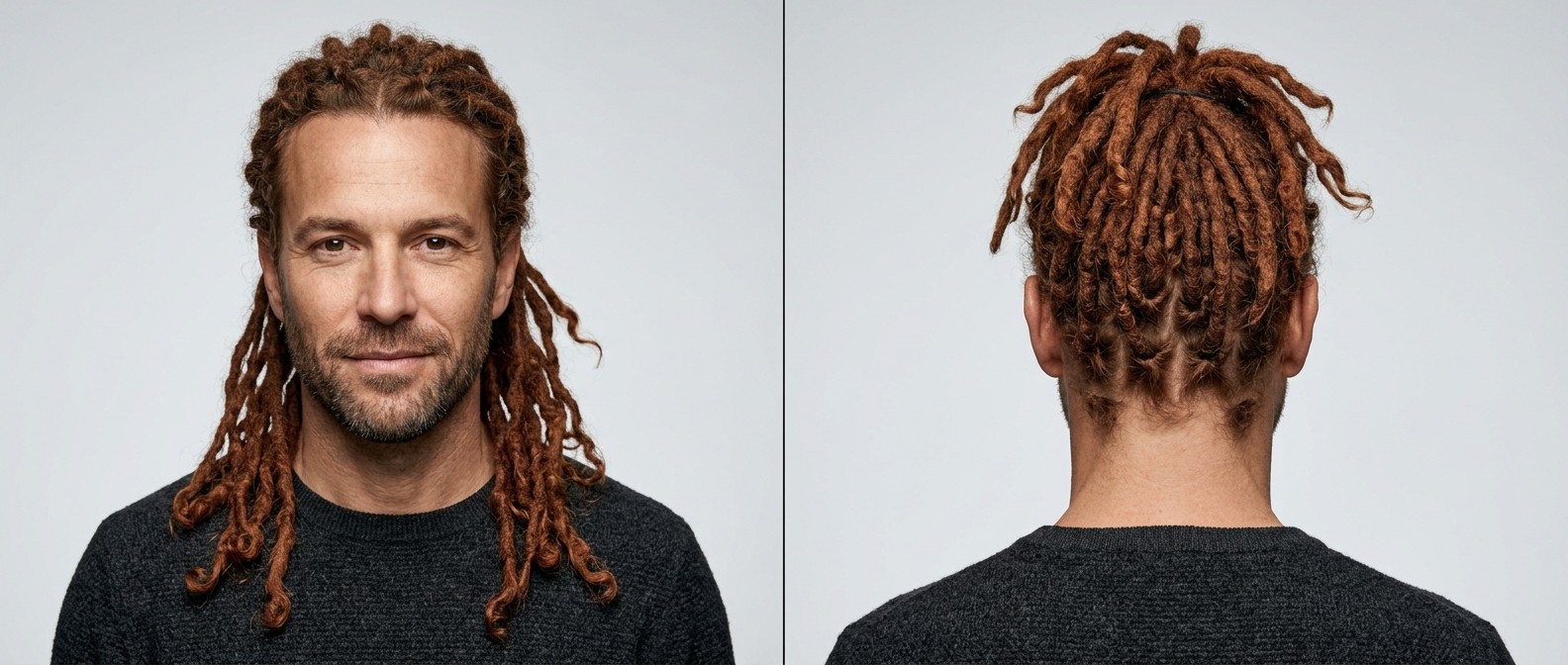
This striking variation of long dreadlocks showcases a masterful blend of structured sectioning and relaxed, organic flow. The vibrant copper-red hue immediately draws the eye, while the precise grid pattern visible at the nape highlights the meticulous foundational work required for this style. By gathering the upper locs into a loose half-up, half-down configuration, the face is kept open and clear, allowing the natural texture of the curly Type 3 hair to cascade beautifully over the shoulders. It is a brilliant display of controlled chaos, balancing impeccably neat roots with slightly loose, unraveled ends that add a touch of softness.
Perfectly suited for the modern creative or artistic professional, this look exudes confidence and unapologetic individuality. It is exceptionally flattering for mature men over forty-five with oval face shapes, as the swept-back top elegantly elongates the profile while the framing lower locs add necessary width and volume to the overall silhouette. The accompanying rugged stubble beard perfectly grounds the aesthetic, bridging the gap between polished grooming and bohemian flair. Ultimately, this dreadlock variation proves that long hair can be both highly managed and wonderfully freeform.
Perfectly suited for the modern creative or artistic professional, this look exudes confidence and unapologetic individuality. It is exceptionally flattering for mature men over forty-five with oval face shapes, as the swept-back top elegantly elongates the profile while the framing lower locs add necessary width and volume to the overall silhouette. The accompanying rugged stubble beard perfectly grounds the aesthetic, bridging the gap between polished grooming and bohemian flair. Ultimately, this dreadlock variation proves that long hair can be both highly managed and wonderfully freeform.
Key Features
- Distinctive grid-like sectioning at the scalp, providing a highly organized foundation for the locs visible at the back of the head.
- Medium-thick individual dreadlocks that maintain a consistent cylindrical shape from the root down to the ends.
- A half-up, half-down silhouette that pulls the top and crown sections back into a small ponytail while leaving the nape sections loose.
- Natural, slightly unraveled curly tips that soften the overall appearance and showcase the original Type 3 hair texture.
- Rich copper-red coloration that adds profound visual depth and emphasizes the interwoven texture of each loc against the olive skin.
- Seamless length transition from the root to the long ends, creating a balanced, voluminous drape over the shoulders and upper back.
Getting the Cut
- Request a comprehensive consultation to map out a precise brick-lay or square grid parting system across the entire scalp, ensuring even weight distribution.
- Ask the stylist to utilize the crochet hook method to instantly lock the thick, Type 3 curly hair, ensuring a tight, cylindrical core from root to tip.
- Specify that the individual sections should be roughly one square inch to achieve medium-thick dreadlocks that perfectly match the natural density of the hair.
- Instruct the loctician to leave the last inch of the hair loose and un-crocheted to maintain a natural, curly tip that adds character to the drape.
- Request a thorough palm-rolling session with a light, natural locking gel to smooth away surface frizz without causing heavy, unwanted product buildup.
- Ask for a hairline cleanup using a detail trimmer, keeping the natural straight hairline intact but removing any stray baby hairs for a polished front view.
- Discuss a strict maintenance schedule for root retwisting every six to eight weeks to keep the foundational grid pattern sharp and manage new growth effectively.
Daily Routine
- Begin your morning styling routine by lightly misting the scalp and dreadlocks with a refreshing rosewater or aloe vera hydration spray to awaken the roots.
- Apply a dime-sized amount of lightweight, water-soluble locking oil or jojoba oil to your palms and gently massage it directly into the scalp to prevent dryness and flaking.
- Take the top and crown sections of the dreadlocks, gathering them smoothly and evenly toward the upper back of the head just above the occipital bone.
- Secure this gathered section with a snag-free, extra-thick elastic hair tie, wrapping it just tight enough to hold the half-up style without causing tension on the hairline.
- Allow the remaining dreadlocks at the sides and nape to fall naturally over your shoulders, meticulously adjusting individual locs so they lay flat and untangled.
- Smooth down any persistent flyaways around the front hairline and temples using a very light touch of edge control paste and a dedicated soft-bristle brush.
- Finish the routine by gently scrunching the loose, curly ends of the dreadlocks with a tiny drop of argan oil to define the curls and add a healthy, non-greasy shine.
Products & Tools
- Snag-free, thick elastic hair bands designed specifically for thick hair to secure the half-up style without breakage or tension.
- Lightweight hydration mist (like rosewater or aloe vera extract) to moisturize the scalp and locs daily without leaving a sticky residue.
- Premium jojoba or argan oil for scalp nourishment and adding brilliant shine to the loose curly ends.
- Natural, residue-free locking gel or pomade for occasional palm-rolling and taming mid-shaft frizz during the week.
- Soft-bristle edge brush to gently lay down the hairline and keep the straight front looking exceptionally neat.
- Microfiber towel for gently patting the hair dry after washing, preventing lint buildup and excess friction on the locs.
Maintenance
- Schedule professional maintenance appointments with your loctician every 6 to 8 weeks to interlock or retwist the new growth at the roots and maintain the grid.
- Wash your dreadlocks every 1 to 2 weeks using a specialized residue-free clarifying shampoo to prevent product buildup and scalp irritation.
- Always sleep with a satin or silk durag, bonnet, or pillowcase to protect the locs from lint accumulation and moisture loss overnight.
- Avoid heavy wax-based products at all costs, as they are notoriously difficult to wash out and will trap dirt and debris inside the dreadlocks.
- Ensure your hair is completely, 100% dry after washing—using a hooded dryer if necessary—to prevent mildew or dread rot from forming in the dense core.
Best For
Ideal for men with naturally thick, dense, and curly (Type 3) hair, which provides the perfect texture for forming strong, resilient dreadlocks.
Exceptionally flattering for oval face shapes, as the pulled-back top highlights facial symmetry while the cascading length adds rugged character.
Perfect for creative, artistic, or entrepreneurial lifestyles where strict corporate grooming codes do not apply and individuality is celebrated.
Well-suited for mature men over forty-five looking to embrace their natural hair texture with a distinguished, bohemian aesthetic.
Pro Tips
- A common mistake is tying the half-up ponytail too tightly; always leave a bit of slack to prevent traction alopecia at the front hairline.
- During dry winter months, increase your use of hydration mists and scalp oils to prevent the locs from becoming brittle and snapping off.
- If the loose curly ends begin to tangle or mat unpredictably, gently detangle them with your fingers and a drop of leave-in conditioner before washing.
- Regularly separate the locs at the roots after washing to ensure they do not merge or marry together as they air dry.
Related Hairstyles
Dreadlocks
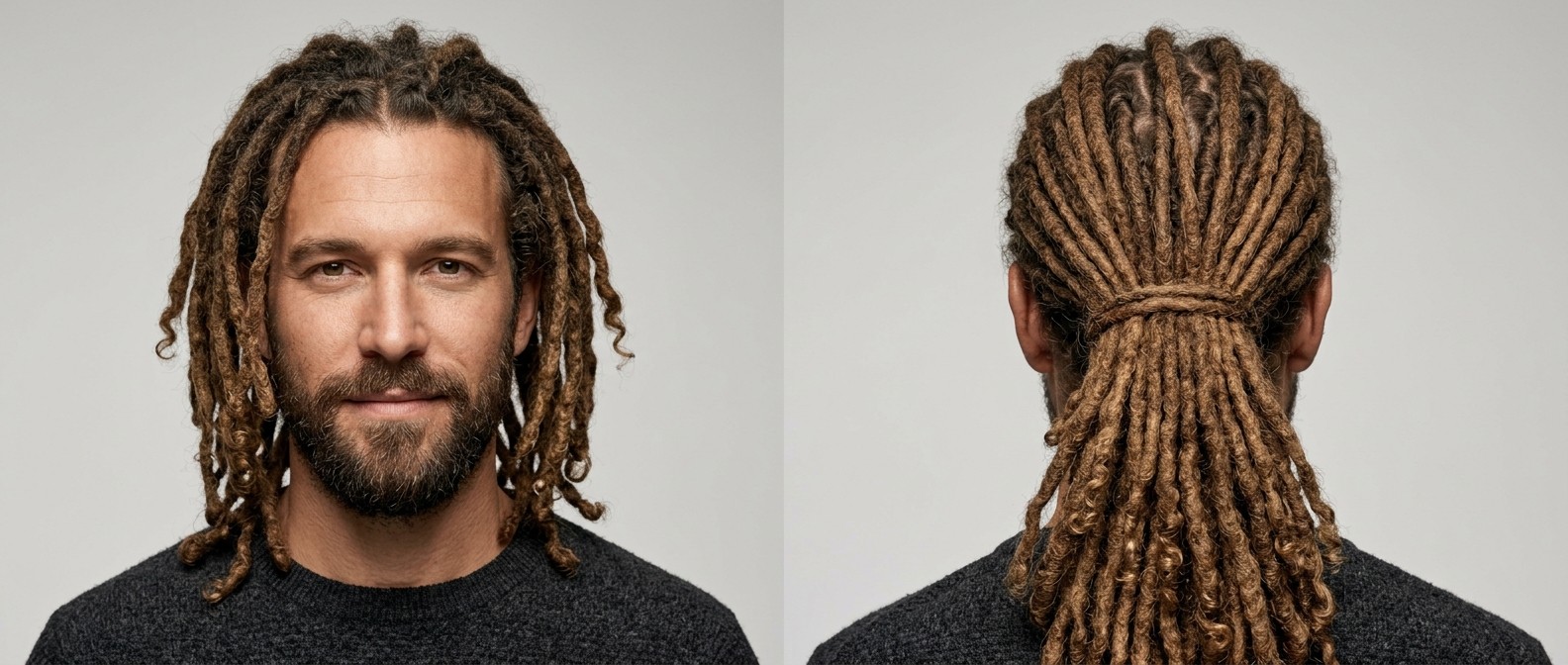
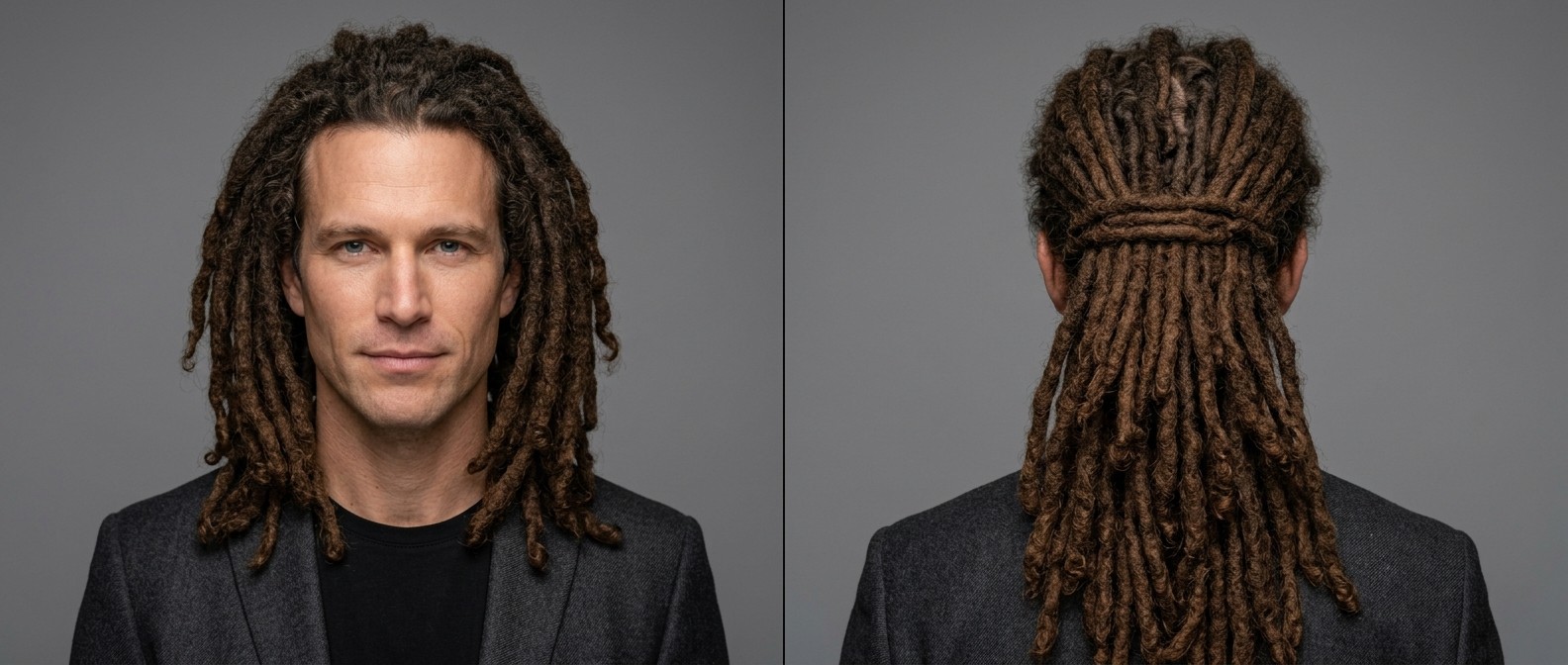
Long Light Brown Tied-Back Dreadlocks with Loose Curly Ends
Dreadlocks
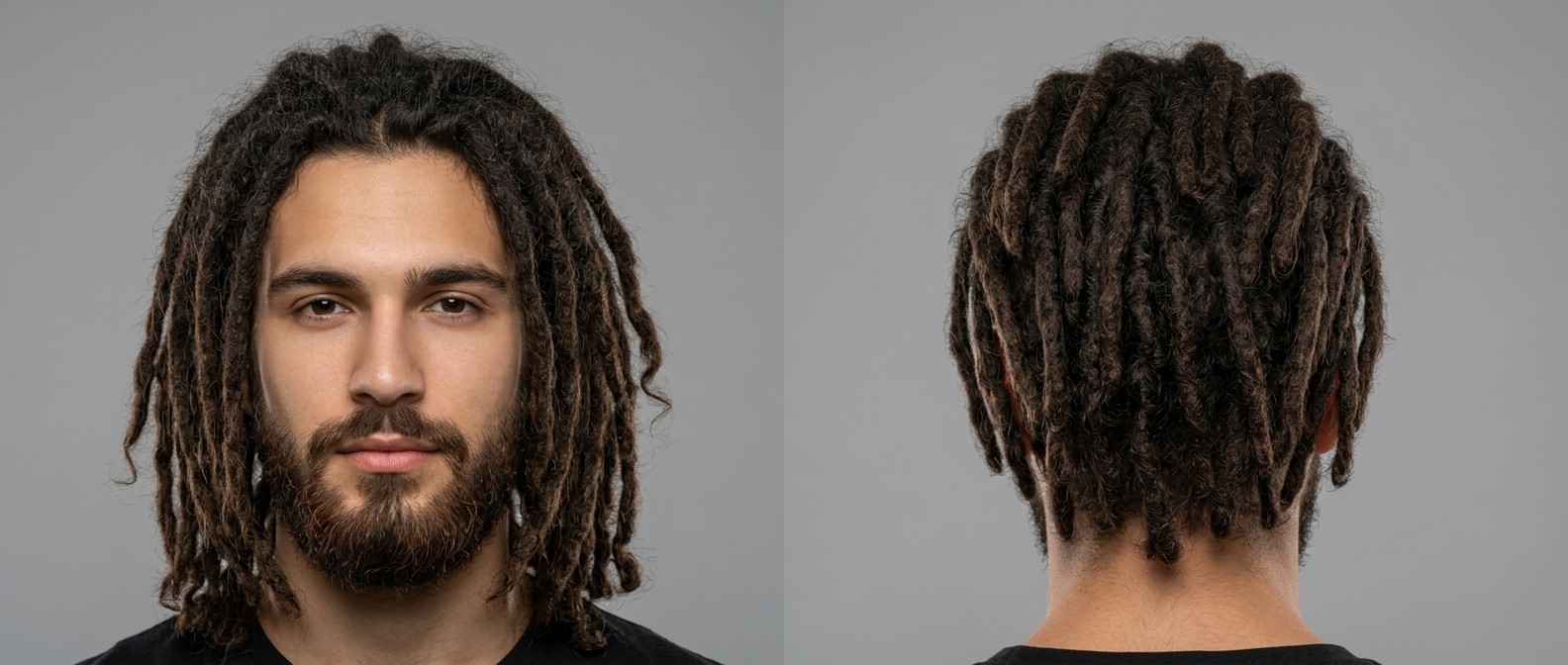
Long Mature Brown Dreadlocks with Half-Up Tied Crown
Dreadlocks
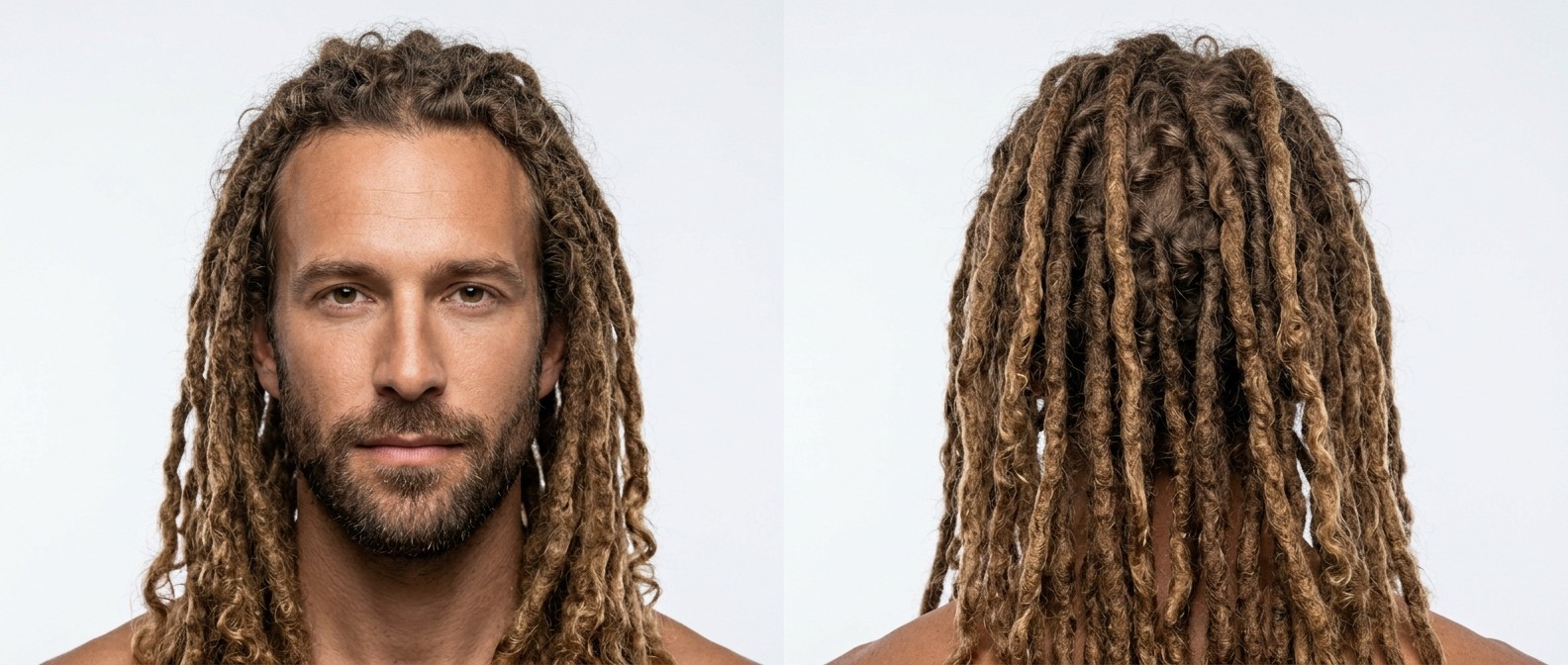
Long Natural Freeform Dreadlocks with Full Beard for Thick Hair
Dreadlocks
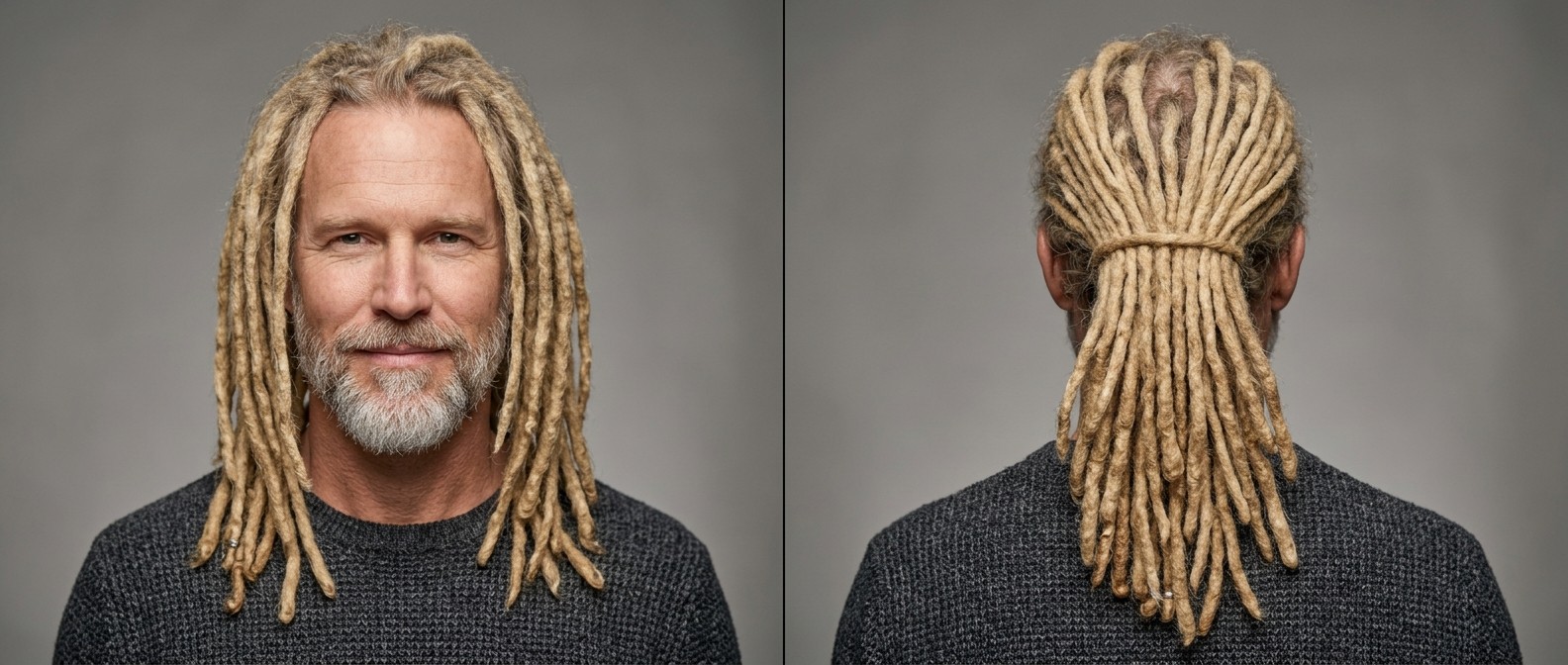
Long Natural Light Brown Dreadlocks with Curly Ends and Short Beard
Dreadlocks
Long Blonde Mature Dreadlocks with Natural Half-Tie and Groomed Beard
Dreadlocks