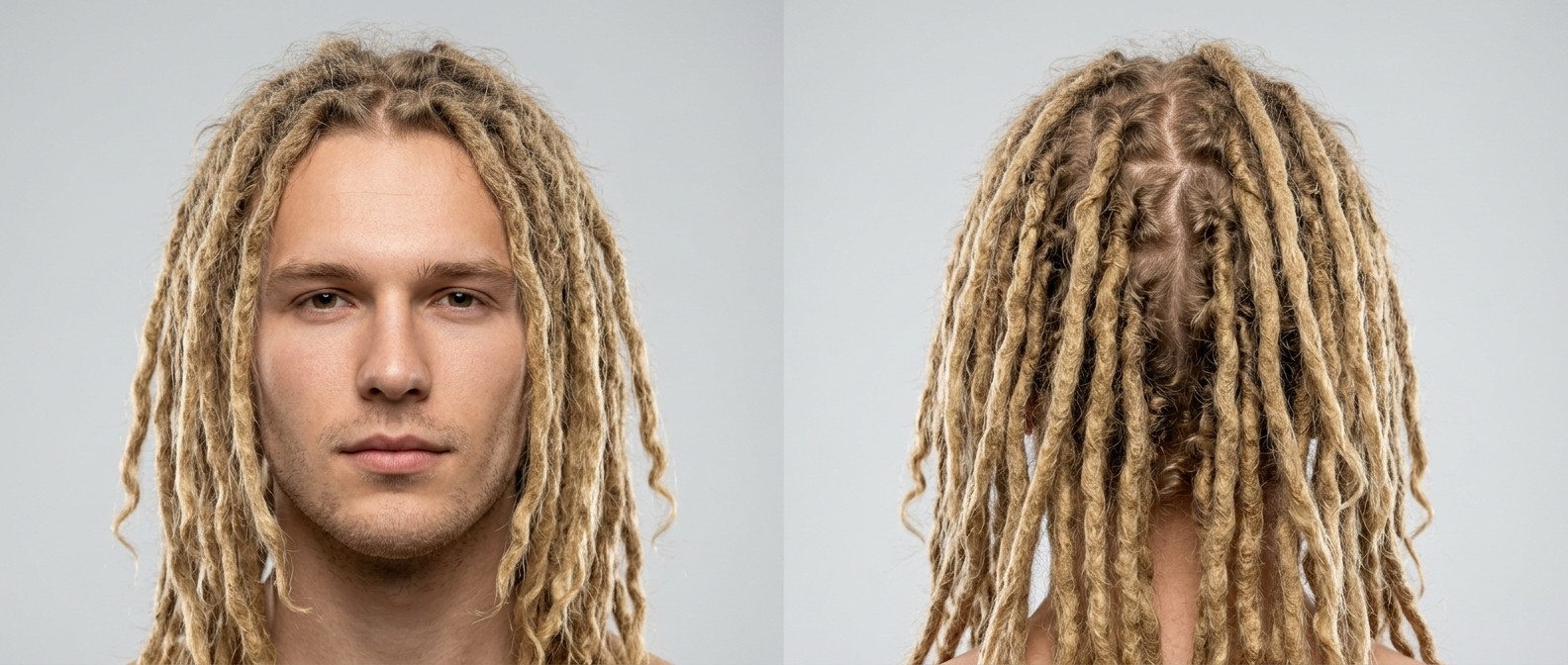
Long Blonde Caucasian Dreadlocks with Middle Part and Wispy Ends
 Top
Long (10-20 cm)
Top
Long (10-20 cm)
 Sides
Long (5+ cm)
Sides
Long (5+ cm)
 Hair Type
Curly (Type 3)
Hair Type
Curly (Type 3)
 Face Shape
Oval
Face Shape
Oval
 Maintenance
Medium
Maintenance
Medium
 Thickness
Medium / Normal
Thickness
Medium / Normal
About This Style
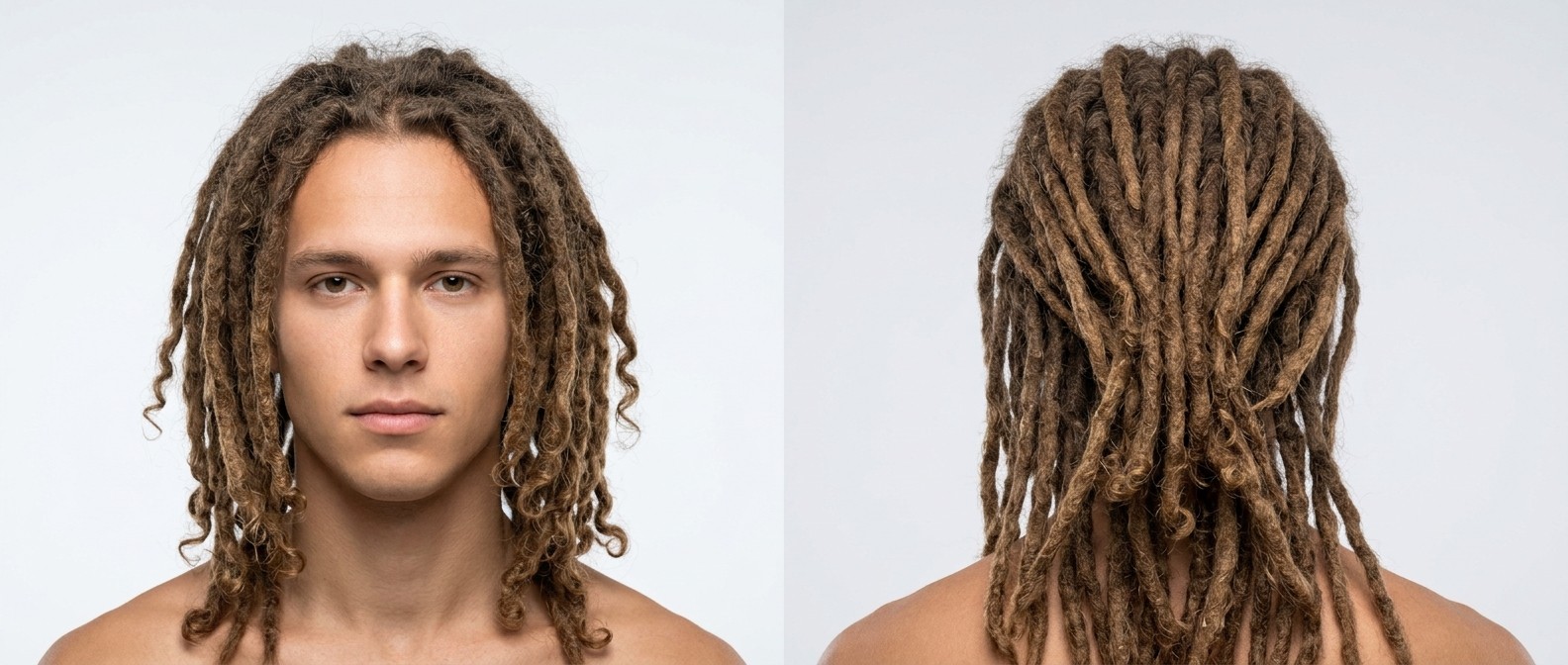
Embrace a truly bold, artistic aesthetic with these stunning long, blonde Caucasian dreadlocks. As clearly seen in the reference photos, this complex style features meticulously sectioned roots that transition seamlessly into medium-thickness locs, cascading elegantly past the shoulders and framing the face. The distinct, well-defined middle part allows the dreads to fall naturally and symmetrically, perfectly complementing an oval face shape, while the slightly loose, curly ends add a touch of organic, unrefined texture. This isn't a tightly manicured, artificial-looking style; rather, it celebrates the natural frizz, character, and unique texture of Type 3 curly hair as it undergoes the locking process over time.
Perfect for the creative individual, this dreadlock variation balances structural, geometric sectioning at the scalp with a relaxed, free-flowing vibe through the mid-lengths and ends. The highly visible grid pattern at the back of the head demonstrates a deliberate, well-planned locking process by a skilled loctician, ensuring even weight distribution and consistent loc size throughout the entire head. This hairstyle commands attention and respect, perfect for musicians, artists, or anyone preferring an expressive aesthetic. It effortlessly complements a casual, streetwear, or bohemian wardrobe and pairs exceptionally well with a rugged, light blonde stubble to ground the youthful, carefree energy of the cascading locks. The natural color variations, with slightly darker roots blending into sun-kissed blonde lengths, add incredible depth and dimension to the overall silhouette.
Perfect for the creative individual, this dreadlock variation balances structural, geometric sectioning at the scalp with a relaxed, free-flowing vibe through the mid-lengths and ends. The highly visible grid pattern at the back of the head demonstrates a deliberate, well-planned locking process by a skilled loctician, ensuring even weight distribution and consistent loc size throughout the entire head. This hairstyle commands attention and respect, perfect for musicians, artists, or anyone preferring an expressive aesthetic. It effortlessly complements a casual, streetwear, or bohemian wardrobe and pairs exceptionally well with a rugged, light blonde stubble to ground the youthful, carefree energy of the cascading locks. The natural color variations, with slightly darker roots blending into sun-kissed blonde lengths, add incredible depth and dimension to the overall silhouette.
Key Features
- Symmetrical, well-defined middle part that allows the cascading dreadlocks to evenly frame both sides of the face and jawline.
- Distinctive square and rectangular root parting (a precise grid pattern) highly visible at the crown and back of the head.
- Medium-thickness, cylindrical locs that maintain a relatively consistent diameter from the root down to the mid-shaft.
- Loose, wispy, and slightly curly un-locked ends (blunted ends are specifically avoided) for a highly natural, organic finish.
- Visible surface frizz and rich organic texture, which is a hallmark characteristic of locking European/Caucasian curly hair types.
- Impressive shoulder-length cascade (10-20 cm top and side length) that provides significant volume, weight, and dynamic movement.
- Subtle color dimension featuring naturally darker blonde roots that transition into lighter, sun-bleached blonde tones through the lengths.
- Flexible root base that allows the locs to lay flat against the scalp rather than sticking straight up, indicating maturity.
Getting the Cut
- Request a comprehensive scalp and hair consultation to determine the absolute optimal loc size and quantity for your specific medium hair thickness.
- Ask the professional loctician to create a precise brick-lay or square grid parting system (approximately 1-inch sections), ensuring clean, geometric lines as seen in the back profile.
- Specify clearly that you want a sharp middle part established from the front hairline all the way to the crown before the actual locking process begins.
- Request the crochet method combined with the twist and rip technique, which is specifically tailored and highly effective for straight to Type 3 curly Caucasian hair textures.
- Instruct the loctician to intentionally leave the bottom 1 to 2 inches of the hair un-locked and naturally curly to achieve those signature wispy, tapered ends.
- Ask them to carefully incorporate any loose surface hairs using a fine 0.5mm crochet hook, but warn against over-tightening to maintain some natural flexibility and organic texture.
- Discuss establishing a strict maintenance schedule for professional root retightening every 6 to 8 weeks to keep the grid pattern sharp and incorporate new hair growth seamlessly.
- Request that they avoid using any heavy waxes or sticky gels during the installation process, opting instead for friction and mechanical locking techniques.
Daily Routine
- Gently separate any locs that may have naturally intertwined or stuck together at the roots while sleeping to prevent unwanted matting.
- Lightly spritz your scalp and the entire length of your dreadlocks with a refreshing, residue-free spray, rosewater, or a diluted essential oil mix to hydrate the hair and wake up the scalp.
- Use the palms of your hands to vigorously but gently palm-roll individual locs, starting directly from the root and working your way down to the tips, to encourage a uniform, smooth cylindrical shape.
- Apply an extremely conservative, pea-sized amount of dreadlock-specific tightening aloe-based gel to any particularly frizzy spots or loose hairs, working it in gently with your fingertips.
- Flip your head upside down and shake your hair gently from side to side to restore natural volume, separate the locs, and encourage movement after being compressed during sleep.
- Stand up and ensure the middle part is clearly defined by manually guiding the locs to their respective sides of your head, framing your face symmetrically.
- If you used a significant amount of hydration spray, allow the hair to air dry completely or use a blow dryer on the cool setting; never tie up damp dreadlocks to avoid mildew.
- Finish by gently teasing the un-locked, curly ends with your fingers to ensure they look wispy, separated, and naturally textured rather than clumped together.
Products & Tools
- Residue-free dreadlock shampoo (liquid or solid bar form) for deep, clarifying washes without leaving any buildup behind.
- Lightweight, water-soluble locking gel or pure aloe vera for taming surface frizz with a very light, natural hold that washes out easily.
- Rosewater, witch hazel, or peppermint scalp refreshing spray for daily hydration, itch relief, and natural odor neutralization between wash days.
- Precision 0.5mm to 0.75mm ergonomic crochet hook for pulling in loose hairs, repairing weak spots, and tightening the locs during at-home maintenance.
- Extra-large silk or satin-lined sleep cap or bonnet to effectively protect the dreadlocks from lint accumulation and damaging friction overnight.
- Ultra-absorbent microfiber towel for gently squeezing and pressing out excess moisture after washing without causing unnecessary surface frizz.
- Blow dryer with a diffuser attachment to safely thoroughly dry the dense locs on a low-heat or cool setting, preventing internal moisture retention.
Maintenance
- Wash your dreadlocks thoroughly once a week using only specialized residue-free shampoo, focusing your fingertips primarily on massaging and cleansing the scalp rather than the lengths.
- Always ensure your dreadlocks are 100% bone-dry all the way to the core before going to bed or tying them up to completely prevent dread rot and mildew formation.
- Sleep with your hair tied up in a loose, comfortable pineapple bun inside a high-quality satin cap to drastically minimize lint accumulation and breakage from pillow friction.
- Schedule professional root maintenance with a certified loctician every 6 to 8 weeks to keep the parting grid neat, separate any congos (locs joining together), and lock in new growth.
- Strictly avoid using heavy beeswax, traditional daily conditioners, or thick cream-based styling products, as these will cause severe, impossible-to-remove buildup inside the matrix of the locs.
- Perform a deep cleansing Apple Cider Vinegar (ACV) and baking soda soak twice a year to strip away any environmental impurities, trapped dirt, or minor product buildup.
Best For
Ideal for men with oval, heart, or diamond face shapes, as the long, symmetrical framing locs perfectly balance facial proportions and highlight the jawline.
Best suited for individuals with medium to thick natural hair density to ensure the resulting dreadlocks look full, voluminous, and not overly sparse or scalp-heavy.
Perfect for creative, artistic, bohemian, or alternative lifestyles where unconventional grooming is celebrated and strict corporate dress codes do not apply.
Works exceptionally well for highly patient individuals who are willing to commit to the lengthy initial locking process and the required regular root maintenance.
Complements youthful, energetic aesthetics, specifically thriving in the 18-25 age range, and pairs beautifully with a well-groomed light stubble or short beard.
Excellent for European/Caucasian hair types (specifically Type 3 curly hair) that have enough natural texture to grip and lock effectively over time.
Pro Tips
- Patience is absolutely critical; Caucasian dreadlocks go through a messy teenage phase and can take up to a full year to fully mature, tighten, and drop into their final, smooth shape.
- Consistent palm-rolling after every single wash while the hair is slightly damp is a crucial habit for shaping the locs, smoothing frizz, and preventing flat spots from forming.
- Keep a strict, vigilant eye out for lint from clothing (especially hoodies) or bedding; once lint gets deeply trapped inside the core of a loc, it is nearly impossible to remove without damage.
- If your scalp feels excessively itchy or irritated during the early locking stages, use a soothing witch hazel or aloe vera spray directly on the scalp instead of scratching and disrupting the delicate roots.
- When washing, do not violently scrub the lengths of the dreadlocks like traditional hair; instead, gently squeeze the suds through the locs like a sponge to cleanse them without causing fraying.
Related Hairstyles
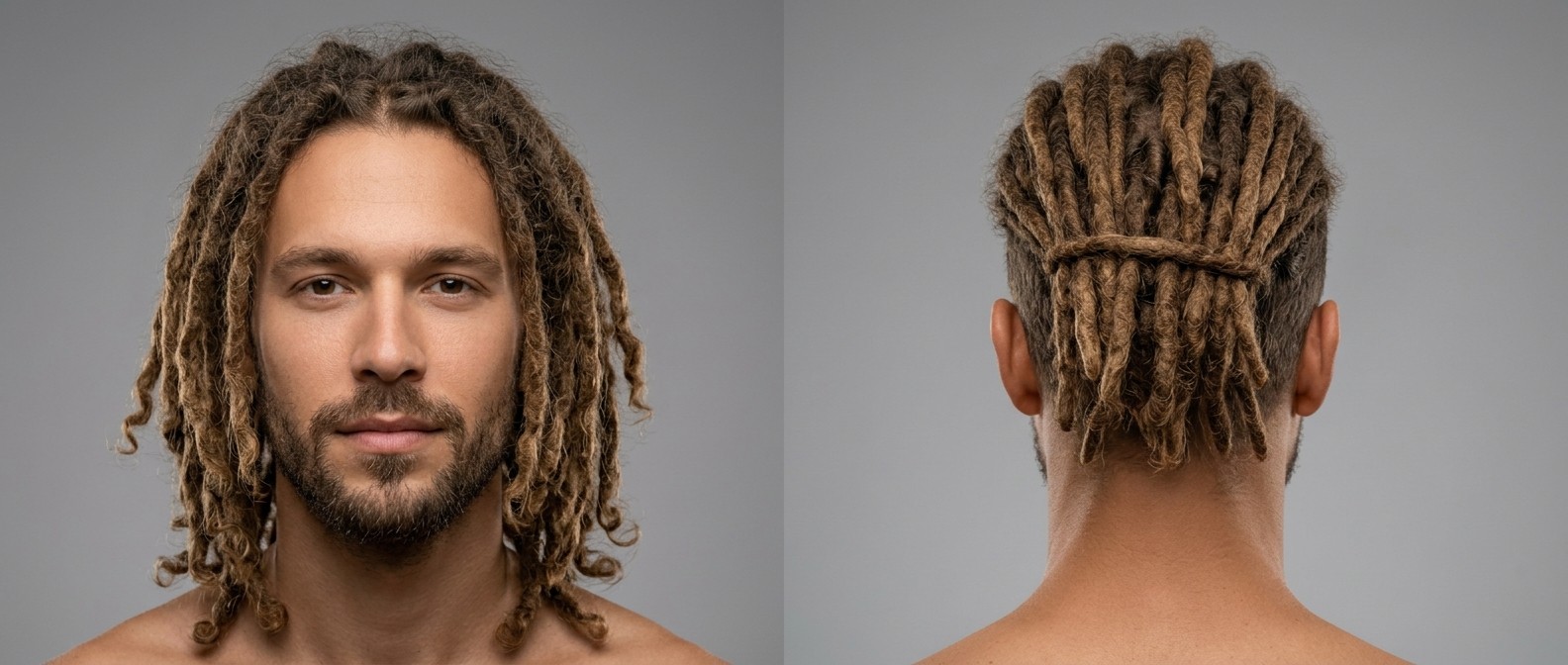
Dreadlocks
Light Brown Mid-Length Dreadlocks with Loose Curly Ends
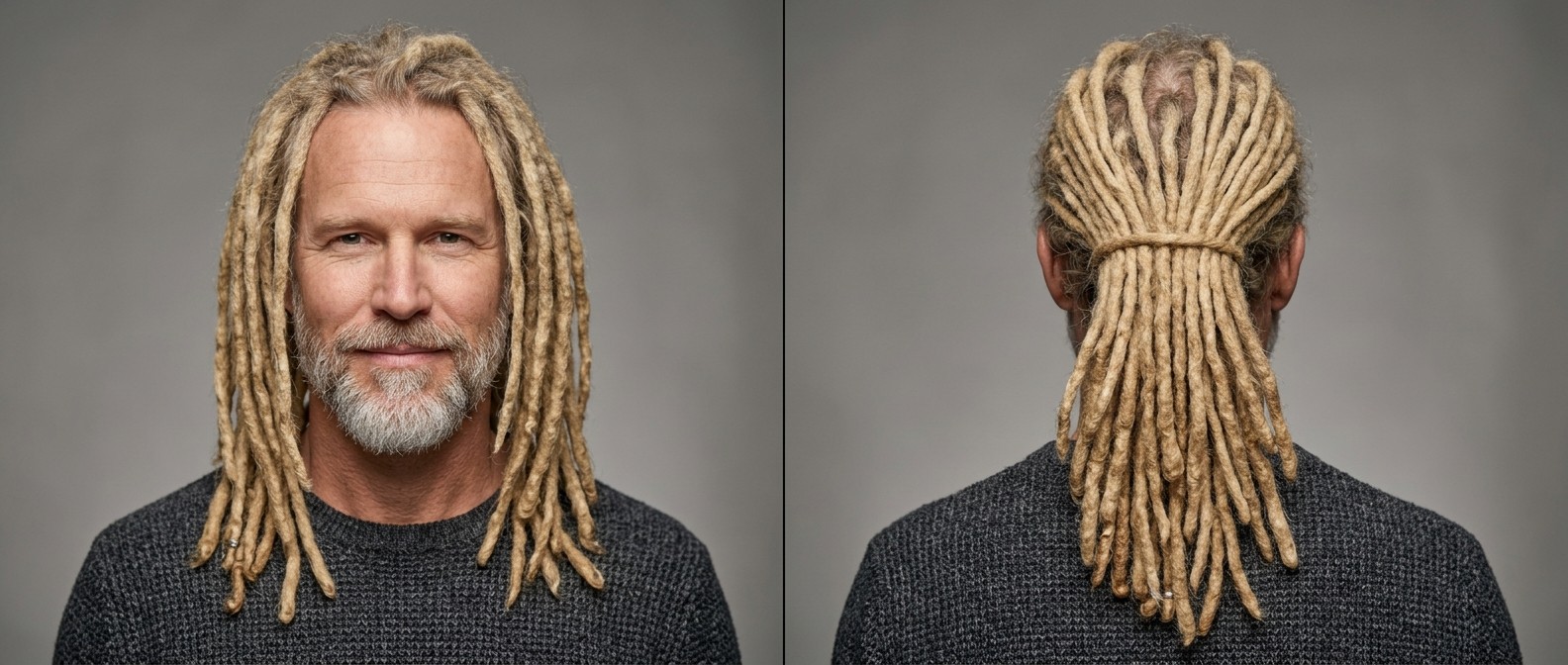
Dreadlocks
Long Blonde Mature Dreadlocks with Natural Half-Tie and Groomed Beard
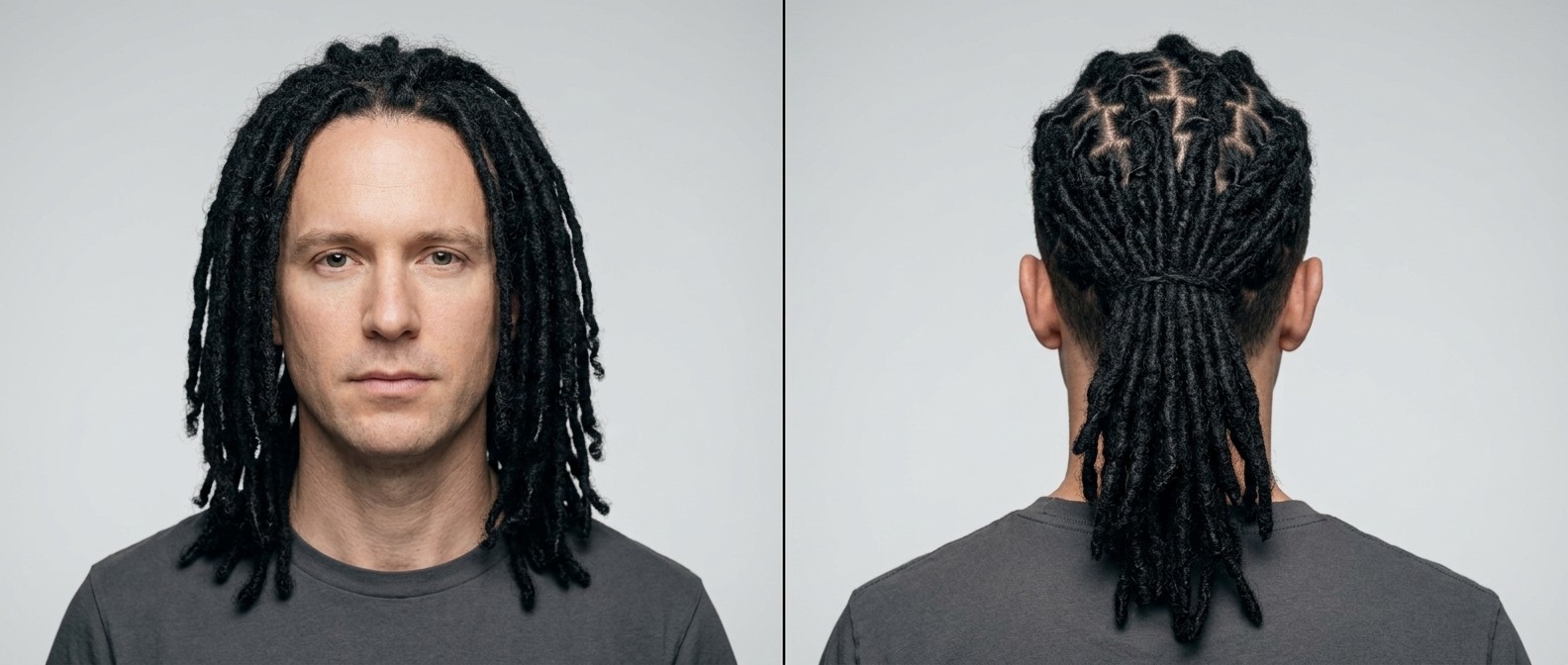
Dreadlocks
Long Structured Dreadlocks with Geometric Root Parting
Dreadlocks
Long Natural Light Brown Dreadlocks with Loose Curly Ends
Dreadlocks
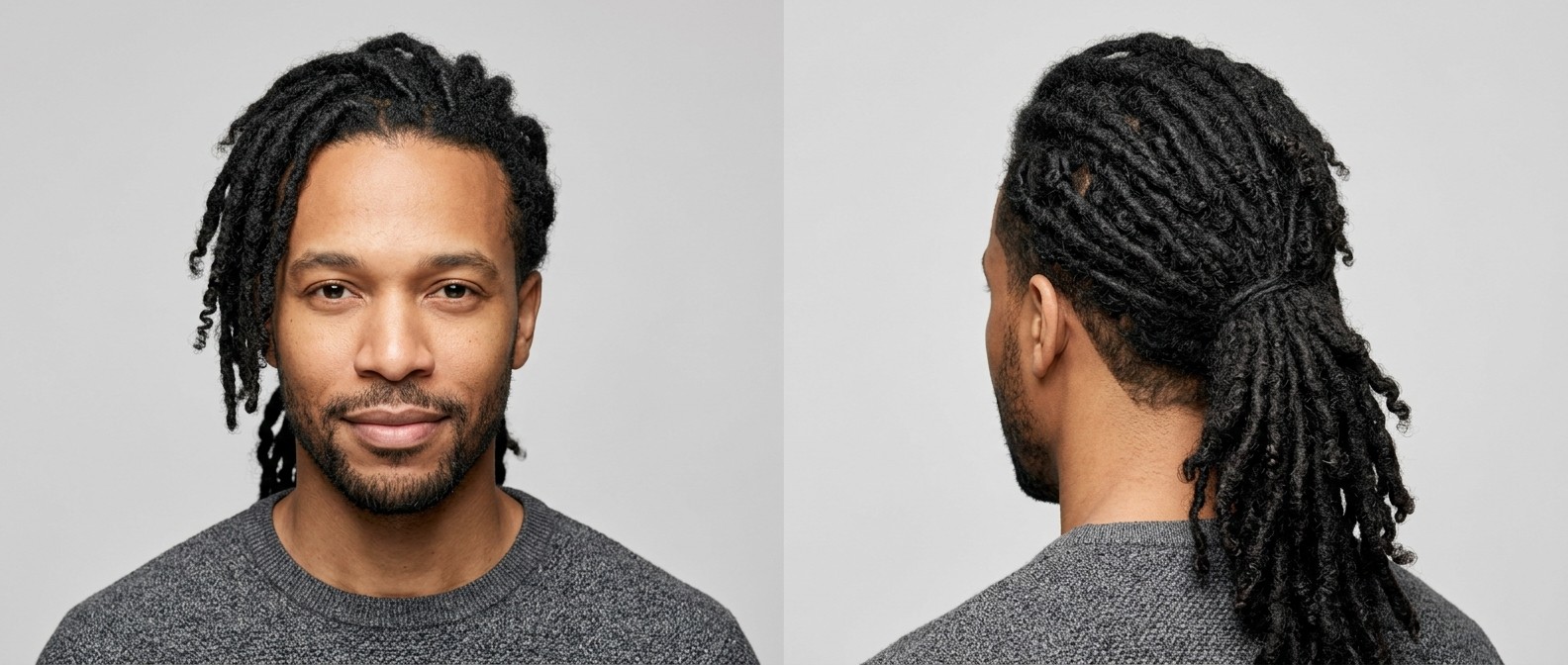
Long Swept Dreadlocks with Low Tied Ponytail and Clean Taper
Dreadlocks