Precision Square-Parted Men's Box Braids with Middle Part
 Top
Long (10-20 cm)
Top
Long (10-20 cm)
 Sides
Long (5+ cm)
Sides
Long (5+ cm)
 Hair Type
Very Curly / Afro (Type 4)
Hair Type
Very Curly / Afro (Type 4)
 Face Shape
Diamond
Face Shape
Diamond
 Maintenance
Low
Maintenance
Low
 Thickness
Thick / Dense
Thickness
Thick / Dense
About This Style
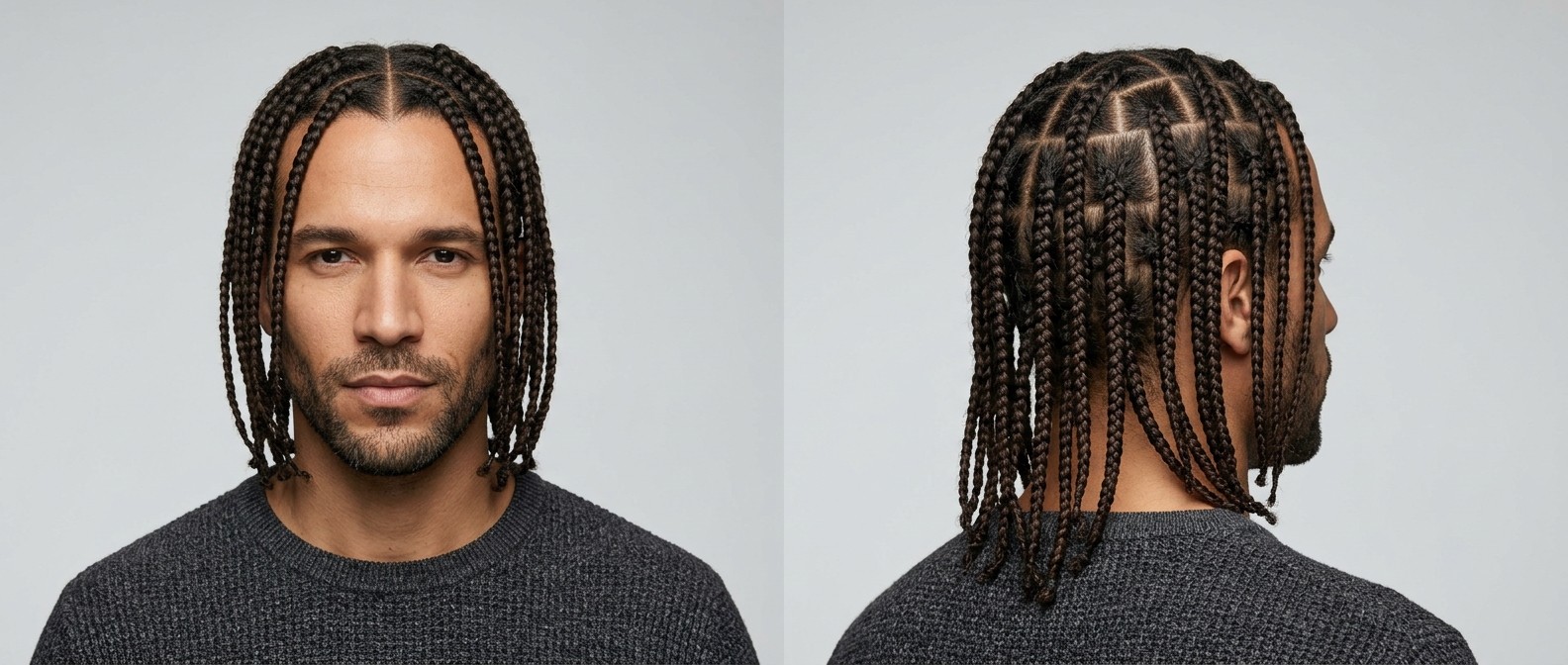
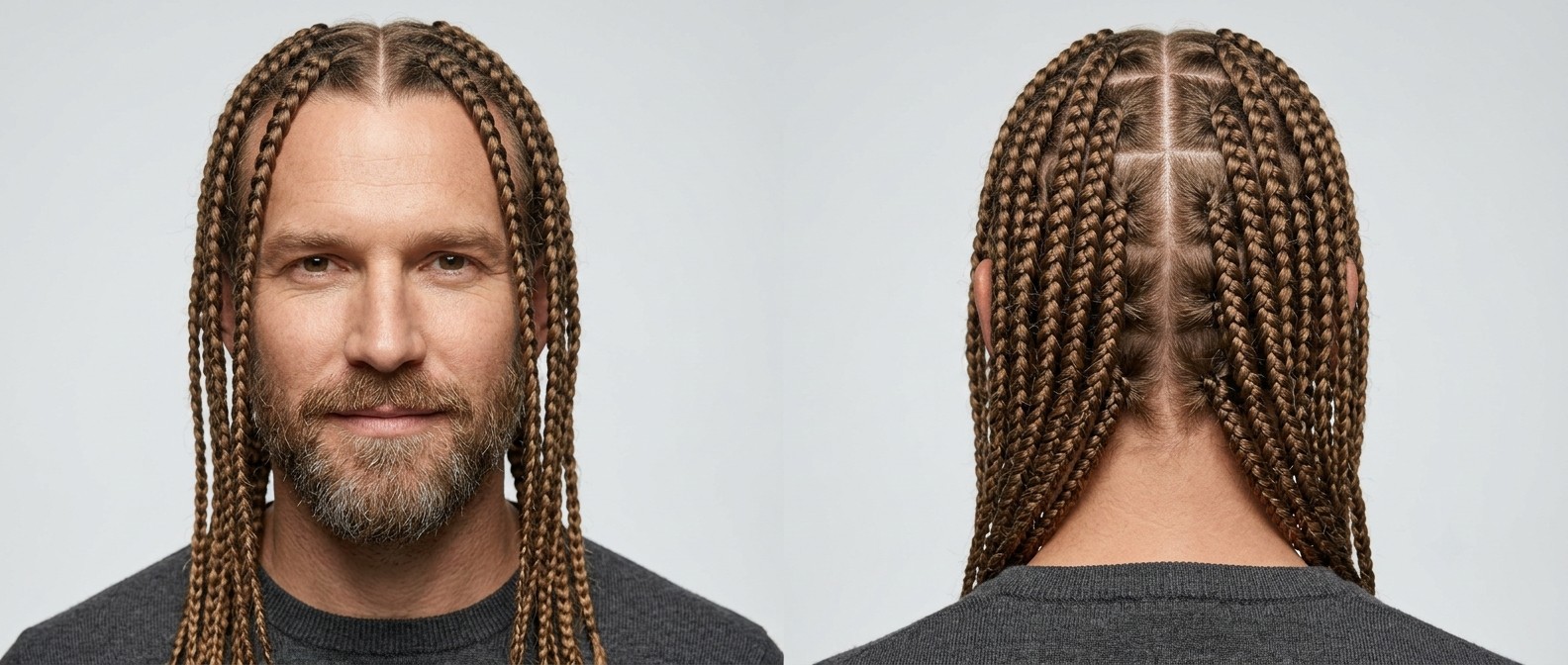
Behold the striking precision of classic men's box braids, a masterful protective style that seamlessly blends geometric structure with effortless flow. As seen in the photo, this look is defined by its immaculate, razor-sharp middle part that symmetrically divides the dark brown hair, allowing the braids to cascade naturally down the sides of the face. The back view reveals the meticulous square-shaped scalp sections—the signature 'boxes'—that give this style its name, showcasing high-level braiding artistry. The uniform plaits rest neatly around the collarbone, while the clean, natural hairline and crisp short beard provide a rugged, masculine contrast to the sleekness of the braided lengths.
Designed specifically for thick, dense, Very Curly or Type 4 Afro hair, this variation beautifully manages volume by compacting the hair into neat, highly manageable strands. The 10-20 cm length provides enough natural weight to keep the braids laying flat against the head without the need for heavy styling products. It is the ultimate low-maintenance solution for the modern man, bringing your daily morning styling time to well under a minute.
This structured yet distinctly artistic aesthetic is absolutely perfect for creative professionals or anyone who wants a distinctive, polished appearance that stands out in a crowd. It exceptionally complements a diamond face shape, as the vertical lines of the long braids help to balance wider cheekbones and frame the jawline beautifully. While the day-to-day upkeep is incredibly minimal, keeping the look fresh and healthy requires a commitment to professional maintenance, with a fresh re-braiding session recommended every five to eight weeks.
Designed specifically for thick, dense, Very Curly or Type 4 Afro hair, this variation beautifully manages volume by compacting the hair into neat, highly manageable strands. The 10-20 cm length provides enough natural weight to keep the braids laying flat against the head without the need for heavy styling products. It is the ultimate low-maintenance solution for the modern man, bringing your daily morning styling time to well under a minute.
This structured yet distinctly artistic aesthetic is absolutely perfect for creative professionals or anyone who wants a distinctive, polished appearance that stands out in a crowd. It exceptionally complements a diamond face shape, as the vertical lines of the long braids help to balance wider cheekbones and frame the jawline beautifully. While the day-to-day upkeep is incredibly minimal, keeping the look fresh and healthy requires a commitment to professional maintenance, with a fresh re-braiding session recommended every five to eight weeks.
Key Features
- Symmetrical middle part that divides the hair perfectly and creates a balanced, face-framing effect for the wearer.
- Precise square-shaped scalp sections across the entire head, forming the geometric, highly structured foundation of the style.
- Uniform three-strand plaits that maintain consistent thickness and tight tension from the root down to the naturally tapered ends.
- Downward hair flow direction, utilizing the natural weight of the 10-20 cm length to lay flat naturally against the head and neck.
- Clean, straight hairline integration with minimal edge manipulation, promoting a natural, unforced aesthetic that protects the roots.
- Sleek and controlled overall silhouette that effortlessly minimizes frizz while maximizing the appearance of dense, thick Type 4 curly hair.
Getting the Cut
- Request a thorough clarifying wash, deep moisturizing condition, and a gentle blow-out to stretch your Type 4 hair fully before any braiding begins.
- Ask for a perfectly centered, straight middle part running exactly from your front hairline all the way back to the crown of your head.
- Specify traditional "box" (square) parting across the entire scalp, ensuring each section is meticulously measured and uniform in size for consistent braid thickness.
- Instruct the stylist to use a firm but comfortable tension—tight enough to secure the thick base and make the style last, but avoiding excessive, painful pull on the natural hairline.
- Request standard three-strand plaits extending the full 10-20 cm length of your hair, braiding all the way down to the very ends to prevent unraveling over the coming weeks.
- Ask the braider to finish the style with a lightweight setting mousse and a brief session under a hooded dryer to lock in the parts and lay down any persistent flyaways.
- Have your barber clean up your facial hair, keeping your short beard neatly trimmed, faded, and lined up to perfectly complement the highly structured nature of the braids.
Daily Routine
- Begin your morning routine by carefully removing the silk or satin durag, bonnet, or scarf that you wore overnight to protect the braids from friction and prevent frizz.
- Give your head a gentle shake to allow the long, 10-20 cm box braids to fall naturally into their gravity-assisted, downward position around your face and neck.
- Apply a dime-sized amount of lightweight, soothing hair oil or a specialized moisturizing braid sheen spray directly to your fingertips and gently massage it into your exposed scalp.
- Smooth your hands lightly down the entire length of the braids from root to tip to distribute the remaining oil, enhance the rich dark brown shine, and tame any minor stray hairs.
- If your front edges or hairline require a quick touch-up, use a soft-bristled edge brush and a tiny dab of matte edge control to lightly smooth the perimeter without creating white buildup.
- Ensure the signature middle part is visually clear of any crossing braids, manually adjusting the front sections so they frame your diamond face shape perfectly for the day ahead.
Products & Tools
- Lightweight soothing scalp oil or serum (ideally containing tea tree, jojoba, or peppermint) to calm the skin and maintain essential moisture between your wash days.
- Hydrating braid sheen spray or conditioning mist (low hold, high shine finish) to keep your thick Type 4 hair nourished and flexible inside the tight plaits.
- Gentle, flake-free edge control paste (medium hold, matte or natural finish) for minimal hairline touch-ups when you need a slightly sharper look for an event.
- High-quality silk or satin durag, bonnet, or pillowcase to protect the hair texture, retain moisture, and prevent the braids from frizzing while you sleep.
- Professional metal rat-tail comb, which is absolutely required for the braider to precisely map out and create those razor-sharp, geometric square parts.
- Soft-bristled edge brush to gently lay down the front hairline hairs without disturbing the tension or structure of the primary braids.
Maintenance
- Schedule professional braider or barber visits every 5-8 weeks to safely take down, thoroughly cleanse, and reinstall the braids to prevent severe hair matting at the roots.
- Wash your hair every 2-3 weeks using a diluted clarifying shampoo focused directly on the scalp to remove sweat and product buildup without drying out the lengths of the braids.
- Always sleep with a silk or satin head covering; this step is absolutely non-negotiable for maintaining the crisp neatness of the parts and preventing friction-induced breakage.
- Strictly avoid using heavy styling waxes, thick gels, or creamy leave-in conditioners that can easily get trapped and leave unsightly white residue at the base of your braids.
- Keep your scalp properly hydrated by applying oil lightly once or twice a week, but avoid over-saturating the roots, which can cause the braids to slip prematurely.
Best For
Face Shapes: Ideal for diamond and oval faces, as the long, straight downward lines of the braids help balance wider cheekbones and frame a strong jawline beautifully.
Hair Types: Perfectly suited for thick, dense, Very Curly or Afro (Type 4) hair that has the natural grip required to hold a firm braid without slipping or unraveling.
Age Ranges: Highly complementary and sophisticated for men aged 35-45 who are looking for a refined, structured, yet deeply artistic protective hairstyle.
Lifestyles: Excellent for creative professionals, artists, and busy individuals who want a stylish, low-maintenance look that requires under one minute of daily styling.
Pro Tips
- Do not ignore scalp tension; if the braids feel painfully tight after the first 24 hours, use a warm, damp towel to loosen the roots slightly to prevent traction alopecia.
- For seasonal adaptation, use a slightly heavier, moisture-locking oil during dry winter months to protect the scalp from flaking, and switch to a lighter hydrating mist in humid summers.
- A critical mistake is leaving the style installed past the 8-week mark; this inevitably leads to severe tangling at the new growth and potential hair loss during the takedown process.
- Pair this braided look with a meticulously groomed, short beard to create a sharp, intentional contrast between the long, flowing braids and the highly structured facial hair.
Related Hairstyles
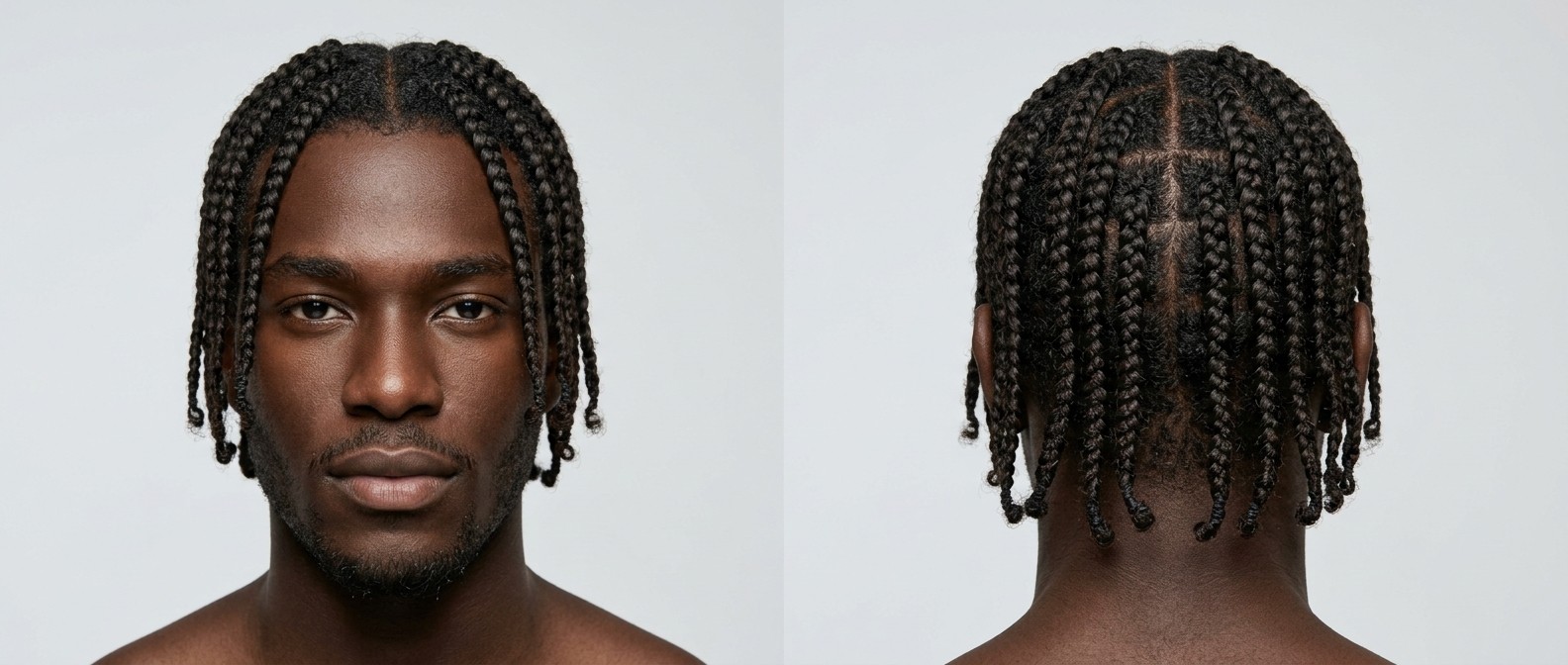
Box Braids
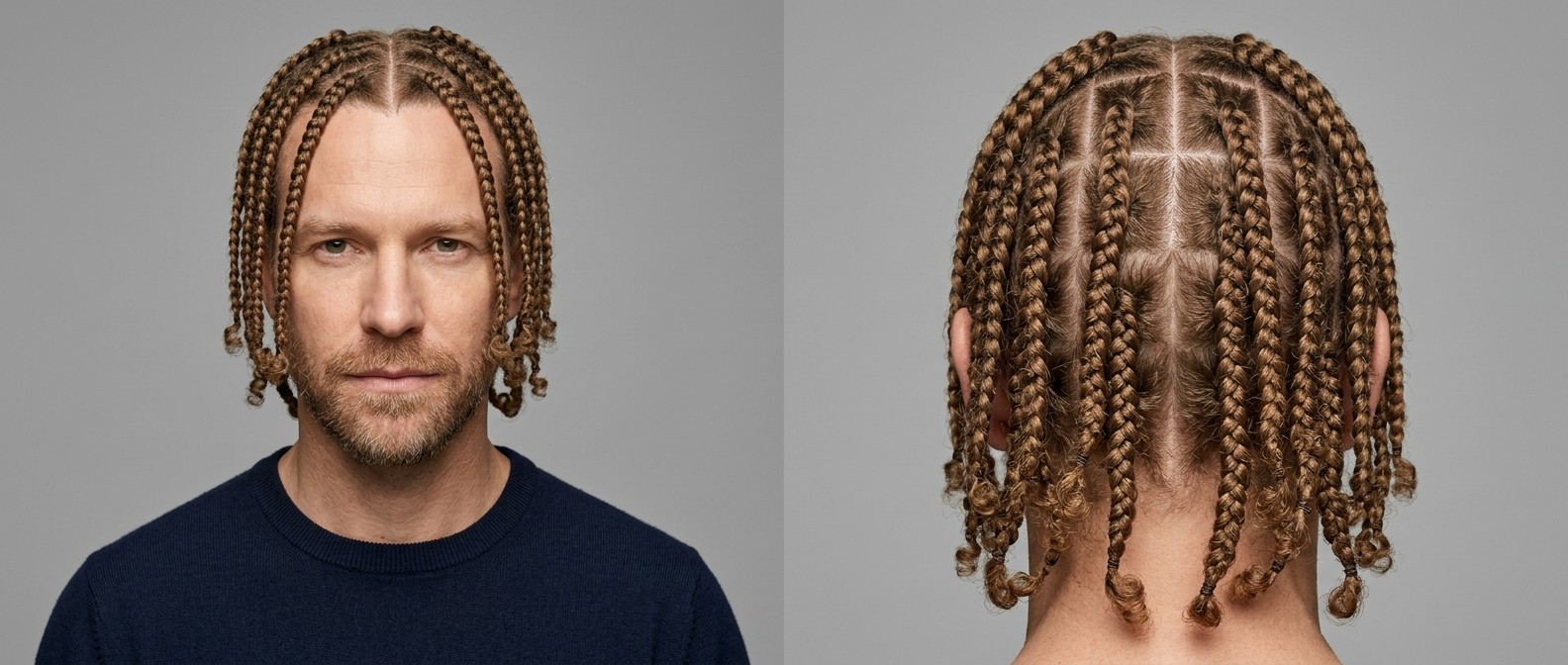
Classic Mid-Length Box Braids with Sharp Center Part & Precision Scalp Grid
Box Braids
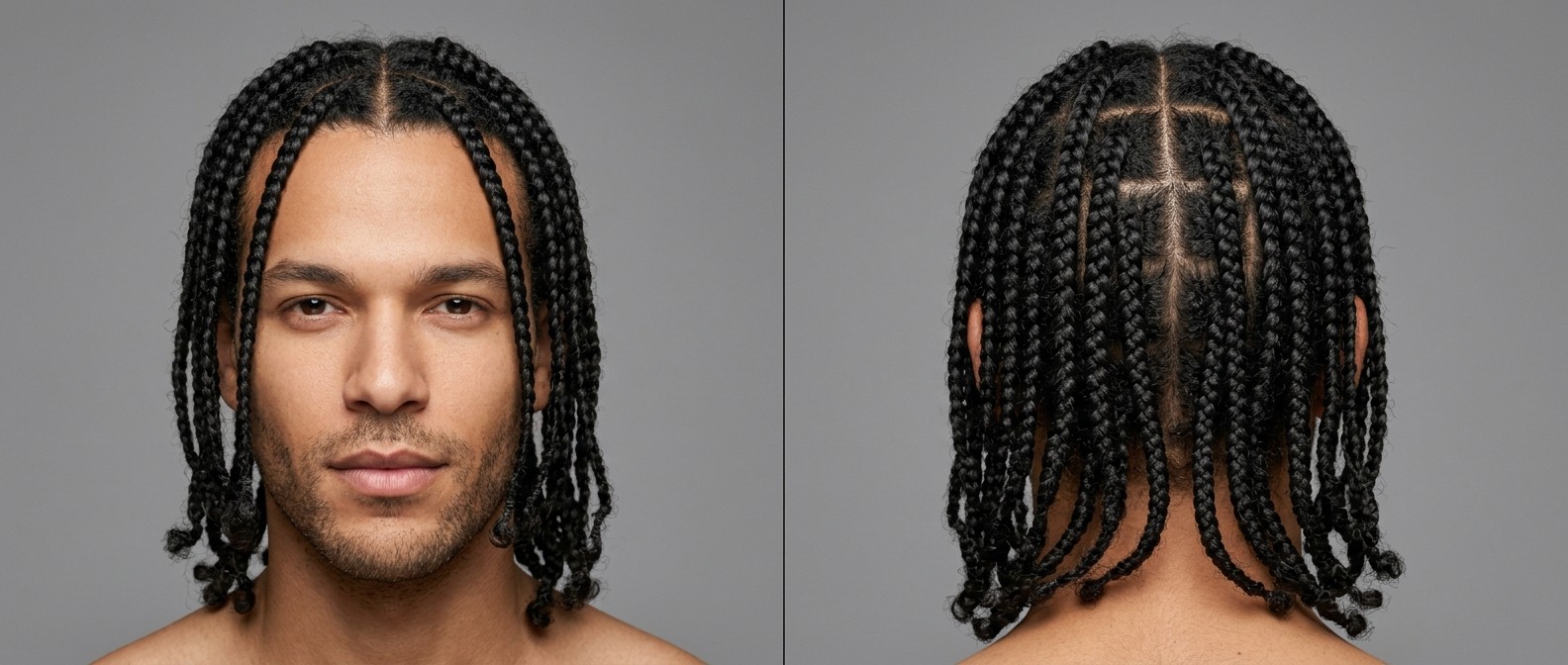
Men's Precision Box Braids: Square-Parted Style Guide
Box Braids
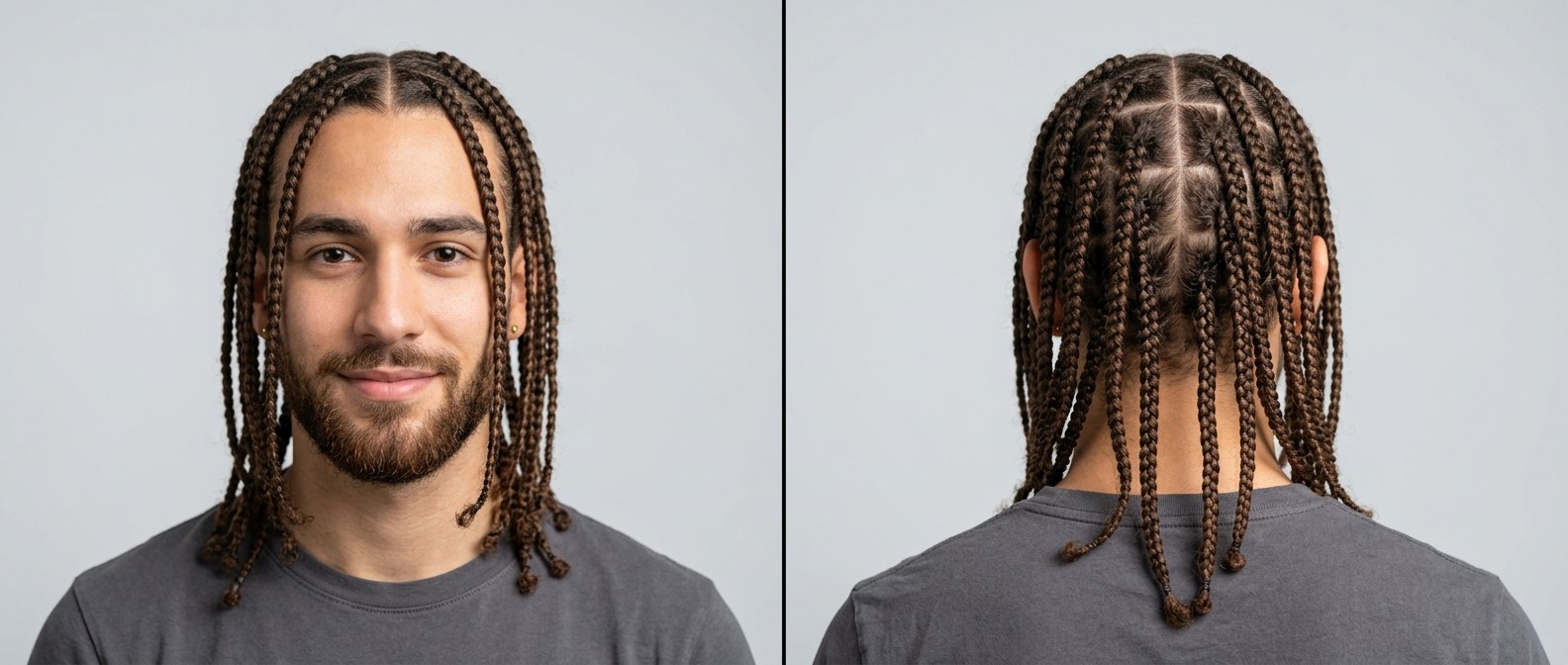
Classic Medium Box Braids with Distinctive Square Parting and Natural Ends
Box Braids
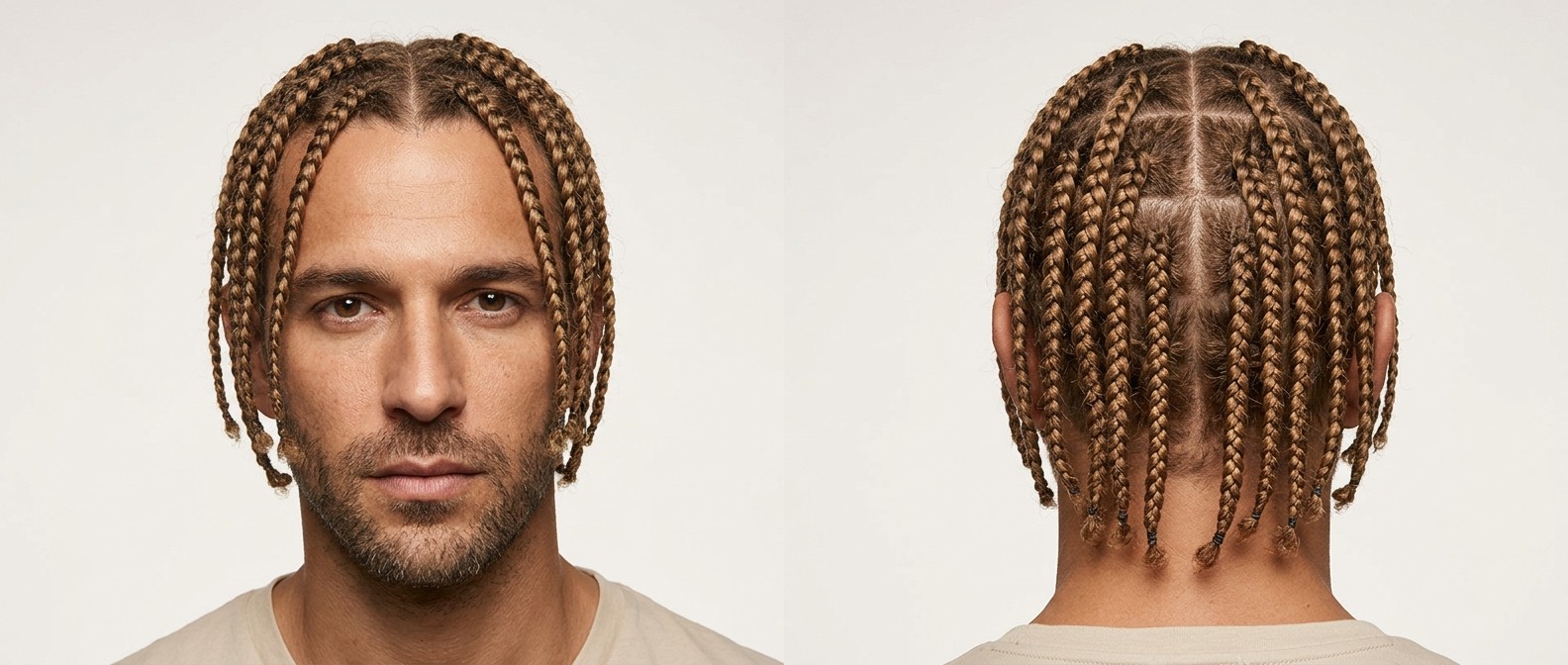
Long Center-Parted Box Braids with Precision Square Partings
Box Braids
Center-Parted Light Brown Box Braids with Distinctive Grid Parting
Box Braids