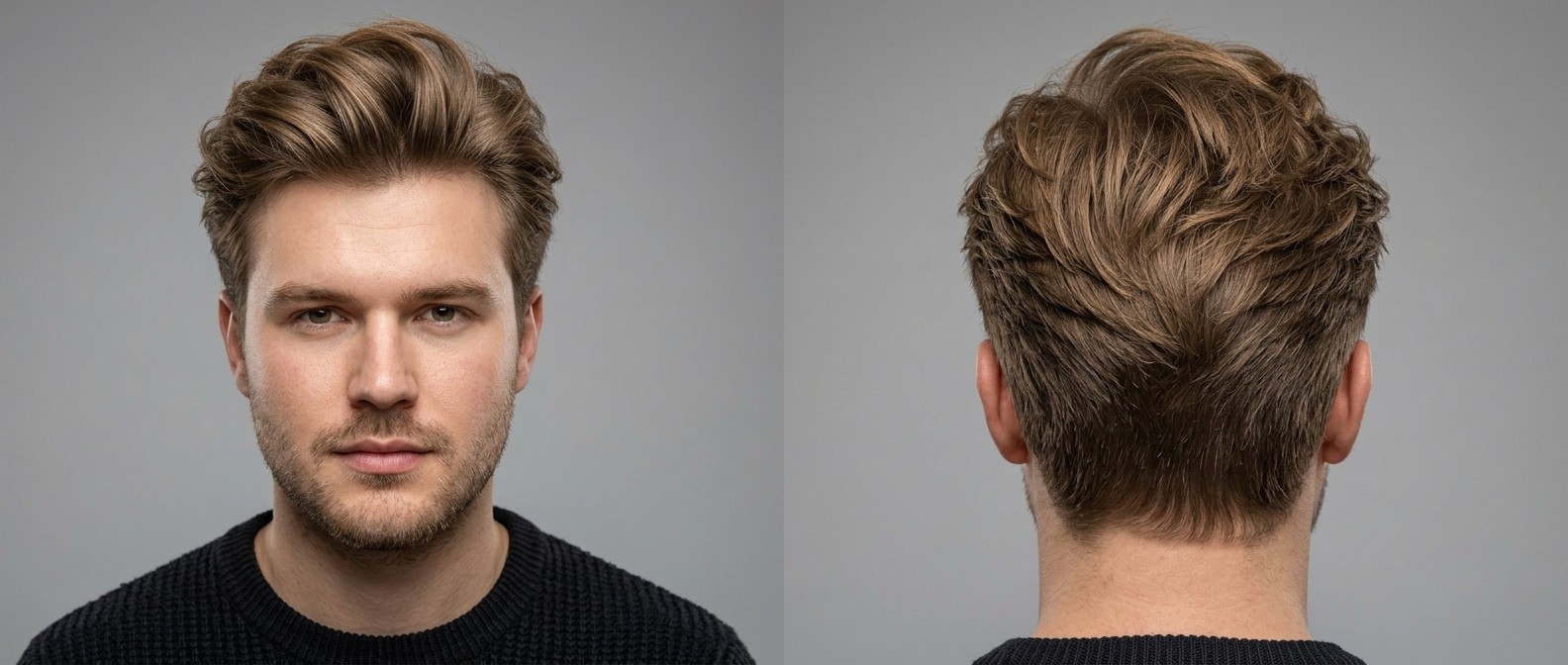
Voluminous Swept-Back Blowout with Textured Tapered Sides
 Top
Medium (5-10 cm)
Top
Medium (5-10 cm)
 Sides
Short (6-20 mm)
Sides
Short (6-20 mm)
 Hair Type
Straight (Type 1)
Hair Type
Straight (Type 1)
 Face Shape
Round
Face Shape
Round
 Maintenance
High
Maintenance
High
 Thickness
Medium / Normal
Thickness
Medium / Normal
About This Style
This modern voluminous swept-back blowout is a masterclass in controlled chaos, perfectly balancing relaxed, casual energy with highly intentional grooming. Looking closely at the provided photo, you will notice the striking visual contrast between the medium-length, heavily textured top and the neatly tailored, shorter sides. The light brown hair color beautifully highlights the aggressive point cutting, showing off every individual strand and layer. The hair is driven upward and backward, creating a sweeping, wind-blown silhouette that naturally elongates the face—making it an absolutely exceptional choice for rounder face shapes. The back of the head features a beautifully layered, almost V-shaped flow that demonstrates expert scissor work, seamlessly blending the crown down to the neckline. While it projects an effortless, everyday vibe, make no mistake: this style demands a committed daily grooming routine. It is meticulously tailored for the modern gentleman who doesn't mind spending ten or more minutes in front of the mirror wielding a blow dryer to achieve that flawlessly structured, yet touchable, gravity-defying lift.
Key Features
- Gravity-defying front volume with a swept-back, slightly off-center directional flow that opens up the forehead.
- Medium-length top (5-10 cm) featuring aggressive point cutting to create a highly piecey, separated, and dynamic texture.
- Short, softly tapered sides (6-20 mm) that are brushed backward to blend seamlessly into the longer parietal ridge.
- Dynamic back section that is heavily layered to create a sweeping, V-shaped convergence at the crown and nape of the neck.
- Matte to low-shine finish that emphasizes natural movement and airiness rather than a stiff, greasy, or helmet-like hold.
- Soft, natural neckline taper that gradually fades into the skin rather than utilizing a harsh, blocked-off straight edge.
- Distinctive wave-like movement achieved through heat styling, transforming naturally straight Type 1 hair into a textured masterpiece.
Getting the Cut
- Ask for a classic blowout shape with disconnected but smoothly blended lengths, keeping exactly 5 to 10 centimeters of length on the top.
- Request scissor-cut sides or the use of a long clipper guard (number 4 to 6) to leave approximately 15 to 20 millimeters of length on the sides.
- Specify that the sides must be blended smoothly into the top using a precise scissor-over-comb technique to completely avoid any harsh transition lines.
- Ask for heavy texturizing and deep point cutting through the top and crown to remove excess bulk and encourage that signature piecey movement.
- Request that the front fringe be left significantly longer than the crown to allow for maximum vertical lift when the hair is swept backward.
- Instruct your barber to layer the back section so the hair naturally flows toward the center axis in a soft, V-shaped taper.
- Ask for a natural, feathered taper at the nape of the neck to maintain a clean but organic look, avoiding a perfectly straight, blocked-off hairline.
Daily Routine
- Start your routine with freshly washed, lightly towel-dried hair that remains slightly damp, ensuring it is absolutely not dripping wet.
- Apply a generous dime-sized amount of pre-styling sea salt spray or thickening mousse from the roots directly to the ends to build a strong foundation for volume.
- Using a high-quality blow dryer set on medium heat and high speed, brush the hair upward and backward using a medium-sized vented round brush.
- Focus the dryer's concentrator nozzle directly at the roots of the front fringe, pulling the hair straight up with the brush to lock in that gravity-defying lift.
- As the top begins to dry, switch to using your fingers to firmly direct the hair on the shorter sides backward, flattening them slightly against the sides of your head.
- Once the hair is 100% dry, immediately switch the blow dryer to the cold shot setting to blast the entire style, locking the volume and closing the hair cuticle in place.
- Scoop a small, pea-sized amount of matte clay or high-hold styling paste, rub it completely into your palms until invisible, and aggressively rake your fingers through the top from front to back.
- Finish the look by pinching and twisting individual sections at the crown and front hairline to define the separated, piecey texture clearly visible in the reference photo.
Products & Tools
- Pre-styler: High-quality sea salt spray or volumizing mousse to provide essential root lift, gritty texture, and thermal heat protection.
- Finisher: Heavy-duty matte styling clay or high-hold texturizing paste to deliver a no-shine, flexible grip that lasts all day.
- Professional blow dryer equipped with a concentrator nozzle attachment to ensure directed, precise airflow exactly where you need it.
- Medium-sized vented round brush with firm bristles to maximize root tension and vertical lift during the crucial blow-drying phase.
- Wide-tooth comb for initial detangling and evenly distributing the pre-styling products through your damp hair.
- Optional but recommended: A lightweight, dry finishing hairspray to lock the final silhouette against humidity without adding unwanted shine or weight.
Maintenance
- Schedule your barber visits strictly every 3 to 4 weeks to maintain the tailored short sides and prevent the voluminous top from becoming too heavy to lift.
- Wash your hair 2 to 3 times a week using a lightweight volumizing shampoo; strictly avoid heavy, moisturizing conditioners that will weigh the hair strands down.
- Incorporate a clarifying shampoo into your routine bi-weekly to effectively strip away the intensive styling product buildup that clays and pastes inevitably leave behind.
- Sleep on a high-quality silk or satin pillowcase to drastically reduce friction, preventing your hair from flattening entirely or breaking overnight.
- Avoid wearing tight hats, caps, or beanies, as they will permanently crush the delicate blowout structure, requiring a complete re-wash to fix.
- On non-wash days, use a quick spritz of dry shampoo at the roots to absorb excess scalp oils and instantly revive yesterday's volume.
Best For
Face Shapes: Exceptionally ideal for round or square face shapes, as the extreme vertical volume at the front dramatically elongates the overall facial profile.
Hair Types: Perfectly suited for straight (Type 1) hair with medium to normal thickness that requires intensive heat styling to hold a dynamic, sweeping shape.
Lifestyles: Highly recommended for style-conscious men, young professionals, and creatives who have the dedication and time for a 10+ minute daily grooming routine.
Occasions: Incredibly versatile for casual, everyday wear while remaining polished and sharp enough for upscale social events or professional environments.
Age Ranges: Particularly flattering for men in the 18-25 demographic, though it easily adapts to any age group looking for a youthful, energetic aesthetic.
Pro Tips
- Never attempt to apply your matte clay or paste to damp hair; the blowout technique requires 100% bone-dry hair to achieve the desired airy, separated texture.
- If the front fringe keeps falling flat throughout the day, you likely didn't apply enough heat directly at the roots during the initial blow-drying phase.
- Adapt the style for humid climates by finishing the look with a quick blast of anti-humidity spray to stop the straight hair from frizzing or collapsing under moisture.
- Pushing the hair on the sides straight backward rather than straight down is absolutely crucial to connecting the short sides to the voluminous top seamlessly.
- Less is always more with finishing products; start with a tiny amount of clay to avoid weighing down the volume you just spent ten minutes building.
Related Hairstyles
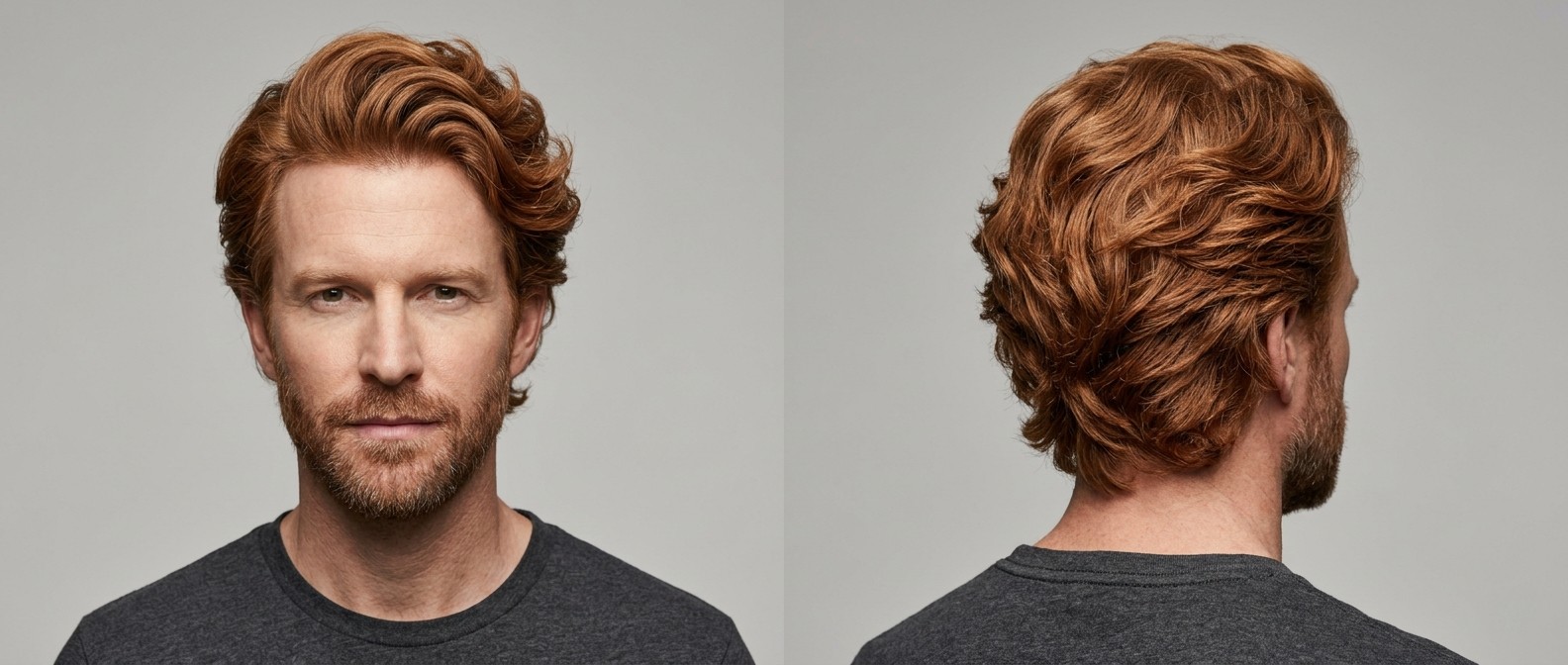
Blowout
Swept-Back Voluminous Wavy Blowout for Thick Hair
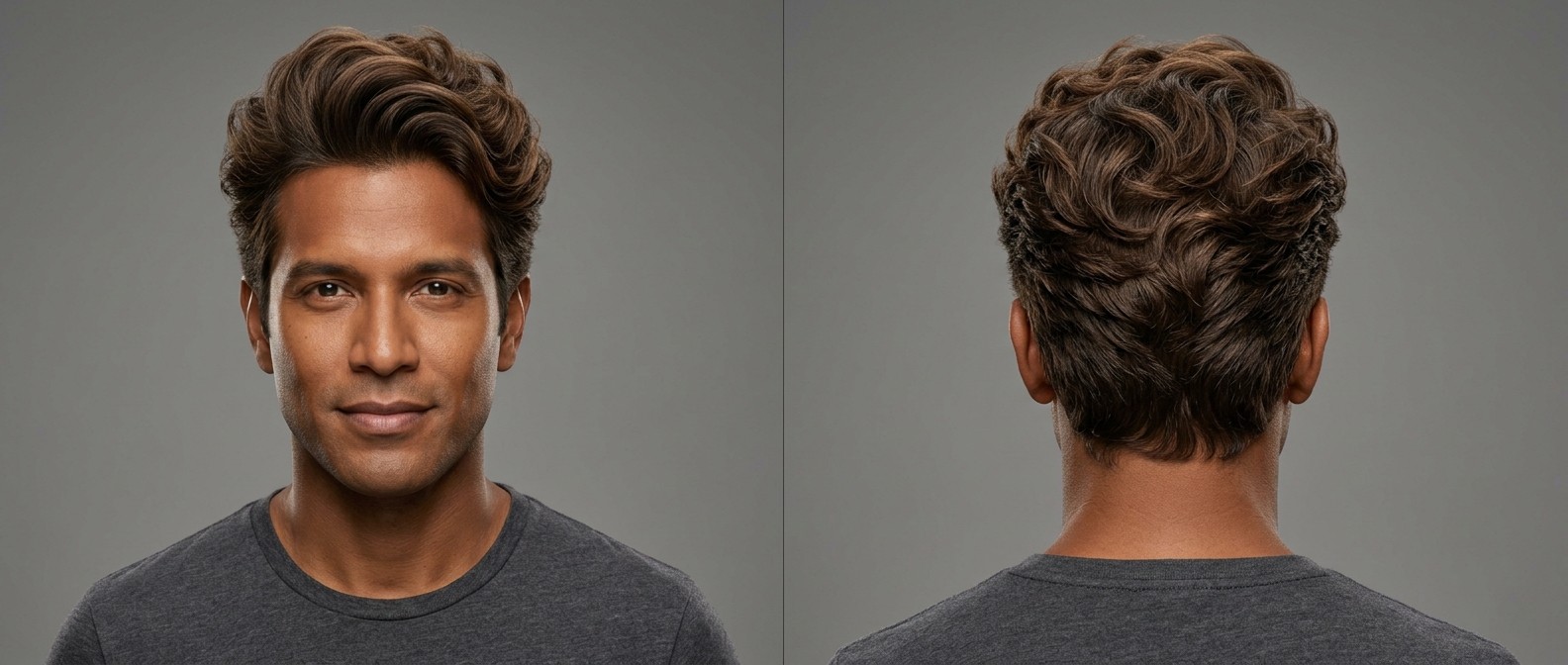
Blowout
Voluminous Wavy Blowout Hairstyle with Tapered Short Sides
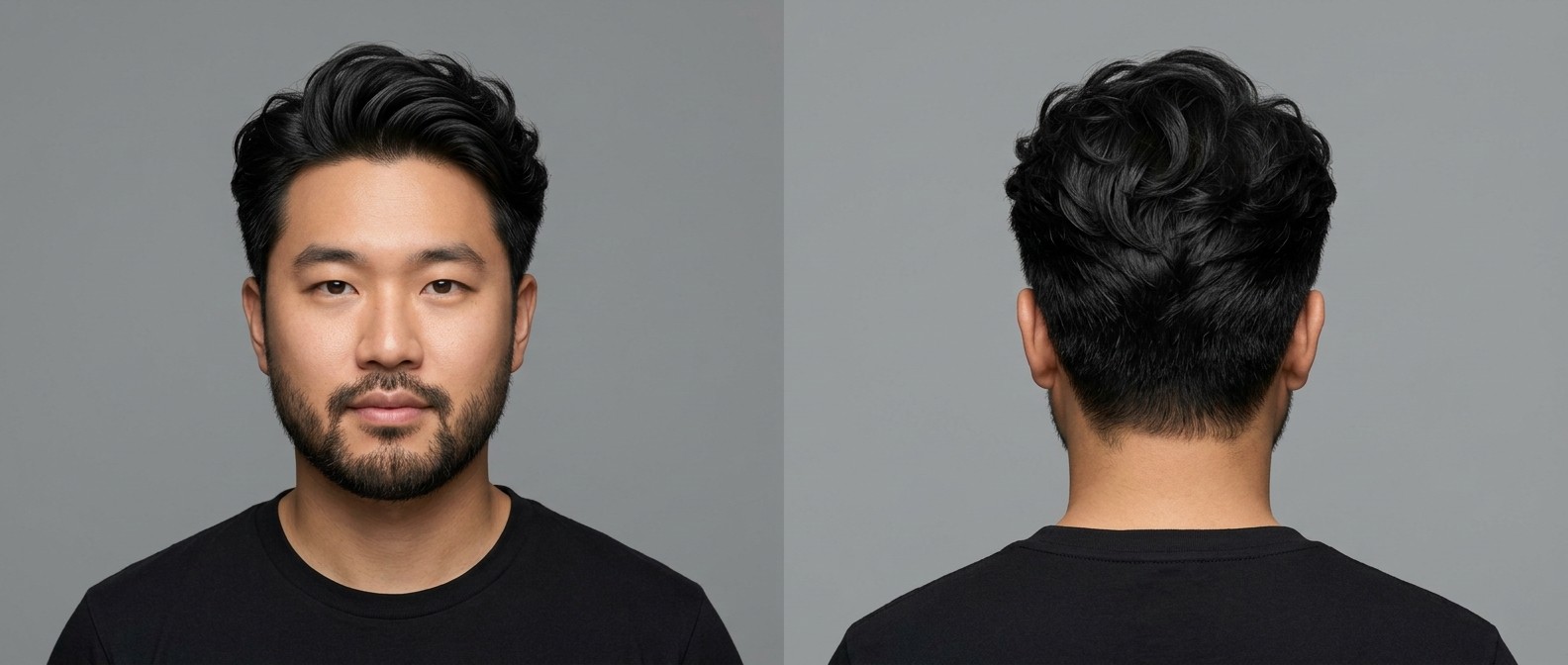
Blowout
Wavy Textured Blowout with Tapered Sides for Medium Hair
Blowout
High-Volume Swept-Back Blowout with Tapered Sides and Texture
Blowout
Textured Wavy Blowout with Tapered Short Sides and Swept-Back Flow
Blowout